Showing posts sorted by relevance for query taxes. Sort by date Show all posts

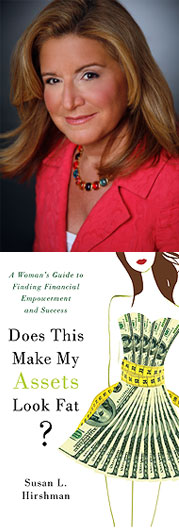
How to Become a Financially Fit Freelancer: Interview with Susan Hirshman

Tuesday, November 06, 2012
by Krissy Brady

I love this time of year as a freelancer: with a new year just around the corner (yikes!), it’s the perfect opportunity to plan the changes you’re going to make to better your freelance lifestyle.

As freelance writers, it’s even more crucial to have a strong financial plan in place, since you have no one to depend on but yourself. The onus is on you to plan for emergencies, vacations, tax payments, and your retirement.

I caught up with Susan Hirshman—president of SHE LTD, a consulting firm focused on enhancing the financial literacy of women globally, and author of the fabulous Does This Make My Assets Look Fat?, a women’s guide to finding financial empowerment and success—to find out more about what you can to do to feel financially secure in your freelance lifestyle.

WOW: One of the biggest fears aspiring writers face is not making enough money from their writing to survive, which is why so many are reluctant to take the plunge. What tips would you offer to help ease their fears and go after their dream career?

Susan: Having a sense of control over your finances is essential if you want to live the entrepreneurial life. Cash flow is king here—thus, you want to make sure that you’ll be able to meet your expenses on a month-to-month basis without going into debt.

The first step is to have a keen understanding of your monthly spending plan—think in terms of fixed costs (i.e. rent, utilities, food, student loans, etc.) versus discretionary costs (gym memberships, clothing, entertainment, etc.). Don’t forget to include any additional fixed costs that you would incur being self-employed (for example, health insurance).

Compare your fixed costs to your savings—how many months would your savings cover? Is it enough time for your business to start generating sufficient cash flow? If the answer is yes, then do the same exercise and include your discretionary costs and compare. If there is a significant difference in ratios, you may want to examine some of your discretionary expenses. Can do you without?

The bottom line here is that if you know what you have to earn, as compared to what you spend, what you have will be a greater sense of control, which will give you peace of mind.

WOW: What are some of the financial benefits of being at a “day job” we have to take over as freelancers, and how do we go about preparing to do so?

Susan: There are three key areas to take over:

• Insurance
• Retirement
• Taxes

Insurance—health disability, life, LTC. Before you leave your day job, see if any of your plans are portable and if they fit into your budget. If not, before you leave your day job, investigate your other options. Freelancersunion.org is a good place to start.

Retirement and Taxes—talk to your CPA to gain a sense of the rules for setting up a retirement plan, estimated taxes and any other state or local taxes that your business will be subject to. If you don’t have a CPA, ask other freelancers, or go to CPAdirectory.com for a listing.

WOW: One thing I’m always guilty of is not being prepared at tax time. Are there things we should be doing throughout the year to prepare ourselves (e.g. taking a certain percentage of each paycheck and stashing it away, etc.)?

Susan: At tax time, you need to have your income and expenses organized. The key is to keep your business and personal expenses separate during the year. It’s important then to setup a separate checking account and credit card as soon as you go out on your own.

Also, use your credit card as often as you can for your business expenses. Many credit cards will give you a year-end summary of your charges, categorized by type of expense.

And as stated above, work with a CPA to understand the what and when of your taxes, and devise a plan so it’s not a last-minute scramble.

Finally, keep an electronic well-documented calendar—so you can always tie your expenses to your activity.

WOW: I’ll be the first to admit I’m a total spend thrift. What are ways we can cut costs as freelancers, without feeling like we’re losing the standard of living we enjoy?

Susan: It’s not always about cutting costs—it’s about spending your money on things that are really important to you. Your basic fixed expenses don’t change (unless you want to move, etc.)—thus, the play is with your discretionary expenses.

A good way to think about your discretionary expenses is to break them into must-haves, nice-to-haves, and splurges. For example, although your gym membership is discretionary, you feel that it’s vital to your well-being and thus non-negotiable; therefore, it’s a must-have. Whereas, your once-a-month live concerts are nice to have, and wouldn’t feel horrible to lessen them to every other month, and so on. It’s all about trade-offs and choices.

WOW: Are there certain financial tools you feel without a doubt should be in a freelance writer’s arsenal?

Susan: Mint.com is a great place to start.

WOW: What do you consider to be your “ultimate” financial tip—the one you always swear by?

Susan: The tip I always swear by is: knowledge is power. Have a strong understanding of what you have, what comes in, what goes out, what you want, and your plan to get there.

For more information, check out Susan’s website at www.myfatassets.com


About Krissy Brady

Krissy Brady is the owner of Krissy Media Ink, a blog dedicated to simplifying the writing life. She’s also an eBook writer for Sterling & Stone, specializing in eBooks for indie authors. Like most women, she wants to have it all… but first needs to figure out what that means. Keep in touch with Krissy on Facebook and Twitter for the latest writing-related information.
Read More »

Common Deductible Business Expenses

Monday, March 16, 2009
One of the questions that's come up in our Premium-Green Writer's Group is what you can write off as an expense. So I’m giving you a general list of tax write-offs for contractors (which is what a freelance writer is), and you can check off, or apply these to your business, and see if they fit.

COMMON DEDUCTIBLE BUSINESS EXPENSES

Note: Probably no business will have all of these expenses. Your business may have different categories of expenses. Don’t agonize over which category an expense belongs to.

Advertising
Accounting/bookkeeping fees
Bank service charges
Car and truck expenses
Client consultation and supervision fees (for therapists)
Contract labor (outside services, subcontractors, etc.)
Credit card fees
Depreciation on assets used in the business
Dues
Education
Entertainment/business meals (Note: try to keep these low if you can...move to another category)
Freight
Gifts
Insurance
Interest on business credit cards and loans
Inventory/merchandise purchases (items the business has available for sale to others)
Legal and professional fees
Magazines and books
Maintenance and repairs
Office supplies
Online/internet fees
Payroll taxes (only for businesses with employees and only the employer’s share of taxes—not the taxes withheld from the employee’s pay stubs)
Postage
Printing and copying
Rent/office in home expense
Sales or excise tax (only for businesses that collect this tax)
Small furnishings and equipment
Telephone (including pager, answering service, and cell phone)
Travel (outside normal business location)
Utilities
Wages (this refers to what is paid to employees, not to yourself or to independent contractors)
Website hosting, creation, design, or maintenance fees

-----

If you are in the midst of filling out your taxes for the year, instead of filling out simpler forms, itemize: You might qualify for tax breaks you hadn't thought of. And don't take a "refund anticipation loan," a high-interest loan offered by some tax-prep chains.

Good luck!
Read More »

Friday Speak Out!: 100% Success in Writing Contest, Guest Post by Darcy Pattison

Friday, December 23, 2011
100% Success in Writing Contest

by Darcy Pattison
Note: This is an especially poignant post for me to run this week because our troops have pulled out of Iraq and are returning home soon. The story is about a girl waiting for her father to come home from his military posting. Just remember--the Iraq conflict may be done, but troops are stationed throughout the world and there are still military families who will be missing their loved ones during this holiday season. This story is for them.

I have won 100% of the stories for kids writing contests I’ve entered. Of course, since I’ve only entered one, it's easy to say. I’m picky about what I enter and I may never enter another one. Here’s why I did enter “The Help” Children’s Story Contest (www.takepart.com/thehelp).

In August, I returned from vacation and saw info on a writing contest related to the movie, “The Help,” based on the novel of the same name by Kathryn Stockett. I live in Little Rock, home of the infamous Central High Crisis over Civil Rights, when the Arkansas governor called out the National Guard to prevent nine black children from attending Central High School. Today, the National Park Service runs a National Park at Central High to commemorate the struggle for civil rights as it played out here. Everyone I know was talking about this new movie, The Help, and loving it.

But I’m skeptical about contests. And I had criteria.

What’s the benefit to winning this writing contest?

For me, the benefit to winning this contest was publicity. "The Help" is a high profile movie and stories for kids are not. To be associated with this amazing story could only help my career.

Who is the judge of this writing contest?

Lou Berger, children’s author and former Head Writer for the popular children’s television series Sesame Street, judged the children’s story contest entries. It was important that the judge was credible and a good judge of writing.

What is the fine print of the writing contest?

Of course, a contest often has simply awful contract details, often so bad that they will grab all rights and you get nothing. Ever. In this case, the contract said the contest retained NONEXCLUSIVE rights. Before I signed the contract, I verified that I still retained the copyright and could exploit it as I wanted.

What is the prize of the writing contest?

The prize was professional illustrations that would be licensed to me to be used as I wanted. Good news. As a children’s book author, I can write a text but I can’t illustrate on a professional level. The "draw" of professional illustrations meant that the story would become a book. See more at 11ways.darcypattison.com (Order in paperback, Kindle or Nook.)

Also important was the dollar amount of the prize, because I am responsible for taxes on that amount. It’s a bummer to win a prize and then have to pay taxes on it! Fortunately TakePart also offered a small cash prize. When the cost of illustrations and the cash prize were added together, the cash will just about pay the taxes. I would be out zero dollars.

Did I have a likely story that fit the contest rules?

Finally, I had to have a story that fit the contest! I looked over my files and chose one I liked, but had seen several rejections. I added a Nanny and took out 200 words to wind up one-word under the 400-word limit.

In this case, the benefits, the fine print, the prize, the judge, and my story all matched up. I entered. I won!

***

Author and writing teacher Darcy Pattison blogs at Fiction Notes (www.darcypattison.com). Read more about "The Help" Children's Story contest at the 11 Ways to Ruin a Photograph website http://11ways.darcypattison.com.
~~~~~~~~~~~~~~~~~~~~~~~~~~~~~~~~~~~~~~~~~~~~

Would you like to participate in Friday "Speak Out!"? Email your short posts (under 500 words) about women and writing to: marcia[at]wow-womenonwriting[dot]com for consideration. We look forward to hearing from you!

~~~~~~~~~~~~~~~~~~~~~~~~~~~~~~~~~~~~~~~~~~~~
Read More »

Getting the Most Bang Out of Your Buck When You Travel For Writing

Wednesday, May 01, 2019

KT and me at the beach
I like to travel--who doesn't? I enjoy it for both work and pleasure--especially if the work is a writing conference related trip; or if I combine pleasure and work and blog about some of the parenting things I learned on a trip with my daughter, for example. Earlier this year, I took a trip to the beach with some of my critique group members and their children, and we had a mini retreat while on a family vacation. In the morning, while the kids entertained each other, we wrote or worked on marketing or brainstormed with each other book ideas. So all of these examples are to show you that writers will travel--and even travel for pleasure can be used for writing material or as an inspiration/retreat!

But let's face it, traveling is expensive, even if you are frugal. You have to get to your destination. You have to stay somewhere. You have to eat and do activities. So I'm always looking for ways to get the most bang out of my buck. I thought I'd share a couple of my ideas with you, dear Muffin readers. Then I was hoping (praying, wishing...demanding?) you would share some even better ideas about saving money while traveling (any travel writers out there?) with me and the rest of the readers in the comments below.

1. Rewards Programs

Here is my new mantra:

If the rewards program for a hotel, airline, restaurant, or credit card is free, sign me up!

Please adopt this mantra, too. I'm not encouraging you to recklessly sign up for every program out in this reward-program world, but I'm suggesting you read over the information, look for any hidden fees or conditions, and then sign thyself up.

Here’s an example of how a one-time user can benefit from a rewards program. On my first stay as a Priority Club Rewards member at a Holiday Inn in Cincinnati, I received points for my stay, a check-out time of 2:00 p.m. instead of noon, free breakfast, and free drinks at happy hour. I think those are some great benefits, especially for writers—free food, free liquor, and a chance to sleep in late. WOW! Right?

Many sit-down chain restaurants have rewards programs, where you can earn free meals or special deals on food. Food and drink can be one of the biggest expenses while traveling, and most hotel rooms don't have a kitchen where you can make your own food. (Plus, what is the fun in that?) But if you join a couple national restaurant rewards programs and eat at those consistently, you could earn some nice rewards to use while traveling. For example, a few years back, I joined the rewards program at Ruby Tuesday. I received two coupons for buy one dinner, get one free through e-mail. Their entrees ran anywhere from $10 to $20. So I used one of these coupons with a fellow writer at a conference, and we each ate a great meal for half the price.

Sunset at the beach!
It’s worth it even if you start to lose the points that you earned. With Hilton Honors, I don’t stay in enough Hilton hotels in a year to keep my point total growing. However, last time I stayed at a Hilton in downtown Chicago, I received free parking for my entire stay because I signed up to be a Hilton Honors member. That saved me over $20 a day! (Plus you always get a free bottle of water as a HH member--you know, they are thinking of your health!)

Have I convinced you yet?

TRICK: Even if you have already made reservations for an upcoming conference, book signing, or trip for a travel article, look online to see if your hotel or airline has a rewards program. If it does, sign up. Then call customer service, and ask them to add your new rewards number to the reservation, so you can get credit for your stay when you go.

2. Credit Card Programs

A friend of mine has a Disney Rewards Visa card. She uses it for everything, and then she pays off the whole balance at the end of each billing cycle. Why? So, she can earn the points for a Disney vacation. You guessed it—her example made me think of how writers could use credit cards to gain points to pay for writer-type things.

For example, many credit cards allow you to use points you earn in their programs to buy gift cards to major stores or to even get cash back. Amazon has their own Chase credit card that earns you dollars to use on Amazon.com.

I once received a $25 Visa card by using my Bank of America World Points reward points to “buy” this gift card. I could use that card in any store that accepted Visa—at Walmart to buy envelopes and paper; at Staples to buy a flash drive; at Kohl’s to buy a new skirt for my next speaking engagement; at Hertz to help pay for my rental car. Do you see where I am going with this?

You have to do two things, though, to take advantage of this type of program:

  • You have to use your card. Use your card when you travel. You know you’ll have a lot of bills to pay at your hotel, at restaurants, and for transportation. You can still pay the balance off at the end of your billing cycle, like my Disney friend does. But now you have a good start on accumulated points, and you will soon be able to reap the rewards. If you save up enough points, you might be able to purchase free hotel stays or airline tickets.


  • Research the card’s rewards that you are able to purchase with points. Find the card that offers rewards that writers can use. Ask other writer friends if they are enrolled in a credit card program like this and how they like it or use it.


3. Don’t Forget Your Taxes!

This is one of the easiest ways to get the most bang out of your buck when you go to writing conferences, research your novel, or attend writing groups. You can claim expenses you accrue (airfare, hotel stays, conference registration fees, food, mileage, etc) on your taxes, so save your receipts! Hire an accountant, at least the first year, so she can help you figure out what you can claim as expenses and what you cannot.

When I went to my first SCBWI conference in Los Angeles years ago, I saved EVERYTHING—receipts for my coffee, my hotel bill, the cost for Internet service in the hotel, and even my receipt for transportation to and from the airport in a shuttle. At tax time, I turned it all over to my accountant, and she worked her magic. I’m lucky because my accountant is my childhood friend, and she charges me very little for all she does. But even if I didn’t have her, it would be worth it to save everything you think you might be able to claim and pay an accountant to help you sort it out.

In conclusion...
Traveling is often part of a writer’s job--and not just travel writers, by the way. Marketing your books often takes travel to do so. Improving your craft at a conference, workshop, or MFA program probably will, too. It’s important to think smart and spend a little bit of time looking for deals. Talk to other writers whom you know travel and ask them for any money-saving tips. If you are staying at a certain hotel because the conference is being held there and you are getting the conference rate, you can still enroll in the rewards program! Trust me...and my mantra.

Margo L. Dill is a writer, editor, and writing coach in St. Louis, MO. She teaches three classes for WOW! Women On Writing on marketing, novel writing, and a new class coming this summer--creating author talks and school visits for children's and YA writers. The next novel writing class starts on Friday, May 3. She blogs on both her websites: https://www.margoldill.com and https://www.editor-911.com


Read More »

Do You Really Need An Editor?

Wednesday, August 24, 2022

Yes. Yes, you do. 

But my editor would probably prefer an actual post here. And I’m pretty sure I can hear some of you muttering, “Well, Miss Bossypants, you don’t always need an editor.” 

Y’all, I’ve received texts that could have benefited from editing. But for the purpose of today’s topic, I’ll keep the focus on novel-length manuscripts (fiction or non-fiction). So on to the actual blog post (and your arguments). 

BUT MY CRITIQUE GROUP/BETA READERS HAVE CRITIQUED IT 

That’s wonderful! Unfortunately, it does not say that your work is ready for publication. Even if your critique group is made up of all published writers (Gosh, that’s an enviable critique group!) or even if your beta readers also happen to be editors (Wow, that’s the jackpot of beta readers!). As professional as your people may be, they’re not working professionally for you. No doubt, a great critique group and/or beta readers can help you get your manuscript close to ready. But it’s not their job to line edit or developmentally edit. 

OKAY, BUT AN EDITOR WILL DO THAT AFTER I SELL THE BOOK 

Yep, editors are paid to do that job. But one has to sell the book first—and that sale is based on the manuscript submitted. 

Take Manuscript A, with its unique concept and a query/pitch that grabs an agent. But oh, dear, the manuscript is rife with grammar errors and sloppy syntax. That’s a hard no most of the time.

Manuscript B, on the other hand, is a grammarian’s delight and the concept is interesting. The agent (or the agent’s reader) is enjoying the story in the first 25 pages (which have been workshopped to bits!), but around page 45 or so, things start to fall apart. Confusion and chaos creep in and not in a good way. What a shame, thinks the agent, who might send a personal note along with the rejection. 

You simply can’t count your edits before the sale. 

SURE, BUT EDITORS ARE EXPENSIVE! 

Yes, editing can take a chunk out of a writer’s budget. Which, let’s face it, may be pretty meager when a writer is starting out. So what’s a struggling writer to do? A few ideas… 

 Are you in a professional writer’s organization? Use their resources; ask other writers for recommendations. 

Check out writing how-to websites, like here at WOW. And look for courses/editors that fit your book’s genre. 

Explore options like Fiverr. The range in fees for editing can vary widely so be careful choosing based strictly on price. Check reviews and/or finished products. 

Reach out to your accomplished friends. You know that writer, the one in your critique group who writes beautifully and has an eye for commas? She may jump at the opportunity for editing experience. You may be able to negotiate an introductory fee, but even if your friend offers to edit for free, insist on payment. It keeps the relationship professional (and allows you to count the editing as an expense for taxes). 

FINE, BUT I’M SELF-PUBLISHING 

 And I understand. I know how easy it is to look at a ledger sheet with all the publishing costs involved and then think that editing is surely one cost that can be cut. You’re a professional writer, for heaven’s sake! You’ve got this part, right?

Well…if you’re publishing books from your own backlist, books that were professionally edited and published before, then fine, you can skip editing. But if it’s the beginning of the venture, and especially if you’re DIYing the process, hire an editor. Your initial product should be the best it can be to snag readers! And then keep readers by keeping your professional editing edge. 

 Of course, there will always be those writers who waltz in to a conference and sell their half-finished manuscript. Or the writer with a highly polished gem of a manuscript that gets snatched up in the first query. But most of us can’t count on being one of those Unicorn Authors. We’ll need to earn it the hard way (and that means getting an editor).

Read More »

Cashing in on Your Vacations

Wednesday, July 23, 2014

This time next week, I will be on a much-needed family vacation at one of our favorite South Carolina beaches. Workwise, the timing couldn’t be better, as we will have just sent the latest issue of the magazine I edit to the printer and my next round of freelance assignments aren’t due for a few more weeks. But, as most freelancers know, vacation is no time to rest upon our laurels.

I’ve turned many a vacation into blog posts and travel articles, and over time, I’ve definitely learned to keep my eyes open to possible story ideas while traveling. I’ve been able to write about several trips for different magazines I write for, such as this article, Which Carolina Beach is Best for Your Family? This past year, when we ventured out on a weekend trip at a bed and breakfast in the North Carolina mountains, I reviewed the inn in a regional magazine parenting article that began, “As much as I love my kids, there are times I need to get away with just my husband.” It doesn’t have to be a lengthy or expensive trip—even just a few days to decompress works wonders.”

The great thing about brainstorming while on vacation is that it’s relatively simple. All you really need is an open mind and a good camera to help you take photos to accompany any articles (editors love it when you can do this). And the best part? Save all your receipts, because if you write about specific places/restaurants/experiences within that year, you can possibly deduct them from your taxes.

Vacation is also a great time to snap photos of things you don’t normally see that you can then archive for future blog posts, such as the image I've included at the beginning of this post. I’ve also started a Pinterest board combining some of my travel photos and articles.

In addition to mining the brochure racks for story ideas, I also plan on spending some time each day doing a little prospecting, so that I can make sure to start lining up assignments for the fall and winter. But don’t worry—I won’t spend too much time behind my computer. I have a tote bag full of books and several more saved on my Kindle that I’ve been saving specifically for next week. Until next time!

Renee Roberson is an award-winning freelance writer and editor who also works as a Blog Tour Manager for WOW! Women on Writing. She also blogs at Renee’s Pages.

Read More »

What You Need for a Successful Writing Career

Wednesday, January 11, 2023

I must be on the birthday circuit here at the Muffin because today is Mister Man’s birthday. (Last time we met, it was Oldest Junior Hall’s Birthday.

Anyway, I don’t celebrate Mister Man’s birthday in quite the same way because he’s—I hope!—enjoying himself at a party on heaven’s side. But I always give him a shout out or two or fifty for all that he did for me. 

Not that I didn’t express gratitude for all the times he filled my gas tank or filled out the taxes. But like most people who’ve lost a loved one, I didn’t realize how much he did until he…well, stopped doing it. But unlike an empty gas tank, the things I missed were of a far less tangible nature. 

Take my writing career. I honestly had no idea the necessary role he played in my success. And I’m not talking about the financial support he gave in early days or the many times he’d drop me off and pick me up at an event because I have a terrible sense of direction and/or hate driving at night. Those were incredibly helpful and generous acts of kindness but I think I might have eventually succeeded without the conferences or the cash flow. 

What I wouldn’t have succeeded without was his belief in me. 

I mean, sure, I believed in myself. I wouldn’t have picked up that pen and started jotting down ideas if I didn’t believe I had something to say. And boy, did I have A LOT to say! I thought Mister Man would love to read every little word. Turned out, he was not that interested. Turned out, in fact, that he really did not want to read my creative ramblings. At all. 

But you know what he did do? When those editors or contest judges or agents also did not want to read my creative ramblings AT ALL, when critiques would shred my pages as well as my self-esteem, when I was sure that the hours and hours and hours of work I’d done meant nothing, Mister Man believed in me. He’d listen to my ranting and raving; he’d wait patiently for the tears to dry. And then he’d say something—what, I have no idea, and really, that’s not the point. 

The point is, it wasn’t so much what he said as it was his steadfast, unwavering belief in me. That’s some powerful stuff, another person believing in you. It would bolster me to where I once again believed in myself. And I would pick up that pen and write. 

I don’t think I appreciated that super power until Mister Man was no longer around; I floundered for several years, wanting to just quit the whole writing business. But I’m blessed with friends that, like Mister Man, believe in me. They listen, they commiserate, they wait patiently, but mostly they stand by, believing in me. And now, I’m starting a new journey in my writing career. 

Yes, there’s much out there to help you be a writer. And of course, it starts with you believing you can do it. But don’t underestimate the power of that someone in your life who also believes in you, who’ll be there when your faith in yourself wavers. Because sometimes, it’s a who, not a what, that we often need to be successful. 

 (P.S. Happy Birthday, Mister Man—and thanks for everything!
 With love from Cathy C. Hall)
Read More »

Giveaway: Win a $55 Gift Certificate to CSN Stores

Saturday, March 05, 2011
Enter to win a $55 Gift Certificate for any product from the million products available from CSN Stores.

Readers, you're in for a treat! Last December we held a giveaway contest sponsored by CSN Stores. It was such a hit with readers that we thought we'd do it again. CSN Stores is giving away a $55 Gift Certificate Code to one lucky WOW reader! If you aren't familiar with CSN, they are comprised of over 200+ online stores, where you can find everything from home office furniture to pet products. Their sites include Cookware.com, AllModern.com, and ToysAndGamesOnline.com. Visit http://www.csnstores.com/ourstores.asp for a full list of all their stores!

Here's how to enter:

1. For your first entry, just leave a comment on this post! Anything goes--you can tell us what you'd like to buy if you win, what you're working on at the moment, your favorite piece of home office furniture, or just say hello. :)

Want extra entries? Do any of the following, and leave a separate comment for each one:

2. Write about this giveaway and link to this post on your own blog or website, then come back here and leave the link!

3. Link to this post on Twitter, then come back and leave us the link to your tweet. One Twitter entry per person. (Let us know on Twitter too! http://twitter.com/womenonwriting)

4. Link to this post on your own social network page (such as Facebook, StumbleUpon, LinkedIn, MySpace, JacketFlap, etc.), and then come back and leave us the link to it in the comments section! One entry per social network profile per person.

Rules & Regs: Giveaway ends on Sunday March 13th at 11:59 PM, PST. Winner will be chosen the following day via Random.org. We will post the lucky winner's name in the comments section on Monday March 14th and, if we have the winner's email address from the comments section or profile, we will also notify the winner via email. This contest is only open to readers in the US and Canada. Please note that there may be international shipping taxes that the gift code cannot cover in the case of Canadian addresses. CSN Stores will only ship to the US and Canada.

Good luck!
Read More »

Ask the Book Doctor: Making Money Writing

Saturday, September 16, 2023

By Bobbie Christmas

Q: How do we support ourselves while we’re writing our books?

A: If you’re writing nonfiction, you can write a proposal and several sample chapters instead of the whole book. If the information is current, compelling, and well written, and if the proposal follows the guidelines about how to write a book proposal, you may succeed in selling the book and get an advance against future royalties. Still, the advance may not be enough to live on while you write the full book. My advance from Union Square Publishing for the first edition of Write In Style paid only about a month’s expenses, so I continued to edit books and write articles to maintain my income while I wrote my book in my free time. 

If you write fiction, you can try your hand at freelancing for magazines and websites while you also write your novel.

Writing and selling articles is a great way to make some money while you’re also writing your book, but you need to know how to write an article and how to find work, and writing articles can be a full-time job in itself.

Long ago at a local meeting of The Writers Network I asked attendees how they supported themselves while they wrote their books. The consensus was that most kept their day jobs and wrote their books at night and on weekends.

In reality most of us writers don’t make enough money off our books even after they are published anyway, so we’d better have another solid source of income, no matter what.

Q: Tell me about breaking into magazine writing.

A: Oh dear, entire books have been written on the subject. I can’t possibly give the answer the full attention it deserves. Instead I recommend reading a few books on the subject. Although I haven’t read the book, I looked at a few, and I liked Complete Idiot’s Guide to Publishing Magazine Articles by Sheree Bykofsky best of all, because it covers a great deal of territory, including how to handle your taxes when you get paid. I’m a little prejudiced because Sheree has been a help to me from time to time. She’s a literary agent in New York.

In brief, editors need to see that you can write a good article and are familiar with the jargon and craft of journalism. For example, the lead paragraph of an article can be referred to as a lede or a lead. When editors read your clips (examples of articles you’re written), they want to see you know how to write a strong lede, follow the tenets of creative writing, and use good grammar.

At the time I began freelancing full-time—when dinosaurs roamed the earth—I used the Yellow Pages to find local magazine publishers. I made appointments to show off my portfolio and get to know the editors. In this way I was able to get articles assigned to me regularly. Today you’re not limited to local publications. The internet is filled with information on periodical publishers and how to query them.

Q: How can I go from free to fee writing?

A: Good for you for writing for free! You’re building your portfolio.

Many accomplished writers began by writing free articles. Some do it to get experience and build a portfolio. Others began writing as volunteers for nonprofit organizations. I began by writing and editing for my school newspapers and then for charitable and educational organizations. After I gathered enough bylined articles to build a solid portfolio, I used it to land a full-time job as a reporter and editor with a newspaper. Over the years as my skills and portfolio grew stronger, I moved into corporate communications, without ever revealing that my original portfolio had all been written for free.

I’ve progressed into editing books and magazines, so I no longer seek freelance writing assignments. When I did, though, I had much more success when I met with publishers, showed them my copious and varied portfolio, and asked for assignments. Nowadays I recommend that freelancers have a website that displays some of their published articles. Websites have become essential for anyone in business, and trust me, freelance writing is a business.

As a business owner you must constantly market yourself. No client lasts forever. Editors change, companies fold, work dries up, and if you aren’t always looking for more and new clients, you will find yourself out of work.

Even though printed periodicals have slowly dwindled, other opportunities have arisen. Companies need copy for their websites. Businesses and organizations need newsletters and blog entries. Query all the websites, periodicals, and other paying markets that appeal to you. Never stop looking. If you hone your writing skills and approach publishers in a professional manner, you will soon go from free to fee.

Never make the mistake of undercharging, though. Rather than settle for low rates, you may need to use a few negotiating skills. Going from free to fee is one thing, but getting paid a fee that’s worthy of your time is more important than merely getting paid.

Even when you are accustomed to getting paid for your work, you may find times when you want to charge less or nothing, such as when writing for a nonprofit that speaks to your heart. Don’t hesitate to follow your passion and use your skills to help people and organizations that make the world a better place.

***

Send your questions to Bobbie Christmas, book editor, author of Write In Style: Use Your Computer to Improve Your Writing, and owner of Zebra Communications. Bobbie@zebraeditor.com or BZebra@aol.com. Read Bobbie’s Zebra Communications blog at https://www.zebraeditor.com/blog/.
Read More »

Interview with WOW! Runner Up Sheryl Winters

Tuesday, February 12, 2008
If you believe that everything happens for a reason (whether we ever understand what that reason is or not), you’ll love Sheryl Winters’ short story about what happens when a thunderstorm reveals more about the main characters than they ever expected.

Bio:
Editor-in-chief of her high school's weekly newspaper, Sheryl dreamed of a career as a journalist. Fate had other plans. Her life's journey instead took her down paths as an employment counselor, legal assistant in her husband's law office, and innkeeper of their bed and breakfast.

Now retired and living in Florida, she writes poetry, song lyrics, children's stories, and enters fiction and non-fiction writing contests. Several of her poems have been published. She is currently seeking a recording contract for several of her song lyrics. Sheryl loves to travel, read, swim, and has recently become addicted to knitting. If you'd like to on-line chat with her, she can be contacted at sherylwinters@comcast.net.

We welcome Sheryl and offer a big congratulations on her runner-up story in WOW!’s 2007 Fall Flash Fiction contest. If you haven’t already read Sheryl’s intriguing story with an unexpected twist, please do so: A Flicker in Time. And don’t forget to come back and read our interview with this talented woman, who not only writes stories and songs, but extends her creativity into the crafty endeavor of knitting as well.

* * * * *

WOW: A theme of your story “A Flicker in Time” is that things happen for a reason. Do you feel there’s a reason Fate deferred your plans of being a journalist?

Sheryl: Yes. I never did become a journalist. Instead, I found my career niche as an employment counselor and later as a legal assistant. Also, I had problems with balancing my sleep disorder (narcolepsy) and college to the point that I never finished getting a degree.

WOW: I imagine that narcolepsy would be a serious impediment to your education, but you seem to have handled it well. You were able to find your niche in other areas and as a result, experience an event that landed you here. Because you express such honesty in your feelings toward the ex-convict in the story, do you also try to create fictional characters with such complex emotions?

Sheryl: Yes. I am an extremely sensitive and emotionally charged individual and it does translate to my fictional characters.

WOW: That’s wonderful and very important for writers to possess. Did you learn any lessons from the encounter described in your story?

Sheryl: Yes. We cannot let our own personal prejudices keep us from assisting others. Being judgmental and opinionated only creates roadblocks in our life's journey.

WOW: That’s a powerful lesson to learn. Because of this, do you wish your story could have had a different ending?

Sheryl: Yes. I would have loved to have found him a job not only to earn a fee, but to support his efforts to return to society and a successful career.

WOW: Your writing covers a broad range of genres. What kind of song lyrics do you write?

Sheryl: Country western is the type of lyrics I write. I have 3 of them currently on the Empire Music Company website. Here is one of them:

Forgivin’ Yourself

© 2007 Sheryl Winters

Verse I:
You’re doin’ the best you can and that’s no crime.
So what if you didn’t pay those darn taxes on time.
No one’s walked in your shoes or carried your load.
Someday you’ll reap all the good that you’ve sowed.

Chorus:
Forgivin’ and forgetting, once you get it down pat,
You’ll no longer hate the in-laws, or the neighbor’s cat.
You’ll wake up one morning realizing something else,
Hardest thing to do is forgivin’ yourself.

Verse II:
Let go of feelings of never being good enough,
Got wrenching memories of divorce court stuff.
Of cashin’ in bottles to get money for the bus.
Bill collectors, overdrafts. God, times were tough.

Repeat Chorus.

Bridge:
Don’t wait till golden years to watch pretty, pink sunsets.
Take trips to Rome to see churches with two hundred steps.
Cause you ain’t gonna enjoy all the fruits of your hard labor,
Feeling guilty ‘bout the tool you didn’t return to the neighbor.

Repeat Chorus.

Verse III:
Quit stewin’ ‘bout the money ya could’ve but didn’t make,
And fretting ‘bout mistakes ya made and risks you didn’t take.
Yesterdays are gone. Tomorrows are comin’ near.
What matters is today, and hey, you’re still here.

Repeat Chorus.

Demo available. Direct all inquiries to:

© 2007 Sheryl Winters
c/o Empire Music Co.
PO Box 2145
Newburgh, NY 12550
Email: jstone3216@yahoo.com

WOW: Great lyrics, Sheryl. They’re very traditionally country. When did you first realize you wanted to be a writer?

Sheryl: My earliest recollection of wanting to write was daydreaming stories as I soaked in the bathtub as a kid. Later, a brilliant high school English teacher further inspired me with his requirement for a theme a week. This, along with my experiences as editor of my high school weekly newspaper further reinforced my writing ambitions. However, it wasn't until I was seriously injured in a pedestrian/motor vehicle accident that I began writing in earnest. My husband said that the brain injury I sustained must have started the creative juices flowing. As a result, I wrote a poem on "courage" which was later purchased by The Courage Center, a rehabilitation center in Minnesota, as part of a contest.

WOW: That’s an interesting way to come back to being serious about writing. You mentioned in your author bio that you’ve recently become addicted to knitting! Do story ideas form while you’re engaged in your craft?

Sheryl: I am a beginner knitter and still need to concentrate on the stitches. I find the craft extremely relaxing and look forward to the time when story ideas will come from those tranquil moments.

WOW: Since you’re such a creative person--writer, songwriter, knitter--do you believe creative people have a natural desire to explore as many creative avenues as they possibly can?

Sheryl: Yes, I do believe creative people seek out multiple avenues of creative expression. Owning and operating a bed and breakfast gave me many opportunities for this as I orchestrated events including Victorian teas, quilting weekends, murder mystery dinners, chess tournaments, class reunion slumber parties, to mention a few. We "creativity creatures" are constantly searching for new ways to convey our ideas. It is our passion.

WOW: Can you explain how you set aside time to write?

Sheryl: I write when the moment moves me...no matter what time of day. Some of my best writing has been done in the middle of the night when it is quiet and there are no distractions. (Having a sleep disorder sometimes is not all bad). It also helps being retired and having a fluid schedule. I always carry a pen and paper in my purse in case a light bulb goes off in my head.

WOW: If you’d been able to become a journalist when you were younger, do you think your life would have been as rich as it’s turned out to be? Or do you believe it may have been richer?

Sheryl: I never regretted not becoming a journalist because my life has been filled with excitement and remarkable experiences. A friend once told me, "compared to yours, my life sucks." I took that as a compliment. Sometimes I feel overwhelmed with the events of my life but then I stop and listen to the words of my own poem:

Relax, enjoy the day.
Without the worry of work or play.
Yesterday is gone.
Tomorrow is near.
But TODAY - TODAY is why we're here.

* * * * *


If you haven't done so already, please read Sheryl's story, A Flicker in Time.

And remember, every Tuesday we'll be featuring an interview with one of the top 10 winners from the Fall 2007 Essay contest. So, be sure to check back and see who's up next!

For more details on WOW! Women On Writing's current contest, please visit:
http://www.wow-womenonwriting.com/contest.php.
Read More »

Should A Writer Form a Limited Liability Corporation

Wednesday, November 17, 2010
Since I began freelancing nearly 10 years ago, I've never separated my writing earnings from other income. I paid the self-employment taxes on those earnings. Honestly, I did not see the need to separate income from a few writing sales each year from my earnings from my full-time job.

Then, I started freelancing full time. For the last five years, as my writing business has grown - along with the income - I've contemplated forming a Limited Liability Corporation (LLC), but I haven't determined if it's worth it. Yes, I make a living from my writing abilities, but I don't view myself as a "big-name brand" so I'm not sure if I will be ahead by forming my own writing conglomeration where I can rule the publishing world...at least in my mind....and keep personal and business finances separate.

According to the Internal Revenue Service, an LLC is a type of business structure, allowed by state statute, where owners have limited personal liability for the company's debt and actions of the LLC. The LLC can include several members or it can be a sole proprietorship.

Will it add more paperwork or will it make bookkeeping and tax time easier? What costs are associated forming this type of arrangement? Do other writers use an LLC or is it an unnecessary expense?

I'm still weighing my options about the value of an LLC for a freelancer, and I've scheduled an appointment with the accountant so we can discuss the benefits and drawbacks. Then I will be able to make a sound decision...and continue my quest for publishing domination!

What do you think, writers? Should a freelance writer form an LLC?

by LuAnn Schindler. To read more of LuAnn's work, visit her website.

Read More »

Do This For Your Children's Writing Career: Join SCBWI!

Thursday, May 30, 2013
I admit it, I'm a joiner. I belong to three writing groups and a critique group: Missouri Writers' Guild, Saturday Writers (a local chapter of MWG), and SCBWI. I think the best way to keep your head up and words on the page, while you are pursuing your writing career, is by networking, discussing, and being around other writers. It's important to do this in person and online, and it's important no matter what genre you write.

But if you are a children's writer or illustrator, fiction or nonfiction, for ages 0 to 18, then you should seriously consider joining the Society for Children's Book Writers and Illustrators, otherwise known as SCBWI. I'm not usually so opinionated--and I'm hoping that some of my fellow WOW! readers and SCBWI members will chime in here, too--but there is not a better organization for children's and YA writers in my opinion.

First, it's only $85 for the first year's dues, and $70 after that. This is for an entire year, and so per month, you are only spending $7.08 a month on your writing career the first year, and $5.83 a month after that. Don't go to Panera Bread for lunch one day each month, and you've got the dues. Plus, if you are claiming writing expenses and revenue on your taxes (which you should be), the dues is one of your writing expenses!

For your membership, you get a plethora (thank Cathy Hall for this great word choice! ) of FREE writing resources from the inside track on agents and editors who are accepting manuscripts to magazine listings to children's book reviewers and blogs. You can build a profile on their website as well as numerous other membership benefits, which you can check out here.

I'm not going to repeat everything their site says because I'd rather share personally how I've used SCBWI in my writing life. First, I love the fact that when you join the national level, you are automatically put into the state chapter FOR FREE. This is where you will do a majority of your activities. State chapters have free workshops as well as paid conferences and retreats. Members always get a discount to the paid events. Most state chapters have a message board, website, and/or newsletter that is full of information you can use for your writing career. And best of all, real, live writers in your very own state, many published and knowledgeable, are now accessible right at your fingertips. They want to help you and talk with you because you are fellow SCBWI members.

Conference @ the Hyatt Regency
When I lived in Illinois, I found my critique group through SCBWI. I participated and led free shop talks and networked with some very well-established authors. We attended the LA conference at the beautiful Hyatt Regency hotel, where I learned all about Facebook and blogging and started both in August 2008. I'm sure that my career took off, and that I sold more books as a result of this. I know a lot more people in the business and am surrounded by great marketing ideas and creative brilliance all the time. Currently, in Missouri, I've been asked to lead a writing workshop on June 8--this is a paid speaking opportunity where I can also sell books. I could go on and on, but I think you get the point.

If you are looking for an organization with professional children's and YA writers, full of benefits--including ones that will help you get published and market your book--then go to SCBWI now and sign up!

Please share your experiences and opinions if you are a member, too. Questions are great, too!

Margo Dill teaches several online children's and YA classes for WOW!, including one on taking hold of your career, another on short fiction, and a novel writing workshop, too. For more information, check out the WOW! classroom. 
Read More »

Friday Speak Out!: The List-Maker

Friday, May 27, 2022
by Leslie Cox

I’m a list-maker. I make lists every day. Lists in my head and on paper. I email myself “to do” lists, grocery lists, song lists, book lists, movie lists. Lists of writing resources and essay ideas. Friends at work teased me for making lists on sticky notes and plastering them all over my computer monitor. Then someone clever came up with sticky notes to place on a computer screen, not on paper, by typing them onto the desktop, a more sustainable way to keep track.

My notepad is chock-full of lists, starting with a list of questions to ask an old friend to fill in gaps for my memoir: 1) What was Tim (my ex) like as a kid? 2) Why did his parents split up? 3) Was his brother really a product of the milkman?

Next is a list of five common elements of a successful memoir: 1) Drama, 2) Relevance, 3) Authenticity, 4) Character Arc, and 5) After-effect.

I flip the page to find a list of 18 weak adjectives not to use to avoid confusion in one’s writing. Lackluster words like: 1) happy, 2) sad, 3) cold, and 4) hot should be replaced with stronger words from a thesaurus. And avoid adverbs, e.g., 1) really, 2) very, etc.

The following page is a perpetual “to do” list of things not checked off because the above lists are more gratifying. 1) Review options for health insurance, 2) pay house taxes, 3) take car through emissions, 4) fix car so it will pass emissions, 5) take car through emissions again, 6) apply for car tags since my registration expired two months ago.

The next page is not a list, but a story my mom tells about a guy she crushed on before marrying my dad. She met Francis Hudson at the post office, and it just so happened every day when he stopped to get his mail, she was there unlocking her mailbox. They flirted a lot, but she didn’t let him kiss her, and when he asked her on a date, she declined. Seventy years later, she reveals her regret for turning him down. They wrote letters while he was in the navy, and sadly his ship went down somewhere in the Pacific during WWII. Mom said he was from a small town near Tucson, Arizona, so in the margin I’ve made a long list of possibilities: Sahuarita, Green Valley, Tombstone, San Simone, Bisbee, Sierra Vista, Bowie, Deming, Marana, Oro Valley, and Eloy. I suppose I could count this story as a first item on a new list of essay ideas.

A list of songs I heard on Spotify while cooking dinner recently brought back these memories:

1. La Grange by ZZ Top: My older brother’s best friend in high school invited me to sing in his band and later invited me for a ride in his green, fluorescent car. He pulled over and invited me to kiss him, and that’s where the story ends.

2. Highway to Heaven by AC/DC: My cousin’s ex-husband, a talented guitarist, portrayed Angus Young in an AC/DC tribute band. He was spitting image of Young giving a high-energy performance in a schoolboy uniform.

3. Black Magic Woman by Santana: My brother shared his vinyl record album “Santana Abraxis” with me when I was nine. The image of a naked black woman on the cover intrigued me. Listening closely to the lyrics, I realize instead of “You just might pick up my magic sticks” I’ve been singing “You just might be on my magic list.” You can see I value lists.

4. Old Time Rock & Roll by Bob Seger: There are too many memories to mention here only because this worn-out song has been played at every wedding reception, high school reunion, and birthday party I’ve attended since 1978. Enough said about that one.

5. Black Betty by Ram Jam. My daughter did a tap dance performance to this song. During her dance recital she sent me this text: “I forgot my pants for our next performance!” I hightailed it home to get the damn pants and by the time I returned, she had borrowed pants from her teacher and the performance was over. I still feel angst hearing that song.


Songs remind me of people, places, and feelings from my past. Music is inspiration for writing. So, writers, make some lists. Lists that make you really happy exhilarated, or very sad sorrowful. Lists that furnish ideas for an essay when you’re on a deadline and the page is blank.

* * *

Leslie Cox is a writer of creative non-fiction, focusing on personal essay and memoir. Her essay “My Favorite Chair” was a runner up in the WOW! Women on Writing Q1 2020 Creative Nonfiction Contest, and she published two essays in “Her Vase” in 2020. Her essay "Distracted" appeared in the Pure Slush anthology: "Love, Lifespan," and she has enjoyed contributing guest blogs and book reviews. Prior to semi-retiring from health care administration in 2019, Leslie wrote and published trade articles and a guidebook for health care professionals for HCPro. When she’s not writing, Leslie tutors students K-12 in the craft of writing, and that fills her up!
~~~~~~~~~~~~~~~~~~~~~~~~~~~~~~~~~~~~~~~~~~~~

Would you like to participate in Friday "Speak Out!"? Email your short posts (under 500 words) about women and writing to: marcia[at]wow-womenonwriting[dot]com for consideration. We look forward to hearing from you!
~~~~~~~~~~~~~~~~~~~~~~~~~~~~~~~~~~~~~~~~~~~~

Read More »

How to Set Goals that Will Help You Become a Successful Freelancer

Saturday, December 01, 2012
Have you looked at today’s calendar? December 1. The first day of the last month of 2012. How are you doing on your writing goals for 2012?

If your goals are on track – congratulations!

If not, now is the time to consider different types of goals and what might work best for you.

Minutes Spent Writing
Many writers set time related goals. “I will spend 1 hour a day writing.”
Pros: If you are struggling to fit writing into your day, this is the way to do it. Start with 15 minutes and build.
Cons: 1 hour. 1 paragraph. Time wasted? I’m not telling, but I can piddle away 45 minutes with little effort which is why I set . . .

Word Count
Other writers set a word count goal. Mine is 6000 words/week. I can take a day off, which is sometimes essential for my mental health, and still meet my goal.
Pros: If you tend to write and rewrite the same page endlessly, this can push you to produce.
Cons: See, NaNoWriMo. Anything counts as long as I get words down on the page, yes?

Submissions/Month
Need to get more of your work circulating? One writer I know submits a specific number of finished pieces and queries each month.
Pros: This helps get your writing into an editor’s hands.
Cons: Tough to pull off if you write novels.

Pieces Circulating
Other writers strive to keep a set number of manuscripts circulating.
Pros: Again, this get your work off your desk but it also allows for some wiggle room. Submit 20 crafts and, until you hear from the various editors, you can work on your novel.
Cons: If you only write novels, this still won’t do you much good.

Billable Dollars
This year, I tried a new type of goal. I submit $1000 worth of material each month.
Pros: This goal forces me to pay attention to what various gigs pay. My income has gone up nearly 20%.
Cons: Again, longer work, such as my middle grade novel, gets pushed aside in favor of the short stuff.

To-Do List
Some writers work from a to-do list. “These are the things that I want to do in 2013.”
Pros: It helps you keep the big picture in view.
Cons: For me, it was too vague. Too many items on an annual or monthly list can be pushed back “until later.” Keeping both an annual list and a weekly list felt like doing my taxes.

As you may have guessed, I work with a combination of goals. I have a weekly to-do list and a weekly word count. I have a monthly billable dollars goal.

The problem is that I still have a number of bigger projects that have been works-in-progress for too long. Next year, I’m adding a to-do list of book projects. I’ll pick one and work on it each morning before tackling either my word count or billable dollars.

Different goals work for different writers. What works for you?

–SueBE
Author Sue Bradford Edwards blogs at One Writer's Journey.

Read More »

Welcome to the Trades

Monday, January 10, 2011

Are you looking for new markets for your writing? Have you tried the trades? Trade magazines are for people in a specific industry and, in my experience, have skeleton staffs and rely heavily on a stable of freelance writers they contact regularly. There are trade magazines for everything from beauty shop owners to electrical contractors to candy manufacturers.

Let me use my ESP and predict what you’re thinking…is it “I know nothing about running beauty shops, electrical contracting businesses or candy manufacturers” ? Just call me the Amazing Jodi. I’ll be performing in Vegas all through the month of February. But seriously, writing for trades isn’t just for people who also have extensive knowledge of another profession. In my experience there are four types of articles found in trades.

1. Professional Knowledge – These are articles written by people active in the trade: they know the trends, the challenges unique to the profession, the movers and the shakers. Do you have a day job or past career that has trade magazines?

2. Knowledge Lite – You need some knowledge of the industry but often you can study up on the industry or the editor will help you out. I found I could interview movers and shakers in various industries(nothing too technical…I wouldn’t try to tackle a rocket scientist)by reading back issues so I asked the right questions. Sometimes you have knowledge of a complementary field that can help you out. Being a substitute teacher(not to mention a mom)helped me out with toy industry trades. If you worked in clothing retail you might be able to use that knowledge to get work in other trades that involve sales such as those for gift shops or coffee houses. What professional knowledge do you have that could be adapted to other fields?

3. Business Knowledge – These magazines are directed at business owners. Every business owner, whether they’re involved with selling beer, selling ad space or selling their special skills as a cardiologist has to deal with the same types of things. Taxes, advertising, employees, health insurance, office space…if you’re an accountant, interior designer, lawyer, bookkeeper, publicist or a host of other professions you can adapt your specialized knowledge to countless trade magazines. Recently I’ve seen articles on grooming the new generation for the family business in trades for breweries, pizza restaurants, and wineries. So what do you know that could help business owners?

4. General Knowledge – Believe it or not, some articles in trade magazines can be lifted out and placed in Woman’s Day, Men’s Health, E-The Environmental Magazine…Many trades have articles slanted toward their industry but basically about physical and mental health, environment, and lifestyle. You can propose an article on yoga to CPA Today by mentioning yoga that can be done at your desk during tax season. Or an article on insomnia to State Cops by mentioning switching shifts. Or an article on recycling to Mexican Food and Beverage by mentioning how going green can promote your business to the community.

Trades are ghost publications…you know they’re out there but sometimes it’s tough to see them. You won’t find them in your local bookstore and those online sites that promise a free copy often only want to give them to people involved in the profession. Sometimes you can find info about trade magazines(and back copies)online but my best source is neighborhood businesses. Just go into a local business and ask if they have any past issues of trade magazines(they often get them from their suppliers). I went to a florist friend asking for a trade mentioned in the last issue of Premium Green and ended up with back copies of that magazine and two other titles. I also found local trades at my local elementary school, electrical contractor and dentist. Now all I have to do is figure out what dentists want to read about.

Jodi Webb has written hundreds of magazines articles including for trades in the toy and hobby industry, shipping industry, and electrical contracting industry despite the fact that she doesn't own a toy company, tractor trailer or a 1000 foot reel of wire. Stop by her blog Words by Webb.

Read More »

Don't Be a Starving Writer

Wednesday, April 22, 2015
As a freelancer, you've probably experienced the "feast-or-famine cycle." It's when one month you have plenty of work and are eating [insert your favorite, most-expensive meal here], while the next you're watching the dust settle on your computer and using your credit card to buy ramen noodles. (And while ramen noodles taste pretty good, they are extremely bad for you!)

So what do you do if your income is all over the place?

That's what I'm talking about today over at Mint.com in my article, How Freelancers Can Budget with a Feast-or-Famine Income. Check it out and cycle back!

To further expand on that idea, I'd like to share a sample budget that wasn't included in the article because I was way over word count.

Example Budget for a Fluctuating Income

Have you heard of the 50/20/30 rule? Well, this is a slight variation we'll call the 50/30/20 budget. The emphasis of this budget is paying down debt and putting money into your emergency and retirement funds.

Let's say in the past year you made: $5400, $300, $1700, $900, $3600, $6800, $300, $4100, $8000, $500, $3600, and $5900. Average all those numbers out to create a monthly budget of $3425, and remember to subtract taxes. In this case, the tax bracket would be 25%, so you'd subtract $856 each month, which comes to a monthly budget of $2569 per month.

So with the 50/30/20 budget, your budget of $2569 per month might look like:

Fixed Costs:
Rent: $700
Utilities: $45
Health insurance: $150
Internet, Cable, Phone bundle: $90
Cell Phone: $90
Car insurance: $40
Gas: $150
Subscriptions: $20
Total: $1285, which is around 50% of your net pay.

Financial Goals:
Debt: $170
Emergency fund: $400
Roth IRA: $200
Total: $770, which is around 30% of your net pay.

Flexible Spending:
Groceries: $350
Shopping: $100
Day spa: $64
Total: $514, which is around 20% of your net pay.

Of course, your budget would vary. And yes, this budget is tighter than a frog's you-know-what, but the idea is to create enough of a cushion in your emergency fund to provide you with three to six months of income.

The rest of the article at Mint talks about streamlining your expenses and changing your business model, because the budget above is almost impossible to live on unless you have a roommate or significant other. I don't know about you, but where I live in Southern California, you can't find a rental for $700!

Okay, your turn. If you have any budgeting ideas for a feast-or-famine income, we'd love to hear them!
Read More »

The Importance of a Writing Habit (And How to Find Yours)

Wednesday, April 21, 2021

Without realizing it, I fell into a writing habit the past couple of months. It all started when I changed my weekend morning routine. Rather than turning on the coffee and skimming the news on my phone, I take out a notebook and write for a while. 

You see, this is remarkable to me because I've never been the type to embrace the idea of a writing habit. I've never thought it was for me. It reeked of the type of responsibility reserved for laundry, taxes, and Monday mornings. However, once I began to embrace this habit, I've started to write more. Not only that, my stories are better too. So, I wanted to share a bit of advice on how to find your writing habit.

1) A writing habit doesn't mean you have to write every day.

I sometimes think a lot of us fear that unless we are writing every day, we aren't making progress. As much as I like the idea of writing every day, I just don't have the mental space for it. Now, I guess you can say I do some form of writing semi-daily because I do journal on a regular basis. However, in terms of actual creative writing, that's reserved for the weekends. My mental space is less crowded, and my time is less rushed.

2) Do what works for you and your writing.

So, for me, I usually write on Saturday and Sunday mornings. For you, maybe you have a window Thursday afternoons that are relatively free and clear. Maybe you can't sleep Sunday nights, and you stay up later than usual. Maybe you have a 15-minute break at work that you can finally start taking. Whatever it is, find what works for you. Even if it isn't very long, start embracing this window of your day as a time for your writing.

3) Go to your writing time, even if you aren't sure you have anything to say.

Last weekend, I stopped at a scene in my story thinking I really didn't have much happening, and that I needed more of a direction for my character. She didn't have much of a life surrounding her that made the ongoing problem more complicated. I thought maybe I'd have to table my idea and revisit it later, which would be fine. It's definitely happened before. This weekend, I returned to my story during my writing time and realized there was more to my character than I thought. Now, she lives near downtown, works in a clothing boutique with a boss that swears in French, and likes the barbecue sandwiches from the deli down the street. She enjoys reading British vogue that she most recently purchased wearing sweatpants and her ex-boyfriend's old t-shirt that he forgot to take with him when he moved out. Now, ladies and gentlemen, this is a character. I'll be honest, this is probably the most vivid character I've developed in a while. And I have a gut feeling it's all due to that writing time I've reserved for myself.

4) Stick with it.

I don't know about you but I tend to let even the best of writing habits go by the wayside sometimes. So, this final piece of advice is for me as much as you. As you embrace your new habit and figure out what is working for you, make sure to stick with it. Things in life can happen that derail newfound habits, but if (or when) it does happen, make sure you return to what works. 

Do you have a writing habit? How did you discover what works for you? 


Read More »

Be the Happiest Writer in the World

Sunday, April 02, 2017
What's the happiest country in the world? America? Sorry,  wrong. The correct answer is Denmark. Their citizens have five weeks paid vacation every year, twelve months paid maternity leave, free education and free medical care. They're known as the happiest people on earth, even though it's raining about half the time and they pay over 60% in taxes.


The key to their joy? Hygge. It's pronounced hu-guh, and is a Danish practice of enjoying the small pleasures in life.
VisitDenmark gives this definition:
Hygge is as Danish as pork roast and cold beer and it goes far in illuminating the Danish soul. In essence, hygge means creating a nice, warm atmosphere and enjoying the good things in life with good people around you. The warm glow of candlelight is hygge. Friends and family—that’s hygge too. And let’s not forget the eating and drinking—preferably sitting around the table for hours on end discussing the big and small things in life. Perhaps the Danish idea of hygge explains why Danes are often considered the happiest people in the world?

Since I cannot move to Denmark in the foreseeable future, I need to find new sources of joy--as a writer--where I am right now. But what if  there's plenty of joy already around me, and I've been ignoring/overlooking it?


I never saw this quote until Cathy Hall shared it on a post. Sometimes I look at writers who have filled literally shelves of books in bookstores and I wonder, Why not me? Other times, I compare myself to another writer in my critique group, and wonder why I am not as prolific or am puzzled why I'm not published as frequently as they are. I should be happy for their success (I am, I truly am) and I should also be happy with the progress I'm making, instead of looking at it like it's a competition.

And to savor that joy that surrounds me, I'm going to celebrate things like:

  • A great beginning. There are times when I share a piece at a writing critique meeting, and my fellow writers say things like, "That first paragraph really drew me in," or "You had so many rich images in your beginning, I felt like I was there." Hey! I crafted that opening. I should smile and bask in it for a moment. 
  • Batting around ideas. When I get together with writing friends, invariably someone will mention something--a memory or an anecdote--which immediately causes me to think Oh! That reminds me of... I could write a piece about it. Ideas come to us when we least expect them. For example, a fellow writer mentioned her daughter's tattoos, which poked my muse in the arm. My muse reminded me, "Sioux, you could write a memoir piece about your son's ink." And I did...
  • Getting back to a dusty WIP. After procrastinating and making excuses, diving back into a piece you love, a manuscript that keeps calling you--well, it's satisfying. It's almost like coming back to an old friend.
So, try to embrace your inner (and perhaps non-existent) Dane. Enjoy the simple pleasures that are all around you. It might make you more content as a writer.

What is a simple pleasure you enjoy? A wannabe-Dane wants to know. 


This is a selfie of Barry Lane--a writing guru for teachers-- and
me. I'm so technologically inept, Barry had to take the selfie.
Sioux Roslawski is a middle school teacher, a freelance writer, a rescuer of dogs, a mother and a grandmother. She's working on comparing herself less to other writers and searching more for the hidden joy in life. If your interest is piqued, check out her blog.


Read More »
Powered by Blogger.
Back to Top