Do We Need AI Clauses?

Thursday, April 30, 2026


I love to play with words. I love to move them around, trying to find the most powerful order. I love to wander the house mumbling to myself because the right word is lurking just on the outskirts of my thinking. I love scribbling an idea on the back of the grocery list. I love the feeling when someone reads something I wrote and I can tell they like it. Of course, on other days I'm frustrated, my hair looks like Albert Einstein's and I've erased more than I've written. But I can't stop no matter how many bad days I have. In other words, I'm a writer.


So A.I. has confused me from the beginning. Why would you want a computer to write/improve/edit your work? Doesn't that take all the fun out of writing? The joy of saying, "I wrote this!" 


I guess people have their reasons. Time. Money. Fear. Deadlines. Take your pick. But it was never for me. I don't even let AI write my Facebook posts (even though it politely makes suggests that I promptly ignore). Because I want my words to sound like me not...perfectly polished prose.


Despite not using the controversial generators, I've been watching the AI invasion as a concerned creative person.  I worried briefly about the creepy idea that AI could "learn" to write using some of my writing. Like all writers, I pondered the idea of AI generated novels flooding the marketplace. But surely publishing professionals and readers would immediately reject anything AI generated. For me, AI remained a weird thing in the industry that didn't really touch my life.


Until the Hachette debacle, which ironically sounds like a novel. Successful self-published novel acquired by traditional publisher. Hooray! Reviewers begin questioning if it's AI. Traditional publisher pulls book. And here's the twist - author claims it wasn't them. Their first editor must have used AI.


It's the twist that's given me another thing to add to my worry list. Now it isn't enough that we as writers don't use AI personally. Now we have to make sure that everyone who touches our work throughout the process doesn't use AI. How can we as authors ever be sure what our editors use or don't use? As a writer, I've already had to sign several contracts promising that no AI tools will be used in completing my assignment. Should we be adding no AI clauses to editing contracts now? And how can we be sure our editors are honoring our AI ban?


I'm tired of AI. Can we just go back to red pen editing of yesteryear?


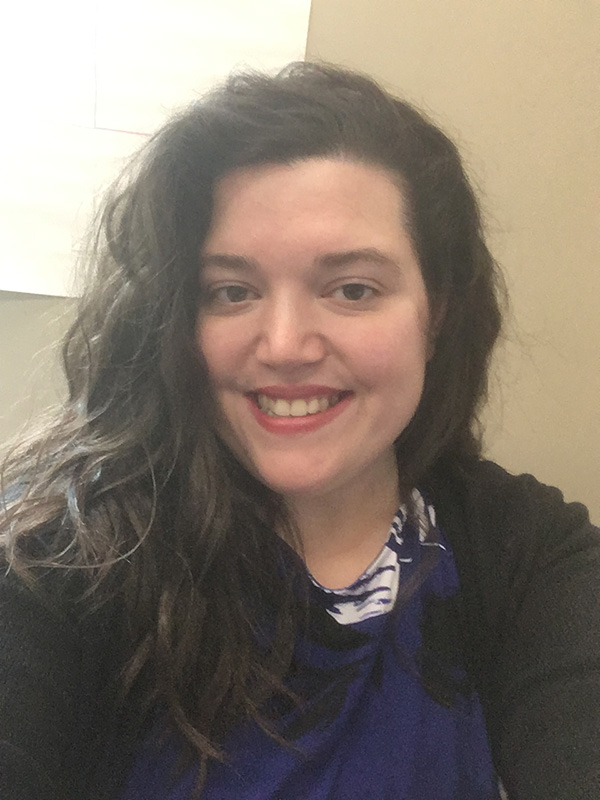
Jodi M. Webb writes from her home in the Pennsylvania mountains. She's also a blog tour manager for WOW-Women on Writing. In her mind she calls AI "Big Al". She isn't a fan of Big Al. Follow her writing and reading life at 
Words by Webb

Read More »

Interview with Bianca Jones, 2nd Place Winner in the WOW! Fall 2025 Flash Fiction Contest

Tuesday, April 28, 2026


Bianca Jones is a library assistant, developmental editor, and fiction writer represented by Leah Pierre of Ladderbird Literary Agency. She writes sweet young adult romance and dark, unsettling horror…and she would love to combine the two one day. You can find her on X (formerly Twitter) at BJOwrites. 


----------Interview by Renee Roberson 

WOW: Hello, Bianca, and welcome! I loved your winning story,  “A Forgiveness of Crows," which discusses a family curse and the ability to break the cycle of generational trauma. How did you first get the idea for this piece? 

Bianca: I’ve always admired crows for their gentleness, mischievous nature, and their extreme intelligence. Recently, I watched a blip of a video, maybe 45 seconds long, about crows’ ability to form relationships. Crows are familial creatures that have long memories and can hold grudges for up to 17 years! If you hurt one, you can end up catching a thwack on the head from its grandchild years later—they mean business. As an African-American in the South, connecting crows to Jim Crow came as easily as saying the word “crow” out loud. So, I started there, and the “family history” unfolded all on its own. I’m interested in exploring this idea in an extended format, maybe as a novelette, in the future! There’s a small detail of my narrator being a woman—a break in the cycle of sons that become fathers who are killed by the crow curse—that could have several meanings. Was it actually her tiny son’s kindness that broke the curse? Did the curse require a “male sacrifice” of sorts, and that’s why she was spared? Or was it something else entirely? I’m quite eager to know myself. 

WOW: I did not know that about crows! I can definitely see this being extended into a longer story. Have you published any flash fiction or short stories prior to this one? Where do you find your ideas? 

Bianca: I actually haven’t published any flash fiction before! I’m a novelist, and I’ve never considered myself strong at writing short fiction; I’m far too long-winded for that. In fact, I wrote “A Forgiveness of Crows” as a 2,200-word short story before I re-read the contest rules and realized I was supposed to be writing flash fiction, so I had to cut down this story quite a bit! It was a lovely challenge, though, and it’s made me more confident in my ability to write short fiction. My ideas come from odd tidbits and things I learn, or from inspiration in books that I read; working at a library gives me a lot of inspiration to work with all day long. 

WOW: You are represented by Ladderbird Literary Agency. Could you tell us more about your path to finding an agent and what books you have in the works? 

Bianca: I’m so proud to be represented by Ladderbird. I’ve been writing young adult contemporary fiction novels since college. Around big life events like marriage and children, I queried on-and-off for nearly twelve years before writing a story that centers around the lives and mental health struggles of Black and brown people; in particular, it’s a love story between two high school seniors, one Hispanic and one Black. I decided to, for the first time, query Black and brown literary agents. I found Ladderbird, read its bold, front-and-center mission statement on their website that says, “We have a passion for bringing marginalized voices to the forefront,” and I felt like I and my work would be supported and seen in a way that we hadn’t before. I reached out to Leah Pierre, and she loved my story as much as I do. It was very “right moment, right time,” but built upon years of writing, scrapping, writing again, and quite a few dozen rejection letters. Currently, we’re querying my YA mental health romance and a YA rom-com, and I’m also editing a YA paranormal novel with a touch of romance and a whole lot of spooky. We’re crossing all of our fingers that an editor will bite! 

WOW: Kudos to you for sticking with it! I know writing and querying for so many years is not for the faint of heart. It sounds like you found the perfect champion for your stories and I can't wait to see how your journey progresses. I noticed you work in a library (and I work part-time at an independent bookstore!) so I’m curious what genres you are seeing grow in popularity with your patrons. 

Bianca: I’ve worked in public libraries for 13 years, and I’ve seen so many genre trends come and go. Having one foot in the publishing world helps me see the trends before they even hit the library sometimes! Currently, the focus is less on genre and more on author and author read-alikes; aside from romantasy, which is still a major player in our circulation numbers, authors like Freida McFadden, Colleen Hoover, Kristin Hannah, and Taylor Jenkins-Reid always fly off the shelves. Any author who writes a lot of edgy intrigue is going to be a must-borrow. A touch of historical fiction usually makes a book even more coveted. And with books older and newer being turned into films left and right, I see renewed interest in stories that were popular ten or twenty years ago. Sometimes I get to see a classic, such as Wuthering Heights, start circulating more, and that’s really exciting! 

WOW: And don't you love recommending books to people looking for their next great read? I concur with all you said above. What is the last book you read and what was it about? 

Bianca: I read a cozy little book called Days at the Morisaki Bookshop by Satoshi Yagisawa. Takako, the 25-year-old main character, is broken up with in a painful and embarrassing way, and she gets locked in a mundane cycle of depression in her city apartment. She moves to the outskirts of Tokyo, into the tiny apartment above a bookshop owned by her eccentric uncle. Previously a non-reader, she becomes engrossed in the second-hand books as she organizes them and begins selling them alongside her uncle. Over the course of the few months she spends living above the Morisaki Bookshop, she learns about herself, love, and gains a new perspective on the importance of consistent, healthy relationships. Lately, I’ve been reading sweet, human-centered stories from Japanese and Korean authors, both as a way to gain insight into another culture and to read something different from my usual rotation of spooky, spicy, and non-fiction.

WOW: Those stories are very popular, and now I have to put Days at the Morisaki Bookshop on my list! I have also been wanting to check out Jesse Q. Sutanto, who's been writing in a variety of genres. Bianca, thank you again for being here today and please keep us posted on your publication news!

Read More »

Being Pyotr Ilyich by Chris Nielsen: Blog Tour & Giveaway

Monday, April 27, 2026
Being Pyotr Ilyich by Chris Nielsen

I'm excited to announce Chris Nielsen's blog tour for her book, Being Pyotr Ilyich: Tchaikovsky’s Inner Life, Revealed by Himself 130 Years Later. This book is perfect for seekers, creatives, and anyone who has ever sensed that their life, love, or suffering carries a deeper meaning beyond what can be explained by a single lifetime. Join us as we celebrate the launch of her book and interview with her about her writing journey. You'll also have the chance to win a copy for yourself.

Before we get to that, here's more about her book:

Being Pyotr Ilyich: Tchaikovsky’s Inner Life, Revealed by Himself 130 Years Later is a confessional spiritual memoir that explores the deeper meaning of human suffering, love, and creative purpose through the lens of soul memory.

Born from an extensive process of past-life and between-lives regression, the book recounts Chris Nielsen’s unexpected discovery of a former life as the composer Pyotr Ilyich Tchaikovsky—and the profound emotional wounds, unfinished lessons, and spiritual insights that followed her into this lifetime. Moving beyond biography, the book uses Tchaikovsky’s life as a case study to illuminate how trauma, grief, identity, and longing echo across incarnations.

Blending personal experience with therapeutic and spiritual reflection, Chris offers readers a rare glimpse into the mechanics of incarnation, life purpose, and healing from the perspective of the Higher Self. At its core, this book is not about the past—it is about understanding why we are here, how love shapes our evolution, and how deep inner clarity can transform pain into meaning.

This is a book for seekers, creatives, and anyone longing to understand the hidden threads that connect suffering, love, and the soul’s long journey home.

ISBN-10: ‎9730378851
ISBN-13: ‎978-9730378856
ASIN: B0BTZTG87W
Print length: 205 pages

Purchase a copy of Being Pyotr Ilyich: Tchaikovsky’s Inner Life, Revealed by Himself 130 Years Later on Amazon and Bookshop. Add it to your Goodreads Reading List.

About the Author, Chris Nielsen

Chris Nielsen

Chris Nielsen is a spiritual author, regression therapist, and podcaster exploring the deeper meaning of incarnation, healing, and soul evolution. She is the author of Being Pyotr Ilyich – Tchaikovsky’s Inner Life, Revealed by Himself 130 Years Later, a confessional spiritual memoir born from an extensive process of past-life regression. Through her writing and her podcast, Time Traveling – A Spiritual Journey of Healing, Chris examines themes of love, grief, soul memory, and the transformative power of human experience. With a background in arts communication and cultural marketing, she brings clarity and discernment to complex spiritual subjects. Her work has been featured in ABC, CBS, NBC, FOX, Business Insider, and the Miami Herald.

Find the author online at: https://chrisnielsenbooks.com

---- Interview by Nicole Pyles

WOW: Congrats on your book! What inspired Being Pyotr Ilyich – Tchaikovsky’s Inner Life Revealed by Himself 130 Years Later?

Chris: In November 2019, during a deeply personal journey of healing and self-discovery, I came face to face with my past life as Pyotr Ilyich Tchaikovsky. It was one of the most profound experiences of my life, and it changed not only the course of my healing, but also the way I came to understand myself and the
deeper meaning of our earthly existence.

This past incarnation defines my present life far more than any of my other previous lives. My career (in the artistic world), my family relationships, the blockages and fears I experienced before healing, and many other aspects of my life — even seemingly small details, from hobbies to literary preferences — all seem to find their explanation in my past existence as Pyotr Ilyich.

But most importantly, the deepest significance of this rediscovery lies in the continuity I recognised in my own personality, which feels, in many ways, like a natural extension of Tchaikovsky’s way of being.

WOW: How profound! What was your writing process like? Did you do a lot of planning and preparation in advance?

Chris: My book was born from more than twenty regression therapy sessions conducted over the course of a year and a half, amounting to nearly one hundred hours of trance work. The audio recordings made after each session were then transcribed almost word for word. In that sense, I believe my book was, in a very unusual and intimate way, more told than written.

In a world where AI tools increasingly risk making writing feel artificial, I feel that the way this book came into being preserves something deeply authentic: a direct connection between the soul of the author and the soul of the reader.

Because regression therapy naturally takes the form of a dialogue between therapist and patient, the therapist’s questions and some of the more technical passages — what one might call the “pure healing” dimension of the work — were removed from the final text. What remains is the essential material, presented on two levels: first, the story of Tchaikovsky’s life as seen from the most intimate angle possible; and second, the deeper answers I received from higher planes throughout my healing process.

Only light editorial intervention was made, mainly to remove repetition and allow the text to unfold withvgreater clarity and grace, since when you are under trance, you pay no attention to style. The events were also arranged in chronological order, because regression does not always reveal them that way.

So Being Pyotr Ilyich – Tchaikovsky’s Inner Life, Revealed by Himself 130 Years Later is a faithful transcription of those trance recordings — the closest possible equivalent to direct testimony — drawn from within Tchaikovsky’s life itself and from within the healing journey undergone by his spirit, and implicitly by my own. In a sense, reading this book is like listening to a live transmission from Tchaikovsky’s inner world and from my own dialogues with the Divine.

WOW:  What an incredible experience. What was your research process like?

Chris: Continuing from my previous answer, my research process involved delving into the history of my own spirit. Whether or not we are consciously aware of it, all our memories are stored somewhere in the subconscious mind, whether their source lies in our present life, early childhood, or even past lives. Some people access these memories more easily, through lived experience or intuition, while for others the veil of forgetfulness remains very firmly in place.

In my case, writing this book followed naturally from my healing process. Any regression therapy begins with a problem one wishes to heal in the present life — an emotional blockage, a relational issue, a limiting behavioral pattern, a phobia, recurring nightmares, unexplained pain, and so on.

I began with emotional blockages related to my profession, as well as aspects of my personal and family life. The thread led me to this past life, which I explored in order to understand what I had lived through. But in regression, seeing the story of a past life and its key moments is only half of the process. The second half — and the essential one — is the healing itself. It is not enough to understand what you experienced; even more important is understanding why you experienced it. 

That is where the release of blocked emotions begins: saying what could not be said at the time, meeting spiritual guides, the Higher Self, or the Divine, and receiving insight into the meaning of those experiences and their connection to the life one is living now.

So my research process meant following the flow of my own healing. Over the course of more than ten years, I have worked through more than thirty past lives. What I did differently in the case of my life as Tchaikovsky was that, after completing the sessions necessary for my own healing, I continued with a few additional sessions for research purposes. There were certain scenes, not essential to my healing, in which I felt the need to clarify details, relationships, or circumstances in order to offer my readers the most accurate story possible.

WOW:  I find that so interesting. I see you host a podcast! Did that experience inspire your book or guide your process in any way?

Chris:  I think it would be more accurate to say that things happened in exactly the opposite order: my book Being Pyotr Ilyich inspired the creation of my podcast Time Traveling – A Spiritual Journey of Healing, and not the other way around.

I felt that many readers wanted me to go further into the process of past-life regression, so I decided to offer something more to those who were open to understanding what lies behind the architecture of our lives. That is how the podcast was born. I literally took my book in my hands and asked myself, page by page: what might readers want to understand more deeply? Where could I offer more detail, more context, or more concrete examples from my experience, both as a patient and as a therapist?

That is how more than fifty weekly episodes came into being. I have always tried to make everything I share simple and concrete, so that anyone — whether familiar with psychology, alternative healing, or spirituality or not — can easily follow what I am talking about.

The podcast explores the deeper architecture of the soul through past-life regression, karmic memory, and emotional healing across lifetimes. I speak about existential questions such as the purpose of earthly life, how emotional wounds are formed and carried forward, what happens between incarnations, and how relationships, illness, creativity, and destiny reflect a much longer journey of the soul. I also touch on themes such as the inner child, fear of abandonment, karma, soul contracts, family patterns, psychogenealogy, life mission, depression, trauma, self-love, the Higher Self, the relationship between the soul and the Divine, and the link between blocked emotions and physical illness.

Drawing on more than a decade of personal regression experience, therapeutic training, and the spiritual revelations that inspired Being Pyotr Ilyich, the podcast moves beyond abstract spirituality into lived inner experience. Although it includes intimate insights connected to the soul journey portrayed in the book, its message is universal: it offers listeners a bridge between regression therapy, emotional healing, and everyday human transformation.

WOW: That's amazing! How did you come to learn about past life regression, and how did this wisdom shape your writing?

Chris: Today, when I look back on the last fifteen years of my life, I feel with all my heart that my steps were guided, one by one, from Above, building a path of which I was completely unaware while I was living it.

And I believe this is true for all of us: we live with a sense of spontaneity, yet we are constantly assisted and guided along a path shaped by what each of us has chosen to live, feel, and experience in this existence. 

So I discovered past lives almost by chance — through a simple footnote, which only shows how much even an apparently insignificant detail can reveal. My husband had borrowed from his aunt a well-known spiritual book called The Intelligence of Matter, written by the Romanian doctor and author Dumitru Constantin Dulcan. In one footnote, he mentioned two American authors known for their books on past lives: Brian Weiss and Sandra Ann Taylor.

I was immediately fascinated and inexplicably drawn to the subject, although I knew nothing about it before. The following weekend, I rushed to a bookshop, bought the books, and read them almost in one breath, feeling instantly convinced of the truth of what I was reading, even though those ideas were completely foreign to my upbringing. I am an Orthodox Christian and was born into a fairly conservative world. But I have always been open-minded, and when something feels true to me, I am willing to follow it.

At the same time, because of several health issues that had been troubling me for years, I began seeing a therapist and master of alternative Asian medicine. He first worked with me as a therapist and later as a teacher, and he explained that my problems originated in past lives, encouraging me to explore further.

Then came a remarkable series of synchronicities. A co-worker of my husband’s turned out to be the only therapist in Central Europe trained at the Newton Institute in the United States, and with her I had my first two trance sessions, which deeply fascinated me and convinced me of the reality of other planes. Later, almost unbelievably by chance, I discovered the courses offered by the Academy of Past Life Regression in the UK, founded by the well-known author and therapist Andy Tomlinson. I became a student there and graduated after about three years of training.

What I find essential is that I do not come from a family or culture in which people believe in past lives — quite the opposite. And I am a very analytical and rational person. So the first sceptic of my own
experiences was myself. But that is precisely what gives depth to everything I have lived: I was
convinced by direct, concrete experience, not by theory alone. Today, I feel deeply the truth of
something the Asian world has taught for thousands of years, and that many of us in the West are only
now beginning to rediscover.

WOW: How profound! What do you hope people gain from reading this book?

Chris: What prompted me to write this book were the truths shared with me in trance by the Divine as part of my healing process. I would come out of trance deeply moved by the revelations I received — about how a life mission is born, how the script of a life is constructed, how one life connects to another, how a spirit evolves, what our relationship with the Divine is, how the subtle planes are organised, and how emotions shape the physical body and even influence illness.

As I write in the introduction, I felt an inner need — almost like a fire — to share all of this, as though it were a sacred duty. At a certain point, it seemed unfair to keep only for myself revelations that had been so generously offered to me.

After all, our lives are not nearly as different as they appear. We all go through similar wounds, losses, fears, and questions. So if my experience can help others understand their lives more deeply and perhaps heal, then I feel the effort was worth it.

I hope readers will come away with the sense that existence has meaning, that nothing is random or without purpose, no matter how painful certain experiences may seem. I hope they will understand that we are always assisted from the subtle planes — by guides, angels, or however each person chooses to understand that reality — and that we are deeply loved by the One who created us, regardless of religion or spiritual language.

Finally, as I say in the book’s introduction, I hope this book brings more love and light into each reader’s life, and that after turning the final page, they may live more consciously, keeping close only what truly matters and what truly defines them. In other words, I believe in living as authentically as possible — or, as my mentor used to say, in “living in truth”.

I would also be happy if this book encouraged people to become more open-minded and flexible in the way they see the world. If we truly understood that across many lives we may have carried different races, religions, and national identities, perhaps many of the divisions we take so seriously today would begin to dissolve.

WOW: That would be wonderful! What are you working on now that you can tell us?

Chris: Right now, in addition to continuing to develop my book Being Pyotr Ilyich and my podcast Time Traveling – A Spiritual Journey of Healing, I am preparing two new podcast projects.

The first is YOU ARE ENERGY – Awaken Your Healing Force, which will be a more practical podcast drawing on my thirteen-plus years of experience working with energy as a Reiki therapist. The second is NEXT LEVEL HUMAN – Elevate Your Consciousness, through which I hope to encourage people to live more purely, at a higher vibration, with more light, more love, and more authenticity, while questioning what is superficial in their lives and reconnecting with what is essential.

I believe the second podcast may be the first one I release, and I warmly invite readers to follow my YouTube channel to stay up to date with everything I am sharing.

WOW: How exciting! What advice would you share with readers who feel they have a story to tell but don't know if it's worth writing?

Chris: As I often tell my nearly ten-year-old child, every meaningful journey in life is difficult, takes time, and  asks a great deal of us.

So I would say this: do not begin unless the need to write truly burns within you, because otherwise you may not have enough fuel to continue. But if you feel a clear and powerful inner call to share something, then keep going no matter what — beyond fear, beyond doubt, and beyond the opinions of others. We all have a purpose, and each of us has our own path. So I believe we should make the most of every moment of every life. More than anything, I would love to see people support one another more generously.

I was recently deeply moved by the work of a younger French author, Benjamin Carraud, whose book Goodbye, Fields of Prokhorovka: Past Life Memories of a Waffen-SS Officer I reviewed with great admiration, although we have never met. I felt moved to support him simply because the sincerity and quality of his work touched me. In the same spirit, my own book was generously endorsed by Daniel Meurois, a major French author in the spiritual field.

I am sorry that the world is often so divided. I believe that if we supported one another more, the path would become not only easier, but also far more beautiful. Too often, egos still stand in the way.

WOW: So true! Thank you so much for joining me today. Enjoy the blog tour!


Being Pyotr Ilyich by Chris Nielsen Blog Tour

--- Blog Tour Calendar

April 27 @ The Muffin
Join us at the Muffin as we celebrate the launch of Being Pyotr Ilyich: Tchaikovsky’s Inner Life, Revealed by Himself 130 Years Later by Chris Nielsen. We interview the author and give you a chance to win a copy of the book.

April 28 @ CC King's blog
Stop by CC King's blog for a spotlight Being Pyotr Ilyich by Chris Nielsen.

April 29 @ What Is That Book About?
Michelle features Being Pyotr Ilyich in a spotlight.

May 4 @ Tracey Lampley's blog
Join Tracey for a spotlight on Chris Neilsen's Being Pyotr Ilyich.

May 7 @ A Wonderful World of Words
Stop by Joy's blog for a spotlight on Chris Neilsen's Being Pyotr Ilyich.

May 10 @ A Storybook World
Join Deirdra's blog for a spotlight on Chris Neilsen's Being Pyotr Ilyich.

May 14 @ Words by Webb
Stop by Jodi's blog for her response to our tour-themed prompt about what forgiveness means to her now, compared to earlier in life.

May 15 @ Speaking of Spirit
Visit Linda's blog for her response to our tour-themed prompt on her experience with a connection that felt ancient, familiar, or inexplicably deep.

May 16 @ Boots, Shoes, and Fashion
Join Linda's blog for her interview with author Chris Nielsen about Being Pyotr Ilyich.

May 18 @ Sarandipity's Blog
Stop by Sara's blog for an excerpt from Chris Nielsen's Being Pyotr Ilyich.

May 20 @ Create Write Now
Join Mari's blog for a spotlight on Chris Neilsen's Being Pyotr Ilyich.

May 21 @ The Faerie Review
Stop by Lily's blog for a spotlight of Chris Nielsen's Being Pyotr Ilyich.

May 23 @ Word Magic
Join Fiona's blog for an excerpt from Chris Nielsen's Being Pyotr Ilyich.

May 25 @ Chapter Break
Visit Julie's blog for a spotlight on Chris Neilsen's Being Pyotr Ilyich.

May 27 @ Nikki's Book and Movie Reviews
Stop by Nikki's blog for a review of Being Pyotr Ilyich.

***** BOOK GIVEAWAY *****

Enter the Gleam form for a chance to win a copy of Being Pyotr Ilyich: Tchaikovsky’s Inner Life, Revealed by Himself 130 Years Later by Chris Nielsen! The giveaway ends May 10th at 11:59 pm CT. We will randomly choose a winner the next day. Good luck!

Being Pyotr Ilyich Giveaway
Read More »

A Little Help From My Friends

Thursday, April 23, 2026


Photo by Pexels

I’ve been feeling a little down in the dumps about my writing lately. After years of working on various novel-length projects, I finally had requests from agents. Then, the rejections came pouring in once they read through the book. I’ve had a few beta readers go over the manuscript, and it needs work, but I can’t bring myself to begin the edits. I’ve written a novel about a true crime podcaster who shares survival stories whose sister disappeared from a summer camp. Last week I picked up a book by Tiffany Crum that's been receiving a lot of buzz called This Story Might Save Your Life. Guess what it’s about? Two true crime podcasters who host a survival podcast until one of them goes missing. Well, darn. (I read the novel, and while it’s not the same as mine past the podcast premise, I still worry it’s going to appear I copied the concept if I ever send out the manuscript again). It made me think that maybe I’m not cut out to write mysteries, because I struggle with planting all the clues efficiently when I write. 

I produce a weekly true crime podcast where I do all the research and write the scripts. While it has grown organically in the past five years to have almost 9,000 followers on one podcast platform, it still doesn’t receive enough downloads to earn money. Essentially, I’m paying to produce my own podcast, and last week, someone was kind enough to drop a nasty one-star review in the feed. Among other things, this anonymous keyboard warrior said, “Do a little research on how to produce a good quality show before actually doing it.” 

Then, today, a glimmer of hope, from a WOW! classroom instructor and judge. Last month, I’d told her about an essay I wanted to write. In 2023, I was the victim of financial fraud and lost more than $3,000. My bank refused to refund the money until I enlisted the help of a local consumer affairs reporter. The day I received the cash back into my bank account was the same day I learned my biological father had passed away. Estranged for many years, I hadn’t even known he was ill. I ended up using some of the refund to quietly help pay for his funeral. 

The first draft of the essay flowed out of me in 24 hours. I had the instructor look over it, and we had a call today. She lifted my spirits, pleasantly surprised that I could have written a solid first draft in less than a month, and gave me some wonderful tips for revising the next draft. I began to think that maybe my writing isn’t so hopeless after all. Then I thought back to all the times my writing friends (most of whom I’ve met right here at WOW!) have helped me with essays, short stories, contest and market suggestions, and reading drafts of my novels. In fact, if it hadn’t been for these writing friends, I wouldn’t have placed in Writer’s Digest competitions for nonfiction and fiction or had my work published in literary journals. They’ve even cheered along my podcasting journey from the very beginning. 

I can’t write in a vacuum, and none of us should. Sometimes all it takes is a few words of encouragement to make us realize our worth. I came away from today’s call with a renewed enthusiasm and suggestions on how to improve a few other essays I’ve drafted in the past few years. 

And maybe, just maybe, a little more belief in myself.

Renee Roberson is an award-winning writer and host/creator of the podcast, Missing in the Carolinas. Learn more about her work at FinishedPages.com.
Read More »

Mother Tongue - Interview with Linda Petrucelli (and Join our Reader Review Event)

Wednesday, April 22, 2026


Travel across the world today with author Linda Petrucelli and her memoir Mother Tongue: A Memoir of Taiwan. Enjoy today's author interview and a sneak peek at a memoir of her time as a clergyperson in Taiwan in the 1980s.


For more information about reviewing this book contact jodiwebb9@gmail.com or sign up at 


 About the Book


Standing by the window, I tried to understand what happened to me to take such an unfathomable leap… What I hadn’t realized was that first, my one and only assignment would be to learn the language.”


In 1984, when Linda Petrucelli arrives in Taiwan with her husband Gary Hoff, she assumes she will learn Mandarin Chinese. Instead, her local church partner, the Presbyterian Church in Taiwan, assigns her to learn Taiwanese, an eight-toned ancient tongue that few Westerners ever attempt. What began as a daunting assignment turns into a transformative journey of faith, identity, and resilience. Set during the world’s longest period of martial law, Mother Tongue offers candid insight into Taiwan’s nonviolent struggle toward democracy, the political power of language, and the universal search for belonging. In her odyssey to communicate in the island’s mother tongue, Linda learns the political implications of language, insight into her own ethnic identity, and the value of finding humor in her mistakes.


Publisher: Koehler Books

ISBN-13:   979-8897471195

ASIN:   B0GNCKK6QV

Print length: 178 pages

Genre: Memoir


We're also inviting readers to participate in our Reader Review event. You can sign up by emailing: jodiwebb9@gmail.com and she will get you a copy of the book! You don't need to be a blogger to join in on this event; anyone who can leave a review on Goodreads and Amazon can participate and receive an ebook copy of Mother TongueBy leaving a review, you'll also be entered in a drawing to win a $25 Amazon Gift Card!


Mother Tongue: A Memoir of Taiwan is available in print and as an ebook at Amazon, BooksaMillion and Barnes & Noble. Add it to your Goodreads list.


About the Author

Linda Petrucelli’s creative nonfiction essays have earned Pushcart Prize and Best of the Net nominations, and her fiction accolades include first place in the Women on Writing Fall 2018 Flash Fiction Contest. An ordained minister in the United Church of Christ, Linda holds degrees from Yale Divinity School and Chicago Theological Seminary. For ten years, she served as a missionary in
Taiwan, becoming fluent in the Taiwanese language. Her wide-ranging ministerial service includes work as a humanitarian relief executive in New York City and pastorates in Iowa, Illinois, Indiana, Pennsylvania, and on the Big Island of Hawaii. She now resides in Hawi, Hawaii, with her artist husband, Gary Hoff, and writes on the lanai of their tin-roofed rancher overlooking the
ʼAlenuihāhā Channel.

Connect with the author


Website: http://lindapetrucelli.com

Facebook: https://www.facebook.com/LindaSPetrucelli/

IG: @linda.petrucelli


--Interview by Jodi M. Webb


WOW: Tell us a little about how you began writing.


Linda: I’ve kept a journal much of my life as a way to sort through my feelings, but writing played a significant role in my professional life, too. I've been an ordained minister and for much of my career each week I wrote a flash CNF essay, aka “a sermon,” and delivered it live before a congregation. From time to time during my ministerial years, I published nonfiction articles that leaned toward journalism, including one about capital punishment in Taiwan that appeared in The Christian Century. 


After I retired, I finally had the time to dedicate myself to the craft of writing and to enjoy a consistent practice. I started by taking online classes, many of them WOW! offerings, joined our local writer’s guild, and began reading lit mags and memoirs. My first efforts were short form prose—flash fiction and personal essays.


WOW: So how did you go from flash fiction to a memoir focused on your time in Taiwan?

Linda: Current events got me thinking. How, in my opinion, Taiwan and the US had reversed roles over the last several decades. I am concerned about what I see as authoritarian tendencies infiltrating our national life. Book banning; disruption in transferring power; curbs to freedom of expression. These were the tactics of Taiwan’s one-party dictatorship in the 80s when I lived there. How ironic, I thought, that Taiwan has made incredible strides toward democracy in the shadow of China, slowly overcoming its authoritarian history, while my own country has moved in the opposite direction. I wanted to tell my story against the backdrop of Taiwan’s resistance and resilience as a hopeful reminder that courageous individuals can change oppressive systems.

WOW: It's amazing to see our current world through the lens of your experiences decades ago. How did you write Mother Tongue? Did you have journals or other written works
to draw from or was it all from your memory?

Linda: I had made several attempts at writing a memoir but I never finished any of them. Finally admitting that I was a “Plotter” not a “Pantser,” I drafted a three-act structure using a list of detailed scenes. The outline periodically shifted and rearranged itself but it helped me when I felt lost or overwhelmed trying to get the story down. I committed to 500 words a day for four months. The first draft was pretty awful but not beyond saving and I went on to edit the manuscript over a period of nearly two years. I actually wrote the last chapter first, in hopes that the preceding chapters would move toward and culminate in that final scene.

For background material, since it happened so long ago, I utilized journals and letters I had written to my father. I also was lucky to have my husband Gary who was with me in Taiwan as a sounding board. His recollections were indispensable, as well as the extensive photo collection we had assembled. Towards the end of the second draft, I contacted some of my Taiwanese colleagues with a few questions. I even got some information I didn’t expect… After I messaged Lim Bi-iong, one of the Taiwanese women who appear in my book, she sent me declassified government surveillance records on my activity at the Fishermen’s Service Center where I had worked!

WOW: You write about the difficulty of learning to speak Taiwanese. Was it difficult to capture the sound of the Taiwanese language in your writing?

Linda: That is a super insightful question, Jodi!

Of course, I used the romanization system I had learned to show the language I was speaking, but to evoke the sound is another thing altogether. As a writer, I think sound is one of the more challenging senses to describe. So, I got a lot of practice writing this  book! 

During my research, I discovered a journal written back when I was studying Taiwanese where I wrote about “laughing in eight tones.” This memory inspired the scene where I am practicing saying “HA” using eight different intonations. Later in the scene, where I am practicing saying MA, you’ll find my favorite line in the book:

“Eighth tone: MA (high and stopped). I forced a soprano glottal stop and squeaked. It was the same tone of my surname in Taiwanese. Not the gently modulated “Bai” of Mandarin, but mousespeak. Peh!”

WOW: I often find that the memoirs I read change my outlook on life. What do you hope readers will take away from Mother Tongue?

Linda: Life and learning are better with laughter!

WOW: Isn't everything! What’s up next for your writing career?

Linda: I continue to take online classes and keep practicing, word by word. I participated in 
Novnov last year and wrote a 50K-word cozy mystery in a month. This kind of writer’s marathon had been an item on my literary bucket list for a while. I’d like to see, with a few months of hindsight now, what I might do with that “vomit draft.” I’m hoping to explore chapbooks, too. Maybe compose several short-short collections around the theme of ‘belonging’ and my spiritual experiences with nature in Hawaii.

WOW: You sound super busy with so many different possibilities. Personally, I would love to read about the connections you've made during your time in Hawaii.


Join the Reader Review Event


Readers, if you'd like to receive a copy of Mother Tongue by Linda Petrucelli for review, please email jodiwebb9@gmail.com or signup at https://forms.gle/LhLatdbbS8i6cuBT9 . Book reviews need to be posted by  on Goodreads (required) and one other bookseller online site. We'll be sharing all the reviews in a Reader Review Event and Giveaway post here on The Muffin on June 15! In addition to receiving the book, you'll also be entered to win a $25 Amazon Gift Card!
Read More »

Interview with Rose Brown: Fall 2025 Flash Fiction First Place Winner

Tuesday, April 21, 2026
Rose is an ICU nurse who was raised in Hawaii and now lives in Georgia with her husband, toddler, and cat. She took up writing in 2025 and has been published in Elegant Literature, was a 2025 ACFW Crown Award finalist, and is shortlisted for a current Uncharted magazine flash contest. She is working on her debut novel, a Southern folk horror–drama.

--interview by Marcia Peterson

WOW: Congratulations on winning first place in our Fall 2025 Flash Fiction competition! What inspired you to write your story, “Sack of Bones?” It’s a powerful piece, and I loved everything about your writing style.

Rose: Thank you so much! I'm honored (and shocked) that I won. I actually wrote it last year during my lunch break at work. I'm not sure why this specific family member came to mind while I ate some crappy hospital cafeteria Salisbury steak, but he did. He died years ago, and his funeral, the eulogy, everything felt like it was for a stranger. The only ones I found myself grieving for (and confused by) were his still-living victims, who seemed genuinely lost and torn up over his death when I thought they'd finally feel free.

I'm much older now (was nineteen then) and understand how incredibly complicated abuse is, and how victims can be left with many mixed emotions. Basically, parts of the story (like the setting, since I grew up in Hawaii) were changed, but it was inspired by a very real moment of struggling to grieve someone who had caused a lot of pain in my family.

WOW: In your bio, you say that you “took up writing in 2025.” You’re already having success with publications and awards. Did you have an interest in writing and make any attempts at it previously?

Rose:  My twenties were busy with college, nursing, getting married and moving across the country (my husband is in the Air Force). Long hours at the hospital exhausted me so much that I didn't have energy to pursue much outside of that, especially something that can be as difficult as writing.

But things changed after having my daughter. I worked much less to stay home with her, and finally had time to breathe. One day I came across a Reedsy ad for a writing contest, tried it out, and soon started winning. I had no idea how much writing short stories could help me de-stress (and help pay for groceries!).

WOW: What advice would you give to someone wanting to try writing flash fiction for the first time?

Rose:  One of my goals for this year has been to read much more, specifically flash fic and short stories. Spending more time reading than writing has actually strengthened my writing way more than I expected! I wish I prioritized it much sooner!

WOW: You’re also currently working on your first novel. Can you tell us anything about it, and what your novel writing journey has been like so far?

Rose:  Last year I completed my first try at a novel, a thriller, then trashed it. I hated it! My writing style and preferences have changed so much in just a year, and I had to start over. So since late last year I've been working on a southern mystery. The south, especially Appalachia, has fascinated me since moving here, so my story incorporates a lot of Appalachian folk-lore and spiritual themes. I'm only on chapter seven, and have a lot going on this year (a baby due this summer, deployed husband, and possibly moving to Japan), but I'm hoping through all of the craziness I can still work on it!

WOW: My, you have a lot going on, and we wish the best for you and your family with all of these things!  Thanks so much for chatting with us today, Rose. Before you go, can you share a favorite writing tip or piece of advice?

Rose:  It's funny how the stories I think are my best and most polished don't place. The ones I almost don't submit to contests because they feel so raw and unedited almost always do well. So, don't write to sound good, or like someone else, or to win. Just write a story you can't not write, one that speaks deeply to you.

***
Read More »

Moving to My Dog's Hometown by Betsy Vereckey: Podcast Tour & Giveaway

Monday, April 20, 2026
 
Moving to My Dog's Hometown by Betsy Vereckey

We are so excited to announce the launch of Betsy Vereckey's podcast tour. Podcasters will be talking with her about her newly released memoir, Moving to My Dog's Hometown. You'll have a chance to read more about the author in our interview and enter to win a copy of the book for yourself. 

Before we get to that, here's more about the book:

Betsy Vereckey was thirty-seven and newly divorced when she rerouted her life from New York City to a tiny town in New Hampshire she knew virtually nothing about . . . except that it was her dog’s hometown. A lot of people switch up their lives after a divorce, but only a dog lover would drive a rental car north with just a duffel bag and a Glen of Imaal terrier named Ronan in the backseat.

While Betsy’s decision to move to Hanover was motivated by a desperate need for change—along with the fact that Mercury was no longer in retrograde and she’d been offered a “garden” apartment she could almost afford—sometimes challenging circumstances and a cosmic hunch lead you right where you’re meant to be.

From the author of the essays “How my dog helped me find love again” (Newsweek) and “This recipe is the best thing I got from my divorce” (Washington Post) comes a relatable, funny and inspiring memoir for anyone feeling stuck in life. As Betsy discovers in writing these stories, taking a leap of faith to find your personal authenticity isn’t wrong—it’s the key to happiness.

Purchase a copy of Moving to My Dog's Hometown on Amazon, Barnes and Noble, and Bookshop.org. You can also add it to your GoodReads reading list.

About the Author, Betsy Vereckey


Betsy Vereckey is a journalist, memoirist and astrologer who lives in Vermont with three very opinionated terriers in an old farmhouse. Her debut memoir, Moving to My Dog’s Hometown, is about an impulsive decision she made in her mid-30s to move to Hanover, New Hampshire, a town she knew nothing about--except that it was the town where she and her ex-husband adopted their dog Ronan. The book was published in January by Rootstock Publishing, a small press based in Montpelier, Vermont. It is a Kirkus-recommended pick, and the Vermont Weekly Seven Days called the book “a feel-good story with some bite.

Betsy started her career as a 24-year-old reporter writing for the Associated Press in Athens, Greece. Her personal essays have appeared in the highly competitive New York Times’ Modern Love column, The Boston Globe, Food & Wine, The Washington Post, and New York Magazine. Her Modern Love column was chosen by comedian/actress Abbi Jacobson to read on the NYT Modern Love podcast. 

Betsy is the daughter of a Hungarian immigrant, has been a vegetarian since she was 7 years old, and grew up near Youngstown, Ohio, home of the best pizza you’ll ever have. She is an avid birder and volunteers at the Center for Wild Bird Rehabilitation at the Vermont Institute of Natural Science. 

Betsy is also a practicing astrologer and has written numerous essays on astrology, including one for The LA Times about what it was like to do her mother’s chart, decades after she died. You can find her on Substack as Moonlight in Vermont.

Find her online at:


--- Interview by Nicole Pyles

WOW: Congrats on your memoir, Moving to My Dog's Hometown. There's so much I love about your memoir. Can you tell us why you decided to write a memoir about your experience?

Betsy: I was 36 and going through a divorce when I started working on this memoir, a time when many of my friends were settling down and having babies. Writing was my therapy (and cheaper than seeing a therapist)! I wasn’t sure that anything would make sense in my life again. I was working in a dead-end job writing insurance copy for a marketing agency and throwing all my money into my Brooklyn apartment, which was infested with mice. They were everywhere—even in my oven. Well, you know how the saying goes—bad for real life but amazing story material. If I didn’t find the humor in it, I probably would have gone crazy.

I decided to move to Hanover, New Hampshire, a college town that I knew nothing about, except that it was where my now ex-husband and I had adopted our dog Ronan. I moved in with an older retired couple who were suffering from empty nest syndrome, and they became my surrogate parents. We had the best time playing “Jeopardy!” I had only expected to live in New England for six months or so until I moved on to something better, but it's been almost 10 years, and I’m still here and loving it. So, I think my memoir is an exploration of how and why this random decision ended up working out for me.  

WOW: What a scenario! I love how that turned out for you. And you basically lived out a daydream of mine, and that is moving to a random city to start a new life. What gave you the courage to take such a drastic step in changing your life?

Betsy: I had no other options? I’m kidding, but I think there’s actually something to that! If one thing had worked out for me (a date, a job, an apartment), I’d probably still be living in New York City. When everything goes to hell, you really have no choice but to start over. Also, when you change one thing, it becomes a lot easier to keep on taking chances. Once I quit my job, it wasn’t long until I left the city. I really had nothing to lose, and I was tired of sleeping with one eye open to fend off the mice. Plus, I had big dreams of having my own washer and dryer. 

WOW: Ha! I think there is a LOT of truth to that statement. This is certainly not your first rodeo in terms of writing. But what was different writing a memoir in comparison to other types of writing you've done?

Betsy: I workshopped my memoir with a wonderful editor named Joni Cole at the Writer’s Center of White River Junction in Vermont. I met with a writers’ group every Thursday night. It was collaborative and creative, and far less solitary than how I used to work. I think I will always be in a writers’ group from now on. I find that it helps me pull a draft together much faster. 

I also felt like I had more freedom on the page when working on my memoir (hello, swear words!) than if I were writing a personal essay that would appear in a newspaper. I feel like people always say this, and I never believed them until I experienced it myself, but the best part of writing a memoir was actually writing it. In addition to divorce, there were other setbacks in my life I was desperate to make sense of—my mother’s death, for example—and writing a memoir helped me find some peace. 

WOW: Memoir writing can be absolutely healing. As you look back, what lessons would you have wanted yourself to know, whether it's a life lesson or a writing lesson?

Betsy: Sometimes, you can’t think your way out of things; you just have to act. I think I hesitated to leave New York because I was paralyzed that I would make another wrong decision, but you actually can’t move on if you’re just sitting around doing nothing. I think the same lesson applies to writing. More often than not, you can’t write the story in your head. You have to handwrite in a journal and put some words on the page and get out of your own way so that your subconscious can take over.  

WOW: Great advice! What would you say to authors who aren't sure their lived experiences are "memoir worthy"?

Betsy: Great question. I wrote an entire book about living in a stranger’s house, so I bet your lived experience is a lot more exciting than mine! Any story that completely transforms you is worth putting on the page. I have found that some of the best stories are in the mundaneness of everyday life. By going smaller, you can actually go bigger. Often, it’s not the story itself that matters; it’s how you tell it. 

WOW: I completely agree. Where do you like to write? Any photos you can share?

Betsy: Sometimes, I’ll go to King Arthur Bakery, which is right down the street, but usually, I write at home. My husband and I live in an old farmhouse, and my office is in a small one-room building next to the house that used to be the former owner’s carpentry studio. 


His family buried his freaking ashes under the floorboards after he died, so I like to think he’s my spirit guide. I have three Glen of Imaal terriers who never fail to steal all the good spots on the furniture, so I’m normally at my desk, which is right in front of a big window. 


Sometimes, I’ll see an owl or a hawk. Once, I saw an otter, but I’d love to see a bear or a moose walk past one of these days. A girl can dream. 

WOW: How fun! You have great writing company. Thank you so much for joining us today.

--- Podcast Features

Creative Conversations with Roger Humphrey


Beach Chair Chats

Who We Become

One Starfish with Angela Bradford

The Written World

Teatime with Miss Liz

Moving to My Dog's Hometown Giveaway

***** BOOK GIVEAWAY *****

Enter the Gleam form for a chance to win a copy of the memoir Moving to My Dog's Hometown by Betsy Vereckey! The giveaway ends May 3rd at 11:59 pm CT. We will randomly choose a winner the next day. Good luck!

Moving to My Dog's Hometown Giveaway
Read More »

Interview with Bethany Bruno, Runner Up in the Q1 Creative Nonfiction Essay Contest with “Half of What I Hear”

Saturday, April 18, 2026
Congratulations to Bethany Bruno from Huntsville, Alabama 
for her amazing nonfiction essay titled: Half of What I Hear 

 Check out Bethany’s submission, 
Half of What I Hear as well as all the other winning entries 
and then stop back here to read Bethany’s engaging interview with 
Crystal J. Casavant-Otto from WOW! Women on Writing. 

 
Bethany’s Bio: 
Bethany Bruno is a Floridian author and amateur historian. She holds a BA in English from Flagler College and an MA from the University of North Florida. Her work has appeared in more than a hundred literary journals and magazines, including The Sun, McSweeney’s, River Teeth’s Beautiful Things, Brevity, and The Huffington Post. A Best of the Net nominee, she won 2025 flash fiction contests from Inscape Journal and Blue Earth Review. She is the winner of the 2026 Saturday Evening Post Great American Fiction Contest. Learn more at www.bethanybrunowriter.com. 

WOW: Thank you Bethany for being with me today and sharing so intimately with the WOW! Readership. Keep up the great work and I look forward to working more with you in the future! 

What is the take-away you’d like readers to gain from Half of What I Hear? 

Bethany: For a long time, I treated my hearing loss as something to overcome. Instead, it taught me how to listen differently. I learned to pay attention to pauses, expressions, and what goes unsaid. Silence shaped how I move through the world and how I parent my daughters. I hope readers leave thinking differently about connection, and noticing how much meaning lives in quiet spaces. 

WOW: Bethany - that is such a beautiful explanation for those of us who can only imagine the silence. As someone who is often overwhelmed with an overabundance of noise I can’t really imagine it, but I try… I find myself searching for somewhere quiet when I need to study or write. That makes me wonder, if it’s different for you. Where do you write? What does your space look like? Where did you write your winning piece? 

Bethany: I write wherever I can find a little quiet. On telework days, that means writing at home while the house is empty. Most nights, it happens after my kids are asleep. Time is always the hardest part, so I’ve learned to write in short bursts and take what I can get. 

I actually wrote No Swimming at Monson’s, the piece that won the Great American Fiction Contest, in my husband’s computer lab at work. During the summer, the university is nearly silent, and I loved slipping into that empty space to focus. 

At home, I write at a large wooden desk I bought when we first moved to Alabama. I keep it mostly clear, partly by choice and partly because my toddler loves to grab anything within reach. I do keep a Far Side rip-away calendar on one corner, which feels like just the right amount of chaos. 

WOW: The computer lab sounds dreamy - but I feel like my children might find me as they just love those screens! What’s next for you? What are your writing goals for 2026 and beyond? 

Bethany: Over the past year, I’ve made a real shift toward writing more consistently. For a long time, I only produced a few pieces a year, which limited where and how often I could submit. Writing more changed everything. It opened doors I once thought were closed. 

In the last year alone, I’ve had work accepted by places I’d been submitting to for more than a decade, including McSweeney’s, The Huffington Post, and River Teeth’s Beautiful Things. I started submitting seriously in 2011, right after college, knowing this was the life I wanted. Those acceptances felt like quiet confirmation that persistence matters. 

Looking ahead, my goals are simple but big. I want to keep writing, keep submitting, and keep aiming higher. I’m also starting a new book. I’ve written two books in the past three years and queried widely without landing an agent, which has been humbling. Still, that goal hasn’t changed. I want to build a sustainable writing life. A Pushcart nomination is high on my list, not just as an honor but as a sign that the work is reaching beyond me. 

WOW: You have an impressive bio. What’s one strange story about yourself that may surprise us? 

Bethany: I’ve had a lot of interesting jobs, from English teacher to National Park Ranger to records manager for the Army. But one of the strangest experiences came when I was an undergraduate at Flagler College in St. Augustine, where I worked as a ghost tour guide. 

For two years, I dressed in full nineteenth-century mourning clothes and played a grieving Spanish widow, hoop skirt and all. In the summer, it was brutal. I used to joke that I was slowly roasting as I walked people through the city. 

One night, while leading a group of Girl Scouts, I stopped in front of the gates of the Tolomato Cemetery. As I was telling a story, several of the girls started pointing into the cemetery and whispering. One of them finally said, very calmly, “There’s a little boy in the tree.” 

What unsettled me was that there’s a well-known local story about a young boy buried there whose spirit is said to appear playing in a tree nearby. I’ve always wondered if they knew the story or if they truly saw something I couldn’t. I never saw anything myself, but that moment has stayed with me. 

WOW: Well if that isn’t the most surprising job I’ve ever heard of! Thank you for the photos - what fun! 

Who is your support? What sustains you in writing and in life? 

Bethany: Support has always been a complicated idea for me as a writer. The people in my life are kind and encouraging, but most aren’t deeply connected to what literary work means or how long the road can be. When something gets published, they’re happy for me, but the scale of it often lands differently. 

My husband supports me in the way that matters most. He knows writing makes me happy, and he believes in the part of me that needs to keep doing it, even when the process is slow and quiet. What I’ve learned is that writing requires a certain self-reliance. You do it because you want the work to exist. In the end, you become your own support system, and your own reason for continuing. 


WOW!: Bethany - next time we chat I want to know more about being my own support system and my own reason for continuing… If only we had more time. 

 Thank you for sharing so much about yourself and your life - you’re amazing and I’m so thankful for our time together!


Today's post was penned by Crystal J. Casavant-Otto 


Crystal Casavant writes. 

 Everything...

If you follow her blog you have likely laid eyes on every thought she has ever had as well as most of the recipes she's tried. She's a lot and she's not for everyone.

Her debut novel, It Was Never About Me, Was It? is still a work in progress and shall be fully worthy sometime in 2026...or maybe 2027. She has written for WOW! Women on Writing, Bring on Lemons, and has been featured in several magazines and ezines relating to credit and collections as well as religious collections for confessional Lutherans. She runs a busy household full of intelligent, recalcitrant, and delightful humans who give her breath and keep her heart beating day after day. 

Crystal wears many hats (and not just the one in this photo) including college student, mom, musician, singer, administrator, writer, teacher, and friend. She fully believes in being in the moment and doing everything she can to improve the lives of those around her! The world may never know her name, but she prays that because of her, someone may smile a little brighter. She prides herself on doing nice things - yes, even for strangers! 


 Check out the latest Contests: www.wow-womenonwriting.com/contest.php

Read More »
Powered by Blogger.
Back to Top