Showing posts with label Creativity. Show all posts

I'm Not Sleeping, I'm Writing

Thursday, July 30, 2026


Like everyone out there, I have some days where I'm on the go from the minute the alarm goes off in the morning until I fall into bed at night (often with plenty of things remaining on my to-do list). On those days, actual writing seems like an impossible task. So I resort to thinking and planning scenes as I fall asleep. I began noticing that I would wake up with a fully evolved description or bit of dialogue rattling around in my brain just waiting for me to type it into my laptop. Sometimes these impatient pieces of writing would even wake me up before the alarm buzzes.


Weird, right?


Maybe not. When I looked into creativity after sleep I learned that scientists have been studying the link between sleep and creativity for years. Seems Thomas Edison was a big believer in the power of that state just before falling asleep for helping come up with creative solutions. And who can argue with Thomas Edison?


Researchers at MIT and Harvard Medical School recently took the link between sleep and creativity a step further. They encouraged people to guide their dreams to a certain topic or theme and then write something on that topic when they awake. When study participants practiced "targeted dream incubation" - basically thinking about a specific topic or problem while falling asleep - they were judged to be 43% more creative than those who didn't attempt to guide their dreams. And it doesn't have to be a whole night's sleep. It works just as effectively (some scientists say more effective) with naps of 45 minutes.


Are we all just one good nap away from banishing writer's block forever?


Do you find solutions to writing problems when you awake from a good night's sleep? What else gives you a creative burst? 


Jodi M. Webb writes (and occasionally naps) from her home in the Pennsylvania mountains about everything from apple pie to consignment shops to travel. She's dreaming about murder for her latest WIP. She's also a blog tour manager for WOW-Women on Writing. Follow her writing (and reading) life at Words by Webb

Read More »

A Funny Thing Happened After Yoga

Thursday, August 01, 2024


                7:00 – Get up and make bed (Thanks mom for ingraining that in me!)

                7:15 – Treadmill 

                7:45 – Yoga

                8:15 – Shower

                8:45 – Work until I get hungry or frustrated


That’s my morning schedule. The treadmill and yoga are recent additions after my daughter invited me to do yoga at a local lavender farm. I had to brush up on my yoga positions so I didn’t make a complete fool of myself. (I did almost fall into the lavender at one point but overall, I did OK.) But a funny thing started happened after my daily yoga…


More days than not, I find the last two things on my list switched. After the final Namaste, I am suddenly gripped with an idea/re-write/phrase that I have to capture. There is no starting my day staring at a blank screen…waiting. Words are eager to pour out of me. I find myself at my desk in yoga pants, typing furiously, worried that taking time for a shower will allow the words to slip away.


In the beginning, this was a puzzling experience for me. As a newbie yogi, I have to focus on the instructions of the incredibly flexible instructor on my screen as well as try not to fall over. It isn’t as if I have time to mull over obstacles in my writing and come up with solutions. So where are these idea bursts coming from?


Yep, from the exercise. So, if your doctor harping on you to be less sedentary wasn’t enough, I’m here to tell you that several studies have shown a link between increased activity and creativity. Researchers at Austria’s University of Graz point to increased blood flow and endorphins that encourage original and abstract thoughts. Normally, I would be rolling my eyes at this point but I’ve experienced it in my life. 


It isn’t just me! Novelist Claire Cook regularly writes about her daily walks. She wrote 24 novels so far. Coincidence? Some heavy hitters like Steve Jobs, Mark Zuckerberg, Ernest Hemingway, Friedrich Nietzsche, Philip Roth and Henry David Thoreau all credit regular exercise with increased creativity in their own lives. So grab your sneakers, boxing gloves, bicycle, yoga mat, pickleball racket – whatever it is that gets your heart rate up and see if it gives you a creativity burst also.


Don’t exercise to decrease your waistline; exercise to increase your word count.


Read More »

5 Ways Short Story Writing Has Boosted My Productivity

Thursday, July 06, 2023

By Linnea Gradin
 
For many aspiring authors, finishing and publishing their first novel is their ultimate goal. Completing it promises an immense sense of accomplishment, but the road there is often long and arduous, so it’s easy to get stuck on the way. Add to that the pressure of putting everything you want to say into a single story, and the fear of the blank page can start to hinder your writing progress.
 
It’s for this reason (and many others) that I’m a huge proponent of the short story. Below, I’ve outlined five ways this shorter format can help you beat procrastination and become a more effective writer — both in terms of skill and routine.
 

1. Building a consistent writing habit

 
When it comes to writing, simply getting words down on paper on a regular basis is an invaluable skill in and of itself. The length of a short story feels more attainable, allowing you to actually get started.
 
Frequent calls for submissions are another way in which short stories can help you create a consistent writing habit. With novels, it’s easy to push things indefinitely, especially as the sheer size of the undertaking looms large. With short stories, you’re facing a smaller task and you’ll often have monthly or quarterly submissions — such as WoW’s flash fiction and essay contests, or even weekly short story competitions like Reedsy Prompts — to stay on top of. When you have some places to submit to regularly, it becomes much easier to establish part-way goals and keep up with a consistent writing routine.
 

2. Exploring your creativity and experimenting

 
The short story format also comes with the exciting possibility of exploring multiple avenues of interest. Unlike novels where you commit to a single idea over a longer period of time, each story you write can tackle something new, giving you the freedom to experiment with wilder ideas. If it doesn’t pay off, there’s always the next story.
 
If you’re someone who’s driven by curiosity, this is a great way to build positive associations to the writing process. When you allow yourself to follow where your curiosity leads and tell all the different stories floating around in your mind, you get a chance to push your own limits. And as you experiment with genres — from literary fiction and fantasy to horror and romance — and play with the format, writing consistently becomes significantly easier.
 

3. Completing arcs and finishing projects

 
There’s also a lot to be said for the feeling you get when you actually finish something. With short stories, you get to experience the dopamine release much more often. Of course, with novels, there’s the promise of delayed gratification to keep you going, but with shorter pieces, the finish line seems that much closer. Before you know it, you can’t wait for the next time you get to sit down and write just to experience the heady feeling of accomplishment again.
 

4. Honing your writing skills

 
The creative process is subjective, and writing a short story isn’t necessarily easier than writing a novel just because it’s shorter. The challenge of the short story lies in the fact that you’re forced to tell a complete story within a limited word count. You can’t spend pages and pages on world building or character development, so every word needs to be chosen with purpose and care. Forcing yourself to kill your darlings until you’ve boiled your writing down to something sharp and (hopefully) insightful will inevitably make you a more intentional writer.
 

5. Overcoming perfectionism and fear of rejection

 
Lastly, one of the wonderful things about short story writing is that there are so many ways to get your work published, whether in online magazines or print journals. Unlike the process for pitching your book, short stories can usually be submitted directly.
 
Of course, with more frequent submissions you also stand a greater chance of facing rejection. But it’s a little bit like ripping the band-aid off. It always stings a little, but after a while you start to develop thicker skin and can even start to learn from it. You were rejected but the world didn’t end, and perhaps you even got a couple acceptances, building up your platform in case you end up querying literary agents down the line. With less pressure on yourself to deliver a perfect first draft, you’ll find that it becomes easier to write without worrying about any writing flaws.
 
*
 
As you get more writing miles under your belt, perhaps that longer piece will start to feel more approachable. Whichever format you choose, just remember to let curiosity lead the way and you’ll find yourself longing to get back into the writer’s chair.
 
***
 
Linnea Gradin

Linnea Gradin is a writer for Reedsy — a digital marketplace connecting authors with the industry’s best publishing professionals and providing answers and information on all things writing and publishing related, from how to find a ghostwriter to how to make an audiobook.
Read More »

Phrases to Use as Writing Prompts (from an Unlikely Source)

Thursday, October 20, 2022
If you’re looking for a writing prompt to spark some new output, here’s an exercise to try. Inspired by doing newspaper blackout poetry, which I wrote about here, it involves isolating words and phrases from a newspaper or magazine article. You can then use them to trigger some writing.

Recently, I was doing this with the sports section of our paper (there seem to be good phrases there). I circled “Not really, Kyle” because that’s my husband’s name, so it made me chuckle. The article was referring to Kyle Shanahan, the head coach of the San Francisco 49ers, in case you were wondering.

Here are some of the sentence fragments I circled from a few issues. Any of these could be used as a writing spark:

Nagging questions                         This season

Unless, of course                           A good chance

What to expect                              Most striking aspect

At least one                                   Appeared

Played a key role                          Has morphed into

The possibility                              Probably too early

Right now                                     Last week

But there remain                           The right mentality

Anything could happen                Going to develop

A decent idea                                But it’s fair to wonder about           

Combined with                             One of them just happened to be

Always have                                 Still time

Find a way                                    Most of the concern is about                       

Best of today’s                              Surprised  

What appears to be a                    It’s not a sure thing that

An encouraging sign                    Sadness because

On a regular basis                        Always going to appreciate that

Not unlike                                    It’s shortcomings were spotlighted

Peek back a layer                         Reason for optimism


So what do you do with this list? You could pick one randomly, or one that seems to be calling out to you.

You could pick one but turn it into a full sentence of some sort, then use that as your prompt.

You could combine two of the fragments (or three) to make a prompt.

From there, you could do a timed freewrite, start an essay or a flash fiction piece, or create a poem. Maybe something will come of this effort, or maybe it will just be fun. You will get your creativity going, and that’s always a good thing.

-Marcia Peterson
Read More »

Friday Speak Out!: Jump Start Your Creativity With a Pre-Writing Routine

Friday, September 02, 2022
By Kelly L. Stone

Time to write is sparse, so you need to sit down and get going quickly. Even if you only have 15 or 20 minutes to get words on the page, springing into a creative state of mind is as simple as one-two-three when you establish a pre-writing routine.

A routine, or doing the same tasks in the same order before you sit down and write, establishes a habit and engages the subconscious mind; you can train your brain to shift into an alpha mode just by creating a routine. It helps you make the transition from day-to-day life (work, kids, chores) to your creative project quickly and easily.

The use of a pre-writing routine is a common tool among successful authors. For instance, Ernest Hemingway is said to have sharpened 12 pencils before he looked at his work-in-progress.

Pre-Writing Routine Examples


Use some of these ideas to create your own pre-writing routine. The key here is to limit it to three tasks, do it the same way every day, and take no more than 20 minutes to complete:

1. Get Your Work Space Ready: Make your tea, organize your research materials, check your e-mail (and then close your browser!), gather all your writing materials, put on your writing music, shut the door to your office and sit down to write!

2. Meditate: Relaxation and creativity go hand in hand. Set aside a few minutes before you write to do some deep breathing and meditation (exercise also works).

3. Light Candles: Pick a few scents you enjoy and fire them up!

4. Journal: Get your internal editor out of the way first.

5. Write With Your Eyes Closed: This is a trick bestselling author CJ Lyons recommends, especially if you feel blocked. Sit at your computer and write with your eyes closed until your mind loosens up.

6. Re-read the Previous Day's Work: Review what you wrote the day before to regain focus on the work at hand and stimulate the creative process. Some writers call this "getting back into the story." (You can also try another Hemingway trick: stop writing in the middle of a sentence so that you have a jumping off point the next day.)

A pre-writing routine focuses your mind and helps you gain access quickly and easily to your subconscious creativity. Just remember: no more than three tasks, do it the same way every time, and take no more than 20 minutes to complete it.

***

Kelly L Stone (http://authorkellylstone.com/) is the author of the TIME TO WRITE series: TIME TO WRITE (Adams Media), THINKING WRITE: The Secret to Freeing Your Creative Mind (Adams Media) and LIVING WRITE: The Secret to Inviting Your Craft Into Your Daily Life (Adams Media). Her work has appeared in Chicken Soup for the Soul and Cup of Comfort anthologies, as well as Family Circle magazine, Writer’s Digest, Cat Fancy, and others. She has spoken at conferences around the country on how to achieve writing success, and helps other writers through classes, coaching, and one-on-one consultation capitalize on the the power of the subconscious mind for maximum creativity and results.


~~~~~~~~~~~~~~~~~~~~~~~~~~~~~~~~~~~~~~~~~~~~
Would you like to participate in Friday "Speak Out!"? Email your short posts (under 500 words) about women and writing to: marcia[at]wow-womenonwriting[dot]com for consideration. We look forward to hearing from you!
~~~~~~~~~~~~~~~~~~~~~~~~~~~~~~~~~~~~~~~~~~~~
Read More »

Try This: Newspaper Blackout

Monday, February 07, 2022
I admit to holding on to the ridiculous belief that engaging in playful, no-destination creative activities are “wasting time.” But when I do let myself work on creative projects, it ends up feeling like time well spent. There is always a payoff, whether it’s inspiration to create more things, a therapeutic benefit or just having fun.

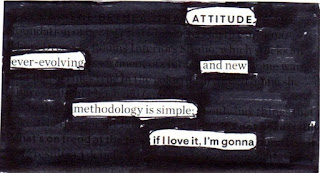
I’ve recently been revisiting Austin Kleon's books, and decided to try some newspaper blackout poetry. If you’re not familiar with this, you choose a section of a newspaper article (though I tend to prefer a magazine piece), and use a marker to cover everything except the words you want to remain shown. It’s an enjoyable creative exercise that can result in interesting outcomes.


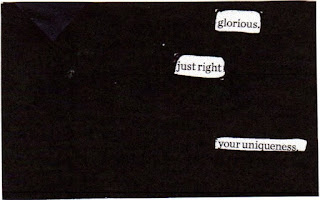
I’m sharing two very simple and short ones I made last week, as examples. These are more on the personal/inspirational side, though blackout poetry can be whatever you want.


The three-word one could apply to a number of things, but to me it felt like a hopeful message about my potential contributions to the writing world, which I sometimes doubt. So, doing this type of redacted poetry can be just for yourself, about anything you want.

Newspaper blackouts are just one of the types of exercises that I do in my journal, with others that are equally satisfying. Maybe you’d like to give this or something else new a try. It will be worth it.

-Marcia Peterson
Read More »

Friday Speak Out!: There Is No Such Thing as Time, There Are Only Cycles and Seasons

Friday, March 26, 2021

by Deirdra Eden

The first step to controlling time is to realize that the concept of time, as we have been taught, is only a mortal construct. It is the attempt by humans to exert a measure of control over the natural world and calculate the intangible flow of cycles and seasons. 

However, this method painfully disconnects creators from natural energy cycles in order to conform to the eight-hour work shifts and deadlines of corporate and industrial productivity. Creative people don’t always work within finite mathematical boundaries.

Just like the earth, creativity also goes through seasons. Spring has fertile newness with exciting potential. Summer is the height of growth. Autumn is harvest time. And winter allows you to rest and gain strength again.

Spring

Creative cycles can be born through weeks of preparation or instantly when an idea strikes or you wake up from an inspiring dream.

This young creative idea is fresh, new, and exciting. Even though the creative project is in the fragile beginning stages, the creator feels a drive to enhance it and help it blossom into a full-grown creation that will produce beauty and/or bounty.


Summer


During this peak time, creators do their best work. You do not feel the panic or doubt of developing a newborn idea. You are often absorbed in the work and can experience adrenaline rushes and extra energy that will drive you to stay up late, get up early, skip meals, and take time off from other activities to work on the project. Sometimes you will have euphoric thoughts about the project and its success.

Autumn

A creator in the autumn phase of their cycle will often refine work and take time to critique it while at the same time admiring it. This is the best time to refine the work because creators can step back from the work and look at it with a critical eye without interrupting the creative flow. Then creators reap their own harvest and rewards by publishing the creation, displaying it, sharing it, selling it, or gifting it.

Winter


A natural end to a creative period is normal, yet sometimes creators will feel guilty for not working on a project or they may miss the excitement of a new project. Sometimes creativity is dormant, especially during times of stress, depression, fatigue, or illness. Sometimes creativity evolves.

Some people call this writer’s block or artist’s slum, but it is part of the natural cycle of creativity and should be embraced.

For creative people this is the time to prepare for the next project. Generally, the better the preparation, the longer the next creative lifecycle will last.

The Natural Cycle

We enter these same seasons and cycles in different phases and contexts throughout our lives and our creative journeys. Asking the question, “What season am I/is this in?” can bring a reassuring clarity to a convoluted situation.

In every phase it is important to remember that this is just a season of your life, and not your whole entire life. Give yourself grace and permission to slow down or pick up the pace depending on what is happening in your world right now and the season of your personal and creative life.


* * *
Deirdra Eden is a social and behavioral scientist and the author of Time Management for Creative People, in which she explores the seasons, cycles, and how to be in the right mind for right-brain creators. 

Website: www.DeirdraEden.com
Facebook: https://www.facebook.com/DeirdraEdenWatchers/
Instagram: https://www.instagram.com/deirdraeden/

~~~~~~~~~~~~~~~~~~~~~~~~~~~~~~~~~~~~~~~~~~~~
Would you like to participate in Friday "Speak Out!"? Email your short posts (under 500 words) about women and writing to: marcia[at]wow-womenonwriting[dot]com for consideration. We look forward to hearing from you!
~~~~~~~~~~~~~~~~~~~~~~~~~~~~~~~~~~~~~~~~~~~~
Read More »

Friday Speak Out!: Dear Writer Friends

Friday, January 22, 2021
by Deirdra Eden

The modern world works on billable hours, clocks watched, and the mantra, “Produce, produce, produce.” Even among other creatives there is a massive emphasis on getting more done, not to mention the competition. The pressure can kill creativity, damper the joy in your work, and knock you off balance. 

You might find yourself somewhere between totally overwhelmed at the prospect of managing your time or you’ve tried and failed so often you are ready to give up. 

It’s because you are a creator! You see the world in terms of expression and potential. You dream the impossible. You have exactly what it takes to make life functional, balanced, and beautiful all at the same time. 

Having a creative spirit requires discipline. Creators like to let their ingenuity run wild and free. A dog can be a friend, a protector, and companion. But just like creativity, if not disciplined, the dog can go feral and then turn on its master. Once creativity is tamed, this energy can be harnessed, focused, controlled, commanded, and become a powerful ability for the creator who can masterfully control their artistic energy. 

What kind of creative energy method (or combination of) are you? 

Zig-Zagging  


Zig-Zagging energy is great for brainstorming, seeing the applications of available resources, recognizing opportunities, and fueling enthusiasm for new projects. However, the struggle comes with actually completing tasks.

Obsessing 

Obsessive Focus Energy gets things done! It is the arrow shot from the archer’s bow: one target, one path, one destination. No distraction! No deviation! 

When Obsessive energy ebbs, as all energetic cycles will, the creator is left in befuddlement, wondering where everyone has gone. They may realize that they have broken promises, missed opportunities, or simply strained their own capacities too far.

Evading 

The Evading creator would like to write a book. They have lots of notebooks at home, but they need a fresh notebook. They may redesign their entire office, and then say, “I can put my mind to my work, but only when the dishes are done”.

Evading Focus Energy is about preparation. The wonderful thing about Evasive creators is that they generally control their flow of creative output and balance. They are great team members because they will never let the group run off half-cocked in excitement about the latest endeavor. They have prepared for every contingency and once the ball gets rolling, it can roll much farther.

We cannot change the outcomes of our lives if we don’t change our understanding of creation, time, and ourselves. You can channel your desire to create into the powerful motivating force it is meant to be.

* * *
Deirdra Eden is a social and behavioral scientist and the author of Time Management for Creative People, in which she explores the seasons, cycles, and how to be in the right mind for right-brain creators.
~~~~~~~~~~~~~~~~~~~~~~~~~~~~~~~~~~~~~~~~~~~~
Would you like to participate in Friday "Speak Out!"? Email your short posts (under 500 words) about women and writing to: marcia[at]wow-womenonwriting[dot]com for consideration. We look forward to hearing from you!
~~~~~~~~~~~~~~~~~~~~~~~~~~~~~~~~~~~~~~~~~~~~
Read More »

Protect Your Precious Creativity Time

Saturday, March 09, 2019
Recently, I've been thinking about how to make some changes in my life to lead me where I want to be in my career and how I want to be as a parent--or really, looking at the big picture: what I want my entire life to look like. One of the things I feel on pretty much a daily basis is OVERWHELM. I feel like there's so much to do at my day job, with my editing business, as a parent, in my house, with my friends and boyfriend, and I want to do it all--well, okay, there are a few things I don't want to do like clean the toilet, but I have to--and I constantly go around complaining about how I'm overwhelmed. My ever-growing to-do and idea lists never seem to shrink.

The one thing that I can do, and that I've done successfully two days out of five this past week, is protect my work time. If I don't want to be crazy, stressed out, tired mom, then I need to work while my daughter is at school and after-school care. Sure, this is also a great time to go out to lunch, to get grocery shopping done, to chat with friends, to take phone calls from my parents, etc etc. But I started to notice that on those days when I had scheduled some "non-work" tasks, I was usually crabby and more stressed out; I even felt bad about myself and my failure to accomplish my goals.

I would sit around in the evening and ask myself: what is wrong with me? Will I ever make progress? How come I can't finish anything? Does everybody else work this long? But if I really looked at my day and all the time I spent doing things other than working, the answer was pretty clear.

I wasn't staying focused. I'm easily distracted by bright, shiny objects. I"m not working when I should be, and this is the reason why sometimes I'm finishing projects at 4:30 am in the morning or after the deadline, not reaching my goals, and feeling stuck.

This week I said ENOUGH. I wrote a list of my priorities on a piece of white paper and used a blue Sharpie marker (man, I love those things) and stuck that list in my underwear drawer. Why there? Well, I'll look at it every day when I get new underwear out (or at least I should! I try not to have typical "work-from-home" hygiene habits, wink, wink), but the priority list's not hanging out for the world to see--I don't want anyone arguing with me about my priorities--that is private.

Now, before I say yes to something, I'm thinking: Is this a priority OR does this get in the way of  a priority? (I have only been doing this for 2 days, so I'm no expert yet.) Before I answer a message during work hours or schedule an appointment, I ask myself if it fits with this change I'm making in my life. If the answer is yes, then I do it. If the answer is no, then I'm saying no--I'm protecting my work time. I am saying yes to my priorities.

It's an absolute myth that we can do it all and do it well. Yes, we can do it all if we do it half-way and look like a stressed-out, exhausted version of ourselves.

Whatever your creativity time is--whether it's two hours in the morning, four hours at night, or all day, protect that time. And then, know when you need a break--because that's important, too. But that's another blog post for another day, or you can watch The Shining and see how all work and no play worked out for Jack Nicholson's character.

Protect your precious creativity time like a toddler protecting her favorite stuffed animal from the grubby hands of other toddlers! How do you do it?

Margo L. Dill is a single mom, writer, editor, and teacher, living in St. Louis, MO. Her day job is as an editorial assistant for Farm Journal, and her other jobs are working her own business, Editor 911, and helping out at WOW! as much as she can! If you want to take a class with Margo, check that out here. To learn more about her, go to her website here

Read More »

Writing Wishes For You (And a Farewell)

Wednesday, December 26, 2018
In five days we delve into 2019. This year has been filled with ups and downs for me, and I’m sure, dear readers, for you as well. The reality is that everyone has losses and wins in life. We’d be naive to think otherwise.

This is my last post for Women on Writing for a while. I’m taking a break to focus on other writing endeavors. I’ll be back - I enjoy blogging too much to leave forever. In the meantime, however, I leave you with writing wishes as you enter into the New Year.

I wish you creativity. May you be blessed with new ideas, with fresh characters, and with original settings. May your plot take exciting and unexpected turns. May your protagonist surprise you and make choices you never anticipated. May your villains be more cunning than you ever imagined.

I wish you tenacity. May you finish your first draft with a renewed sense of purpose. May you tackle your editing with a fresh mind. May you find every error. May you have the foresight to anticipate plot inconsistencies. May you find the perfect way to word your favorite scene, and may you be your own thesaurus, avoiding repetition with dexterity.

I wish you success. May your creativity and tenacity produce an amazing manuscript. May you find the right beta readers which lead to finding the right editor. May your pitch on Twitter be successful enough to land yourself the perfect agent. May HarperCollins fall in love with your book and may you make it on the New York Times Best Sellers List.

But most of all, I wish you joy. Joy in your ideas. Joy in your execution. Joy in your writing.

May 2019 be your best writing year yet. I'll miss sharing my ideas with you in the upcoming months, but I know this blog will continue to offer you wisdom, laughter, inspiration, and insight.


Bethany Masone Harar is an author, teacher, and blogger, who does her best to turn reluctant readers into voracious, book-reading nerds. Check out her blog here and her website here.


Read More »

Friday Speak Out!: The Knitting Together of Creative Passions

Friday, September 21, 2018
by Barbara Stark-Nemon

Abbie Rose Stone, the main character in my forthcoming novel, Hard Cider, is a serious knitter. She knits to express her creativity. She knits to spend contemplative time sorting out her life. She knits in the companionship of other women who share her interest. Two different knit shops provide prominent settings in the book. What starts as a minor plot element in Hard Cider, ends up becoming more important throughout the novel. Knitting and writing have a creative connect for me.

Full disclosure— my personal creative time is spent not only in the written word, but also in various fiber arts- knitting, sewing, quilting, and embroidery. And so I imbue my characters with interest in these arts. In Hard Cider, the kinship among women who love to knit leads Abbie to connect with another character long before she understands the shocking reality that will connect them forever. Feeling that kinship to other fiber artists lends an important authenticity to this part of the story and a counterpoint to other plot threads.

And then there is the metaphor of the knitting… the stitching together. To me, the relatedness of fashioning a garment bears a strong creative resemblance to the writing process. It is most helpful to have a sense of where the project is going. Choosing a pattern, finding yarn and colors that work with the desired end product have their objective correlative in choosing a genre, a story structure, finding the right narrative voice, and developing characters. In both knitting and writing projects, there will be unanticipated changes as the piece emerges, discouraging mistakes, “ripping out,” and occasional wishes to abandon the project altogether. There are constant choices as to how perfect the project has to be, and worries as to how it will be received by the desired recipients. Most of all, each of these arts pulls something elemental, something important from inside me as a creative person and allows me to share the results with others— to give something of myself that I have made. The thrill is similar.

I consider myself first and foremost a writer when it comes to my own definition of “what I do.” But I deeply value my creative experience as a fiber artist. When I come across fiber art themes or even just a character who knits in a novel, I’m immediately drawn closer to that character or plot thread. I will never forget the sinister knitting scene at the beginning of Charles Dickens’ A Tale of Two Cities. It still makes me shudder to imagine the stitches marking each guillotine execution. More akin to my own experience, in Kate Jacobs’ Friday Night Knitting Club, and Debbie Macomber’s The Shop on Blossom Street, the authors demonstrate the richness of women supporting each other through their gathering to create with their hands, regardless of the chaos going on elsewhere in their lives. I look forward to providing that little extra enjoyment to readers of Hard Cider.

* * *
BARBARA STARK-NEMON is the author of the award-winning first novel, Even in Darkness. She lives, writes, cycles, swims, does fiber art, and gardens in Ann Arbor and Northport, Michigan. After earning her undergraduate degree in English Literature and Art History and a Masters in Speech-language Pathology from the University of Michigan, Barbara enjoyed a teaching and clinical career working with deaf children. Barbara writes novels, short stories, and essays. Visit her online http://www.barbarastarknemon.com/.
~~~~~~~~~~~~~~~~~~~~~~~~~~~~~~~~~~~~~~~~~~~~
Would you like to participate in Friday "Speak Out!"? Email your short posts (under 500 words) about women and writing to: marcia[at]wow-womenonwriting[dot]com for consideration. We look forward to hearing from you!
~~~~~~~~~~~~~~~~~~~~~~~~~~~~~~~~~~~~~~~~~~~~
Read More »

Creativity: Remember to Have Fun

Tuesday, March 06, 2018
Whether you write part time after your day job or writing is your day job, remember that creating something new should be fun. I’m reminded of that on a regular basis when I log into Twitter. One of the creators types I follow there is Debbie Ridpath Ohi. She is both an illustrator and an author as you can see in Where Are My Books.

Debbie tweets on a regular basis about the importance of merging fun and creativity. And she’s discovered a much more fun way to do this than simply typing a tweet. Check out the fun doodles she creates and posts in these two galleries - Found Objects and Broken Crayons. Debbie’s sense of fun and her commitment to play come through in these pieces and in her other illustrations as well.

Not an illustrator? That’s okay. This year I’m keeping a bulleted journal. I’m not going to claim that this journal holds pages and pages of hand written text. Mostly they are bulleted lists along with various found objects. It may not be your standard journal, but I am still journaling. I started in January so that’s at least 6 weeks longer than I’ve ever managed to journal before.


In my bulleted journal, I’ve experimented with pages and layouts. Some are purely utilitarian. I record what I need to on these pages but . . . really? They’re just blah. I don’t feel particularly inspired.

While I’m not an illustrator, I do like color and I like to play with fonts. So I’ve been doing that on my weekly to do list. Yes, these pages take a lot longer to set up but it is well worth the effort because I really do feel more creative.

Last but not least, it is also a lot of fun to be around other creative people. That was the inspiration behind Wool Gathering, my husband’s name for craft night at our house. I let friends know the date and time and everyone brings a dish to share and something they are working on.

One woman scrapbooks and alters books. We have several knitters who also crochet. There are people who bead, quilt and also paint. And, if you don’t feel like working on your current work-in-progress, coloring is always an option. Everyone left the first gathering discussing what they planned to bring to the next. Not only was it fun but the scrap-booker gave me a photo to work into a story.

Don’t let your creative time become all work. Engage in play. Get together with other creators. Laugh.

Wool Gathering. Word Crafting. The Spinning of Tales. It doesn’t matter what you call it. Just remember to play.

--SueBE

To find out more about Sue Bradford Edwards' writing, visit her blog, One Writer's Journey.  Sue is also the instructor for Writing Nonfiction for Children and Young Adults. The next session begins March 12th, 2018.
Read More »

Don't Forget To Thank Creativity

Thursday, November 23, 2017
You read a lot of posts about being thankful at this time of year. You will often see a long list of the typical items: family, shelter, food, health, financial security, and so on. It's good to be grateful for the blessings we have and to look at life with an optimistic and grateful attitude.

Have you ever been thankful for your creativity? 

I feel like we should take a moment today and be thankful for our imaginations, for the gift that we have been given to use our right brains and make fantasies come alive whether its with words or paintings or music.

My creative one
I am thankful that I see my gift of creativity coming alive in my daughter. At 7, she has a notebook, where she writes lyrics to original songs. She has made several stapled books full of words and illustrations. She pretends to be characters from her favorite shows. I can often overhear her talking to her "YouTube Channel Fans" on her made-up Katie channel. Sometimes she even ends that creative play with, "Don't forget to leave a comment below on how you liked our video."

Because I am thankful for creativity, because I am a writer, because creativity is important and celebrated in our house, she is carrying on the tradition. I suppose I am responsible for molding another creative mind, and I couldn't be more thankful for this opportunity!

I am also thankful for the outlet my creativity provides for me to work through the tough times, to express myself through humor, to share what is important to me with the world.

So this Thanksgiving, while you fill your belly with turkey and stuffing and you give prayers of thanks for your many blessings, don't forget to also thank the powers that be for your gift of creativity and your freedom to express it. I certainly will be, and I might just be doing that on Katie's pretend YouTube channel, where I will ask her viewers to leave a comment below on what they are thankful for this year or how their creativity helps them. 

Margo L. Dill is a writer, editor, teacher, and mother living in St. Louis, MO. Don't let your creativity and progress on your novel stop during the holiday season. Consider taking her WOW! novel writing course, where you will be turning in sections of your novel every Friday for critique. Next class starts December 1. Sign up here.
Read More »

Fight the good fight

Tuesday, November 21, 2017
We've all heard stories about editors who "passed" on manuscripts that became best sellers. We wonder how they could have been so blind. We think we would never make such a terrible mistake. But to be honest, when faced with the unfamiliar, it's easy for anyone to "pass."

We may rationalize anything that doesn't make sense with a critical response. "It can't be me, so it must be you." However, the ones who persevere through negative responses are the true artists, those not swayed by others.

Artists and leaders are unique in that they offer their vision to the world with every word, melody, product, or system they create. Writers also are on the forefront of change. We may have a new or unique vision, and the critics may not be ready.

My advice is to be kind to the critics. Give them time to catch up to you. They may not know you, and may not be ready for what you have to say. There is no right time for creativity, and it may strike you in an unlikely place in an unlikely way. You need to be ready to defend your work, and explain or rewrite it in a way that makes it more relatable, and hopefully, marketable.

Critics also have not had time to keep up with the information in your head. Your idea may have been percolating for a long time, but most of it is beneath the surface inside your brain, like an iceberg. You've seen the part sticking out of the water and the huge foundation underneath, because you built it. But others may come upon it like the Titanic approached that other fateful iceberg. They weren't expecting it, and may need a time to figure out what's happening. Give them a minute to catch up. Help them readjust their thinking.

Fighting the good fight to get your ideas out in the world can take many different forms, like a book you've been writing for months, or the perfect essay that has been rewritten 15 times with help from your writer's group. It also may take the form of conquering rejections by sending out a manuscript immediately to someone else.

Artists consider rejection a challenge that comes with a decision. The choice is yours. Listen to the critics and take what you need, or ignore them altogether. You have to decide. It's your view, and that view may be different from every other view in the world, but it's up to you to defend, explain, or rewrite.

So fight the good fight, however you see fit.

And have a Happy Thanksgiving.

Mary Horner's short story Shirley and the Apricot Tree appeared in the latest edition of Kansas City Voices. She teaches communications at St. Louis and St. Charles Community Colleges.
Read More »

The Third Place

Thursday, May 25, 2017
“We shape our buildings, and afterwards our buildings shape us.”
— Winston Churchill


Earlier this evening I sent an email to an editor about the ending of my story slated for fall publication in Kansas City Voices (yay!). She had suggested developing an ending that ties together the beginning, which is a great idea, but I'm having trouble coming up with a way to do that. Without thinking, I told her I would go to Starbucks for a change of scenery and work there to get the creative juices flowing. After I wrote that, I wondered if it's really true, do I have better ideas when I write in a different place?

Last night I was watching the 80s/90s television show Cheers, starring Ted Danson. Cheers was the name of a local hangout/bar for several lovable, eclectic characters, which is epitomized in the theme song "Where Everybody Knows Your Name." Sociologists would call Cheers a third place. First is your home, second is your workplace, and the third place is where you gather voluntarily to socialize while enjoying the atmosphere.

A third place can be where people hang out and eat or drink coffee (cafe) or alcohol (bar). A barber shop or hair salon also might be considered a third place, depending on the customers. Although some argue that a third place is not a place you would work, for creative folks like writers, I am going to include it.

Earlier this week I met fellow writer and friend Sheree Nielsen, publisher of Folly Beach Dances, at a local cafe. When I walked in, there were several people working alone on laptops, and others engaged in conversation while eating or drinking. A third place.

I asked Sheree where she liked to write, and she said she likes the Starbucks by her house. I also frequently grade papers or write at one close to mine. I like one table in particular because it is out in the open and I can hear others talking, which offers a background noise that I find comforting and familiar. In St. Louis we have The St. Louis Bread Company (known as Panera in many other cities) which also could be considered a third place because it provides a welcoming and relaxing environment for visiting or writing. I also work there on a regular basis.

What is it about a public place that makes us feel more creative? Is it the hip baristas, or the comfortable chairs and delicious coffee? I have never thought about analyzing my work to discover themes, ideas, or creativity while working in a cafe, but I'm going to start. But first, tell me, where do you write when you aren't at home? What's your favorite third place?

Mary Horner is a freelance writer and editor, and the author of Strengthen Your Nonfiction Writing. She teaches communications at St. Louis and St. Charles Community Colleges.
Read More »

Friday Speak Out!: To All Those Who Have Lost Their Creative Thinking Caps

Friday, January 20, 2017
by Jenna Brandon


We've all been there. You sit down to write. You expect the words to flow, knocking down everything on their way, but the writing just...well, it just doesn't happen. It is not a shame to admit that time has come to fill your creative thinking tank with some fuel. In fact, I have never heard of writers who churn out novel after novel and never face a writer's block.

Some writers prefer to listen to music or exercise in order to deal with this writing paralysis. Some meditate or simply have a glass of wine to distract and boost creativity. These are all good tried and tested methods, and they do work, but what else can you do to help your mind get creative?

1. Exposing yourself to some kind of absurdity allows to unlock your subconsciousness and stimulates non-trivial thinking. Therefore, one of the ways to get rid of the writer's block is to experience something absurd. You may want to visit a contemporary art gallery, read a book like Rosencrantz and Guildenstern Are Dead by Tom Stoppard (my favorite) or even famous Alice in Wonderland, or listen to some cosmic music.

Apart from that, there's one absurd technique that is supposed to boost your out-of-the-box thinking. All you need to do is find a big box and sit near it. Yes, literally sit outside the box. If anyone did it, please let others know in the comments – I really wonder if that works.

2. Another thing that helps me come up with original ideas is taking pictures. Whenever I feel like i need to recharge my writing batteries, I go out and just wander the streets with my camera. I helps me notice small things I would have missed otherwise, concentrate on details, and link many different ideas together. Photography works for me personally, but you can find your inspiration in cooking, painting, or doing crafts.

3. Mark Banschick, a famous psychologist, suggests equipping your very own creativity room (or creativity corner for small apartments). It should be a place where you can unleash your imagination, paint on walls, laugh, dance, dream, and create. I do have a whiteboard for brainstorming and a corner where I put pictures and sketches, and my brain automatically turns on its creative mode when I surround myself with such things.

Albert Einstein once said: “Creativity is intelligence having fun”. I couldn't agree more. The best ideas are born when you set yourself free and open up to all the fun and excitement of the world. Do not be afraid to play, listen to yourself, and let your mind wander. Savor the life and creativity will find you!

* * *
Jenna Brandon is a blogger, content writer, and editor at Writology.com. She’s on a never-ending quest for excellence in writing and photography.When she is not writing or taking pictures, she travels the world together with her husband. 
~~~~~~~~~~~~~~~~~~~~~~~~~~~~~~~~~~~~~~~~~~~~
Would you like to participate in Friday "Speak Out!"? Email your short posts (under 500 words) about women and writing to: marcia[at]wow-womenonwriting[dot]com for consideration. We look forward to hearing from you!
~~~~~~~~~~~~~~~~~~~~~~~~~~~~~~~~~~~~~~~~~~~~

Read More »

Friday Speak Out!: 3 Tips for Beating the Creativity Blues

Friday, December 16, 2016
by Erin Liles

There might not be a cure for the summertime blues, but there are a few things that might help with the creativity blues. You know, those dry spells you encounter when you can’t think of anything to write, or when everything you write seems awful? Yes, we’ve all been there!
But creativity is the drive behind art, so when it dries out, we’ve got to tend it, help it bloom again.

Play around. Dive into absurdity and write. Take chances. You will succeed if you are fearless of failure.”
― Natalie Goldberg, Writing Down the Bones: Freeing the Writer Within

1. Go with the flow. Take ten to fifteen minutes a day to sit down and write. Set a timer for the allotted time, put pen to paper (or keyboard, but sometimes engaging in the physical act of writing the old-school way helps to connect you to your mind more effectively) and start writing. DO NOT STOP until your timer goes off. Do not edit, do not stop to think about what you’re going to say, do not censor yourself in any way.

Writing this way helps to free you from your fear. It tells that inner editor, the one that makes us think we’re no good, that makes us pause, that makes us question, to shut up. This is all about letting whatever comes to mind flow. Let it all out. Even if you can’t think of anything to say, write, “I don’t know what to write.” Or, “I hate doing this.” But keep writing and don’t stop.

2. Think in opposites. Think of two words that are opposite. Lead/follow. Big/small. Together/apart. Lazy/ambitious. You get the idea. Write a few words about how a character you might be working on could be both things at once. A business man is successful and unhappy. A woman leaves prison only to feel caged by her circumstances.

Or, if you’re a nonfiction writer, think of how a concept might encompass two ideas at once. A business plan is complicated but easy to follow. The point is to stretch your mind, try to eliminate black and white thinking so that creative thinking can get through.

3. Look at visual art. Go to a museum, scour the Internet, or even my favorite, get on Pinterest and type “art” or “art inspiration” in the search box. You will be amazed at what comes up. Pick something that strikes you and write about it for a few minutes.

Taking some time each day to do some exercises like these will really help get those creative juices flowing!

Happy writing!

***
Erin Liles is a freelance editor and writer. She is the author of A Friend for Freckles, and her young adult novel is represented by Mansion Street Literary. You can visit her website at editperfectword.com.
~~~~~~~~~~~~~~~~~~~~~~~~~~~~~~~~~~~~~~~~~~~~
Would you like to participate in Friday "Speak Out!"? Email your short posts (under 500 words) about women and writing to: marcia[at]wow-womenonwriting[dot]com for consideration. We look forward to hearing from you!
~~~~~~~~~~~~~~~~~~~~~~~~~~~~~~~~~~~~~~~~~~~~


Read More »

Getting Away to Get Down to Business

Wednesday, November 09, 2016
I recently left town for a few days to be part of the Press Corp for the Inaugural Convention of the Dairy Girl Network. This was a great opportunity to wear two of my hats at once and it taught me so much. I won’t get into the importance of colostrum for calves, because this really isn’t the place for that. The pearl of wisdom I want to share with you is about getting away to help get back on track with your writing. This wasn’t easy for me. I had so many reasons not to leave (and I gave birth to 4 of those reasons) but yet I came back ready to give 110% again. It was a great opportunity to learn, network, but most of all to recharge my batteries.

We often hear how important it is to write every day – to practice our craft like an athlete prepares for a marathon. Just like an athlete needs time to rest their body, we as writers need time to rest our minds. A change of scenery, an upset in routine, some new faces and different places – all of those things will help with creativity and concentration. It wouldn’t even need to be a writer’s workshop or anything relating to our trade. A romantic weekend with our spouse, an indoor waterpark with our
Wine n Canvas - and new friend Tami Smith from Williamsburg, PA

kiddos, shopping with girlfriends and a hotel with a cozy bar are just some suggestions for getting away. It doesn’t need to be long (but it can be if that’s what works for you). It doesn’t need to be a far off destination. I’ve known authors to stay at a cute B&B right in their own town or in a neighboring town.

As for me…After 3 days and 2 nights out of town with a girlfriend and her toddler as well as my youngest, I came home and you wouldn’t believe all I’ve been able to accomplish. (Did I mention there was wine and canvas?) This wasn’t a romantic getaway and in fact, I still had a child in tow – but it was certainly a change of pace. Now that I’m home, I’m more productive but more important, I’m renewed. I’m not as short tempered with the children, I’m now sighing about all the never-ending laundry, and I have a smile on my face that was missing for quite some time.

How have you gotten away?
 Are there some destinations that work better than others for helping you feel renewed?
 How has getting away helped you get down to business?
 What tips do you have for other authors?
 What type of getaway works best on a small budget?

Share your thoughts and ideas with your friends – we love to hear from you!

Hugs,
~Crystal


Crystal is a church musician, babywearing mama (aka crunchy mama), business owner, active journaler, writer and blogger, Blog Tour Manager with WOW! Women on Writing, Publicist with Dream of Things Publishing, Press Corp teammate for the DairyGirl Network, as well as a dairy farmer. She lives in Manitowoc County, Wisconsin with her husband, four young children (Carmen 9, Andre 8, Breccan 3, and Delphine 1), two dogs, two rabbits, four little piggies, a handful of cats and kittens, and over 230 Holsteins.

You can find Crystal riding unicorns, taking the ordinary and giving it a little extra (making it extraordinary), blogging and reviewing books, baby carriers, cloth diapers, and all sorts of other stuff at:http://bringonlemons.blogspot.com/ and http://muffin.wow-womenonwriting.com/
Read More »

Creative Visualization for Writers by Nina Amir -- a blog tour and book giveaway

Monday, September 19, 2016
Some days creativity feels like a geyser that will never cease. Other days it feels like a tiny trickle of
creek after a long hot summer. Nina Amir has some ideas on how to keep your creative juices flowing.

Her latest writing craft book, Creative Visualization for Writers: An Interactive Guide for Bringing Your Book Ideas – and Writing Career – to Life, helps you nurture your creativity. Say goodbye to tedious assignments and say hello to fun activities--over 100--that will give your writing a boost.

This book also helps you develop Author Attitude by setting goals, increasing productivity, refusing negativity and more. Creative Visualization for Writers will help you take the steps needed to become a successful writer.

Paperback: 224 pages
Publisher: Writer's Digest Books (October 18, 2016)
ISBN-10: 1440347182
ISBN-13: 978-1440347184

Creative Visualization for Writers is available as a print book at Amazon, Barnes & Noble, and IndieBound.

Book Giveaway Contest:
To win a copy of Creative Visualization for Writers, please enter using the Rafflecopter form at the bottom of this post. The giveaway contest closes next Monday, September 26 at 12:00 AM EST. We will announce the winner the same day in the Rafflecopter widget. Good luck!

About the Author:

Nina Amir started as a journalist. She has a BA in magazine journalism with a concentration in psychology. After working as an editor and writer for a variety of regional magazines, a national corporation in New York City, and a small consulting firm, she started my own freelance writing and design business.

Working on other writers’ manuscripts sparked her desire to write a book of on topics she felt passionate about: personal development and practical spirituality. More than publishing a book, she wanted to build a business around those books.

Setting out to learn all she could about the publishing industry she got involved with the San Francisco Writer’s Conference and started the Write Nonfiction in November Challenge (now known as National Nonfiction Writing Month). In April 2012, her first book How to Blog a Book was published, became an Amazon bestseller almost immediately, and has remained one ever since. The Author Training Manual was published by Writer’s Digest Books just two years later and was a bestseller before any books passed through the register on Amazon. In addition she’s self-published several more ebooks, all of which have made it onto the Amazon Top 100 right away. In fact, she’s had as many as four books on one Amazon Top 100 list at the same time!

Nina Amir's website: http://ninaamir.com/

Nina Amir's blog: http://ninaamir.com/blog/

Facebook: https://www.facebook.com/ninaamir

Twitter: https://twitter.com/NinaAmir

-----Interview by Jodi Webb

WOW: Creative Visualization for Writers combines writing and drawing. How do you feel these two activities complement each other?

NINA: The point is to find ways to help writers tap into their ability to create—to write—even if they don’t seem complementary.

Most of us realize that our brain has two sides that process information differently. The right side of the brain focuses on visual information. The left side of the brain focuses on verbal information.

As a writer, you may use your left brain—the language center—more than your right brain. Yet, the right brain is regarded as the more creative part of the brain.

But creativity is enhanced when you actively use both sides of the brain. For instance, it’s easier to ideate (and even write) if you call upon the right side of your brain. Drawing or coloring, meditating or visualizing, creating mind maps or time lines of your project, or singing or dancing help you tap into your creative energy and get the ideas and words flowing.

You’ll experience more creativity when you actively use both sides of the brain—when you write, draw, visualize, feel, and analyze. Thus, writers benefit from adopting a whole-brain approach to their work.

Also, when your writing project leaves you feeling stressed, unclear, and overwhelmed, drawing and coloring offer a means to relax and focus.

WOW: The book is divided into five sections: self-exploration, goals, creativity, visualization, and focus. How did you decide on these five themes OR which section is your favorite?

NINA: I felt that each one of these areas was important to making writing dreams real. I believe personal development is what helps us achieve anything in life. We hold ourselves back more often than any external situations. If we aren’t writing, we may need to explore or thoughts, mindsets, habits, etc. That’s where self-exploration comes in. Without goals, I think we flounder around through life. Goal setting gives us a map to follow toward the goal of successful authorship. Creativity is the foundation of writing. We want ideas! We need to solve problems and find solutions. And we need to know how to turn creativity on at will…not wait for inspiration to hit. Visualization could be seen as an outcropping of goal setting, but it goes farther. It’s a tool used by many people, including athletes, to convince themselves that they can achieve their goals and dreams. A clear vision of successful authorship, for instance, feeds your ability to bring that vision to life. As for focus, without it, you can’t write. We live in a highly distracting period of time. We need to learn to train our minds to work like laser beams. We can do this with affirmations, visualization, and constantly training our mind on what we want—not what we don’t want. Coloring pages that contain images of what we desire, coupled with the repetitive writing and repeating of self-affirming statements, helps us focus…and manifest our dreams.

The last section on focus also was born out of a desire to tap into the adult coloring book trend. But my publisher and I did not want to produce a coloring book. We both felt writers were way to busy to sit around coloring! But we agreed that they would color if it helped them focus on their goals and dreams and bring them to life. (The same for the affirmations.)

As for which section I like most…I’d have to say Self-Exploration. I’m passionate about personal development. That’s why I became a Certified High Performance Coach. I think personal development is the missing piece in Author Training and Coaching. I strongly believe it is the key to successful authorship.

WOW: Do you feel this book is just for the writer in us or can it carry over to other aspects of life?

NINA: Oh, it definitely carries over into every area of life. You could apply the exercises and concepts to your finances, relationships, health, or anything else! And I do regularly.

WOW: Why did you decide to write Creative Visualization? Were you drawing on your own needs and experiences as a writer or the needs and experiences of your mentoring clients?

NINA: I drew on several things. First, I strongly believe we all need to utilize the tools included in the book in our lives—all areas of our lives. I’ve used affirmations, meditations, visualizations, goal setting, and more since my early 20s. I find my personal growth efforts and use of “woo-woo” strategies, like vision boards, has helped me become the author and coach I am today.

I’m a big advocate of planning—you’ll notice this in both How to Blog a Book and The Author Training Manual—and seeing writing and publishing as a business. This is the “hard” side of becoming an author.

I work with a variety of writers and authors, as a coach and trainer. But sometimes the education and support they receive through my Author Coaching and Author Training are not enough. These aspiring authors need a “softer” way of achieving goals. They need new habits, clear goals, ways to train their mind, and the energy to move to completion of a project. They need courage and influence.

You can teach someone almost anything, if they are willing to learn. But the deciding factor on whether or not they achieve their goals comes down to their ability to understand themselves and what holds them back—and to change. They need to become the person who can fulfill their dreams.

So, I wanted to move away from the hard business books for writers and provide them with a companion to my other titles—one that would provide a softer approach. And I believe Creative Visualization for Writers provides a fabulous foundation for the strategies in my other two books.

But take note that The Author Training Manual also mentions goals, visions, and development of the right attitude or mindset. Creative Visualization for Writers just takes the concepts further.

As a side note, I got the idea for the book from the adult coloring book trend. But I wanted to give writers something more useful than a color book.

WOW: Do you think there is one particular skill or attitude that every writer has to cultivate if they want to become successful?

NINA: I often talk about the need for Author Attitude—willingness, optimism, objectivity, and tenacity.

But this leads back to the one skill writers need: the ability to master their mind.

Whether you need to turn on creativity in a moment, stop yourself from feeling not good enough, turn your fear of rejection into the courage to contact an agent, or sit down and write daily, one thing will help you in every situation. Your ability to master your mind.

You have to learn to turn your negative thoughts into positive ones and shift limiting beliefs to unlimited ones. Doing so will increase your self-esteem and self-confidence and help you discover the willpower to change your habits.

You achieve your current level of success with your current habits. To achieve a new level of success, you need new habits.

No one likes to change. Therefore, we often have to work with our thoughts and beliefs to make change happen. That’s where affirmations, visualization, and personal development help enormously.

I see it time and time again. An aspiring writer never finishes a book or publishes successfully because she is afraid, doesn’t think she can, gets overwhelmed, or doesn’t have the energy to get to “done.”

As Henry Ford said, “Whether you think you can, or you think you can't—you're right.”

WOW: Our readers are well acquainted with your books on writing craft. But you also have a fictional WIP. Can you compare the process of writing to non-fiction and writing fiction?

NINA: Well…I have a novel; it’s true. It’s not done.

But I would never approach the process of writing a novel in the way I did when I wrote that one—given what I know now.

I believe all books—fiction or nonfiction—should be born out of an idea, first, and a business plan, second—if you want it to have a greater chance of the book selling well.

But in addition to creativity, to write a novel you need a great imagination and the ability to tell a story.

Now, in nonfiction, you also should be telling a story—and possibly using anecdotes and vignettes—but you don’t have to make the story up! That takes imagination.

Memoirists must write like novelists in terms of style, and this can prove a different process than writing straight nonfiction. But, as we’ve learned, putting your imagination to work on a memoir, which is nonfiction, is not a good idea.

But in both genres, you must have an idea and the ability to carry it out. That takes an Author Attitude and more!

WOW: Tell us about compiling the exercises in Creative Visualization. Where did all the exercises come from? Did you do research into what types of questions and activities would increase creativity?

NINA: Some of the exercises are ones I use. In fact, I brainstormed relentlessly to create exercises for the book—over 100 of them.

I love creating workbooks and exercises. And the majority of those in the book are my own or based on my experiences or experiences of those I know or with whom I’ve worked.

When it came to creativity, I did, indeed, do research. And many of the exercises were born out of that research.

I also researched the topics of the other four sections, and this generated additional ideas for exercises.

WOW: Anything else you would like to add?

NINA: I’m extremely proud of this book. It melds my understanding of the writing and publishing process with my passion for helping writers get past the blocks they place in the way of their success. It’s a lovely blend of all that I have learned in career as a writer and author and in my quest to learn what makes people succeed at any endeavor. It provides the best of what I have to offer as an Author Coach and Author Trainer and a Certified High Performance Coach.

Plus, it’s a beautiful interactive journal. There’s so much fun in the pages and possibilities for introspection and dreaming. And it’s pretty! I love the illustrations—all of which can be colored.

I hope writers will take advantage of Creative Visualization for Writers and find that it helps them make their writing dreams and career real.

----------Blog Tour Dates

Monday, September 19 (today!) @ The Muffin
Stop by for an interview with Nina Amir and a chance to win Creative Visualization for Writers!
http://muffin.wow-womenonwriting.com/

Wednesday, September 21 @ Pen & Pro$per
Stop by for advice from Nina Amir, author of several writing craft books, including her latest Creative Visualization for Writers.
http://penandprosper.blogspot.com/

Friday, September 23 @ Create Write Now

Learn what makes a writing guru tick in today's interview with Nina Amir, author of Creative Visualization for Writers.
http://www.createwritenow.com/

Tuesday, September 27 @ Building Bookshelves
Looking for a book that could rejuvenate your writing career? Read today's review of Creative Visualization for Writers and enter to win a copy.
http://blogs.republicanherald.com/bookshelves

Thursday, September 29 @ Santa Fe Books
Looking for a great book on writing craft? Read today's review of Creative Visualization for Writers by Nina Amir. You'll be adding it to your "must read" list.
http://www.booksantafe.info/blog

Friday, September 30 @ Choices
Need all the details on Nina Amir's latest book? Don’t miss today’s showcase of Creative Visualization for Writers.
http://madelinesharples.com/

Monday, October 17 @ Lisa M. Buske
Read a review of Nina Amir's Creative Visualization for Writers today -- release date is tomorrow!
http://www.lisambuske.com/blog

Wednesday, October 19 @ Beads and Books
Creative types of all kinds – not just writers -- will enjoy Creative Visualization by Nina Amir. Stop by for a review!
http://www.beadsandbooks.com/

Thursday, October 20 @ Writers Pay It Forward
Learn more about writer Nina Amir and how you can practice Creative Visualization for Writers.
http://writerspayitforward.org/blog/

Friday, October 21 @ Android After Forty

Don't miss one of your last chances to enter and win Creative Visualization for Writers by Nina Amir.
http://www.AndroidAfterForty.com

Wednesday, October 26 @ Beverley A. Baird
Stop by for a review of a writer's book you shouldn't miss: Nina Amir's Creative Visualization for Writers.
https://beverleyabaird.wordpress.com

Thursday, October 27 @ Dorit Sasson
Does your writing need a boost? Creative Visualization for Writers could be just the thing you need!
http://doritsasson.com/blog/

Monday, October 31 @ Memoir Writer’s Journey
Memoirists need creative visualization too! Learn more about Creative Visualization for Writers from Nina Amir and enter to win her newest book.
http://krpooler.com

Keep up with blog stops and giveaways in real time by following us on Twitter @WOWBlogTour.

Get Involved!
If you have a website or blog and would like to host one of our touring authors or schedule a tour of your own, please email us at blogtour@wow-womenonwriting.com.

*****BOOK GIVEAWAY CONTEST*****

Enter to win a copy of Creative Visualization for Writers! Just fill out the Rafflecopter form below. We will announce the winner in the Rafflecopter widget Monday, September 26. Also, stop by the blogs to enter into the tour-wide Rafflecopter giveaway. Winner will be announced on Friday, November 4.

a Rafflecopter giveaway


Good luck!
Read More »
Powered by Blogger.
Back to Top