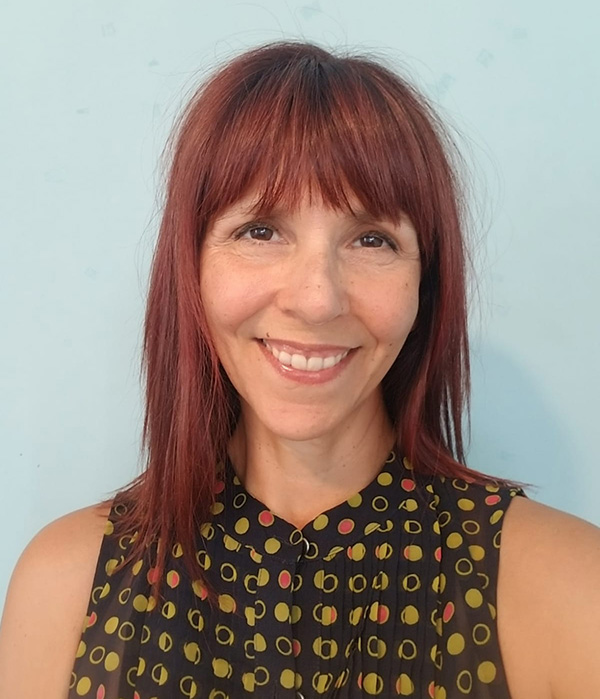
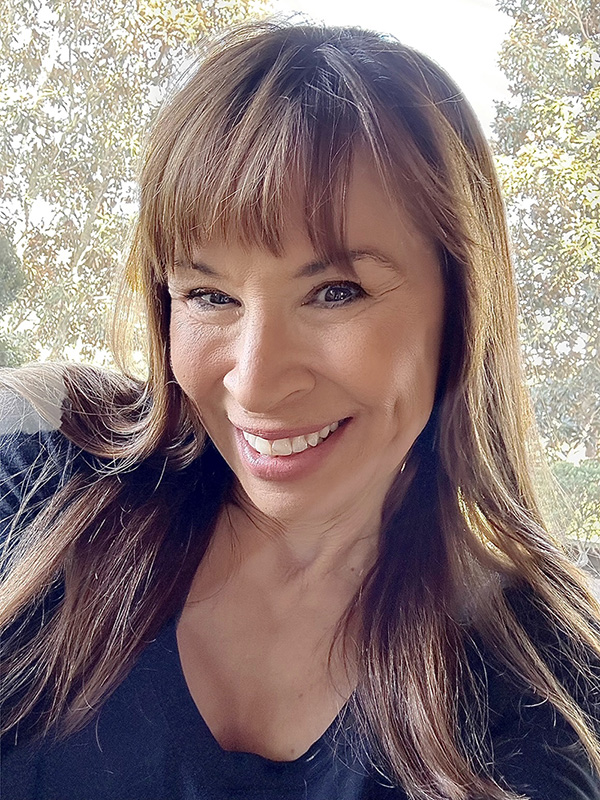
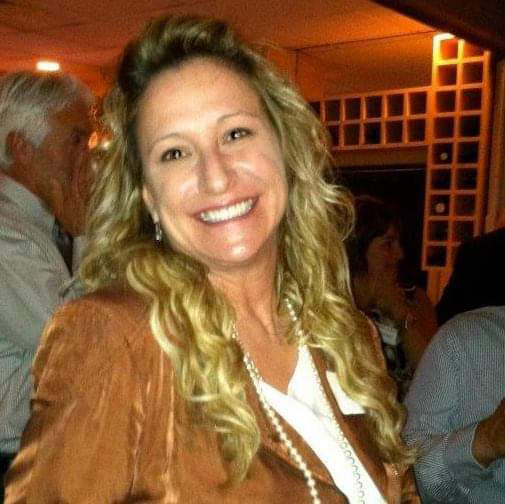
Interview with Elizabeth Cooke: Fall 2025 Flash Fiction Runner Up

Tuesday, May 19, 2026


Elizabeth’s Bio:
 
Elizabeth Cooke is a London-based writer whose short fiction has been shortlisted for the Fish Publishing Prize, longlisted for the Commonwealth Short Story Prize, and featured in Litro Magazine. She trained as an actor before taking a practical detour into the corporate world, and now writes fiction in the margins of everyday life. 

If you haven't done so already, check out Elizabeth's award-winning story "Margaretisms" and then return here for a chat with the author. 

WOW: What inspired Margaretisms? 

Elizabeth: The first line of Margaretisms - “The clouds are near and very moist” - came from a prompt exercise with a writing group. It struck me as such an odd, unsettling sentence. It brought to mind something close, damp, and a little claustrophobic, and so the drizzly British seaside setting was. It draws quite heavily on the kinds of places I visited as a child. 

In terms of the characters, the three generations (the protagonist, her mother, and her daughter who lives abroad) was loosely inspired by Alice Munro’s The Moons of Jupiter. I love the way she captures "the sandwich generation" - that sense of being caught between caring for children and aging parents. It made me reflect on my own family, and on what that responsibility might look like in my own life one day - something I've been thinking about even more lately, as my father's been unwell. What amazes me most about Munro is how she conveys entire family dynamics - all the love and resentment and grief and hope - with such precision and restraint. She's a master of showing rather than telling, and if I could summon a drop of what she does then I'd be incredibly proud indeed. 

WOW: I bet a lot of our readers will be requesting their own copies of The Moon's of Jupiter after that recommendation. Flash is such a concise form of writing. How did you decide what details to include and what details to leave out? I noticed the only name we get is Margaret’s. 

Elizabeth: That’s a great observation! And honestly, something I hadn't consciously considered while writing. 

I recently came across a description of fiction as a kind of secret garden. In a novel, the writer builds the entire garden for the reader. But in short fiction - particularly flash - the writer creates the keyhole. The reader only glimpses part of the world, and the rest is implicit. 

So when it came to Margaretisms, I wasn’t trying to create the protagonist’s whole world. Instead, I was thinking about shaping a very specific viewpoint - a single afternoon, a particular feeling - and every detail served that viewpoint. 

It actually feels fitting that Margaret is the only named character. Even if it was unintentional, it reflects how central she has become to the narrator’s life. The absence of other names kind of mirrors that narrowing of focus - how caregiving can reshape someone's entire sense of self and attention. 

WOW:  That one answer gives us so much to unpack and consider.  How did this story evolve through revision? 

Elizabeth: The opening paragraphs for Margeritisms came out of a writing group exercise, then sat untouched in a notebook for months. I work like this quite often - I'll write something, or the start of something, then leave it alone for ages until I've got some distance from it. When I came back to those lines, I didn’t fully remember what I’d originally intended, which was actually helpful. It allowed me to approach the piece more instinctively and build something new from it. 

I can be quite an impatient (and emotional!) editor, and I sometimes struggle to see my own work clearly when I’m too close to it. So giving it time creates some clarity and revision can feel more like I'm evolving a piece rather than refining it. 

I wouldn’t be surprised if I revisit Margaretisms in the future and it shifts into something else yet again.

WOW:  That's so helpful, to think of revision as evolution. What else are you writing? 

Elizabeth: Lots of short stories and flash fiction! I love the room for experimentation with these forms. I’d love to write something longer someday, but I’m still working up the courage. 

WOW:  Growing into a new form definitely takes courage and often time. What question do you wish I had asked? How would you respond to it? 

Elizabeth: Ooh, that’s a great question. I think it would be: How has your relationship with this piece changed over time? 

When I first wrote Margaretisms, it felt more like a thought exercise - but since then, my father has been ill, and what once felt observational now feels much more immediate and real. I’m younger than my protagonist, and I don’t have children - let alone grownup children - but my understanding of what it means to watch your parents age has deepened, or at least become more complex. And alongside that, I’ve gained a greater appreciation for what my parents’ went through in caring for their own parents. 

It’s made the story feel strangely prescient, in a way. 

I also feel a new kind of responsibility toward the character. There are nuances I can see now - emotional textures I didn’t anticipate during my dad's illness - and part of me wonders if I’ve done her a slight disservice by not capturing those. But I suppose that’s part of writing: you can only write from the understanding you have at that moment. And sometimes, returning to a piece later reveals just how much that understanding has grown.

WOW:  Elizabeth, thank you for taking the time from your busy schedule to help us grow as writers.  You've definitely given us a lot to consider.  Healing thoughts to your father and good luck on your future writing projects.

Read More »

Interview with Rebecca D. Martin - WOW! Q2 Creative Nonfiction Contest First Place Winner

Sunday, May 17, 2026
Rebecca D. Martin is a Virginia-based writer, educator, and museum docent whose work has appeared in various publications. Her essay “Mute,” on autistic muteness and hyperlexia, and her poem “Your Mind the Map,” on autistic stimming, have received particular recognition. Her passion is teaching, her inspiration is art, her safe place is nature, and her sustenance is poetry. Find her at rebeccadmartin.substack.com talking about all these things.

--interview by Marcia Peterson

WOW: Congratulations on winning first place in our Q2 2026 Creative Nonfiction essay competition! What prompted you to enter the contest?

Rebecca: I have been aware of Women on Writing for a while, appreciating the offerings and contest opportunities. This is my second time submitting and my first time placing. "How to Disappear" is such a strange little essay, and I hoped the way it refragments and aligns a particular kind of female experience would connect with other women readers and writers.

WOW: “How to Disappear” is a beautiful essay and the format (including great subsection titles that tell their own story) worked well here. What inspired you to write this particular piece?

Rebecca: Thank you! This piece developed over time in a segmented fashion--first, three years ago, the missing cat narrative that bookends it, then other elements, like the church memory and the experience of teen sexual awakening. Many of these flash fragments were written in memoir workshops. They couldn't quite stand alone, but I knew there was something there. One of my writing instructors, the marvelous Joanna Penn Cooper, challenged me to put them in conversation with each other, to see what would happen. That's when the essay began to become itself. I'm interested lately in pushing boundaries with prose: where can I replace explanation with juxtaposition? How can I make it more interesting without losing the thread?

WOW: Do you have any thoughts or advice for writing about difficult things?

Rebecca: I am not sure if I'm the right person to advise on that! Writing about painful things is what moves me through them toward healing. There isn't much I won't write about (though making that writing public is another matter). I know writing about pain or hardship can be too painful an experience for many, not worth what it stirs up. You have to know yourself. There is also the aspect of distance. The events of the teenage summer cabin fragment happened when I was 15; at 47, I was only just ready to say some of these things out loud. I think it's important to be gentle and patient with ourselves as storytelling humans. I also find it important to wait a while after writing something very personal before publishing. I composed that fragment two years ago, and now was the time to take a deep breath and let others read it.

WOW: In your bio, you say that your sustenance is poetry (love that). Could you share a few of your favorite poets or poems?

Rebecca: Oh, absolutely! The difficulty will be limiting it to a few. The sounds and rolling rhythms and environmental concern of "Inversnaid" by Gerard Manley Hopkins (so many of his poems, actually) galvanize me. There's Joy Harjo's "Perhaps the World Ends Here," which feels like the truth of everything, and Prageeta Sharma's "I Am Learning to Find the Horizons of Peace," which is a stop-me-in-my-tracks reading experience. I revisit Sylvia Plath's "Black Rook in Rainy Weather" every year on my birthday. A recent discovery is Linda Hogan's "Home in the Woods." I've been rereading it a lot lately. The way it ends: "Can you keep me / here? Can you unharm me?" There are so many poets right now, crafting incredible lyric and phrase around images we need in order to be fully human. I love the idea that I'll be discovering new poems till the end of my days.

WOW: Great recommendations, I will check those out. Thanks so much for chatting with us today, Rebecca. Before you go, can you share a favorite writing tip or piece of advice?

Rebecca: I'll go back to the advice I received that helped me create this essay: if you're uncertain or stuck, try putting pieces in conversation with each other. See if they want to connect and create something bigger than themselves. After all, all of your writing comes from you, and it's likely there are undercurrents and through lines that will reveal themselves. That's my theory, at least. Other advice would be that gentleness and patience--have it for yourself, as a writer and a person, always.

***
Read More »

How Better Mental Health & Self-Awareness Got Me Back On Track

Thursday, May 14, 2026

When it comes to creative writing dreams, or goals as it's likely better put, I don't think there's enough said about how mental health can play a part in our own success. Lately, my own mental health took somewhat of a dive. Although not dramatically, mind you, it was enough to make me realize I needed to do something about it. I hadn't written in months, actually. 

Kicking off May, I began by making a list of all the things that actually helped my mental health, from the minor things like taking my vitamins regularly to major ones like keeping a gratitude journal. Somehow, becoming more aware of what helped me, instead of focusing on what didn't, made a big difference. 

Then I began to notice something that may sound obvious, but wasn't obvious to me until I started tracking it. On the days I made an effort to exercise (and yes, I know it's something I should be doing daily, no matter what), I also made an effort to write. Maybe it was really habit stacking at its best. I'd do my exercise routine, then follow up with a brief writing session.

And it's working. So far, I've made progress on a lengthy short story I've neglected for months.

These days, it's easy to feel overwhelmed. When I'm struggling like that, creative writing takes a back seat. But this month, I wanted to get back on track and feel good enough to focus on my writing goals again. 

If you aren't really feeling emotionally hot these days, don't beat yourself up for writing taking a back seat. Put your mental health first. Then slowly, when you can, reintroduce your writing goals. I think pushing yourself when you aren't doing well can do more harm than good. Accept where you are at. Then, when you can, find out ways you can bring your writing back in a low-pressure, gee-I-actually-enjoy-this-again kind of way. 

Nicole Pyles is a writer hoping to get her creative self back in action again. Check out her writing blog for updates at https://worldofmyimagination.com. Or say hi on threads at @BeingTheWriter.
Read More »

Interview With Hannah Andrews: Fall 2025 Flash Fiction Runner Up Winner

Tuesday, May 12, 2026
 

I'm honored to interview Hannah Andrews. Two of her stories, "Catching Life" and "Swan Song" won runner up in our Fall 2025 Flash Fiction contest. 

Before we chat about her stories, here's more about the author:

Hannah Andrews lives in sunny southern California with her faithful dog Josie (who thinks her stories are amazing) and four cats (who are mostly unimpressed). Hannah’s fiction and CNF have been published in Shaking The Tree Short Memoir Anthology, Gold Man Review, Two Hawks Quarterly, Elegant Literature, Writing Battle, and WOW. She has been stalled on the third draft of her adoptee memoir, “None of This is Yours,” for about two years now. She hopes to finish it one day soon.

--- Interview by Nicole Pyles

WOW: Congrats on winning runner up! What inspired your stories, "Catching Life" and "Swan Song"?

Hannah: Catching Life was originally written for a prompt contest for Writing Battle. My prompts were a widow and a dozen eggs. My first thought was fertility, but I wanted to put a different spin on it.  I'd recently visited the Galapagos Islands and the Darwin center (though there were no tortoise eggs or tour that included the incubator --that came from research) and thought of the tortoises. At first I thought I'd set my story here, in San Diego, with a young researcher. But then I gave her an internship... sent to the Darwin Center... and she fell in love...

 Swan Song was written for an Elegant Literature contest, but was mostly inspired by my own search for my mother of origin. The line "the summer that followed the summer of love" is pulled from my own creative non-fiction, and my true story of being conceived during one of Chicago's most turbulent times, to a young teen who was then "sent away" to a maternity home. The rest is fictional. As a person who lived many years with closed records and unknown parentage, I have a myriad of fictional meetings and "what if" rumblings inside of me. 

WOW: I love how you used a prompt and a real life instance to create really unique and creative stories. I can't help but notice common themes in both stories about the cycle of life. Is that a common theme for you to explore in your fiction or did this emerge on accident?

Hannah: It is both a common theme AND an accident. If you told me to write a story about interplanetary beings I would inevitably weave family, love, and loss in there. And maybe a bit of snark. I guess I write what I know and what I want to know more of...  Loss, longing, and love.  

WOW: Those are beautiful themes to have in stories. How did you come by your titles? Did they come to you automatically or did you struggle at all?

Hannah: They're both borrowed. 

I've always loved the term "swan song," pulled into present language from the myth of swans singing an achingly beautiful song just before their death. It seemed a fitting metaphor for this story-- A mother-daughter reunion/ first and final meeting all at once, 50 years after surrendering the daughter, as an infant, and now sharing her truth and her daughter's origin story just before her final breaths. 

On the flip side... Catching Life—not a common expression as far as I know, but I heard it once and it never left me. I'd taken my dog to the emergency vet for a minor after-hours injury.  While we were there I kept hearing this high-pitched squealing cry. It was a sound (and maybe this part was my imagination) that seemed to silence people and pets alike. A vet tech explained that a mother dog was having a difficult birth. They were having to assist and then pump air into the puppies mouths, lungs. The pups would catch their breath and squeal. "We call it catching life," she said, "I think it's the most beautiful sound in the world." While researching the tortoises for this story, I watched a video of a biologist "catching" the clutch of eggs one at a time, and it seemed like something my character would do, and say. 

WOW: What beautiful origins for your titles! You have quite the collection of published stories! What advice can you share on creating a winning story? 

Hannah: Persistence. Editing. Thick skin. And community. Community. I hate rejection, no matter how often I tell myself "rejection is just an opportunity for redirection."  If you already have thick skin, awesome. For me that's an ideal, not an actual.  But, I keep going. I take any feedback provided with rejections, pout to myself, then work on applying it. I'm also fortunate to have found an online group of flash fiction/short story beta readers. (One of my beta buddies is a runner-up here too! ) Edit. Submit. Repeat. And, of course, read as much as you can. 

WOW: Great advice! What is your writing routine like? 

Hannah: I write most every day, generally in the morning, and mostly about nothing. Just writing to write, to clear out or maybe stir up the muck in my brain. When it comes to constructing actual stories though.... that is more random than routine.  Most often my MC comes to me first. She's most often a woman, sometimes even a fictional version of myself . I let her run around my brain for a day or two while I walk the dog, stare out the window, walk the dog some more. I jot down bits of dialogue. Think of an opening, then an ending. Then I start constructing the messy middle. Then I edit generally right up to the deadline. I'm sure there's a better way to do it.  But I haven't figured it out. 

WOW: I love your routine. Thank you so much for chatting with us today! Congrats again!
Read More »

A Dozen Subgenres for Mystery Month

Thursday, May 07, 2026


I was reading through my email when I clicked on one from Kanopy. I use this app to watch a variety of movies and series including mysteries. “May Is Mystery Month” proclaimed the email. I love good mysteries. But I still wasn't sure where my own project fits into the most popular subgenres. I did some digging and found 12 popular mystery subgenres.

Caper 

A caper is a humorous story about a heist. Much of the humor comes from someone being profoundly inept. My favorites are golden oldies, the Pink Panther and Scooby Doo. 

Cozy 

A cozy detective is an amateur. The murder occurs off-scene and things aren't too gory or graphic. Some definitions have cozy mysteries taking place in small towns. Agatha Christie is known as the Queen of the Cozy. More recent cozy series include Posie Parker by L. B. Hathaway and my favorites the Highland Bookshop Mystery by Molly MacRae.

Hard-boiled 

The hard-boiled detective story involves . . . a hard-boiled, professional private eye ala Sam Spade. The crime is gruesome and the detective is often fighting an emotional battle of their own such as addiction. Think the Robert Galbraith mysteries written by J.K. Rowling. 

Soft-boiled 

These mysteries are a lot like the hard-boiled detective stories but less gory and much more humorous. The soft-boiled detective is often a woman solving crimes in gritty, urban settings. Janet Evanovich’s Stephanie Plum books are soft-boiled mysteries. 

Historic 

This category can overlap with any of the others, but the stories are set in the past. The Lady Sherlock books by Sherry Thomas fall into this category. So does the Flavia DeLuce series by Alan Bradley. I simply cannot resist this young scientist turned sleuth. 

Paranormal 

A ghost or some type of magic is involved in a paranormal mystery. I've read books with characters casting spells via the cakes they bake as well as friendly ghosts. My favorites are the Haunted Yarn Shop mysteries by Molly MacRae. Clearly, I really enjoy her books. 

Police Procedural 

Forensics and other police procedures are critical in solving the crime. I really enjoy Kathy Reich's Temperance Brennan series, perhaps the only mystery series my husband also reads. Shhh. He doesn’t realize they are mysteries. 

Suspense 

Suspense stories are atmospheric and build slowly. There is often a time element because the protagonist is the villain’s next target. Think When No One is Watching by Alyssa Cole or The Safe Place by Anna Downes. 

Thriller 

A thriller is another type of tense, fast paced story that is often international in scope. Anthony Horowitz's Alex Rider series is one example of a thriller.

Romantic Suspense 

Add a dash of romance and you have romantic suspense. The grand-dame of this category is Mary Higgins Clark. 

True Crime 

This category is nonfiction, but these books read like fictional mysteries. There is a crime, and real investigators struggle to solve it. Think Ann Rule's The Stranger Beside Me

My story did not fit neatly into any of these categories, so I did one more search and came up with . . .

Science Fiction Mystery 

Science fiction mysteries combine all of the science and speculation of science fiction with a sleuth who is working to solve a crime but gets to use technologies beyond what any detective is using today. This genre isn’t new. One of the earliest books of this kind was Isaac Asimov’s The Caves of Steel published in 1954. My story takes place 100 years in the future and my detective is a tween who can code.

Reading through these subgenres, do any of them inspire you to work on your own mystery this month? 

 --SueBE

To get a free copy of Sue’s book, What to Do When Your Book Is Banned, subscribe to her newsletter, One Writer’s Journey, here.

Sue Bradford Edwards' is the author of over 80 books for young readers.  

She is also the instructor for 3 WOW classes which begin on the first Monday of every month. She teaches:
Read More »

Interview with Elizabeth Hoban: Fall 2025 Flash Fiction Third Place Winner

Tuesday, May 05, 2026
Elizabeth’s Bio:
Elizabeth is a traditionally published author of two novels and a historical nonfiction memoir. She has written numerous newspaper and magazine articles over the years. She has won numerous writing awards, including Bethlehem Writers Circle Best in Prose 2018, Writers Digest runner-up in Memoir 2019, Millennium runner-up for Best in Prose 2023, and Reedsy first-place award for two short stories and two short-listed. Her winning story appears in 2025 Reedsy Anthology. Most recently she received the Miriam Chaiken Award for Best in Prose 2025, and won Women on Writing Essay Award 2025. Aside from writing, Elizabeth is a Nurse Practitioner who loves spending time with her kids and her four-legged antidepressants. 

If you haven't done so already, check out Elizabeth's award-winning story "The Wail" and then return here for a chat with the author. 

WOW: Congratulations on placing third in the Fall 2025 Flash Fiction Contest! What excited you most about writing this story? 

Elizabeth: My brother served in the Coast Guard and some years back he had told me about a beached whale they tried to save but to no avail – it was very sad. I decided this would make a harrowing short story someday. It has evolved into a 750-word story from 3000 words and, interestingly enough, after chopping so many words, it still feels like it is complete. I find that exciting. 

WOW: Yes, it often amazes me how much can fit into a piece of flash writing. What did you learn about yourself or your writing while crafting this piece? 

Elizabeth: I am fascinated by small fishing villages in places I have travelled because they seem to have something for all the senses – this piece really helped me use those memories, as well as bring in all the sights, smells, tastes and feelings, etc. Showing and not telling has been a challenge for me and I believe in honing this story, I was able to push myself to use those descriptors more so than in any other short story I've written. 

WOW: I imagine it gets busy working as a nurse practitioner, and spending time with your children and pets. What tricks or tips can you share for making time to also be a prolific and accomplished writer? 

Elizabeth: My children are all grown now and no longer live with me so that in and of itself makes for peace and time. When I am working (as a nurse) I find myself yearning to get home and read/write. I feel guilty watching TV and reading others’ books when I should be focused on my own art. I do audio books when I commute but when I'm home, I spend 80% of my time writing something and, even if I do not finish what I start, I know down the road I will revisit it with new eyes. That was what happened with The Wail. I started it years ago, forgot about the very rough draft, and then rediscovered it just recently. And I always find time for my 4-legged antidepressants! 

WOW: Audiobooks in the car have been a huge timesaver for me, too, and I [almost] look forward to my commutes. What are you reading right now, and why did you choose to read it? 

Elizabeth: Currently, I am reading The Many Lives of Anne Frank by Ruth Franklin. After visiting Amsterdam a few years ago, I had very mixed feelings about the Anne Frank House, so I wanted to find out more, beyond the diary. 

WOW: If you could give your younger self one piece of writing advice, what would it be and why? 

Elizabeth: I grew up in a home where we could stay up as late as we wanted as long as we were reading, we could not see a movie unless we read the book first, and we were not allowed television except on Sundays. Going back, I wish I'd catalogued (and kept) all the books I'd read, especially the ones when I first started reading. It would have been fun to now share some of those really old titles with my grandkids. Many are no longer in print. 

WOW: Keeping a list of books you’ve read is a great idea! I feel fortunate that I have GoodReads to help with that now. Anything else you’d like to add? 

Elizabeth: I very much enjoy writing for and reading the stories on WOW. This platform has not only awarded me twice thus far but has also helped me build confidence in my writing. Perhaps I am going in the right direction. Congratulations to the other winners and thank you WOW for this honor. 

WOW: You’re very welcome! Thank you for sharing your story and your responses with us. Happy writing! 


Interviewed by Anne Greenawalt, founder and editor-in-chief of Sport Stories Press, which publishes sports books by, for, and about sportswomen and amateur athletes and offers developmental editing and ghostwriting services to partially fund the press. Connect @greenmachine459.
Read More »

Water in Every Room by Heather Brown Barrett: Reader Review Event & Giveaway

Monday, May 04, 2026
 
Water in Every Room by Heather Brown Barrett

I'm excited to announce our reader review event for the poetry collection, Water in Every Room by Heather Brown Barrett. This book is perfect to give to the mother in your life on Mother's Day, or to yourself, to enjoy the beautiful words Heather has shared with her readers.

We'll be celebrating the launch of the event by sharing reviews from our community and giving you a chance to win one of three copies of the book and an Amazon gift card!

But before we get into what our readers thought, here's more about the book:

Water in Every Room embodies the fluctuations of emotion and form in new motherhood. Ferocious and tender, tending and transformed, mother embraces both her child and the dualities of self in this collection of poems.

You better be sitting down when you read Heather Brown Barrett’s Water in Every Room because these poems will knock you off your feet—the imaginative and emotive energy crackles on every page as she writes about her metamorphosis into motherhood and the son she loves from bottomless depths. “Oh come / be our child, wind of change,” Barrett cries in “Blue Moon,” a resounding “Yes” to the stirring inside that will bloom her son and the water trail of poems that follow in myriad forms and styles such as haibun and ekphrasis. In “Growing a Mother” she writes, “Tender words shook my bones / loose, rattled like seeds / in a coffee tin,” and they will shake you too in words that, like a “churning ocean in our chests,” let us recognize our human capacity for sacrifice and transformation.

— Suzanne Underwood Rhodes, Arkansas Poet Laureate and author of The Perfume of Pain and Flying Yellow: New and Selected Poems

Honest and heartfelt, Water in Every Room beautifully captures the dueling tensions of motherhood—the overwhelming love and frustration, the sense of purpose coupled with helplessness and extreme exhaustion. Heather Brown Barrett expertly oscillates between quiet but joyful observations of parenting and the torrent of raw emotions that accompany the shift into her new role as a mother. This collection is a deeply resonant and perfectly rendered portrait of the mother-child relationship and a necessary reminder that, like the child, the mother is a burgeoning self who requires nourishment and gentle care to grow.

—Claire Taylor, author of One Good Thing and Mother Nature, and publisher/editor-in-chief of Little Thoughts Press

In this stunning debut collection by poet Heather Brown Barrett, we are confronted with the fierceness of motherhood in the face of distress and joy. Water in Every Room creates metaphors for the everyday of family life that explore time, doubt, and the yearning for wholeness through the lens of nature and what it means to be human.

—Michael Jon Khandelwal, Executive Director of The Muse Writers Center (Norfolk, VA)

Publisher: Kelsay Books (February 2025)
Print length: 42 pages
ISBN-10 ‏ : ‎ 1639807071
ISBN-13 ‏ : ‎ 978-1639807079

Water in Every Room is available for purchase at Amazon, Barnes & Noble, and Bookshop. Be sure to add it to your Goodreads list.

Water in Every Room by Heather Brown Barrett Review Event and Giveaway

What WOW Readers Thought

"Heather Brown Barrett's poetry book Water in Every Room takes a dive into motherhood. Several poems, including this line from Grit, "I drink his joy in swells" invites the reader into the loving relationship with her son. Postpartum, Thrown, and Bones of my Bones stuck out the most for me. I recommend this book to any parent or to someone who understands the deep bond between a mother and her child."

~ Heather J.

"I really enjoyed the poems in Heather Brown Barrett’s Water in Every Room. They are intimate and moving, but they’re also crafted with attention to image, rhythm, and form. There’s so much tenderness here, but the writing never feels sentimental. Her narrator is restrained, even when taking on heavy material around the body, birth, fear, love, and life. I appreciated the way the collection captures motherhood not as one simple feeling, but as a transformation that's at once joyful, exhausting, frightening, overwhelming, and full of devotion. This is a thoughtful, moving collection, and I know I'll return to these poems again and again."

~ Kaecey M.

"Buckle up! This stunning debut captures the emotional rollercoaster of motherhood. Up and down she takes us through the torrents, rivulets, and calm waters of the journey. Perfect Mother's Day gift. Also the perfect gift for anyone who enjoys a darned good poem." 

~ Nita S.

"This was a sweet compilation of poems about motherhood and mom life. It shares the big feelings and extreme exhaustion as well as all the little joys. The poems vary in style and flow. I especially enjoyed 'Growing a Mother' and 'Grit.'"

~ Julie S.

"A delightful book to read around Mother's Day and during Poetry Month, which I did. It is a book of poems that are words of devotion in every way to parenthood. These are moving words brilliantly describing in various imagery, form and rhythm what it is all about. The words of motherhood she presents are precious and tender with a collection to visit to help when feeling joyful or overwhelmed or even wanting a feeling of connection."

~ Charity H.

"Water in Every Room is a combination of two things every parent knows. Literary drawings of the scenes we all live - the mountains of laundry, the finger paints, the baby giggles. But if you look beyond that you can find the overwhelming emotions - the love, the fear, the discovery. These poems run the gamut from joyful celebrations of mothering to honest exhaustion to haunting memories of past thoughts. I feel Heather Brown Barrett did a fine job capturing motherhood in a way that we all recognize a glimpse of ourself in her poems." 

~ Jodi W.

"The book of poems Water in Every Room took me back to the wonderful, terrible days of early motherhood, as it perfectly captures the bittersweet moments of being a mother. Heather Brown Barrett takes us on a relatable journey starting with the conception of her child by “two hungry wolves…hungry for more life” in “Blue Moon” and ending with the playful pirate poem “Prelivers & 20 Keys”. Simple to read, there is so much to love in this book, whether we are seeking “Sustenance”, “Growing a Mother”, or discussing heart-wrenching “Curious Words”. It’s a book you can return to again and again."

~ Linda S.

"Water in Every Room, by Heather Brown Barrett, is an absolute gem! If you love poetry, motherhood, or just damn good writing, please read it. I enjoyed it in one sitting, as memories rose to the surface and all my emotions poured out. Barrett’s elegant expressions reveal the passion, uncertainty, exhaustion, hunger, strength, and mostly love that a mother feels. Her use of metaphor, imagery, and the senses brings the reader into her space—morning sounds, smells, and touch, “his tiny fingers, soft as moss…” She imagines her child’s future—what she will teach him, how they will play. My favorite is “Active Imagination” – allowing chaos to become a delight. This book of poems is also a delight!"

~ Leslie C.

"This book of poetry really brought me back to the early times with my now grown three children in a most touching way. I read a lot of poetry that ends up bringing motherhood to the surface, the good and the bad, and this collection is another in that vein that I’ve felt a connection with. I’m so happy to be able to put it on my poetry shelf alongside other women poets who keep it raw and real. I look forward to more of her poetry in the future!"

~ Erin A.


About the Author, Heather Brown Barrett

Heather Brown Barrett
Heather Brown Barrett is an award-winning poet and writer in southeastern Virginia. She mothers her young son and contemplates life, the universe, and everything with her writer husband. She is a Cherokee Nation citizen, the current Membership Chair of The Poetry Society of Virginia, a member of The Muse Writers Center, and a former board member of Hampton Roads Writers.

Her work has appeared in Literary Mama, The Ekphrastic Review, Yellow Arrow Journal, Formidable Woman Sanctuary, Black Bough Poetry, OyeDrum, and elsewhere, and has been nominated for Best of the Net. Her poetry is featured in the global TELEPHONE exhibition, was previously featured on the Dahlgren Railroad Heritage Trail as part of The Poetry Society of Virginia’s Poetry on the Trail project, and previously in the Suffolk Center for Cultural Arts Everyone Has a Story exhibit.

Much of her work is influenced by themes and dualities of motherhood, modes of forgiveness and grace, the structures of curiosity, time, and attention, and the types of subjects that plague most poets, like death, grocery stores, and birds.

She’s the author of Water in Every Room (Kelsay Books 2025), a collection of poems embodying the fluctuations of emotion and form in new motherhood.

Visit her website at https://heatherbrownbarrett.com.
Instagram and Substack: @heatherbrownbarrett

--- Interview by Nicole Pyles

WOW: Congrats on your poetry book, Water in Every Room. What inspired this collection of poetry?

Heather: Thank you for the kind words! This collection was inspired by becoming a mother. What an incredible gift to watch a life blossom, and to be so transformed by it. I’ve always been a creative person, but motherhood plunged me deeper into my creativity. New motherhood was the most challenging and most rewarding experience of my life—a bit isolating and a lot transformative. Being a parent offers a new awareness and vulnerability that wasn’t quite accessible before. More visible now are the minutiae and liminal spaces and dualities, and exploring it all is very exciting. Writing allows me to explore the motions and emotions of the darker recesses and emerge lighter, and so writing during early motherhood helped me sustain a sense of self and process the highs and lows of my new role. It was my intention to create tension and visual appeal in the book with opposing forms, lines, subject, and POV, and to thread hope throughout. Very much embodying the new mother experience!

WOW: You really have done exactly that! What do you hope readers take away from reading this collection?

Heather: I hope mothers will feel connection, and less alone in their frustrations or transformations. I hope readers will see my collection as a love letter from mother to son, and also a love letter to the sense of self in the new mothering role. I also hope readers will feel encouraged to write about their own experiences, if they feel a pull to do so.

WOW: I hope so too! Who should read this collection?

Heather: My book makes a great Mother’s Day gift! Water in Every Room will appeal to expecting, new, and seasoned mothers. This collection of poems speaks to the universal experience of new motherhood and its common themes: the mother-child relationship, transformation of self, dualities present in the mothering role, exhaustion, frustration, strength, and the healing power of love and hope. Several mothers and grandmothers have told me that reading my collection brought back their own memories of giving birth and caring for their babies and toddlers. Fathers have read it and enjoyed it. My book might also appeal to those who are curious about parenting life. I structured this book linearly, even though it’s generally not advised to do so with a poetry collection, because it occurred to me that part of the story was showing the journey through postpartum and slowly but surely coming up from the depths, and that this would allow for more relatability and accessibility for some readers, especially those who don’t normally read poetry. I’m honored when anyone reads this collection!

WOW: I love how it draws all kinds of readers! What wisdom do you have for those nervous about sharing their writing with the world?

Heather: Share it. Writing, and the arts in general, is important for expression, healing, connection. Even if you don’t share it with the world, continue to write. But if you want to share, do it. Find community in other writers, because writers are an incredibly generous and encouraging lot. Be patient with yourself, with your writing and revision. Study the craft of writing, and read, read, read. Create a thick skin for the inevitable rejections. It’s all part of the process. If you embrace the process, you will grow as a writer.

WOW: Absolutely. Creating a thick skin does help! Where do you like to write? Can you share photos?


Heather: Some 4 AM mornings I’m at our kitchen island. (First photo.) Some days, while my son is at school, I work in our library room. (Second photo.) But a great deal of the work goes on in my head, throughout my busy days. For me, words, writing, are a constant flow, like water, spilling out of me all day long. I try to write everything down before it disappears. Thoughts, ideas, fragments, sentences, ramblings, revision. I use my phone’s notes app all the time, and I often write in physical journals. One thing I love about being a writer is how portable it is!

WOW: You have such beautiful spaces to write! Thank you so much for joining us today.


Water in Every Room Giveaway

***** BOOK & $25 GIFT CARD GIVEAWAY *****

Enter the Gleam form below for a chance to win a copy of the poetry collection on motherhood, Water in Every Room by Heather Brown Barrett and a $25 Amazon gift card! The giveaway ends May 17th at 11:59 pm CT. We will choose a winner the next day and follow up via email. Good luck, and Happy Mother's Day!

Water in Every Room and a $25 Amazon Gift Card Giveaway
Read More »
Powered by Blogger.
Back to Top