Showing posts with label hermit crab form. Show all posts

Interview with Julie Lockhart, Runner Up in the Q3 2024 Creative Nonfiction Essay Contest

Sunday, September 01, 2024
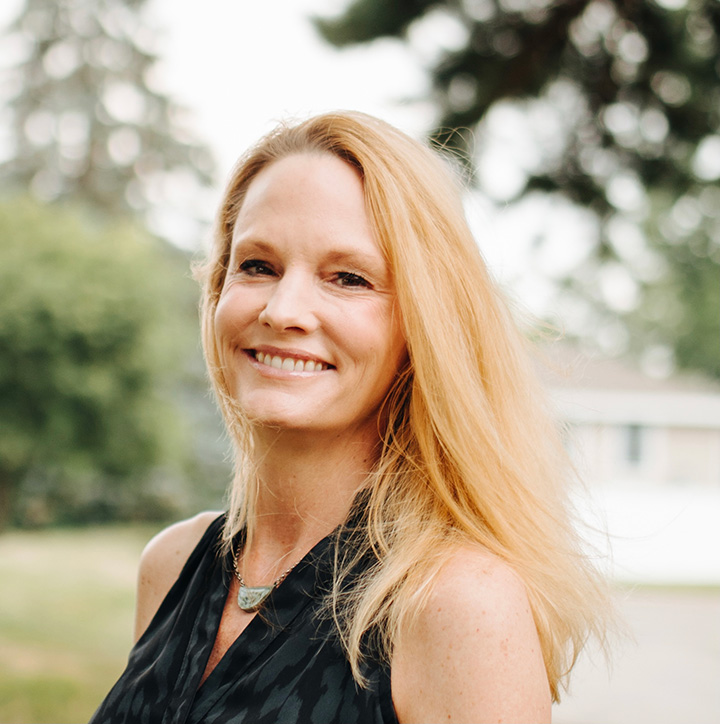
I was thrilled to chat with Julie Lockhart about her incredibly creative essay, "The Fist." It's a fantastic example of what writers can do with a hermit crab form, and I encourage everyone to read it and then join us for a craft discussion. Julie and I chat about changing people's names in nonfiction, the hermit crab structure, and how she uses her rejection letters to enhance her work.

Julie Lockhart loves an adventure in wild places. She spent most of her career in academics, where she published in peer-reviewed journals, such as Critical Issues in Environmental Taxation and Advances in Accounting Education. During the last years of her career, she led a grief support nonprofit, where she discovered the beauty and depth of personal stories, writing about her experiences to help grieving people feel less alone. Her essays have been published in The Journal of Wild Culture, bioStories, Feels Blind Literary, Minerva Rising (Keeping Room), and Witcraft. Julie has several times placed in the top ten in Women on Writing Essay contests. She is a Pushcart nominee. Born in the Chicago area, Julie has lived, worked and played in the Pacific Northwest since 1982. She lives in Port Townsend, WA. Find her at: julietales.com.

----- Interview by Angela Mackintosh

WOW: Welcome, Julie! Your winning essay, "The Fist" is incredibly creative. The police report format really complements the narrative in an interesting way. How did you come up with the idea for the format?
 
Julie: Thank you, Angela! Because this essay covers an incident that happened in April 2023, the trauma was still pretty fresh. I was taking Chelsey Clammer’s flash trauma class, so the essay needed to be 800 words max. I felt emboldened to write about the assault because of her class. This particular week she had us looking at perspective in writing about trauma. I tried a few different ways to write it, but nothing was working. I honestly can’t remember how I came up with this idea, but I did have a copy of my witness statement taken by the police, so I think that’s what spurred the idea. What I loved about using the format of a police report is that it allowed me to fit a complex story into a flash essay. The format also gave me some distance from the trauma, and I could play with perspective, thus satisfying Chelsey’s assignment for that week.
  
WOW: It's a delightful format to read, and it sounds like it provided the perfect container to write with some distance from the trauma. Well done! I also love Chelsey Clammer's WOW workshops.

Many creative nonfiction writers change character's names in their essays to protect the people they're writing about and/or themselves. You changed the suspect's name to "The Fist," and his friends to "fist people," which is really innovative and serves as an image and metaphor. What inspired you to change his name in this clever way, and do you change the names of all characters in your nonfiction writing?
 
Julie: When “the fist” assaulted my husband, neither of us saw who the person was that threw the punch. I suspect it was the father of the boy who fell off the ATV, because after the assault, that guy terrified me by coming over to our camping area pushing the bent-up two-wheeler screaming that someone owed him $600 to fix it. In figuring out how to craft the essay, the fist popped into my head as the suspect, so that I didn’t mistakenly accuse someone when I don’t know for sure. The people surrounding my husband were angry and aggressive, ready for a fight. “Fist people” seemed to be an appropriate way to describe them. 

About changing other names, sometimes I do. My husband asked me to use an alias, “Charles,” in this essay. Whether I change a character’s name has a lot to do with my intuition on whether using their real name would hurt that person. I will change a name to protect a person, or even to protect myself in a situation where I’m describing someone’s horrible behavior.
  
WOW: That's smart! I also noticed that the police report doesn't include the victim's statement. Was this because of the limited word count or an aesthetic choice?
 
Julie: The word-count definitely had me pick and choose what to include. The victim’s statement was similar to mine, so I left it out.
 
WOW: Your piece has a really inspiring message. To me, it's about those intense traumatic events that help us realize how much we love someone, and the importance of being there for each other, and the importance of love overall. I simply adored the last section ("Wife's Epilogue"), and could feel the emotional connection between you and your husband. What do you hope readers will take away from your piece?
 
Julie: I am so happy you got the message I hoped to share! My way of being in the world is to look for the lessons, the positive things, that can come from difficulty. It’s a spiritual practice, and I try to express my personal growth and insights in all of my writing about trauma and grief. When we as humans are in the midst of a tragedy, we may not be able to see our growth potential while bombarded by grief, trauma, etc. I don’t want to seem flippant about the enduring pain people find themselves in, but for me, it’s important not to get stuck there. In this situation, both my husband and I worked to move through the trauma after our experience. But what blew me away is how our connection deepened with this tragedy. That deepening of love, the expansion of our hearts, helped us to get on with our lives in the aftermath. It’s a real testament to the power of love. I am so blessed to be with him.
  
WOW: The reader felt that love, too! You did a great job of showing that, and "The Fist" is an exemplary hermit crab essay! What advice would you give to a writer who is interested in trying this format, but doesn't know where to start?
 
Julie: Thank you! The hermit crab essay is one of my favorite structures. I get my ideas after reading other hermit crab essays, which stimulate my creative juices to create something unique that fits what I want to write about. Author Brenda Miller has used the hermit crab structure, such as in her grief essay called, “Artifacts.” Also, Miller beautifully describes the various forms that can be used in her book: A Braided Heart: Essays on Writing and Form. I am also inspired by Eula Biss’s, “The Pain Scale.”
  
WOW: Oh I adore Brenda Miller and Eula Biss! I first read their work in one of Chelsey's workshops.

Last time we chatted, you mentioned a digital "pile" of rejection letters. I have those, too! But you do something creative with them—you sort through them to see if there's a different way to tell a story. Have you done this recently, and could you give us an example? This sounds like something I want to try!
 
Julie: Yes, if I gather enough rejections on a particular essay, I often try to figure out what else to do with it. For example, I wrote about an abusive situation with my first husband, but didn’t find a home for it. I decided to create a braided essay, instead weaving in the story of abuse I witnessed as a kid to show that my childhood experiences in a sense informed why I would end up in an abusive marriage. In another essay about the death of my second husband, I have rewritten it from his perspective (looking down from wherever his soul is in the afterlife). Neither of these has been accepted at a magazine, but I still feel good about how each turned out. And I love the creative process of making something different, and hopefully better.
 
WOW: Those essays sound incredible! Julie, I always love hearing about your nature adventures, and your essay's setting of Canyonlands and Moab, Utah, was simply gorgeous and immersive. Where have you been lately and what was the most memorable thing you've seen?
 
Julie: I often wonder if I should do some travel writing, so thanks for asking this question! There are oh so many amazing things I’ve experienced. In early April, we camped in the Hoh Rainforest on the west side of the Olympic Peninsula of Washington. Some of the biggest drops of rain I’ve ever seen accompanied the steady showers, but weather did not keep us from hiking through the incredible mossy, lush, every-shade-of-green landscape. On our last morning, my husband stepped out of our truck camper and turned back around to tell me there was an elk. I grabbed my phone and joined him. As we peered around the campsite, we realized we were completely surrounded by a herd of about ten stately elk, munching away on spring’s tender leaves and fresh grass. Elk symbolism is about strength, stamina and pacing yourself. Their presence as they surrounded us felt powerful, especially in these times when there’s so much stress and chaos in the world. I can still breathe in their circle around us when I feel overwhelmed. While our health is still excellent, we hope to continue adventuring to beautiful places. In September, we’ll visit Taiwan and then South Korea. Maybe I’ll write a new essay from that trip!

WOW: That is such a surreal experience with the elk, and definitely essay worthy! I can't wait to hear about your trip to Taiwan and South Korea, too. I'm sure it will be amazing and inspire many creative works. Thanks again, Julie, for chatting with me today, and best of luck in your travels and writing! I can't wait to read more from you soon.

Writers, find out more about WOW's flash contests here: 
Read More »

Interview with Julide Kroeker: 2nd Place Winner of the Q3 2023 Creative Nonfiction Essay Contest

Sunday, August 13, 2023
Julide Kroeker
Julide (Juh-lee-duh) Kroeker is 25 and living in Missouri with her dog Midnight. Julide works in a cold, dark office and spends her days wondering if the sun still exists. Will the sun’s rays ever touch her skin again? And if they do, will they be so foreign to her skin that her flesh will reject the warm light and shrivel up upon contact? Julide is also a big fan of hummus.

----- interview by Angela Mackintosh

WOW: Congratulations on winning 2nd Place in the WOW Q3 2023 Creative Nonfiction Essay Contest! Your essay, “An Alpha’s Guide to Apologizing” is so creative, and I love the form. What inspired you to start writing it?

Julide: Thank you so much for the opportunity! I was inspired by almost every job I’ve ever had. One day at a job I had some of the other girls and I were making fun of the “apologies” we’ve received from men and I started noticing the patterns within them. I imagined that they all read the same handbook on how to apologize, and then I thought how awful but funny that handbook could be to write.

WOW: That is so clever! The how-to methods remind me of this Southern California shock jock from back in the day. He gave guys “love advice” and encouraged them to use the “backhanded compliment,” among other things like gaslighting. Your essay brought it all back for me, and you nailed the alpha male way of thinking. How did your essay evolve during revision?

Julide: That was definitely an inspiration as well! I did consider the idea of ranking apologies Ive received from men, but I really fell in love with the “how-to” format. From there I just knew the more embarrassed I felt writing it the more authentic it was.

WOW: Ranking apologies would make another great essay! I'm always curious about writing habits. Many writers love to listen to music while they write and create playlists for their work-in-progress. Do you listen to music while you write or do you have a ritual that you use to put you in the writing mood?

Julide: I definitely need noise to do anything as I am an elder IPad baby. I’ve seen every episode of the British panel show, “Would I lie to you?” and love having that on in the background!

WOW: I'll have to check out that show! Right now I'm on a reading kick, and this summer I've burned through about five novels so far, and I'm always looking for recommendations. What have you enjoyed reading lately?

Julide: I’ve been on a massive Greek mythology kick lately. Right now I’m reading Pandora’s Jar by Natalie Haynes. She reexamines how women are portrayed in Greek myths and I’m in love with it and her writing. She’s the kinda of writer her makes you feel smarter when you read her work.

WOW: Thank you for the recommendation! I just reserved it on my Libby app, and can't wait to dig in. I believe this is your second win here at WOW, and we all love your narrative voice! Before you go, please share your favorite writing tip or piece of advice.

Julide: Thank you and everyone at WOW for the opportunity and the community! My favorite writing tip is boring but it’s just write. That’s the best way to improve your craft I think, even on days you don’t want to!

WOW: It really is the best advice! Thank you so much, Julide, for chatting with us today, and I wish you the best of luck in all your writing projects.

Find out more about WOW's creative nonfiction contest and flash fiction contest here: https://www.wow-womenonwriting.com/contest.php
Read More »

Interview with Bethany Jarmul, Q2 2023 Creative Nonfiction Essay Contest First Place Winner

Sunday, May 07, 2023
Bethany Jarmul is a writer, editor, and poet. Her work has appeared in more than 50 literary magazines and been nominated for Best of the Net and Best Spiritual Literature. Bethany enjoys chai lattes, nature walks, and memoirs. Originally from West Virginia, she lives near Pittsburgh with her husband and two young children. She’s currently working on two nonfiction chapbooks (one about growing up in West Virginia and one about motherhood) and a prose poem chapbook. Bethany also offers affordable editing services for writers. Connect with her at bethanyjarmul.com or on Twitter: @BethanyJarmul.

interview by Marcia Peterson

WOW: Congratulations on winning first place in our Q2 2023 Creative Nonfiction contest! What inspired you to write your essay, “Cloudy?”

Bethany: Thank you so much! It's such an honor. Three things led to this essay. The first was what I was thinking and feeling at the time, wrestling with what it meant to be a stay-at-home mom and what kind of mother, what kind of person I wanted to be. When I have that internal wrestling feeling, that's usually a great starting place for an essay.

The second thing was a suggestion that my husband gave me. I like to write about nature, or even scientific phenomena as part of my writing. My husband is an engineer with a curious mind, so when I'm not sure what I want to write about I sometimes ask him: "What's something that you're curious about or that you think is amazing right now?" When I asked him this time he said: "Clouds. How a cloud can weigh thousands of pounds, more than a car, and yet hangs in the air above our heads." I agreed with him—incredible!

The third thing was taking Chelsey Clammer's class (I don't recall the name) about doing fun research as part of writing essays. I used to think of research as something that's boring, but I can honestly say that research has become fun for me.

WOW:  Research sounds fun to me too. I think you're referring to Chelsey's Curiosity and Creative Nonfiction class (which next starts on May 22nd). How did your essay develop, both in your initial thinking about it and in the revision process?

Bethany: I started with these two ideas—wrestling with motherhood/identity and exploring cloud science. I wrote out the main scenes and figured out a narrative arc for the piece, but while I was doing that I was also researching clouds and collecting the most interesting parts of the research. At some point, I realized I needed an organizing structure for this collage-type essay. The different types of clouds seemed like the perfect idea. I weaved the science facts and my personal narrative together, then broke it into the sections with the cloud-type titles. The very last thing I added was actually the first section of the piece—I realized I needed to introduce my mother and our relationship earlier. I'm very happy with how it turned out in the end.

WOW:  You're great at the hermit crab essay format, and the piece is a a nuanced look at motherhood, self and acceptance. Well done! What is your writing process like? Please describe a typical day.

Bethany: I love that you asked this question because I would like to dispel the myth that writers get up in the morning, sit down with coffee, and write for 8 hours. That just doesn't happen for most people.

My "full-time job" is being the primary caregiver for my 3-year-old son and 18-month-old daughter. I also have a part-time work-from-home job doing editing, and I often do freelance editing gigs and (sometimes) get paid for my creative writing. (Such as winning this contest... thank you very much!)

My typical day goes something like this:
Wake up, get everyone dressed & breakfast, answer emails & edit something, take my son to preschool, put my daughter down for a nap, write furiously, feed my daughter lunch, edit something, pick up my son from preschool, edit while doling out snacks, vacuum, cook dinner, spend time with hubby & kids, put the kids to bed, submit work to literary magazines and/or read something. Go to sleep.

WOW:  In your bio, you mention that you enjoy memoirs. Is there a particular memoir you think everyone needs to read, or a recent favorite?

Bethany: The memoir that made me fall in love with memoirs was when I read Jeannette Walls' The Glass Castle as a teenager. I grew up in West Virginia, and part of her book takes place there, which was part of the draw—but mostly, I was just struck by how this incredible story was a true story. I've read dozens and dozens of memoirs since then, and honestly, I can't get enough.
 
What I love most about memoirs—whether full-length books or micro memoirs—is how one human shares a little piece of themselves with readers. The vulnerability, the exploration of truth, of finding the things that bind us together as humans even as our stories are all unique. I also love creative nonfiction that reads like poetry—with intense attention given to language.

WOW:  Thanks so much for chatting with us today, Bethany. Before you go, can you share a favorite writing tip or piece of advice with our readers?

Bethany:  
1. Invest in your writing craft.
Take classes, read craft books, get feedback from a skilled editor. (I offer affordable editing services, more info on my website.)
2. Find community.
Join a writing group (or two), participate in the writing community by connecting on social media, going to readings, buying books and supporting other writers
3. Write, edit, submit, repeat.
If you're looking for where to submit your writing, check out Chill Subs!

****

For more information about our quarterly Flash Fiction and Creative Nonfiction Essay contests, visit our contest page here.
Read More »

Sometimes Our Story Has to Find Shelter to Be Told

Friday, September 09, 2022
By Sheila Bender

Author Brenda Miller coined the term “hermit crab essay” when teaching her students a personal essay structure that delivers surprising results. Not only has the term become widely used, it has also educated many about hermit crabs: anomuran decapod crustaceans that have adapted to occupy empty scavenged mollusk shells to protect their soft abdominal exoskeleton.

Important to note: they must find shelter produced by other organisms or risk being defenseless.

How often do we sit down to write something so important to us that is difficult to start? Or perhaps we have only a hazy idea or feeling that something is there to be written, but we don’t know how we will find out what it is. Either way, we may feel stymied from defenseless in the face of the enormous task.

That’s when borrowing the protective shell of another kind of writing helps. That writing might be a grocery list, a calendar, a bus schedule, an address book, a map, a form letter, a manual or even a prayer, among so many more possibilities. Each of these are a story themselves moving over time and containing specifics from which scenes can spring by association. The shell of the common form we’ve encountered helps us find our writing occasion.

One of my students presented me with a piece of writing that she didn’t know what to do with. She had written about people in her address book. So much had changed—friends had died, moved, or grown ill. What could her address book tell her about what she was to know?

Here is an excerpt of the work by Suzan Huney after we talked about where a next draft could take her. The excerpt starts after she writes from the letter K, where her sister’s address appears, and reminisces about their times together:

I close my address book, but instead of working on my Christmas cards as planned I get out my inheritance from Grandma Cooper: her address book. It is a 5 1/2 inch by 4-inch pink notebook and inscribed inside the cover is “Given me by Suzie, Christmas 1960.”

The pages are aged a subtle yellow. The majority of addresses are crossed out with large, bold X’s. That’s what happens when you live to be 94, lots of X’s.

Grandma didn’t bother with alphabetizing and names appear randomly O, W, C, L, and B. Some names, like Harold and Flossie and Oscar and Elvira, are nearly obscured by heavy X’s. There are addresses with no zip codes, and phone numbers like GR2-5228. Recorded in the back of Grandma’s address book, in script so small I almost need a magnifying glass to read, are poems, Bible scripture, and Grandma’s Choice Bits.

I heard her voice as I read out loud. I worry I putter I push and shove Hunting little molehills to make mountains of.

Grandma kept track of old friends from North Dakota where she and Grandpa lived until their retirement from farming, and then their move out West She stayed in contact with grandsons with military FBO addresses, and her many relatives scattered like Johnny’s apple seeds. Her letters often included a Choice Bit like this one that Grandma sent to me when I was away at college:

Promise yourself to be so strong that nothing can disturb your peace of mind. Promise yourself to think only of the best, to work only for the best and expect only the best. Promise yourself to forget the mistakes of the past and press on to greater achievements of the future.

***

When Suzy begins writing her Christmas cards, she returns to her own address book at the letter L and writes to Lenny, a childhood friend of the girls. She writes, “Judy is not fat,” referring to the way Lenny always teased Judy. We soon learn that Judy has been diagnosed with mast cytosis:

…a rare life-compromising, life-threatening disease. Her body produces huge levels of histamines that cause an abnormal accumulation of mast cells to form in her skin. The freckles on her insides are what worry me. These mast cells could accumulate in her liver, spleen and lymph nodes.

We know the reader fears that all the Xs in both the address books may someday soon include her sister, who she resolves to support, promising herself (despite her fear of loss), as her grandmother instructed, to expect only the best.

I have long treasured Suzay Huney’s essay and the way it demonstrates the beautiful way adopting a shell allows us to write into being what we have had inside.

It is a good idea as writers to practice the Hermit Crab method of creating an essay. Who knows what we might say between the lines of a recipe, say, or instructions on how to use Google Maps or even a bus schedule for a place we have never visited?

***

Sheila Bender, founder of 
WritingItReal.com, is the author of many books on writing, including the popular Writing Personal Essays: Shaping and Sharing Your Life Experience and Creative Writing DeMystified. Her memoir is entitled A New Theology: Turning to Poetry in a Time of Grief. Her newest book, Since Then: Poems and Short Prose will be available in spring 2022. She has been updating previously published books. Two of them are now available in print and digitally on Amazon and through bookstores: Writing in a Convertible with the Top Down, co-authored with Christi Killien Glover, and Sorrow’s Words: Writing Exercises to Heal Grief. As a writer, teacher and editor, she believes that writing so others understand our hearts and minds helps us understand ourselves, heal grief and sadness and grow. She has presented at conferences and writers' centers including Centrum Foundation's summer Port Townsend Writer's Conference, the Whidbey Island's writer's conference workshops, the Writer's Workshoppe in Port Townsend, WA, and the Kahini writing program's writer's workshops and served as a Distinguished Lecturer in Poetry at Seattle University.

--Sheila is also a WOW! Women on Writing instructor. Her class, Writing the Hermit Crab Essay and Other Related Creative Nonfiction Forms, starts on September 19th, and her class, Writing the Five-Minute Memoir starts October 10th.

~~~~~~~~~~~~~~~~~~~~~~~~~~~~~~~~~~~~~~~~~~~~


Read More »

Susan Triemert on her Award-Winning Essay, "How to Activate Your Ancestry DNA Kit"

Sunday, February 13, 2022
Susan Triemert
Susan Triemert's essay, "How to Activate Your Ancestry DNA Kit" was a runner up in WOW! Women on Writing's Q1 2022 Creative Nonfiction Essay Contest. I'm thrilled to say her essay is just as gripping as the title! Read on for a discussion about borrowed form, Susan's work as a journal editor, and her latest essay collection.

Susan’s collection of essays, Guess What’s Different, will be out in May of 2022 by Malarkey Books. She is an assistant non-fiction editor at Pithead Chapel and Red Fez. She has been nominated for a Pushcart, Best of the Net, and two Best Microfictions. She holds an MA in Education and an MFA from Hamline University in St. Paul, MN. You can find her work at susantriemert.com. 

----- Interview by Angela Mackintosh

WOW: Thank you, Susan, for taking the time to chat with us today, and congratulations on your winning essay, "How to Activate Your Ancestry DNA Kit"! Besides your essay being an incredible story, the format works well to drive the narrative of finding your half brother through a DNA test and forming a relationship with him. What was the initial spark to writing this piece?

Susan: Because our biological grandmother had been adopted, my sister took a DNA test as a way to see if we were Irish. We were not expecting to find a sibling! The first version of this essay was over 40 pages, and it was unwieldy. When I thought of turning it into a flash, a hermit crab essay seemed the most accessible avenue.

WOW: You must have quite a story at 40 pages, and I'm sure this is only a slice. The second person POV works well with borrowed form (hermit crab) essays, and in particular, your narrative fits tightly with the instructions, even using the same language in some places. Did you find that conforming to the structure allowed for more creativity, helping to pull certain threads from your relationship in an interesting way? I'd love to hear more about your process.

Susan: Because I already had over 40 pages on this topic and once I’d decided on the form, the current version of this essay was easy to write. Modeling it after the short instructions helped me rein in the numerous tangents that I had. It was a fun challenge to shape this essay to fit the constraints of the instructions.

WOW: "Numerous tangents"—I know those too well! I was surprised by the shift that happens near the end of the essay, when your half brother says he no longer wants you in his life. The pacing is perfect and that shift comes right where a climax should be, ratcheting up the tension. You must've studied some hermit crab essays. What are some of your favorites? 

Susan: I have many favorites hermit crab pieces, both in CNF and fiction. Here are just a few: Kathy Fish’s “Collective Nouns for Humans in the Wild,” Jill Talbot’s “The Professor of Longing,” Marilyn Duarte’s “A Father’s Legacy,” K.B. Carle’s “Vagabond Mannequin,” and Cheryl Pappas’ “Homework.” Most of these women also teach writing, so please check out their websites.

WOW: Those are all excellent examples, and Jill Talbot's essay is one of my favorites. I will have to check out the rest. You also mentioned K.B. Carle, and we interviewed her here at WOW about her work as associate editor at Fractured Lit. 

You're an assistant nonfiction editor at two of my favorite journals: Pithead Chapel and Red Fez. Red Fez actually gave me my first Pushcart Prize and Best of Net nominations, so they hold a special place in my heart. In what ways has editing for journals helped you when it comes to submitting your own work?

Susan: Oh, that is wonderful to hear. Editing has helped me to not take rejections personally. We have to turn down amazing writing all of the time. Also, I think it is really important to become familiar with the places you are submitting. For instance, I selected this essay because it seemed to fit the types of essays that were being chosen at WOW.

WOW: Excellent advice, and you are right; we appreciate unique form. In your bio, you mentioned that your essay collection, Guess What's Different, comes out in May 2022. Congratulations! I love your title. How long did you spend working on your collection, and is there a connecting theme, perhaps related to your title?

Susan: Thank you! I have spent seven years on this collection. I needed to compile enough material, and I am a slow writer. The themes are adoption, grief, and my mental health journey. “Guess What’s Different” is also the title of an essay that was published by Red Fez before I came on board and was recently nominated for a Best of the Net 2022.

WOW: That's wonderful news about your Best of the Net nom! Your collection sounds like one I'd love to read. Book promotion is so tricky during COVID times, and it seems authors have to get creative. Do you have plans for in-person readings, online book tours, or other events for Guess What's Different? 

Susan: I hope to do at least one in-person reading here in St. Paul, Minnesota. I have connected with other writers on Twitter about doing online readings and have met wonderful women this way. I so appreciate this interview as a way to promote my writing as well. Thank you!

WOW: It's our pleasure! And please check back in when your collection comes out. Finally, what's your favorite writing tip or piece of advice?

Susan: Volunteer to be a reader or editor for a journal. You will learn so much from the submitted writers and from the comments of fellow editors. I cannot believe how smart and inspiring the people I edit with are! Thanks again for this interview.

WOW: Great advice. Thank you, Susan, for spending time with us today, and congratulations on writing a powerful, wonderfully creative, brave essay that touched all of our hearts.

Read More »
Powered by Blogger.
Back to Top