Showing posts with label empathy. Show all posts

Friday Speak Out!: Writing Diverse Characters

Friday, October 20, 2023
by Karen Klink

As a white female who grew up outside Akron, Ohio, I found that writing a 19th century historical novel featuring a bisexual young man and a young black slave who he considered his brother to be a fascinating and sometimes risky journey. I wanted to explore the multifaceted aspects of writing diverse characters, the significance of historical accuracy, and the delicate balance between representation and sensitivity.
To lay a sturdy foundation, I first delved into literature written by and about gay and black men, like Alan Hollinghurst, Jonathan Ned Katz, Malcolm X, Robert Jones, Jr., and Colson Whitehead. This helped me to understand the experiences, perspectives, and challenges faced by the characters I wished to portray.

Attending webinars and classes on diversity further enriched my knowledge of diversity. I highly recommend these classes for anyone who wishes to write about diverse characters. Writing groups, such as Authors Guild, offer these and other webinars to their members.

Lastly, I hired sensitivity readers for my novel as a vital step in ensuring that my characters were authentic and respectful representations of the communities to which they belong.

Historical Accuracy vs. Modern Sensibilities

One of the central dilemmas in writing diverse characters set in a historical context is the tension between historical accuracy and modern sensibilities. It’s crucial to portray the attitudes and norms of the time accurately, even if they may be uncomfortable or offensive to contemporary readers. This authenticity allows readers to understand the complexities of the past and how far society has come to the present day.

However, balancing historical accuracy with sensitivity requires subtly. It’s essential to approach sensitive topics with care, ensuring that they are neither sensationalized nor glossed over. By delving into the emotional and psychological depth of characters, I hoped to create a nuanced portrayal that resonates with readers while respecting historical context.

Diversity and Empathy

Writing diverse characters requires empathy. Putting myself in my characters’ shoes, regardless of their backgrounds, helped authentically capture their experiences, emotions, and growth. Empathy bridged the gap between me and my characters, allowing their stories to unfold with authenticity.

Finally, it’s important to acknowledge that narratives surrounding diverse characters have evolved over time. My novel, set in the 19th century, captures a particular moment in history. Contemporary authors may approach similar themes differently, reflecting the progress and changing perspectives of society. As an author, I have the freedom to choose the historical context that best serves my narrative while respecting the past.

The journey I embarked upon through research, education, and collaboration with sensitivity readers underscores my commitment to honest storytelling. By striking a balance between historical accuracy and sensitivity, I allow readers to engage with my characters in a way that both enlightens and entertains. I hope that all my work exemplifies the power of literature to illuminate the diverse tapestry of human experiences across time.

* * *

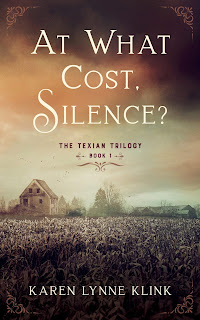
Karen Anne Klink is a writer based in Tucson. Her debut novel, At What Cost, Silence? (She Writes Press, 10/17/23) is the first installment in her Texian trilogy.
~~~~~~~~~~~~~~~~~~~~~~~~~~~~~~~~~~~~~~~~~~~~
Would you like to participate in Friday "Speak Out!"? Email your short posts (under 500 words) about women and writing to: marcia[at]wow-womenonwriting[dot]com for consideration. We look forward to hearing from you!
~~~~~~~~~~~~~~~~~~~~~~~~~~~~~~~~~~~~~~~~~~~~
Read More »

Friday Speak Out!: EMPATHY, THE SECRET TO IT ALL

Friday, September 22, 2023
By Laura Yeager

Why is it that writers think that stories/articles/novels/blog posts/poems/plays must “come out” of one’s psyche chronologically? This is a conceit of mostly beginning writers. From my experience of over 40 years as a writer, this just isn’t the case. You don’t have to sit down and write something from beginning to end.

Recently, I wrote an article for The Writer, but I wrote it in sections that I ultimately “glued” together and formed a piece that made sense but wasn’t conceived chronologically. This piece is one of the best creative works I’ve ever written. I didn’t know where it was going to end up when I was writing it. I certainly didn’t use an outline.

There’s something called a “first line writer.” This is a writer who gets the first line in their head and from there can write the whole piece practically in one sitting. You might be a first line writer.

One method is not necessarily better than the other. Use what works at the time.

I’ve written both ways – used a first line and an outline and gone from beginning right to the end AND written something in units and then figured out how to order them.

One method might be called “mechanical” (something that grows according to rules) and the other, “organic” (something that grows “wild.”)

This discussion falls under the umbrella of a writer’s writing PROCESS. I have a hunch that many writers aren’t keen on revealing their tricks and secrets of how they create. After all, does it really matter what the process is if the product is brilliant?

I teach writing, have for over 35 years, and I have a student who hasn’t said a word in class for a few weeks. He turned in his first paper which was about an Easter egg hunt, and I have to say that it was hysterical. The guy is funny on the page. I can’t teach this. The kid has either got it or doesn’t.

Am I going to ask him how he wrote the piece?

Heck, no.

I had a story published in The Paris Review years ago, decades ago. But the story bears mentioning now because someone asked me “How did you write this?”

My answer wasn’t very enlightening. I told the guy, “It’s completely true,” which it was, lifted from life. In this piece, I didn’t really use any fancy writing technique. I simply recorded verbatim what had happened to me in the span of a few months.

So, you see, there are many ways to write a creative piece.

But what should they all have in common?

Empathy. Putting yourself in another person’s shoes. Even if it’s just your reader’s shoes.

(Why do I feel like the guy in “The Graduate” who tells Dustin Hoffman that the secret to the economy is “plastics?”)

Whatever your writing process – disjointed, chronological, lifted from life, etc. – write with empathy, and you’ll have a chance of going far.

And isn’t that where we all want to go?

* * *

Laura Yeager has been writing fiction and nonfiction for over 40 years. A graduate of The Writers’ Workshop at The University of Iowa, she teaches writing at Gotham Writers and at Kent State University. Laura Yeager’s work at curetoday.com can be found at https://www.curetoday.com/contributors/laura-yeager. 
  ~~~~~~~~~~~~~~~~~~~~~~~~~~~~~~~~~~~~~~~~~~~~

Would you like to participate in Friday "Speak Out!"? Email your short posts (under 500 words) about women and writing to: marcia[at]wow-womenonwriting[dot]com for consideration. We look forward to hearing from you!
~~~~~~~~~~~~~~~~~~~~~~~~~~~~~~~~~~~~~~~~~~~~

Read More »

I am Spider-Man (at least for a little while)

Thursday, December 01, 2016
If you've ever cried or felt your heart pound while reading a book or watching a movie, then you've experienced what I call "reality blocking"--the process of becoming so engrossed in a story that you ignore your own feelings and adopt those of a fictional character. In the real world, nothing has happened, but your brain processes the information you see or read as if it were real, which, in turn, causes your body to react as if it were true. You "become" the character and see the world through his or her eyes.

Good writing focuses on shared emotions. Regardless of whether you write fiction or nonfiction, tapping into the emotions that make us human can improve your writing. Readers will root for the boy to get the girl of his dreams because we have all loved someone, and readers will empathize with the athlete who loses the race because we have all worked hard for something important, and suffered defeat. We feel the character's pain or joy.

So when I follow a fictional mother down a long, dark hallway toward her children's bedroom because she heard an unearthly noise, my fear increases with every step. She begins to sweat, and I begin to sweat. I relate because I worry that something bad might happen to someone I love. Because I care, I want to know what happens, and will continue to turn pages or sit through a movie that scares me.

This also explains why I care about alien invasion, Spidey Senses, or a wizard who casts away evil. None of these things will ever affect me (probably), so why am I not content to sit at home and pet my cat and work on a craft project? Instead, I willingly spend my time and money sitting in a dark theater, or curled up in a comfortable arm chair to experience a world that looks nothing like mine.

Through empathy, I can put myself in Spider-Man's shoes (does he wear shoes?) and think about what I would do in his situation. Would I feel guilty for Uncle Ben's death? Probably. I can relate to that emotion because I have experienced my own guilt and sorrow.

Audiences will care when they know why the main character cares. If there is no emotion behind the action, then we are just watching a guy in a spider suit. Although I will never spin a web from my wrist, I connect to his emotions and put myself in the center of the action, which makes me believe that I am Spider-Man (at least for a little while).

Here's a link for more information: https://www.psychologytoday.com/blog/the-psychology-fiction/201208/entering-anothers-experience


Mary Horner is a freelance writer, editor, and author of "Strengthen Your Nonfiction Writing." She teaches communications at St. Louis and St. Charles Community Colleges.
Read More »

Empathy and Mystery Hook Your Reader

Wednesday, April 15, 2015
I’ll be one of the first people to admit it. I’m a fickle pickle of a reader. Fail to hook me in about 20 pages, if I’m feeling generous, and I close your book and move on to the next. Thank goodness for my library card.

A lot of writers try to open with an exciting, seat-of-your pants scene to hook the reader. Sometimes it works. Other times it doesn’t. Too much drama, too early on can make your reader roll her eyes. It’s too much too soon so it seems overdone.

Instead, give your reader a reason to empathize. Stir up her curiosity.

I’m reading Empty Mansions: The Mysterious Life of Huguette Clark and the Spending of a Great American Fortune by Bill Dedman and Paul Clark Newell. When I started the book, I didn’t know who Huguette Clark was so that wasn’t going to work as a hook.

Instead, Dedman relies on reader empathy. He tells about his search for a new home and, finding nothing in his market, searching way up the scale. At one time or another, whether we were car shopping or shoe shopping, we’ve all failed to love what we could afford and ended up looking beyond our price range. We get it and we empathize.

Dedman saw something about an enormous gated home in the area. He wasn’t allowed on the grounds, but the caretaker divulged the owner’s name – Huguette Clark. The man had held the job for years but never met Ms. Clark. Then Dedman chanced upon a second Clark property when he was in California with much the same results. He was determined to find out about this mysterious woman who owned, but never visited, luxury properties.

Talk about a great way to hook the reader – mystery piled on top of mystery.

When the reader meets Huguette Clark, she is an old woman being visited by a doctor who doesn’t actually know her. While he anticipates eccentric, he doesn’t expect a woman whose face is so ravished by cancer that she hides behind a towel.

We all know what it’s like to be embarrassed but . . . wow. How can you not feel for this woman and wonder what led to this situation?

Dedman didn’t start the book with a car crash or a natural disaster which he could have done. After all, Huguette had a ticket for the Titanic. Instead, he starts the story by hooking us with a mystery and building empathy for this amazing character, a character who just happens to be real.

Can you use any of these techniques to hook your readers?

--SueBE

SueBE teaches our course, Writing Nonfiction for Children and Young Adults.  The next section start May 4, 2015.

Read More »

Connect with Your Audience with This Key Element

Tuesday, March 24, 2015
Whether you want to form a relationship with your blog audience, those that visit your website, your twitter followers, or even readers of your book, you need one key element.

What is it? That's what I'm blogging about over at FireText. And I'll give you a hint: it starts with empathy.

Today I'm specifically giving examples of how to use this method as it relates to texting and connecting with your customers through an SMS limit of 160 characters, but it's a technique that works well for just about anyone who wants to connect on a deeper level with their readers.

I just got a gig blogging for various businesses and sites about topics related to writing, marketing, and making money with writing, which is fantastic because I get to stay in my niche and help out other audiences that I normally wouldn't reach. I'll share more about this gig later, but in the meantime, check out my post: Creating a Deep Connection with Your Customers Through Text.

And if you've used empathy as a way to connect with your readers, I'd love to hear about it!
Read More »

Generating Suspense in Fiction

Wednesday, September 19, 2012
It happened. Again.

I picked up a new novel, excited to dive in, only to find myself disappointed almost from word one.

What was the missing element?

Suspense!

A strong sense of suspense snakes its way around you, through your mind (and maybe sense of reality), and pounces immediately.

Need to get a grip and add a tinge (or ton) of suspense to your WIP? Try these tips. They'll get the hair to stand up on the back of readers' necks and cause them to cheer for your characters!

  1. Begin immediately. It's common sense, but think about the number of times you've read or written a scene that doesn't begin with tension. Instead, you (or the author you are reading) start with casual details, attempting to create backstory or establish setting. Face it. It's not working. So, why not jump right in and show what's wrong? One of the best examples I've read that begins building suspense from the first word on the page is Love You to Death by Shannon K. Butcher. (Check out my interview with Shannon.)
  2. Develop empathy. Does character drive suspense or does suspense drive character? Until the reader feels a sense of empathy for the character and the impending conflict, the writer should be building suspense. Sure, the suspense doesn't have to pound you on the head; it can be subtle, but it should create a empathy, devise and spread a sense of understanding the motivation of a character. One of my favorite examples of a subtle use of suspense is in Caroline Leavitt's novel, Pictures of You. I read it in an afternoon sitting, crying while I read, because of the empathy I developed for one of the characters. 
  3. Find the flow. Building suspense reminds me of listening to music. Action builds to a crescendo before it plummets to the abyss, then builds again, sometimes adding staccato, sometimes extending a whole note for an extra beat. Suspense thrives on flow and rhythm. Strong comedic pieces create  suspense, too, utilizing rhythm and flow to keep readers off guard. One of my favorite examples for establishing rhythm comes from author Claire Cook. Just when you think you've reached the pinnacle, her words take you to another level, and that gentle, lulling rhythm keeps you tuned in. Check out Best Staged Plans as an example.
These basic storytelling elements will add a strong, suspenseful presence that's sure to hook readers...and keep them coming back for more!

How do you create suspense? Suggest a novel that starts with a suspense-building scene.

by LuAnn Schindler
Read More »
Powered by Blogger.
Back to Top