Showing posts with label diversity. Show all posts

Friday Speak Out!: Writing Diverse Characters

Friday, October 20, 2023
by Karen Klink

As a white female who grew up outside Akron, Ohio, I found that writing a 19th century historical novel featuring a bisexual young man and a young black slave who he considered his brother to be a fascinating and sometimes risky journey. I wanted to explore the multifaceted aspects of writing diverse characters, the significance of historical accuracy, and the delicate balance between representation and sensitivity.
To lay a sturdy foundation, I first delved into literature written by and about gay and black men, like Alan Hollinghurst, Jonathan Ned Katz, Malcolm X, Robert Jones, Jr., and Colson Whitehead. This helped me to understand the experiences, perspectives, and challenges faced by the characters I wished to portray.

Attending webinars and classes on diversity further enriched my knowledge of diversity. I highly recommend these classes for anyone who wishes to write about diverse characters. Writing groups, such as Authors Guild, offer these and other webinars to their members.

Lastly, I hired sensitivity readers for my novel as a vital step in ensuring that my characters were authentic and respectful representations of the communities to which they belong.

Historical Accuracy vs. Modern Sensibilities

One of the central dilemmas in writing diverse characters set in a historical context is the tension between historical accuracy and modern sensibilities. It’s crucial to portray the attitudes and norms of the time accurately, even if they may be uncomfortable or offensive to contemporary readers. This authenticity allows readers to understand the complexities of the past and how far society has come to the present day.

However, balancing historical accuracy with sensitivity requires subtly. It’s essential to approach sensitive topics with care, ensuring that they are neither sensationalized nor glossed over. By delving into the emotional and psychological depth of characters, I hoped to create a nuanced portrayal that resonates with readers while respecting historical context.

Diversity and Empathy

Writing diverse characters requires empathy. Putting myself in my characters’ shoes, regardless of their backgrounds, helped authentically capture their experiences, emotions, and growth. Empathy bridged the gap between me and my characters, allowing their stories to unfold with authenticity.

Finally, it’s important to acknowledge that narratives surrounding diverse characters have evolved over time. My novel, set in the 19th century, captures a particular moment in history. Contemporary authors may approach similar themes differently, reflecting the progress and changing perspectives of society. As an author, I have the freedom to choose the historical context that best serves my narrative while respecting the past.

The journey I embarked upon through research, education, and collaboration with sensitivity readers underscores my commitment to honest storytelling. By striking a balance between historical accuracy and sensitivity, I allow readers to engage with my characters in a way that both enlightens and entertains. I hope that all my work exemplifies the power of literature to illuminate the diverse tapestry of human experiences across time.
* * *

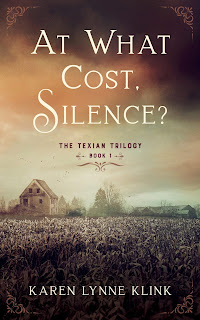
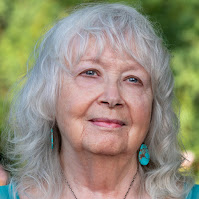
Karen Anne Klink is a writer based in Tucson. Her debut novel, At What Cost, Silence? (She Writes Press, 10/17/23) is the first installment in her Texian trilogy.
~~~~~~~~~~~~~~~~~~~~~~~~~~~~~~~~~~~~~~~~~~~~
Would you like to participate in Friday "Speak Out!"? Email your short posts (under 500 words) about women and writing to: marcia[at]wow-womenonwriting[dot]com for consideration. We look forward to hearing from you!
~~~~~~~~~~~~~~~~~~~~~~~~~~~~~~~~~~~~~~~~~~~~
Read More »

Special Friday Speak Out: A Conversation About Being a Writer with Interfaith Activist Saadia Farqui

Friday, March 29, 2019
Saadia Farqui writes just about everything you can imagine--fiction and nonfiction for kids, teens, and adults. She has a podcast about books with another author; and she trains various audiences, including faith groups and law enforcement, on topics pertaining to Islam. She has been featured in Oprah magazine in 2017, as a woman making a difference in her community. I am so excited to speak to Saadia on this special Friday Speak Out! edition of the Muffin because she truly has a lot to say encouraging all women to bring their voices to the table.

On her website, she says: "I am a self-taught 'interfaith activist', which means I strongly believe that the path to peace in this world is to understand and accept other religions and ways of life as valid and valuable. Sometimes I write about that as well."

WOW: Welcome Saadia, we are thrilled to have you with us today on The Muffin to talk about your children's book series and other writing you do as well as your podcast! We have a lot of children's writers that turn to us for help, navigating the publishing world, and we are excited to add your "in the trenches advice" to their resources. So, let's start by you telling us about your early reader chapter book, Meet Yasmin! What's it about? Why did you write it?

Saadia: Thank you for having me on the website! Meet Yasmin! is a collection of four specific stories from the Yasmin series. It's an early reader, which means it's perfect for children in grades K-2 , and it focuses on the antics of a curious and imaginative second grade Pakistani American girl called Yasmin. I wrote it to give children of color a character they could identify with and relate to, in a world where the majority of children's books feature white main characters. I also hoped it would provide all readers a chance to see a different cultural perspective than the one they're used to.

WOW: That sounds great for all children. Books can definitely open worlds to kids beyond their own neighborhoods and schools. How lucky we are to have an author with us who is doing that for kids! So how did you get a literary agent for your book series? And did you sell her on just the one book or other books, too?

Saadia: I queried countless agents for a number of years, just like other writers. I wrote several manuscripts before this one, both children's books and adult ones. After several years of rejections and writing new manuscripts, I was able to find my agent Kari Sutherland through participating in a Twitter pitch party. I actually had an adult short story collection as well as the Yasmin series, plus a picture book at that time, and signed with Kari on the basis of all three.

WOW: I think that is the first time I've talked to anyone about securing an agent during a Twitter pitch party! (Muffin readers, take note!) What is your advice to aspiring children's book authors--either about the actual writing and/or about getting published?

Saadia: My advice is to continue to write even when you're getting rejected. I think back to the years in which I wasn't able to find an agent, and almost giving up, and am so thankful I didn't. I wrote many books that didn't sell, and rather than get frustrated, I realized that this wasn't a failure. I saw this as part of the process of improving my craft. I advise aspiring writers to do the same.

WOW: That is great advice! Besides children's book writing, you also have a podcast titled, Lifelines: Books that Bridge the Divide. We have just started writing a lot about podcasts on WOW!, even though they've been around for a while! When and why did you start yours? Do you use it to market yourself? How can interested readers listen to your podcast?

Saadia: My co-host Ann Braden actually approached me with the idea of a podcast when we were both waiting for our books to be released. She is a middle-grade author with a background in teaching, and she felt strongly about books being a way to reach marginalized readers. I agreed to host the podcast with her, and it's been a very well-received one! You can listen to episodes on Stitcher and iTunes, or visit Ann's website for show notes and podcast info: http://annbradenbooks.com/podcast/

WOW: I can't wait to check that out. I've been listening to a lot of podcasts when usually I would have the TV on for background noise or when I walk my dog. It's opened up a whole new world to me! You also have quite a bit of information on your website about sensitivity training and school visits that you do. I know a lot of our new children's book writers are working on lining up school visits and other workshops. How do you set these up? Is it important to have all this information on your website?

Saadia: I don't think there is any one way to set up school visits. It seems to be through word of mouth as far as my own experience goes. If you're active on social media and your book gets recognition online, teachers will be interested having you visit. I have heard of authors advertising their availability by mailing out postcards, but I'm not sure this method gets any traction. My own experience has been that teachers who follow me on Twitter share the word about my books, and then contact me via my website to inquire about my visits. That's why I think it's so important to be on social media and connecting with readers in a genuine way.

WOW: I really like that you are talking about how you use Twitter. I think so many of us get bogged down on trying to be on all social media accounts; but more and more, I've seen the suggestion that specializing in one or two that you really relate to is the way to go. It seems like Twitter really works for you! That is awesome. How can our readers follow you on social media or to receive updates on your work?

Saadia: I love Twitter and share most of my news there. You can follow me on www.twitter.com/saadiafaruqi or on Instagram at www.instagram.com/saadiafaruqi.

WOW: Saadia, thank you very much for taking the time in your busy schedule to share your books and career with us and to help other aspiring writers. Muffin readers, please check out Saadia online or her podcast. If you are a children's book writer or have kids, don't forget to check out her books, too! 
Read More »

The Writing Life: 4 Things I Learned in 2016

Thursday, December 22, 2016
Research means work, work, play.
I assume that there are a certain number of things that you and I have in common. After all, given the fact that we’re having this discussion at the Muffin, there’s a really good chance that we are both interested in making our living as writers. Because of this, I’m hoping that some of what I learned will benefit you as well. 

Getting 50 rejections in one year isn’t as easy as it sounds.  One of the goals I set for 2016 was to earn 50 rejections.  I was counting agent queries, editor queries, book markets and magazines, so I thought this would be do-able. But finding agents who represent picture book authors who don’t illustrate is tough. Because of this, I would find a suitable agent and submit to that one person so I didn’t send out nearly as much as I had planned. If I’m going to earn 50 rejections next year, I’m going to have to send out a lot more and that includes contacting 5 or 6 agents a month.

When you write for an overseas publisher, find their magic number. Right before Thanksgiving, I got a rewrite request from efuture, a South Korean ESL publisher. Before I submitted the manuscript the first time, I ran it by my critique buddies. One writer reminded me that I couldn’t build my story around the “power of three” unless I was sure that three was meaningful in Korean culture. What if they grouped things in four or six for maximum impact?  Lucky for me, the “magic” number is still three but I’m glad she reminded me to check.

I thought of myself as a pantser but I am really a plotter. Because I don’t tend to outline my nonfiction, I thought of myself as a pantser, someone who writes without an outline.  But most of my nonfiction has a natural order – the steps in a how-to, the order in which historic events happened, etc.  When I tried NaNoWriMo without a solid outline, I discovered that I have to know where I am, where I’m going and the major landmarks in between.  I am not a pantser.

Not every writer is flexible enough to write for a packager. The piece that really brought this home is the book I turned in yesterday, E-Sports! Game On which is about professional gamers.  Yes, people who make money playing computer games. My son and his teen friends all “get” it. I didn’t understand how rare my love of gaming is in my “age bracket” until I noticed how my peers reacted when I told them what I was writing.  They looked confused. Some actually got “triggered” (the word my son uses). While I wonder how many writers turned the assignment down, I’m glad I have diverse interests.

Those are the lessons that I’m taking with me into 2017. Keep learning and looking into new things (I hear Battlefield has a new game coming out).  Maybe you could outline or pants a new type of writing.  But most of all, keep submitting your work.  There are editors and readers out there and it is up to us to help each other find them.


--SueBE

To find out more about Sue Bradford Edwards writing, visit her blog, One Writer's Journey.
Sue is also the instructor for Writing Nonfiction for Children and Young Adults which starts again 2/6/2017.
Read More »

Don’t Forget to Build that Bridge

Saturday, May 21, 2016
“Don’t send us what we’ve already seen. We want something new. New settings. New situations.  New stories. We want true diversity.” 

Editors, agents and publishers are singing this refrain or something much like it which makes sense.  They want to publish work that is new.  They want to publish work that represents the diversity of readers they hope to reach. They are also coming to recognize that diverse reading leads to greater empathy.  If you have seen Grace Lin’s Ted Talk on this subject, it is well worth the time. 

Duchess Harris and I are working on our second book together. Our first book was Black Lives Matter.  Our second is African-American women at NASA. Yet again, we are discovering how tough it is to write diversely. It isn’t the partnership that’s difficult although that can be challenging. 

What we are rediscovering is the need to build bridges for our readers.  It doesn’t matter if this reader is your agent, your editor or the person you hope will curl up with your book, if the subject matter is new to them, they will need a bridge. They will need a way to cross from what is familiar to what is not. 

In our case, we have to build a bridge between the dominant culture and the realities of racism and civil rights. Although we are familiar with the topic and often discuss race, we live in a society that has long sidestepped race. We can’t just plunk our subject down in front of someone and expect them to read long with us. It just feels too foreign, too extreme. To get them from where they are to where we want them to be, we build a bridge of facts, laying these details out one beside the other like the stones in a bridge.

But this problem isn’t ours alone. One author I know had written about both her native West Indies and her current Midwestern home.  In both cases, she was questioned by her coastal editors about details in her stories.  “Surely people don’t live like this?” “I’ve never seen a town with an empty street corner?” “Is the New Madrid fault a real thing?” She too had to build a bridge using sensory details and facts drawn from her own experience. It was the only way to make her settings real and accessible to big city readers who were more accustomed to skyscrapers than gravel roads.

Whether your story is set among the Ancient Maya, a futuristic Wild West culture or a fantasy world of elves and magic, you will need to create a bridge for your reader.  Lead them step by step, fact by fact, detail by detail, from the world that they know to the world of your story. No matter how much they want the experience, they need the bridge to get there.

--SueBE

Sue is the instructor for our course, Writing Nonfiction for Children and Young Adults. The next session begins on June 6, 2016.
Read More »
Powered by Blogger.
Back to Top