Showing posts with label 2020 Spring Flash Fiction Contest. Show all posts

Interview with Victoria Lorrekovich-Miller, Runner Up in the Spring 2020 Flash Fiction Contest

Tuesday, November 10, 2020


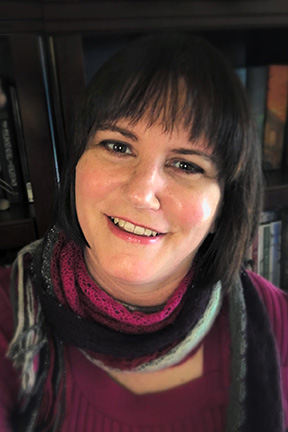
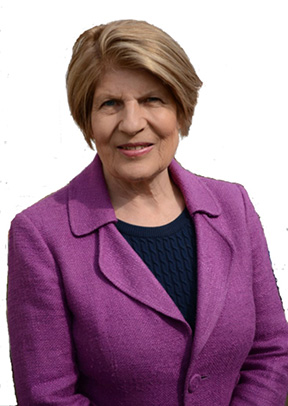
Victoria loves stuff that begins with W: Words, Writing, Wine, Women activists, Wagging tails and her World of family and friends. She is an APA style-certified editor and the founder of www.LocalEditors.com, which helps high schoolers craft their college application essays and graduate students polish and publish their theses and dissertations. Her published pieces have appeared in print and online in Dog and Kennel, Moxie Magazine, Diablo Magazine, Dream in Color, Thought Catalog, Cricket Magazine, and more. Victoria is the guardian of a menagerie of critters—two dogs, two cats, a bearded dragon, and a praying mantis named Cujo who inspired her children’s picture book, When a Mantis Finds a Fly in the Sky, due out in 2021! When not writing, editing, or sheltering-in-place, Victoria works as a wine educator in a Livermore Valley winery on the weekends. She is currently working on a novel about a female-centric winery! She lives with her incredibly fun and supportive husband, Martin, and they are parents to four talented children: Ari, Justin, Logan, & Kaitlin, who are all making the world a kinder and more interesting place to live. You can reach her at: Victoria@LocalEditors.com 

 Make sure you read Victoria's story "The Disposables" and then come on back and read her interview. 

-- Interview by Nicole Pyles 

WOW: First, congratulations for winning runner up in the flash fiction contest! Your story was so thought-provoking. What inspired this piece? 

Victoria: I took a women’s psychology course in college and one of our assigned readings was: “The Rape of Mr. Smith” by Connie Borkenhagen. It first appeared in the April 1975 American Bar Association Journal and highlighted the legal bias against rape victims. It was so powerful; it stayed with me all these years. I thought it would be interesting to write a story where women, historically, had all the power. 

In any context, evolution equals change and those who have the power don’t want to give it up—even if it seems, on the surface, they pay lip service to the idea of equality. The last line of my story is supposed to be humorous, but also indicative of the grandmother’s internalized sense of gender preeminence. 

WOW: I think you are spot on about those with power. So, what surrounds you when you write? 

Victoria: I like to be surrounded by pictures of inspirational women (or quotes from them)—Michelle Obama, Cher, Jane Goodall, Gloria Steinem, Malala Yousafzai, and Tig Notaro. Could you imagine having a dinner party with this eclectic group? 

I also love being surrounded by books—I love works by Alice Hoffman, Amy Tan, Maya Angelou, Ayelet Waldman, Patti Callahan, Angie Thomas, and Jhumpa Lahiri. (I also read male authors, but men have always hogged up the limelight, so I’m not going to list them here;-) 

I also always have my pit-bull-x, Bella, and Pom-poo, Teddi, near or under my desk—always ready to offer emotional support or give me a nudge when I’ve been sitting too long. Going for a walk can re-energize me and enable a more productive writing session. 

WOW: You have great sources of inspiration around you! How does your work with students shape your own writing? 

Victoria: I was just talking about this with my writer friend, Pam McNeilly-Calabrese. When teens are drafting their college application essays, they have to adhere to very strict word counts. For the University of California campuses, it’s four 350-word essays; for the common app, it’s 650-words and then there’s all the supplemental questions that require responses anywhere from three words to 500 words. For their first drafts, I require them to do what Anne Lamott calls the “shitty first draft.” I tell them NOT to worry about the word count. When I have in front of me a 1,000-word essay that needs to be edited down to 650 words, there’s a lot of carving and shaving that has to happen. Every word has to carry its own weight—no space for freeloaders. When the editing process is complete, they have original, powerfully narrated essays. 

When I return to my own creative writing, I find that I am able to apply that same fine-toothed comb to my own stories and they’re better because of it. WOW contests are great exercises for the writerly mind. 

WOW: That is great advice you give your students. I can't help but notice your writing is often shaped by who - or what - is around you, such as your children's picture book due in 2021 and your current WIP about the female-centric winery! How do you use what surrounds you to inspire your writing? 

Victoria: I think because I use writing for both my work and as my way of understanding myself and others, a part of me is in everything I write. I love strong women, animals—whether it’s a dog or a praying mantis, and a strong sense of fairness, especially in cultures where the marginalization of people who are different from the norm has been the historical practice. I like people who want to grow and evolve and attempt to understand that no one is completely self-actualized. 

The things that intrigue me often find their way into my work. My husband’s pet praying mantis, Cujo, has kept me enthralled for nearly a year. We got her when she was ¼” long and she’s now 4” long. She’s fun to handle but a deadly assassin in a world of crickets and flies. Of course, she had to have a children’s book written about her, “If a Mantis Finds a Fly in the Sky…” 

The world of wine is a fascinating place in which to be (and where I work on some weekends) but if you look too closely, you’ll find that it’s dominated by men (at least when looking at the actual winemakers), so I started asking myself questions: What if I wrote about a badass female winemaker and her best friend who’s an amazing artist with a degree in business and together they realize their college dream and opened a winery together? What if this happens after one loses her police officer husband to an auto accident? (I worked with police officers for a couple of years). What if one is a lesbian and the other straight? What if each wants a romantic partner but considers the other her life partner and soul mate? And so many more questions… Now I have 200 pages written with another 80-100 to go! 

I also wrote a short story about a homeless guy and a pit bull. Most of the story takes place in or around a dog park in Boise. As someone who has a pit bull and has worked and volunteered with rescue foundations, it was easy for me to imagine the kinds of interactions dog owners would have with one another. 

WOW: That all sounds so amazing! What does a typical day of writing look like for you? 

Victoria: My days have changed since the Covid-19 pandemic struck—my husband now works from home and three out of my four kids are doing distance learning, also from home, so my days aren’t as quiet as they used to be. However, I believe we’ve entered into an elevated space of consideration and appreciation for one another. We all have carved-out areas within the house where we work, individually and independently, but it sort of feels like we’re heading up different departments within one company. If my daughter is having trouble with a math problem, one of her brothers is there to help her. When the electricity goes out, my husband is there to give us each a fully charged portable power bank. When I’m on a writing roll, my other son offers to make dinner. When my husband needs a contract proofed, I’m here to do it. 

The above didn’t really answer the question so here’s a more straight-forward response: I usually work on my creative nonfiction projects, short stories, and/or novel in the mornings and then spend the afternoons working with students. After dinner, if everyone seems to be doing their own things, I go back to writing for myself. This is a Monday through Friday schedule. The weekends are reserved for family fun like paddleboarding, hiking, hanging out with friends, antique shopping, wine-tasting, and going to art shows or music concerts. There’s also usually a couple of times a month when I’m working as a wine educator in a Livermore Valley Winery.

WOW: You have a great writing routine and a wonderful support system. Thank you again for taking the time to speak with us today. Best of luck wth your writing! 
Read More »

Interview with Sally Keeble: 2020 Spring Flash Fiction Contest Runner Up

Tuesday, October 27, 2020

Sally’s Bio:

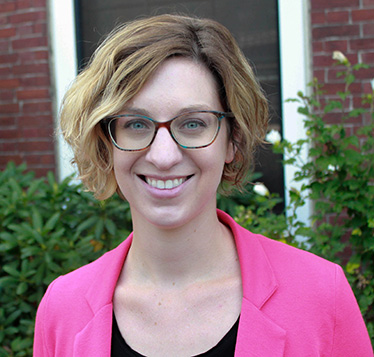
Sally’s new to fiction-writing, using the medium to explore the social issues that originally drove her into a career in politics.


A former Member of Parliament in the UK, and before that a journalist, she’s had non-fiction published previously. But she finds writing fiction much more challenging and rewarding.


“Batman and Crunchy Nuts” is one of a series of pieces she’s written on people’s experiences during the Covid19 lockdown in the UK. She’s just finished her first novel called Ocracoke set in London and on the Outer Banks of North Carolina. Sally’s an avid reader of literature from around the world, and spends her spare time travelling, and with her family.


If you haven't done so already, check out Sally's award-winning story "Batman and Crunchy Nuts" and then return here for a chat with the author. 


WOW: Congratulations on placing in the Spring 2020 Flash Fiction Contest! What excited you most about writing this story?


Sally: The spark for the story came from a Zoom community meeting where someone complained about homeless people camping in the local woods. When I got down to writing it, what was most exciting was the way different experiences of the coronavirus lockdown came together: parents juggling childcare, home-schooling and food shortages, children caught between warring adults, rough-sleepers with nowhere to go. It’s been intriguing to hear people’s different responses to the story. I saw it as a story about two people, but some see it as a story about three people, some don’t see it as being about COVID-19 at all. 


WOW: Isn’t it such a rewarding experience to hear different responses to your story, to know that people are reading it, thinking about it, and taking away different perspectives that resonate with them? That’s one of my favorite parts of storytelling. What did you learn about yourself or your writing while crafting this piece? 


Sally: The main thing I learned was that, after a lot of false starts and disappointments, I can actually write fiction. So, thank you to Women on Writing for giving me that hope. It’s been a huge boost to be a runner up in this competition.  Flash fiction is really good for teaching you to pay attention to detail which is especially useful as I tend to write too quickly.


WOW: How has fiction writing helped you to explore social issues in ways other forms of writing have not? 


Sally: My background is in politics and political writing. Fiction has made me be a lot less dogmatic and directional, and enabled me to look at social issues in the round. As a fiction writer, you create the characters and the context. What comes next can be unpredictable. Homelessness is one of the issues I care and campaign about most passionately. “Batman and Crunchy Nuts” doesn’t reach any of the usual neat conclusions, but probably says more about homelessness than any number of political pieces. 


WOW: I agree. Sharing an issue as a story is very effective. What are you reading right now, and why did you choose to read it? 


Sally: Bernadine Evaristo’s Girl, Woman, Other, which I wanted to read for its exploration of diversity and experimental style. It turned out to be one of the greatest novels I’ve ever read.  


WOW: Good to know! That’s been on my to-read list for a while. If you could give your younger self one piece of writing advice, what would it be and why?  


Sally: Just do it. I put off fiction writing for far too long. The second piece of advice I’d give my younger self is to remember that writing is a craft that you have to learn and practice, luckily with the support of the writing community.  


WOW: Thank you for sharing your story and for your other thoughtful responses! Congratulations again, and happy writing!


Interviewed by Anne Greenawalt, who keeps a blog of journal entries, memoir snippets, interviews, training logs, and profiles of writers and competitive sportswomen with the purpose giving them a forum to discuss their own athletic careers, bodies, and lives in their own words. For more on the power of storytelling, join the conversation on Facebook, Twitter, or Instagram.


Read More »

Interview with Angelica R. Jackson, Runner Up in the Spring 2020 Flash Fiction Contest

Tuesday, October 06, 2020


Angelica R. Jackson, in keeping with her scattered Gemini nature, has published articles on gardening, natural history, web design, travel, hiking, and local history. Other interests include pets, reading, green living, and cooking for food allergies (the latter not necessarily by choice, but she’s come to terms with it). Ongoing projects include short fiction, poetry, novels, art photography, and children’s picture books.  
She’s also been involved with capturing the restoration efforts for Preston Castle (formerly the Preston School of Industry) in photographs and can sometimes be found haunting its hallways. An incurable joiner, she is a member of the Society of Children's Book Writers and Illustrators (where she serves as her region's Social Media Coordinator), and several other writing organizations. 

She shares a home in California's Gold Country with a husband, a rescued Basset Fauve de Bretagne dog, plus a Miniature Pinscher/Nibblonian mix, a reformed-feral tabby, and far too many books (if that's even possible). She is the author of the award-winning Faerie Crossed young adult urban fantasy series, and her photos are collected in Capturing The Castle: Images of Preston Castle (2006-2016). She also features her art on her line of handmade jewelry, Charming Corby Jewelry. 

Angelica’s story “Ebb Tide” placed third in the WOW! Women On Writing Spring 2010 Flash Fiction Contest

Connect with her online: Twitter, Facebook, Goodreads, Art Galleries, Website

Make sure you read Angelica's story The Devil You Know, then come on back and read her interview. 

 -- Interview by Nicole Pyles 

WOW: First of all, congratulations on winning runner up in the flash fiction contest! I felt like this story is part of a much bigger one, especially with your strong character development. How did you get into the mindset of this character? 

Angelica: Your intuition is correct--this is actually a reworked section of a novel I'm working on called Stay, Girl: Together, a runaway girl and a neglected hound overcome their abusive pasts by taking the lead in a fun-filled neighborhood prank war. It's Because of Winn-Dixie meets Okay for Now, set in small-town Northern California in the 1930s. 

I rewrote this scene to be more of a standalone flash fiction piece, which mainly meant taking out some exposition that related to other parts of the story, and also changing the characters somewhat. In the novel, the character of Lacey is a dog rather than a cousin, but that seemed like it would take too many words to set up. 

For the main character, I drew on my own childhood abuse and tried to convey how that trauma plays out through a child's POV. Lacey is inspired by a hound we rescued a few years ago, who came to us sick and shutdown with shyness. I think my understanding of how to give her time and space contributed to her bonding so closely with me before she eventually passed away. That's one of the great things about fiction, too--in my book, the dog doesn't die! The other two dogs mentioned in the story, Nap and Josie, are based on my current pair of mischievous, rescued dogs. 

WOW: I love how you pulled from your own experiences. You have such vivid descriptions in this piece that I felt like I was actually there. How do you capture settings and scenery in such a vivid way? 

Angelica: The settings and descriptions are a blend of my visual artist side and some sensory issues I have. The visual artist side expresses itself in my photography, sketches, and paintings, and it has trained me to notice and memorize details. 

When I'm looking for inspiration, I'm just as charmed by the bee with pollen caught in its hair as I am by the wide field of flowers and looming mountains. I'm also fascinated by how two artists can describe or interpret the same scene so differently; a finished painting or scene in a story is made up of who we are as well as what we see. And how that is expressed through the filter of our experience. 

I have some sensory issues that make it difficult to tune out sounds, smells, breaks in a visual pattern, and so on. It can be both a blessing and a curse, but I have definitely embraced using it to make scenes and characters richer and more dimensional. 

WOW: I think that's amazing! You have such a variety of creative talents! How do you nurture each one? 

Angelica: Funnily enough, I feel like each outlet only adds to the well of creativity rather than taking away from it. If I get stuck in one of my writing projects, I'll go work on some art for a while and it takes the pressure off the writing block. Creating art specifically for my writing projects also gets me inspired again, like how my book covers make me like the characters all over again--and believe me, after rounds of revisions or proofing audiobooks, I need to be reminded of the time before I was sick of my characters and my story, haha. 

 Last year I also started making glass cabochon jewelry with my artwork and some vintage images and find it relaxing to piece my jewelry. Making small design decisions like what finish or size of setting suits each image the best is a nice break from larger plotting decisions in a novel. 

WOW: I completely agree. Creative outlets each feed each other! What are you currently working on that you can tell us a bit about? 

Angelica: I'm working on Stay, Girl, mentioned above, and it started out as a middle-grade book but may turn out to be more for the adult literary market. I'm also working on the third and final book in my young adult, urban fantasy series, Spellmeet, which should be out next year. 

The other project is a deep rewrite of the first book I wrote (my UF series was the first published), a task prompted by the stressful days of COVID. My anxiety reached a point where I was truly struggling to write new words in my book projects, but I found I could get my brain to cooperate with shorter pieces (like my contest entry) and editing. I had set aside my first novel because although I had grown as a writer to the point where I could see all the first-book issues, I couldn't see how to fix them. Turns out the best way was to ditch over 2/3 of the words I'd already written and start many of the sections from scratch. I'm pleased with how it's going but needed a break, so I'm currently setting up an Etsy store for my jewelry. 

WOW: I'm so impressed with what you've been working on! What surrounds you when you write?

Angelica: Unless I'm at my PC, I move around a lot when I write. I'm fortunate enough that we have a beautiful garden and when it's nice outside, I often take my work out there. My Instagram feed is mostly my garden and my dogs if anyone wants some visuals. 


My office has posters lining the walls (including some gorgeous art deco versions of characters from the show Firefly), and multiple dog beds and a cat tree since the critters have figured out that I am in that room a lot. When the dogs come in from the garden, the first place they look for me is the office, haha. I usually have music playing in another room because it's too distracting to have it right in my ears while I'm working.

WOW: Your office sounds amazing! Thank you again for speaking with us today and best of luck with your writing! 
Read More »

Interview with Chris Lytwynec: 2020 Spring Flash Fiction Contest Third Place Winner

Tuesday, September 22, 2020

Chris’s Bio:

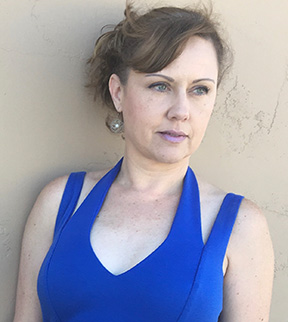
Chris Lytwynec is a former software developer who works at the intersection of technology and society—whether building a database to investigate foreign money in congressional testimonies, reporting on tech regulation, or writing science fiction. She holds a BA in Psychology from University of Rochester and an MS in Journalism from Boston University. Recently relocated to Phoenix, AZ, Chris enjoys hiking, learning, and playing music. Visit her website at chrislytwynec.com.


If you haven't done so already, check out Chris's award-winning story "The Places that Aren't" and then return here for a chat with the author.


WOW: Congratulations on placing third in the Spring 2020 Flash Fiction Contest! What excited you most about writing this story?


Chris: I’ve been working on a novel, so this was a bit of a relief from the ups and downs of that process. It felt great to write something complete in a short time frame! This story was also a bit of an exercise in conveying backstory in a compelling way, which is something I’ve been grappling with in my longer work. 


WOW: It’s always so interesting to hear how writing flash stories informs longer works, or vice versa. What did you learn about yourself or your writing while crafting this piece?


Chris: Trauma is typically portrayed solely as the addition of negative experiences, but this piece looks at trauma as the denial of the neutral or positive experiences – the things that never came to be as a result of a negative experience. For me, writing this piece was partly a way to put to words this unpleasant feeling somewhere between regret and nostalgia.


WOW: How does working at the intersection of technology and society influence your writing?


Chris: I find elements of sci-fi sneaking into stories that I didn’t even plan to be science fiction. This story, for example. It started from a couple of prompts relating to dreams and home, and I ended up with a draft of a science fiction story!


WOW: I love hearing how stories take shape in such unexpected ways! What are you reading right now, and why did you choose to read it?


Chris: I like to have a non-fiction book and a novel going at once. Right now, I’m working through IBM and the Holocaust by Edwin Black and Parable of the Talents by Octavia E. Butler. The former was recommended to me based on my interest in surveillance and cataloging technologies and my tendency to read WWII-era historical fiction. The latter I picked up because I wanted to read some more science fiction and I’d already read the first book in the series.


WOW: It’ll be interesting to see if those ideas coalesce into one of your next pieces. If you could give your younger self one piece of writing advice, what would it be and why?


Chris: Just start. It sounds simple, but it’s the hardest thing to do some days.

WOW: Yes! I agree! Thank you for sharing your story and for your other thoughtful responses! Congratulations again, and happy writing!


Interviewed by Anne Greenawalt, who keeps a blog of journal entries, memoir snippets, interviews, training logs, and profiles of writers and competitive sportswomen with the purpose giving them a forum to discuss their own athletic careers, bodies, and lives in their own words. For more on the power of storytelling, join the conversation on Facebook, Twitter, or Instagram.


Read More »
Powered by Blogger.
Back to Top