Friday Speak Out!: Start Your Own Writers’ Discussion Group: Tips from Electric Sheep

Friday, March 11, 2022
by Myna Chang

Have you ever fallen so hard in love with a flash or short story that you couldn’t wait to talk about it--only to remember your book club exclusively discusses full-length novels and your writers’ critique group focuses solely on members’ WIPs?

Where can you go to gush about that phenomenal short story, or ask questions about the experimental flash piece you didn’t fully understand? A made-to-order discussion group might be the solution you’re looking for.

Talking through published pieces with other writers can promote deeper reading, which can enhance your own work. It’s also a wonderful way to maintain your enthusiasm and expand your community.

But how to get started? Here are a few tips I’ve gathered from hosting Electric Sheep, a speculative fiction discussion group that recently celebrated its first birthday.

First, consider your goals. Do you hope to discover fresh narrative styles, or new authors? Are you hoping to uncover additional layers of meaning, or explore other readers’ interpretations and perspectives? Electric Sheep’s primary goal is to celebrate scifi and fantasy short stories. Analyzing these pieces with other speculative writers often brings unexpected insight into the story, as well as the craft of writing.

Next, think about how to structure your activities. Maybe you want to participate asynchronously through a message board or chat group. Or perhaps you’d like to meet virtually. How will you decide which stories to discuss, and how will you assign organizational tasks? Electric Sheep meets weekly via Zoom. We keep our schedule and participation guidelines in a group spreadsheet in Google Docs. There are many ways to approach this, so envision a setup that will be convenient and enjoyable for you and your members.

Speaking of members, how do you find each other? If you’re a writer, you might already be part of online authors’ groups. Literary Twitter is overflowing with writers of every genre and skill level, making it easy to connect with others who share your interests. Don’t forget to check the bulletin board at your local library. Most of the people in my group met through an online workshop offered by a bookstore.

Finally, try to keep an open mind. Your new friends may have all sorts of suggestions that never occurred to you--be brave and experiment until you find the right combination of structure and procedures. The folks in Electric Sheep keep surprising me with their generosity and brilliant ideas. Our meetings are the highlight of my week.

I wish you good luck starting your group, and remember: have fun!

* * *
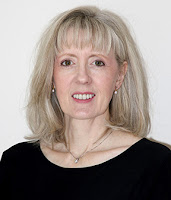
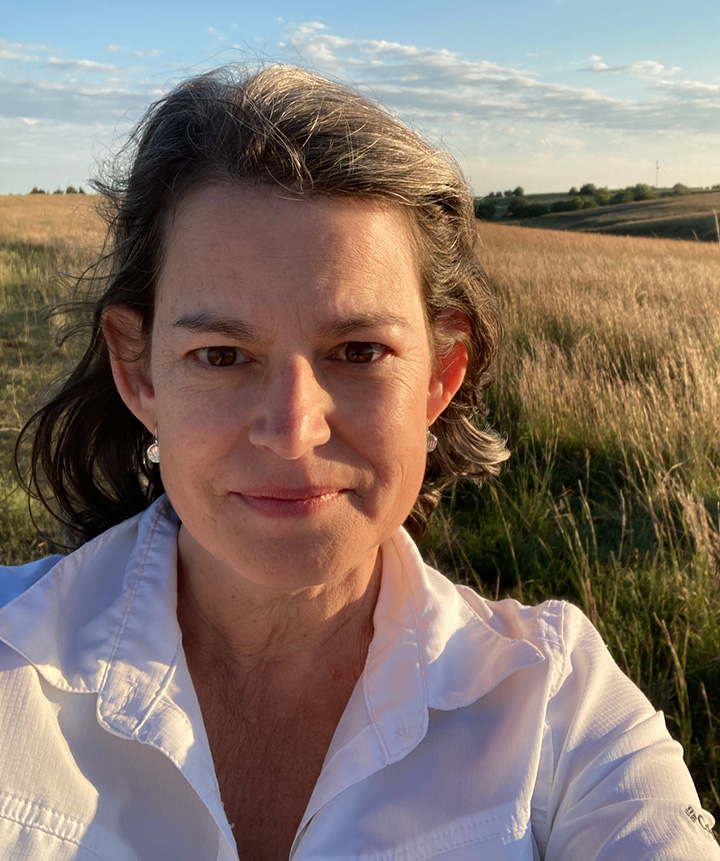
Myna Chang (she/her) is the host of Electric Sheep. Her work has been selected for Flash Fiction America (W.W. Norton), Best Small Fictions, Fractured Lit, X-R-A-Y Lit Mag, and The Citron Review, among others. She has won the Lascaux Prize in Creative Nonfiction and the New Millennium Award in Flash Fiction, and she’s a huge fan of the WOW! Flash Fiction contest. She reads submissions for Uncharted Magazine and Janus Literary. Find her at MynaChang.com or on Twitter at @MynaChang.
~~~~~~~~~~~~~~~~~~~~~~~~~~~~~~~~~~~~~~~~~~~~

Would you like to participate in Friday "Speak Out!"? Email your short posts (under 500 words) about women and writing to: marcia[at]wow-womenonwriting[dot]com for consideration. We look forward to hearing from you!
~~~~~~~~~~~~~~~~~~~~~~~~~~~~~~~~~~~~~~~~~~~~
Read More »

The Gift of Laughter

Wednesday, March 09, 2022

The Gift of Laughter


WOW! (pun intended) it's been a bit of ... you know ... a challenge the last few weeks/months. That's about the most politically correct way I could thing of to say it. You know what I mean, right?

No matter who you are, where you live, or how much money you have in savings (do people still do that?) - gas prices are rising, groceries are getting more expensive, and things are just plain weird. There's talk of war on every channel, and I won't even go there and bring up matters of health.

Yesterday, I was scrolling through social media and Dillon, a good friend/family member had posted about fuel prices. Now, as many of you know - we are dairy farmers, so when we talk about fuel, it's not just a tank of gas here or there to get the kids to school or grab a cup of java. I mean, it IS that...but it's also 10,000 gallons of diesel fuel a year to run tractors and equipment. It's the daily hauling costs to ship milk. It's the price to transport cattle, have feed delivered, and the list goes on. Anyway - Dillon is in the same business we are, so we "get" one another.

I made a comment on his post that maybe he would be stopping by to look at some horse saddles I have in the barn. We had discussed them last summer, and as typical horse people who also have cows, we always intend to make more time for riding but life seems to get in the way. Anyway - I had originally told him to pop in when he was ready and see if anything I have fits his needs. Yesterday, the joke was we might all be needing saddles so we can get to the grocery store as we won't be able to afford fuel for our cars. It was a joke - clearly hauling cattle and taking kids to school is not easily done with a saddle and single horse. If you'd like to try it, feel free to get back to me about the issues you run into. 

My comment was meant as a joke - Dillon and his friends took it that way. For a few moments, we bantered back and forth about how it might be difficult to ride a horse to work and our coffee might spill. We teased about where the carseat goes and if it should go in front of the saddle, behind, or if you should just strap it directly to the horse and forego the saddle completely. We envisioned how many horses it might take to pull a cattle hauling trailer and we pondered the looks on the cows faces (and horses for that matter).

Amidst fears of falling milk prices, concern over rising fuel costs, fear of the future, etc... we were able to laugh. We shared funny thoughts and ideas, and were even able to find some hilarious photos. It felt incredibly good to laugh and forget about all those worries plaguing our days.

I'm going to encourage each of you to find something to make you laugh today. Grab a fun new book or pick up a magazine! Spend time chatting with a toddler; or ask a teenager if anything funny happened at school today! Let yourself relax and laugh and see how amazing you feel when you're done. If that's not enough for you, pop on in and I'll introduce you to one of our kissing cows - that always makes me laugh when they come in with that big wet tongue as I try to navigate to safety only to find another cow lapping at my pants leg!

Still not your bag? Ask one of my kiddos to tell you about the baby goat we nursed back to health - the one who was sleeping in the kitchen! There's never a dull moment here and lucky for me - never a lack of laughter!


As our time together comes to an end, let me ask you:


Do you have a funny story that will make others laugh? Share it as a comment on this post!

Can you recall a time when laughter helped you? Better yet, do you have a funny story about a gift? Share it as a comment on this post!

How are you weathering life? Tell us a little bit about your journey and where you are at? What's going on with you friend? Share it as a comment on this post!


Hugs,

~Crystal


About Today's Author:

Crystal is a foodie, farmer, and friend! She has 6 children and lots of special young people who call her "mom" even if she isn't 'their' mom! She starts each day sipping coffee and milking cows with the love of her life and occasionally ends the day with a glass of wine.  Crystal is raising kids and cattle while juggling cleaning jobs, bartending shifts, music gigs, her job as office manger and she escapes reality a few hours each week riding horses and reading books (not simultaneously)! And who knows, she may start blogging again sometime soon: http://bringonlemons.blogspot.com/


In the meantime, you can find her posting pics of food, cattle, and more on Instagram and Facebook


Read More »

The Epilogue Questions

I finished the manuscript! Woohoo! Woohoo! *confetti showers* 

Or maybe I have one more chapter. Still Woohoo! 


Or maybe it’s an epilogue? Okay, hold my confetti, I have to think. 

From the beginning of this novel, I envisioned an epilogue where I’d tie up the very last of the particulars from the story. But somewhere between putting that period on the last sentence of the last chapter and typing the word “Epilogue” I paused. And now I’ve been thinking A LOT about epilogues in general and mine specifically. 

First, I’m wondering if the only reason I’m thinking of writing an epilogue is because I’m reading a mystery series where the author always includes an epilogue. I mean, how often does one see an epilogue? Not very often, right? (Unless you, too, are reading this particular series and then you’ll see one at least thirty times.) And the epilogues in this series—and the very few ones I can remember—tend to have a significant time jump. It often covers many months down the road, if not years. And I just want to skip ahead a few weeks. So is that even an epilogue? 

And what is an epilogue, anyway? What’s the proper definition? Because it’s sometimes the case with me that I think I know something when in fact, I do not really know it at all. 

So according to Merriam-Webster an epilogue is: 1 : a concluding section that rounds out the design of a literary work. 2a : a speech often in verse addressed to the audience…(and other definitions having to do with theater). 

Which is all well and good, but it really doesn’t get to the meat of the definition when it comes to novels. Isn’t it fortunate that I’m not the only one asking, “But what does epilogue mean in a book?” And so there is this answer, courtesy of Masterclass, Writing 101: 

An epilogue is the final segment of a story and effectively serves as one final chapter. An afterword is a statement on the entire narrative, and it is frequently told from a different perspective and period of time

Aha

But wait. That still doesn’t explain when one calls those last concluding bits an epilogue or when one just calls it Chapter 29. (Plus, now I’m wondering about the whole afterword thing, which I’ve always found somewhat confusing and assumed it was a British convention. Like calling the trunk of an automobile a boot.) 

And so I continued my research into the epilogue but short of reading reams of stuff (and who has time for that? I’ve got a novel to finish!), I happily came across Jerry Jenkins (author of Left Behind series, has sold a gazillion books) who had a rather succinct section on the epilogue and what goes in it. In a nutshell, here’s what he had to say: 

The most important aspect of a good Epilogue is its purpose. It should either show the reader what happens to your main character after the story ends or it should pave the way for a sequel or even a series

Well, there you go. Sort of. 

To sum up, I’m absolutely certain that when it comes to the epilogue, it must come at the end of the story. And why to have one or what goes in it is…well, a little less certain. But not for me. I know exactly what’s going in my epilogue! *throws confetti*

 (But just out of curiosity, where do you stand on the epilogue? Good, bad, or indifferent?)

Read More »

Interview with Rachel Singh, First Place Winner of Fall 2021 Flash Fiction Contest

Tuesday, March 08, 2022
Rachel Singh is a writer and artist who loves assembling, whether she is working with strings of words, moving images, or yards of fabric. She is drawn to an array of art forms including literature, fashion, film, and dance, but not singing, which, despite her last name, she avoids at all costs. She has written blog posts for The Atlanta History Center and news articles for Paste Magazine. Fiction writing has always been her first love, and she’s slowly beginning to share her work in that realm. More of her creative projects, including short films, can be found on her website, rachelsingh26.wixsite.com/website, and you can also connect with her on Instagram at @rachelsinghsong. In the real world, you’re likely to spot her in coffee shops or bookstores across her home base of Atlanta, GA.

interview by Marcia Peterson

WOW: Congratulations on winning first place in our Fall 2021 Flash Fiction competition! What prompted you to enter the contest?

Rachel: I’ve always been a very solitary writer, working alone and keeping my writing to myself, mostly because I was afraid to share it with others. I’ve also often struggled with sticking to a word count, so I felt that this Flash Fiction contest was a great creative challenge for me as I become more committed to writing. WOW! also seemed like such an encouraging community of writers that I felt comfortable entering. I feel so lucky to have my story be read and appreciated.

WOW:  So glad the you decided to enter! Can you tell us what encouraged the idea behind your story, “Rotations?”

Rachel: Over the years I’ve worked a couple waitressing jobs, and the story follows a waitress through a seemingly everyday shift. The core of the story is about wanting to be seen in an environment where you’re often rendered invisible. Expounding upon that, I wanted to tell a story from a perspective of someone who meets so many people in a day, people that are coming from so many different places and perceiving all that movement while you feel a bit stuck. I also wanted ‘Rotations’ to crux upon the sentiment that people can change your day in seemingly light ways, and I thought it would be interesting to tell a small story that revolved around a much larger force, in this instance, the sun.

WOW: You mention fiction writing as your first love, though you have a variety of artistic interests. How do you juggle the different types of projects that you do? Anything you can share about the process?

Rachel: The truth is I am still trying to figure out the answer to that question myself. I think it is important to go where your creative instincts lead you, and for me, sometimes that’s towards the written word, other times towards film. Art these days is rarely confined to one medium. During the early days of the pandemic, I got much more into writing because it was hard to believe that there was a world in which I could make films again, although lately I’ve circled back to screenwriting. Whenever I get overwhelmed while switching between disciplines, I try to think about different forms of writing as exercises to improve my writing in general. As for needlework, I’ve been crocheting since I was a child and find it to be relaxing I moved from crocheting to sewing because I wanted to make clothes for myself, and it’s a great skill to have to make the items you have last longer. Overall, I think its beneficial to have more than one artistic hat, even if it’s just a hobby, because often the skills in one medium may lend themselves to another. Sewing has taught me so much about patience and attention to detail that I think has made me more committed and focused as a writer.

WOW:  What are you reading right now, and why did you choose to read it?

Rachel: I’m currently reading Notes from a Black Woman’s Diary, a collection of short stories, plays, scripts, and novel excerpts by writer, activist, and filmmaker Kathleen Collins. I watched her pivotal film 1982 Losing Ground for the first time last year, which led me to her short story, ‘Whatever Happened to Interracial Love?’ and I happened across Notes in a local bookstore, so I feel like a lucky chain of events have led me to more and more of her work. Her career as a multi-disciplinary artist is so inspiring to me, so I think its triumphant that people are collecting her work for more people to read and experience, especially since she died very young without much exposure. I love talking about her whenever I can.

WOW: Great recommendation and thanks so much for chatting with us today, Rachel. Before you go, do you have a favorite writing tip or piece of advice you can share?

Rachel: I took an acting class in college in which my professor gave me the best storytelling advice I’ve ever gotten, which was to inhabit a moment, and I think its important perspective for a writer to attain. I feel the biggest universal challenge for writers today is the number of distractions that can arise, pressing or trivial. Just sitting with a moment and really leaning into it to develop a character, a story, or a scene is a piece of advice that stayed with me and had a hand in shaping the flow and story arc of "Rotations."

****

For more information about our quarterly Flash Fiction and Creative Nonfiction Essay contests, visit our contest page here.
Read More »

A Character's DNA

Monday, March 07, 2022
Read More »

Interview with Julie Hester Runner Up in the 2022 Q1 Creative Non-Fiction Essay Contest with "Lucy's Lips"

Saturday, March 05, 2022

 Congratulations to Julie Hester and Lucy's Lips and all the winners of our 2022 Quarter 1 Creative Non-Fiction Essay Contest!


Julie's Bio:
Julie Hester has served progressive faith communities as a pastor in the Presbyterian Church USA, and is a freelance writer specializing in curriculum and faith formation. She leads workshops on writing through grief, and writing as a spiritual practice, and helps others discover the power of writing in company with a supportive group. Scattered in the pages of her composition books and computer files are the beginnings of a memoir, a couple of children’s books, and a novel draft that makes her laugh. Julie lives in North Carolina with a patient spouse, an anxious dog, and an open door for her young adult children to come home. Find out more about her work and subscribe to her weekly writing prompts at www.juliehester.com. This is her first contest submission.

 If you haven't done so already, check out Julie's talent in writing with the touching story Lucy's Lips and then return here for a chat with this talented author. 

WOW: Thank you Julie for sharing your essay. It's so inspiring to hear from our contestants - I always learn something! I'm sure you've got some great tips and tricks to share, so let's get to it!

Where do you write? What does your space look like? 

Julie:  I write all over the house. I have a favorite chair by a window in two different rooms, and I’ve gotten good at switching between my composition notebooks and my computer on my lap. I also have a home office upstairs, but my dopey senior dog Twyla prefers that I write downstairs with her. 

WOW: I love that you've got a companion writing with you - Twyla sounds like a lovely companion! What’s next for you? What are your writing goals for 2022 and beyond? 

Julie: In 2022 my goal is to choose between several ideas for a non-fiction book project, and make some progress on it—either one of two memoir ideas, or a writing guide and devotional for people who are grieving. Or work on the children’s book idea I have. Or pick up my NaNoWriMo fiction book again. Or take a poetry class. Like the space where I write—all over the house—I write all over different genres too. I’d like to actually finish something this year, as well as enjoy the process of writing whatever is most compelling to me in the moment. 

WOW: Sounds like you'll be very busy - all those options and ideas; you certasinly won't be bored!

What role has journaling and/or writer's groups played in your life? 

Julie:  I’ve been a haphazard journaler since my first yellow diary with the lock and key I had in second grade. Half-filled notebooks are my favorite item to collect. I discovered the power of writing in company with others when I reluctantly walked into a one-day writing workshop for bereaved mothers. I was five years past the death of one of my twin sons, and knew I needed some way to process my grief. The group of grieving mothers that met one another that day has now been writing together for nineteen years. We usually meet twice a year for a weekend, but we’ve also traveled to a French chateau, the desert Southwest, and Willa Cather’s Nebraska prairie. We’ve written a book, host a blog, and share what we’ve learned to help others heal. Our group texts have given us all life during the pandemic. My experience with that group of writers led me to train as a facilitator with Amherst Writers & Artists, and I lead online and in-person writing groups where I get to share the power of reflective writing with others. 

WOW: That certainly speaks strongly about the power of journaling and healing. Thank you for sharing in oh so many ways to help others.

This was your first contest submission - tell us what prompted you to submit? What would you like to tell other authors concerning contests and submitting their work? 

Julie: Just do it! It’s terrifying and thrilling at the same time. I’ve been thinking about “someday” for a long time. Someday I’ll polish that piece. Someday I’ll have something good enough. Someday I’ll find the right journal or website. What if today is someday? 

WOW: That right there is worth it's weight in gold - I hope others really follow you're great example!

How did you get started with your weekly writing prompts? What drives you in this arena? 

Julie:  I write better when I have a prompt to get started. My weekly writing prompts are as much for me as for those on my mailing list. They can be a starting point for morning pages, a prose essay, a poem, a journal entry, or an idea that writers just tumble around for a while in our heads until something unexpected comes out later. Choosing prompts to share has become a kind of spiritual practice for me. I’ve learned I need to slow down enough to notice what’s happening around me, and reframe it as inspiration for writing. Like the moment I wrote about in my piece Lucy’s Lips—it could have been gone and forgotten. Instead, the prompt to “write about something seen in a mirror” led to a memory I gratefully captured on paper. 

WOW: This has been so inspiring - thank you ever so much Julie for sharing your essay, and your time with us today! We look forward to more from you in 2022 and beyond! 

  Interviewed by Crystal Otto who just keeps on keeping on!

Check out the latest Contests:
Read More »

Friday Speak Out!: Climbing the Mountain: After the First Draft

Friday, March 04, 2022
by Lydia Rose Brita

I heard someone say that in life, once you reach the top of a mountain you find yourself at the base of another one.

During the first year of the pandemic I wrote the first draft of a novel that had been in my head for a decade. When I wrote the ending I was in pure disbelief that I had actually finished something shaped like a novel! I really felt like I had climbed to the top of the mountain and was probably done now with learning more about writing, right? Now I just got published and got lots of money?

Wrong - it was just the beginning!

Redrafting my novel has been challenging not because of the writing itself but because it made me have to look in detail at my own shortcomings as a writer. To look closely at your work is to inevitably come to the conclusion you’re not the artist you want to be - yet!

I’ve spent the past year learning how I write the best story possible. I’ve redrafted it a few times now, tweaking the plot - in the end I used a hero’s journey structure, changing my writing routine - now I write 30 minutes a day and watching endless clips of writers talking about writing on youtube to feel less alone - Elizabeth Gilbert is amazing.

I’m learning how to really fill out characters, combining multiple characters into one, simplifying the story and enriching the characters themselves. I’ve refined my writing style, which is dialogue heavy and I’m trusting it more and more.

And most importantly I’m learning to just do it.

I realized that I spent so long overthinking things rather than doing it that I would never get my novel ready to send to publishers. And I am determined to send it to publishers next year.

My 29th birthday was on 22nd February and one of my intentions for the next year is to send my completed and edited draft to a publishing house that sounds perfect.

Hopefully my 30th birthday present to myself is going to be getting my book published!

I don’t know when my book will be published but I do know that if I keep climbing I will get to the top of this mountain. I know because I’ve done it before and will no doubt do it again and again.

My best piece of advice for anyone at a similar stage to me would be - enjoy the climb - because that’s all we’ve got!

* * *
Lydia Rose Brita is a writer based in London. She works in communications and is currently working on her first novel, a coming of age contemporary YA. 

Her Linkedin page is: https://www.linkedin.com/in/lydia-brita-78a769218/

~~~~~~~~~~~~~~~~~~~~~~~~~~~~~~~~~~~~~~~~~~~~
Would you like to participate in Friday "Speak Out!"? Email your short posts (under 500 words) about women and writing to: marcia[at]wow-womenonwriting[dot]com for consideration. We look forward to hearing from you!
~~~~~~~~~~~~~~~~~~~~~~~~~~~~~~~~~~~~~~~~~~~~
Read More »

When Taking Criticism is Hard

Thursday, March 03, 2022
Photo by elifskies from Pexels

It’s been kind of a rough week over here. I’ve made a few errors in a magazine I edit recently, and that realization has made me feel terrible. One was a pretty big whopper—I accidentally ran a wine column in our new issue that we ran in March 2020. I’m not sure what I’m more upset about—the fact that I mistakenly went into the wrong e-mail folder to retrieve the file or that it didn’t even resonate with me that I read or edited it before. The columnist was not happy when he figured it out, resulting in a terse e-mail to me that made my heart sink. A few hours later, another writer reached out to ask me why I had asked him to interview someone for his monthly column, asked me to clarify what angle I wanted him to take, and later sent me an e-mail right before I went bed basically telling me my assignment was not a good one and listing all the reasons why. I felt personally attacked, because I’m the only one responsible for planning content for our magazine. I'm also the only proofreader, which leaves a wide margin for error, in my opinion. For anyone that knows I struggle with insomnia, accidentally reading that e-mail before bed sent me into a spiral that kept me awake until 3 a.m., running scenarios over and over in my mind of how I could solve this problem. I’ve also been working on a podcast episode about a missing person in my state and am emotional after talking with his family and trying to find the right words to put in the script about his case. 

For someone who is on the edge of a creative burnout, these types of critical comments and conversations can be devastating. I tried to ask myself why two unhappy e-mails are outweighing the other positive comments I frequently receive about my work. I think creatives tend to be perfectionists and we take mistakes to heart, because we simply don’t like to make them or have our shortcomings pointed out. I found a blog post that discussed how creatives are much more likely to recall negative performances or criticisms that positive ones. Why is this, and why do these thought spirals lead to cognitive distortions? I feel like I’m not alone in this struggle. How often have we received rejections from an agent, editor, contest judge, or literary journal that made us feel as if our writing was not worthy and we should give up? I know I have. 

For today, I’m going to ask for some extra snuggles from my dogs, maybe treat myself to a coffee and a doughnut from a new restaurant that opened nearby, and get out and go for a walk in the almost 70 degree weather. I’ll take deep breaths and go through my “Atta Girl” folder, where I keep e-mails I’ve received over the years with positive comments and praise to remind myself that everyone has bad days, and we won’t always get it right. 

Do you find you take negative criticism to heart more than the accolades? Why do you think this is?

Renee Roberson is an award-winning writer and editor who also hosts the true crime podcast Missing in the Carolinas. Learn more about her at FinishedPages.com.
Read More »

When Your Story Gets Stuck (& Getting it Unstuck)

Wednesday, March 02, 2022


If you've been keeping track of my blog posts, you'll remember that I've been battling with an incredibly stuck and stubborn short story of mine. In case you forgot, here's one post I wrote about being in pursuit of conflict and another about finding treasure in your first draft. Both were inspired by a story of mine that wasn't moving forward. 

I didn't want to end the month of February without reaching a resolution in this story. I had been reading endless pieces of advice on how to jumpstart your story, improve your characters, and ratchet up your plotline. Last week, I thought my only option was really to just let the story go and come back to it a few months later. Yet, I didn't want to do that. I knew I would keep tinkering at it, even knowing I wasn't able to get it anywhere.

Until I came across advice that really struck a chord in me. Someone somewhere in this universe that I can't remember who suggested that you marry two stuck stories together. I'm famous for keeping half-finished pieces. Knowing that the missing piece (as told to me by many, many people) was that my character wasn't developed enough, I went in search of a character. It helped that I didn't even like my main character, to be honest. 

Many characters stepped forward for a lead role. I considered my character with the memory loss and mysterious past. That didn't feel right. Plus I'm pretty sure in the version of the future I was writing, this character would just run terrified. I considered a couple I wrote about once that was headed off to a dinner party, and how the wife was uncertain of her husband's work obsession. Well, that didn't feel right, either. 
Then I came across a very brief story I wrote once that had been left unfinished. This was during a time when I didn't like the work-woe plotline I kept featuring in my stories. (hey, we all need a go-to theme, right?). I actually really liked the character, but she didn't have a direction. 

The second I placed her in my stuck story, it completely transformed. All of a sudden, my story wasn't stuck anymore. She plays a slightly different part than my previous main character, but it works far better. A sign for me this is working is my revision process isn't changing the core of the story that much. I'm still in the midst of the revision process but things finally feel right. 

If you have a stuck story, my advice to you is the same advice I came across: marry two stuck stories together. Of course, it all depends on what isn't working in your story. It could be the plot, the character, the setting, or something else completely. Replace whatever isn't working with what is working in another story, and you might just see the transformation you've been looking for.

Read More »

3 Tips when Asking for Feedback

Tuesday, March 01, 2022
Know what you want

Most writers reach a point when our work is as good as it is going to get. The only way it will get better is to turn it over to our critique partners or to hire an editor.

That sounds pretty straightforward, but recently I’ve seen numerous twitter threads from freelance editors.  These threads stood out because these are people I’ve worked with.  One editor made a simple suggestion about changing the relationship between two characters in my story. I had to sit back and consider the changes that would echo throughout the whole story. They were amazing.

Yet she and other editors sometimes get nasty-grams from clients.  Nasty-gram is my own term for a lengthy e-mail or text.  It goes on for multiple screens, is accusatory, and . . . obviously . . . nasty.  Think of the howler that Ron gets from his mother in Harry Potter and the Chamber of Secrets.

Sure, we’ve all felt like writing a howler.  After all, if you write and you receive feedback, you periodically get feedback that is way off the mark. Fortunately, you minimize the chances this will happen.

Be Specific

When you hand over your work, be specific about what you want.  When I give my critique group an early draft to see if the story premise works, I tell them that is what I need.  They shouldn’t line edit.  This isn’t the time to correct punctuation.  I just need big picture feedback.

If I want help proofing something, I need to be clear about that. Check my grammar and punctuation.  Help me turn in clean copy.  This is when I need to use the term “proof” and not the terms “edit” or “critique.”

Be Selective

Knowing what you want is step one.  Improve your chances of getting it by asking the right person.  One of my critique partners cannot critique fantasy.  Me?  I’m useless if you are writing a board book.  If you are going to pay an editor, check out the services the person offers.  Ask questions.

If what you want isn’t what they offer, they may very well tell you that.  Not every fit is perfect, and you want someone who can do what you need.

Be Accepting

If you ask someone to review your work, you have to expect constructive criticism.  After all, that’s what you asked for and that’s what most people are going to try to give you.  There’s nothing worse than asking for feedback and getting, “This is great.  I really like it.”

Receive the feedback in the spirit it was intended. Most people want to be helpful.  This means they aren’t sitting with your work thinking, “I really need to mess this up. How can I completely destroy her plot?” 

Read the feedback and then go chill out.  That means get away from your desk.  Play a video game.  Go for a walk.  Bake something.  In a day or two, look at it again.  You may be surprised at what is now obvious that you simply couldn’t see before.

If you still feel the need to howl, reach out to your friends.  Your fellow writers will understand, because sometimes the feedback really does miss the mark.

--SueBE

Sue Bradford Edwards' is the author of over 30 books for young readers.  To find out more about her writing, visit her site and blog, One Writer's Journey.

The next session of her new course, Pitching, Querying and Submitting Your Work will begin on March 6, 2022).  Coping with rejection is one of the topics she will cover in this course.

Sue is also the instructor for  Research: Prepping to Write Nonfiction for Children and Young Adults (next session begins March 6, 2022) and Writing Nonfiction for Children and Young Adults (next session begins March 6, 2022). 
Read More »

Getting Lost and Trying to Get Home

Sunday, February 27, 2022


 Here we are, February 2022 (and believe it or not, tomorrow it'll be March!). It's been a long time friends. This post may not be as inspirational as my usual banter - it may even be a bit sad. I'll try to make the sad part quick so we can get to the happy ending. Everyone loves a happy ending, right?


I haven't put pen to paper this year. Until now...


I have been so incredibly lost and I'm trying to get home. You know that feeling when you're driving and realize you've somehow managed to get off course? Your heart rate increases. Your palms get sweaty as you grip the wheel tighter. You turn off the radio in hopes concentration alone will help the situation. That's how I felt in 2020. I felt like the entire year is nothing but a blur. We were in survival mode on so many levels. Cash flow was non-existent, the children were falling behind academically, and we didn't smile because no one could see our faces anyway. Life was full of uncertainty, turmoil, disgust, and fear. No matter where we went or who we spoke to, the unhappiness and heaviness seemed to surround us. Home became our sanctuary.


2021 was the opportunity for a new start - or so we hoped! Didn't we all hope for that? Things improved, but "normal" seemed so far away. Our youngest children didn't even remember a time when we would eat at restaurants or leisurely walk through stores in search of good deals. What they were familiar with was conversations and controversy surrounding mask wearing, vaccination status, politics, and they knew the adults around them weren't in agreement on oh so many things. Sometime during 2021 I got lost. I stopped talking to people. I stopped sharing ideas. I stopped inviting friends to do things for fear of making them uncomfortable. I started doing grocery pick up or Amazon delivery for absolutely everything. I didn't want to go out, talk to people, or engage in any activities I didn't "have to" for the sake of my family.


During 2021 I became so comfortable with my ever shrinking village that I considered hanging up any type of writing at all. After all, I couldn't possibly have anything worth sharing. I missed deadlines. Lots and lots of deadlines. Then it happened - I got a Christmas card saying the following:


Dear Crystal,

You are such an inspiration! 

I know it's been another rough year, 

but your posts are always so uplifting. 

Thank you for all your hard work. 

I am so grateful to have you as a friend and coworker...


I sat back and tears flooded my eyes and ran down my face. How could I possibly uplift others when just going to the grocery store or putting on pants was something I avoided? I was a fraud. Couldn't she see I was a fraud? Why would one of the smartest and most talented people I know think I was anything but a depressed hermit? 


It took a few days, but I went back and read many of my old posts. She was right - the stuff I had written wasn't half bad (I could definitely be better about editing, but that's not really my bag, but I digress). I made a vow to myself to get back to the person who wrote about positive self-talk. The person who encouraged herself and others. I vowed to get home. I promised myself I wasn't going to just throw in the towel. I wasn't going to be some washed up 'has been' sitting on my couch waiting to die surrounded by Amazon packages filled with books about people who were actually living. 


So - here I am... my compass is working and I'm on my way home! Please be patient - I didn't get lost quickly; it was a slow process and I expect the road home will take even longer. And now for the uplifting part - here's the takeaway: Had I not gotten that note, I really was ready to quit writing and sharing. The quick note of appreciation and encouragement from a friend was all I needed to get back on track. Just like someone driving in a strange city - some quick directions written on the back of a napkin can get them back to the freeway so they can continue journeying to their destination. I may still be lost, but I am going to be more mindful about sharing encouragement with others. It just takes a few moments to tell an author now touching their stories are. An email or a phone call can be life changing - we can all help someone get home!


As our time together comes to an end, let me ask you:


Do you have a funny story about getting lost on a road trip? Share it as a comment on this post!

Can you recall a time when someone's encouragement helped you? Share it as a comment on this post!

How are you weathering life? Tell us a little bit about your journey and where you are at? What's going on with you friend? Share it as a comment on this post!


Hugs,

~Crystal


About Today's Author:

Crystal is a foodie, farmer, and friend! She has 6 children and lots of special young people who call her "mom" even if she isn't 'their' mom! She starts each day sipping coffee and milking cows with the love of her life and occasionally ends the day with a glass of wine.  Crystal is raising kids and cattle while juggling cleaning jobs, bartending shifts, music gigs, her job as office manger and she escapes reality a few hours each week riding horses and reading books (not simultaneously)! And who knows, she may start blogging again sometime soon: http://bringonlemons.blogspot.com/


In the meantime, you can find her posting pics of food, cattle, and more on Instagram and Facebook


Read More »

Interview with Tiffany Doerr Guerzon, Runner Up in the WOW! Q1 2022 Creative Nonfiction Essay Contest

Tiffany Doerr Guerzon is a freelance writer, essayist, and mixed media artist. Her work has been featured in This Land Press, CNN, The Christian Science Monitor, Parents.com, Submittable, ParentMap, and Chicken Soup for the Soul. She lives near Seattle, Washington with her husband and three children, where she teaches creative nonfiction at a local college. She loves to hike and make art. 


----------Interview by Renee Roberson


WOW: Hi Tiffany, welcome! I loved your essay and am excited to talk to you about the process of developing it. In “Red Dirt” you explore your Oklahoma heritage with the storied past of the land that once belonged to Native Americans. How did you first get the idea for this piece? 

Tiffany: It came out of a prompt from one of Kandace Chappelle’s nature writing classes that I took through WOW. My family has always talked about both our Land Run and Native American heritage and I enjoyed exploring the concept of home and place through the metaphor of the ground itself. Red Dirt is so iconic for Oklahoma, the tourist shops sell “Red Dirt Shirts” which are T-shirts dyed with red dirt and Rose rocks which are rose-shaped crystals that are pink because of the red dirt. I have a fellow Okie friend living near me who keeps a jar of red dirt in her house because it means “home” to her. Due to the word count limit, not the entire essay made it into the entry. As I researched the properties of red soil, I found more and more parallels between the facts and the people, such as the fact that red dirt sticks or clumps together when tread upon, which reminded me of the way the community came together after the Oklahoma City bombing. 

WOW: I love hearing our WOW! classes are helping to inspire published and award-winning works of writing! You have articles that have been featured in both regional and national publications such as Parents and The Christian Science Monitor. What was the first piece you had accepted and what was the writing/revision process for it like? 

Tiffany: The first piece I had accepted by a local regional parenting magazine was an essay I’d sent in two years before. The editor emailed me one day saying “I’ll bet you thought we forgot about this!” I don’t think that piece was edited at all. The editor was very kind in answering all my novice questions and walked me through the publication process. The national magazines were a different story. Not as far as the kindness of the editors I worked with, all of them have been wonderful, just in the case of editing. In my piece for CNN, “Why I Didn’t Become a Gymnastics Mom,” first the editor responded by asking me to include some research to back up my opinion. Even though it wasn’t a guarantee that she would accept the revised piece, I took her advice, both because I was so excited that she responded and because I agreed that research could only improve the essay. It took me a couple of weeks to do that and when I resubmitted it, it landed in her inbox on the day the news broke that Simone Biles was stepping away from Olympic competition for mental health reasons. Suddenly, my little story of how I tried not to pressure my gymnast daughter in the hope of preserving her mental health was of interest. CNN wanted a quick turnaround and it was edited by two different editors seven times in the space of a few days. And that was after many revisions by my critique partners before submitting the piece in the first place. 

WOW: Tell us about your fiction writing. You’ve written three picture books and an award-winning middle-grade novel called “Adeline’s Mirror,” which is a ghost story set in Seattle’s Queen Anne neighborhood. How do you get your ideas for your books? Do you have any new fiction works on the horizon? 

Tiffany: Most of my picture book ideas came from things one of my three children did or said. For example, “Loud Lani” is about a little girl who has no volume control and my middle child was never quiet. My middle grade novel, “Adeline’s Mirror,” began as a NaNoWriMo project over ten years ago. I’ve always loved ghost stories and history, so combining the two created a book that I would’ve wanted to read as a preteen. As for the setting, the Queen Anne neighborhood in Seattle is full of beautiful older mansions, many of which are built in the Queen Anne Victorian style. Plus, houses were built there as early as 1851, making it old enough for a ghost story! I’m currently working with a mentor through SCBWI’s mentorship program to revise the “Adeline’s Mirror” manuscript and will be looking for an agent soon. 

WOW: You belong to The Pacific Northwest Writers Association. What do you find beneficial about belonging to a writing organization? 

Tiffany: I think belonging to a writing organization is essential. Writing is a strange job and a very solitary pursuit. Being with other writers offers the companionship, shop talk, and advice that others might get in office settings. I also belong to the SCBWI which has been wonderful in providing resources and informational conferences. 

WOW: Your website says that you enjoy visual art and teach workshops focusing on creating mixed media art. How did you first discover this art form and what draws you to it? 

Tiffany: Before I became a professional writer, writing was my creative outlet. It still is to a degree, but more of my writing is now “work.” I discovered mixed media when I joined a free creative challenge called Index Card a Day offered by Daisy Yellow. In the challenge, you create tiny art pieces on index cards daily for 61 days. I learned about new art mediums and techniques from the Daisy Yellow Facebook group and enjoyed it so much that I started taking classes in mixed media. What I love about mixed media is that the process is very intuitive. Mixed media is created by adding multiple layers. The form is very forgiving; if you make a mark you don’t like, just cover it with another layer! It’s also very relaxing. I feel like my art practice compliments my writing practice and vice versa.

WOW: Tiffany, thank you again for stopping by today, and we can't wait to read more of your writing!
Read More »

Avoid Litigation: Mentioning Songs, Quoting Lyrics, Quoting People

Saturday, February 26, 2022

By Bobbie Christmas 
 
 
Q: If I mention a song in my book, could I get in trouble? Here’s a sample sentence: Evanescence’s “Good Enough” was playing on the radio. I have quoted nothing from the lyrics. If I just mention that Evanescence is the character’s favorite band, do I need to do any legal things? 
 
A: I am not an attorney, but I do know that titles cannot be copyrighted, so you can certainly quote a title. Using even a few words from the lyrics of a song not in the public domain, however, can open you up for trouble if you haven’t received permission. 
 
Q: Please be so kind as to define the rules and regulations for quoting song titles and lyrics in published works. I have always assumed that quotation marks covered the legalities, but I was just informed that if you quote lyrics in a published work, you need a mechanical license to do so. Have you encountered this situation before?
 
A: I haven’t encountered it personally, but a close friend of mine did. Granted, it was before we had the internet, so her task took many weeks of research to find the owner of the copyright and learn how to contact that person. Once she had that information and leaned how to contact him, she wrote and requested permission to use his lyrics. He didn’t respond for several agonizing months. After all the delays, in the end she paid a fee based on the number of books that the publisher was printing and was pleased to have a signed contract with a well-known performer. 
 
Before I explain further, let me clarify some terminology. A mechanical license is necessary if you are publishing a songbook of copyrighted lyrics or producing a record using copyrighted lyrics. If you are writing a novel, not a songbook, and want to quote a line or a few lines of a copyrighted song, you need a print license. To get a print license, you first have to find out who owns the copyright. Nowadays you can search the ASCAP and BMI websites to determine the owner of the lyrics, and then you have to contact the owner to get written permission to use the lyrics. You may also have to pay a fee for each book you plan to print. 
 
The process can take a long time, put you through a great deal of trouble, and cost you money. You can see why I advise writers to avoid using lyrics and instead simply refer to the title or titles of songs. You don’t have to get permission to refer to a song title.
 
Q: I plan is to write a book made up of information gathered by interviewing one hundred leaders. After collecting this information I am simply going to use their input and words and craft my book. I plan to write only the intro and conclusion. Are there any industry rules about this? 
 
A: I’m relatively sure that if the people you interview are aware that you are writing a book based on their information and you get them to sign an agreement that allows you to identify them and use their words in your book, you won’t run into any problems. The key is to have their signatures on record and be careful not to misquote them. People don’t remember exactly the words they used, so you can rearrange their words to make sentences clearer, shorter, more to the point, or whatever is necessary to make the interview sparkle. You can also delete information that doesn’t fit and rearrange the order of the information. If you revise their words, though you must be sure to communicate that person’s intent. You can’t change the meanings of their quotes. 
 
Here's an example of an acceptable change. Original quote: “I—um—I’m not certain, but I’m pretty sure the house was white with black shutters.” Improved and acceptable quote: “As I remember the house, it was white with black shutters.” Unacceptable change: “I am certain the house was white with black shutters.” 
 
If you have concerns, you can tell each person you will send a copy of the interview for approval. I promise you, though, that doing so can lead to complications. Everyone will want to add, delete, edit, and change, and you’ll have a ton of changes to make, in your attempts to appease everyone. If you have the time and patience for that step, or if you have major concerns about “getting into trouble,” then getting approval of each interview once you have written it is the one step that will keep you out of trouble. 
 
*
 
Bobbie Christmas is a book editor, author of Write In Style: Use Your Computer to Improve Your Writing, and owner of Zebra Communications. Send your questions to Bobbie@ZebraEditor.com or BZebra@aol.com. Read Bobbie’s Zebra Communications blog at ZebraEditor.com/blog/.
Read More »

The Right Time To Write

Thursday, February 24, 2022

I’ve got a writing predicament over here and I don’t know quite how to fix it. 

It’s not the usual problem, like a muddled middle, a runaway plot, or a flat character. It’s a bit more complicated and a lot more embarrassing. On the other hand, I feel like my writing friends will understand. 

Because I need a little validation, a smidgen of compassion. But then again, I might get a swift kick in the laptop instead. Anyway, here goes:

I can only write under certain circumstances and that’s about to change! 

Whew. It’s a relief to finally say it out loud. 

Except I sense you might be confused, struggling as it were to get on board the Cathy C. Hall Support Train. So let me explain further. 

As you may recall, I’m working on an adult mystery. I started the serious writing in the fall, and then NaNo came along (in November) when I set a goal that would require a certain amount of discipline. Fortunately, my discipline paid off with a writing routine that has taken me through this very day. But now I’ve got a big problem looming. 

Hmmm. Maybe you need to understand the routine a little better to fully grasp the enormity of the situation. Picture this: Every day around 6:00 PM in my corner of the world, dusk is settling in and I turn on one lamp where the glow spreads across my desk, casting a dappled shadow. The temperature has started to drop so I fire up my space heater to take off the chill and more often than not, a hot cup of tea sits next to the keyboard. As the sun sets, I’m typing away; the room grows darker, colder, a hush falls with nothing but the steady buzz of a heater to keep me company. But then a snap, a crack! What was that outside? Did someone just pass by my window? A shiver runs down my spine as I glance behind my chair. 

Could it be any more obvious? Six o’clock is perfect for cozy mystery writing! And after a solid hour, sometimes two, I have another five hundred words written and/or edited (more or less). 

For four months, it’s been the absolute right time to write. And I’ve got just a few chapters left. But now, when I sit down to write at 6:00 PM, the dadburn sun is still kinda shining. Birds are chirping. Happy little kids are playing outside. How am I supposed to write a mystery with all that going on? 

I need my shadows, a hint of intrigue in the air. I crave secrets, the darker, the better. I WANT THAT HAUNTED FEELING. 

It’s a huge challenge, y’all. And here’s the embarrassing part: I don’t think I can switch it up. 

Am I to suddenly start writing at 8:00 PM? My brain is winding down then; I’m deciding whether to watch a Friends episode or something on Netflix. Not to mention that I’d have to eat around 6:00 and that leads to digestive torpor, right? 

There’s always the afternoon, you say. But that’s for business writing and such. Am I to change my entire writing schedule at this advanced stage of my career? There’s mornings, though. Bright and early, greeting the day!

Please. 

It’s a predicament that only other writers can appreciate. To wit, I finally find the right time to write and the universe comes along and ruins it.

(Tell me I’m not the only crazy one! Do you have a right time to write? And why?)

Read More »
Powered by Blogger.
Back to Top