
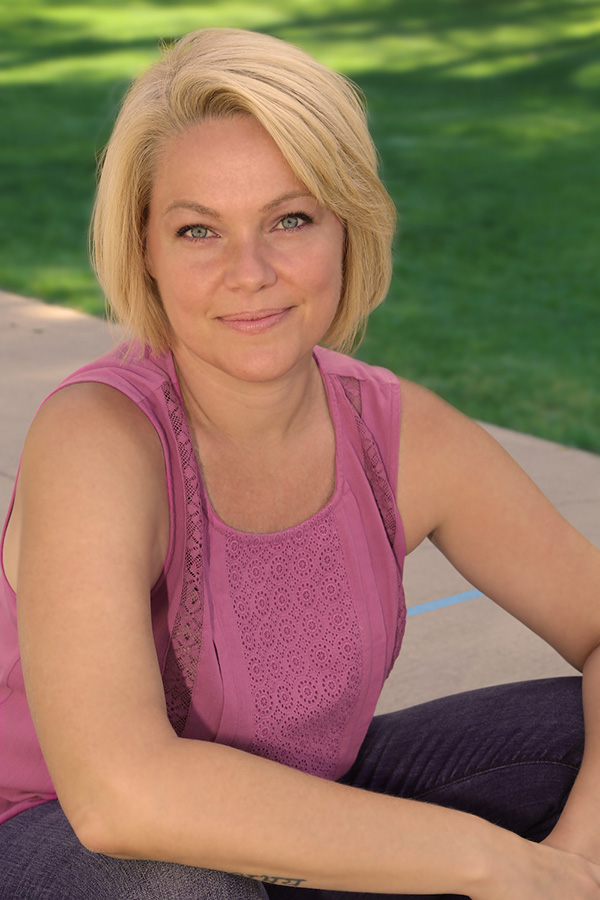
If you haven't done so already, check out Wendy's award-winning essay "Ask Your Doctor if Empathy is Right for You" and then return here for a chat with the author.
WOW: Congratulations on placing second in the Q3 2026 Essay Contest! How did you begin writing your essay and how did it and your writing processes evolve as you wrote?
Wendy: I started writing this piece as a student studying pharmacology. Last year, after my daughter went away to college, I wanted to try something new professionally, so I went back to school to become a pharmacy technician. It’s a bit odd going back to school at age 51, but I like to learn so it just made sense.
Pharmacology is the study of how medicines interact with the body, and part of my studies involved reading drug monographs, which are documents outlining a medication’s indications, dosages, side effects, and warnings. I thought it would be fun to combine my writer life and my pharmacology life and use that form for a hermit crab essay. I played around with a few different so-called “drugs” – and by that, I mean various social problems or personal issues of my own. Eventually I settled on empathy, which to me seems like something the world needs a lot more of right now.
WOW: What a great process! Thank you for sharing that with us. What did you learn about yourself or your writing by creating this essay?
Wendy: As I thought about the things that empathy could help “cure,” I kept a running list of events from national news stories. Mostly, they were things that outraged me – insensitivities toward groups of people or cruel comments made by political leaders. The list got very long very quickly! I had to choose timely, well-known examples. I also wanted to include the smaller, everyday injustices that can feel so big when the rest of life is wearing us down.
What I learned about writing was how to balance narrative distance. I wanted to combine the medical syntax of the form, which can read as dry and detached, with the more direct address of second person and the use of very specific, very personal examples. I found that second person helped draw the reader in, while the specificity of examples gave everyone something to which they could relate.
What I learned about myself is that I too could be better about putting myself in other people’s shoes. We all can be. You never know what another person is going through.
I also learned that you can have a little fun sometimes. For example, see the rectal instructions for Empathy.
WOW: Ha, yes! That line grabbed my attention. What have you learned or noticed about writing from serving as the flash creative nonfiction editor at Hippocampus Magazine?
Wendy: So, so much! One of the best ways to become a better writer is by volunteering with a literary magazine and reading the many stories that come through the submissions portal. Not only does this help keep your favorite literary magazines afloat, but over time you will learn what works in a story, what is amiss, what needs cultivation and you will learn how to apply those perspectives to improve your own writing. You will also see what other members of the reading panel think of the stories, and you can compare notes and have a discussion with the other volunteer readers. It becomes a virtual literary community.
I started as a member of the reading panel in 2019 and became flash editor in 2024. In that time, I’ve become much better at identifying the places where my own stories need work. I think I’ve become better at seeing the potential in other people’s stories as well.
WOW: Becoming a reader and editor has benefited my writing so much, too! I urge all writers to engage with the literary community in this way. Which creative nonfiction essays or writers have inspired you most, and in what ways did they inspire you?
Wendy: I often go back to Brenda Miller, whose writing conveys so much meaning in such small spaces. “Swerve” is one of my all-time favorite pieces.
I am forever inspired by Bernard Cooper and the way his essays handle and illuminate memory. His essay, “Burl’s,” is on my top five list. Maybe my top three. I’ve read it at least a dozen times. And I keep Mary Oliver’s poem “Praying” taped to the wall in my writing space. It reminds me to pay attention to the divinity of small things. Mary makes literary elegance seem so simple.
WOW: If you could tell your younger self anything about writing, what would it be?
Wendy: I think I would tell my younger self that good writing doesn’t have to be perfect and it doesn’t have to be deep to be beautiful. Like Mary says, “It doesn’t have to be the blue iris; it could be weeds in a vacant lot.” Tell a good story and try to have fun.
WOW: Thank you for your thoughtful responses. Happy writing!
Interviewed by Anne Greenawalt, founder and editor-in-chief of Sport Stories Press, which publishes stories by, for, and about sportswomen and amateur athletes. Engage on social media @GreenMachine459.


0 comments:
Post a Comment