Showing posts with label speculative fiction. Show all posts

Interview with Roxane Sloan - Runner Up in the Fall 2024 Flash Fiction Contest

Tuesday, May 13, 2025
I’m thrilled to chat with Roxane Sloan today about her dreamlike story, “Family Secrets,” which placed in the Fall 2024 Flash Fiction Contest! Join us as we discuss her ekphrastic inspiration, speculative literature, and more in this fascinating interview.

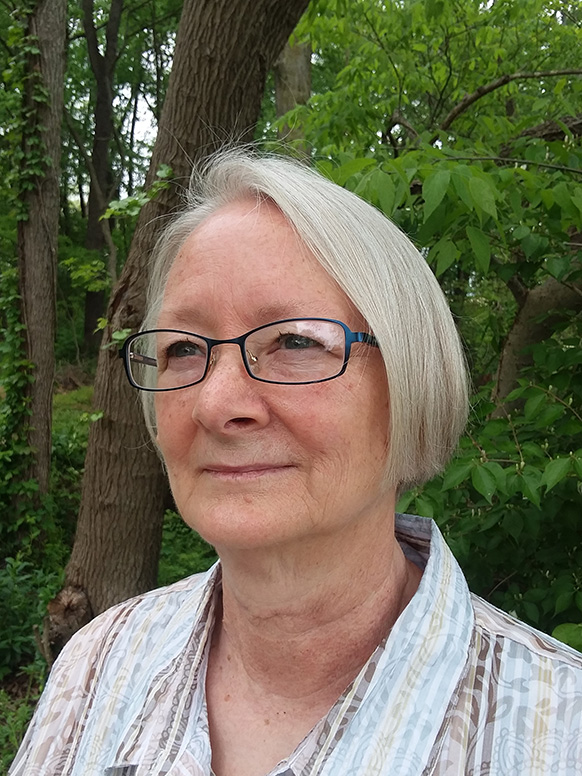
Roxane Sloan
Roxane Sloan has been a children’s librarian, an elementary and middle school teacher, and a teacher of English to speakers of other languages. She is fascinated by languages and cultures, and has taken classes in Spanish, Chinese, Japanese, and Russian just for the fun of it. When she is not reading or on the road, you can find her mulling over character development and wondering whether there is any dark chocolate left in the kitchen.

----- Interview by Angela Mackintosh

WOW: Welcome, Roxane! I absolutely love your story “Family Secrets,” and how you incorporated Japanese folklore. What inspired you to write this tale?

Roxane:
It started with my address book which features woodblock prints by the Japanese artist, Utagawa Hiroshige (1797-1858). As I was looking for an address, the print of New Year's Eve Foxfires At The Changing Tree (1857) caught my attention. It's magical! I was soon online researching the print, foxfires, and enoki or hackberry trees. I ended up in the library checking out a stack of books on Japanese folklore, travel guides of Japan, and foxes. I'm not sure if I ever did find that address.

WOW: Oh wow, Hiroshige's woodblock print is magical! I had to include a photo of it, so our readers can see how well you captured the mood of the piece. One of the things that made an impression on me was the brilliant way you used the father’s dialogue as a retelling, which has this folktale feel to it. When the father starts with “I was enthralled,” it reminded me of a documentary! How did you come up with this structure?

Roxane: To be honest, I didn't consciously plan the structure. I wanted to portray a person reliving an important moment in his life, using language to convey the mood and his feelings of being spellbound. Having the father retell what happened seemed the way to do this.

WOW: Would you call your story magical realism or more speculative because of the shapeshifters? Who are some authors in the genre who have inspired you?

Roxane: I consider it speculative, but this is my first attempt writing in the genre, so I might not have gotten it right. Also, the story continues in my mind; I know some upcoming plot twists that might make it more speculative to me than the flash fiction story appears to the reader. I have enjoyed reading magical realism and speculative fiction for years. I admire the writing and story-telling abilities of Orson Scott Card (especially the Tales of Alvin Maker series, and the Ender series), Octavia Butler (Kindred and Parable of the Sower), Rebecca Roanhorse (Sixth World series - Trail of Lightning and Storm of Locusts), and just for the pure fun of it, Rick Riordan's Percy Jackson series.

WOW: Those are all fantastic authors! Your bio mentions your fascination with cultures and languages (Spanish, Chinese, Japanese, and Russian). I admit, learning Japanese is on my must-do list, to be able to better communicate with my relatives. Do you have any recommendations for language learning resources?

Roxane: That's a tough question for me. I find language learning (actually, most learning) depends on the learner's individual motivation, likes, and interests. If you can tap into those, the learning will flow. For me, it helps if I see the written language as I'm learning the sounds and words. There are so many opportunities for language learning, from online classes, programs, and tutors to old-school hard copy books. If one class or program doesn't work for you, don't give up. Try another! It sounds as if you may have the advantage of some built-in practice with relatives! Have fun with it!

WOW: In your previous interview with WOW, you mentioned two middle grade novels you were working on. Are you still working on those and/or what are you working on now?

Roxane: Thanks for asking! I'm getting up my nerve to send one of the MG novels to agents this spring. The other still needs some work. After writing flash fiction stories for adults, I'm interested in trying a longer work of fiction for adults.

WOW: This is the second time you’ve placed in a WOW contest! We are thrilled to celebrate your work and love returning writers. Do you have any tips for entering contests?

Roxane: I love the WOW! Flash Fiction contests! The WOW team is so supportive and encouraging to writers! I find it a comfortable environment for trying new styles and to experiment and grow as a writer. The critiques that are offered have been a boon to my writing. To have someone who doesn't know me (and doesn't have to "love" my writing) give me a critique, tell me what speaks to them or what they find confusing - that is valuable! So I guess my tip would be to take advantage of the WOW! Flash Fiction contests and critiques!

WOW: That makes me smile! Thank you for your kind words. Okay, final question: What’s your favorite writing quote or piece of advice and why?

Roxane: I like the Mo Willems quote: "If you ever find yourself in the wrong story, leave." It works on so many levels!

WOW: Great tip and so true! Thank you, Roxane, for chatting with me today. It's always a pleasure to catch up with you and celebrate your writing, and now I have a few books to add to my list!

Check out the latest WOW writing contests here:

Read More »

Meet Flash Fiction Top Ten Contest Winner, Rebecca Gomez Farrell

Tuesday, April 24, 2018
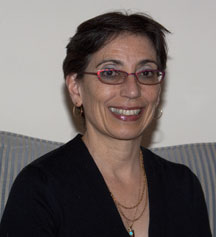
Rebecca Gomez Farrell writes all the speculative fiction genres she can conjure up. Her first short story publication came from winning 3rd Place in the Summer 2009 WOW! Women on Writing Flash Fiction Contest, and with “Hobgoblin,” she is now up to 19! Her first fantasy novel, Wings Unseen, debuted in August 2017 from Meerkat Press. You can find her other short stories in anthologies and magazines including Dark Luminous Wings, the Future Fire, and Beneath Ceaseless Skies among other outlets. Becca’s food, drink, and travel blog, theGourmez.com, has garnered multiple accolades and influences every tasty bite of her fictional worldbuilding. She lives in Oakland, CA, with her tech wizard husband and two trickster cats. Website: RebeccaGomezFarrell.com. Social Media: @theGourmez.

interview by Marcia Peterson

WOW: Congratulations on your top ten win in our Fall 2017 Flash Fiction competition! What inspired you to enter the contest?

Rebecca: I’ve entered and placed in WOW’s contests before, and I love the format. Not to mention that the prize money is pretty good for flash fiction publication! Someday, I’ll get that grand prize, I hope.

WOW: Can you tell us what encouraged the idea behind your story, "Hobgoblin?"

Rebecca: "Hobgoblin" was originally written for a local open mic literary reading in Berkeley, CA, where the readings have to be completed within three minutes. The reading series is called Saturday Night Special, and it takes place once a month with a theme. That month, the theme was Heroes and Villains. Hobgoblin was what I came up with when I sat down to write something for the open mic. I thought it would be fun to do a character sketch of a misunderstood villain from fairy tales, and hobgoblins are a more nebulous category among those. I’ve revised the short story since then, but it retains the original lyricism that makes it an ideal piece for reading aloud.

WOW: You mention that you write “all the speculative fiction genres you can conjure up.” What are a few of your favorite types, and perhaps explain it a bit for people who may not be familiar with speculative fiction?

Rebecca: Speculative fiction is an umbrella term for fiction that falls within the genres of fantasy, horror, science fiction, paranormal, superhero, slipstream, magic realism, alternative history, steampunk, and a few others that I’m sure I’m leaving out. The element these sorts of fiction share is that they come from asking a question that requires the author to speculate. For example, “What if Columbus had never come to the Americas?”, “What if people could read minds?”, “What if there were a world where it never stopped snowing?” When I began writing as a career, I thought I would focus on fantasy, as I’ve always loved stories that imply a deep history and lore and involve magic. But I’ve found that I also gravitate toward fairy tale qualities in my storytelling, whether existing or new fairy tales I invent, and I have written a fair bit of humorous science fiction tales. Horror, with more of a Poe or Twilight Zone feel than slashers, is also a natural fit for my narrative style. I’m not likely to write a highly technical science fiction tale any time soon, but I’m working on a postapocalyptic paranormal romance novel, currently in its second draft.

WOW: Your novel, Wings Unseen, debuted last year, which must have been very exciting. What was your novel writing journey like? What did you learn along the way?

Rebecca: I’m thrilled that Meerkat Press published Wings Unseen, my epic fantasy novel, last August. I had a great time putting together a book tour to promote it, and I’ve been happy with how much support I’ve received. Hopefully, a few readers will follow my work and buy my other books as they come out! By the time I graduated college, fifteen years ago, I knew the basic premise of the book and I knew my three main characters, from whose points of view Wings Unseen is told, quite well. But I didn’t seriously start writing the book until six years later, and I completed it four years after that. As I am working on any number of writing projects at a time, I am definitely not a fast novel writer!

I’m still rather surprised that my first book was published, as so many authors talk about their first books being in a dark drawer somewhere, never to see the light of day again. But it wasn’t a speedy process getting there. I knew I wanted to be traditionally published, but I didn’t necessarily want to go the agent route. So I spent a year sending the manuscript to the big speculative fiction publishers who consider work from writers without agents. That went nowhere, so I decided I would try to land an agent next, and while I had some promising nibbles, I became discouraged with that process by the end of the next year. I then switched gears to small presses that take work from writers without agents. Within six months, I had a couple of offers. Ultimately, I went with Meerkat Press, and I have been absolutely thrilled with them as publishers. They provided the full traditional publication experience: advances, multiple rounds of editing, fantastic cover art, distribution, and great support and access to reviewers. I hope to continue my relationship with Meerkat once my next book is complete. It took about a year from contract acceptance to the launch of Wings Unseen.

WOW: Congratulations and good luck with the next book! Thanks so much for chatting with us today, Rebecca. Before you go, do you have any tips for our readers who may be thinking about entering writing contests?

Rebecca: Contests are a great way for writers to get a confidence boost for their work – as I’ve mentioned elsewhere, my very first published short story, “Last Complaint,” was a WOW third place winner, and that was in 2011, early on in my writing career. I’d caution writers against spending too much money on contest entry fees, as it’s rare that they’ll see a return on them, but WOW’s $10 entry is right at my sweet spot for what I’m willing to pay. Plus, it’s great to have published bylines, but it’s also great to be able to list contest placements among your accolades when querying publishers and agents.

Make sure you read up on the contest judges and submit a piece of your work that they’ll potentially connect with, if you can. And make sure that your submitted manuscript is as clean and error-free as possible! That always give me a leg up in the submission or contest judging process.

*****

For more information about our quarterly Flash Fiction and Creative Nonfiction Essay contests, visit our contest page here.

Read More »

Eric Trant Launches his SciFi Thriller, Steps Blog Tour

Monday, July 06, 2015
....and giveaway!

Steps is a well-written science fiction novel you won’t want to put down. Following the Peacemaker family through their battle of survival will keep you on the edge of your seat as you wait to see what obstacle is next.

Society is falling to a ravaging virus, and the Peacemaker family is stranded in the mountains of Arkansas. Forced to band with a group of deserted soldiers, they battle to survive starvation, apocalyptic cataclysms, and a growing number of dangerously infected wanderers.

As their dwindling number struggles against ever-increasing odds, they realize they are not alone in the wilderness. A large creature is present in the hills, at first seen only as a fleeting shadow.

Now the family not only faces impending death from the unstoppable virus, they must also deal with the mysterious giant, whose footprints signify that he knows where they are.

Paperback: 218 Pages
Genre: Speculative Fiction
Publisher: WiDo Publishing (May 21, 2015)
ISBN-10: 1937178684
ISBN-13: 978-1937178680
ASIN: B00Y3A9AZE
Twitter hashtag: # StepsTrant

Steps is available as an e-book and paperback at Amazon and Barnes & Noble.

Book Giveaway Contest:
To win a copy of Steps please enter using the Rafflecopter form at the bottom of this post. The giveaway contest closes this Friday, July 10th at 12:00 AM EST. We will announce the winner the same day in the Rafflecopter widget. Good luck!

About the Author: 

Eric W. Trant is a published author of several short stories and the novels Wink and Steps from WiDo Publishing. He lives in Dallas, Texas, with his wife, two teenagers, a toddler, and an angel baby watching over them all. See more of Eric's work at:

Blog: http://diggingwiththeworms.blogspot.com

Website: http://www.erictrant.com

Facebook: https://www.facebook.com/eric.trant.9

Goodreads: http://www.goodreads.com/author/show/6939871.Eric_Trant

-----Interview by Crystal J. Otto

WOW: First of all, thank you so much for touring with us again! It’s exciting to work with you again and I enjoyed arranging the tour for Steps as much as your first tour for Wink! You are an inspiration.

And speaking of inspiration, how or what inspired you to write and how have you been instrumental in encouraging others?

Eric: My biggest inspiration was my mother. She was a librarian and an English teacher with a love of reading that can be considered obsessive. Along with reading, my family on my mother's side is full of story-tellers, poets, songwriters and dreamers. So I suppose I come by it naturally. It's genetics.

As for encouraging others, I involve my children and wife in my stories. I encourage my daughter's artistic drawing, and she has a novel she will not let me read. My son is a drummer (I was a drummer, too), and has a passion for writing that may turn into something. My wife just likes to hear stories.
In general, I encourage people to live their life in such a way that they have a good story at the end. That's what it is about, in my opinion. You'd better have something good to say when that great granddaughter plops up onto your knee.

WOW: I certainly hope your daughter lets you read her novel sometime soon so you can help her with publishing. How exciting!

As we work on our writing and help others along, some of us turn to book clubs and writers groups. What is your take on them?

Eric: I interact socially with writers online, but not much in person. Nothing personal, I'm just not a tremendously social person. As for clubs and groups, I believe they can be used for good or for evil.

Be cautious of the advice you take. For instance, I ride a motorcycle. Lots of people give advice on how to ride, owing to having ridden for forty years or some such. Some of the advice starts out like this: Now listen here, sonny, I've been in seventeen wrecks, pins in both legs and half my right arm is metal. Let me tell you son, I know how to ride a motorcycle!

Well, no, you don't. You should have learned how not to wreck after that second or third trip to the hospital. I really don't want to take riding advice from someone who is full of pins and metal limbs, even if they have been riding for forty years.

So what I tell my kids is what I'll say here: Find someone who is doing what you want to do, and model yourself after them. If you can find that someone in a writer's group, have at. Otherwise, try memoirs, joining their social site or blog, or researching their life in some other way. Don't take advice from the guy who has written seventeen novels, not one of which has been published, who says, Listen here, sonny, I know how to write a novel!

Well, no, you don't.

Be careful and choosy with those groups.

WOW: That sounds like great advice for any of us, and after all we have such limited time and we need to be choosy with how we spend it. How do you manage your time and make sure your writing doesn’t get neglected? Do you have some advice for those of us who struggle with time management and our writing?

Eric: As a business owner, husband, and father of a toddler and two teenagers, I can say that time management is a crucial and critical skill that I constantly struggle with. The two biggest factors I have discovered are these: 1) How bad do you want it? 2) Does your family support it?

Pick your it. It may be weight loss. It may be a new career. It may be further collegiate study, a working blog, a novel, a short story, a memoir, a song, a particular picture you want to paint or digitally create. Whatever it is, you have to want it, and your family has to support it.

For me, my family supports my health goals, and so they support the time I sacrifice working out. In my part, I work out at home, and keep workouts generally short, such that I can meet my goals without sacrificing all my family time.

The same is true for writing. My wife and family respect my writing time (it is when I am wearing my writing hat), and in return, I agree not to spend all my free time writing. I also agree to prioritize, such that a doctor's appointment with my son comes before the writing, but the writing may displace a particular chore I was trying to avoid anyway, such as drilling in a concrete screw for my wife (which is a pain).

In the end, it is about balancing something you truly desire, against your family's support. Balance them both, respect them both, and set clear priorities. Sometimes writing will simply have to wait, but don't wait forever.

WOW: I could use an entire class on time management, but you seem to do it so well. Thanks for the great pointers!

Who is your favorite author?

Eric: Hands down, Ray Bradbury. It's been a while since I read through his stuff, but I have his full collection. I almost feel like I should capitalize pronoun references to Him, like that. His writing sweeps you away against your will, and is written in a cinematographic manner. You feel you are watching the story, rather than reading it. And he was truly human. Read his thoughts on writing in Zen in the Art of Writing, which should be required reading for anyone plunging into the art of writing.

In writing this, I paused and read some of his stuff. It is amazing how quickly I feel both humbled and encouraged. Humbled, because I know I cannot write like that. Encouraged, because his opinion is that anyone can. You just have to get past the foothills.

WOW: You’ve certainly gotten past the foothills Eric! Other authors can sometimes be our best inspiration. What is the first book you remember reading?

Eric: Where the Red Fern Grows. I read it in third grade. I had to go to the high school library to check it out. My mom was a fifth-grade teacher, and we always went to the library after school while she graded papers. It was a small school. The high school, junior high, and elementary were all in the same building. I don't recall how I came across the book, but I figure the librarian (I can see her face, but not her name...) recommended it. My brother read it, too. He was in second grade. Old Dan and Little Ann live on with us.

WOW: Boy, does that bring back memories; it’s been a long time. When did you know you wanted to be a writer?

Eric: Birth. I remember in kindergarten telling everyone I wanted to be a brain surgeon, a scuba diver, and a writer. I still never have scuba dived, though I did try for several years to enter medical school. I have a degree in Chemical Engineering, but the GPA suffered a little getting there. It's not bad, it just was not med-school worthy. I always wrote, though, and for my high school graduation gift, my aunt bought me a Brother word processor. Man, it was cool. I could type up and proof-read a whole page on this little green screen, insert a piece of paper, hit the Go! button, and it would slam out the page fully typed. The first story I submitted was to Playboy. Of course, it was not published, but I always thought that was a cool twist.

WOW: Playboy and you admit it? You’re a riot Eric! As for your Brother word processor, I still have mine and it saved me from having to use the computer lab during college (yes, I went to college when there was no such thing as WIFI and I didn’t even have a cell phone).

Changing the subject… Who has been most supportive during your writing journey?

Eric: My family. Without your family's support, you cannot proceed, at least not easily. You need balance, of course, but they respect and encourage my time spent writing stories, and are patient with me as I pitch out ideas to gauge their response. To celebrate my writing victories, we generally go out for a family dinner or plan a family vacation.

WOW: It’s awesome how your family is so involved and you celebrate together. On the flip side of that, how do you cope with rejection and what advice can you give to others who will undoubtedly be faced with a bad review or an unpublished novel?

Eric: Ah, rejection! I love rejection. Learn to embrace the suck. If you cannot get over being rejected, you are destined to fail. No overnight success occurred overnight, nor did it occur without copious rejections. You will be laughed at, ridiculed, shunned, and humiliated. That is simply part of the process of weeding out the weak and the timid. Think of it as the training that military special units go through, such as the Army Rangers, Navy SEALs, or any U.S. Marine (who were the original SEALs). They endure a brutal and rigorous bootcamp, followed by more brutality as they move deeper into the program. Only the strong survive.

I won't say writing is as hard as the stuff they endure, but I will say you should use them as inspiration. If they can withstand their training, their humiliation and suffering, surely you can take a couple of rejection letters. I mean, really, it's not like you have to run ten miles carrying a sixty-pound pack while someone is yelling how terrible you are.

Furthermore, celebrate your rejections. Expect the reject, and you will be all the more surprised when someone actually accepts and reads your work.

WOW: ‘Expect the Reject’ – it has quite the ring. Thank you for this great advice. What advice do you wish someone would have given you back in high school?

Eric: It doesn't matter. I would have ignored it.

I do wish I had read and studied the art of writing sooner. I made a study of it many years ago, and that study helped tremendously. Most writers believe you can simply start pecking and hope for the best. That is not true. Study the art. Read books on how to craft dialogue, create a plot, and maintain movement within a scene. Re-write books you loved to read. I personally re-wrote much of Bradbury's work, along with several Stephen King novels. I need to revisit this study, because it has been a while, and those skills need to be honed.

So my advice, which would have been ignored, would have been: Read up on writing, and copy some authors.

WOW: Speaking of high school, if you are anything like me it’s the songs you remember most. If you had to choose a song to go along with Steps, what would it be?

Eric: I actually listened to a song called "He's Frank" by Iggy Pop, over and over when I wrote Steps. I do this with songs. I find one that jives, and I use it to entrance me while I write. It put me in the mood. I have a short story about Frank that I will turn into a novel soon. That one is percolating...

WOW: What does it look like when you write? Are you an office guy with a computer, a coffee shop dude with a notebook, etc...? Hot cocoa, tea, or coffee? Give us a sneak peak into the eb and flow of your trade.

Eric: I write in a cloffice. What is a cloffice? It is a closet-office. My house is full of children, and so I carved out a small quiet nook in my closet and built a desk (a.k.a. cut some plywood and mounted it to the wall with cleats). I do have a very comfortable chair, and a fan, and plenty of quietude. Really, those are all the things that matter. Chair, fan, quiet...

WOW: Adorable! As a mom with a busy house, I can totally relate to your CLOFFICE!

So what’s next for you?

Eric: Next for me is my next book. I have a firm belief that the best way to succeed is to publish more books. While I have not produced as fast as I would like, I hope the quality of work will show through, and over time I can accumulate enough of a backlog to generate enough income to justify writing full-time.

WOW: That’s great news and it means we will be doing this again soon, so there’s no need to say goodbye. Thank you for your inspiration and your humor Eric!

----------Blog Tour Dates

Monday, July 6 (today) @ The Muffin
Stop by for an interview and book giveaway!
http://muffin.wow-womenonwriting.com/

Tuesday, July 7 @ Choices with Madeline Sharples
Eric Trant makes a book blog tour stop at Choices as he writes a guest post for Madeline Sharples. The guest post is titled: "Part-Time Authors: How a Second Career Improves Your Writing" and you won't want to miss his insight into this topic as well as an opportunity to learn about and participate in a giveaway for your own copy of Trant's latest best seller Steps!
http://madelinesharples.com/

Wednesday, July 8 @ Katherine Hajer
Eric Trant authors today's guest post at the blog of Katherine Hajer as he speaks on "Exploring the World: Why Writers ~ Must ~ Get Off the Couch". Learn more about this topic as well as Trant's latest novel Steps.
http://www.katherine-hajer.com/

Friday, July 10 @ Ava Louise
Eric Trant stops at the blog of fellow author Ava Louise. Don't miss Eric's guest post titled: "Bigotry in Writing Part I: How Much is Too Much? " and learn more about Eric's latest novel Steps.
http://avalouise.net/

Monday, July 13 @ Renee’s Pages
Here's a guest post we can all sink our teeth into (or not)..."Workout Fun: A Simple Trick to Spice Up Your Workout Routine" by Eric Trant. Eric visits the blog of WOW!'s own Renee Roberson as he shares his thoughts on workouts and his latest novel Steps. This is a blog stop you won't want to miss!
http://reneespages.blogspot.com/

Tuesday, July 14th @ All Things Audry
Eric Trant offers reader of All Things Audry an insightful guest post titled: "OCD: How This Super Power Can Be Used for Good or Evil." Find out more about this and Trant's latest best seller Steps.
http://allthingsaudry.blogspot.com/

Wednesday, July 15 @ MC Simon
Join author MC Simon as she review the latest novel by Eric Trant. Learn more about Steps and find our for yourself why Eric Trant is a top selling author.
http://www.mcsimonwrites.com/

Thursday, July 16 @ I’d So Rather be Reading
Eric Trant stops at the I'd So Rather be Reading blog. Don't miss Eric's guest post titled: "Bigotry in Writing Part II: How Realistic are your Bigots?" and learn more about Eric's latest novel Steps.
http://www.idsoratherbereading.com/

Saturday, July 18 @ Hott Books
Don't miss the awesome topic of "Editing 101: Why I Never Argue with My Editor (or My Publisher)" by Eric Trant as he stops by Hott Books as part of his WOW! book blog tour. Hear from Eric and find out more about his latest novel Steps.
http://www.hottbooks.com/

Monday, July 20 @ Create Write Now
Today's guest author at Create Write Now with Mari McCarthy is none other than Eric Trant. Find out more about Eric, his latest book Steps, and his guest topic today which is "Killing the Dream: Five Sure Ways to Never, Ever Achieve Your Long-Term Goals."
http://www.createwritenow.com/

Tuesday, July 21 @ Lisa Haselton
Lisa Haselton reviews "Steps" by Eric Trant and will be giving away a copy to one lucky reader!
http://lisahaseltonsreviewsandinterviews.blogspot.com/

Wednesday, July 22 @ Kathy Pooler
Eric Trant will wow readers as he writes a guest post for Kathleen Pooler at Memoir Writer's Journey. Don't miss today's post titled: ""Bad Reviews: Why You Must Read Them (and How to Survive)". Learn about this and Trant's latest novel Steps!
http://krpooler.com/blog

Thursday, July 23 @ Slay the Writer
Fellow author Trisha Slay reviews the latest novel by Eric Trant. Find out more about Trant and Steps and get in on the giveaway to win your own copy!
http://trishaslay.com/

Friday, July 24 @ Bring on Lemons
Eric Trant authors today's guest blog post at Bring on Lemons (the blog of Crystal Otto) and the topic is: "The Grinder: A Simple MS Word Automation That Will Clean Up Your Manuscript."
http://bringonlemons.blogspot.com/

Tuesday, July 28 @ Selling Books
Join Eric Trant with a guest post titled "City Lights: Why it is Important to Turn Them Off" as he visits Cathy Stucker's Selling Books blog.
http://www.sellingbooks.com/

Keep up with blog stops and giveaways in real time by following us on Twitter @WOWBlogTour.

Get Involved! If you have a website or blog and would like to host one of our touring authors or schedule a tour of your own, please email us at blogtour@wow-womenonwriting.com.

*****BOOK GIVEAWAY*****

Enter to win a copy of Steps by Eric Trant! Just fill out the Rafflecopter form below. We will announce the winner in the Rafflecopter widget THIS Friday, July 10th!

a Rafflecopter giveaway
Read More »

How To Write for Penumbra: An Interview with Editorial Director Celina Summers

Thursday, December 22, 2011
In a time when speculative fiction sources are rapidly disappearing, Penumbra eMagazine offers a pro-paying market for spec-fic writers and exciting new stories for avid readers.

The electronic magazine, owned by Musa Publishing, made its debut in October 2011 with a collection of speculative fiction stories based on a particular theme (art, death, travel, for example). They have published works by well-known authors such as: Mario Milosevic, Daniel Ausema, Scott Overton and David Blake.

To find out more about this market, we sat down with Celina Summers to chat about editing for Penumbra magazine, what she looks for in submissions, causes for rejections, market trends, and what she’d like to see more of.

Editorial Director Celina Summers has been involved in e-publishing as an author, editor, review coordinator, senior editor, and managing editor for over a decade. She studied theater and political science at college in Tennessee, including master class studies in playwriting with famed dramaturge Howard Stein. First published in high school and now the award-winning author of sixteen novellas and novels, she left her career in professional theatre to return to her first love, writing and publishing, in 2000. As the driving force behind Aurora Regency, she produced over forty historical novels in the year before coming to launch Musa Publishing.

WOW: Share with us the conception story of Penumbra Magazine and Musa Publishing. Why did you decide to launch them simultaneously?

Celina: The other three directors and I were previously the senior staff at a well-known e-publisher. We were asked to take over the management of the company because of the owner's personal situation, and found ourselves in the position of correcting problems that had accumulated over the course of a couple of years. When it was no longer possible to help that company, we parted ways with the owner and decided to start our own publishing house. We wanted to avoid similar problems to the ones we'd encountered at the company we'd tried to save—but in advance.

When we created Musa, we determined that our policy would be different from the publishers where we'd worked. We wanted to include the author in the process at a level where they hadn't been before, including complete transparency involving sales numbers and royalties. Musa authors can track their sales live on our database—daily. That transparency has carried over to every other aspect of the company.

Penumbra eMag was my pet project from the beginning. Because of Penumbra and the overwhelming response we got from the writing community, we decided that we wanted to focus on providing other avenues of publication for those writers. As a result, we not only put together a high quality speculative fiction magazine—we pay pro rates, so we get a lot of submissions—but also turned some of the short stories that were submitted to us into stand-alone, royalties-paying e-books at Musa. So Penumbra is the vanguard for Musa's programs for shorter fiction. We now publish short stories, collections, novelettes, and serial stories in every imprint at Musa as well.

As for launching the publishing house and the eMag simultaneously—well, I'll admit it. People thought we were crazy. We weren't. We knew that Musa was going to attract a lot of interest on the web and within the online publishing community. We wanted to make sure that Penumbra capitalized off that. So we set ourselves some seemingly impossible goals and, believe it or not, we made those goals. Now we're putting the finishing touches on our fourth issue and Musa will have released over a hundred short stories, serials, novels and novellas by the end of 2012. We're tired…but always ambitious with everything we do.

WOW: How did you become the main deity (Editorial Director)?

Celina: The four directors of Musa all have very specific experience in the publishing industry. Kelly Shorten is our art director and web developer (and the genius behind Delphi, our house-wide database system), Kerry Mand is our administrative director, and Elspeth McClanahan is the promotions and marketing director. Because I've been an editor for years, the editorial directorship fell to me by default. But I'd question that I'm the main deity. I do get to play the bad cop a lot, but Kerry's really the main deity; she's the money lady and we have to do what she tells us.

WOW: You worked with historical novels before speculative fiction. What made you decide to genre-hop?

Celina: I created the Aurora Regency line at AMP because of a specific need I saw in the electronic market. Several trade publishers had just killed off their traditional Regency romance lines, and those readers had lost their monthly book fix. That's how Aurora Regency came about. I was very relieved that we were able to purchase the imprint when we started Musa. We were able to bring the writers and project that I'd been working on for over a year and keep the imprint alive. Right now, it's one of the healthiest imprints at Musa.

But I didn't genre-hop. I'm also a writer, and I write speculative fiction—alternate history and magic realism primarily. So while I love my historicals, speculative fiction is my true passion. I have a fantastic head editor of our Urania speculative fiction line at Musa, Dr. Matt Teel, so Penumbra allows me to remain connected with my spec fic roots.

WOW: What is your vision for Penumbra and its place in the market?

Celina: The speculative fiction market is remarkably loyal—and has been remarkably resistant to electronic publishing up until now. However, the wonderful magazines I cut my teeth on as a young wannabe writer are starting to disappear—Realms of Fantasy's announcement that they were closing a few weeks ago was a blow to writers and readers both. I think that this is where Penumbra has a big advantage compared to many fledgling magazines. Electronic publishing allows a magazine like Penumbra to pay professional rates to authors, while maintaining an extremely low overhead for production costs. My intention is to create an electronic magazine that brings the speculative fiction reader the best in short fiction monthly, in a consumer-friendly electronic fashion, at a substantially lower issue and subscription price than print magazines can feasibly offer. And so far, the industry's response to Penumbra has been favorable. I'm optimistic about our chances to succeed at these goals.

WOW: What do you look for in a short story?

Celina: I look to be engaged quickly by the author's voice, a distinctive narrative style, and amazing content. The quicker you hook me, the greater the chance I'll like your story. We do themed submission calls at Musa, so I like to see how people play with our themes. Our Shakespeare issue coming in February of 2012, for example, got an unbelievable number of submissions (we've got just as many or more for the Steampunk issue) and, believe it or not, there was not a single Romeo and Juliet story in the whole batch. But we did get submissions based off Titus Andronicus and Taming of the Shrew and Comedy of Errors and just the creativity of those stories still blows me away. To my mind, it takes a very skilled writer to take something as venerated as Shakespeare and develop thoroughly modern and original stories around those familiar plays.

WOW: What are some causes for rejection?

Celina: I'm ashamed to admit this, but if a short story doesn't grab my attention in the first paragraphs—say half a page—then I will usually reject it. Poor grammar, typographical errors, similarity to a story/author I already know all contribute to our rejection rates. But once we narrow the hundreds of submissions for an issue down to twenty or twenty-five contenders for the 5-6 slots in each issue, rejection comes down to really tiny factors—maybe a story could have stood a little more tightening, or a character was just slightly underdeveloped. When I reject a story for those reasons, I usually try to send a personal note with my thoughts on the story—and many of those authors I'll offer a chance to publish the story through Musa instead of Penumbra. And sometimes, at the very end, it comes down to purely subjective things—like how much of our word count is remaining or which story I enjoyed more. As I've said, I'm also a writer, and I know how rejections sting. In the end, rejections are tiny windows into the heart of a story whether it's a thousand words or a hundred thousand, and if an editor tells me my narrative ran out of steam in the middle of the story that's useful to me. I know what to look for. I can't give personal rejections all the time, but I try to keep a reasonable percentage of emails with some type of feedback in them even if it's just, "I like your narrative style and want to see more of your work."

WOW: So far, what have been some of the unique challenges in putting together the eMag?

Celina: Creating a staff out of nothing and very, very quickly. We are blessed with a team of enthusiastic interns at Musa, several of whom work with me at Penumbra. All the research I was slowly doing into speculative fiction magazines before we started Musa had to be condensed into a matter of weeks. So we read a lot, we checked out other magazines editorial and aesthetic style, and we developed our vision for Penumbra in a very short period of time. Even now that we're preparing our fourth issue, we're still adding content besides short fiction. We have several articles in each issue now, and in January are adding a monthly feature about folklore and world building by a very talented author, editor and scholar Lori Basiewicz. Then, too, I personally had to make the adjustment from creating periodicals destined for print (how I learned these things back when dinosaurs walked the earth in the late 1980s) and developing one for electronic consumption. We are very fortunate to have outstanding designers at Musa, Kelly, and Coreen Montagna, our interior book designer, did an amazing job creating the layout and formatting for Penumbra. The process has been an education for me—all of us, probably—and we're now beginning the same process all over again. We have a romance-oriented eMag in the early stages of development.

WOW: You do have an ambitious team! Speculative fiction covers such a wide spectrum. Are there any trends you are noticing right now in the genre or in submissions?

Celina: Well, submissions at Penumbra are themed so that's keeping the majority of submissions on track with what we're looking for. Speculative fiction submissions at Musa have been heavy on fantasy and very light on science fiction—which surprises me still. One thing I'm noticing and am very happy about are the profusion of strong, intelligent, kick-ass female protagonists. There are more princesses saving warriors than the other way around in our slushpile these days. I think that's a good thing. I would love to see more science fiction, more Steampunk, and more fantasy that is truly fantastic and not derivative. As for horror, I want good psychological horror and not the slash and gore kind. Gore is all fine and good, but blood and guts don't equate true horror in my opinion. When I read a horror story, I want to be so terrified that I can't keep from reading further. Gore makes it relatively easy for me to move on to something else.

WOW: Lastly, any advice for someone submitting fiction?

Celina: Follow the submission guidelines. Always. It doesn't take long for any author to do exactly what the magazine or publisher asks for them to do. Take the time to format your stories correctly, to keep within the proper requirements for that publication, and to actually KNOW your market. Read what they've published recently in your genre—that'll give you a better idea than anything else whether your manuscript would be a good fit there or not. Aside from that, I think it's essential that every author educate themselves about potential publishers or agents. Before a writer signs a contract with ANYONE regarding their intellectual property, they should know what they're signing. Contact one of the writers' guilds or an industry professional you know and ask questions. Sometimes, a writer gets so excited at a contract offer that they don't realize what they're signing away. At Musa, we have our contracts and royalties breakdown on our website for everyone to see BEFORE they submit. I may be kind of prejudiced, but I think that's the way it should be.

WOW: I love the way Musa invites their authors into the process by providing easy access to all the financial matters.


Thank you, Celina, for taking the time for this interview. It’s been a pleasure.


Publication: Penumbra eMagazine
Description: Penumbra is the speculative fiction eMag published monthly by Musa Publishing.
Website: http://penumbra.musapublishing.com/
Blog: http://penumbraezine.blogspot.com/

Circulation: Electronic; currently under 1,000
Frequency: Monthly, Themed Issues
Where to get a subscription:
http://www.musapublishing.com/index.php?main_page=product_info&cPath=16&products_id=34.

Pay Rate: $0.05 per word (SFWA professional rates)
Pay Schedule: On publication
Rights: We purchase first electronic rights to exclusively distribute the work for six months. Additional details available at http://penumbra.musapublishing.com/includes/pcontract82011.pdf

Photos/Art: Currently we only take art submissions for our art contests.
Contests are based on our themed issues and submission begins on the fifteenth of the month before. That means if you want to submit for the January contest, you should submit your piece between December 15th and December 31st. You can find more information here: http://penumbraezine.blogspot.com/p/art-contest.html

Payment amount(s) for photos/art: Winners of the art competition receive $50 flat.

Story Length: 500–3,000 words
Does not want: No fan-fiction; No non-fiction
Writer’s Guidelines: http://musapublishing.blogspot.com/p/penumbra.html

Editorial calendar:
2012:
January – Sports
February – Shakespeare
March – Steampunk
April – Animals
May – Fractured fairy tales
June—Greco Roman Mythology (submission call ends Dec 31, 2011)
Jul—Politics (accepting submissions through February 29, 2012)
August—Dreams (accepting submissions through March 30, 2012)

Editor: Celina Summers, Editorial Director
Contact: The address is submissions@penumbra.musapublishing.com

Etiquette: All submissions are done by email. Include a short cover letter with your past publication credits and attach your full story in either .doc format or .rtf format. No multiple or simultaneous submissions please. We will consider reprints of rights reverted stories.

Lead time: Stories should be submitted several months in advance. Please consult the editorial calendar for deadlines.

Response time: Initial responses usually take about 2-3 weeks. If your story makes it past the first round, it will probably take a bit longer to get the final decision. We go through an extensive vetting process for our stories.

Online opportunities: At this time only authors published in an issue of Penumbra are considered for the blog.

Twitter: @MusaPublishing
Facebook: Penumbra-eMag
Read More »

Martha Katzeff, Fall '09 Flash Fiction Contest Runner Up

Tuesday, April 06, 2010
Martha Katzeff is very excited to have her first submission to a WOW! contest be among the top ten finalists. She has been writing for several years and takes classes at the Gotham Writers’ Workshop. She wrote an essay for Masters Cycling called “My Clown Bike” about her hot pink bicycle and recently had a piece of flash fiction titled “The Farm” published in 365 Tomorrows. Martha swims competitively with a Masters Swim team and wrote an essay about being a slow competitor called “Life in the Slow Lane” for the USMS website. She is married with two grown children, lives in the Bronx and likes to knit, read and travel.

interviewed by Marcia Peterson

WOW: Congratulations on placing as one of the Runners Up in our Fall 2009 Flash Fiction contest! What inspired you to enter the contest?

Martha: I have a good friend who is also a relatively new writer and we're both always looking for contests to test our skills and storytelling abilities. I like the challenge of competing against other writers in a contest. It levels the playing field.

WOW: Could you tell us a little about your story and what encouraged the idea behind “Get a Fresh Killed Chicken?"

Martha: I initially entered a contest open only to Bronx writers and I wrote a memoir about shopping with my grandmother and mother. When I didn't win that contest, I re-wrote the story as fiction, throwing in a little bit of a speculative fiction/ghost story twist to it.

WOW: Great idea to play around with the story—it worked out well for you. Since you've taken several writing classes, we'd love to know which ones have been your favorites and why?

Martha: My favorite writing classes have been through Gotham Writers' Workshops. I started with Science Fiction I and moved to Science Fiction II which I've taken a few times (online). The instructor for most of the classes has been Michaela Roessener—the author of several wonderful science fiction/fantasy novels. She's very encouraging and loved the idea that one of her homework assignments morphed into this prize winning story!

Science Fiction (or speculative fiction as it's called now) allows me to express my outrageous opinons through fiction in a way that mainstream fiction does not. In sci fi, there are unlimited worlds and experiences to write about.

WOW: It's always interesting to learn about other people's writing routines. Could you tell us when and where you usually write? Do you have favorite tools or habits that get you going?

Martha: I'll probably get into trouble for this, but I do most of my writing at work. Whether for better or worse, I have a low stress job with lots of down time. (I will absolutely not divulge where I work!) Sometimes I write on Sunday while my husband is watching some sporting event. I like the distraction—it helps me think. I wish I did have favorite tools or habits that get me going. I'd write more. That's why I like taking classes—it’s good impetus to keep going.

WOW: Too bad you can’t tell us where you work! I agree that taking writing classes is a great way to force yourself into action. Finally, is there if there was one bit of advice you could pass on to other aspiring writers, what would it be?

Martha: Don't get discouraged by negative criticism. Recently I was told that a story I'm writing isn't really Science Fiction, to which Michaela replied: give 'em the old Bronx cheer!

Ignore unhelpful critiques and keep writing!

************

Check back on Tuesdays for more contest winner interviews.
Read More »
Powered by Blogger.
Back to Top