Showing posts with label self-publishing. Show all posts

Self-Publishing Made Simple, or Not

Thursday, October 09, 2025


On Monday, I launched my first self-published book, What to Do When Your Book Is Banned. I did a lot of the work myself. I watched tutorials and read books on graphic design before putting together my cover. Since I worked as an archaeological illustrator in college, I felt comfortable turning my layout skills toward something like this. Besides, I had Angela to give me tips. 


Then I took Self-Publish Your Masterpiece: Video Class here at WOW with Barbara Noe Kennedy. One of the things Barbara talked about was making certain your fonts are copyright free or that you pay for the right to use them. I had read something on Microsoft’s site that made me think this was not essential, but I could not relocate that advice. Instead, I found the link to click for Microsoft to calculate your fee. So, I found copyright free fonts. 

Then I started playing with my layout. For whatever reason, I couldn’t get the chapter titles to generate a table of content with links although I followed the instructions to a letter. Nope. It didn’t work the second time. Or the fifth time. So, I found a new way to do it. 

Then I needed to figure out how to number the pages. I’m giving the book away as a PDF, so the cover is part of the document. I needed to number front matter pages with lower case Roman numerals and then the body of the book with Arabic numerals. It wasn’t that hard to figure out. 

 All of this was in my Word file. After this project, I’ll be creating three more self-published books. A friend gave me a copy as a Word document so that I can just copy and paste my material in the right areas and have the proper formatting. Aren’t writing friends the best? 

But I couldn’t get the page numbers right. No, problem. I’d done it once. Certainly, I could do it again. I bet you saw this coming. I must have tried five or six times. I kept Googling various search terms looking for a solution. Nothing worked. 

And I couldn’t figure out how to put it on my site. I wanted to create a blind page that someone would only find with a link. But that’s impossible on my version of WordPress. I couldn’t find anything that worked. 

I would have just put it off if Angela hadn't talked me into committing to a launch date. But I did have to pivot to work on a paying job. By the time I met that deadline, I had 2 days left to wrap up the formatting on the book and get it posted. But I was coming at it fresh.

I did another Google search on how to save the book on my site. I found out how to use a password protected page in less than 10 minutes. It took me only slightly longer than that to find a description of how to do the page numbers that after several tries worked. 

I’m not going to say self-publishing the book was simple. There were times I questioned my decision to do this. But as is so often the case with writing, the solution was not giving up. And often the people who kept me going were the members of my accountability group. Thank you, Ladies! A strong community is a must for any writer testing self-publishing. 

--SueBE 

To get a copy of Sue’s book, go subscribe to her newsletter, One Writer’s Journey, here.

Sue Bradford Edwards' is the author of over 80 books for young readers.  

She is also the instructor for 3 WOW classes which begin on the first Monday of every month. She teaches:
Read More »

Judging a Book By Its Cover

Thursday, November 16, 2023
When I was a little girl, I put a lot of stock into the saying, “You can’t judge a book by its cover.” Though not so much with actual books; in my day, hardbound books were solid colors with those plastic covers that were always annoyingly falling off the book. 

But when it came to the spirit of the saying—that it’s what’s on the inside that matters—I was all in. As a quiet kid outside the home, I sincerely hoped that people would see beyond my shyness to the brilliant and flashy girl on the inside. 

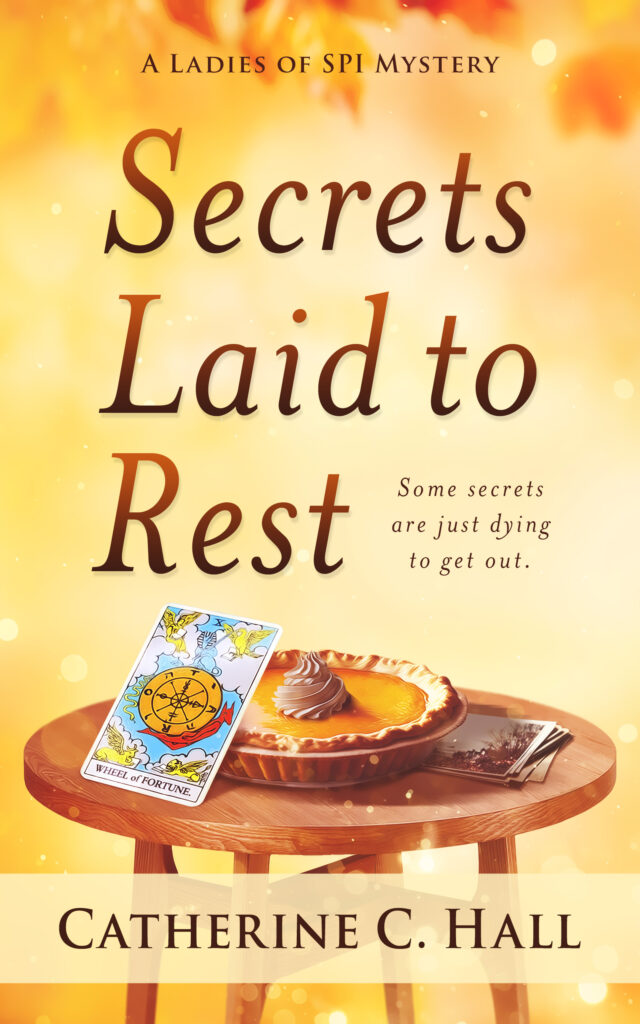
And so it’s a little bit funny now that, as a self-published author, I’m singing a different tune. Namely, that the book cover matters. Quite a lot, actually. 


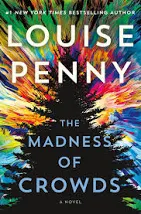
Oh, not if you’re a profitable author. I was reading Louise Penny’s The Madness of Crowds when I did my book cover research. It has an artsy, geometric design on the cover, and I remember thinking that I’d have no idea what the book was about, based on the cover. But it’s not the cover selling the book. It’s Louise Penny and Inspector Gamache. 

Catherine C. Hall might initially get readers from friends and family. But to attract readers who don’t know her from Adam’s house cat? That was going to start with the cover, a point made clear to me recently when I heard from my local library system. 

My library system serves one of the largest and most populated metro Atlanta counties; Lord only knows how many books—hardbound, digital, and audio—are in the system. When it comes to those of us outside the trade publishers—regional or indie published authors—it’s not easy to get a book on the shelves. But it is possible. One fills out the form and waits. 


So I filled out the form, dropped off a copy of Secrets Laid to Rest, and crossed my fingers. About a week later, I received an email, inviting me to give an Author Talk at one of our libraries. Not till March, but still, I was pretty darn excited! 

Just this week, the staffer called. We touched on timing, how I had wanted to release the book last fall but the cover took way longer than I planned. And she said, “Oh! It’s a great cover. I noticed it immediately.” 

She happened to be in the office of the staffer who gets the proposals and my book was on the desk. The cover caught her eye. I joked that it was worth it then, ‘cause that cover was a whole thing! 

“We get a lot of books here,” she added. “But few of them look as professional as yours.” 

Simply based on the cover, she had judged Secrets Laid to Rest to be professionally produced, a lesson to learn if you’re self-publishing. But I still think it’s important to look beyond the outside to what’s inside. So make sure the content of your book is as brilliant (and flashy!) as your cover!

Author, Secrets Laid to Rest
A Ladies of SPI Southern Cozy Mystery

Read More »

Beating the Odds in Publishing

Thursday, August 10, 2023

I often catch up on my magazine reading in the summer and a few weeks ago, I came across an article about beating the odds in various situations. One of those situations was “A Publisher Publishing Your Book” (AARP, The Magazine, August/September 2022). The odds of that happening? 1 in 1,000. 

Now, I don’t want to alarm you but that’s only .1 %. According to this article, you have a better chance of catching a ball at a major league game (1 in 835)! 

But then I thought, hold on! That was this time last year. What about this year?

Know-It-All Google had this to say (as of February, 2023):

A publishing house of a medium/large size will often receive more than 5,000 unrequested manuscript submissions annually. Within the book publishing industry, it is agreed that the odds of an author getting their work published stands between 1% and 2%. 

It seems like the whole industry got together and agreed on that number. But 1 in 100? I suspect it’s more likely around 1 in 500, or .2%. Whew, that’s better, right? 

I’m kidding but I’m well aware it’s not a laughing matter to plenty of writers chasing the publishing dream. Only, I think it’s important to understand what writers are up against: the odds of getting published have been dropping drastically in the last ten, fifteen years. There are numerous factors to account for the challenge but how about we focus on the serious business of how to increase your odds of getting published?

 According to the AARP article, one can beat the odds by writing non-fiction, or developing a cookbook, or finally, self-publishing. 

Hmmm. No doubt about it, non-fiction sells well, whether it’s in children’s publishing or self-help markets, or cookbooks, especially if a writer has an established platform in their field. Come to think of it, that’s where I finally beat the odds (Educational market, children’s publishing). 

But my heart is with fiction. So how’s one to beat those odds? 

For me, and for many writers, it’s self-publishing, and it’s exploding as most of us know. Will your genre be a good fit? Series mystery does well, as does fantasy, especially in YA. The thriller/suspense genres sell successfully; all of these genres are perfect for ebooks. There’s romance, too, though romance is one of those genres that seems to sell wherever it lands. 

Can an outlier like contemporary women’s fiction thrive with self-publishing? I think so, if a writer is willing to put in the work to beat the odds. As with any writer on their own, here’s the short list: 

1. Write the book and then invest in yourself. 
2. Start with professional editing. 
3. Present a polished product. 
4. Develop a marketing plan. 

You can, of course, go the traditional route. Improve your odds with professional editing and plenty of opportunities to meet agents. But also do your homework! Research the smaller publishers who accept unagented manuscripts or try reputable royalty/hybrid publishers. The odds might be stacked against you but I still see writers getting contracts all the time. 

Or you can be a publishing entrepreneur. According to the AARP article, the odds that a “New Business Will Survive Five Years”: 503 in 1,000. I’ll take those odds every day!

Read More »

Know Thyself, Writers (And Would-Be Publishers)

Thursday, January 26, 2023

There are a thousand little details to take care of when one becomes a publisher, and frankly, I’m more of a Big Picture gal. But I had a fairly good idea of what I was getting myself into before I signed up for this adventure. Still, there have been moments… 

For the better part of January, there have been LOTS of moments as I’ve tackled formatting my manuscript for ebook and print. So I thought I’d share a bit about the process in general. 

There are several avenues one can pursue with formatting: there are free programs that are basic but serviceable and there are programs that come with a cost, providing a few more bells and whistles and continuity if one is planning on writing/publishing lots of books. Or one can hire a professional to format the book, either separately or included in a package deal (for example, the company that creates the book cover might also offer formatting for an added fee). 

As I read all about formatting and costs and such, I was reminded of my newly painted bedroom vs. my newly painted kitchen. 

When I realized my bedroom was long overdue for a new coat of paint, I looked around and eyed the king-sized bed, the dresser, and the chest of drawers. My back hurt just thinking about what it would take to move those heavy pieces of furniture to get to the walls. And to tape all the trim, including crown molding—egads! So I called the painter guy and it cost me more than I budgeted but it was worth it. The room looked fresh and gorgeous and I knew the professional paint job would last for years. Plus, my back thanked me profusely. 

Then there was my kitchen, where I’d had renovation work done. I looked around and eyed the wallpaper; it was time for it to go. Not only that, I wanted to remove the chair rails and paint the walls. 

This time, I decided I’d do the project myself. Because for one thing, there was very little wall space; it was easily accessible, requiring little ladder work. It would be tedious, but it really only required time and attention to detail, both of which I could manage what with a Shutdown going on. And in the end, the kitchen looked pretty gorgeous, too. 

Now back to formatting. I weighed my timeline as well as the time involved to do the project myself. I looked at quite a few different programs and read reviews about finished products and support staff. And of course, I looked at my budget. 

Ultimately, I purchased a formatting program. It was moderately priced and provided extras I wanted. And I knew I had plenty of time since I’ve pushed my deadline way out. Most of all, I was sure that, given all the tutorials, the program would be doable for a do-it-yourselfer publisher. 

I was mostly right. It hasn’t been the easiest part of the process (See “there have been LOTS of moments as I tackled formatting”) but now I have a swell program and know what to do (and what not to do) for the next book. 

So the bottom line? Know thyself! Honestly consider what you can manage, no matter what your writing project may be. Get excited about the Big Picture, but take a good look at the little details, too. And when you’re done, celebrate! In my case, with a nice, long nap…zzzzz.


Read More »

Self-Publishing: Running the Diagnostics

Wednesday, July 13, 2022

Nothing is ever simple anymore. 

Just today, I had the plumber come out to fix the faucet in my kitchen. And right from the get go, I was told he’d have to run a diagnostic. Every little possibility had to be considered, even if it turned out to be a simple problem. (Which it did, after checking who-knows-what-all.) 

There’s no more jumping in and hoping for the best. And I’m finding that’s particularly true with self-publishing. So much to be considered before one takes the plunge! Like hybrid publishing or do-it-yourself? Or whether to use a service to set up an LLC or skip setting up a business altogether? Which platform for this, what app for that? 

One has to “run the diagnostics,” so to speak, go through all the possible problems and questions to find answers. But it occurred to me that before doing anything one really needs to ask just one question: Why self-publish? Because different answers lead in different directions. It sort of reminds me of the old “Choose Your Adventure” books, so let’s take a look: 

Self-publishing/ Personal 

This writer has penned something personal, perhaps a memoir or a collection of essays. Or maybe it’s a children’s book for the kiddos. The point is, it’s personal and will not be sold or promoted in any kind of public platform. It’s for family and friends only! 

I love this kind of writing; I think it’s treasured by loved ones for years to come. But the simple answer here is that this writer doesn’t need to self-publish at all. This is a situation when just printing it up is fine. And if a writer wants more than a stapled collection of printed pages, then it’s very easy and relatively inexpensive to choose a pro printing business to make a book. 

Self-publishing/ Profit

It’s hard to quantify these writers; perhaps they’ve written a self-help book or all about a hobby, but basically, non-fiction. They know their niche audience and believe their book can make a difference. 

Or maybe they’ve written fiction, a romance or fantasy, or even a series. These books are a great fit with indie publishing as evidenced by the slew of them out there—and these authors want to be part of the fun! 

Whatever the book, these writers must decide whether they’re willing to do the work, if they have the entrepreneurial spirit to see it through, because this adventure is not all fun and dollar signs. It requires homework! Do the research—there are LOTS of great sites out there with tons of in-depth information about self-publishing—before choosing to spend all that time and/or money. 

Self-publishing/The Dream 

This is the writer who may feel the pull of self-publishing but needs a push to make the dream come true.

Perhaps she had a book (or books!) traditionally published years ago and has always wanted to see these book (or books!) back out there in the world. Does she buy back her rights, go for it? 

Or maybe her publisher just dropped her after three books and she has three more in the series—and readers are clamoring to find out more about the characters they love. Can she do this on her own? 

Or she’s written yet another book that her peers praise—but she just can’t face again the slog through agent/publisher querying, or waiting, waiting, waiting. The “life is short, just go for it” mindset. Does she dare? 

It’s tough, choosing to grab hold or choosing to let go of that publishing dream. But honestly, each writer must decide whether self-publishing is ultimately worth it. Still, it helps to ask all the questions, consider the possibilities first. Then ask again, "Why self-publish?" The simple answer may be right there at last.


Read More »

7 Powerful Book Promotion Ideas for Self-Published Authors

Saturday, July 17, 2021
A passion for writing doesn’t always go hand in hand with a desire to monetize your work. However, if you’d like to share your writing gift with the world and still make money, it’s imperative to learn about the best ways to promote your book. It’s important to identify your goals beforehand because successful book promotion requires deliberate planning and execution. 

Promoting your book may seem like a daunting task at first but it doesn’t have to be. It involves communicating with your target audience in ways that make them want to buy your book. In this article, we’re going to cover 7 book promotion ideas that will help you reach your target audience and sell more books. 

1. Create a Blog or Website 

Nowadays, it's impossible to think about marketing without talking about content marketing. It's one of the most effective ways of gaining organic SEO and works for the long term. The same case applies to promoting your book. 

Having a blog that’s tailored to your target audience is a good way to attract readers that would have otherwise not heard about your book had you opted to market it using other methods. You should blog regularly on interesting topics and incorporate insights from your book. 

A blog also avails the opportunity to create a buzz about an upcoming book publishing launch. You can use the opportunity to give away free books or post a few excerpts which will leave the reader yearning for more. If all goes well, they’ll end up buying the book to read more. 

If you don’t know how to go about writing your blog, hire a writer who has specialized in your niche. 

2. Increase your Online Digital Footprint 

There are a few ways to increase your online presence. The first one involves creating accounts on different social media accounts. Social media marketing is one of the most effective methods to reach your target audience and one which won’t cost you any money. 

It's however important to identify which medium resonates with your target audience based on their demography. For example, Instagram is popular among young people while a more mature audience prefers Twitter. 

If you prefer to use over one social media platform, put out unique content instead of copy and paste. 

The second one involves guest posting on high-traffic websites. When guest posting, it's important to include a link that redirects readers to your website. One such site is wow-womenonwriting.com

3. Learn From Those Who Have Gone Before you 

"A fool learns from their mistakes while a wise person learns from other peoples’ mistakes” is a common saying but one that carries a lot of weight. Learning from successful publishers who have gone before you will help you avoid making the same mistakes they did. You can benefit from identifying what they are doing right and help you sell more books. 

Reading books from authors in your niche will help you identify the tone and phrases that resonate with readers and by doing so, it will help you sharpen your writing craft. Other things you should look out for is how they are doing their covers and designs and hopefully, this will help you when designing your books. 

4. The Power of Reviews 

Some marketers have termed reviews as the best form of marketing. One advantage of reviews is that they don’t cost you any money. One of the most effective ways to get quality reviews is by using former reviews and sending them a copy of your book. If you’re a new publisher, you can use Amazon’s top reviewers who are in your niche. 

When requesting reviews, patience is key. Sometimes, you'll have to request a referral more than once from the same individual. However, keep your tone friendly to avoid appearing being pushy. 

5. Write an Enticing Book Blurb 

Blurbs are short promotional pieces ranging from 100 to 150 words that go on the back cover of a book. You should use strong words to write the introduction to capture the attention of the reader right away. Follow it up with the core of the book without giving everything away or the readers might end up losing interest in the book. 

Last, the introduction should entice the reader to grab their copy to read more. You can achieve this by addressing who the target audience is and why they should get their copy. 

6. Invest in a Good Cover Designer 

When thinking about how to get a book published, don't forget about the cover! We have only one chance to make a good first impression. It doesn’t matter how good your book is if it’s not attractive to the eye. Investing in a good cover designer is one of the most effective ways to attract readers to buy and read your book. 

7. Maximize your Distribution Channels 

Amazon is one of the most popular distributors of books from traditional book publishing companies. They have also had 2 self-publishing subsidiaries. If you combine Amazon with iBooks, Barnes & Noble’s Nook, and Kobo, you’re bound to benefit from increased book sales. If you identify one is doing better than the other, it’s best to concentrate your effort there. 

If you opt for a traditional book publisher, they will not only publish your book but also promote it. All that’s required of you as the writer is to put out good content. If you’re self-publishing a book, you’ll require targeted promotion methods to capture your target audience. If you read this article and still don’t know where to begin when promoting your book, don’t be afraid to ask for help from someone who has gone before you.
Read More »

Steer Your Writing Career

Monday, July 05, 2021


I spent probably two years listening to various podcasts and dreaming of what my own podcast would look like. When the pandemic forced us all to slow down and stay at home, I developed a plan to create a true crime podcast, using my creative and marketing skills plus all the great information I had picked up from consuming the medium. That podcast now receives at least 500 downloads per episode within a week of going live and the numbers only continue to grow. 

In today’s world, creatives don’t need permission to put our work out into the world—we only need the savvy to market it and spread the word. Because of this, I think I’ve finally come to the realization that I don’t need permission from anyone to release my other creative projects. I’ve written three novels—two are young adult and the other is middle grade fiction. I am outlining an idea for a thriller/suspense novel. One YA novel is very close to being ready for publication—it’s been professionally edited a few different times and had beta readers. 

While I haven’t seen interest from any agents, I no longer feel the need to wait for that interest. I’m a successful writer and editor in my mid-40s who believes she has something to offer readers. For example, a few years ago I wrote short story called “Monster in the Woods.” I workshopped the story and submitted it to a few different contests and literary journals. I couldn’t find it a home. Then this past October, I got the idea to produce it as a bonus episode of my podcast, “Missing in the Carolinas,” because the story was based on a real-life murder that occurred in Oklahoma. I narrated the story, used spooky music, had my daughter help me voice one of the characters and now the episode has received more than 1,000 downloads. If I hadn’t produced it, the story would still be sitting on my hard drive. I am proud that it entertained so many people in audio form. 

I’ve helped spread the word of plenty of indie authors over the years who produced solid books but couldn’t attract the attention of traditional agents and publishers. Does that mean their work didn’t deserve to be read? No way. Why have I won writing awards for both non-fiction and fiction and produced 28 episodes of a true crime podcast but don’t’ have any of my books published? Is it because I don’t deserve it? I don’t think so. 

My plan is to take the book that is in the best shape, a young adult novel titled “Between,” and use a crowdsourcing platform to raise enough money so I can hybrid publish. That model currently appeals to me as the best of both words, and in the meantime, I can continue working on other manuscripts that need more work and plug away at the podcast (while continuing to work my day job to support these creative endeavors). Have you self-published or used a hybrid publishing model? What are your thoughts on taking creative control of your own writing projects? 

Have you ever taken control of your own creative work? I'd love to hear your experiences!

Renee Roberson is an award-winning writer and magazine editor who also produces the true crime podcast, Missing in the Carolinas. Learn more at FinishedPages.com.
Read More »

Faith Over Fatalism

Thursday, December 10, 2020

During recent Decembers, I’ve been catching up on my holiday reading. You know what I mean…all those books on the shelves, bought in years past when I was way too busy to actually read ‘em. The other day I picked up The Best Christmas Pageant Ever by Barbara Robinson, a book my daughter had purchased at a school book fair nearly 25 years ago. 

Thank goodness, I was not drinking my cuppa or tea would have spewed all over the place. Holy Herdmans (the six kids who take over the Christmas Nativity pageant), this is an hilariously horrible story! And when I finished the last page, I sat basking in gratitude that this book existed. Because honestly, I’m not sure The Best Christmas Pageant Ever would have sold today. 

Here’s a list of just a few gems you’ll find in this short Middle Grade book: 

--cigar smoking (by a kid) 
--arson 
--violence 
--bullying
--the Bible and lots of religion 

Yep, and that’s just the title and the first paragraph. Imagine a present-day agent reading that first paragraph! I laughed out loud but the word “aghast” is coming to me, imagining that scene. 

And it’s true, there’s plenty of politically incorrect stuff in The Best Christmas Pageant Ever. But there’s a transcendent message, and Robinson delivers it in a perfectly non-preachy way. So perfectly that the book’s won awards and continues to be a perennial best seller since 1972. There’s even a movie and a play, and as far as I know, the play is still presented to this day. 

So what’s this totally irreverent and funny book got to do with you, writers? Just this: write what you want to write. Tell the story you want to tell. And don’t worry about agent/publisher/market pleasing. 

The truth is, most of us who write a swell book that has something objectionable in it to the gatekeepers will not find a publisher. Maybe the time isn’t so great for selling a story that has Christian themes or a kid who smokes, so maybe you keep changing the manuscript to make it fit someone else’s wants. Or maybe you throw up your hands and walk away. 

Which is kinda the fatalistic point of where I was this year. And then I read The Best Christmas Pageant Ever and got to thinking. I know kids still read that book. And I think kids will read my books…the one with spirits and spirituality, or the one with the Civil War backstory (and a guy who smokes). But they can’t read a book that hasn’t sold and been published. 

And that’s where the faith comes in, ‘cause maybe the Best Christmas (or Hanukkah or Kwanza) Present Ever we can give ourselves is to believe in ourselves and our stories enough to put butt in chair and self-publish. 

So okay, it might be something different for you, but isn’t it time to go after what you want? I mean, if there’s one thing I’ve learned from 2020 (and sort of the Herdman kids, too), it’s that we make today count because who knows what the future holds? 

I published a book for someone else who had a dream; I think it’s about time I published my own dream. So kick fatalism to the curb and tell me. What do you believe in enough to make happen today?

Read More »

Should You Use a Book Doctor?

Tuesday, August 25, 2020
As writers, we talk endlessly about revision. Probably because we’re always working, one way or another, on a revision. I mean, even when we’re not working on the manuscript, we have other people working on it…beta readers, critique partners, editors, book doctors.

Wait. Book doctors? Are you thinking—as I did once upon a time—that a book doctor is just a cute name for an independent editor? Yep, I thought a book doctor was a clever marketing title but one day, a writer friend and I were discussing the latest release of another writer friend, and she mentioned that said author had used a book doctor. I learned about book doctors that day, mostly that it had been a wise use of time and money for that author. And maybe a book doctor would be a wise choice for you, too, but first, know what you’re getting into.

Independently contracted editors can give a writer all kinds of services. He or she can give in-depth notes on the first fifty pages or an entire novel. A writer then takes those notes and revises, and sometimes, an editor will work back and forth on the revisions. It’s lots of re-writing for the would-be author, and it can be a time-consuming as well as costly process.

An editor can also do line-editing, which is basically proofreading your fully-revised novel, making sure that your grammar is spit-spot and names don’t change in the middle of the book. Publishing houses do a line edit before sending off the manuscript to be printed; writers planning to self-publish should get a line edit, too, but it’s probably a lot cheaper to ask that friend of yours in the critique group who’s a grammar nerd (and then treat him or her to a nice lunch).

And then there’s the book doctor. Remember when I said that writers had that secret dream of sending off a manuscript for a professional critique and really, we just want somebody to fix it? There’s a way to make that dream come true: hire a book doctor.

A book doctor is not playing around with all that revising back and forth. A book doctor will take your novel and fix those plot holes, clean up the character mix-ups, shore up the settings, tighten the tension and perfect the pace. And a book doctor might do all that and have a relatively quick turn-around. So why doesn’t everyone use a book doctor?

For one thing, a book doctor can be very expensive; doctoring a manuscript is a serious workload, even for a professional. And though a reputable book doctor will get permission from the writer before making massive changes, a manuscript can turn out quite differently. That sort of revision is not for everyone.

Still, there are times when a writer has revised a manuscript so much—either through critique partners, beta readers or paid professional critiques—that the idea of one more rewrite can cause dry heaves, not to mention hair-pulling. It’s that point of hitting a brick wall and maybe a book doctor can punch a way through to make a manuscript sellable. Not that anyone can make a guarantee that a manuscript will sell, but an expert book doctor can certainly push it closer to publication.

And then there’s the writer who’s self-publishing a book to enhance a business; it might be a more cost-effective use of time and money to use a book doctor. But like all writing services, do your homework first. Ask writer friends, check for any “write beware” notices, before committing to a pricey contract. It’s all well and good to invest in yourself but don’t break the bank in the process!

(How about you, dear writers, have you used a book doctor? Inquiring would-be published authors want to know!)

~Cathy C. Hall

Read More »

Learning From High-Powered Authors

Wednesday, December 04, 2019
This is part two of my series on what I learned at the 20Books To 50K conference in Las Vegas. You can find part one here

Welcome to a great panel discussion with Rebecca Moesta, Malorie Cooper, Kristine Kathryn Rusch, Alex Liddell, and Lindsay Buroker titled High-Powered Authors. These five authors are killing it in the indie publishing world, and they shared what works and doesn't work for them. This panel was chock full of inspiration and knowledge, and I can only write so much and have your attention on this blog post for so long. So I encourage you to check out the You Tube video of this panel if anything I say here catches your interest!


(When you click play above, it should take you to the high-powered author panel, but if you are interested in the two guys behind the conference, go back to the beginning of the video and watch their introduction!)

Here are a few tidbits that the high-powered authors said and was also echoed throughout the conference:

1. Market research is important. If you're writing romance, then make sure you're giving your readers what they expect--respect the tropes and your readers. Look at the top 10 on Amazon in your genre. What do their covers look like? What are their blurbs? What are the current trends? How will your book fit with these? You have to standout without being too different, of course. (Sidenote from me: stand out with your good writing and ability to tell a story, not by trying to trick your reader!)

2. Self-published authors are advertising on Amazon and Facebook, and it's working. Trust me when I say that if the sentence above gave you the heebie jeebies, you'll have to find a way to get over it IF you want to make money as an author and sell copies of your books. Traditional publishers have put advertising dollars behind their top names for decades. To compete with this, and you can, you have to be willing to spend some money on advertising that makes sense. Currently, that seems to be on social media, with email services like Bookbub, and on Amazon or other booksellers. (Although everyone was honestly talking about Amazon ads!)

3. Being consistent over time is the best way to build your career. Stop comparing yourself to the high-powered authors on the panel, as they all had to start somewhere. But they're currently writing on a regular basis and putting out books regularly. They treat their writing as a career, and they show up for work every day. Analyze your best time of day and write then. You will get much more done than if you are trying to work when you are tired. (Sidenote: Since I came back from this conference, I have written every morning when I get up until I get to at least 1000 words. My streak so far is 19 days, and I have written 24,324 new words. I finished one non-fiction book project I had been messing around with for far too long, and started on another one. I plan to self-publish both of these.)

4. Different income streams are important. This was also something that was talked about a lot, not just on this panel. There's a huge debate right now about being exculsive (to Amazon) or going wide (selling on many different platforms). If Amazon went away today, and all your eggs are in Amazon's basket, where does that leave you? This doesn't mean you can't take advantage of some of the exclusivity perks on Amazon for a certain number of days, but you also have to think of how else you can get money. What do your books lend themselves to? Where else would they sell?

In conclusion: What I loved about this panel is that a couple of these authors were also tradtionally published at one time or still are--so they are known as hybrid authors. They are on a panel at an indie conference talking about the perks of being independent in this day and age. This advice seems more spot on than most because they have experience in both worlds, and they are telling us that currently in many genres, authors who treat their books and career like a business as well as a creative endeavor can have success with self-publishing. It's an amazing time to be a writer!

Margo L. Dill is a writer of children's and YA books in St. Louis, MO. She is also WOW!'s managing editor and teaches a few classes for WOW! on novel writing, school visits, and YA/MG writing. Check out her classes at https://www.wow-womenonwriting.com/WOWclasses.html. The novel writing class starts on December 6, and she can work with you to have deadlines not through the holidays if needed. To find out more about her and her books, join her newsletter here.


Read More »
Powered by Blogger.
Back to Top