Showing posts with label reader expectations. Show all posts

A Rose by Any Other Name: Why You Need to Call Your Book What It Is

Thursday, January 30, 2025

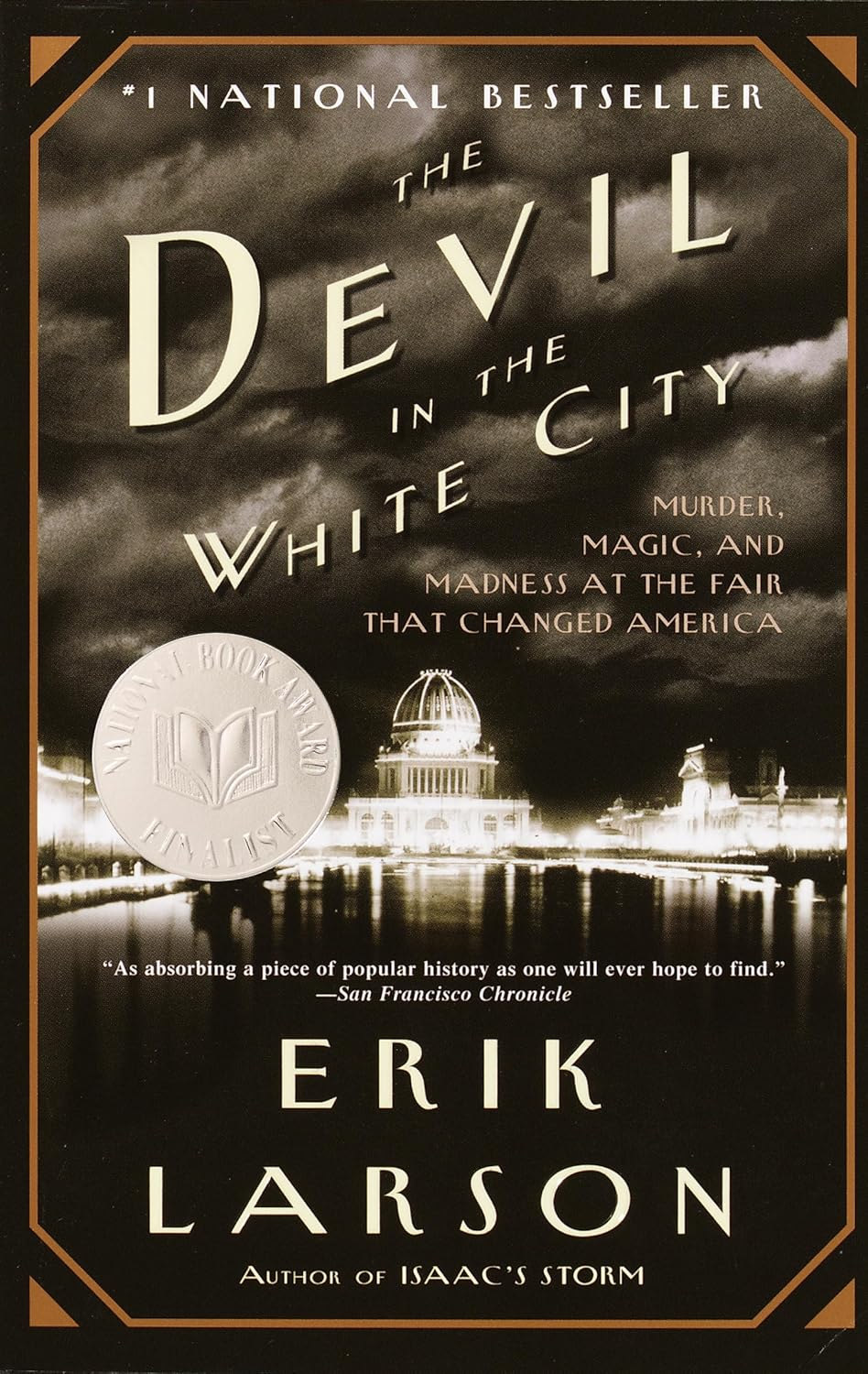
I love it when a discussion comes together in the comments on a post. Recently Renee Roberson and I were discussing Erik Larsen’s The Devil in the White City. You can see the conversation on Jodi Webb's post "Why Good Writers Read Bad Books." Renee disliked it, but I love it. 

Obviously, different people love different types of books, but she diagnosed an important problem. The book had been misidentified when it was recommended to her book club. They were told it is historic fiction and true crime. While it deals with true crime and a serial killer, it is a nonfiction history about the Chicago World’s Fair and a serial killer that operated against that backdrop. 

What’s the big deal? So, it’s nonfiction and not fiction. Surely a book lover could get over that. 

The problem is focus and pacing. True crime is tense and fast paced. Danger and deceit keep the reader turning the pages. History? The pace is going to be much slower because you must pull in so much material. This is all about the Gilded Age and is as layered and complex as a Gilded Age drawing room. There’s landscape architecture, architecture, and city politics. What? Oh, right. A murderer. He’s in there too, but he is only a part of a very complicated whole. People who read history are okay with that. People who read true crime may be, but it is going to help if they know what they are getting into. 

Call your book the wrong thing, and you are going to lose potential readers. Call your manuscript the wrong thing and you are going to lose potential sales. 

So how do you make sure you’ve got it right? A big part of it is knowing the market. If you read in a certain area, then you are going to have a better idea what to call a manuscript. I read a lot of mysteries. I can explain the difference between a cozy, a police procedural, and noir. Although I enjoy fantasy, my recent reading is more science fiction. Because of this, I have only a vague idea of what a romantasy is versus a cozy fantasy. I’m much more familiar with older terms like high fantasy, steampunk, and Arthurian. 

Reading your competition but still not sure what to call your own writing? Read articles about writing mystery or fantasy, essays or whatever it is that you write. Don’t forget to look up “types of fantasy” or “mystery subgenres.” And don’t read just one list but several since they are sure to have different sub-genre listed. For example, I just did a quick search and only one of three articles I skimmed included Wuxia fantasy. 

A third way to find the right term is to read reviews. Do you have a mentor text? Google it and read reviews. Be sure to look for professional journal reviews. Skim them for phrases like “a perfect example of real crime” or “the best cozy we’ve read this season.” 

Still not sure? Ask a book seller or librarian. They need to know how to find things, and they often make book recommendations. If they can tell you what genre or subgenre your mentor text falls into, this can help you categorize your own work. Categorize it correctly and you are that much closer to helping your readers find your work. 

--SueBE

  • Click here to find her newsletter.
Sue Bradford Edwards' is the author of over 60 books for young readers.  

She is also the instructor for 3 WOW classes which begin on the first Monday of every month. She teaches:
Read More »

Why to Write with Tropes

Thursday, February 16, 2023
Tropes help readers identify their type of story.

When a reader picks up a fantasy novel, a rom-com, or a cozy mystery, they come to the book with certain expectations. A fantasy reader expects magic. Rom-com fans want both romance and laughs. Cozy readers want to watch someone just like them catch the bad guy. 

Using your genre’s tropes will help you meet their expectations. First of all, you need to understand what a trope is. In short, a trope is a device. Hmm. That’s not very satisfying as explanations go. A trope is a plot element, a theme, or a character type that readers expect to find in this type of story. 

If you are writing a fantasy novel, possible tropes include: 
  • A character who is chosen to solve an epic problem or is the heir to the kingdom/all things magical.
  • A mentor character. 
  • Someone or something indescribably evil. 
  • A tarted-up medieval setting. 
  • A powerful artifact. 
  • A quest. 
Rom-coms have a whole different set of tropes: 
  • Friends to lovers. 
  • Enemies to lovers. 
  • Someone popular/successful falls for someone unpopular/unsuccessful. 
  • The makeover. 
  • Love triangles. 
  • Stuck with each other – think snowstorm, elevator, vital to the company project that must be completed the evening of Valentine's Day. 
  • Second chance. 
  • Soul mates. 
Cozy mysteries have yet a different set of tropes: 
  • Amateur detective. 
  • No on-screen violence or sex. 
  • Food including what the amateur detective makes but also frequent dining out. 
  • The victim was not a nice person. 
  • But everyone has something to hide. 
  • Pets, pets, and more pets. 
  • Quirky locations full of quirky characters. 
If you are looking at those lists and thinking that you can't possibly include them all, you're right. But you should use at least a few. 

After all, they can serve as convenient shortcuts. Fantasies include magic. You don’t need to spend a considerable portion of your word count explaining systems of magic or spell casting to your readers. Readers who pick up paranormal mysteries are ready to believe that the story could include a ghost. And science fiction readers will accept faster than light travel. 

Tropes also increase reader satisfaction. A romance reader who loves enemies to lovers stories will be primed to like your enemies to lovers story. A fantasy reader who wants to root for the underdog will pick up a book about someone who finds out that they are heir to the kingdom. Cozy readers love to try to sort out red herrings and clues as they read. 

When you tell readers that your book is a certain genre, this claim is a contract of sorts. Readers approach your story with a set of expectations. Know what they are and deliver a variety in a story that is all your own and readers will be primed to enjoy the trip from Once Upon a Time to The End. 

--SueBE

Sue Bradford Edwards' is the author of over 35 books for young readers.  To find out more about her writing, visit her site and blog, One Writer's Journey.

The next session of her new course, Pitching, Querying and Submitting Your Work will begin on March 6, 2023).  Coping with rejection is one of the topics she will cover in this course.

Sue is also the instructor for  Research: Prepping to Write Nonfiction for Children and Young Adults (next session begins March 6, 2023) and Writing Nonfiction for Children and Young Adults (next session begins March 6, 2023).
Read More »

The Contract with Your Reader

Thursday, May 24, 2018
It doesn’t matter what you write or who your reader is. If you write for anyone other than yourself, you have a contract with your reader. Your reader approaches your work with a certain expectation based on the genre you are writing, the description of your work and even your title. Deliver or risk losing your reader.

Genre

Every genre has conventions so, judging by genre, readers approach your work with certain expectations. A mystery will have an unanswered question. A cozy mystery will probably have a murder but readers won’t “see” it take place.

Nonfiction is factual. Everything, from dialogue to details, can be found in one or more sources. Facts are not altered to create a more dramatic story because, if they are, readers who love factual writing will feel cheated.

If I submit a novel and describe it as a romance, agents and publishers will expect certain things. The protagonist is wildly attracted to someone but they can only be together if they overcome certain obstacles. If there is no attraction, I will have broken my contract with the reader. The best I will be able to hope for is a rejection letter.

Description

How do you describe your work in your cover or query letter? While you don’t want to give too much away, you have to be honest with your reader. This means that once again, you have to know the conventions for a romance, a fantasy or a middle grade novel.

But your summary also has to be accurate. If you tell me that everyone on Earth disappears and one couple has to find out why, I have three expectations. 1. They are not from Earth because everyone from Earth has vanished. 2. There is something huge at risk that hinges on finding out what happened. 3. They have a reasonable chance of figuring this out.

Otherwise? I’ll relax with someone else’s work next time.

Title

Last but not least, your title has to be accurate. The Secret of the Mummy’s Curse needs to involve a secret, a mummy and a curse. I know, I know. The writer doesn’t always have the final say in their title.

But when a book club reads The Bad Ass Librarians of Lichtenstein, it doesn’t matter how fascinating the history is. If the bad assery belongs to the teens the librarians recruit and not the librarians themselves? I will still be hearing about how inaccurate your title was months later because there are two librarians in this particular book club.

Genre, description, title. They all form a contract with the reader. As a writer, your goal is to keep that reader reading, not give them an excuse to put your work aside for housework, grading, or, worse yet, the work of another writer.

--SueBE

To find out more about Sue Bradford Edwards' writing, visit her blog, One Writer's Journey.  Sue is also the instructor for Writing Nonfiction for Children and Young Adults. The next session begins July 9th, 2018.
Read More »
Powered by Blogger.
Back to Top
