Showing posts with label queries. Show all posts

Take a Chance

Wednesday, January 06, 2021
Take a chance on me
 Take a chance, take a chance, take a chance on me 

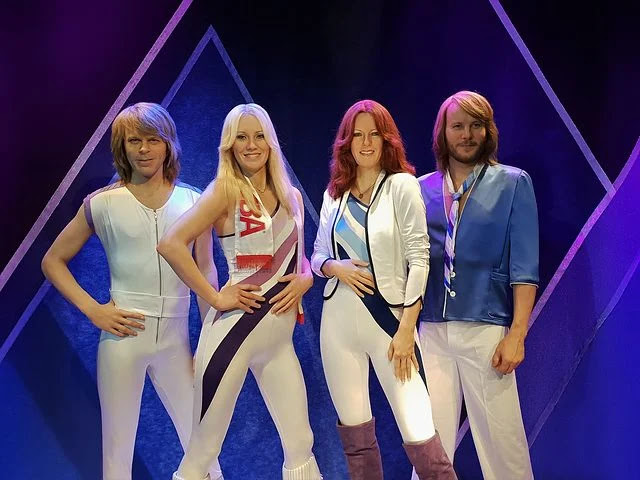
 If you’re not familiar with the group ABBA, you also have probably never heard the catchy tune that includes those lyrics. As writers, however, we need to take a chance. In fact, we need to take lots of chances.


                                                                 imge by Pixabay

Each time we send a query to agents or publishers, we’re taking a chance. Sometimes we send dozens and dozens of queries and get frustrated. After so many rejections, we’re tempted to quit. So many rejections make us think we’re never going to get a yes. However, after more than 120 queries, I got a “I’d love to publish your book.” If I had quit at 119 (or so), I wouldn’t have a publishing contract now.  

Take a chance. 

I asked a nationally-known expert on the Tulsa Race Massacre to read my soon-to-be-published book. (She and I have presented at conferences.) My hope was she’d give me a (positive) blurb I could use on the book. She (politely) said no, for a couple of reasons. Then when I asked the executive director of the Greenwood Cultural Center if she wouldn’t mind reading my book, she said yes. She might not like it, she might not be able to give me a usable blurb… and yet I took a chance. 

 Take a chance on me (and my work). 

 I needed a cover for my book that’s about to birthed. I can’t illustrate, and I know nothing about graphic arts, so there was no way I could do it. I do, however, know a teacher-artist friend who does amazing work in multiple mediums. I asked her to read my manuscript and design a cover (for pay, of course). She had never done a book cover before. There was the chance that she’d read my book and think, ‘It sucks,’ but she didn’t. What she did do was create an incredible cover. There was also a (small) chance that I’d see the final artwork and feel disappointed. I didn’t. What I did see blew me away. 

Take a chance. 

Beginning a new project when another one is almost finished is the MO for some writers. You know, the keep-the-momentum-going strategy. Always have a couple of projects you’re juggling. I began a new manuscript a year ago, and it’s gotten stuck in a major puddle of quicksand. In a true groove with the prior piece, I keep struggling with this one. The more I flail my arms around, the deeper I sink. There might be another option: I have a picture book that got some feedback from Margo Dill a while ago. (This is my oldest project. It was going to get published, and then the publisher disappeared, leaving behind lots of unhappy authors.) I set it aside. Maybe working on the picture book--something different from a novel--will help me later get into the right frame of mind for the novel. 

Take a chance on working on something different. 

I had a sucky title for my book. It lacked pizazz. I reached out to some people, and one writer friend gave me the perfect title. 

Take a chance. 

Take a chance on submitting. On reaching out to people for blurbs or to be a beta reader. On devoting time on a once-old-and-now-new project. On getting help with a title. You might not be successful, but if you don’t try, you’re guaranteeing you’ll fail. 

What are you taking a chance on lately?

Sioux Roslawski is a freelance writer and the author of the middle-grade novel Greenwood Gone: Henry's Story (coming soon, in the spring). She teaches middle school literature and writing during the day, and rescues dogs on the weekends. To check out her blog, head to Sioux's Page.
Read More »

Friday Speak Out!: How to Write a Better Query

Friday, December 30, 2016

by Tammie Ortlieb

The query is the business equivalent of a cover letter to a resume. It introduces your work in a no-nonsense, polished, professional sort of way.

First, what is a query? Think of a query letter as that two-year-old tugging on your shirtsleeves, “Look at me! Look at me! Look at ME!!!” The query is simply a letter that asks the agent, editor, or publisher to give your writing a look. That’s it, nothing more. The query is a sales piece.

The query process differs for fiction and nonfiction.

Fiction writers will complete the book or short story first and then send out queries. Nonfiction writers will pitch an idea. The idea, however, should be formed enough to provide sample paragraphs, an outline, or sample chapters should you be asked for that.

Good queries are constructed using the following basic format:

Paragraph 1 — Introduce your topic with some statistics, interesting facts, or research for a nonfiction piece. Offer up a tantalizing teaser for a short story or novel.

Paragraph 2 — Give the title of your work, potential word count, and tell us why the world needs to hear your story.

Paragraph 3 — Provide a short personal biography. Include only relevant information. Keep it short. Discuss any links or clips that showcase your work. Do not attach the clips. Editors will ask for these if they choose.

Sign off with a polite “Thank you for your consideration. I look forward to hearing from you.”

Provide contact information, speak in a professional tone, and introduce a bit of your personal voice.

Unlike in the business world, avoid follow up if you have not heard back from the editor in a few weeks. Many editors will not respond to “no’s” and will only get annoyed from continued correspondence. This kills future chances at publication with that particular source. Many queries can be sent out for a single piece at any one time. Only one query, however, should be sent to each source at any time. For example, you might send out ten queries to different agents trying to sell your first romance novel. You would not, however, send queries to a single agent marketing your finished romance novel, a short story, and a How To Write Love Stories informational piece.

Many beginning writers feel they need to get fancy with font or format to stand out. The query process is one place you don’t want to stand out with glitter and curlicues. You want to follow format, appear professional, and leave the door open for future correspondence. Stand out with a strong voice, an interesting idea, and material that will interest the agent, publisher, or publication you are targeting. Do your research. Different agents are interested in different kinds of work.

Most importantly, get ready for rejection. It will happen. Keep your chin up, your head strong, and your fingers to the keyboard.

* * *
Tammie Ortlieb is cofounder of and content creator for vegoutkalamazoo.com. She also blogs at lifeloveandpixiedust.blogspot.com. Professor, writer, and mother of four, she hones her query skills through channeling her inner two-year-old.
~~~~~~~~~~~~~~~~~~~~~~~~~~~~~~~~~~~~~~~~~~~~
Would you like to participate in Friday "Speak Out!"? Email your short posts (under 500 words) about women and writing to: marcia[at]wow-womenonwriting[dot]com for consideration. We look forward to hearing from you!
~~~~~~~~~~~~~~~~~~~~~~~~~~~~~~~~~~~~~~~~~~~~
Read More »

Queries: Your Query Letter is not One-Size-Fits-All

Wednesday, September 16, 2015
How many query letters have you written for each of your manuscripts? The uncomfortable truth is that you should have one for every agent you approach.

I know, I know. You want to agonize over that letter only once and then change the address and date. After all, shouldn’t it be your manuscript that makes the sale?

Your manuscript does show how well you write. But your query letter shows an agent something too. It reveals how well you know the business of writing including what you know about the agent.

Every agent that you approach should be carefully chosen. This means your reasoning should go beyond “because you take young adult novels and I have written a novel for teens.” Not only should you be submitting to an agent who represents young adult novels, they should represent your kind of young adult novel whether that’s urban fantasy or diverse characters. What is it about the books this agent represents that are similar to your own?

If you are approaching an agent who has sold books to Random House and you already have a Random House book, point that out. It tells that agent that you write the kinds of book that he sells.

Have you found an agent who wants manuscripts for a given series? Read the specs for the series and discuss your work using key words taken from the spec sheet.

A query letter is more than a chance to butter up an agent. It is a chance to talk to a professional about your work. Open your letter with what you are sending – TITLE, a young adult novel of X length. It makes it easy to keep track of your work and shows that you know what they represent (you aren’t submitting a novel to an agent who only reps nonfiction), and that you know a novel isn’t 50 pages long any more than a picture book is 20 pages.

I know. You want part of this letter to be boiler plate. Can’t the section on your manuscript be it? Even this section needs to be customized. If an agent wants quirky characters, your description must include your quirky character. If an agent wants stories set in Armenia, that information has to be in your paragraph. While this paragraph may not change much, it needs to highlight what this agent most needs to know about your work.

Query letters may not be one-size-fits-all but they are a solid way to let an agent know that you’ve done your research before sending them your work.

--SueBE

Sue is the instructor for our course, Writing Nonfiction for Children and Young Adults. The next session begins on November 9, 2015.
Read More »

Singing the Summertime Writing Blues

Wednesday, June 19, 2013
(With apologies to George Gershwin)

Summertime, and the writin’s not easy.
Words won’t come, and your brain’s a hot mess.
Your plottin’ stinks, and your hubby wants dinner.
Hush, now kiddies, don’t you cry.

One of these mornings, you’re gonna rise up writin’.
You’ll have an idea—and you’ll pull out your pen.
But till that morning, you’re gonna need a vacation,
With a cool drink standing by.


It happens to the best of writers. Summertime rolls around and all we want is a break from the everyday grind. And you know what? A break might be exactly what you need to get your weary writing mind back to work. Try one of these mini-vacations and see if you can change your summertime blues tune.


A Reading Romp

If you’re a writer, you need to be a reader; that’s a tip you’ve heard a hundred times. So you’re writing and reading and reading and writing and whew! You can’t remember the last time you read a book just for the sheer joy of it. So take a break, turn off your writer’s brain, and read just for fun. Read a children’s classic that you somehow missed in your youth. Try one of those bodice-ripping, makes-you-blush, beach reads. Dip into something so scary, you have to sleep with the lights on. And then read a handful of swell books in the target audience you want to hit with your work-in-progress. Hey, you think, I know what’s not working in my manuscript!

Now you’re ready to write again.


The Think-Don’t-Write (So Much) Break

It’s entirely too hot to come up with 60,000 great words. You can’t even come up with 600 great words. But maybe you can come up with 60 great words. Honestly, it only takes half of that number to come up with a pitch. And you don’t even need the novel to come up with a pitch. In fact, if you haven’t figured out a great pitch first, then your novel is destined to be ho-hum. So a summer break can be the perfect excuse, er, time to sit around, thinking up great pitches.

After you have the greatest pitch ever developed, possibly a steamy murder mystery involving cabana boys and Mai Tais, you won’t be able to wait another minute to write it.


The Write-Don’t-Think (So Much) Break

But what if you’re not working on the Great American Novel? What if your work is coming up with ideas? I know how the psyche can take a beating after sending out queries and pitches to non-fiction markets, day in and day out. You need a vacation, need to take your brain away from work and try something different. Like a light-hearted essay (Check out Chicken Soup for a topic) or a couple blog posts on a just-for-fun subject. Or maybe, secretly, you have a book in you, too. Let your imagination run wild and write that crazy first draft. It may stink, but that’s okay. You’re on vacation! Before you know it, you’ll be itching to get back to work—and writing what you know.


I do so love summertime. And the writin’ will be easy—if you give yourself a much-needed vacation first (and don't forget the drinks with little umbrellas).


~Cathy C. Hall


Read More »

Friday Speak Out!: No More Query Letters, guest post by Joanne Lewis

Friday, August 17, 2012
No More Query Letters

(If you’re not having fun, don’t do it)

by Joanne Lewis

I wrote my first novel when I was 24 years old and while a prosecutor working sex crimes. I didn’t have an agent. A small press that has since gone out of business published the novel. While I did not sell many books, I was invited to speak on panels and did book signings. I got an agent. I was on my way. Then my agent unexpectedly passed away.

Opportunities continued to arise, at least for a short time. Another small press wanted to publish a book of mine, however the novel was never released.

At this time, I’m 29 years old and feeling like my writing career would never go anywhere.

I didn’t write throughout my thirties. Not writing gnawed at my brain but I was productive in other ways. I left the State Attorney’s Office and opened my own practice. I fell in love. But still, I didn’t write. I knew, however, that I would write in my forties.

Four days shy of my 41st birthday, I experienced a life changing event. I was diagnosed with ovarian cancer. After a radical hysterectomy and six months of chemotherapy, I emerged cancer free and ready to write. I was determined to be published again.

One day, as I was trying to write the perfect query letter, I told my sister I was tired of hoping an agent or editor considered me worthy. She said, if you’re not having fun, don’t do it.

I stopped. No more query letters. No more hoping to find an agent. No more praying for that editor to make me the next big thing. No more yearning to call a publishing house my home. I decided to self publish.

Here’s what I’ve learned about self publishing. It’s better than traditional publishing in many ways. We still do our own marketing but we also have control over our product. The final edits. The cover. How much we charge.

Do you know who looks down upon those of us who self publish? People in the publishing industry. Shouldn’t they be cheering us on?
Do you know who doesn’t care if we self publish? The readers. All they ask for is a good book.

What I don’t understand is how come self publishing, which is the same as being self employed, is given a bad rap? I started my own law practice and was congratulated for being an entrepreneur. I bought a house, flipped it and people were impressed. I have been self employed since 1997. Why is writing the only industry where being self employed is frowned upon?

When I am not working as a lawyer, I am writing and striving to follow my sister’s advice. If you’re not having fun, don’t do it.

I am 47 years old now. I have self published two novels. I do not sell a lot of books. I know that will change when I am in my fifties. Hopefully, this time the life changing event won’t be so drastic.

* * *
Joanne Lewis is the self published author of Wicked Good (co-written with her sister, Amy Faircloth) and Make Your Own Luck, a Remy Summer Woods mystery. The Lantern, a Renaissance mystery, will be released in November 2012. Please visit her website at www.joannelewiswrites.com and email her at jtawnylewis@gmail.com. Her books are available as eBooks and as paperbacks on Amazon, Barnes & Noble and all over the web. Please ask your local bookstore to order her novels.

~~~~~~~~~~~~~~~~~~~~~~~~~~~~~~~~~~~~~~~~~~~~
Would you like to participate in Friday "Speak Out!"? Email your short posts (under 500 words) about women and writing to: marcia[at]wow-womenonwriting[dot]com for consideration. We look forward to hearing from you!
~~~~~~~~~~~~~~~~~~~~~~~~~~~~~~~~~~~~~~~~~~~~
Read More »

When a Great Idea Isn't Great Enough

Saturday, June 23, 2012
There are a few freelance markets I regularly consider, and WOW! Women-on-Writing is one of my favorites. So when I read about the topic for an upcoming issue, I let it rumble around in my brain for a while.

And my brain eventually spit out a couple ideas for an article. But my brain also spit out a “Not so fast, sister.”

Sometimes, a query idea may be really great—except when it’s not great enough. Which sounds a little crazy so I’ll try to explain.

If you’ve ever read the submission guidelines for WOW!, then you’ll know exactly what the editors look for in an article. You know important details like word count and fonts and where to pitch the idea. But there’s another step that is just as important as reading submission guidelines, and that’s reading the market.

Reading the market where you want your idea/article to find a home is absolutely necessary. It gives you the depth, as well as the edge you need to catch an editor’s eye. Think of when you meet someone for the first time. You can see whether she’s short or tall, or if her eyes are green or blue. But when you talk to her, you find out the really interesting stuff, the juicy details that you remember much longer than how she wore her hair.

Your submission guidelines are like that first meeting; they give you the facts. But reading the market content is like getting to know someone better; you get details like style and tone, and what an editor likes.

So when I came up with my splendiferous WOW! ideas, I knew they fit the topic, but I wasn’t so sure they’d work for the ezine. One didn’t have enough take-away information (a big plus if you want your query accepted at WOW!) and the other idea was much more suitable as an essay rather than an article.

Still, I’d written down plenty of notes about those ideas. One might be sent off to Chicken Soup for the Soul. Another might morph into a children’s poem. And one might even show up here at The Muffin.

Because I never waste a great idea. Including the one about when a great idea for a market isn’t great enough.

Read More »

Get Your Article Query Noticed

Tuesday, May 25, 2010
Remember preparing for the dreaded job interview? The first impression. It seems everyone from your Great Aunt Martha to the dry cleaner had advice—and most of it included the handshake. Firm. Confident. Not sweaty. Because if the interview was the first impression, the handshake was the beginning of the first impression. A lot of pressure for a handshake but…

As a freelance writer you can work for an editor for years without every meeting them in person(or these days without even talking to them on the telephone). Instead of job interviews we have queries—one written page to say “Hire me!” In place of the handshake we have the article title.

Be honest. How much time and thought do you put into your article titles? Sure, you craft a great idea and format, find sources, toot your horn with clips and experience, compliment the magazine and/or editor. I used to slap in any title that popped into my head as I was typing up the query. Then I realized that in a flood of queries, titles are easy for editors to remember. Titles can say I’m professional, I pay attention to details, I know your magazine. A lot of pressure for a title but…

This is where research comes in handy. You did research the market, didn’t you? Try to use a similar format to past articles—every magazine has their favorite title type.

Article Quote – Use a source quote or an especially good phrase from your article, usually the first paragraph. For instance, if you were writing an article on job interviews and used the first paragraph of this article your title could be “A Lot of Pressure for a Handshake”.

Number – Many magazines like “number” titles: “Five Ways to Organize Your Life”, “Six Fun Car Games”, “Three Things to Do with Avocados”.

Funny – Especially if your article has a tinge of humor to it carry that theme through to your title. An essay on capturing a bat in my house was titled “Living in a Bat House” as opposed to the more straight forward, but less fun “The Day I Captured a Bat in My House”.

Alliteration
– Don’t carry alliteration for more than three words and don’t feel all the words in the title have to match: “Delectable Desserts”, “Help with Heart Health”, “Doggie Disasters in Your Garden”.

Familiarity – Take a well known book, song, or saying and give it a twist to create a memorable title. “Three Cheers for the Red, White and Blue” became “Three Cheers for the Red Freshman”. “Invasion of the Body Snatchers” became “Invasion of the Bulb Snatchers”. Just make sure it isn’t an overused title twist. For instance, I imagine at one time editors were drowning in titles that were twists on Nike’s “Just Do It” and the Mastercard “Priceless” line is finding its way into many article titles.

One last note: You’re probably noticing that my blog title is, well, lackluster. That’s because I’ve received advice to be straightforward with blog post titles since it makes search engines easier to find your article.

One last, last note: Even if you come up with a great title don’t get too attached to it. Editors often change it anyway to match the issue’s theme, the space available, or a thousand other reasons. But your title did its job—it helped get you the assignment.
Read More »

All About Editors and Agents: Tips from Andrea Campbell

Saturday, May 22, 2010
One of the most challenging aspects of being a writer is not writing (that's the fun part!) it's finding a home for our work. Even when we think we've found the perfect fit--a publisher or agent who accepts the type of material we're submitting--we still receive rejections. Why? Perhaps we haven't targeted the right person, maybe it's a timing issue or lack of market need, maybe we just haven't built up our platforms enough to attract an agent's attention, or maybe we simply don't know enough about our product to market it properly. And sometimes, it's just downright baffling!

So to help us figure out how we can better target agents and editors, we've invited WOW! instructor Andrea Campbell to answer our questions on the subject and questions about her upcoming course The Gatekeepers: All About Agents and Editors--Getting them, Working with them, and Growing as a Career Author, which starts Monday, June 7th. If you're interested in learning all about agents and editors from a pro who will personally guide you through the process, there's still time to sign up. Visit our Classroom Page for full curriculum details.

Andrea is the author of twelve traditionally published nonfiction books on a variety of topics including forensic science, criminal law, primatology and entertaining using interactive games, among others. Her latest book is the 2nd edition of Legal Ease: A Guide to Criminal Law, Evidence and Procedure, which as just been updated and fashioned into a college law textbook. Her next book, a historical-biography about the world's first detective, will be released later this year with Overlook Press.

Andrea is a member of several professional organizations and stays current with book business. Her classes always offer students much more than they thought they'd get. One of her students got a "very good deal," and, according to Publisher's Lunch, a $100,000-plus contract. We ask Andrea about that student in this interview.

WOW: Welcome, Andrea! Let's start by talking about your upcoming e-course, The Gatekeepers. Who should take your class on agents and editors? Is it only for authors?

Andrea: Angela, thanks for having me. The Gatekeepers e-class was set up specifically for authors, but it will also apply to advanced writers who have a book idea that has gone through some considered thought. It is tightly focused on a writer's interests in terms of obtaining publication and it addresses their needs toward that end--but the class also provides evergreen information, useful for furthering an author's career.

WOW: Why is it important for authors to learn about the publishing business?

Andrea: If you were going to start a small business, say, dressmaking, you would go seek out a workspace, purchase work equipment, set up accounting, secure your business name, find a supplier for your fabrics and such, and make sure your patterns were current and in fashion before you hired additional workers. You also don't want to set up your shop next to someone else's dress shop unless you want your business drained off. Why would anyone go into publishing without learning the industry? This is a business after all and the more professional you are, the more realistic you are about the industry, the better your odds of succeeding.

WOW: I like that analogy! And you're so right. It always surprises me though how often aspiring authors jump into the business without learning all about it. It just creates more work in the long run, and this is already a slow industry!

In week two of your course, you cover an author's platform. What are some key points authors should consider when creating a plan for their platform?


Andrea: Platform is really about positioning. And it is not something that can be created in a month or two of effort. Platform is what you bring to the table. Here is the publisher at this meeting and he is looking to invest a lot of money into an author. He thinks to himself that it would be best to work with someone who already has customers, or at least interested readers and potential buyers for the product. If you can say, "I have a blog in my subject area that nets 20,000 visitors a month," or "I have a newsletter that goes out to 10,000 subscribers," "I have a radio show that airs on Friday nights that gets the best _________ (fantasy, romance, whatever) writers in the business," and so forth. These desirable entities do not spring up overnight but take concentrated effort and planning.

WOW: Having an established audience is definitely attractive to publishers. You also cover getting an agent or editor in your class. How can an author craft a query that will catch an agent or editor's attention?

Andrea: The name of the game is knowing your product, being able to describe it in an intriguing manner, having relevant credentials, and keeping your professional letter to one page or a page and a half. That's no little feat.

WOW: What are some things an author shouldn't do when crafting her query? Are there any big "don'ts" to avoid?

Andrea: Don't say your mother/friend/writing teacher, etc. loved it. Who cares? Don't use a generic "Dear Editor" greeting. Don't fail to mention pertinent awards. Don't fail to know your audience. Know the difference between audience and market. Don't do things that will label you a novice.

WOW: Those are great tips! I know agents usually specialize in certain genres or subjects. How can authors find the right agent to target before sending her query?

Andrea: A huge part of The Gatekeepers is marketing. And that marketing component means many different things. We figure out what sells. We figure out who buys what you write. We figure out what agents like and don't like. And that's just the beginning. It's research. There are a lot of websites that carry this information, but you have to dig it up and make sure it's current.

WOW: That's true; the industry is always changing and it's important to keep current. In your course description you say that "a lot of what you'll learn is not clearly visible." Can you explain this concept to our readers?

Andrea: One thing we do is discuss what readers want. If you don't know how your book benefits your targeted reader, it's probably a vanity effort and you have not gone beyond first-level thinking. There is a psychology to sales, and we learn to tap into that psychology. To find not only the universal message but to find your exact reader and why they should buy your book.

WOW: That's very helpful! So what do you ultimately hope students will learn from taking your course?

Andrea: I don't hold out hope. I am a difficult taskmaster. If you are not doing the work, it's obvious. I suggest that students clear their plates. I will read your assignments, tell you where you've erred, and expect you to learn from it. We have a chat every week that allows students live sessions to brainstorm and ask questions. There are no vagaries, so hope is not an option. It's do this or don't move forward. It's as easy as that.

WOW: You are a "difficult taskmaster!" I love that. It produces results. Tell us a little about your student who received what Publisher's Lunch calls a "very good deal"--a $100k+ advance. That's amazing! You must be very proud!

Andrea: Jeannie Ralston wrote, The Unlikely Lavender Queen: A Memoir of Unexpected Blossoming. In fact, we chose the title in class and the publisher kept it, which is quite a coup today.

Jeannie had a great experience to share but couldn't find her focus. She had left a flourishing writer-editor career in New York, to begin a life in rural Texas as a lavender farmer because that is what Robb, her husband, yearned for. They had visited Provence, in France, and her husband wanted to settle down in the country--so a deal was struck--she'd move to Texas if Robb would agree it was time to have children. But her National Geographic photographer husband was still taking photo assignments to exotic places and guess who had the farm and the kids? Jeannie not only discovered her "muster" but also became the largest lavender farmer in the southwest, Hill County Lavender. It is really a transformative story for anyone who dreams of another life.

WOW: That's an amazing story! Both the deal and the book! Thank you, Andrea, for sharing your tips with us today. Do you have any parting words of wisdom for our authors-in-waiting?

Andrea: If you want to succeed in this hard-knock business you need the foundation and knowledge of how to be a professional first. I once heard an agent say, "Ideas are hard, we can teach anyone to write, but content is still king." Thinking is hard, if it weren't we would all do it longer than five minutes.

-----

Readers, if you're interested in learning more about getting an agent or editor from a pro, remember, Andrea's The Gatekeepers: All About Agents and Editors--Getting them, Working with them, and Growing as a Career Author starts next Monday, June 7, 2010. It runs for 4 weeks. Visit the classroom page to view what you'll be learning week by week. Enroll today to reserve your spot. Happy writing!
Read More »
Powered by Blogger.
Back to Top