Showing posts with label perseverance. Show all posts

Do You Feel Lucky?

Thursday, October 08, 2020

I had a front row seat at my oldest son’s somewhat unconventional wedding this past weekend, and as I sat there, listening to the vows between him and his soon-to-be-wife, I was struck by two things. Firstly, that Oldest Junior Hall had kissed a lot of close-but-not-his princess on the way to finding his true love. But he never gave up; he always believed he’d find The One. 

And secondly, considering the goofball (his words, not mine) that my son is, that he was awfully lucky to find someone who found all that wackiness not only endearing but was willing to spend the rest of her life with it/him. 

It all reminded me of the novelist, Philip Pullman (whose trilogy, His Dark Materials, is brilliant fantasy writing). He was the keynote speaker at the Summer Spectacular SCBWI Conference this year, and he had a virtual Q & A. 

Mr. Pullman (Or maybe it’s Sir Pullman?) began by listing the three things necessary to be a writer who gets published. One necessary thing is perseverance, said he. 

Well, yes, of course, that’s a fact. A writer who wants to get published must stick to it, hang in there, never quit and all that. Everyone can have perseverance, right? No special skill involved there, just the ability to keep working despite setbacks. Perseverance comes in handy whether you’re trying to get published or find a mate. 

The esteemed novelist told his audience that we must also have talent. 

Okay, that’s a bit trickier. He felt like fate had granted him writing talent and that had obviously been extremely helpful in his career. But he had worked at improving the talent he’d been given and he encouraged the audience to work diligently on improving the talent they’d been given. And that’s certainly doable, too, since there are so many opportunities available to help us writers improve our skills. So yes, perseverance, talent…I’m feeling very hopeful at this point. 

And then he came to the third necessity to be published: luck. 

Wait a dang minute. Luck? I’m not saying that I haven’t often felt like there are writers out there who’d been exceptionally lucky to get this or that publishing deal. But I eventually talk myself out of that thinking because luck, after all, is not something you can somehow acquire. It’s just…luck. Some people seem to have been born under a lucky star while others of us couldn’t find luck if it whacked us upside the head. 

So, honestly, this annoyed me. It annoyed me a lot. 

But then I stopped all the mental fussing and fuming and moved on because…well, it’s true. Luck comes into play in our lives all the time, whether it’s finding the right mate or finding a publishing contract. My own books came about because of a lucky connection made years ago, even years before I started writing for children. 

And so I hope you’ll take Mr. (Or Sir) Pullman’s advice to heart. Persevere, work on improving your writing talent, and then be ready when luck comes around to whack you upside the head. Because it probably will when you least expect it. It’s just like the song that my son and I danced to at his wedding: “Fairy tales can come true. It can happen to you…”

~Cathy C. Hall (who enjoyed dancing to Young at Heart. In fact, she likes to think she's among the very young at heart. And that makes her indeed lucky.)
Read More »

This Post Brought To You By the Letter C

Wednesday, September 05, 2018
The Unreal Conditional

The following is a real conversation I had with one of the Junior Halls. (Whose name shall not be divulged to protect the innocent.)

JH: If I was the President—

Me: Were

JH: (Continuing as if I hadn’t spoken) If I was the Presi—

Me: Were

JH: IF I WAS THE P—

Me: WERE. It’s were, were, were! (Followed by a somewhat boring, possibly lengthy explanation of why it’s were.)

However, I have several topics to cover here and I suspect that like my Junior Hall, you don’t really want the whole boring, possibly lengthy explanation of the conditional when dealing with the unreal or hypothetical. (That right there is a mouthful, isn’t it?)

Suffice it to say that I hear this construction used incorrectly often. People (besides the Junior Halls) want to use “was” when there are times when “were” is correct. So here is my short and delightful way to know whether to use “was” or “were” in the conditional:

Think of the musical, Fiddler on the Roof. In If I Were a Rich Man, Tevye rushes to finish back-breaking chores before the Sabbath begins. He sings of the day when he doesn’t have to work so hard, when he has one staircase leading up and another staircase leading down and still another leading nowhere. It’s a funny and yet poignant song because Tevye…well, Tevye is never going to be a rich man but a fellow can dream, right? So, if you are about to start a sentence (or clause) with “if” and you are going down a hypothetical or unreal path, think of Tevye and use were, please.


The Joy of Correspondence

Speaking of Junior Halls, I’m cleaning up around here because now, I mostly work in what was Mister Man’s office, and thinking I would paint, I took down all kinds of stuff from the walls in the upstairs office I once used. But the stuff that caught my eye—that I stopped to read once again—were the cards, the notes, the letters written by Mister Man, the Junior Halls, and friends.

Sometimes, I laughed out loud, because honestly, the Junior Halls are very funny. But I also teared up, because honestly, those Junior Halls, and Mister Man, and many of my friends, write the sweetest, spirit-lifting things. And here’s my point here: I am so glad that all these people that I love took the time to write.

Sure, it’s lovely to have a call, and a text is nice, too. But letters, notes, cards…oh, my goodness, what joy that brings to the recipient! So send a note. Add your heartfelt words to a card. Write a letter to someone you love. I promise you, that someone will save and treasure those words long after you’ve forgotten writing them.


The Importance of Continuance

No, I’m not talking about the legal continuance; I mean the quality of enduring.

Along with taking stuff from the walls (see above), I also cleaned out a few folders of writing stuff, notes I’d taken from websites and writers and such that obviously were important enough to save.

Oh. My. Word. Time and time again, I found these sites were defunct, that somewhere along the line in the last ten years (ten years!), it had all sort of…just…disappeared. So if you are a writer who has stuck with it, if you are still standing ten years on, I salute you! Because I am sure you have achieved goals beyond your wildest writing dreams, even if it doesn’t feel that way to you.

If I were the President, I’d give you a special Medal of Continuance. Because you deserve it! (And if you have a C-word-of-writing-wisdom, please share!)


~Cathy C. Hall (Who always spells her name with a C, thank you very much.)


Read More »

The Most Important Thing a Writer Needs

Monday, January 22, 2018
I'm making a pretty bold statement with my blog post title, but in all my years as a writer, teaching writers, and having friends as writers, I truly believe the most important thing a writer needs is...

Perseverance

It's so obvious to me this morning that before I wrote this post, I decided to do a quick search of the Muffin to see if I had ever dedicated a post to it before. (Another thing about writers--we easily forget what we write!) I hadn't dedicated an entire blog post to it! What sparked this idea of perseverance was a couple of things that happened over the past couple of weeks.

One of my critique group members was recently talking about how she's just not sure she has what it takes emotionally to make it as a writer. She is trying to add to the family funds with her career, and what she is finding out is that it's extremely difficult. And...she has had success! She is a published writer! She is also a mom and a wife, and doesn't love the isolation of the writing career. These feelings are really weighing on her, and it's not that she doesn't have talent or that she doesn't work hard. She works hard every day of her life. It's the perseverance thing--she's not sure if persevering through this rocky road is worth it to her emotionally. I'm sure many of us can relate.

Then I edited an upcoming article for WOW! (which you all will love). It's a very inspirational piece about freelancing and trying to get article ideas accepted by editors. It's not easy! The author wrote a sidebar about one idea she had that took two years and eight to ten queries before it landed in the perfect spot. If she hadn't persevered, the idea would have never seen readers. But here's something else she had: belief.

So is that the second most important thing you need as a writer? Belief?

Needing perseverance and belief is not to say that you don't need talent; but even then, you can improve your talent. Perseverance and belief help you do both--if you want to keep going and you want to get better, you will seek out classes and conferences, critique groups and writing books, and you will improve your craft. I see my novel writing students persevere every month, and those who take the class for a couple months improve their writing even in that short time.

I've had my struggles with perseverance, which I have not been quiet about; but without it, I would not be writing this post to you today. I would have given up a year ago or maybe earlier, when the words weren't coming easy and when time and emotions were not on my side. But I didn't want to give up. I wanted to believe that some day, if I just kept active and wrote a little, I would be on the other side. And here we are.

What do you think is the most important thing a writer needs?

Margo L. Dill is a writer, editor, and teacher, living in St. Louis, MO. She teaches a novel course for WOW! each month, which includes 4 critiques of your work-in-progress. To check out more about her, go to http://www.margoldill.com. To check out her next class starting February 2, go to the WOW! classroom.

Perseverance photo above by Evil Paul on Flickr.com
Read More »

Surviving the Canyon Trail and What I Learned from It

Monday, December 25, 2017
Instead of my regular Christmas post where I write random inspirational thoughts, I’m sharing a story about something that happened to me recently, and how I’m applying it to the New Year.

(Yep. I've ran into rattlesnakes.)
December 13th was a Wednesday, but it felt more like a Friday on account of my bad luck. It’s the kind of luck that turns a glass half empty, makes you question what you did differently. By sunset, I would find myself alone, stranded in the wilderness, using all my strength to survive.

Okay, that sounds a bit dramatic. I’ll change that last part to: “using all my strength to survive the situation.” Yes, we’ll go with that because this is not a Rambo movie!

I was working on WOW that day. I had just finished the html page for Chelsey Clammer’s column, and it was 3:40pm. Normally, I’d take a break at 3pm to go trail running, but I’d gotten out of routine. It’d been almost two weeks since the Santa Ana winds started whipping through the canyons at 50mph, tirelessly stoking the California wildfires. It was a bad month for wind (and allergies). Every voice was a scream. I had less than an hour, but I knew I could finish the four-mile trail that snaked through the canyon and get back to my car before sunset.

I ran light: Brooks trail running shoes, capris with zipper pockets for keys, cell phone, Bluetooth headphones, Ray-bans, and one stick of gum for hydration. A downloaded Spotify playlist helped keep the pace. I knew where I should be on the trail when a song came on, and how many minutes were left in my run. By the time “Goodbye Horses” played, I slowed to watch three juvenile coyotes run across my path and into the bushes. One curious coyote stopped, and I swore we had a moment as we exchanged a long glance. I made up for that pause and ran faster until I hit the end of the lollipop trail and turned around.

(Where the coyotes like to hang out.)

I ran down the 1,500-foot peak, then slowed to a walk to take a second descent down a smaller hill of dirt and gravel. This is where my memory fails because it happened so fast. I don’t know if it was because of my sunglasses or the fact that I didn’t slow down enough or that I hadn’t cleaned my shoe’s treads in a while, but the next thing I knew I was tumbling down the hill like a cartoon character. When my body finally stopped, my head was still tumbling and I felt like puking. I took a deep breath and stood up, but the pain was too agonizing. My left ankle was the size of a softball. I tried to get up again but felt something dislodge and pop, and I couldn’t put pressure on my left foot. It was then that the realization set in. I was hurt, really hurt. I couldn’t walk. I was two miles from my car. The sun was abandoning me. I was alone. I reached for my cell phone and there was barely one bar. I called my husband.

(Not the hill I fell down,
but check out that terrain!)
“I’m on the 5-freeway an hour away, going to a meeting,” he said. “What happened?!”

I told him I possibly broke my ankle, maybe sprained it or twisted it. I wasn’t sure. That I was two miles from my car.

“Find a stick to walk with, and call my dad to pick you up. Or call 9-1-1—“

“And what? Have them airlift me out of here?”

Then I lost cell service.

It was getting dark and I debated using my phone’s flashlight, but needed to wait as long as possible because my battery was dying. I stood up and hopped on one leg down the hill. By the time I got to the bottom, I was drenched in sweat. The temperature was dropping quickly and I knew sweat would make me cold if I stayed still for too long. I called my husband again, but I still had no reception. So, I hopped. And hopped. And hopped. For a quarter of a mile.

I stopped before I reached the twelve-inch ledge that hung twenty feet over the stream below. Even with two legs, this part of the trail required attention. I knew I couldn’t cross it by hopping. To my right, tree branches broken by the harsh winds lay in a jumble. I found a curved stick, two inches in diameter, broke off its branches, and used it as a support. Honestly, it didn’t help much. Every step delivered a shot of pain and a clunky pop, but at least I could maintain balance. My thoughts turned dark as I hobbled into the thick forest, trees swallowing me like the mouth of a cave. I could barely see the rocks on the ground. I felt like I was going to lose it when I thought of how far I had to go. I stopped to catch my breath.

I heard a rustling behind me and then some panting. Could it be coyotes?

“Hey, what happened?” a man’s voice said. “I saw you run past me a while ago.”

I craned my neck around to see a stocky man with long blonde hair and a scraggly dog emerge from the darkness. I recognized him as a regular hiker on the trail, and told him what happened.

“I’ll walk with you,” he said.

His name was Richard, and his dog’s name was Betsy. We talked about the Trump administration of all things, our aging parents, the holidays, and pretty soon I was laughing and in good spirits.

As we walked over a small rocky hill, he grabbed my arm. “Dang, this thing is meaty! Do you work out?”

“Every day.”

And so it went. We made it back to my car pretty fast.

“Door service,” he said, opening my car door.

I thanked my new friend, chucked the walking stick to the side of the road, and drove home with my good foot. My father-in-law drove me to the hospital. Like I’d suspected, my ankle was broken. After seeing an orthopedic doctor who examined my x-rays—a “bad break” he said—I found out I would have to get surgery. Pins, plates, rods, and all that fun stuff. I would finally achieve my dream of turning into a cyborg. Just in time to ring in the New Year.

So why am I telling you this? I learned a couple valuable lessons from this experience that I’m applying to the upcoming New Year:

Choose Your Reaction to the Situation

“Life is 10 percent what happens to you, and 90 percent how you react to it.” ~ Charles R. Swindoll

I started to slip into that bad space where I felt frustrated and alone, and could've had a meltdown, but I didn't. I pushed on and maintained a positive attitude.

Margo Dill wrote a recent post on her blog, Life is All About Your Reaction and Your Tribe, which inspired this post. In it, she talks about how a friend changed her perspective on a bad situation, and how it’s important to choose who you surround yourself with because they can help change your reaction.

I totally agree. When Richard appeared out of the darkness and walked with me, it changed my perspective. I didn’t include this in the story, but when I got back to my car, I called my husband. “Gee, you sound chipper,” he said. “I guess you didn’t break your ankle.” As you know, I did. But having someone positive to talk to during a bad situation helped pull me out of my headspace.

Margo improved the above quote to this:

“Life is 10 percent what happens to you, 40 percent how you react to it, and 50 percent who you choose to surround yourself with.” ~ Margo Dill

Pretty awesome.

I choose to surround myself with fine writers like all of you in the WOW community. I believe if we band together, we can make all of our writing goals happen.

Train Every Day

Angela Mackintosh
(Not a fashion statement.
I just can't wear pants!)
If I hadn’t trained for it, I never could’ve hopped on one leg for almost two miles. P90X is part of my regular workout routine; and believe it or not, one of the weekly exercises is hopping on one leg for a period of time. It’s my least favorite exercise, but it prepared me for this.

I’m not saying to go workout in case something goes wrong; I just mean if you love something, work on it every day.

I only have one goal for 2018: write every day.

Professional writers I know write every day, if only for an hour. I figure if I do that, the rest will fall into place. I will be prepared for anything that comes my way. I will find what I’ve been looking for by putting in the time and effort.

Oh yeah, and the last lesson I learned? Don't run down hills.

Merry Christmas, writers. Cheers to a productive New Year!

***

Angela Mackintosh is publisher of WOW! Women On Writing. She hopes to get back on the trails in six to eight weeks.

Read More »

Three Reasons to Watch Hacksaw Ridge

Tuesday, March 21, 2017
One Saturday night my husband and I saw the movie Hacksaw Ridge. It was a compromise, believe me. Hubby prefers slapstick stuff or films with lots of action, and I adore sad movies. We figured this movie would be both exciting and sad.


There was one moment, one-easy-to-miss moment, that blew me away and as a writer, I
connected it to the craft of writing. Of course. As usual. I think as writers, we think everything can serve as a writing lesson, that everything revolves around us as writers because the whole world revolves around the opposite of us. As authors, we're not the axis of anything. We're never the center of the universe for even a millisecond because of all the rejection we get. So, forgive me if I watch a film and draw some lines between the movie and my craft.

After you've cut me some slack, check out why I recommend Hacksaw Ridge:

1.  Be ready to kick it or slap stuff out of the way. The moment (one of many) that prompted this post was when a couple of hand grenades were lobbed toward Andrew Garfield/Desmond Doss. He immediately kicked one back toward the enemy and slapped the other one back, like it was a volleyball.

There are times when someone (perhaps a family member who's an idiot not well-versed in the art of writing) says something stupid. Something like, "Why don't you just give up on that book you're working on?" or "It must not be any good, 'cause if it was, it'd be on in Barnes and Noble by now." Or "Writing's easy. Look how many books James Patterson puts out every year."

When that kind of grenade is tossed your way, don't even think about it. Kick it away from you. Send it back their way, even if it you only mumble the colorful response in your head.

2. Stay true to yourself. The real man behind the movie, Desmond Doss, never strayed from his convictions. He didn't believe in killing a person, and went onto the battlefield without a gun.

Stay to your course. If you are convinced you have a story to tell, write it, revise and edit it, and then work on getting it published. Don't let small obstacles prevent you from moving forward.

3. Keep telling yourself, "Just one more." Desmond Doss, in spite of being exhausted, would tell himself, "Just one more," and then all by himself would lower another wounded soldier down to the bottom of a cliff, so the injured soldier could be driven away from the battle to the medical tent. As a writer, there are times when I get feeling downtrodden. My manuscript has been rejected by an editor? Just send it out to one more editor, I need to tell myself. My manuscript has been rejected a bunch of times, making me feel like a total failure? I need to prod myself with Just start one more project.

So how about you? What movie or TV show can you connect to your writing?  Or, what nimroddy mistaken thing has a friend or family member said to you about writing?


Sioux Roslawski is a middle-school teacher (after discovering that retirement was not for her), is a freelance writer (she has stories in 15 Chicken Soup for the Soul books), belongs to two writing critique groups and rescues dogs for Love a Golden Rescue. She's also a mother to two, a grammy to one extremely talented fifth grader, and a future mother-in-law to a lovely bride-to-be. To read more of Sioux's musings, go to Sioux's Page.
Read More »

The Hunt for a Great Human-Interest Story

Wednesday, August 28, 2013
A few years ago, I was working out my frustrations at the gym, trying to figure out where my writing career was going and brainstorming a few new magazine article ideas. As I was leaving through the front lobby, I noticed a flyer about an upcoming swimming fundraiser. For some reason, even though I’m not a big swimmer, I picked it up and skimmed it on my way out to the parking lot. The flyer mentioned that a local woman named Lizi was competing in a series of races in honor of her upcoming 40th birthday. The flyer had her blog address printed on it so I investigated further once I got home.

There, I discovered Lizi had type 1 diabetes and learned more about her birthday challenge. She was signed up to compete in a variety of races, involving swimming, sprint triathlons, cycling and running, by her 40th birthday, which she called “Forty 4 Forty.” I knew I had to somehow get in touch with this woman, because I thought her story would be perfect for one of the regional magazines I had been trying to break into.

But her blog didn’t have any contact information. I figured she was local but still needed more details for a query. On a whim, I e-mailed a personal trainer I had been working with at the time and asked if she knew who the woman was. I was in luck, she did! She quickly e-mailed me back with the woman’s e-mail address. I e-mailed Lizi, who also turned out to be a nurse, to let her know I was interested in pitching a story about her, and she responded happily and graciously. We chatted on the phone so I could get some pertinent details to include in my pitch, and I let her know I’d be in touch.

Not only did the editor I contacted respond to me quickly, but she also complimented me on my story pitch. In the end, I got to meet an inspirational member of the community by contacting Lizi, and as a bonus, my article ended up as the cover story of the magazine a few months later. Lizi called me and laughed about the fact that she had become a local celebrity and all the nurses at her doctor's office were telling her that the magazine with her cover shot was sitting in the waiting room.

These days, I work with several local magazines regularly and have tackled some tough human-interest stories, but I still get a thrill watching the story come alive and to fruition. If you come across a story that intrigues you, I say to always go for it!

Renee Roberson is an award-winning freelance writer and editor who blogs at Renee’s Pages.

Read More »

Becoming a Better Writer: Easier Than You Think

Saturday, August 24, 2013
I’m sure your fiction files are much like mine, whether you save piles of writing in online folders or cram typewritten pages into dented metal filing cabinets. I’ll bet you have plenty of pieces that have never been published, pieces that now languish, abandoned, dejected, demoralized. And why?

Well, probably because an editor rejected them.

It may seem tragic at the time, but rejection is not the end of the road to publication. What is tragic is leaving those stories and poems and essays to lounge about while you peck away at your keyboard, becoming a better writer.

That’s right. Every day that you write, you’re becoming a better writer. You may not realize it, but you’re improving your craft. Every day that you read good writing, or tips about good writing, you’re picking up nuances or figuring out pitfalls. In short, you’re building necessary skills whenever you work. And because of this practice, you’re not the same writer today that you were yesterday. Or the day before that. Or the month before that.

So what does that mean for you, the I-am-writer, hear-me roar?

Don’t give up on those old stories, those dejected poems, those languishing essays! Take them out and give them a read. You may be surprised at the gems waiting for you.

Now, technically, they may not be gems at first read. I mean, let’s be realistic. There may have been a very good reason why a piece of writing was rejected. But here’s the good news. Because you’re a better writer, you can peruse that piece of writing and figure out why it was rejected.

I’m a big believer in going back to old writing, even though I have read some pretty cringe-worthy stuff and wondered how in the world I ever sent that piece of writing (and I use that term loosely) out into the world. But I almost always see something in that writing that makes me stop and think, “Hold on, Cathy. You have something here.”

And wonder of wonders! I can see—almost immediately—what I couldn’t see before! I can see where the plot went south, or that a character limped along, or that a theme is completely missing. And even more wondrous? I know how to fix it!

So I attack that writing. I polish up that gem and make it sparkle. More often than not, the new and improved piece goes back out into the world—and it’s not rejected. It’s accepted for publication, or places in a contest.

Honestly, all the work you do will pay off! Why, you’re a better writer already for having stopped by here to read The Muffin. Now all you have to do is open a file, pluck something out—and (re)write!


~ Cathy C. Hall (Hear me roar!)
Read More »

Friday Speak Out!: Mind Your P's, Guest post by Sioux Roslawski

Friday, May 24, 2013
To be a successful writer, you must be persistent. You must persevere. However, you never want to cross the line and become a pest.

Being persistent and perseverant means writing. Writing steadily and regularly and unrelentingly. And writing even when you hit a snag.

I’m working on a handful of anthology stories—some are light and bawdy and others are dark. A longish project that might end up in the BBQ pit someday. A story on—you guessed it—breasts (speaking of things that are long), which is my “go to” topic when I’m stuck. (Hey, as they descend downward, closer to the ground every year, I might as well wring some levity out of the situation.) The pieces are all saved. I simply go to my file marked “submissions,” choose one, and usually I work on a couple of different things in the course of an evening.

My longish “thing” is full of snags. Navigating is slow going as I work on it. There ain’t nothin’ fun about it right now but I’m hopeful that sometime in the near future, it’ll be the source of great joy. Almost six months ago I wrote a romance short story. This was my first attempt at writing one. My story titillated but tread lightly in the territory of romance, and I shared it with my critique group. The WWWPs swooned (but maybe that was due to the sugar surge from the cheesecake we gobbled) and I sent it off, only to get a resounding no.

However, after reading the stories that were chosen, I figured out the desired tone. Later, I wrote a completely new story for the publisher, and this time, she liked it.

But sometimes in the writing world, “no” means no. Recently I sent off a story, responding to a call for submissions. My critique group did their normal “slash and burn,” I revised it and emailed it, elated. In my opinion it perfectly fit the description of what they were looking for. When I got a reply the very next day, I was excited…until I opened it up and read the message.

A very succinct, polite “thanks but no thanks.” Since the deadline was still a few weeks away, I emailed back, thanking them for such a quick response and inquiring if they were looking for a particular type of piece. (My story was on the serious side—perhaps they were looking for lighter fare?) I figured I had oodles of time to send off something else. However, I was careful to add that if they were buried under with submissions, to not bother responding…I would certainly understand.

After getting a second reply that was as concise as the earlier response, I got the hint. To send another story for that same anthology would brand me a pest.

With my friends I’m often a pain in the rear. As a writer, I’m persistent and perseverant. But never do I want to be a pest…

* * *
Sioux Roslawski has been published in three (so far) Chicken Soup for the Soul anthologies, as well as several Not Your Mother's Book collections. A third grade teacher with the Ferguson-Florissant School District, she is also one of the five founding members of the famed WWWP writing critique group. Her musings can be found at http://siouxspage.blogspot.com.
~~~~~~~~~~~~~~~~~~~~~~~~~~~~~~~~~~~~~~~~~~~~
Would you like to participate in Friday "Speak Out!"? Email your short posts (under 500 words) about women and writing to: marcia[at]wow-womenonwriting[dot]com for consideration. We look forward to hearing from you!
~~~~~~~~~~~~~~~~~~~~~~~~~~~~~~~~~~~~~~~~~~~~
Read More »

Friday Speak Out!: Endurance, Guest Post by Christina Kapp

Friday, January 28, 2011
Endurance

by Christina Kapp

When writing, most people don’t think of what they’re doing as a sport or as something requiring a level of fitness, but it’s quite possible that is where they have gone astray. In fact, writing does require a certain ability that is typically associated with athletics: endurance.

Endurance is a funny word, one that is associated both with sports and a general ability to withstand discomfort, as in the idea that “God doesn’t give us more than we can manage.” Endurance implies hardships, struggles, and pain. But if we consider endurance from the athletic side we also know that we can endure challenges, distance, and heightened efforts. It is this sense of “going the distance” that I think applies so well to writing and the writing life.

I took my first fiction workshop in the late 80s as an undergraduate. A friend of mine talked me into it and, as a long-suffering and miserable student, I took it on as the lesser of many possible evils, just one more notch toward being done once and for all with my torturous academic career. I never, ever expected that in creating a couple of short stories I could discover a certain truth about myself. Whether I had any talent for writing or not, I certainly had a taste for it, and became and English major simply so I could do it again.

Writing, however, has proven to be a punishing, difficult endeavor. I have given up in disgust more times than I can count. I have hated it, cursed it, sweated it, and cried over it. Rejections have left me completely hopeless and demoralized. I have equated my inability to stop writing with an addiction that I may actually need a 12-step program to remedy. And yet, when the frustration clears, I sit down and start again.

Which brings me to the meaning of endurance, which has a sense of overcoming and persevering and is certainly applicable to my writing life. Writing, at least creative writing, is less a job than an art, and its achievements often feel less like professional milestones than athletic goals. Writing successes are hurdles to be reached for, personal bests, even if not best sellers. Creative writers can benefit from the notion that art, like athleticism, measures success largely in time and practice. It is in endurance that real achievements are made.

Oxford Online defines endurance as, “the capacity of something to last or to withstand wear and tear.” If you write, you probably recognize something of yourself in this concept. You know, or at least suspect, that the road is not going to be smooth. But these are the times to remember that as a writer you are a marathoner. You are going to have to train yourself to work at it. You are going to have to set goals and work toward them. You are going to have to learn to recognize your own personal bests and celebrate them all by yourself. It won’t come easily, but it will come.

If only we can learn to endure.

* * *
Christina Kapp is a mom, writer, and occasional triathlete who leads the New Jersey Writers Society's Franklin Chapter. Her fiction, poetry and essays have been published in numerous journals and anthologies, most recently Chicken Soup for the Soul: Runners, apt, and Best of Eclectic Flash 2010. She blogs at: http://booksandcrayons.wordpress.com.


~~~~~~~~~~~~~~~~~~~~~~~~~~~~~~~~~~~~~~~~~~~~

Would you like to participate in Friday "Speak Out!"? Email your short posts (under 500 words) about women and writing to: marcia[at]wow-womenonwriting[dot]com for consideration. We look forward to hearing from you!


~~~~~~~~~~~~~~~~~~~~~~~~~~~~~~~~~~~~~~~~~~~~
Read More »

Your Cinderella Story Can Come True

Sunday, May 03, 2009
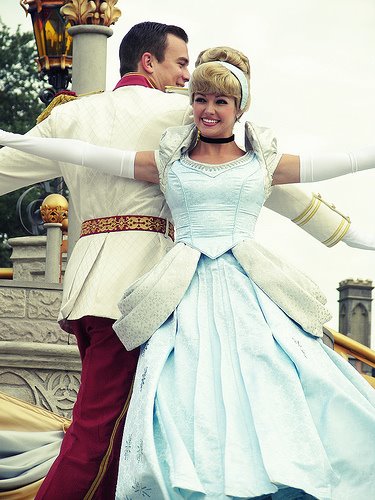
When you were a little girl, did you ever dream about being Cinderella? You know, playing and singing with the mice and the birds, finding your Prince Charming, and showing those ugly stepsisters that you really were the special one. I know I did--I wanted my own fairy godmother, too. "Bippity-Boppity-Boo!"

Last month, a teacher friend asked me to come and talk to her students about what a "real" writer does. One question she wanted me to answer was, "How much do you write that actually never gets published?" Boy, she was asking the right person! So, while preparing my talk, I decided to include information about how many rejections I had received and how many of my picture book stories were still searching for a home, and so on. But would fourth graders be impressed with my statistics? So, I wanted to find the perfect Cinderella story to wow them and show them that you should never give up on your words.

J.K. Rowling has a great Cinderella story, and she would be somebody that the kids knew had been wildly successful. The story is that J.K. Rowling was a single mom, living on state benefits while she wrote the first Harry Potter manuscript. She got her idea in 1990, wrote for five years (sketching out the other six books, too), and a publisher finally accepted it in 1996 after being turned down by several large publishing companies because the book was too complex for kids! She did have an agent that believed in her--so even with an agent, the rumor is she was rejected 12 times by publishing companies. And you know the rest of this Cinderella story--she is now reported to be worth over 1 billion dollars.

When J.K. Rowling sat in coffee shops writing her novel, do you think she thought she would see Harry Potter on the big screen some day? Really? Sure, we all dream, but we also know that it's tough work. Here are her words explaining this time (from an interview on-line): "I had lots of rejections. But I expected everyone to reject me, so I was already braced for failure. However, I loved Harry so much that I just wanted to get him into print whatever the cost in emotional energy," she said. (From Accio Quote! website)

So, what does all this Harry Potter and Cinderella stuff have to do with you? Well, you really could be the next Cinderella story, couldn't you? With hard work, perseverance, and determination, you could see your beloved characters charming millions of readers. Believe it! And remember. . ."A dream is a wish that your heart makes. . ." (from Cinderella)

Happy writing!
Margo Dill
http://www.margodill.com/
Read These Books and Use Them! (blog)
photo by Raymond Brown http://www.flickr.com/
Read More »
Powered by Blogger.
Back to Top