Showing posts with label genre. Show all posts

A Rose by Any Other Name: Why You Need to Call Your Book What It Is

Thursday, January 30, 2025

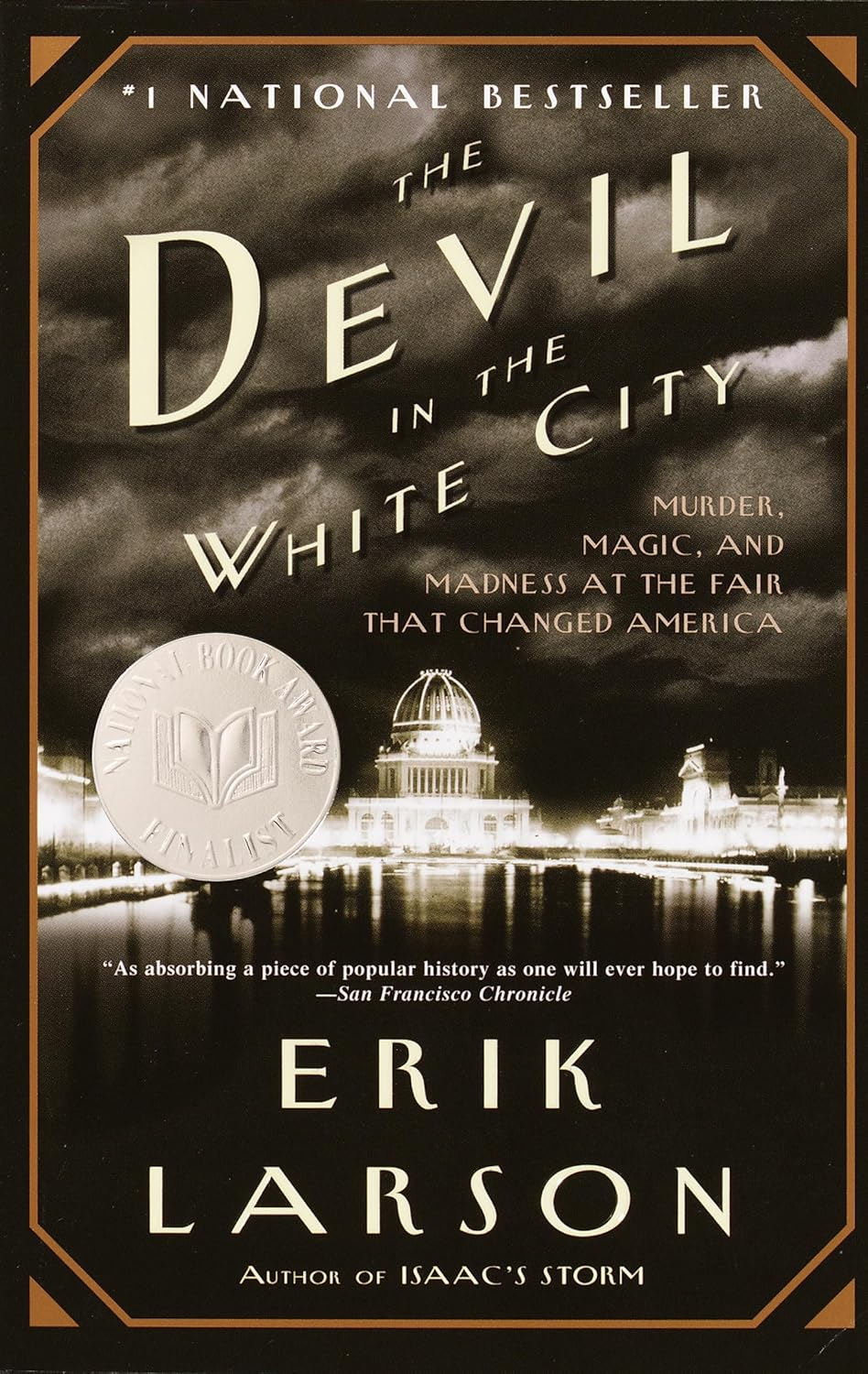
I love it when a discussion comes together in the comments on a post. Recently Renee Roberson and I were discussing Erik Larsen’s The Devil in the White City. You can see the conversation on Jodi Webb's post "Why Good Writers Read Bad Books." Renee disliked it, but I love it. 

Obviously, different people love different types of books, but she diagnosed an important problem. The book had been misidentified when it was recommended to her book club. They were told it is historic fiction and true crime. While it deals with true crime and a serial killer, it is a nonfiction history about the Chicago World’s Fair and a serial killer that operated against that backdrop. 

What’s the big deal? So, it’s nonfiction and not fiction. Surely a book lover could get over that. 

The problem is focus and pacing. True crime is tense and fast paced. Danger and deceit keep the reader turning the pages. History? The pace is going to be much slower because you must pull in so much material. This is all about the Gilded Age and is as layered and complex as a Gilded Age drawing room. There’s landscape architecture, architecture, and city politics. What? Oh, right. A murderer. He’s in there too, but he is only a part of a very complicated whole. People who read history are okay with that. People who read true crime may be, but it is going to help if they know what they are getting into. 

Call your book the wrong thing, and you are going to lose potential readers. Call your manuscript the wrong thing and you are going to lose potential sales. 

So how do you make sure you’ve got it right? A big part of it is knowing the market. If you read in a certain area, then you are going to have a better idea what to call a manuscript. I read a lot of mysteries. I can explain the difference between a cozy, a police procedural, and noir. Although I enjoy fantasy, my recent reading is more science fiction. Because of this, I have only a vague idea of what a romantasy is versus a cozy fantasy. I’m much more familiar with older terms like high fantasy, steampunk, and Arthurian. 

Reading your competition but still not sure what to call your own writing? Read articles about writing mystery or fantasy, essays or whatever it is that you write. Don’t forget to look up “types of fantasy” or “mystery subgenres.” And don’t read just one list but several since they are sure to have different sub-genre listed. For example, I just did a quick search and only one of three articles I skimmed included Wuxia fantasy. 

A third way to find the right term is to read reviews. Do you have a mentor text? Google it and read reviews. Be sure to look for professional journal reviews. Skim them for phrases like “a perfect example of real crime” or “the best cozy we’ve read this season.” 

Still not sure? Ask a book seller or librarian. They need to know how to find things, and they often make book recommendations. If they can tell you what genre or subgenre your mentor text falls into, this can help you categorize your own work. Categorize it correctly and you are that much closer to helping your readers find your work. 

--SueBE

  • Click here to find her newsletter.
Sue Bradford Edwards' is the author of over 60 books for young readers.  

She is also the instructor for 3 WOW classes which begin on the first Monday of every month. She teaches:
Read More »

Genre and Format: The Confusing Terms Used in Children’s Publishing

Wednesday, December 06, 2023

Whenever someone refers to the picture book genre, I cringe. I used to do this myself. Picture books aren’t a genre. They’re a format. If you want to publish books for young readers it is vital to know about both genre and format.   

The two broadest genres in writing are fiction and nonfiction. Within each of these categories, whether you write for adults or children, are numerous other genres. Fiction genres include: 
  • Mysteries – a crime has been committed and someone needs to figure out who did it and why. Check out Midnight at the Barclay Hotel by Fleur Bradley.
  • Fantasy – stories that involve magic. Anyone remember a series about Harry Potter? 
  •  Science fiction – futuristic science. I loved The Lion of Mars by Jennifer Holm. 
  • Historical fiction – these fictional stories are set in the past. See The Evolution of Calpurnia Tate.
  • Romance – The lovers meet and then they split. Will they end up together at last? Ali Hazelwood has published romances for both adults and teens. 
  • Dystopian – A cataclysm of some kind has left the world a total mess. The Hunger Games made it from print to screen.   

There are even more fictional genres, but there are nonfiction genres as well. 
  • Memoir – This is a slice in a person’s life as told by themselves. It contrasts with autobiography (a person writes about their whole life) and biography (a person writes about someone else’s whole life). One of the latest is This Indian Kid by Eddie Chuculate.
  • How-to or DIY – These books relate how to do something whether it is hand sewing or dying cloth with plants. 
  • Science – Biology, chemistry, astronomy, and ecology are all covered in science books. Young reader science can be about anything from human anatomy to fungus. 
  • History – The history of a wide variety of topics is covered in this genre. One of the best writers of historical nonfiction for young readers is Steve Sheinkin. 
  • Popular Culture – From books about music to art and pop culture of all kinds, these books appeal to fans of everything from Barbie to Pink. 

If you write for young readers, you also need to identify your format. The most well-known formats for young readers include: 
  • Board Books – these cardboard books stand up to rough handling by babies and toddlers. One popular board book author is Sandra Boynton. 
  • Picture Books – Picture books combine texts and illustrations to tell a story. They are most often 32 pages long. For a popular series, check Ryan T. Higgins Mother Bruce books. 
  • Early Readers (also called Beginning Readers) – These books have a smaller trim size than picture books. They are fully illustrated, but the illustrations don’t help tell the story. They are there to help decipher unknown words. Step Into Reading is one popular early reader series.
  • Chapter books – Each chapter has some spot illustrations but there is much more text. The chapters are short to help newly independent readers build confidence. See Saadia Faruqi’s Yasmin books. 
  • Novels -- Tweens and teens who are fully competent readers turn the pages of novels. Many of these books are popular with adults and even make it to the big screen like Judy Bloom’s Are You There God? It’s Me Margaret

If you write for adults, you need to know your genre. If you write for young readers, add format to this description to help you find the right agent or editor for you. 

--SueBE

Sue Bradford Edwards' is the author of 40 books for young readers.  
  • To find out more about her writing, visit her site and blog, One Writer's Journey.  
  • Click here to find her newsletter.
She is also the instructor for 3 WOW classes which begin again on January 8, 2024. 
She teaches:
Read More »

Friday Speak Out!: How Janet Evanovich’s Book Helped Me Try Writing in a New Genre

Friday, October 28, 2022
By Dawn Colclasure

Self-publishing is not new for me. I have self-published poetry books and children’s books since 2012. My experience with self-publishing took an interesting turn this year, when I self-pubbed horror!

An independent publisher who showed interest in publishing my collection of YA horror stories ended up turning it down. “Too dark,” they said.

However, one issue about these stories stood out: The teen characters committing murder. My publisher was worried the stories would have too much influence over teen readers, encouraging them to seek bloodthirsty revenge on bullies and abusers. It was such a pressing issue that they wouldn’t be so worried about my releasing these stories into the world should I do something a little bit different with the book: Offer a teaser for a novel I haven’t yet written at the end!

They shared with me their idea. Why not write a series about an amateur sleuth who attempts to help these girls who have committed their crimes? After all, they would eventually end up getting caught, wouldn’t they?

When I responded to their proposed idea, I had a bit of a surprise: “It's funny you should mention that. I actually had a story idea tickling my brain the last couple of days but I couldn't figure out how to make it work.” Their suggestion made it work. All of the pieces fell into place.

Now all I needed was a title!

First, however, they wanted a chapter.

This gave me pause. What they were asking me to write was a genre I had never written in for novels! I did write one P.I. short story, but I was not familiar enough with the genre to write a novel.

Then I remembered a book I’d read earlier this year called How I Write: Secrets of a Bestselling Author by Janet Evanovich with Ina Yalof. In this book, Janet Evanovich shares how she went from writing romance to mysteries: She spent a year studying the genre before taking the leap into writing her popular Stephanie Plum novels.

Perhaps this is what I should do as well, in order to write the series my publisher has proposed. I will spend a year studying and learning how to write the amateur sleuth genre. For now, I had to start with a first chapter.

I spent the evening writing that first chapter and the next day polishing it before I sent it to my publisher. They liked it and now it looks like I have to write the rest of the book!

That first book will get written and submitted eventually. For now, I have the first chapter of it for readers to enjoy – right at the end of my YA horror story collection that I just self-published!

I have one chapter of that novel written and I do plan to write the rest of it. But first I need to spend a year studying the genre!

* * *

When she’s not writing pet-focused Dawn Colclasure is a writer who lives in Oregon with her husband and children. She is the author and co-author of over two dozen books, among them 365 Tips for Writers: Inspiration, Writing Prompts and Beat the Block Tips to Turbo Charge Your Creativity. She is also a content writer, freelance writer, book reviewer and ghostwriter. She is also a self-publisher. Her stories have appeared in magazines and anthologies. She publishes the SPARREW Newsletter each month. Her websites are at https://dawnsbooks.com/ and https://www.dmcwriter.com/. She’s on Twitter @dawncolclasure.
~~~~~~~~~~~~~~~~~~~~~~~~~~~~~~~~~~~~~~~~~~~~

Would you like to participate in Friday "Speak Out!"? Email your short posts (under 500 words) about women and writing to: marcia[at]wow-womenonwriting[dot]com for consideration. We look forward to hearing from you!
~~~~~~~~~~~~~~~~~~~~~~~~~~~~~~~~~~~~~~~~~~~~

Read More »

Genre and Author Brand

Saturday, January 25, 2020
Back when I was new to the field, a seasoned children’s writer told me she didn’t try to determine what type of book her story would be. She simply wrote the story. Then she would figure out what it was. She had learned this lesson as she drafted an early reader that turned into a chapter book at the advice of her critique group. She later rewrote it as a picture book. When she sold the book, it was once again an early reader.

Sometimes you just have to tell the story. In the end, perhaps with help, you’ll figure out what it is.

When I tell people, especially writers, this story, I watch them panic. “If you write more than one type of book, how will your readers find you?”

How indeed? Given the fact that most of my readers are zoomers (Generation Z) or younger, I have confidence that they’ll Google me.

Oh, wait. I can still hear the die hards in the group calling out. “You can’t brand yourself if you write in more than one genre! It doesn’t work that way.”

But it does. Just this week, I listened to an episode of Literaticast. In this podcast, agent Jennifer Laughrin of Andrea Brown Literary Agency interviews children’s publishing professionals. Episode 39 featured author Kate Messner.  One of the things that Kate discussed is that she writes a wide variety of children’s books including nonfiction, picture books, and middle grade novels. What then is her brand? 

Jennifer explained that an author’s brand is whatever readers think of when they think of her. She followed by asking Kate what she thinks her brand is. Kate answered curiosity and courage. For her part, Jennifer identified Kate’s brand as being able to make difficult topics accessible to young readers and always writing with heart and courage. With two answers that agree so closely, I think it is safe to say this is her brand.

What does this mean for your writing career? If you normally write women’s fiction but your current novel is nudging into mystery territory, learn all about red herrings and write that mystery. If you are a nonfiction writer who has found an event that you can best write about in fiction, start outlining your story.

Write what calls to you and your brand will create itself. Maybe you write fiction and essays that shock and awe. Or you could be someone who pens mysteries and romances that titillate. Write what only you can write and your writing will create your brand.

For my part, I’ll continue to write about ancient cultures and evolution, headline topics and social justice. To do so, I’ll comb through history, eye witness accounts, court documents and the latest science to tell young readers the facts as we know them.

--SueBE
To find out more about Sue Bradford Edwards' writing, visit her blog, One Writer's Journey.  Sue is also the instructor for  Research: Prepping to Write Nonfiction for Children and Young Adults. The next session begins  March 2nd, 2020. 


Read More »

Friday Speak Out!: Writing Prompt: If you could write the definitive book on any topic, what would it be?

Friday, November 02, 2018
by J. Green

Don’t think that this definitive book has to be non-fiction. For those fierce fiction writers, what would be your genre-defining book? What would its title be? Who would be the major characters? Where would it take place? For the non-fiction writer-goddesses out there, what is your main area of expertise? What topic keeps you up at night? What story did you see in the New York Times or the local paper that you just can’t help thinking about during a quiet period in your day?

I’ll tell you about my (imaginary for now) book that I can only hope one day defines a sub-niche of a sub-niche of a genre. Twenty years ago, I was diagnosed with schizoaffective disorder. Schizoaffective disorder shares many of the symptoms of schizophrenia (voices, hallucinations, delusions, social isolation), but it also includes an affective (mood disorders) component. After my diagnosis, I read many of the most popular memoirs written by women who dealt with at least one mental health issue. An Unquiet Mind (Jamison), The Center Cannot Hold (Saks), Prozac Nation (Wurtzel), Marbles (Forney), I read them all.

The one thing that was missing from this treasure trove of hard-fought experience and wisdom were the tales of women of color with a mental health issue. Yes, women of color have written about their battles with mental health over the years. But when most people who have knowledge on this topic get asked about the best mental health memoirs written by female authors, the same names inevitably come up: Kay Redfield Jamison. Elyn Saks. Elizabeth Wurtzel. Susanna Kaysen. Jenny Lawson. Carrie Fisher. None of them look like me. Most of them have financial resources and support from loved ones that I could only dream of.

There are plenty of mental health memoirs by WOC that are more than worth reading. But the women who read these memoirs (I include myself in this number) have to do a much better job of seeking out new and different perspectives. I’m not saying that a mental health diagnosis won’t devastate a cisgender woman who’s white, wealthy, and well-educated. But we need to hear from authors from all walks of life. I hope to one day be an author that puts her book into the ring of mental health memoirs written by strong, unflappable women.

My Must-Read List: Mental Health Memoirs by Women of Color

1. Willow Weep for Me: by Meri Nana-Ama Danquah (depression)
2. My Body Is A Book of Rules: by Elissa Washuta (sexual abuse, bipolar disorder)
3. Not All Black Girls Know How to Eat: A Story of Bulimia - by Stephanie Covington Armstrong
4. 72 Hour Hold: by Bebe Moore Campbell (bipolar disorder)

* * *
J. Green has worked as a freelance writer for over eight years. She is a Massachusetts native, born and raised. An aspiring memoirist and novelist, J. devotes a lot of her free time to discovering new literary voices, developing her own artistic voice, and trying not to sweat the small stuff. What J. hopes to accomplish with her non-fiction work is to inspire more people of color to write about their battles with mental health issues.
~~~~~~~~~~~~~~~~~~~~~~~~~~~~~~~~~~~~~~~~~~~~
Would you like to participate in Friday "Speak Out!"? Email your short posts (under 500 words) about women and writing to: marcia[at]wow-womenonwriting[dot]com for consideration. We look forward to hearing from you!
~~~~~~~~~~~~~~~~~~~~~~~~~~~~~~~~~~~~~~~~~~~~
Read More »

The Contract with Your Reader

Thursday, May 24, 2018
It doesn’t matter what you write or who your reader is. If you write for anyone other than yourself, you have a contract with your reader. Your reader approaches your work with a certain expectation based on the genre you are writing, the description of your work and even your title. Deliver or risk losing your reader.

Genre

Every genre has conventions so, judging by genre, readers approach your work with certain expectations. A mystery will have an unanswered question. A cozy mystery will probably have a murder but readers won’t “see” it take place.

Nonfiction is factual. Everything, from dialogue to details, can be found in one or more sources. Facts are not altered to create a more dramatic story because, if they are, readers who love factual writing will feel cheated.

If I submit a novel and describe it as a romance, agents and publishers will expect certain things. The protagonist is wildly attracted to someone but they can only be together if they overcome certain obstacles. If there is no attraction, I will have broken my contract with the reader. The best I will be able to hope for is a rejection letter.

Description

How do you describe your work in your cover or query letter? While you don’t want to give too much away, you have to be honest with your reader. This means that once again, you have to know the conventions for a romance, a fantasy or a middle grade novel.

But your summary also has to be accurate. If you tell me that everyone on Earth disappears and one couple has to find out why, I have three expectations. 1. They are not from Earth because everyone from Earth has vanished. 2. There is something huge at risk that hinges on finding out what happened. 3. They have a reasonable chance of figuring this out.

Otherwise? I’ll relax with someone else’s work next time.

Title

Last but not least, your title has to be accurate. The Secret of the Mummy’s Curse needs to involve a secret, a mummy and a curse. I know, I know. The writer doesn’t always have the final say in their title.

But when a book club reads The Bad Ass Librarians of Lichtenstein, it doesn’t matter how fascinating the history is. If the bad assery belongs to the teens the librarians recruit and not the librarians themselves? I will still be hearing about how inaccurate your title was months later because there are two librarians in this particular book club.

Genre, description, title. They all form a contract with the reader. As a writer, your goal is to keep that reader reading, not give them an excuse to put your work aside for housework, grading, or, worse yet, the work of another writer.

--SueBE

To find out more about Sue Bradford Edwards' writing, visit her blog, One Writer's Journey.  Sue is also the instructor for Writing Nonfiction for Children and Young Adults. The next session begins July 9th, 2018.
Read More »

Genre Blends: When Your Manuscript Isn’t One Thing Or Another

Thursday, November 10, 2016
Even if I never use the term when communicating with an editor or agent, I like to know what to call things in my head. Not that I walk around talking to myself, except when I’m working on dialogue, but it just helps me to know what something is.

I knew that a book that isn’t quite one genre or another but seems to blend both was not called a crossover. No, a crossover crosses over age levels. A book that appeals to teens and tweens? Crossover. A book that both young adults and new adults want to read? Still a crossover.

But that didn’t help me know what to call these two genre books. Then I stumbled across the correct term for these books that cross, or blend, genre. They are called genre blends or cross genre novels. Yep. I went from zero terms to two but I like genre-blend better.

Although it wasn’t a term that I was familiar with, it isn’t a new idea. Some writers consider Williams Blake’s Marriage of Heaven and Hell a genre blend because it combines poetry and prose. Blake’s book was first published in 1794 so blending more than one type of book is hardly a new idea.

If you aren’t a Blake fan and aren’t sure you’ve ever read a genre blend, you probably have especially if you like science fiction or fantasy. Two of my favorites are Coraline and The Grave Yard Book by Neil Gaiman. Both combine fantasy and horror. The magic is just as important as the things that go bump in the night.

I also love science fantasy that blend science and magic. One of the first science fantasy series was Edgar Rice Burroughs John Carter of Mars which made its magazine debut in 1912. I also remember diving into Andre Norton’s Witch World books. Some people also consider steampunk a type of science fantasy which seems logical. I’m currently reading Gail Carriger’s Etiquette and Espionage which combines steam science and urban grit with vampires and werewolves.

Another possibility is comic fantasy such as Robert Aspirin’s MythAdventures. I also remember that Piers Anthony's Xanth books as a combination humor and fantasy.  I find myself wondering if you could classify Rick Riordan’s books in this genre blend. Mythic elements (Greek gods and Norse gods) run strong but the comedy is also a huge part of the draw for young readers.

These aren’t all of the possible genre blends but hopefully it is enough to make you think. Could you’re your current WIP were to cross genre and could it become something more?

--SueBE

To find out more about Sue Bradford Edwards writing, visit her blog, One Writer's Journey.
She also teaches our class, Writing Nonfiction for Children and Young Adults.  The next session begins December 5, 2016.
Read More »
Powered by Blogger.
Back to Top