Showing posts with label freelancing. Show all posts

Business Writing: What Is It Exactly?

Thursday, July 14, 2011
With the economy in a tailspin, we all know that freelance writing gigs can be tough to get. Some magazines and newspapers have closed their doors; others are only working with staff writers to keep costs down. So, to pick up some freelance work and put some of that green stuff back in your pocketbook, you might consider business writing. You’ve probably heard the old pros mention that they do quite a bit of business writing, and it’s often more lucrative and easier to find than magazine and newspaper work. But what does this term business writing mean exactly?

External Communication

One of the most common types of business writing is when a company hires a freelance writer to create materials for public viewing. The writer’s job is part writing and part public relations as she produces materials that communicate with potential and current customers. Small- to medium-sized businesses are more likely to hire freelancers for these jobs because they don’t have the budget to pay a staff writer (or provide benefits like health insurance), or they don’t have enough regular work to keep a writer busy forty hours a week.

If a company hires you to work on external communication projects, you could be writing:
•    Newsletters
•    Letters
•    Brochures
•    Press Releases
•    Blogs
•    Website copy
•    Ads
•    E-mails
•    Presentations
•    Reports
•    Social Networking Profiles

For example, I’m currently working with a psychologist who is creating a parenting brochure for her clients. I’m taking her technical jargon and making it more parent-friendly, as well as adding practical examples that parents can relate to.

Many businesses today create newsletters or brochures full of helpful tips, projects, recipes, community information, and more to create a relationship with their customers. A hardware store could hire you to create a bi-monthly newsletter full of do-it-yourself projects and highlighting ways the store is helping in the community. A photographer might want to create a newsletter or brochure around the holidays offering photo-taking tips with some special offers he’s planning for Valentine’s Day. A coffee shop might have newsletters available for customers to read while drinking coffee. Some non-profit organizations will also hire freelance writers to work on similar projects. Someone has to write these materials; and in these examples, the owners of the business might want to hire an outside writer since their areas of expertise are not in communications.

 Internal Communication

Another type of business writing is when a company hires a writer to communicate with employees. All of the writing is done internally like in employee newsletters, memos, and e-mail campaigns. For example, a company might want to improve employee/administration relationships, but the department heads are already swamped. So a writer comes in and creates positive materials highlighting hard-working employees or announcing new programs to improve the work environment.

CEOs or department heads will also hire writers to put together reports or power point presentations for staff meetings. For example, a local shoe store with several business partners participated in a recent marketing campaign on radio, television, print, and the Internet. The marketing director has several pieces of information to present to the partners on which marketing strategy was the most cost-effective, and he needs a writer to gather this information into a cohesive presentation.

Although being hired as a writer for internal communication is less likely, there are business executives out there looking for experts to help them communicate with employees in a positive and concise manner.

So, start brainstorming--do you know any business owners that might need a freelancer? Can you contact them with a sample of your work? Stay tuned for part two of business writing, which will be posted next week on July 20! There will be more tips on how to get started and find jobs.


Post by Margo L. Dill; To find out more about Margo, visit her website or check out the online classes she teaches for WOW! 

photo by semihundido www.flickr.com
Read More »

A Writer? How Does That Work?

Sunday, June 05, 2011
My new neighbor and I are chatting, getting to know each other when he asks, “A writer, eh? How does that work?” The usual question is what do you write—that one I’m prepared for—but how does that work? Talk about an open ended question!

Do I tell him that I absorb Life and rain it down on the page? That my mind is tuned to observe, listen and record—that I’ll stop people in the middle of what they are saying just to write down the inspiration for a title, a scene, or something to research? That I’m never truly alone…accompanied always by a ready pen and a pregnant inspiration?

I size him up. No, he’s a retired JPL engineer. “Most people start by writing for the Internet and slowly build a portfolio,” I reply. A safe answer, an acceptable answer, a horribly boring answer; gravity wins again.

By Robyn Chausse

Your turn! What is your response when asked about your writing? Do you offer a safe answer or tell it like it is? How would you answer the question, “A writer? How does that work?”
Read More »

Can Writers Ever Vacation?

Thursday, August 05, 2010

I’ve always been strangely proud of the fact that I go on vacation without a laptop, smart phone, or any other device that would tempt me to “Just check in”, “Answer a few emails”, “Dash off a blog post”, or any of the other thousand things I could come up with that take “Just a minute”. I’m not one of those people with a margarita in one hand and a laptop in the other or strolling the beach yelling at the seagulls “It’s in the Anderson file and it has to go out today!” People talking on those hands-free phones still freak me out(and I imagine the sea gulls don’t enjoy them either).

When I go on vacation I really go on vacation…or so I’ve always told myself. But my pile of things to be packed for vacation includes two books that need to be read and reviewed, a book proposal I’m hoping to start(and Larson’s book about book proposals), and a post I promised a blogger the week I return. I’m also hoping to work on handouts for a class I’ll be teaching. And there’s always my novel. Did I mention I’ll only be away for a week? Somehow, I convince myself that without all the pressures of my everyday writing I’ll have time for the projects I’ve been pushing off. Except I’m supposed to be on vacation!

According to my dictionary the definition of a vacation is:

1. A period of time devoted to pleasure, rest, or relaxation, especially one with pay granted to an employee.

Pleasure, rest, relaxation. Yep, that sounds right. The problem is the second half “especially one with pay granted to an employee.” When you work for yourself—welcome to the wonderful world of freelancing—you’re constantly aware of the fact that if you don’t work, you don’t get paid. So I drag along projects out of guilt, panic, hope?

I’d like to say that after writing this post and thinking about my un-vacation like behavior I’ll leave all the projects at home. I won’t.

Are your vacations project free? Computer free? Smart phone free? Am I the only neurotic “I’m sure I can squeeze in a little bit of work” freelancer? Have you ever managed to completely leave the work at home? Tell me your secrets! Quick, I’m leaving for the beach soon.

You can learn more about Jodi and her crazy life on her blog Words by Webb at www.jodiwebb.com. Next week is dedicated to her favorite genre with Mystery Week
Read More »

The Adventure of Working From Home

Wednesday, August 04, 2010
Last night at my critique group, we had a conversation about working from home, writing full time, freelancing, and even writing on the weekends. One of our members recently has the opportunity to stay at home full time and work on her children's writing and illustrating, but she made the comment that she hasn't really done anything yet because there's too much laundry and other stuff to do. Another member said she had the same problem over the weekend and couldn't get any writing done.

Believe me, I know how they feel--it's a common, let's say, curse for women working at home to almost believe that their entire house has to be clean, errands have to be run, or children have to be entertained before they can start writing or creating.

This thinking, my friends, has to change. (I'm smiling while all of you are nodding!)

Here are a couple of things I suggested to my writing partners that I have learned through trial and error over the last four years.

1. Change your attitude and the attitude of those around you: Are you staying home to be a stay-at-home spouse or are you staying home to work? Hopefully, you all answered--"staying home to work." Some of you may be staying home for two reasons to raise your children and to work, but still--attitudes around you have to change. If writing work has anything to do with the reason you're staying home, then everyone in your family and your close friends need to understand and respect this. It is not easy to stay home and write, and you need support!

2. Create a schedule, just like if you were at a regular job: Look at your day. If you have between 8:00 and 5:00 to write every day, then the majority of that time needs to be spent writing. If you feel like you have to do at least one chore each day or you have kids, then you might have to be creative with your schedule. Here's a typical schedule that I use in the summer with my stepson (who is 9): From wake-up time to noon, I write. He entertains himself, eats breakfast, and takes a shower. We eat lunch do something fun. We come home in the late afternoon--he plays in his room, and I check e-mail and fix dinner. At night, when my husband is home, I clean or finish working, or we do something as a family. It works. Some days, I write less, and so then the next day, I tell my stepson: "It's a stay-at-home day." He doesn't actually mind those because it means he gets to play his video game! :) You have to figure out a schedule that works for you and let your family know about it. Then stick to it the best you can.

3. Refuse to run everybody's errands and take care of all family business--just because you are staying at home: Oh my, this is such an easy trap to fall into, and your family will love you for doing all their errands, paying the bills, taking care of home repairs, and so on. I mean, then all they have to do is go to school and work and come home to relax. REMEMBER (type it on a piece of paper and put it up where you work): You are staying home to write! Tell your spouse that you can run errands together on Saturday morning. Ask your older children to help around the house. Find a solution together. I realize that some errands have to be done during business hours, and you may be the only one to do them. Here's a tip: do errands in the late afternoon. If you get started with errands or phone calls in the morning, time can get away from you and pretty soon it's dinner time, everyone's home, and you didn't write a thing. Write first, and do NECESSARY errands later. It's not necessary to pick up dry cleaning--most dry cleaners are open after 5:00 and on the weekends.

I hate to see people who have the opportunity to write from home waste it because they are too busy cleaning their house and running around town for their families. Families are important, don't get me wrong, but you and your career are too. It is possible to find a balance--really! Break this curse, and feel no guilt. Writing is your job, and you aren't going to be successful at this career if you don't schedule the time to work on it.

To read more from Margo L. Dill, check out her blog at http://margodill.com/blog/.
photo by InAweofGod'sCreation www.flickr.com
Read More »

Premium Green: A Supportive Network and Markets Galore!

Saturday, December 19, 2009

WOW!'s Premium-Green isn’t just market listings, it’s a guide with community benefits. For only $4 a month, you get a 100+ Page Ebook delivered to your inbox each month, and you’ll have access to a private community of women writers just like you!

The 100+ page ebook has fiction markets, nonfiction markets, markets for women, anthologies, contests, niche markets, new freelance jobs, interviews with editors and freelancers, tips for being a writing mama, and tips from working freelance writers.

We know that becoming a freelance writer takes more than just market listings. You’ll need the opportunity to network with your peers and a support system to help you reach your goals. And that’s exactly what your Premium-Green Markets Subscription will do.

The best part of your $4.00 a month is not even the 100+page ebook, although it is awesome. (And when you subscribe for a year for only $48, you have access to all 26 previous ebooks full of markets and interviews. That's a bargain!) Anyway, the best part of this subscription is a listserv you automatically belong to when you subscribe called the PG boards. I thought I would show you an example of a very informative and supportive conversation that was on the PG boards this month:

Writer One: I write regularly for a regional magazine. My contract to date has allowed me to reprint my work three months after it is published in the magazine. They sent a new contract yesterday. This one says. . .(writer one quotes the part of her contract she's questioning). Am I reading this right? They are asking me to sign away all rights? There's no way I can agree to this. They could make a book of my work, publish it, and I'd gain nothing. Has anyone seen anything like this before? What did you do? I am going to call them to try to renegotiate. Sigh.

Writer Two in response: Did they offer more money for all rights? I'm guessing not, but even if they did, this contract sounds very one-sided. Not only can they edit, reprint, and distribute, but they reserve the right to offer the rights to a third party. I'm assuming that means they can SELL your rights and receive the money themselves, and it means you have no control over what kind of mag your work might appear in next. Definitely call and see what's going on. Maybe you can re-negotiate or at least strike or modify a few phrases.

Writer Three: They've opened negotiations, in my book. Since they are asking for all rights, you need to ask for more money in exchange for the extra piece of the pie they want. They want more - you want more. The average writer would take this and run. While I don't mind selling all rights to most magazine markets (few of them I'll ever use again anyway), I'd want to be compensated for the privilege.

Writer Four: This is the first time I have seen a print periodical take this stance. Almost every digital publication requires you to sign a similar agreement. Reason is, they recognize the coming value in having a backlog of ready content online, and - you're right - for books and ebooks. With the electronic readers coming of age in the next couple of years, it will become easy to sell material as "e" formats. Publishers are preparing. I think we'll see more of that. I, personally, wouldn't agree to such a contract for work I contribute regularly. Maybe on a one-shot article. Kudos to you for reading the thing - many writers don't. Bottom line is, the rights to my work are valuable to me - I won't give them away. If someone wanted to buy all rights, the price would be significant. I just launched a new project 100% based on writing I have done over the past four years. Good thing I own the rights!

Writer One (responding to all who responded to her original question): Good info everyone. Thanks. I agree with you. Most of the time I am willing to write a new story. I have lots of words inside me! I've decided to dig my heels in regarding two situations here. I write a first-person column (essay) for the magazine. Often the stories I tell are very personal. I won't sign them away. Second, I do food articles where I come up with original recipes. I won't sign off rights to my own unique recipes. I've sent this information, in a kind message, to "corporate." We'll see what the lawyers say.

So, as you can see from this actual example of a recent WOW! PG discussion, you can find support on the PG boards and knowledgeable freelancers working in the field. If you have a question or problem, chances are someone from Premium-Green can answer it or knows someone who can. Plus you get the 100+page ebook for $4.00 a month.

PG members will sometimes post contest information or submission calls on the PG boards only and no where else. Recently, there were discussions about ghostwriting and how much to charge, starting a hometown blog, questions about getting paid from a certain market, and a proud mom sharing a beautiful poem her daughter wrote!

If you don't know what to get a writer this holiday season, try a Premium-Green subscription. Or if your spouse or significant other is still wondering what to get you. . .here's the answer. And your subscription is an expense to build your writing career, so you can claim it on your taxes!

Happy Holidays!
Margo Dill
http://margodill.com/blog/
Read These Books and Use Them
Read More »

Am I too old for all-nighters?

Saturday, March 28, 2009

(Image courtesy of The Unofficial Stanford Blog)


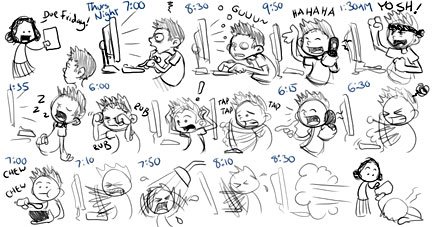
If there's one thing I despise, it's a missed deadline. I’m definitely guilty of it, but I try my darnedest to meet them--even if that means staying up all night. The problem is, when you're tired you make more mistakes, and when you're finally finished with the project, you want to sleep for days. I think this holds true the older you get. Many of my co-workers and team members ask how I do it all. I don't have a set list of instructions, but I've had plenty of practice.

Before I started WOW!, I pulled many all-nighters for my graphic arts business. Many of my clients wanted their catalogues and ad layouts done yesterday. Being the nice person I am, I always complied with their crazy schedules. Without really realizing it, I got into the habit of donning my Wonder Woman costume and "making it happen." These marathons consisted of a week of nose to the grindstone, sleep deprivation, and lots of caffeine, and later, wine. Thing is, I'm still doing it, for a lot less pay. But when does the time come when I can just relax?

I find that the older I get, there's more need for recovery time. There's more need for vitamins and headache pills. And now, every chance I get, I like to gel in front of the TV and tune-out. Is this the life I really want to lead? I often wonder.

Sticking To My New Year's Resolution

Our team members know this, but I made a New Year's resolution that I'm trying to stick to, and have been fairly successful at--though it's a WIP (work-in-progress). I'm dolling out assignments (paying for them) and delegating more. There comes a time when you have to realize what your time is worth--even in this tough economy. You can do it all yourself, but if it's killing you and not good for your health, or your overall business, why not pay to have someone else handle the task?

Delegating More, Doing Less

This method can be applied to anyone who owns her own business or freelances--which is basically the same thing. So next time you are commissioned by a potential employer and think you can handle it all, why not try tacking on a little extra to your price and having someone else take some of the burden off of your shoulders? That's what being a businesswoman is all about: delegating and moving forward. Form a team of talent that can help when you are in need. Network with individuals in your same field. Be an agent. Never turn down a job. Say yes, find help, and charge accordingly. And lastly, get some sleep already! You don't have to take on everything yourself. Think of your health and well being, like I'm trying to do.

What is your method for working less and maximizing your time? I'd love to hear your advice.
Read More »
Powered by Blogger.
Back to Top