Showing posts with label WOW flash fiction contest. Show all posts

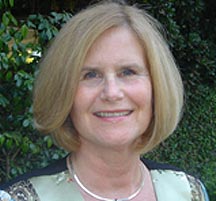
Meet Flash Fiction Runner Up, Nina Skaya!

Tuesday, April 26, 2016
Nina Skaya grew up in Westport, Connecticut, studied philosophy at Princeton and music at the University of Michigan, and has worked as an acquisitions editor for Greenwood Publishing Group and as a regular contributor to Music Alive!, an educational music magazine. She plays oboe and English horn in several ensembles in her new home of Washington, DC.

Nina has studied writing at the Write Yourself Free school in Westport where she has learned, among many other things, to write more, faster, and better. Her first published short story appeared in Niche Lit Magazine in 2015. Inspired by a year-long trip to Italy, Nina is working on a humorous novel set in Rome and New York City.

You can read Nina's flash fiction piece here.

interview by Marcia Peterson

WOW: Congratulations on your top ten win in our Fall 2015 Flash Fiction competition! What inspired you to enter the contest?

Nina: I had a bunch of short pieces in my files and I wanted to see what flash fiction contests were out there. Fortunately, I stumbled across the WOW contest. I liked the way the website features the winning entries. It feels very friendly and personal.

WOW: Can you tell us what encouraged the idea behind your story, "Tuesdays and Fridays?" I really enjoyed it and I felt like I was there, living through the character.

Nina: Thank you! I went through a period of using song lyrics as prompts for free-writes, and “Tuesdays and Fridays” came out of one of those exercises. I was making my way through one of my favorite albums: Palomine by the Dutch band Bettie Serveert. The song "Leg" has the lyrics:

Tuesdays and Fridays

I'd wait at the bus stop

And guess who won't show up

I'm tired of waiting for you.

I hope that the band is flattered by the use of their lyrics and doesn't mind lending me a few phrases here and there!

WOW: I would think they'd be pleased to have inspired a winning fiction piece. You mention that you learned to write more, faster, and better at the Write Yourself Free school in Westport, Connecticut. We’d love to know how to do that!

Nina: The lyric prompt exercise came straight out of a class with Patrick McCord of Write Yourself Free. Timed free-writes are a good way to get yourself writing faster. Find a prompt, set the timer, write longhand and just go for it. Don't stop to think. Just write. A lot of my favorite pieces have come out of exercises like this. I wind up with things that I would have never come up with if I'd stopped to plot out my writing. Now that I've done a lot of these exercises, I can channel that feeling into my longer pieces.

Another important thing I've learned is that you can write a lot in just 10 or 15 minutes. Waiting for a large block of free time isn't really necessary.

That’s my little bit of insight into the “more” and “faster” parts. Writing better came from taking classes with a great teacher.

WOW: Great ideas. Can you also share any good books you’ve read lately?

Nina: I’ve been reading mostly short stories lately. Here are some of my all-time favorite books; the kind that I buy multiple copies of to give away:

Super Sad True Love Story by Gary Shtyengart

White Noise by Don Delillo

Been Down So Long It Looks Like Up to Me by Richard Farina

First Light by Charles Baxter

WOW: Thanks so much for chatting with us today, Nina! Before you go, do you have a favorite favorite writing tip or advice for our readers?

Nina: Deadlines. I've accomplished the most when I've set a deadline for myself. Actually, that's only half of it. The other half is telling my friends about the deadline so that I convince myself that I really must meet it and it's not arbitrary. I've noticed that having a deadline removes the idea that I have a choice about writing every day. Making that choice every day is exhausting. Better (at least for me) to make one choice, set the deadline, and know that every day I'll write in order to meet my goal. Of course, I have to pick the deadline and the goal... and sometimes that can take a while!

***

Our Spring Flash Fiction contest is OPEN.
For details and entry, visit our contest page!

***
Read More »

Meet Eve Bradshaw, Runner-Up in WOW’s Winter 2014 Flash Fiction Contest

Tuesday, July 29, 2014
Today we welcome Eve Bradshaw, freelance writer and runner up in our Winter 2014 Flash Fiction Contest. Eve enjoys writing autobiographical snippets, and so does her character, Carl. Please take a moment to enjoy The Writer’s Group (I’ll bet at least one of these characters will remind you of someone), but remember to come back and meet Eve!

Eve’s Bio

On Twitter (@EPeevie) I describe myself as a “writer trying to find her place and purpose in the world.” You would think that at age 52, I would have already figured those things out—but they are moving targets. I’ve aimed for a career as a writer since I wrote a “Where Will I Be in Ten Years” essay in tenth grade describing my future life as a magazine writer living in the mountains of North Carolina. To this day I don’t know if North Carolina even has mountains—but I never stopped writing. I write personal journals, journals for each of my children, and autobiographical snippets that will eventually become a best-selling memoir. My gainful employment has always involved a great deal of writing, and I have made a career prostituting my writing skills as a freelancer (Eve Bradshaw and Associates) for a variety of public, private, and corporate clients. Writing for clients pays the bills, but it doesn’t feed my soul; and so I started blogging in 2007. The Green Room has attracted upwards of seven loyal followers.

WOW: Hello Eve, congratulations and welcome to The Muffin! I see you write mostly non-fiction and biographical; what prompted you to write a short story and enter it WOW’s Flash Fiction contest?

Eve: The money and fabulous prizes. JK! I had come up with the idea of writing a short story about a writers’ group while I was actually attending my writers’ group because they’re such quirky and interesting people. After I wrote the story, I came across the WOW contest online, and it seemed like a perfect match.

WOW: It’s so fun when things come together like that! Speaking of interesting characters, it sounds like Carl has a bit of a past... Where did the inspiration come from for the back story of Carl and Delia?

Eve: Actually, I don’t usually write from inspiration. I write stories one line at a time, and see where they take me. Conversely, I suppose I could also say that my inspiration is everything that ever happens to me and everything that anyone ever says to me. It’s all potential material.

WOW: As someone on a daily diet of business writing, I imagine writing a flash fiction piece was a nice change in routine. Tell us about your experience writing The Writer’s Group.

Eve: I started with the concept of a writers’ group, and then began putting people around the table. I didn’t want the story to be about my own writers’ group, exactly—that’s going to go in my best-selling memoir. So I placed them in a diner in a farming town in the Midwest. I loved creating the characters. I’m more like Delia than Carl—minus the wild curls, stunning beauty, and elegant legs. OK, I’m nothing like Delia, except that I live in a city.

WOW: Maybe you were getting in touch with your inner-Delia (smile). In 1999 you launched your freelance career with a focus on business writing; what tips do you have for someone wanting to start their own business in that field?

Eve: I was only able to freelance after I spent time working “real” jobs that involved lots of writing. People that I worked with over the years valued my writing and editing. When I left the nine-to-five world, I pestered everyone I had ever worked with and asked them for projects or referrals.

WOW: How do you balance deadlines and “mom-time”?

Eve: My kids are old enough now that I can go in my office, shut the door, and ignore their cries for food. When they were younger, even though I was working from home, I had to hire a babysitter to keep them occupied and away from me so I could concentrate.

WOW: Those are some good tips! Gather initial business from friends and family, and hire a babysitter when necessary to help stay on track.

Thank you for visiting with us today, Eve. We hope to see you again in one of our upcoming contests.
Read More »

Meet Summer 2013 Flash Fiction Contest Winner, Jenny Wang!

Tuesday, December 17, 2013
 Jenny Wang is an Ann Arbor native who’s studying English at the University of Michigan. But don’t ask her how she came to choose English and writing over all the other subjects, because she doesn’t have a clue. Whatsoever. It’s all kind of a blur. Ask her friends and they would tell you that they had never expected her to be interested in writing. It was always supposed to be something in math or science, which she’d been more comfortable with. She had always struggled with reading and writing when she was younger, and it wasn’t late in high school that she’d finally felt more confident in her skills. So no, she’s not really sure how she’s gotten to this point. All she does know is that she’s enjoying every minute of it right now.

She’s grateful to all who have supported her: her teachers, her professors, her classmates, her friends, her family. She’s amazed that they have been patient enough to read some of her really embarrassing, really rough drafts. And of course, she’s thankful to WOW! for all they’ve done for aspiring writers. If it weren’t for everyone’s support, she’d never have realized that the random and private stories in her head were worth jotting down.

interview by Marcia Peterson

WOW: Congratulations on your first place win! What inspired you to enter the contest?

Jenny: Over the summer, I was working on a few stories to submit to class in the Fall term. (I was hoping to take a creative writing course, and it required that I turn in a portfolio before classes began.) So, being new to the writing world and the writing community, I was hoping to find more people who were willing to critique my stories. Someone told me about WOW! and their quarterly flash fiction contests and their extra "critique" option. By then I already had my idea for "Stage," and so I thought, "Why not? I can probably learn some really valuable writing tips from them." Several days and some 600 words later, I submitted my story, and here I am now.

WOW: So it turned out pretty well! Can you tell us what encouraged the idea behind your story, Stage?

Jenny: A lot of things were going on during the summer, and I think they all sort of mixed together into "Stage."

After my first year of college, I was finally back home with my mother, and our relationship got off to a rough start. While I was at school, my mother had gotten used to not having to cook and clean for another person, and I had gotten used to not having a curfew. Arguments over whose turn it was the do the laundry, or wash the dishes, or vacuum to carpet ensued. Somewhere in the middle of this bickering, I suddenly remembered a simpler time, back when it'd become just me and my mother, when I'd been so willing to do absolutely anything for her. My loyalty to her was rock-solid, because I'd known that all I had was her.

At the same time, I was watching a show (or maybe reading a book) that talked a lot about hair, and what hair meant to different people. And so I wondered what sort of value little kids, especially little girls, placed on hair, or the lack of hair. Would a little seven-year-old be able to understand the significance of losing hair to cancer, since she might not fully grasp the concept?

WOW: It's interesting to hear the background and how your idea developed. How did you craft your winning flash fiction story? Did you have to edit much to get to the final version?

Jenny: This story was really hard to craft, even though it's one of my shortest stories. The framework and timeline I had pretty much figured out from the beginning. But I just didn't know how I wanted it to be told, and in what context it should be told. From the voice of a seven-year-old? Retrospectively from when the character grows up? Should I add dialogue if I tell it retrospectively? Or should I keep it feeling like a memory? I had a lot of different versions of this story, and in the end, I chose this one -- the one told retrospectively in a more formal tone, with longer sentences to evoke the "memory-like" feel of it. (Or at least I hope that's the feel of the story.)

After I'd picked the right version, I did a bit of cleaning up, and I finally submitted it.

WOW: As a college student studying English, what have your favorite classes and reading assignments been so far?

Jenny: The problem with being an English major is that there are so many good professors and classes out there. I have a running joke with my friends that we've been recommended pretty much every English professor in the department. I really love having professors who are clearly passionate about what they study and what they do. My favorite classes are definitely the fiction writing classes, especially my first one, because I'd taken my first few stabs at writing short stories there. I also like classes on contemporary literature -- in one, we read Love Medicine by Louise Erdrich, which I really enjoyed. Right now, I'm taking a class on Victorian literature, and I'm still surprised by how much I love it. The Story of an African Farm is one of my favorite books now. I'm also taking a disability culture class, and it's quite an eye-opening experience. Exile and Pride by Eli Clare is also a great book.

WOW: Sounds like a great college experience for you. Thanks so much for chatting with us today, Jenny! Before you go, can you share your favorite writing tip or advice with our readers?

Jenny: Maybe this is just me, but I tend to think that because I'm still young and living within the protective bubble known as college, I don't have much of an opinion to contribute. What does this kid know about the real world, anyway? But I think we get some of the most valuable perspectives from kids and young adults. Everyone has experiences that only they can tell, that deserve to be told. I guess my word of advice would be to voice shamelessly, through storytelling, what you think deserves to be said.

**

Quarterly Flash Fiction Contest Information:
http://wow-womenonwriting.com/contest.php
Read More »

Interview with Gay Degani, First Place Winner of the Winter '09 Flash Fiction Contest

Tuesday, June 09, 2009

Gay Degani, a former community college instructor in English, lives in Southern California with her husband and ancient Labrador retriever. She's been published in two mystery anthologies, in THEMA Literary Journal and on-line at Every Day Fiction, Flash Fiction Online, Tattoo Highway, and Salt River Review. “Spring Melt” was a finalist for The 2nd Annual Micro Fiction Award and has been nominated for a Pushcart Prize. “Monsoon” was a finalist in Glimmer Train’s 2007 Fiction Open and “Wounded Moon” was short-listed for the 2008 Fish Short Story Prize.

Gay’s blog is Words in Place and she is the editor of Flash Fiction Chronicles for Every Day Fiction.

You can read her work online: Losing Ground at Tattoo Highway, The London Eye at Every Day Fiction, Listing Lisa at Salt River Review, and Spring Melt is a 2008 Micro Fiction Finalist and a Pushcart Nominee.

Interviewed by Marcia Peterson

WOW: Congratulations on your first place win! What inspired you to enter the contest?

Gay: Thanks for the congrats! It was most exciting to get an email from a friend with a capitalized “CONGRATULATIONS” in the subject line. I was wondering, what the heck? Then when I read why, I was jazzed! Wow! Literally WOW!

I found WOW! Women on Writing’s Flash Fiction Contest when a friend won a similar prize. I’m always on the prowl for places to submit my writing. Although there are many venues on the internet, much of my fiction seems to sift through without sticking. It seems to be too “on-the-nose” for many online lit sites and not genre enough for others, so I take advantage of every opportunity.

WOW: Can you tell us what encouraged the idea behind your story?

Gay: This story was born when a woman from a nearby town was sideswiped by a car and killed while out for a Sunday bike-ride with her husband. I didn’t know her personally, but the suddenness of her death shook me. I began to think about how it would feel to have my life completely reversed by such an event.

As I do with everything that causes that little niggle in my brain, I asked, “What if that had been my husband?” My answer was “walls.” I’d build walls around myself and never go out. That was the genesis of this piece.

WOW: I loved "Beyond the Curve," and thought you created a great opening sentence, which is important in capturing the attention of your readers. I also liked the title, with its deeper, double meaning. How much work do you put in to your opening lines and story titles? Do you spend a lot of time tweaking them?

Gay: Since I started writing online flash fiction, I’ve learned the importance of first sentences. When someone reads on a monitor, he or she can click through to so many different sites with so little effort, it becomes essential for a writer to seduce that reader immediately with vivid images using specific detail. The reader wants a picture to see right away, the wart on a character’s face, the gleam of light off a skyscraper, a mangled bicycle. With that image, he or she willingly reads on to find out what next.

As for titles, I usually have a working title that comes from my first inspiration, but often it ends up being discarded because it tells too much too soon. I need the working title to keep me focused on the juicy parts of the story, but once I’m finished, I look for something more suggestive and symbolic.

One of the things I love to do most is to try to have double meanings where ever I can, but part of the challenge is that it must be subtle. It’s hard to find the right balance between the obvious and the obscure, and when it works, I’m thinking, “YES!”

WOW: It’s always interesting to learn about a successful writer’s process, thank you. You’re also the editor of Flash Fiction Chronicles. This looks like a great resource for writers. Can you tell us about the site and what visitors might expect?

Gay: I was lucky enough to find Every Day Fiction when I decided to try to publish online. I had a short piece I’d done as an exercise in Gordon Mennenga’s class at the University of Iowa’s Summer Writing Festival ( a great place to spend a week surrounded by writers). When I read “One Question” in front of the group, it was first time Gordon said to me, “Now that’s a piece of professional writing!”

I sent it off to EDF and they published that piece and eventually more of my work. They even nominated “Spring Melt” for the Pushcart Prize. There’s a list of my online stories at my blog, Words in Place.

When the editors of EDF asked if anyone would volunteer to run a blog for the e-zine, I raised my virtual hand. They gave me carte blanche to do what I wanted, and Flash Fiction Chronicles was born. The site is dedicated to the discussion of the art and craft of flash fiction, fiction in general, and the issues of writing, marketing, and publishing today. I’m always looking for submissions from writers at all levels, from beginner to professional.

WOW: I found lots of great posts there, and I think others will enjoy it too. You’re doing a great job! Aspiring authors would probably love to know about your writing routines. For example, where do you write? How many hours (or words) a day do you write?

Gay: Oh-oh. I wish I could say I manage to bang out hundreds of words a day, but I’m somewhat sporadic. When a story has juice for me, I think about it all the time, write notes on napkins, tell my husband “shhhhh,” and hide in my garage office because if I don’t deal with that story right away, it might lose its juiciness.

I sit down at the computer every morning. I work on either a short piece of fiction or my novel. This is always a battle for me. The novel is long range gratification and is sometimes trumped by an email announcing a contest for a 1000-word piece. This provides INSTANT (relatively) gratification. I give in. New characters, new story. What fun!!!

But what I understand and what I say to others is finishing something is crucial. Get to the end while the juice is still dripping from my mouth. You can edit later.

WOW: Good advice! What writing projects are you working on right now? Do you have goals in mind for the rest of the year?

Gay: My goal is to finish editing my mystery novel, What Came Before. This is a must-do enterprise. I love the story which centers around a woman who investigates the murder of a sister she didn’t know she had and while doing so, uncovers the reasons for her own mother’s suicide.

WOW: Sounds like a great story, and we wish you luck with the editing work. Do you have any final words of wisdom for our women readers/writers?

Gay: Work hard. You have the power to learn what you need to know.
Don’t fall in love with your own words. There are more where those came from.
Write what you love to read. Write what you want to write.
Observe everything. There’s a story in every popcorn kernel on the floor.
Trust in yourself and don’t take anything too seriously. Be joyful.


* * * * * * * *


>Check back on Tuesdays for interviews with more Winter ’09 Flash Fiction winners.

>For details on WOW! Women on Writing's current contest, head on over to our contest page.
Read More »

How To Write Flash Fiction

Monday, August 04, 2008

By Louise Dop


While the traditional short story fights to hold the attention of a fast moving world, the popularity of flash fiction is on the rise. Conforming to this restricted format can be a valuable discipline for writers and with an expanding market the potential for monetary reward is significant.

While there is no universally accepted exact word limit, generally a short story is considered to constitute flash fiction if it is less than 1,000 words; most flash fiction pieces are between 250 and 1,000 words long. Although some may disregard this form as a gimmick, there are several reasons why writers should take it seriously. Its brevity is particularly well suited to the Internet where new websites dedicated to the genre are appearing all the time. With the popularity of services that allow readers to download written material on subscription to mobile phones and hand held devices, flash fiction writers have a realistic chance of placing work. And since flash fiction has a low word count, payment rates often seem high when calculated on a per word basis. Aside from the financial benefits, writing good quality flash fiction can hone the skills of even the most accomplished writer by forcing them to consider every word.

Creating flash fiction is like concocting a rich sauce. The basic ingredients of character, action, and setting are reduced down until only the essence of the story remains. However brief, this story must have a plot with a beginning a middle and an end. Merely writing an anecdote or reflection is not sufficient. Like a short, sharp shock, good flash fiction should pack an emotional punch, leaving it with the reader long after it is finished. Despite the imposed restrictions, a cleverly written work leaves plenty of room for implication, a suggestion of a much bigger story beyond the immediate snapshot.

There are a number of basic techniques which can be applied to the process of creating successful flash fiction.

Hit the Ground Running

The basic rule of short story writing is to start with a strong opening and it certainly applies here. There is no room for preamble so your story needs to begin at the start of the action or, better still, right in the middle of it. Any back-story must be implied by the right choice of words. As he returned the warm gun to his pocket, he felt for his warrant card. This sentence immediately implies that we are dealing with a policeman who has possibly just shot somebody.

Allude to the Outside World

A neat way to get back story into your work is to root it in a world already familiar to your audience. You could use historical figures, well-known fictional characters or set your story at a famous moment in time. For example, place your lead character on H.M.S. Victory or call him Dr. Jekyll and readers will make inferences based on their own knowledge.

Focus on Your Subject

When looking for ideas, go for the small details. A murder mystery novel has room for an intricate plot with complex characters and motives. A traditional short story might concentrate on the execution of the crime or its impact on the victim’s family. For flash fiction, zoom in further still--a murderer trying to remove a bloodstain from his clothes or a relative identifying the body.

Set the Scene

Flash fiction works best when contained within a well-defined physical space. Put your characters in the supermarket isle or on top of Everest and straight away the story falls into context.

Make Them Talk

As in all fiction, characters can be defined by what they say. One approach to flash fiction is to use dialogue only. Choose your characters’ words carefully and they will tell the story for you with no need for exposition.

Do the Twist

A twist ending is by no means essential, but does work well for this type of writing. As much of the plot is inferred, it is relatively easy to mislead the reader into drawing the wrong conclusions. The surprise ending also provides the emotional impact indicative of this format. Another powerful strategy is a slightly ambiguous ending that leaves the reader thinking, but not to the extent that they feel cheated.

Rewrite Your Rewrites

The easiest way to start a very short story is to forget about word count and get it written. Only then start paring away all the superfluous words. If you are struggling to keep within word limits, have you tried some of the techniques outlined above? Finally, analyze every word carefully. Once you have deemed a word necessary, consider whether there is an even better word for the job. This editing process is fundamental and once mastered will benefit all areas of your writing.

Practice Makes Perfect

Workshops dedicated to this popular form are now appearing on the Internet. They provide opportunities to practice flash fiction in the company of other writers. Challenges are often set against the clock and critiqued by independent judges or fellow contributors.

Look to the Experts

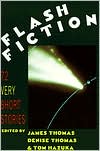
See how the likes of John Updike, Margaret Atwood and Raymond Carver do it in Flash Fiction: 72 Very Short Stories, published by W.W. Norton. o

Or their latest, Flash Fiction Forward: 80 Very Short Stories, published by W.W. Norton.


---------
Louise Dop is a successful freelance writer and technical author. Her ebook, The Writer's Secret Weapon, brings together a collection of the best free online resources for writers and gives an insight into the writing life. With over 50 direct links to resources, this straightforward guide will show you the real-life tips and tricks that--armed with an Internet connection and basic computer literacy--you can try for yourself right away. http://www.clearlywrite.co.uk

---------
Last month to enter the WOW! Women On Writing Summer 2008 Flash Fiction Contest. Deadline: August 31, 2008 (midnight, Pacific time)
Read More »

Update On WOW! Spring 08 Flash Fiction Contest

Saturday, June 28, 2008
Dear Contestants,

If you received an email informing you that your entry made it through first-round judging, please note that we are still in our second-round of judging. The Top 10 and Honorable Mentions haven't been notified yet. Please be patient, as we are still deliberating. Believe me, we are as excited as you are!

We are also working on the July Issue of WOW! and are hoping that by the time we finish doing the issue our Guest Judge will come back with her final decisions so that we can post the winners in our July issue. We will try to be as expedient as possible.

Thanks again for your patience, and stay tuned! ;)
Read More »
Powered by Blogger.
Back to Top