Showing posts with label Q3 2026 Essay Contest. Show all posts

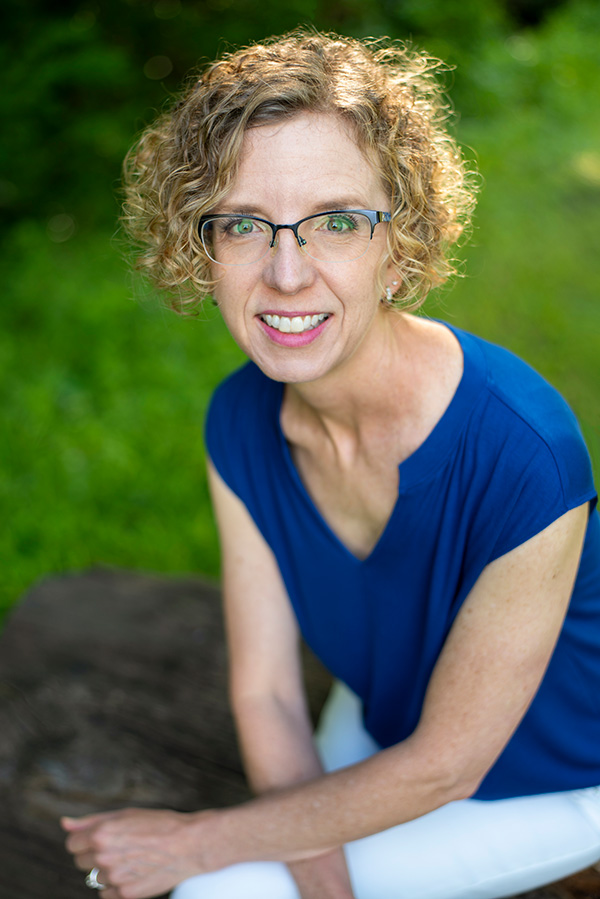
Interview with Deborah Svec-Carstens: Q3 2026 Essay Contest Runner Up

Sunday, September 27, 2026
Deborah’s Bio:
Deborah Svec-Carstens, J.D., MTS, is a writer, book coach, spiritual director, and former lawyer whose work explores healing after trauma, embodiment, and spirituality. Her essays have appeared in bioStories, the Brevity blog, and the Des Moines Register, and her writing has received recognition from Writer's Digest, WOW! Women on Writing, and Memoir Magazine. Her memoir, Toward the Light: A Year in Paris, forthcoming in September 2026, traces her search for meaning and connection in the weeks and months after a traumatic assault in Paris in her early twenties. She writes The Spiral Staircase on Substack and offers workshops and presentations. Deborah lives in Central Iowa with her spouse, where she writes and accompanies others in their journeys of healing and story. Learn more at www.deborahsveccarstens.com. 

If you haven't done so already, check out Deborah's award-winning essay "Disappearing: A Recipe for Anorexia Nervosa" and then return here for a chat with the author. 

WOW: Congratulations on placing in the Q3 2026 Essay Contest! How did you begin writing your essay and how did it and your writing processes evolve as you wrote? 

Deborah: I’ve written a few pieces about my experience with an eating disorder in my mid-twenties. With this particular essay, I wanted to experiment with structure and try my hand at a hermit crab essay. Adopting the structure of a recipe to convey in the simplest terms how my anorexia had manifested offered room to express emotion without explanation. I also was aware of the irony of using a recipe for something that is so intimately—but not completely—related to food. Once I landed on the recipe structure, the first draft came easily. The ingredients list changed very little as I revised. The instructions evolved and became more detailed as I remembered pieces of my life that related to each of the ingredients. 

WOW: What did you learn about yourself or your writing by creating this essay? 

Deborah: I learned that I could write outside the box and experiment with structure and form. Doing so frees up a part of my creative mind that allows me to go deeper into a topic without needing to overexplain for the reader. 

WOW: Thank you for sharing your experience crafting your essay and experimenting with form and structure. I’ve always found it amazing that using a formal structure – like a hermit crab essay – can be so freeing! Could you please tell us more about the connection between story and healing – for yourself and/or others you’ve worked with? 

Deborah: I write to better understand myself and the world around me. My debut memoir, Toward the Light: A Year in Paris, published on September 15, 2026. The process of writing the book, which recounts the first steps toward healing after a traumatic assault in Paris, has been a healing one. Putting the story on the page and examining it from a distance allowed me to make meaning of my experience. When I write about my past, as I did in the essay for this contest, I connect to my younger self with compassion, make sense of my life experiences, and come to know myself on a deeper level. Sharing my story offers an opportunity to connect and heal, for me and hopefully for readers. Working with a coach during the process of writing my book inspired me to seek certification as a book coach in memoir. As a book coach, I offer steady support, honest feedback, and clear direction to women who are holding a story they’re not sure they can tell, so they can turn what their body carries into the memoir only they could write. 

WOW: Congratulations on your book publication! And thank you for sharing how writing helps to heal what the body carries. Which creative nonfiction essays or writers have inspired you most, and in what ways did they inspire you? 

Deborah: Cheryl Strayed’s Wild, Maggie Smith’s You Could Make this Place Beautiful, Carolyn Knapp’s Appetites, and Roxane Gay’s Hunger are memoirs I have returned to for their structure and their vulnerable writing that draws the reader into the story. Chelsey Clammer’s essay collections and her classes through WOW! have inspired me to play and experiment with my own essay writing. In a recent writing class, the instructor assigned Jo Ann Beard’s excellent essay, “The Fourth State of Matter,” which was published in The New Yorker in 1996. It is a master class on using a braided narrative structure. 

WOW: That is a fabulous list of inspiring memoirists. If you could tell your younger self anything about writing, what would it be? 

Deborah: Years ago, when I was in law school, I handed a paper to my advising professor after revising it and added a note to thank him for helping me shape it into a “publishable” piece. He returned the paper with red question marks beside my statement—clearly indicating his doubt in my work. Those question marks haunted me for a long time. I hesitated to call myself a writer. I would tell my younger self these things: It’s never too late to start writing. At times it will be hard and you will want to quit. Keep going. Writing is a solitary endeavor, but we are not meant to do it alone. Find a community of writers to support you. 

WOW: Thank you for sharing that excellent advice. Anything else you’d like to add? 

Deborah: Thanks to the team at WOW! for all the work they put into their contests and the ways they support women writers. I especially appreciate the useful feedback I’ve received on the essays I’ve submitted over the last few years. 

WOW: You are very welcome! And thank you for sharing your experience with WOW. Happy writing! 


Interviewed by Anne Greenawalt, founder and editor-in-chief of Sport Stories Press, which publishes stories by, for, and about sportswomen and amateur athletes. Engage on social media @GreenMachine459.
Read More »

Interview with Wendy Fontaine: Q3 2026 Essay Contest 2nd Place Winner

Sunday, August 23, 2026
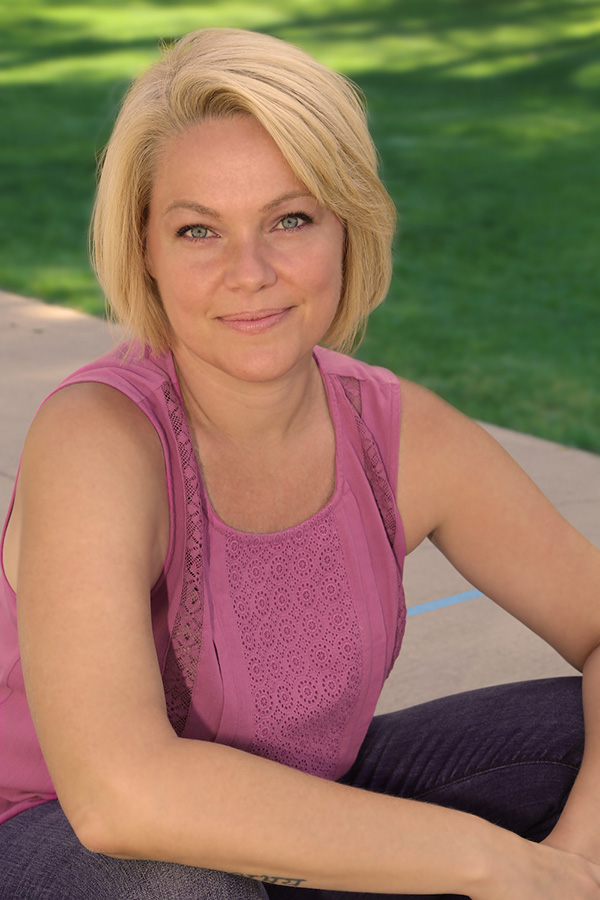
Wendy’s Bio:
Wendy Fontaine’s work has appeared in American Scholar, Jet Fuel Review, Sweet Lit, Short Reads, Under the Sun and elsewhere. She has received nonfiction prizes from Identity Theory, Hunger Mountain, Streetlight Magazine and Tiferet Journal, as well as nominations to the Pushcart Prize and Best of the Net anthologies. She serves as the flash creative nonfiction editor at Hippocampus Magazine and works as a board-certified inpatient pharmacy technician. 

If you haven't done so already, check out Wendy's award-winning essay "Ask Your Doctor if Empathy is Right for You" and then return here for a chat with the author. 

WOW: Congratulations on placing second in the Q3 2026 Essay Contest! How did you begin writing your essay and how did it and your writing processes evolve as you wrote? 

Wendy: I started writing this piece as a student studying pharmacology. Last year, after my daughter went away to college, I wanted to try something new professionally, so I went back to school to become a pharmacy technician. It’s a bit odd going back to school at age 51, but I like to learn so it just made sense. 

Pharmacology is the study of how medicines interact with the body, and part of my studies involved reading drug monographs, which are documents outlining a medication’s indications, dosages, side effects, and warnings. I thought it would be fun to combine my writer life and my pharmacology life and use that form for a hermit crab essay. I played around with a few different so-called “drugs” – and by that, I mean various social problems or personal issues of my own. Eventually I settled on empathy, which to me seems like something the world needs a lot more of right now. 

WOW: What a great process! Thank you for sharing that with us. What did you learn about yourself or your writing by creating this essay? 

Wendy: As I thought about the things that empathy could help “cure,” I kept a running list of events from national news stories. Mostly, they were things that outraged me – insensitivities toward groups of people or cruel comments made by political leaders. The list got very long very quickly! I had to choose timely, well-known examples. I also wanted to include the smaller, everyday injustices that can feel so big when the rest of life is wearing us down. 

What I learned about writing was how to balance narrative distance. I wanted to combine the medical syntax of the form, which can read as dry and detached, with the more direct address of second person and the use of very specific, very personal examples. I found that second person helped draw the reader in, while the specificity of examples gave everyone something to which they could relate. 

What I learned about myself is that I too could be better about putting myself in other people’s shoes. We all can be. You never know what another person is going through. 

I also learned that you can have a little fun sometimes. For example, see the rectal instructions for Empathy. 

WOW: Ha, yes! That line grabbed my attention. What have you learned or noticed about writing from serving as the flash creative nonfiction editor at Hippocampus Magazine? 

Wendy: So, so much! One of the best ways to become a better writer is by volunteering with a literary magazine and reading the many stories that come through the submissions portal. Not only does this help keep your favorite literary magazines afloat, but over time you will learn what works in a story, what is amiss, what needs cultivation and you will learn how to apply those perspectives to improve your own writing. You will also see what other members of the reading panel think of the stories, and you can compare notes and have a discussion with the other volunteer readers. It becomes a virtual literary community. 

I started as a member of the reading panel in 2019 and became flash editor in 2024. In that time, I’ve become much better at identifying the places where my own stories need work. I think I’ve become better at seeing the potential in other people’s stories as well. 

WOW: Becoming a reader and editor has benefited my writing so much, too! I urge all writers to engage with the literary community in this way. Which creative nonfiction essays or writers have inspired you most, and in what ways did they inspire you? 

Wendy: I often go back to Brenda Miller, whose writing conveys so much meaning in such small spaces. “Swerve” is one of my all-time favorite pieces. I am forever inspired by Bernard Cooper and the way his essays handle and illuminate memory. His essay, “Burl’s,” is on my top five list. Maybe my top three. I’ve read it at least a dozen times. And I keep Mary Oliver’s poem “Praying” taped to the wall in my writing space. It reminds me to pay attention to the divinity of small things. Mary makes literary elegance seem so simple. 

WOW: If you could tell your younger self anything about writing, what would it be? 

Wendy: I think I would tell my younger self that good writing doesn’t have to be perfect and it doesn’t have to be deep to be beautiful. Like Mary says, “It doesn’t have to be the blue iris; it could be weeds in a vacant lot.” Tell a good story and try to have fun. 

WOW: Thank you for your thoughtful responses. Happy writing! 


Interviewed by Anne Greenawalt, founder and editor-in-chief of Sport Stories Press, which publishes stories by, for, and about sportswomen and amateur athletes. Engage on social media @GreenMachine459.
Read More »

Interview with C. L. Brenton: Q3 2026 CNF Essay Contest 1st Place Winner

Sunday, August 16, 2026
C. L. Brenton is a fiction author from Carmel, California, and an MFA graduate of Vermont College of Fine Arts. Her short stories about mothers on the brink have appeared or are forthcoming in J Journal, Colorado Review, Witness Magazine, and A3 Review among others. Discover more at clbrenton.com.

---interview by Marcia Peterson

WOW: What inspired you to write your entry, “Rainbows?”

C. L.: I was in a generative workshop when I was earning my MFA at Vermont College of Fine Arts, and our professor prompted us to write about light. I wanted to write about the crystal that made rainbows in my childhood kitchen, and makes rainbows now in my kids’ playroom. It ended up morphing into an essay about my three year old son and his gender fluidity that I found so magical and vexing, and a moment we shared a few days earlier as we tried to capture the light. The first few lines of “Rainbows” came out pretty much fully formed. Sometimes it takes different prompts to unlock what lives inside you, what’s waiting to come out. Sometimes someone merely has to ask a different question of you for you to understand exactly what you’ve been wanting to say.

WOW: What is the most difficult part of your writing process?

C. L.: I find each part joyful and challenging in its own way. I love the wild chaotic creation part, and the methodical editing part though each have their hang ups. I think maybe the challenge is knowing, or deciding when a piece is done, deciding it’s good enough to send out, and strong enough to take criticism from or even the success of the real world.

WOW: As a busy mom, how do you find the time to write? What works best for you?

C. L.: Writing requires (for me at least) a certain amount of emptiness in my life, meaningful time and space for the muse to do her work. As a busy mom, I know that’s usually the hardest thing to come by.

As we say in my house, though, it’s not about lack of time, it’s about priorities. Some days I have to prioritize my children and my home life, and those are wonderful things to put at the top of my list, but when I can carve out daily time for my writing, to go sit on the beach and watch the waves for thirty minutes, my muse comes back and wants to work. If you can make time to exercise, to watch your favorite show, to read, to read this even, you can find time to write. If you can’t, consider reading while your children play, or commit ten minutes to doing nothing, to day dream, to be present wherever you are. Don’t listen to anything, don’t look at your phone. Let your mind wander. The words will come.

When my kids were toddlers, I took my writing time on the weekend when my husband was the primary caretaker. I wrote on a post it note that I still have attached to my computer monitor the five things that constitute a writing life. Writing, Editing, Reading, Submissions and Community. If I don’t feel like writing, or I feel stuck editing, I can read. If that doesn’t spark my interest, I can engage with my writing community, watch a lecture or submit my work. All of those are important to build the writer you will become.

WOW: What are you reading right now and why did you choose to read it?

C. L.: For years, likely since we met, my friend Emily (who is a fabulous writer and a dear friend) has been recommending “The Anthropocene Review,” by John Green. It’s a book of essays disguised as reviews of various human-centered things, things specifically tuned to the author’s life so it’s almost a hybrid memoir. At the beginning of summer, Emily asked me if I had read it yet, and ashamed I hadn’t, I quickly found a thrifted copy and dove in. It’s a wildly fascinating, informative read that has made me quite a bit more interesting at parties. At least I like to think so.

WOW: Thanks so much for chatting with us today, C.L. Before you go, can you share a favorite writing tip or piece of advice?

C. L.: Thank you so much for having me! I’m truly honored “Rainbows” found a home at Women on Writing!

As far as general advice, it might help to remember that writing is iterative. Most of what we create is imperfect, followed by imperfect iterations until the story resembles itself, so don’t get hung up on the flaws. We have to first create the rough block of marble from nothing, then we can start to carve it into art.

It also helps me to remember that creation is separate from publishing. We can’t control how or when a piece is published, so you have to make the work the reward. The pleaser of crafting the thing has got to provide the benefit for doing it. Writing is supposed to be fun. Keep your work fun and weird and wild and painfully true. Try not to over edit it or form it to someone else’s aesthetics. Submit it widely when it’s ready; and I mean widely. Send it to a hundred journals or agents before you give up on a piece. Enjoy the process, trust your own taste, and you’ll write forever.


***  

Read More »
Powered by Blogger.
Back to Top