Showing posts with label Melanie Faith. Show all posts

The Wonderful World of Freelance Editing: 5 Fabulous Perks of Freelance Editing

Saturday, April 06, 2024
 
By Melanie Faith
 
Do you love to read? Have you participated in a writing workshop or beta read for a friend? Or taken a creative writing class to learn the building blocks of prose and poetry? Have you offered suggestions for a friend’s essay or creative piece? Are you a creative writer? Are you a fan of precise or beautiful language? Do you love talking about the writing and revision processes? Do you enjoy discovering an individual author’s voice and offering encouragement?
 
If the answer to any of these questions is yes, freelance editing may very well be a wonderful fit for your natural skills, bring enjoyment, and offer some spending money or a helpful additional income to your household while doing something you already love—communicating and developing fun-to-read, page-turning literature for fellow readers.
 
Let’s look at just a few of the many perks of becoming a freelance editor. 
 
1. One of the best parts of freelancing is working directly with a motivated writer who is open to suggestions for making their manuscript clearer and more gripping to readers. We all know how hard it can be to spot errors or inconsistencies in one’s own writing, and as a freelance editor you get the privilege of offering feedback that the author may be too close to the manuscript to notice while self-editing. You work as a team to sculpt the work to optimal length, genre specifications, literary devices, pacing, character and/or plot development, and so much more.
 
2. You also will likely expand your network and build a bond or a friendship with authors whose manuscript you have the chance to review. It’s a sacred, meaningful honor to be entrusted with a writer’s work, and while bringing out the best in the writing, editors and writers work towards the same goals. Once you have offered supportive, clear feedback to an author on one project, they often return when they have other manuscripts they’d like constructive, helpful suggestions on in the future.
 
3. Freelance editors have freedom of time and freedom of project-choice. Freelancers set up a schedule and a deadline that mutually work for both writer and editor. Freelance editors also enjoy the freedom to pick the kinds of projects and the genres of writing that most excite us. Do you love reading thrillers and fantasy but dislike mysteries and dystopian work? As a freelancer, you can pick and choose the projects that you feel most excited to offer feedback on and that most inspire you.
 
4. Most freelance editors begin their small businesses as part-timers, so whether you are working another job, serving as a caregiver, raising a family, running another small business, or juggling multiple life stages and vocations, freelancing offers the flexibility to work from home or a café or shared office space at times that work best for you, your schedule, and your life circumstances. I’ve worked with freelance editors and students of all ages—from their twenties through their retirees—who start editing, and these editors have found that freelance editing fits into their lives around other life events and responsibilities with a little organization and planning.
 
5. You can work with clients from your local neighborhood or from all around the world at a time that is best for you and your clients’ needs.
 
Clearly, freelance editing offers countless perks and the satisfaction of adding quality, entertaining, meaningful books to the literary landscape. If you have any interest at all in this exciting, flexible field, it’s well-worth looking into and giving it a whirl. 
 
***
 
An Insider's Look at Launching as a Freelance Editor webinar with Melanie Faith
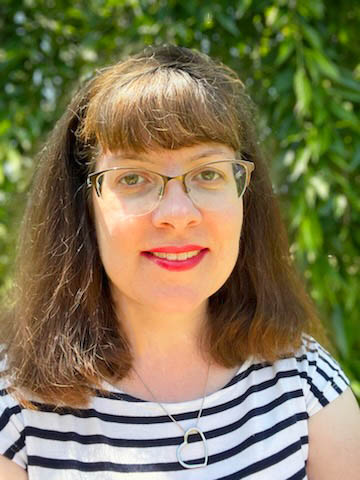
Melanie Faith holds an MFA from Queens University of Charlotte, NC. She is an author and freelance editor with more than 10 years' experience in the field. Her upcoming webinar on freelance editing, An Insider's Look at Launching as a Freelance Editor, is on Friday, April 12th. 
 
To learn more about Melanie’s writing, teaching, and photography, please visit: www.melaniedfaith.com, Twitter: @writer_faith, and Instagram: @frompromisingtopublished99.
Read More »

Launching into Freelance Editing: Tips for Choosing Your Genre Specialties

Friday, September 08, 2023
Freelance Editing

By Melanie Faith
 
There’s never been a better time to break into freelance editing. With the rise of e-books and digital publishing, many small-press publishers and individual authors who self-publish actively seek the assistance of editors who are enthusiastic about their craft.
 
When you think about beginning as a freelance editor, in addition to creating a website and posting your editorial availability on your social media, another step to explore is to decide what genre or genres you’d most like to edit.
 
Many editors specialize in a few areas of editorial work. While at first glance just mentioning that you are open to editing seems like enough, in actuality you are helping both yourself and your future clients by listing a few of your favorite genres that you have a passion for reading and editing as examples. These might also be genres you write as well.
 
Think of it: fiction alone has countless exciting subgenres, from mysteries, middle grade, thrillers/suspense, horror, new adult fiction, and graphic novels, to literary fiction, sweet romance, sensual romance, science fiction and fantasy, westerns, comedic/humorous fiction, historical fiction, and many more.
 
Similarly, nonfiction manuscripts include a diverse array of subgenres, from memoir to biography, journalism, and true crime, to flash nonfiction collections, autofiction collections, thematic anthologies, and flash memoir manuscripts, just to name a few.
 
Don’t forget that there are also exciting opportunities for editorial work in offering feedback to poets (from individual poems to batches of 3-5 poems to poetry chapbook collections and full-length manuscripts) and in offering personalized feedback on authors’ query letters, book proposals, grant proposals, contest entries, project descriptions, back-cover copy/descriptions, website copy, artist’s statements and author biographies for cover letters and/or website use, writing samples, and synopsis drafts.
 
Also, there are many authors specifically seeking feedback on shorter manuscripts, such as novellas and novelettes in countless fiction genres.
 
Remember that you can always begin with two or three types of editing and expand your range as opportunities come your way after your first few editing jobs.
 
Try this exercise:

I often recommend to my writing students who are interested in getting started as editors that they make a list of four or five of the favorite genres they like to read and/or to write. Get some paper, and list away!
 
Then, jot a few lines about what you love most about these genres; such an explication can be very clarifying.
 
After you’ve made your quick list (do this off of the top of your head and without pausing—first-thought, best-thought style), pick two or three of the genres on your list as your initial editorial specialties.
 
From reading and/or writing often within a genre, you already know a lot about pacing, characterization, dialogue, tropes within the genres, and so much more. You also have a natural passion for these genres which will make offering feedback to talented authors an especially fun and meaningful experience.
 
The sky’s the limit, and happy editing! 
 
***
 
Melanie Faith

Melanie Faith likes to wear many hats, including as a poet, photographer, prose writer, professor, editor, and tutor. She teaches workshops for WOW! Women on Writing. Her new webinar, An Insider’s Look at Launching as a Freelance Editor, is on Friday, September 15th. She’ll also teach a four-week Food Writing class, starting October 6th. Find out more about Melanie by visiting her website.
Read More »

From Promising to Published by Melanie Faith: Blog Tour & Giveaway

Monday, December 05, 2022
From Promising to Published by Melanie Faith
We are excited to launch the tour for From Promising to Published by Melanie Faith. This book is perfect for unpublished writers who want encouragement while preparing work for submission for the first time and a friendly voice to demystify how the publishing process works. It's also wonderful for published authors who are interested in learning why some of their past work might have been rejected. Its down-to-earth tips for revising, submission strategy, and having happier, long-term publishing experiences make this book a must-read for writers.    

Before we interview the author about her inspirational book for writers, here's more about this book:

You’ve been writing and honing your craft for months or years and are curious about seeking publication for your latest project. Perhaps you wonder about the next steps in the process. Look no further!

This book has a little something for every writer interested in expanding their audience and sharing their writing with readers, from pre-writing and writing your drafts to choosing your market and the writing life before, during, and after publication.

Topics covered include:
  • The Lovely Littles: Breaking into Literary Magazines
  • The Spinning Spider: Keeping Track of your Brainchildren
  • Options, You’ve Got ’em: Traditional, Indie/Small, University Press, or Self-Publishing 
  • Two Streams with One Stone: To Simultaneously Submit or Not
  • Monetize it! Part One: All about the Benjamins; Monetize it! Part Two: Risk and a Swimming Metaphor
  • The Myth of the Fancy-Pants Tools
  • The Art of Writing the Author Bio
  • Paradox Meets Passion: Writer vs. Author
  • The Slam-Bam Reply: Now in Two Painful Varieties; Creative Noodling
  • F.U.N.
and so much more!

Publisher: Vine Leaves Press (May 2022)
ISBN-10: 1925965929
ISBN-13: 978-1925965929
ASIN: B09V88F1SC
Print length: 184 pages
 
You can purchase a copy of this book in ebook or print at Amazon, Barnes and Noble, and Bookshop.org. Be sure to also add this to your GoodReads reading list.

About the Author, Melanie Faith

Melanie Faith is a night-owl writer and editor who moves through the daytime world with her camera. She’s an introvert who likes to wear many hats, too, including as a poet, photographer, professor, and tutor. She’s been a doodler for years but just recently started to share her perfectly imperfect doodles. She loves to write about historical settings in poetry and prose, and this fall she taught both a Leaping Worlds class for historical fiction and time-travel writers as well as a university class about publishing. She especially enjoys creating nonfiction craft books that assist fellow authors on their writing paths, including books packed with tips about writing flash fiction and poetry. Her latest published craft books are: Photography for Writers, guides for teaching online and writing a research book respectively, and From Promising to Published: A Multi-Genre, Insider's Guide to the Publication Process (all from Vine Leaves Press). Read more about her books, classes, and arts projects at https://melaniedfaith.com/.  

---- Interview by Nicole Pyles

WOW: First, congratulations on your book! Why did you decide to write this book? 

Melanie: Thank you! I’m so excited about this book and sharing it with readers. I’ve taught online classes in publishing and marketing books for several years, and I love the process of sharing the many options for how writers can go about taking a manuscript from a file on a computer or a draft in a notebook to an e-book or tactile book. 

I remember very clearly how confusing and unfathomable the process felt to me before I got my first publication credits. I didn’t know where to start. I really want to give writers an easier, clearer view of their options for breaking in than the way I approached submitting work and publishing in a very prolonged, stumbling, unsure way for the first few years of my writing career. 

WOW: That's so awesome! You start out in your book saying you've submitted your writing more than 1,300 times! I'm so impressed (especially as someone who has only gotten close to the 200 mark). What has kept you motivated to submit so many times? 

Melanie: That’s such a great question! 

First off, I had no clue when I started trying to get published in my teens how often I would submit or how many rejections I’d get—or that getting rejections is routine and completely normal. Often, it’s best just to keep looking forward; one tiny step at a time creates marvelous momentum. 

That said, after I received my first rejection slip from a publication when I was 16, I kept writing endlessly but I didn’t make any submissions to editors outside of a school setting for four years. It stung deeply! So, I fully understand how painful rejection can be and how very personal it feels every time. 

On the other hand, I genuinely want to connect with readers, and I know that having endless project files just sitting on my laptop won’t help me to connect with my fellow readers and writers, so it’s important to me that I submit my writing regularly. As I developed as a writer and a person, knowing that I was trying became more important than whether it was a yes or no response (although I still savor each and every yes!), which gave me the courage to submit more and more. One tiny step at a time adds up over time. 

Both rejections and acceptances have reinforced for me that it’s important to keep persevering and sending work out there. You just never know when it’ll be a yes, so it’s important to interpret a “no” as a “not yet” or a “not for us,” and submit the work again and again and again to other markets who will be a better fit for the work. 

When I first started, I put a lot of pressure on myself and on my writing to get immediate (or almost immediate) yeses or I stopped submitting, instead of editing my manuscripts more and then sending to other editors. I gave up on pieces too soon, which is very common. 

For the past several years, I’ve aimed to submit at least three pieces a month, whether that’s a guest blog, an article, a batch of poems, photography, or a complete book manuscript. Also, once I started to submit simultaneous submissions to editors who accept them (always check guidelines before submitting), that increased the number of submissions I made because I didn’t need quite so much new material all at once. That way, I always have multiple projects in rotation on editors’ desks which increases my chances at a yes. The yeses, along with reader and fellow writer encouragement, really make a huge difference in motivating me and keeping me going. 
 
 
"You just never know when it’ll be a yes, so it’s important to interpret a 'no' as a 'not yet' or a 'not for us,' and submit the work again and again and again to other markets who will be a better fit for the work." 
 

WOW: I love you keep things in rotation. You also teach students! What kind of lessons do you gain from your role as a teacher? 

Melanie: I love teaching fellow writers. They are some of the most imaginative, talented, hopeful, determined people I’ve ever met. They are generous with sharing their thoughts, struggles, and goals. I feel a sense of community with my students. We all understand the cycle of hope, angst, and hard work involved in pursuing publication. I love how each writer’s path shares commonality and yet is also highly personal and unique. 

Working with students teaches me how marvelously diverse and important writers’ voices are as well as underscores that there is room for all genres, styles, innovations, and writers at the table. 

My students teach me again and again the value of having writing dreams as well as perseverance, flexibility, and acceptance as our skills and our projects evolve over time. 

WOW: Those skills are so important! Your first chapter talks about the importance of calling yourself a writer. Personally speaking, I've been a writer for as long as I can remember but it's only in the last few years it's now officially part of my email's signature line. Why do you think it's such a struggle for writers to label themselves as a writer? 

Melanie: This is such an important question; thank you! 

When we practice the arts—whether it’s sculpting, painting, writing a novel or a collection of poetry, or recording a collection of songs—one of the first questions any artist gets asked is, “Have you sold/published [your project]?” Another is, “Where can I read/see your work?” 

It’s often very challenging to keep growing as writers while also experiencing the pressure to write faster to have publications available that showcase our writing to the best of our abilities as we are still developing as artists. 

Crafting the work alone in a room or in a small workshop group of trusted friends is much different than sharing it with a wider audience that often doesn’t include writers. People often mean well in showing interest or curiosity, while at the same time not knowing how very much effort and time go into writing, editing, publishing, and marketing a single work of art. We can feel hurried or a little foolish or embarrassed at times when we don’t have immediate publications after many months’ work or study—even though that’s 100% normal. Writing is a slowly built craft; not fast food. 

It’s natural to self-protect and not tell many people (if anyone, even ourselves) that we are writers for years—but to keep writing, revising, and learning, just without the title. Although, after a while, claiming the title becomes important. 

I understand hesitating to call oneself a writer, because I took photographs for many years before I dared to call myself a photographer aloud, much less on my website and social media, even though I ran around taking photos with a camera for almost as long as I’ve been a writer. I always felt like someone would call me out on it, because I didn’t professionally study photography, and I don’t make my living from photography, and because for very many years I hadn’t had my work in an art show yet. It was so liberating when I finally felt ready to call myself a photographer, not just a person who “likes to take photographs now and again.” 

Still, we wouldn’t go up to a plumber and say, “Well, since you haven’t fixed 7,000 faucet leaks this year, you’re not a real plumber, are you?” or a chef and say, “You don’t have a three-star restaurant, so why’s your name on the door?” but that’s often part of the message writers receive, that there are benchmarks before publicly saying we are writers—through words or body language or even self-talk—which makes writers understandably hesitant to claim the title of writer. Many wait until they get a first publication or a writing-related job or a degree in writing or have won a writing contest as a protection mechanism against the questioning or judgment of others. 

Also, it’s not easy to claim space as a writer. There’s a ton of competition, and writing is a craft that we learn and improve on over time and with effort and energy before we gain more and more confidence in our abilities. It’s totally normal that sometimes it takes many of us months or years to say aloud that we ARE writers. 

The great thing is that it gets much easier to say it the more we type it in our emails; say it aloud to new acquaintances, friends, and family; and start putting it on our websites, front and center. 

It’s a subtle shift, but a big one. Being a writer is an identity as well as a vocation and a lineage of all the writers who came before us and those yet to follow this path after us—it’s a very exciting, honorable, frustrating, mysterious, worthwhile path, and it just takes as long and it takes to feel comfortable voicing that we are writers. No benchmarks needed before applying. 

You are a writer if you practice the art of writing, period. Publications, workshops, classes, conferences: all of these can be wonderful and very helpful parts of the writing journey to experience—just know that you are already a writer before, during, and after them. 

No shade at all to any writers still getting to the point where they can type or verbally introduce themselves as writers. You’ll get there. Nurture yourself and support what feels best for you. 

Once we do claim the title “writer” aloud or in print—whether it’s in our own handwriting in a notebook or all over the internet—it’s that much sweeter for the journey it took to get us there. 
 
 
"You are a writer if you practice the art of writing, period."
 

WOW: It's such a profound journey to finally call ourselves a writer. What do you hope readers take away from your book after finishing? 

Melanie: I hope this book infuses readers with self-belief and courage to pursue publication in whatever ways are the best fit for them and their projects. 

I want writers to feel prepared to put in the work over years—writing, publishing or self-publishing, and marketing are often more of a marathon than a sprint—and also to know that they deserve success. 

I’d love for readers to know from the book that we’re living in a golden age for ways to become published (from self-publishing and blog posting to small-press publishing to publishing with a university press to getting an agent to publishing with big-name traditional publishers) and also myriad ways to study craft and keep improving (from reading craft books, taking online or in-person classes, starting or joining a workshop, and much more). 

I also want readers to take away that all writers (even frequently published ones) experience setbacks, rejections, and support during our careers that make this writing path a varied and meaningful one. Perseverance and some humor, too, are assets I hope writers will take along on their journeys to make their writing and publishing dreams come true.

Mostly, I hope readers will feel excited that what they have to say will find its target market and readers who will appreciate their writing. You’ve got this!

WOW: Thank you so much for your insights, Melanie! Best of luck on your book!
 
 
From Promising to Published Blog Tour and Giveaway


---- Blog Tour Calendar

December 5th @ The Muffin
Join WOW as we celebrate the launch of Melanie Faith's blog tour of From Promising to Publishing. Read an interview with the author and enter to win a copy of the book

December 5th @ Karen Brown Tyson
Visit Karen's blog today and read about whether to monetize your writing or keep it a hobby.

December 7th @ Create Write Now
Visit Mari's blog today to read a guest post by Melanie Faith about how to self-motivate.

December 8th @ Margay Leah Justice's Blog
Join Margay as she reviews From Promising to Published by Melanie Faith.

December 9th @ Blunt Scissors Book Reviews
Jennifer shares her thoughts about Melanie Faith's helpful book From Promising to Published.

December 10th @ World of My Imagination
Visit Nicole's blog to catch her review of From Promising to Published by Melanie Faith.

December 11th @ Shoe's Seeds and Stories
Visit Linda's blog as she reviews Melanie Faith's book From Promising to Published.

December 12th @ One Writer's Journey
Sue shares her thoughts about Melanie Faith's helpful book for writers From Promising to Published.

December 13th @ Lisa Haselton's Book Reviews & Interviews
Visit Lisa's blog for an interview with author Melanie Faith about her book From Promising to Published.

December 15th @ Mother Daughter Bookclub
Join Cindy as she reviews From Promising to Published by Melanie Faith.

December 16th @ The Faerie Review
Lily shares her thoughts about Melanie Faith's book From Promising to Published.

December 18th @ Michelle Cornish' Blog
Come by Michelle's blog and read Melanie Faith's guest post about overcoming imposter syndrome.

December 20th @ A Storybook World
Deirdra features a spotlight of Melanie Faith's book From Promising to Published.

December 21st @ Elle Backenstoe's Blog
Join Elle as she reviews Melanie Faith's book From Promising to Published.

December 22nd @ Author Anthony Avina's Blog
Visit Anthony's blog and read his review of From Promising to Published.

December 23rd @ Help Me Naomi
Noami shares a review of From Promising to Published by Melanie Faith.

December 24th @ The Mommies Reviews
Join Tara she reviews Melanie Faith's book From Promising to Published and hosts a giveaway too.

December 27th @ Mindy McGinnis' Blog
Join Mindy's blog today where author Melanie Faith shares tips on writing author bios that have personality and heart.

December 27th @ Beverley A. Baird's Blog
Join Beverley as she reviews Melanie Faith's book From Promising to Published.

December 29th @ Beverley A. Baird's Blog
Visit Beverley's blog to read a guest post by Melanie Faith about the benefits of hiring a freelance editor and how to find a good fit.

December 30th @ Jill Sheets Blog
Join Jill as she interviews Melanie Faith, author of From Promising to Published.

January 2nd @ Elle Backenstoe's Blog
Visit Elle's blog again and read Melanie Faith's guest post about the benefits of beta readers and how to find one.

January 3rd @ Editor 911
Join Margo as she features a guest post by Melanie Faith about the taking-on-too-much spiral.

January 4th @ Liberate & Lather
Visit Angie's blog and read her review of From Promising to Published by Melanie Faith. She hosts a giveaway and also interviews author Melanie Faith about her book.

January 5th @ Word Magic
Fiona reviews this helpful writing book From Promising to Published by Melanie Faith. Don't miss it!

January 7th @ Leslie's Voice
Join Leslie as she reviews From Promising to Published by Melanie Faith.
 
 
***** BOOK GIVEAWAY *****
 
Enter to win a copy of From Promising to Published by Melanie Faith! Fill out the Rafflecopter form below. The giveaway ends December 18th at 11:59 CT. We will announce the winner the next day in the Rafflecopter widget and follow up via email. Good luck!
 
a Rafflecopter giveaway
Read More »

3 Tasty Techniques for Food Writing

Friday, March 25, 2022
By Melanie Faith

Prefer pickles to relish? Love to nosh kugel? Find Frito pie a comfort food but loathe mac and cheese? Appreciate the aromas of veggie chili or a tart rhubarb pie wafting your kitchen with tantalizing odors? You're speaking our language! Let's take a look at three traits common to food writing across genres, from fiction to poetry to essays and more.

1. Include sensory imagery.


Great food descriptions are specific. They don't just include smells, but also tease us with tastes and textures. Include an adjective or two--so it's not just a sandwich, but an ooey-gooey pb&j on homemade, whole wheat toast. Can't you just see the sandwich cut into diamond halves and placed on a plain, porcelain plate in the second description? Doesn't the second description make you anticipate the salty and sweet in the first bite, waiting for it to stick to the roof of your mouth?

2. Dynamic verbs are a do.

Consider how this snack or meal was crafted. Did you lovingly crimp the crusts or hastily thumb-pinch a scallop-pattern? Consider adding visual and/or tactile imagery that create word-pictures in your readers' minds. Instead of plain old "made," what about "whipped up," "whisked," "poured," "concocted," or "fricassee?"

3. Highlight a main theme or idea in your scene, poem, essay, or chapter.

Food carries potent cultural symbols, from how we prepare it for ourselves or others to how we eat or share it to who cleans up after the feast. For some, meals are a communal time of day to gather with friends or family and share stories of the day. Does food equate to connection and/or community for you or your protagonist? Safety, even? Or does food equate to loneliness, shame, or even sorrow? Does your protagonist eat alone recently? Why or why not? Consider not just what the food looks, smells, and tastes like, but also how it makes your character feel--about self, family, friends, or community. Food can serve as symbols of our greatest time constraints (perhaps your protagonist feels overwhelmed by grocery shopping and cooking many meals, especially at the holidays) and remind us of our greatest hopes and fears. Underscore conflicts or mixed emotions that food sparks within your protagonist.

Try This! Exercise:
Jot a list of five foods. Beside each food, briefly describe the food, pairing an adjective with a strong verb. Then, for each food, write down an emotion or two that spring(s) to mind. How might you explore the symbolism of the food in your character's life? What about his/her hopes and fears? Pick one food and write 250 words detailing your protagonist either preparing or eating the food. Include a line of internal dialogue/self-talk or body language to show the emotions the food elicits.

***

Melanie Faith holds an MFA from Queens University of Charlotte, NC. Her writing has been nominated three times for the Pushcart Prize. Her full-length, historical poetry collection set in the 1918 flu epidemic, This Passing Fever, was published by Future Cycle Press in October 2017. Vine Leaves Press published her craft books about writing and editing flash fiction and nonfiction and her craft book about writing poetry (both 2018). In December 2019, her craft book, Photography for Writers, was also published by Vine Leaves Press. Most recently, her shorter pieces appeared in After the Pause, Contemporary Haibun Online, The Sandy River Review, The Writer’s Monthly Review Magazine, and Embodied Effigies. Her flash fiction, “The Slades,” placed honorable mention in the 2014 Bevel Summers Prize for the Short Short Story and was published in Shenandoah (Washington and Lee University). In addition to numerous photography publications, her art made the cover of both OVS Magazine and Chantwood Review in 2017. Her instructional articles about creative writing techniques have appeared in The Writer and Writers’ Journal, among others. To learn more about Melanie’s writing, teaching, and photography, please visit: www.melaniedfaith.com/blog/.

Melanie is also a WOW! Women on Writing instructor. Check out her upcoming workshops, Food Writing for Fun and Profit: Blogs, Restaurant Reviews, Recipes, Fiction, Memoir, and More and In a Flash: Writing and Publishing Dynamic Flash Prose. More information about our classes can be found on our classroom page.
Read More »

Dabbling with Drawing

Thursday, February 10, 2022
Monday Marcia showed us all how she blacks out newspaper or magazine articles to create inspirational black out poems. Her post inspired me to write about my own recent inspiration which has has come in the form of drawing, and it all started with a WOW! Women on Writing Class. 

I’ve got a mostly finished graphic novel sitting in my file cabinet. I’m not going to admit how long is has been missing only a satisfying ending, but I’d really like to wrap it up and send it out. When I saw Melanie Faith’s graphic novel class I didn’t hesitate to sign up in spite of the fact that she expects us to draw. 

Really? How serious could she be? After all, we’re writers. 

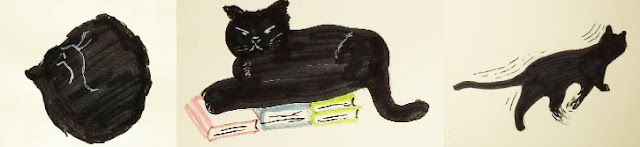
And yet each week our assignments include a drawing component. I have no interest in illustrating my graphic novel but I do have an idea for a comic strip. With only three characters, it seemed do-able so I started drawing my cats. Fortunately they are both black which keeps the details to a minimum. 

Between Melanie and our text books, I’ve learned a few tricks including roughing out a drawing upside down. Work from a photo, rotate it 180 degrees and draw. Briefly, it works because you look more closely at the shapes instead of just drawing what you think you see. All I know is that my three best drawings were all roughed upside down. 


But our comics and graphic novels won’t be just our characters so we had to add things that would likely appear multiple times. Mine? My coffee cup. Seriously, I roughed the one on the right upside down and the one on the left right-side up. Why can I only draw upside down? 


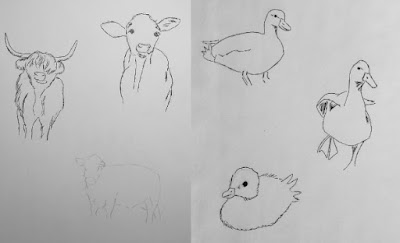
In spite of this quirk, I’ve been sketching several days a week. I’m not a master and haven’t developed my own style yet, but I’m having fun and even managed to draw rightside up. I use prompts supplied by Bardot Brush. The chances that eithers cattle or ducks will make an appearance in my comic are virtually nil but inking up a barnyard full of beasts is a fun start to my day. 


Is this going to feed directly into my work as a writer? Maybe no, but maybe yes. I really like the idea for the comic that I’ve developed in the class. I feel confident that I can handle single panels even if I’m not capable of creating dozens of panels to illustrate my own graphic novel manuscript. 

And drawing is teaching me to look at more closely at the world around me. This will feed into better descriptions in my writing. Who knows? Maybe one day a cow will stroll into my story and, by my description, you’ll know if it is a Hereford, a longhorn, or a Highland cow. 

--SueBE

Sue Bradford Edwards' is the author of over 30 books for young readers.  To find out more about her writing, visit her site and blog, One Writer's Journey.

The next session of her new course, Pitching, Querying and Submitting Your Work will begin on March 6, 2022).  Coping with rejection is one of the topics she will cover in this course.

Sue is also the instructor for  Research: Prepping to Write Nonfiction for Children and Young Adults (next session begins March 6, 2022) and Writing Nonfiction for Children and Young Adults (next session begins March 6, 2022). 


Read More »

Why In a Flash by Melanie Faith is My New Favorite Book on Writing

Saturday, June 09, 2018
Raise your hand if you write or have attempted flash fiction? (*raises hand*) If you have -  and actually, even if you haven't - you need to read this book In a Flash by Melanie Faith.

First, what I loved the most about this book is I could flip through it, land on a section, and read it and gain something from it, without having to read the entire book all over again. It's the kind of book, like a yummy fruit salad, that you can take something from a bit at a time and enjoy it. One of my favorite sections described how to decide on which POV to use (I obsess over this). In this chapter, much like in all the other chapters, it gave me questions to ask myself about the piece I was working on. Questions like "How important is immediacy" made me really think about the purpose of the point of view I was choosing in a story. Best of all, this section ended with a writing prompt, which was my favorite part about this book. The prompts after each section were so important to me and the one thing that I valued the most in this book.

Whether you are a new writer or an experienced writer, you will be glad you read this book. One of the bits of advice that I wanted to share with you said this:

As you sit before the blank page or screen, take a deep, cleansing breath and:
• Let go of the need to know how this draft will end. Yes, some authors already know the ending before they start (and it’s perfectly fine if you do), but many of us don’t. If you’re writing, the ending will come—even if you write past it or around it, you’ll feel it as you draw near. Trust.

Oh how powerful was that for me to read. I need that in bold font in front of each writing session. I obsess over the need to know how things end in a story. Best of all this book also goes over ways to write for both nonfiction and fiction. While I'm not a non fiction writer, I greatly benefited off these section as well.

This is a must have,  even if you don't write flash fiction. It still gives you a lot to think about and it really helped me examine my writing in such a specific, unique way. Be sure to check this out on Amazon and pick up your copy of In a Flash: Writing & Publishing Dynamic Flash Prose.

Follow Nicole Pyles on her writing journey by following her Twitter account @BeingTheWriter.
Read More »

The Portable muse: Creative Writing Cards by Melanie Faith - Giveaway!

Thursday, December 08, 2016
As a writer, you know there’s nothing more intimidating than staring at a blank page, cursor blinking, without an idea in mind. I like to show up to the page with purpose, but sometimes my muse takes a vacation. When she abandons me, I refer to my library of writing prompts and toolkits to get my pen moving. I have a deck of flash cards that say things like “raise the stakes” or “switch media” that I randomly select to help me get unstuck, a set of writer’s dice to help plot my novel, and many, many writing prompt books. So when I found out that WOW instructor Melanie Faith created a set of creative writing cards, I couldn’t wait to share them with you. Melanie has inspired so many of her students to produce quality writing, and these cards are bound to do the same!


The Portable muse: Creative Writing Cards are available at Melanie’s Etsy shop and contain 30 new prompts on beautiful, durable card stock that she created and had professionally printed. These portable cards are sure to inspire fiction, essays, poetry, and more! Slip them into your purse and take them to your writing group or classroom, give them as a gift, or keep them for yourself to inspire thirty new pieces of work. Some prompts include quotations, some situations, others a title or setting. They are good for individuals and for groups, and they are gorgeous!

Here are some suggested uses:
  • Shuffle and pick one card at random each day for a month. Three wild cards included.
  • Shuffle and pick two or three. Combine into one draft.
  • Choose one for your class or writing group. Each writer pens for fifteen minutes and shares. Alternately, each writer can choose one card.
  • Workshop!
  • Meet a writing friend. Both pick a card and write for twenty minutes without stopping. Share. Repeat.
  • Game night. Use singly or on teams.
  • Use on your commute.
  • Use during lunch breaks.
  • Take for a spin during daily free-writes when you are without ideas.
  • Use in waiting rooms.
  • Teaching a seminar or class? For all age groups, middle school and up.

They make an awesome gift for writers of all levels!


I’m in the holiday spirit of giving, so I’m providing a set to one lucky winner. Just fill out the Rafflecopter form below and we’ll randomly choose a winner a week from now (Dec 15th). The winner should have her cards by Christmas. Good luck!

a Rafflecopter giveaway
Read More »

Pick Me, You, Her or Him! Personal Pronouns and Point of View in Poetry

Wednesday, March 28, 2012
by Melanie Faith

It’s so easy to slap a subject down and jump ahead to the snazzier adjectives and dynamic verbs. Yet, point of view can make an enormous difference in a poem’s development and also impact the way readers approach your work. Let’s look at the three points of view—1st, 2nd, and 3rd—and how each pronoun choice molds your poem.

Of all the pronouns, I is most immediate. Since an author’s personal experiences often trigger the rush to the page, it is only natural that many poems have their genesis with an I speaker and continue in that vein. The Confessional School of poets in the 1950s and 1960s, a la Sylvia Plath and her one-time teacher, Robert Lowell, freed the way for ample use of I in lyric and narrative poetry. It is worth noting, however, that even poems with a first-person narrator may not 100% reflect the experiences of the writer, but may include as much fiction as a third-person point-of-view. An example of a first-person narrator removed from the poet’s experience would be a female poet crafting a poem from the perspective of a father. As a creative artist, it is within your skillset to assume a persona.

Advantages of Ist person: it is compelling and has the power of a strong personal or character voice.
Draw-backs: can sometimes become self-indulgent, and it is difficult to create enough distance from the material to pick which images, similes, or metaphors should or should not be included.

Second person, you, may be read several ways. A you subject may address the audience directly. Or it may be used like “one,” to note universal human experience. Also, the you might be an unnamed, absent character who receives the unstated questions and actions of the poem, such as when an employee addresses her boss, “you always made me work/ overtime,” or when a friend addresses another friend who has betrayed him.

Advantages of 2nd person: great for drawing readers into the poem’s action. A comfortable form for most writers, especially for comparing or contrasting two characters’ behaviors.
Draw-backs: with certain themes—political topics, religion—may alienate readers by having too accusatory a tone.

“The advantage of the third person is that it gives both the poet and the reader some personal space from the action of the poem....This can create breathing room to write things you might not otherwise feel comfortable expressing,” Sage Cohen notes in Writing The Life Poetic. It is difficult, if not impossible, to write objectively about a painful or joyful personal experience. Third person narration encourages honesty as well as trimming unnecessary phrases and lines. The obvious drawback, however, is that the third person may appear too dispassionate or dull.

Try this exercise: swap one pronoun for another in a draft. How does that affect the poem’s tone or theme and your approach to it? Switching pronouns may inspire new ideas and make it easier to edit parts of the poem which are not as compelling.

***

Melanie Faith is a poet, essayist, and photographer who holds an MFA from Queens University of Charlotte, NC. Her writing most recently was published in Mason's Road (Winter 2012 issue) and Origami Poems Project. Her photos were published in Foliate Oak (May 2011), Epiphany Magazine (October 2011), Up The Staircase (Fall 2011), and Ray's Road Review (December 2011). Her poetry was a semi-finalist for the 2011 James Applewhite Poetry Prize, and an essay about editing poetry appeared in the Jan/Feb 2011 issue of Writers’ Journal. In 2011, her poetry and essays was featured in Referential Magazine (July and June 2011), Tapestry (Delta State U., Spring 2011), and Front Range Review (U. of Montana, Spring 2011). She has been nominated for a Pushcart Prize. Her work won the 2009 Anne E. Sucher Poetry Prize for the Iguana Review.


Join Melanie's latest WOW! Women on Writing class:
a five week course starting on Friday, April 13, 2012. 
This class is limited to 10 students and early registration is recommended!
Read More »

Friday Speak Out!: It’s a Secret!, Guest Post by Sandy Young

Friday, January 20, 2012
It’s a Secret!

by Sandy Young

Fifty is a big number for lots of things: money found on a messy desk, the number of miles to drive to go shopping, the number of grandchildren some people in New Mexico have, the number of M&Ms I can consume at one sitting, and the number of years some folks have been married to the same person. That last one refers to my sweetheart and me!

In April, before our fiftieth anniversary (December 17), I decided to write a gift for Frank, my hero. It had to be a surprise, and I knew keeping it a secret would be difficult, to say the least. Frank thinks that every time I’m writing on my computer I’m either communicating with friends on Facebook or writing e-mails. Little did he know, as I sat about three feet away from him while we were watching TV, that I was writing a book called Married to My Hero, right under his nose! In all of those eight months, he never asked what I was doing. Not once!

Several friends edited for me, including Melanie Faith, my teacher for the WOW! course Translating a Life, to whom I submitted one chapter as the essay of the week. All authors need editors, and I had wonderful ones.

Since we have lived in only four cities/towns in fifty years, I organized the book by place: Clinton, MS; Pascagoula, MS; Pensacola, FL; and Cerrillos, NM. The book would be a history of our lives together, beginning with when we met and ending with where we live in our retirement years.

Sometime in August, I gave myself permission, though, to write only about Clinton and Pascagoula. Too much has happened in our lives for me to be able to finish and publish by December 17. I was determined to give it to him at the grand party that our daughter had planned for us. I finished my manuscript early in November, and Wendy, our daughter, finished uploading it to Blurb and inserting lots of photos and other memorabilia that we had saved through half a century by the first week in December. The book arrived on December 14 . . . ah, three days before the big event, quite an accomplishment for all of us Youngs, who are notorious for last-minute finishings.

I had my doubts as to Frank’s being surprised; however, when I presented it to him, I knew that he hadn’t a clue. He loves his gift and is reading it each night before he turns out the light. I’ll write about Pensacola and Cerrillos in 2012 and will have the luxury of asking Frank to help me remember details. Several times, I almost slipped and asked him to help me remember things while I was writing this year. That would have been disaster for my secret.

We’ve begun our next fifty years (HaHa!), and Frank is still my hero. Always has been, always will be.

* * *
Sandy Young is a retired English teacher (32 years in the classroom), whose passion is writing. She blogs at Forever Young (www.foreveryoung279.blogspot.com). Sandy and Frank, her husband of 50 years, live in Cerrillos, New Mexico.
~~~~~~~~~~~~~~~~~~~~~~~~~~~~~~~~~~~~~~~~~~~~

Would you like to participate in Friday "Speak Out!"? Email your short posts (under 500 words) about women and writing to: marcia[at]wow-womenonwriting[dot]com for consideration. We look forward to hearing from you!

~~~~~~~~~~~~~~~~~~~~~~~~~~~~~~~~~~~~~~~~~~~~
Read More »

Artfully Editing Your Personal Essays

Monday, September 26, 2011
Artfully Editing Your Personal Essays

by Melanie Faith

Ah, the spark of inspiration—the keys clacking, the ideas flowing, the wind at your back! Shortly, however, the initial draft is finished, and it’s time to begin the more arduous editing journey. Take heart…and these tips to sculpt your personal essay:

1. Division decision— A bit of creative structuring may take a piece to an exciting new level. In Crafting The Personal Essay, Dinty W. Moore notes: “While most of my nonfiction writing follows a pretty traditional path, I have also composed essays that mimic the form of a coroner’s report, a made-for-television movie script, and a Zen koan. One of my favorite experiments, ‘Son of Mr. Green Jeans: An Essay of Fatherhood, Alphabetically Arranged’ borrows a form known as abecedarium from the world of poetry.” Consider unique subject headings or organizational methods. Poem titles, favorite thematic quotations, place names, even times of the day may all structure an essay into an intriguing mosaic.

2. Time, time, time— Although writing nonfiction, that doesn’t mean that a writer must adhere strictly to chronological order. Consider flashbacks and flash forwards, mixing chronological time with the more sophisticated timing of personal epiphanies and hard lessons well-learned.

3. Spotlight self—A writer may include many other “characters” within the piece—siblings, neighbors, exes and friends—but the central moments of change must occur for the speaker. Readers want to discover the aha! moment via the first-person narrator; she is the one readers root for and identify with most strongly. Edit or omit sections where discovery takes place through or for another person. An essay will be stronger for narrowing the focus.

4. “You don’t say!”— Dialogue can be a great tool for compression. Are there whole rambling sections describing setting, clothing, or personality that could be expressed more succinctly in a tart remark or an aside? In Naked, Drunk, and Writing, Adair Lara advises, “Dialogue is very readable, makes writing move fast, and is the fastest way to reveal character…Keep dialogue short and punchy. We’re not allowed to say much before we’re interrupted by others or something else is going on.” Characterizations are strengthened by lopping off background fluff. A short interchange between speaker and friend can easily demonstrate more complex conflict. Lara further advises, “Dialogue gets interesting when there’s subtext: what characters are saying between the lines.” Trust that your readers will intuit much from less.

5. Edit details that don’t showcase theme(s). While interesting, does this portion contribute to the whole piece? Ask yourself: would a reader who had not experienced this person/event find a meaningful connection with the rest of the essay?

6. Set it aside. Then trust your gut. When writing truth, a writer’s emotional connection to the material can cloud editorial judgment. Take breaks of days or even weeks to let the material cool. With the passage of time, an essayist often finds the courage and perspective to hit the backspace key.

***
Melanie Faith is a poet, essayist, and photographer who holds an MFA from Queens University of Charlotte, NC. Her poetry was a semi-finalist for the 2011 James Applewhite Poetry Prize, and she recently had an essay about editing poetry published in the Jan/Feb 2011 issue of Writers' Journal. Her poetry was published in Referential Magazine (July and June 2011), Tapestry (Delta State U., Spring 2011) and her essay about Thoreau and the Internet appeared in Front Range Review (U. of Montana, Spring 2011). Her photos were published in Foliate Oak (May 2011) and forthcoming from Up The Staircase (November 2011). A travel essay was featured in Quicksilver (U. of Texas, March 2010), and another published essay (Shape of a Box, Oct. 2009) was nominated for a Pushcart Prize. Her work won the 2009 Anne E. Sucher Poetry Prize for the Iguana Review. Her current poetry chapbook, Bright, Burning Fuse, was published by Etched Press in Dec. 2008. She has been a small town journalist, an ESL classroom teacher for international students, and (currently) a literature and writing tutor at a private college prep high school. She has enjoyed teaching poetry and essay writing classes for WOW! for two years. In addition to writing two novels seeking representation, her instructional articles about creative writing techniques have appeared in RWR (Dec. ’08) and The Writer (Nov. ’09), among others.

Melanie's latest online class for WOW! Women on Writing starts on Friday, October 7th! Sign up now for Translating a Life: The Art of Personal Essay Writing by Melanie Faith. For details and enrollment, visit our classroom page.
Read More »
Powered by Blogger.
Back to Top