Showing posts with label Margaret Atwood. Show all posts

That Familiar Hiss...

Wednesday, March 06, 2019
For years I've listened to musical CDs. In the car. At home. I thought I was happy. (Before that it was cassette tapes. And before that, 8-track tapes.)

But then my husband got me a record player several years ago. I pulled out the box of LPs that had been languishing in the basement--ruined, I thought--and put one on the turntable.

Hisss. The needle bobbed up and down as it rode the wave of the record, round and round. That sound brought back so many memories. Vinyl has something that no "digitally remastered" CD will ever have.


I think Carole King's Tapestry album was the first one I bought. "So Far Away." "I Feel the Earth Move." "You've Got a Friend." "Smackwater Jack." "Where You Lead." "Natural Woman." Those songs are so distinctive, I still remember them even though it's been 48 years since I bought the record and almost wore the 
vinyl out.

(As a 12-year-old, I had a life-sized poster of this album cover hanging in my bedroom. My dad used to joke about Carole King's toejam. To be clear, her feet looked extremely clean and well-scrubbed.)

My challenge is to make my writing distinctive. Memorable. I'm sending off a manuscript and when I get 10 rejections (2 down. 8 more to go.), I'll make some changes to my query letter, and send it to 10 more agents. In the meantime, I wonder...

Is my writing distinctive? Do I tell a compelling story?

I read an article that gave me some points to ponder. The # 4 (Show With a Spin) especially got me thinking. There's even a link to a Kurt Vonnegut article. In it, he advises to "begin as close to the end as possible" when writing a short story. That's a technique I love.

Then I happened on a piece on writing that appeared in The Guardian. In it, Margaret Atwood had some writing advice:

"You can never read your own book with the innocent anticipation that comes with that first delicious page of a new book, because you wrote the thing. You've been backstage. You've seen how the rabbits were smuggled into the hat. Therefore ask a reading friend or two to look at it before you give it to anyone in the publishing business. This friend should not be someone with whom you have a ­romantic relationship, unless you want to break up."

I've been backstage. I've been there when every one of the 53,000 words have been put onto paper. I've had friends read it... and none of them are romantically involved with me.

Now I just have to keep my fingers crossed as I hope my manuscript is memorable (in a good way) for at least one agent. 

Tapestry was the first record I bought. How about you? What was the first record you bought?


Sioux is a middle-school teacher by day. By night, she alternates between being a couch-drooler and a freelance writer. If you'd like to read more of her stuff, head to her blog.
Read More »

3 Tips From Margaret Atwood, Author of Handmaid's Tale

Monday, September 25, 2017
c Jean Malek
I was incredibly lucky to hear author Margaret Atwood speak in St. Louis last week. She received the St. Louis Literary Award; and with this honor, she also gave a speech and was interviewed on stage. Amazing! I wrote about the surreal experience on my blog here, if you want to hear about the ins and outs of how to see a famous author when you don't even have the proper ticket...but on WOW!'s blog, I thought I would tell you three things about writing that I learned from Margaret's speech.

  1. Know what underwear your character wears. I've heard a lot of writing advice over the years, but this is the first time someone has said: know the underwear. Of course, the audience chuckled about a 77-year-old successful literary author give this advice, but she was not kidding. Her point was that you need to know your character and setting inside and out. You need to research until you've figured out if your character wears tighty whities or Victoria Secret's latest or none at all. Think about it: if your character is going for an extremely important interview that will change her life, what underwear would she choose and why? If you can figure this out, then you know your character and she will come to life on the page.
  2. Are you a "messy" writer or organized? She called herself a messy writer--most people refer to this type of writer as a pantser. Margaret told a story that when she was starting out, she thought she should get more organized and plot her books. Then she wrote a novel based on this plotting, and she said it was terrible. She realized she is a messy writer, and she may not work like others--but what she does works for her. (Obviously). Now, I'm not here to tell you that she said anything earth-shattering like everyone should be a pantser vs a plotter. But what I learned from this moment is that Margaret Atwood tried something else, and it didn't work, and so she knows herself. She is secure in what works for her creatively. She is not scared to take risks; but if they don't pay off, she'll go back to what she knows and what works. This is something as artists we should all do!
  3. Don't take  yourself so seriously! Two days before appearing in St. Louis, she was at The Emmys! In case you haven't heard, her book The Handmaid's Tale was made into a series on Hulu, and it won a bunch of awards. It was apparent that she enjoyed every minute of her experiences with this episode in her life, and she shared how she even had a cameo in the pilot episode. But the funniest part was when she talked about how "they" sent someone to do her make-up, and this person also wondered if she wanted them to do her hair. She was laughing at herself and her hair, and she just radiated joy. I thought: here is woman with so many important things to say, whose books have great success, who lived every writer's dream and attended a big award's ceremony, and who laughs about her wild hair and how no one can do anything with it. At that moment, I thought: This is why she is so successful--she knows human beings. She knows women--we all have a thing about our hair. 
Cathy C. Hall, who also writes for this blog, visited my personal blog and read my account of how I actually got into the concert hall to hear Margaret speak. (It was not easy.) But Cathy's comment was: "I’m often surprised about big name authors, that one can see ’em if you just show up!" It's true. I encourage you to attend one of these talks in your area if you are able. Every single time I have, I have learned something new and valuable.

Margo L. Dill is a writer, editor, writing coach, and teacher, living in St. Louis, MO. To take her novel writing course, which starts October 6, please see the details here. To find out more about her, please see her website: http://www.margoldill.com. 


Read More »

Goodreads Annual Reading Challenge

Thursday, December 24, 2015
Each year Goodreads, a social networking site for book lovers, allows you to challenge yourself to read more books. It has a widget on its page called the Reading Challenge.

For the Reading Challenge, you select how many books you’d like to read in the coming year, and then each time you read a book, you share it on Goodreads and the Reading Challenge widget tracks it for you. At the end of the year, it provides you with statistics about the books you’ve read, like total number of pages, average length, most popular, and least popular book.

I read 25 books in 2014, so I challenged myself to read 30 books in 2015, and sadly I’m going to fall short at only 16 books. Although, to be fair, one of the “books” I logged was actually a four-book series. And I don’t log the textbooks I read for school. But still, I fell short of my goal.

This, however, is higher than the national average, according to the Pew Research Center: “Among all Americans, the average number of books read in the previous year was 12 and the median number of books read was four. Some 27% of adults said they hadn’t read any books over the past year.”

If you haven’t done so already, I encourage you to check out Goodreads and then sign up for the 2016 Reading Challenge. And then add me as a Goodreads friend so we can hold each other accountable for our goals and help our national average to exceed 12 books per year.

How many books have you read this year? What books would you recommend for our readers’ 2016 Reading Challenge?

Written by Anne Greenwalt, who recommends The Goldfinch by Donna Tartt and MaddAddam by Margaret Atwood.
Read More »

Top Books on Writing by Female Writers

Saturday, May 09, 2015
This summer I will work on two major writing projects: my novel and my doctoral dissertation.

For motivation, I look to other authors for guidance, which makes me return to some of my favorite books on writing by female authors.

1. Bird by Bird by Anne Lamott 

“Just take it bird by bird.”

This advice has gotten me through not only the most daunting, difficult writing projects, but through some daunting, difficult life situations, too.


2. Negotiating with the Dead by Margaret Atwood

"All writing of the narrative kind, and perhaps all writing, is motivated, deep down, by a fear of and a fascination with mortality by a desire to make the risky trip to the Underworld, and to bring something or someone back from the dead."

The book includes six essays on what it means to be a female writer and includes the wit and dry humor of Atwood that I love so dearly.

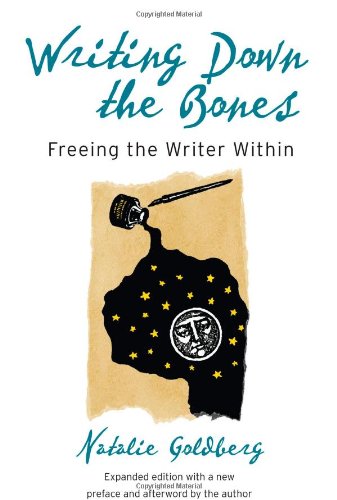
3. Writing Down the Bones by Natalie Goldberg:

“Every time we begin [writing], we wonder how we ever did it before.
Each time is a new journey with no maps.”

Goldberg mixes her writing lessons, exercises, and experiences with Zen Buddhism into this compact guide.

In addition, reading great literature by female writers also inspires me. How many of the greatest books by women have you read? I have read 50 of 102 on this list. So I still have some catching up to do! Also, although most of my favorite female authors are represented here, there are still a few books and authors missing.

Who are some writers who inspire you, and why? Please give me some recommendations so I have more excuses to procrastinate my projects this summer [wink, wink].

Written by Anne Greenawalt, writer and writing instructor
Read More »

Friday Speak Out!: The Top 5 Most Inspirational Female Authors, Guest Post by Alexis Bonari

Friday, April 01, 2011
The Top 5 Most Inspirational Female Authors

by Alexis Bonari

Before the feminist movement in the 1960s, women writers struggled to be taken seriously in the literary world. Like many other professions, society used to consider writing a “man’s job,” so in order for a female writer to get published, she had to be exceptionally talented, courageous and determined.

Here are five women who not only defied the odds and refused to take “no” for an answer, but also consistently wrote about a woman’s role in society to help inspire other women to pick up a pen as well:

1. Virginia Woolf (1882-1941)

Woolf was known to be an innovative, modernist fiction writer, and some of her best work derives from her passion for women’s rights. She tended to write in a stream-of-consciousness style, and some common topics in her writing include personal relationships, women’s issues, philosophical issues, dealing with loss, and the power of memory to “sustain the human spirit.”

Possibly one of her most famous feminist essays is A Room of One’s Own, as well as Three Guineas, which was written to defend the education of women during the European fascism movement in the late 1930s.

In A Room of One’s Own Woolf writes:

“At the thought of all those women working year after year and finding it hard to get to thousand pounds together…we burst out in scorn at the reprehensive poverty of our sex. What had our mothers been doing then that they had no wealth to leave us? Powdering their noses? Looking in at shop windows? Flaunting in the sun at Monte Carlo?”

2. Jane Austen (1775-1817)

Austen was a profound English novelist who was actually homeschooled during her childhood, and was forced to remain anonymous as a writer during the last ten years of her life. Her novels tended to discuss various gender and social issues that were common in England during the 19th century, and many of her novels had female characters who were intelligent yet “economically vulnerable.”

Some examples include Sense and Sensibility, where the Dashwood sisters were forced into marriage after their father passed away, and in Pride and Prejudice, a mother tries to force marriage upon her daughters to wealthy suitors. Also in Mansfield Park, there is a specific focus on how single women are forced to become dependent on males.

3. George Eliot (1819-1880)

Eliot was considered to be one of the greatest British novelists of the 1800s, but many people at the time were unaware that her real name was actually Mary Ann Evans, and she decided to change her name to “George Eliot” just so people would buy her work. She had a passion for education and philosophy, but was forced to leave school at the age of 16 after her mother’s death, and later in life became a social outcast after she moved in with literary critic George Henry Lewes, (who at the time was married with three children).

Many of the characters in her novels depict a person who is forced to make important moral decisions, which could be in direct relation to her own experiences and tribulations.

Her most popular feminist writing to date is Silly Novels by Lady Novelists where Eliot actually calls out to her female readers in the hopes of inspiring them to write as well:

“When men see girls wasting their time in consultations about bonnets and ball dresses, and in giggling or sentimental love-confidences, or middle-aged women mismanaging their children, and solacing themselves with acrid gossip, they can hardly help saying, ‘For Heaven’s sake, let girls be better educated; let them have some better objects of thought – some more solid occupations.”

4. Alice Walker (1944 - )

Alice Walker is an internationally-known African-American novelist, poet, and essayist. From Eatonville, Georgia, some of the most common themes in her work touch on racism and the history of women. Later in life she became very active in the civil rights movement of the 1960s,and some of her early novels and short stories (The Third Life of Grange Copeland, In Love and Trouble, and You Can’t Keep a Good Woman Down depict not only the struggle for the civil rights movement, but for black women in particular.

Her most famous novel to date, The Color Purple, won a Pulitzer Prize for fiction, but other progressive works include The Temple of My Familiar, where she discusses the history of black women issues, and Possessing the Secret of Joy, where she focuses on the topic of female genital mutilation.

5. Margaret Atwood (1939 - )

From Ontario, Canada, one of Atwood’s personal goals as a writer was to not only draw attention to Canadian literature, but to female issues as well.

Atwood’s work spans from novels, short stories, poetry, and non-fiction, and some of her many themes include colonization, technology, the environment, but most importantly the sexuality and alienation of women. In Surfacing, Atwood discusses a woman’s “refusal to be a victim,” and in The Handmaid’s Tale, Atwood depicts the future of women who live in a religious extremist society.

Other popular feminism-based novels written by Atwood include The Edible Woman, Lady Oracle, Life Before Man, and The Robber Bride.

Of course the list could go on and on: The Bronte sisters, Mary Shelley, Sylvia Plath, Emily Dickinson….there are countless female writers who helped pave the path for future women writers. Many of us can empathize with their struggles in being taken seriously as a successful and intelligent female writer, so from time to time it is important for us as women to read (or re-read) their work to help us realize just how far women writers have come, especially in the last 100 years.

* * *

Alexis Bonari is currently a resident blogger at College Scholarships, where recently she's been researching grants for low income students as well as education housing grants. Whenever this WAHM gets some free time she enjoys doing yoga, cooking with the freshest organic in-season fare, and practicing the art of coupon clipping.

~~~~~~~~~~~~~~~~~~~~~~~~~~~~~~~~~~~~~~~~~~~~

Would you like to participate in Friday "Speak Out!"? Email your short posts (under 500 words) about women and writing to: marcia[at]wow-womenonwriting[dot]com for consideration. We look forward to hearing from you!

~~~~~~~~~~~~~~~~~~~~~~~~~~~~~~~~~~~~~~~~~~~~

 
Read More »
Powered by Blogger.
Back to Top