Showing posts with label Flash Fiction Contest. Show all posts

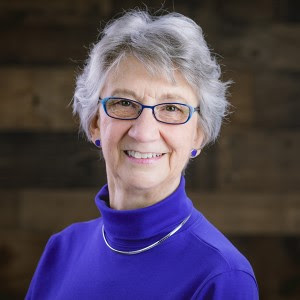
Interview with Annalisa McMorrow: Runner-Up in the Fall 2024 Flash Fiction Contest

Tuesday, April 15, 2025


Annalisa’s Bio:
Annalisa McMorrow is a Bay Area author whose work has appeared in multiple venues including The Point Reyes Light, on KQED radio, and in the New York Times. She once beat out 300 entrants to win a 50-word writing contest to land a spot as a deejay on her college radio station (she penned a murder mystery), and her first ever poem was published in a “Youth Said It” column when she was five. Now, a full-time caregiver for her disabled husband, she dabbles in fiction whenever she can. 


-----Interviewed by Sue Bradford Edwards-----


WOW: What was the inspiration for “Naysayers and Skeptics?” 


Annalisa: There is a beach near where I live that has the most stunning sunsets. The type of magical, sky-changing-colors, hidden alcoves, nobody knows you’re there location that seems made up. If you haven’t seen the beach after the harrowing "13 curves" road, you might not believe me. The location came first, and the characters came second. 


WOW: I'm sure I'm not the only reader who is glad to know you have such an inspirational location nearby. So much of writing is revising. How did this story change through the revision process? 


Annalisa: I edit like a fiend. I have no fear of putting words on paper, and then I revise and revisit, hem and haw, and kill my darlings and resurrect them. I may do 12 drafts for a very short story, and I infamously took over a year once to write 1,000 words. With this piece, I knew exactly what I wanted to do. So the revision was mostly trying to sprinkle as much detail as I possibly could into a very small box. Exchanging three short words for one perfect long word. Listening to the cadence of the sentences to make sure they sang. 


WOW: You set up such a powerful twist. What tips can you give our readers on how to do this? 


Annalisa: My goal was to make every reader certain there was going to be a sad reveal. I did everything I could to set up the cringe moment that most people have experienced—I’ve experienced—where someone you like lets you down gently. Or not so gently. In this particular time (unprecedented times, some folks are saying), I truly wanted to give readers a happily ever after. 


WOW: I for one was sure a sad ending was on the way! Your bio says that you “dabble in fiction.” Tell us more about your fiction writing. Do you always write short? Do your stories always have a twist? Are you a closet romantic? 


Annalisa: This is my real name. Under my pen name(s), I’ve written extensively in racy romance (and beyond) for Harlequin and other publishers. I was once called the "queen of the quickies,” and I’ve probably written several thousand short stories. (I’m 55, and I’ve been writing since I could hold a pencil.) Many of my stories do have a twist. (I love a good twist.) I’m an upfront romantic. I am a heart-on-my-tattooed-sleeve kind of girl. I don’t know that I’ve written any fiction stories that didn’t end happily. My real life (I’m a caregiver for my disabled husband) is pretty sad right now. I cling to the happy with both hands. 


WOW:  And finally, what question do you wish I had asked you? How would you answer it? 


Annalisa: What did entering this contest mean for you? 


Insomnia and I go way back. So it was the middle of the night, and I was thinking of one of my best friends who is an artist. She enters contests regularly with her paintings. It occurred to me I could see if there were any writing contests that would fit my style. I tripped over W-O-W at the most opportune time. I have been a caregiver round the clock for 63 months, and I write a lot about being a caregiver. My fiction has suffered. The contest was the impetus to fall into fiction again. To daydream and paint a scene and live for a little bit in an alternate universe. I was honored to make the first cut and grateful to be in the top 10. But even if I hadn’t placed, simply the sensation of loving the words again made me feel a little like the me I used to be.


WOW: Thank you, thank you, thank you for rediscovering loving the words!  We are so honored that you chose to spend the energy doing something that brought so much happy to all of us.  And, thank you for sharing how your used writing to pull yourself up and out and rediscover this part of who you are.  This will be the encouragement someone else needs to hear!  

Read More »

INTERVIEW WITH BETSEY FIELD: SUMMER 2022 FLASH FICTION CONTEST RUNNER UP

Tuesday, December 20, 2022
 

Betsey’s Bio:

Elizabeth (Betsey) Field has had a rewarding career as a speech/language pathologist and autism consultant for over forty years. She is the author of Building Communication and Independence for Children Across the Autism Spectrum: Strategies to Address Minimal Language, Echolalia, and Independence (2021, Jessica Kingsley Publishers, London). She does conference and webinar presentations on autism topics and is working on a creative nonfiction book about a child with autism and OCD.


If you haven't done so already, check out Betsey's story "Echolalia" and then return here for a chat with the author. 


WOW: What was the inspiration for Echolalia?  


Betsey: I wanted to share a bit of these characters’ challenges, hopes, and triumphs with others on the same path and with those unfamiliar with echolalia. In my career as a speech language pathologist, I’ve known many autistic children who communicate like Jeremy and their very concerned mothers. Having used in therapy the same intervention that I describe in the story, I knew from experience what the outcome could be.


WOW:  I have to admit that I've observed echolalia but didn't even know it had a  name.  This story is concise but packed with information.  What advice do you have for writers who may be new to flash and having trouble limiting their word count?


BetseyRemember that there are different lengths of flash fiction and if one contest’s word quota doesn’t work, another might. I first submitted a 100-word version of “Echolalia” to a contest, and it got no recognition. Shifting to the 750-word option and using the very helpful critiques from WOW! Women on Writing was more successful. And a 300-word version was short-listed in Ireland’s Fish Publishing flash fiction contest. Before submitting, I received feedback from my local writing group, which helped with copy editing and clarifying what’s essential and what could be cut. Readers are a tremendous help, and your own editing should consider whether each word and sentence moves the story forward.


WOW:  You write about a situation in which many parents feel despair.  Yet you end your story on a note of hope.  Can you explain how to do this while maintaining realism in your story situation?


Betsey: I have no magic formula for this, but I’m glad you saw it that way. This story was only a small step away from non-fiction. Many parents do feel despair when learning of their child’s autism diagnosis, and Jody’s life was further impacted by the loss of her husband, but autistic children do make progress, parent involvement is crucial, and there is good reason for hope.


WOW: What else are you currently working on?  


Betsey: I am writing a second book, this one a work of creative nonfiction, about my adventures with an autistic child/teen with obsessive compulsive disorder and an extreme aversion to authority. Now an adult, he is collaborating with me on several chapters. The title will probably be “Meet Me Where I Am: Navigating the Intersection of Autism and OCD.”  I’m proud to say that the first chapter of this book, “Speech and the Postmaster,” earned an honorable mention in this year’s WOW! Women on Writing fourth quarter creative nonfiction essay contest.


WOW:  How exciting to be working with this particular co-author!  What advice do you have for writers who are new to the craft in 2023?  


Betsey: Whether you are writing as a hobby or starting a career, just do it. I have been writing progress and consultation reports all my life, but only published my first book (“Building Communication and Independence for Children Across the Autism Spectrum: Strategies to Address Minimal Language, Echolalia and Behavior”) in 2021. Now, I find that I am thinking about the next project before I finish the one I’m working on. I also recommend contests like those at WOW! Women on Writing that offer the option of critiques as a way to learn and improve.


WOW:  Thank you so much for sharing your writing process as well as your encouraging words.  I'm sure I'm not alone in saying that I will be looking out for more of your work.


Read More »

Interview with Kathryn A. Brackett, runner-up of the Winter 2022 Flash Fiction Contest

Tuesday, June 28, 2022


Kathryn’s Bio:  Kathryn A. Brackett is a native of South Carolina and holds a MFA in Fiction from the University of Pittsburgh. Throughout her writing career she’s developed her craft at prestigious programs like Sewanee Writers’ Conference while earning numerous accolades in literary competitions, some judged by notable writers like Sara Gruen. Brackett’s writing has also appeared in print and online literary journals, to name a few, Emrys Journal, Waccamaw,  Mythium: The Journal of Contemporary Literature, and most recently, a horror/love story about Friday the 13th in Tales from the Moonlit Path. Her work has been anthologized in Short Story America, and in the early stages of her career, C. Michael Curtis, senior editor of The Atlantic, chose one of her pieces for inclusion in Expecting Goodness & Other Stories, which was runner-up in the Independent Publisher IPPY Awards in 2009 for the top collection of short fiction in North America. Her story was later adapted to screen in the Expecting Goodness Short Film Festival and won for Best Film. Brackett continues to write when she’s not teaching English. She is currently working on a novel. You can find her at www.kathrynbrackett.com.

If you haven't read Kathryn's story, "Letting Go," do that and then come back to learn about Kathryn's writing. 

-----interview with Sue Bradford Edwards-----

WOW: What was the inspiration for “Letting Go”? 

Kathryn: Back in the fall of 2021 a mysterious visitor began coming to my backdoor. The doorbell rang the first time at an hour of the night when I wasn’t expecting company. When I didn’t see anyone out the window, I assumed it was my neighbor and instantly felt unnerved when I discovered it wasn’t after a quick phone call. When it happened a week later, also at night with no one standing at the door in the quick time I reached it, I started imagining various scenarios: the doorbell was dying, or someone was playing tricks on me; either way, I didn’t like it. The next event occurred on a rain-soaked afternoon. It took less than 10 seconds for me to get to the door, and just as I peeped out the curtain, I saw a thin, straggly-looking white man with wet hair bolting off the steps while talking to someone I couldn’t see. He scurried through the backyard and disappeared behind the high-walled fence that borders my property. The barrier belongs to the city, meant to cover vast overgrown brush that humans are not supposed to trudge through, especially during a downpour. But there he was, shirtless and scaling a steep, slippery hill in clogs with blue jeans rolled up to his calves, screaming obscenities in a self-consumed conversation that I fearfully took in from my silent perch on top of an old tree stump as I peeked over the fence. I called the police immediately, and they eventually identified him, keeping an eye on his whereabouts for weeks, though they were unsure why he’d chosen my backdoor since I live in a crowded neighborhood. Later on my neighbor boarded up the small opening in his yard where the man had undoubtedly squeezed through to get to mine. As an added precaution, my boyfriend installed security cameras outside my house, often speaking to me through the devices while I sat on the porch. Sometimes the startling crackle broke through silence and made me scream, evoking laughter in our conversations; other times his tender hello simply reminded me of his nearby presence.

One day while sitting at my computer struggling to think of a story for an upcoming WOW competition, that drenched stranger came to mind, along with James’ spirit latched to my psyche. Every fiction writer understands that characters are “real” in our minds. Each creation brings a voice with it, each voice, a life, so I sensed James’ frustration and adoration for his wife immediately. He wouldn’t tell me his name at first, or his real struggle, but I knew he watched her through a security camera at the backdoor where men slipped in and out at all hours of the night. I slowly became entwined in his grief, desiring a sense of safety for him I knew could only be achieved once she took down the camera. She had to let go of him first before he could embrace his true reality. I struggled with the gut-wrenching ending for two months, but I always felt from the very beginning that it would be sad. No matter how gloomy, scary, or muddled my characters’ lives are, I owe it to them to listen to their stories, so writing James’ narrative was not only therapeutic during a foreboding situation in my life, but it was also my way of watching over him. That process brought me the most peace.

WOW: Flash fiction is so tight.  How did you decide which details deserved space in your story and which details had to go?

Kathryn:
I never thought I’d be able to write flash fiction because I’m a prose writer who has no trouble exceeding a 5000 or 6000 word count in a short story, but lately I’ve wanted to embrace a new writing challenge, to step outside my comfort zone and see what I can produce. “Letting Go” barely made the 750 word limit, and believe me, it was hard to trim down! I admire writers who can relate stories in a short amount of time, especially poets whose succinct nature of storytelling has the power to draw people to their knees in profound gratitude. When I considered the bare bones of “Letting Go,” I knew there needed to be a solid motivation for the protagonist, some desire to thrust James forward in spite of his challenges. Initially he was so tacked to his anger over these miscellaneous men at his house that the tone of the story was quite crass. At times I felt like I was trapped in a room with a very surly man who refused to disengage from the only emotion he was hell-bent on displaying. I knew the story had more dimension than that though, so I kept prying details out of him while cutting away facts that didn’t feed the narrative its essential elements. 

Eventually I discovered the story was about love, not rage, and slowly I began to sink into his loss over a wife that had moved on with another man while he was still stuck in grief as elusive as his death. Loss is a theme that I explore in most of my work, as well as finding ways to move through pain that paralyzes hope, but James’ situation was tricky because I had to weave in subtle hints of his demise throughout the narrative without sacrificing his epiphany at learning he was dead. Providing descriptions like “a purse large enough to hold a tombstone” and “surviving on heartache instead of a pulse” were integral moments I hoped would read smoothly on the page yet snowball into a powerful punch as readers rounded the corner to the final two paragraphs. Writers like Stephen King, Flannery O’Connor, and Shirley Jackson have constructed stories that have blown my mind. I’ve dissected their work over the years, focusing on the skillful way they implant the smallest details to illuminate the element of surprise. Scenes burst off the page exactly when they should. God knows I’m still learning how to do this well, but it was very exciting and fulfilling to find that creative balance in “Letting Go.”  
 
WOW: As a teacher, what do you think is the most important lesson for new writers to learn about writing flash?

Kathryn:
Writing flash fiction requires making purposeful choices with imagery, dialogue, setting, whatever it may be, because each sentence needs to help the character achieve his or her goal. You must be willing to let go of languid thoughts that provide little action and find more concise, powerful ways to express ideas. Sometimes that means combining description in a way that feels very blunt yet concrete, or using a strong verb to elevate a moment. Even one line of dialogue can carry enough momentum to progress a scene into the next, if it’s the right choice of words. I always tell my students to never be afraid to write and rewrite a thousand times if something isn’t working. 

Earlier in my writing career, I used to be so afraid of gutting entire paragraphs, but now I know it’s necessary for growth. “Letting Go” went through multiple drafts over the course of several months, and I had to step away from it a few times since James wasn’t always easy to get along with; remember we were locked in a proverbial room together, sometimes I just wanted to slap him. But it’s important to walk away from a story for a bit when you and the characters aren’t in tune. Having that physical and mental space will help you appreciate the blooming field of creativity that often comes while you’re focused on something else. Sometimes all a story needs is more soil, more time to breathe. When you give it exactly what it needs, it will nourish you too.
 
WOW: What advice do you have for readers who are considering entering the WOW! flash fiction competition or another writing competition?

Kathryn:
I used to have this grandiose idea that every piece of writing in a bookstore was instantly published upon its first draft. My naivety quickly dwindled when I started getting writing rejections at a very young age. I no longer keep count of the no’s when I enter contests or submit to literary journals; I expect them, even appreciate them at times, since it forces me to reexamine my work in a closer way before resubmitting it somewhere else. At one point in my life, I used to put rejection letters on my refrigerator, but now I occasionally pin them to my corkboard in my office, reading them on the worst of writing days, which pushes me to keep doing what I’ve been called to do. Writing is so subjective, but it’s comforting to know what one person dislikes may very well fill up someone else’s grey sky with happiness that leads to a solid acceptance of your work. 

I’m reminded of something that Will Smith once said. Though I know he isn’t highly regarded right now, his walk of faith to persevere in his career is renowned. He spoke of this one time, and I’m paraphrasing, obviously, about how failing is necessary for any goal you’re working towards. If you don’t fail, you don’t grow, and if you don’t grow, you don’t succeed. Fail, and fail often. His resolute declaration stays in the back of my mind, especially when self-doubt tries to imprison me, as it does for every writer. 

You’ll tell yourself all kinds of reasons why you should stop writing, and the naysayers in your life will try to convince you to take a different path. After your umpteenth rejection, you might be compelled to take their advice, but you must honor that anointed feeling within you, the one reminding you to press onward to the finish line. There are no accidents when it comes to storytelling. Narrative voices that wake you up in the middle of the night, or force you to pull over to the side of the road to jot down a thought or two or twenty, are always speaking for a reason. The ones that glue you to your computer chair for two days without food or sleep are so bound to your soul that ignoring them would surely be a disserve to you both. You mustn’t give up on them, or yourself.
 
WOW: As someone who is working on a novel in addition to writing flash, what skills do you think can be carried from one type of writing to another?

Kathryn:
I can recall countless stories over the years that have changed my life. I remember the ones that have brought me to tears or terrified me in keeping the lamp on all night. It’s a gift, I think, how someone’s imagination can make you rethink the entire world around you. I know I’m not alone in this sentiment because students are still actively reading Edgar Allan Poe and Emily Brontë. They want to feel goosebumps when that tell-tale heart is beating nearby. They want to get swept up in Heathcliff’s romantic madness over a woman he doesn’t know how to stop loving, and quite frankly, we hope never does. Those endearing and enduring themes can be explored in short or long narratives, so long as there’s something magical to experience in them. It’s all about telling a good story.

As a writer, you must open your heart to the narrative that works for you. You must listen to your characters’ struggle even when you’re afraid of the outcome. Be patient with them, and with yourself, since it’s easy to get discouraged on a journey that could take years to complete, even if you’re writing flash fiction. I have to laugh at this, and it may sound strange to anyone who isn’t a writer, but my characters often tell me when they’re ready to let go of my hand, not the other way around. I can’t explain it; it’s just a feeling in my core, like the person is saying, “Thank you for staying by my side, but I’m okay to walk on my own now.” It doesn’t matter if that connection takes place over a few paragraphs or hundreds of pages, because my job as a writer is to see them through, and if their story offers even the slightest bit of hope, or change to someone else’s life, then I’m happy to stand back and watch that character I love walk away. It’s the greatest of gifts, a blessing I wouldn’t trade for anything.

WOW:  And we are so grateful that you've decided to share your gifts with the WOW community!
 

Read More »

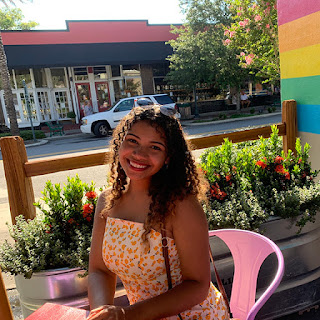
Interview with Ainhoa Palacios, Summer 2021 Flash Fiction Contest Runner Up

Tuesday, January 11, 2022

Today I'm excited to interview Ainhoa Palacios, runner up in our Summer 2021 Flash Fiction Contest. Make sure you read her story Chola and then come on back to read the interview.

First, let me tell you more about Ainhoa:

Ainhoa Palacios was born in Lima, Peru, and moved to the US at the age of six where she was raised by her mother, Abue, and sister. She graduated from the University of South Florida with a B.A. in journalism but soon after remembered it was a different kind of storytelling she loved.

Since, her work has been long-listed in Fish Publishing’s Short Memoir contest, come as a finalist in Sunspot Literary Journal’s Rigel 2021 competition, and appeared in publications like Somos En Escrito.

Ainhoa currently lives in Shenzhen, China with her two dogs—a wild-eyed husky and tripod miniature pinscher.

To connect with Ainhoa, follow her on Instagram @noah_pal_.

--- Interview by Nicole Pyles

WOW: First, congratulations on winning runner-up! I was pulled in immediately with your story. What was the inspiration behind this story? 

Ainhoa:
In recent years I have started exploring my own experience of growing up as a Latina immigrant in the US. One of the first stories I wrote surrounding this theme was titled "Gringas"—a slang term often used in Latin countries to describe an English-speaking foreign woman (usually a white woman). From that story, the word 'cholas' naturally came next. The story which pulls from my own experiences of wanting to have straight hair and refusing to wear hoop earrings is a reflection of that. I wanted to touch on that sensation of being a teenage girl, feeling the pressure to fit in, while also trying to avoid falling into certain categories. 

WOW: I think you did a beautiful job portraying that pressure and internal struggle. I thought it was fascinating how you chose 2nd person to tell this story. What made you decide to write it in this way? 

Ainhoa: 
What often happens when I begin a story is I just begin without giving much thought to the point of view, but rather the feel and content. I’m just trying to get words on paper. But once I've gotten a general idea down, I'll play with changing the tense. Just trying different ways in my head to see if one works better. This particular story was written in 1st person but something wasn't quite working. I felt it was very dull. I randomly started playing with telling it in 2nd person, read it to a friend who loved it, and knew that was it! 

WOW: What a moment! It's so unique. I see that you graduated with a degree in Journalism! How did this experience prepare you for creative writing? 

Ainhoa:
My first instinct is to tell someone how journalism pushed me in the direction of creative writing by showing me the type of writing I didn’t want to do. But that’s not all true. The part of my journalism degree, the experience I loved was telling someone’s story creatively. With heart. I think in some ways, all the interviewing, has helped me to think of the kinds of details I want to include in a story. Details I had to notice myself while interviewing someone just for context if nothing else.

WOW: It probably helps you develop such strong characters too! How do you know when a story is done? 

Ainhoa: 
This one is difficult, and to be honest, I am not sure it ever truly is. I have left stories for months and when I go back to reread them, I’ll almost always find something I want to change. However, for the sake of going forth, I have started to find a comfortable spot to stop. The place where I am comfortable showing the story to someone, receiving feedback, either taking that feedback or deciding not to, and then letting the story go. If it is something I am proud of, can stand behind, I’ll call it complete with, of course, the possibility of always being revisited or expanded in the future. 

WOW: I feel the same way - there's always something for me to change in a story. It's hard to call it truly complete! What are you currently working on that you can tell us a bit about? 

Ainhoa: 
"Cholas" is part of a collection of shorts that have been my main focus this year. Every story is in some way connected to growing up Latina in the US and the themes surrounding it like the feeling of displacement, searching for an identity, and mending broken relationships. I hope the collection can see publication one day! 

WOW: I hope so too! Congratulations again and we look forward to seeing more from you!

Read More »

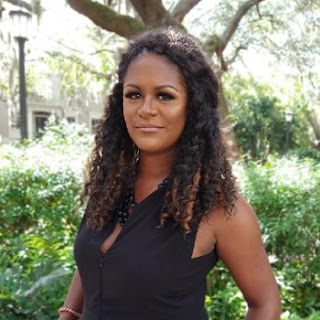
Interview with Kiara Almanzar, Runner-Up in the WOW! Summer Flash Fiction Contest

Tuesday, January 04, 2022
 
Kiara’s Bio: 

Part-time pop music enthusiast and full-time bookworm, Kiara is a junior at the University of Central Florida. Aside from writing short stories and working on her first novel, Solace At Your Door, Kiara writes nonfiction articles for Her Campus UCF. She hopes to one day publish several novels and work in public relations in the entertainment industry. You can follow her on Instagram (@almondzar) or Twitter (@gotosleepkiara) to keep up with her writing journey. 

If you haven't read "A Haunted Girl Meets Her Fate," click through and experience her story.  Then come back here to read about how Kiara created it.

----------interview with Sue Bradford Edwards----------

WOW: What inspired “A Haunted Girl Meets Her Fate”? 

Kiara: Like most of my writing, A Haunted Girl Meets Her Fate is inspired by fractions of whole pieces. I took a lot of inspiration from Wuthering Heights by Emily Bronte, Shastra Deo, interviewed by Sumudu Samarawickrama in Liminal Mag, The Haunting of Hill House Netflix Original, and Watch Over Me by Nina LaCour. 

I took a lot of inspiration from my own life as well, and the moments where my depression wouldn’t let me get out of bed. In those moments, I felt a lot of grief, but I could never really explain why to other people. The main character, Kaya, is haunted by memories of her past manifesting into this entity that reminds her both that she is not alone and that she is as alone as she’ll ever be. I had a lot of moments in my life where I felt the same: I was content with being alone but the loneliness was suffocating. 

WOW:  Thank you for discussing mental health so openly.  It is still such a taboo topic in our society. How did you decide on the vehicle of a ghost story to tell this story about mental health? 

Kiara: I became obsessed with the idea of ghosts as a tragedy rather than as frightening. As a horror movie fanatic, I’ve always noticed that ghosts present a certain kind of tragedy that the protagonists in the film never quite understand. Ghosts are ultimately reminders of the past-- no matter how big and scary you make them out to be. 

WOW:  A big part of writing is rewriting. How did this story change during the rewrite phase? 

Kiara: This story is actually a cut-down version of an unfinished, longer story of a girl who is haunted. The longer story was meant to give the ghost more character, weaving into Kaya’s life like she belonged there, becoming the second half of Kaya herself. However, I could never quite get it to work. When I cut it down, I felt that the story I wanted to write had to be much simpler than what I had been trying to come up with. 

Sometimes the less that is said, the better. 

WOW:  According to your bio, you write both nonfiction articles and short stories and you are working on a novel. What do your immediate writing plans include? 

Kiara: I like to write nonfiction commentary articles on the side because, like most writers, my brain does not shut up! I’m currently working on the second draft of my novel, Solace at your Door, which has been my baby since I left high school. I guess, for now, I’m just trying to write as much as I can, regardless of whether anyone listens. Sometimes an idea for a story pops up and I write quick notes, but my novel is really my long-term focus as of now. 

WOW: I think a lot of writers know what you mean about your brain never shutting off.  Many of our readers create work that somehow reflects their daily life. How does your experience as a student inform your writing? 

Kiara: As a student, there are so many highs and lows of daily life. I go to school away from home, and while I’ve cultivated my own life with my own friends at school, I still sense an immediate loneliness when I am on my own for too long. Learning to be by myself has made me a more introspective person and I’ve learned that my aloneness and loneliness are separate.

WOW: That's probably something that a lot of writers can identify with as so many people are isolating.  Thank you for taking time out of your holiday to share your insights with our readers.  Good luck on your upcoming semester!

Read More »

Interview with Dawn McCaig: Spring Flash Fiction Runner Up

Tuesday, September 28, 2021


Dawn McCaig is an Assistant Crown Attorney who prosecutes all manner of serious crime. She escapes the stress of her professional life by writing fiction. She lives in Nipissing District, Ontario, Canada. 

If you haven't read her story, "In Bloom," take a moment to do so and then come back to learn about how she writes.    

------interview by Sue Bradford Edwards------

WOW: “In Bloom” is such a chilling piece. What was the inspiration behind this story? 

DawnMy work as a criminal prosecutor has definitely influenced my writing. I’ve never had a case with a body buried under the front shrubs, but I do deal with chilling fact patterns, including homicides, on a regular basis. My professional life is very satisfying, but it immerses me in the worst the world has to offer, so I’m not surprised my imagination treads dark waters. 

WOW: Your work definitely seems to fuel your writing. Revision is a vital part of the writing process. How did “In Bloom” change from the first draft to the last? 

DawnThe first draft of the story had looser language; it was too « flowery. » I cut around 100 words, and when I read it now I still see 10 more I probably should have tossed. 

WOW: Because it is so short, many details don’t make it into a flash fiction story. We don’t know, for example, this history of Miranda and Nigel’s marriage. How did you decide which details to include in the story? 

DawnThe word limit made me a vicious editor; if something didn’t further the plot or theme I (hopefully) deleted it. I left most of the details of the marital disputes out to create some moral ambiguity - should Miranda have killed Nigel? Did he deserve it? From her perspective, yes to both, but we’ll never really know. 

WOW: Individual words in your story, including exhume, bone-white, and sinew, help create the dark tone. What advice do you have for our readers about using word-choice to create a mood? 

DawnI’m not sure I have a lot of advice to offer, but I do think it’s good practice to figure out the mood you want to evoke with your work, and to sit in that mindset for a few minutes before you start drafting. 

For this story, I reached for language that describes graveyards and corpses because they provoke feelings of darkness and unease. 

WOW: What are your writing plans for the future? Can you tell our readers where else they can see your work? 

DawnConfession: I love writing fiction, but I have only just started letting other people read it. This is my first published piece and I am beyond delighted. I do have a draft of a novel nearly finished, so we’ll see what becomes of it. It’s a courtroom murder mystery, of course.

WOW:  Good luck finalizing the draft of your novel!  Murder and a mystery seem to be right up your alley. 

Read More »

Flash Fiction Contest Tips: Avoid Passive Voice

Thursday, March 04, 2021

Hello WOW Readers! I have been one of the first-tier contest judges for WOW’s quarterly flash fiction contest for over a decade, and it has been a huge pleasure to read your stories. I am writing this blog series on Flash Fiction Contest Tips to help you strengthen your flash writing and maybe even place in one of our contests! Tips are based on our scoring criteria and craft trends I’ve seen throughout the decade. 


TECHNICAL is one of the scoring categories for the flash fiction contest, and one criterion within that category is overuse of passive voice (as opposed to active voice). 


Passive vs. Active Voice

Active

Passive

They receive a letter.

A letter is received by them.

We write books.

Books are written by them.

She could have gone to Rome last year.

Rome could have been visited last year.

I baked a batch of cookies.

A batch of cookies was baked.

He reads sports memoirs.

Sports memoirs are read by him.


In a sentence in active voice, the subject is doing the action: “I write stories.” In a sentence in passive voice, the object becomes the subject, but isn’t actually doing anything: “Stories are written by me.” Passive voice usually weakens your writing and makes it even wordier. 


In the example above, the active sentence (I write stories) is only three words, whereas the passive sentence (stories are written by me) is five words. And, as you know, strength and economy of words is crucial in flash fiction. 


Passive voice isn’t always wrong, but it’s usually not the best way to craft a sentence, particularly in creative writing. Writers more frequently use it in scientific writing when they’re trying to keep themselves out of their reports to appear more objective. 


When you truly don’t know the subject of the sentence – or the doer of the action – then passive voice can be a good option. For example, if you don’t know who wrote the stories, you could write “the stories were written.” You could also write “somebody wrote the stories,” but that calls attention to the “somebody” which you may or may not want to do. 


In a previous Flash Fiction Contest Tips post, I discussed how to eliminate unnecessary adverbs in a sentence. That example left us with this sentence: 


“She stood and grabbed the sword from the stone, which was placed on top of a cliff where a storm was brewing.” 


Can you spot the passive voice? 


“…was placed on top of the cliff” is an example of passive voice. We don’t know who placed it there, but by writing in passive voice, the sentence is wordier and weaker than it could be. So, let’s consider ways to strengthen this sentence while retaining its meaning. 


Example: “A storm brewed at the top of the cliff where she stood and grabbed the sword from the stone.” 


What are some other ways you could strengthen this sentence? 


Tips brought to you by Anne Greenawalt, who keeps a blog of journal entries, memoir snippets, interviews, training logs, book reviews, and profiles of writers and competitive sportswomen. She is a writer for WOW! Women on Writing, Trail Sisters, and Story Terrace. She has a master's degree in Creative Writing: Prose from the University of East Anglia in Norwich, England and a doctorate in Adult Education from Penn State University. She is also a competitive swimmer, a trail adventurer, a dog lover, and a new mom. Tweets at @dr_greenawalt.

Read More »

Flash Fiction Contest Tips: Eliminating Adverbs

Friday, February 12, 2021

Hello WOW Readers! I have been one of the first-tier contest judges for WOW’s quarterly flash fiction contest for over a decade, and it has been a huge pleasure to read your stories. I am writing this blog series on Flash Fiction Contest Tips to help you strengthen your flash writing and maybe even place in one of our contests! Tips are based on our scoring criteria and craft trends I’ve seen throughout the decade. 


TECHNICAL is one of the scoring categories for the flash fiction contest, and one criterion within that category is overuse of adverbs. Adverbs are words that modify or describe verbs, adjectives, clauses, or other adverbs. 


If a story contains too many unnecessary adverbs – and many of them are unnecessary, especially in a creative work – it hurts your story’s rating and could make or break your story’s chance of getting passed to the contest’s guest judge. The good news is that adverbs are an easy item to edit out of your story! 


Consider the following sentence: 

She bravely stood and unflinchingly grabbed the sword from the stone, which was precariously placed on top of a cliff where a storm was quickly brewing. 

Sure, this sentence has a lot of tension, but it is a mouthful with all of the adverbs. The adverbs not only make it wordy, but they do more to tell than show the scene. The bottom line is that they weaken the writing. Adverbs often – but not always – end in -ly, which can make most of them easy to spot. Some common adverbs that don’t end in -ly are quite, well, and very. 

Let’s revisit the sentence above. How many adverbs can you spot? 

She bravely stood and unflinchingly grabbed the sword from the stone, which was precariously placed on top of a cliff where a storm was quickly brewing. 

There are five in this short sentence. So, what can you do about it? The easiest, and often the best, option is to just eliminate the unnecessary ones. Poof! They’re gone: 

She stood and grabbed the sword from the stone, which was placed on top of a cliff where a storm was brewing. 

Hooray! We just eliminated four unneeded words. (Unless we choose to further edit this sentence, “where” is necessary here.) In flash fiction, as you know, word count is limited, so you want to make every word count. There are additional ways to reduce the wordiness in this sentence, but that may be a tip for another day! 


Tips brought to you by Anne Greenawalt, who keeps a blog of journal entries, memoir snippets, interviews, training logs, book reviews, and profiles of writers and competitive sportswomen. She is a writer for WOW! Women on Writing, Trail Sisters, and StoryTerrace. She has a master's degree in Creative Writing: Prose from the University of East Anglia in Norwich, England and a doctorate in Adult Education from Penn State University. She is also a competitive swimmer, a trail adventurer, a dog lover, and a new mom. Tweets @dr_greenawalt.

Read More »

Why Should I Enter That Contest? This Post May Just Convince You!

Thursday, July 30, 2020
Why should I enter that contest? You’ve probably thought this while reading a contest announcement (maybe even WOW!'s Creative Nonfiction Essay Contest with a deadline of 7/31!) and thinking about the entry fee. Maybe you’ve been eyeing a contest for your novel or for a format or genre you don't usually write to try something new and get some feedback. Whatever your reason for entering a contest, they can build your confidence, improve your craft, and give you publishing credits all in one!

As you know, writing is hard work. It’s easy to become discouraged with each rejection letter. Contests can help ease the pain. One exists for almost any genre, at any ability level. Many come with publication and prize money. When more prizes are offered in any given contest (honorable mentions/runner-ups), more writers receive acknowledgement for their hard work. A winner’s certificate, framed and hanging above your desk, can help remove the sting from an editor who rejects you. Success in a contest can keep you going when publications are lacking.

Not only can contests boost your confidence, but also they can expand the genres you write and improve your skills. Contests are a great place to try that personal essay about your mission trip or a poem about your beachfront home. They give you a reason to type the words in your mind and a deadline to follow. With the deadline looming closer, excuses for not writing—Facebook, watching TV, doing chores —may disappear with a goal to work towards and an ending in sight.

Work on your craft while creating the entry. Try first person if your novel is written in third. Contest pieces are generally shorter and a place to experiment with dialogue or sentence structure. Try a flash fiction competition. (WOW! has one here!) Flash fiction challenges you to write an entire story with a small amount of words. These stories can help you cut out unnecessary adjectives and adverbs that bog down your manuscript.

Remember the slush pile you fear and dread? When you enter a contest, there isn’t a slush pile. Your entry will be read and considered seriously. It doesn’t matter if you have an agent or if you’ve only published stories for your family. Everyone has an equal shot at having her voice heard in a contest.

The greatest benefit to contests is they may provide you with credits to put in a cover letter or in the bio of your indie published book. If you entered chapter one of your novel in a yearly competition, and it won first place, tell the editor in your cover letter or your newsletter followers in your latest edition. This win means three things: you can complete a manuscript, you care enough to polish it and send it off, and someone, besides your mother or significant other, thinks your writing is good!

Just a few tips before you go contest crazy. Read the guidelines carefully. Many judges narrow their entries before even reading because one rule, such as a misplaced heading, wasn’t followed. Watch out for contest fees that are high, but the prizes are low. Finally, make sure if the prize is publication, you want your work to appear in this media. When you enter, you are usually agreeing to have it published.

The other day, I received an email from one of my WOW! novel writing students, and she asked me if I knew of any writers who were having trouble focusing during the pandemic. Her particular query was riddled with anxiety because she said she seemed to have more trouble now (five months into it) than at the beginning. I wrote back immediately and told her, "You are not alone!" So while writing this piece for today, I kept thinking: if you're having trouble writing--you can't bring yourself to work on your memoir or your novel is dysopian and real life is too similar--see if you can find a contest for a short piece and work on only that for a while. As I've been saying since March, you have to give yourself grace during this time because you've literally never faced life during a pandemic before. Maybe this is the time to try your hand at writing a flash fiction piece and entering it in a contest. Then you can go back to your novel.

The next time you are thinking, Why should I enter that contest? Remember, winning may be the encouragement you’ve been looking for or the break you’ve been waiting on.

Margo L. Dill is a writing coach and instructor (and managing editor) for WOW! Women On Writing. Check out her classes on the classroom page. The next one starts on August 7. She is also a judge for WOW!'s contests. Find out about her own writing here
Read More »

Interview with Stephanie Scissom, Spring 2019 Flash Fiction Contest Runner Up

Tuesday, October 29, 2019
Stephanie’s Bio:

Stephanie Scissom hails from Altamont, TN. She plots murder by day and works nights in a tire factory. She’s published in romantic suspense and horror and is currently working on an apocalyptic trilogy.

If you haven't done so yet, check out Stephanie's story, "Murmurations." and then return here for a chat with the author.

WOW:  What was the inspiration behind “Murmurations”? What led you to write this intriguing story?

Stephanie: I work night shift and as I was coming home one morning, I saw a beautiful, complex murmuration over a field. I pulled over to watch it for awhile. I wanted to try a story that pulsed like they did. They move like the waves of the ocean.

WOW: A big part of writing flash fiction is getting the right balance between what is revealed and what is hidden until just the right moment. How did you create this balance in your story?

Stephanie: I wanted the reader to think she was a runaway returning home after some time-- details about how her parents had changed, how her home had changed, her wistfulness and lack of memory.

WOW: You certainly succeeded in fooling this reader! Your final line in “Murmurations” is so powerful. How did you know this was the right ending?

Stephanie: I wanted her thoughts to move like the starlings--strong at times, then weaker, surging and then escaping her. She confronts a very grim memory, then her thoughts retreat, calming her. I have an editor friend who told me she cried at the last line and I knew I wanted to stop there.

WOW: What excellent advice. What advice do you have for our readers who are new to writing flash fiction? 

Stephanie: I think flash fiction is such a great learning device, no matter what length of story you're writing. You learn what's important to keep and cut the unnecessary. I write a lot of flash. One recent story was only 42 words long, and I do a lot of drabbles (100 words exactly).

WOW:  Only 42 words would definitely be a challenge.  Tell us about your future writing plans. Where should our readers look for your work?

Stephanie: I'm working on an apocalyptic trilogy about a battle of angels--a tragic, desperate Lucifer battling to save the only person he still cares about-- his tortured wife, Abigail. Details about forthcoming publications can be found here on Facebook. 

WOW:  Good luck with your trilogy and your other work which will definitely inspire our writers to try their hand at horror and other spooky stories.

Interviewed by Muffin blogger and WOW instructor Sue Bradford Edwards.


Read More »
Powered by Blogger.
Back to Top