Showing posts with label Denise Jaden. Show all posts

Friday Speak Out!: The Fantastic Fun of Writing in Series

Friday, April 20, 2018
by Denise Jaden

The title of this post is a bit tongue-in-cheek. You see, I’m about to launch my first series of connected novels, and while there are some elements of writing it that have definitely been enjoyable, I would say it would stretching it to call the process “fun.”

Even if it has been an overwhelming endeavor, I have learned so much about writing and characters and plotting through the process that I don’t regret it. I remember with the first book I published, a mystery, I swore I would never write a mystery again, as I felt my brain was simply not big enough to contain all the important elements. Of course, like the pain of childbirth, I quickly forgot this vow, and soon launched into writing another mystery.

Writing a series was taxing to my brain capacity in the same way, but multiplied by about a hundred. However this time I’m not vowing to never try it again. Instead, I’m focusing on what I’m learning, and what might make the process easier next time. I wanted to share these takeaways, in case they are helpful for others.
1. Make sure you’re working with characters you really love, and that you know them inside and out. Before writing my series, I hadn’t realized how little I had known some of my former characters. With Kass and Eli in my series, I can not only tell you the superficial stuff, like what they eat for breakfast, but also how their biggest wounding in their lives still flavors their speech and actions. Knowing these characters well has helped keep my interest alive through seven books, which is important, because if I lose interest, my readers certainly will. 
2. Use software that will help you keep everything straight. For me, this software is Scrivener. In the past I’ve heard many-a-writer tout the divine and ethereal all-powerful qualities of Scrivener. I had it on my computer, and used it from time to time, but didn’t think it offered much more than my usual writing software, Microsoft Word. When undertaking the task of writing a whole series, though, I found a whole new respect for Scrivener. I can divide my books into sub-folders upon sub-folders, and scenes and chapters, and see at a glance what is in my entire seven books. Not only that, but I can easily look up if I’ve already used a character name in any of the books, or use the project replace feature to quickly replace words or names throughout the entire series. Plus, I can easily format my books, including header images, pretty scene breaks, and small caps at the beginning of chapters, right from the Scrivener Compile tool. As you can tell, I’ve joined Team-Scrivener-Love, but for good reason! 
3. Write out of order, if it helps. I’ve always been a linear writer, writing a novel in order from start to finish. But it seems I often have to rework my beginnings many times after reaching the end, in order to get them right. With a series, I’ve felt more freedom to jump around throughout the different books I had planned, and write scenes as they came to me. This, I think, helped flavor my characters and helped me get to know them in a deep way, so my early chapters of early books hinted at the depth of these characters. This helped to create a thread of growing characterization over time.
Those are a few of my tips for writing series, but because this is my first and I’m by no means an expert, I would LOVE to hear any other thoughts and suggestions of helpful practices. It’s still a little overwhelming for me to even think of trying to embark upon a new series, but I am starting to see how it might be considered fun…some day.

* * *
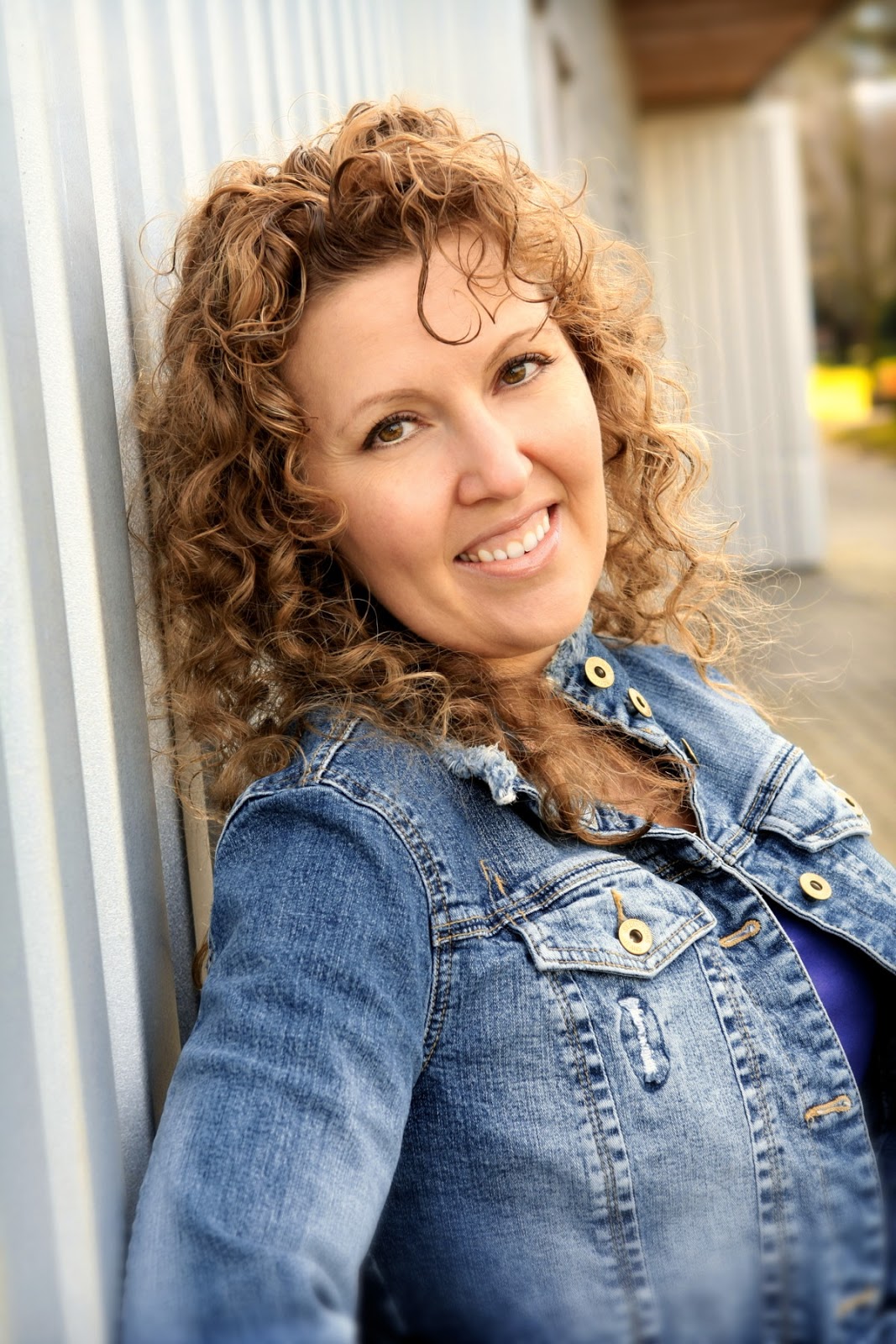
Denise Jaden’s novels have been shortlisted or received awards through the Romance Writers of America, Inspy, and SCBWI. The first draft of her debut novel, Losing Faith, was written in 21 days during NaNoWriMo 2007 and she loves talking with writers and students alike about her Just-Get-To-The-End fast-drafting process.

Jaden’s other young adult novels include Never Enough, Foreign Exchange, A Christmas Kerril, Avalanche, and Outcast. Her non-fiction books for writers include, Writing with a Heavy Heart, Fast Fiction, and Story Sparks: Finding Your Best Story Ideas and Turning Them into Compelling Fiction.


In her spare time, she homeschools her son, acts with the Vancouver film industry, and dances with a Polynesian dance troupe. Find out more at denisejaden.com.

~~~~~~~~~~~~~~~~~~~~~~~~~~~~~~~~~~~~~~~~~~~~
Would you like to participate in Friday "Speak Out!"? Email your short posts (under 500 words) about women and writing to: marcia[at]wow-womenonwriting[dot]com for consideration. We look forward to hearing from you!
~~~~~~~~~~~~~~~~~~~~~~~~~~~~~~~~~~~~~~~~~~~~
Read More »

Friday Speak Out!: Fun Places to Find New Stories

Friday, August 04, 2017
by Denise Jaden

I am a firm believer that the seeds of stories and characters can come from absolutely anywhere. One of my novels, for instance, was sparked during a memorial service for a good friend. Another was sparked when I came home to find that my roommate had left our house in an odd state of disarray. Yet another was sparked in the first five minutes of a movie I was watching. I speculated on where the movie was going. I was completely off-base, but that was only to my benefit, because I was left with my own unique story idea to pursue.

When I speak to other writers, one of the first questions I ask is, “Where do you get your best story ideas?” Time and time again, my mind is opened to new avenues, like the man who was inspired by war stories at his grandfather’s deathbed, or the young girl who never met an animal whose story she didn’t want to tell.

Wherever I went, I started asking myself, “What if I had to come up with a story or character idea from these surroundings? What would it be?” These so-called “forced” ideas have become some of my most inspiring. I think our creative minds flourish more when they are pushed than they do when we sit back waiting for ideas to flood our minds.

If we rush through our lives without paying attention, we may miss these opportunities. I have taken the time to build my observational muscles. I am the perfect person to write about observation because I was not born with this natural ability. I truly have had to learn it. You know during political elections when political parties flood streets and lawns with signs and posters and buttons for their candidates? Yes, well, more than once my husband has asked me who I plan to vote for, and I’ve replied, “Oh, is there an election coming up?”

That’s how blind I can be to the world around me if I don’t actively practice the skill of observation. Being a good observer and learning how to catalog the ideas around you is a little like becoming a collector — but not in order to fill up your house with useless knickknacks. You become a collector of characters, settings, motives, and obstacles.

To train yourself to be more observant, find something to open your mind to every day. Foster curiosity. Read something every day, whether it’s a newspaper ad, a poem, a short story, or anything. And actively watch people every day. Write down what you see, what interests you about people or places, and what questions roam in your mind after spending time observing people.

When you observe, consider the following ideas and questions:

• Practice really seeing the details around you. Set your watch for a minute or five minutes, look around yourself with purpose, and then when the time is up, close your eyes. How much can you remember?

• Do this with a buddy. One person keeps his or her eyes open and asks the other questions about your surroundings. Practice seeing, noticing, and remembering the little details.

• Go somewhere different regularly. Don’t just stick to the same routines. Purposefully visit a new coffee shop, restaurant, or gas station. Drive home from work using an alternate route and sit in a different chair in your home or office. How does this change your perspective or open your eyes to new details?

Finally, during your observations, or immediately after, make detailed notes. I encourage you to jot down everything, and circle anything that immediately resonates as something you think you’ll one day want to come back to. Take photos of interesting places, or, if you’re sneaky enough, of interesting people.

Resolve to take the time to be open-minded about the world around you. Ask questions, notice problems, and be curious. By building up your observation muscles, you’ll never again be stuck for new story ideas.

* * *
Denise Jaden is the author of the new book for writers, Story Sparks: Finding Your Best Story Ideas and Turning Them into Compelling Fiction, as well as the NaNoWriMo-popular guide, Fast Fiction, and several critically-acclaimed fiction titles. She is a sought-after speaker, motivating writers to find their own best story ideas, and then stirring up the drive to write them. She lives just outside Vancouver, BC with her husband and son. Find out more at denisejaden.com
~~~~~~~~~~~~~~~~~~~~~~~~~~~~~~~~~~~~~~~~~~~~
Would you like to participate in Friday "Speak Out!"? Email your short posts (under 500 words) about women and writing to: marcia[at]wow-womenonwriting[dot]com for consideration. We look forward to hearing from you!
~~~~~~~~~~~~~~~~~~~~~~~~~~~~~~~~~~~~~~~~~~~~
Read More »

Friday Speak Out: Choosing a Publication Path (Part Two)

Friday, February 20, 2015
by Denise Jaden

Usually when I meet new or struggling writers, their eyes light up when I mention my experiences working with Simon & Schuster, but when I mention my other publishing routes, their eyes glaze over.

Last week, I shared about some of the benefits and challenges I have seen in working with large and small traditional publishers. This week I’ll offer some insight into Digital Imprints and Self-Publishing.

Digital Imprints:

These imprints (some birthed by The Big Five publishers) generally focus on digital versions of books. They may simultaneously produce print copies, but usually printed on demand, rather than in mass quantities. My latest young adult novel, Foreign Exchange, was published by the digital imprint Evernight Teen.

Benefits: This publishing method is fluid, and often those working behind the scenes are forward thinkers. Royalty rates are often higher. You may get to know most people at the publisher, which can feel very relational. There is a sense of openness toward new ideas for marketing and promotion, and digital publishers may be willing to take a chance on an unusual story because there is less of an investment risk to do so.

Challenges: Digital imprints may offer small to no advance payment to authors, and editing efforts will be lighter. They’re relatively unknown outside of writing/publishing circles. Review bloggers may be hesitant to review books from digital imprints, especially if it means reading via e-galley, rather than a print book. It can be more difficult to get the word out about a book with a digital imprint simply because of the lack of familiarity of the publishing name.

Self-Publishing:

This includes any avenue in which the author must pay, or use their own resources, in order to have their books produced. My first nonfiction writing book, Writing with a Heavy Heart was self-published via KDP, Smashwords, and Create Space.

Benefits: Many of the benefits of self-publishing fall under the area of control. You as the author/publisher control how much and what quality of editing your books will receive, what the book will look like artistically, how and where it will be sold, and how you will promote it. Most of the profits, after expenses, will be yours alone.

Challenges: With self-publishing, many of the benefits can also be viewed as challenges. Being in control of every aspect of your books also means you are responsible for every aspect. You’ll need to hire your editors, formatters, cover designers, and promotional team, or take care of these aspects yourself. The professionals you hire do not have a vested interest in your book, so it is up to you to make decisions to give your book the best chance in the marketplace.

As you can see, publishing is no longer a one-size-publisher-fits-all landscape. Knowing the benefits and challenges ahead of time will hopefully help you navigate the changing terrain.

From your experience, are there other benefits or challenges to the publishing options I’ve listed? I’d love to hear about them in the comments!

* * *
Denise Jaden's novels have been shortlisted or received awards through the Romance Writers of America, Inspy, and SCBWI. The first draft of her debut novel, Losing Faith (Simon & Schuster 2010), was written in 21 days during NaNoWriMo. Her other fiction includes Never Enough (Simon & Schuster 2012) and Foreign Exchange (an Editor’s Pick with Evernight Teen). Her first non-fiction book for writers, Writing with a Heavy Heart, includes clear guidance and practical exercises to help writers get to the heart of their stories. Her second non-fiction book, Fast Fiction includes tips on constructing a story plan, as well as daily inspiration to keep writers writing, regardless of when the mood strikes. Denise spends most of her time home-schooling her young son (who is also a fast-drafter of fiction) and dancing with a professional Polynesian dance troupe.
~~~~~~~~~~~~~~~~~~~~~~~~~~~~~~~~~~~~~~~~~~~~

Would you like to participate in Friday "Speak Out!"? Email your short posts (under 500 words) about women and writing to: marcia[at]wow-womenonwriting[dot]com for consideration. We look forward to hearing from you!

~~~~~~~~~~~~~~~~~~~~~~~~~~~~~~~~~~~~~~~~~~~~
Read More »

Friday Speak Out!: Choosing a Publication Path (Part One)

Friday, February 13, 2015
by Denise Jaden

While reading an article on the WOW Blog about the varied options in publishing today, I considered my own position of experience. I hope my thoughts will help to shed some light on the options, and each of their benefits and challenges. These are generalizations based only on my personal experiences.

Traditional Publishing – Large Press:

1. The publishers we refer to as The Big Five include Hachette Book Group, HarperCollins, Macmillan Publishers, Random House (including Penguin), and Simon & Schuster. These large publishers release a huge number of books each year. My first two young adult novels, Losing Faith and Never Enough were published by Simon & Schuster's teen imprint, Simon Pulse.

Benefits: One of the most obvious benefits of working with a big traditional publisher is the prestige that comes with it. Most acquaintances will recognize the name of your publisher and respect your work for having their name attached. Your book contract is likely to come with a larger advance royalty payment than if you publish with a small or digital publisher. These large publishers have skilled editors, publicists, and salespeople on staff.

Challenges: If your book is not considered a “Big Book,” you may find it hard to get noticed within the sea of authors your large publisher represents. Sales of a current book will likely influence your ability to contract future books and royalty rates are often on the low side. Often authors have little control over sales and marketing strategies concerning their books. Just like it takes a lot more time and effort to redirect a large ocean liner than it does to turn a rowboat, it may take longer for big publishers to change their strategies to meet a changing market.

Small Press:

2. When I talk about small presses, I’m talking about the many publishers and University Presses that produce print copies of books in bulk at no cost to the author. My second nonfiction book for writers, Fast Fiction, was published by New World Library.

Benefits: Authors will still likely receive some advance royalty payment from a small press, and royalty rates may be slightly higher than with a large publishing house. With a small press, you will likely have an ongoing communicative relationship with your editor. You may also have great communication with a publicist, salespeople, and possibly even the top dogs at the publisher. Publicity and marketing ventures are often more fluid, and they may approach more unusual marketing avenues than the ones the bigger publishers have on their regular roster.

Challenges: While you may enjoy working with your small publisher, it’s possible that your mom and best friend and writing group have never heard of them. Editing efforts may be lighter than those with a large publisher, and you don’t often see books with small presses advertised in national T.V. or magazines.

Join me for Part Two of this article next time, when I’ll discuss the benefits and challenges of Digital Imprints and Self-Publishing.

* * *
Denise Jaden's novels have been shortlisted or received awards through the Romance Writers of America, Inspy, and SCBWI. The first draft of her debut novel, Losing Faith (Simon & Schuster 2010), was written in 21 days during NaNoWriMo. Her other fiction includes Never Enough (Simon & Schuster 2012) and Foreign Exchange (an Editor’s Pick with Evernight Teen). Her first non-fiction book for writers, Writing with a Heavy Heart, includes clear guidance and practical exercises to help writers get to the heart of their stories. Her second non-fiction book, Fast Fiction includes tips on constructing a story plan, as well as daily inspiration to keep writers writing, regardless of when the mood strikes. Denise spends most of her time home-schooling her young son (who is also a fast-drafter of fiction) and dancing with a professional Polynesian dance troupe.
~~~~~~~~~~~~~~~~~~~~~~~~~~~~~~~~~~~~~~~~~~~~

Would you like to participate in Friday "Speak Out!"? Email your short posts (under 500 words) about women and writing to: marcia[at]wow-womenonwriting[dot]com for consideration. We look forward to hearing from you!

~~~~~~~~~~~~~~~~~~~~~~~~~~~~~~~~~~~~~~~~~~~~
Read More »

Friday Speak Out!: Why Try NaNoWriMo?

Friday, October 03, 2014
by Denise Jaden

Hundreds of thousands of people from around the world take part in National Novel-Writing Month’s fifty-thousand-word-novel-in-a-month challenge each November. There are many naysayers who don’t believe a quality novel can be written in such a short time. It’s true, you will not come out on the other side of November with a beautifully-polished, ready-to-sell manuscript. But here are some valid reasons for focusing on word count for a month, setting a challenging goal, and giving fast-drafting a shot.

1. While many of the counted words you write while fast-drafting may not seem great, there is always the option to revise. You can’t revise a blank page, but you can revise 50,000 words of story, no matter how bad they are.

2. The practice of fast-drafting encourages people to write every day, whether they feel their muse and are on a “writing high” or not. During the down times, the subconscious mind often kicks in to offer solutions you may have never thought of if you weren’t pushing through on a difficult writing day.

3. Many writers spend years drafting a book, only to discover it has a major flaw or a lack of marketability. Fast-drafting allows writers to get the bones of their stories down quickly, step away from them, and gain perspective about their potential before pouring too much blood, sweat, and time into revision.

4. Momentum makes writing easier. Staying with your story every day may cause you to dream about your characters. You may have thoughts of your characters when you’re on the bus or in the grocery store. Keeping immersed in your story will help you constantly come up with new ideas to work into your writing.

Almost every person I talk to has A Great Story Idea, or they started a novel once, but never got around to finishing it. Why not set a challenging writing goal, push through, and make it happen? All you have to lose is a couple of hours a day for one month.

* * *
Denise Jaden's novels have been shortlisted or received awards through the Romance Writers of America, Inspy, and SCBWI. Her newest release, Foreign Exchange (Evernight Teen, Oct. 2014), started as her longest NaNo draft to date (92,000 words!) Her non-fiction book, Fast Fiction includes tips on constructing a story plan that works, as well as daily inspiration to keep writers writing. For those who don’t want to take on the challenge alone, she is running an online Fast Fiction course through the International Association of Journal Writers. Find out more at DeniseJaden.com.
~~~~~~~~~~~~~~~~~~~~~~~~~~~~~~~~~~~~~~~~~~~~

Would you like to participate in Friday "Speak Out!"? Email your short posts (under 500 words) about women and writing to: marcia[at]wow-womenonwriting[dot]com for consideration. We look forward to hearing from you!

~~~~~~~~~~~~~~~~~~~~~~~~~~~~~~~~~~~~~~~~~~~~

Read More »

Friday Speak Out!: Failed NaNoWriMo Attempts, Guest Post by Denise Jaden

Friday, December 13, 2013
If you’ve ever attempted to write a 50-thousand word novel in a month, you’re not alone. In fact, over three-hundred-thousand people around the world set that same goal each year during National Novel-Writing Month. They don’t all finish. As a matter of fact, most don’t finish. I’ve passed the official finish line each year since I started participating in 2007, but that’s certainly not to say all of my attempts have been successes.

There has been, for example, The Year of The Novel We Don’t Speak Of. In 2010, I went into NaNoWriMo without any kind of plan. I had a cool title, a character’s first name, and that was it. I pushed myself to write every day for the month of November, and came out on the other end with 50,000 words of mish-mashed ideas that really didn’t go anywhere. I still love the title, though!

I thought I had learned my lesson. The next year, I started November with a 38,000-word outline. Yes, you read that number correctly. This outline included underlying motivations, and hair colors, and the sound of even the most minor character’s voice. The result: at the end of my month of fast-drafting, I tried to read back my well-plotted novel, and it was the driest piece of rubbish I’d ever laid eyes on. There was no life to any of the characters. They were simply a transferred version of my story from outline to narrative, with really nothing extra.

The following year I went in with a plan that had been partially designed by my agent. I found partway through the month that I just had no love for the plotline of this story. It didn’t feel organic or like it was “mine.” I pushed my way through, forced myself to write it all the way until the end. Then I put it away, stating that “I hate that book!” I didn’t look back at it for A FULL YEAR. But when I did, you know what happened? I actually fell in love with it. With my renewed perspective, I knew exactly what needed changing, and that is one of my favorite books to this day.

I’ve been participating in NaNoWriMo since 2007, and one thing that has been consistent is that I’ve learned something new every year. I’ve put a book together, Fast Fiction, which will be out from New World Library in February. If you struggle with motivation to finish, Fast Fiction includes daily inspirations, things I’ve said to myself over the years, which will hopefully help. If you, like me, struggle with how to go about outlining, my guided brainstorming and Story Plan should help. I can’t say I have all the answers, but I want you to know that you’re not alone if you’re feeling discouraged after this year’s NaNoWriMo attempt, and you should not let it stop you from trying again.

* * *
Denise Jaden's novels have been shortlisted or received awards through the Romance Writers of America, Inspy, and SCBWI. The first draft of her debut novel, Losing Faith (Simon & Schuster), was written in 21 days during NaNoWriMo 2007. Her second novel, Never Enough (Simon & Schuster), took about eight years longer. Her first non-fiction book for writers, Writing With A Heavy Heart: Using Grief and Loss to Stretch Your Fiction, includes a variety of clear guidance and practical exercises to help writers get to the heart of their stories. Her second non-fiction book, Fast Fiction (New World Library) includes tips on constructing a story plan that works, as well as daily inspiration to keep writers writing, regardless of when the mood strikes.

Denise spends most of her time homeschooling her young son (who is also a fast-drafter of fiction) and dancing with a professional Polynesian dance troupe.

~~~~~~~~~~~~~~~~~~~~~~~~~~~~~~~~~~~~~~~~~~~~

Would you like to participate in Friday "Speak Out!"? Email your short posts (under 500 words) about women and writing to: marcia[at]wow-womenonwriting[dot]com for consideration. We look forward to hearing from you!

~~~~~~~~~~~~~~~~~~~~~~~~~~~~~~~~~~~~~~~~~~~~
Read More »
Powered by Blogger.
Back to Top