Showing posts with label writing workshop. Show all posts

Back to School

Wednesday, December 11, 2024


I'm exhausted. I've been debating for several weeks - with myself. I want to go to a writing conference in March. My writing self is shouting, "Yes! Let's go." My practical self is whining (yes, my practical self whines a lot), "But the cost...what about your 9 to 5 job...it's multiple days so you need a hotel room...will it be worth it." My practical self, after years in marketing, is always worrying about ROI.

My family has been on this rollercoaster with me. Despite not being writers, they have listened to my dissection of the workshops, cost, advantages and my decisions to not go...go...no, not go...maybe. They are all encouraging me to go. I suspect so they won't get drawn into any more writing conference discussions.

Last night - the last day of early registration - I did it. There's no turning back now. They have my credit card number. 

Over the course of this seemingly endless debate, I've changed my outlook on writing conferences, classes, etc. My friends and family are involved in careers that cover a wide variety of industries. Yet they all have one thing in common. They all participate in career building events ranging from industry conferences to skills classes to online workshops. So why am I so reluctant?

The main reason may be that I'm the one footing the bill for any career building events I attend. But in reality there are plenty of affordable and even free options out there. I've taken several classes through WOW that made me notice new writing opportunities in my life. There are also classes popping up in my feed and inbox constantly. I also think part of it may be "imposter syndrome". Somewhere deep inside of me I feel I'm not worth the investment.

For 2025 I've decided that one of my goals will be to actively pursue career building opportunities. I'm going to give myself a money and time budget for the year and find a few ways to hone my skills. In the past, I've found that participating in classes and attending talks not only educates me but also gives me a surge of enthusiasm for my writing career. I never thought that these events weren't valuable experiences. They just always seemed to move to the bottom of my to-do list. But for the upcoming year, I'm giving myself permission to pursue these opportunities.

I'll be happy to share how my experiment has gone at the end of 2025.

What about you? Do you invest in yourself? Do you worry about time and money spent?


Jodi M. Webb writes from her home in the Pennsylvania mountains about everything from DIY projects to tea to butterflies.  She's also a blog tour manager for WOW-Women on Writing and a writing tutor at her local university. Get to know her @jodiwebbwritesFacebook and blogging at Words by Webb

Read More »

Tools for Writing the Journey—Within and Beyond

Thursday, June 08, 2023

By Kimberly Lee

You’ve seen the iconic poster—a woman in profile, her right arm raised in a fist while her left hand rolls up her sleeve. She wears a blue work shirt and a red, polka-dot scarf tied around her temples. Eyebrows immaculately sculpted, eyelashes done up, red lip-stick topping it all off.

During the height of the pandemic, my cousin sent around a photo she’d unearthed, of our grandmother with a work crew, wearing that same blue shirt. When I asked my mother about it, she said my grandmother was part of a World War II “ladies’ crew,” and that her work had to do with ball bearings or something. I’d seen the poster a million times, but never knew my grandmother had been a “Rosie the Riveter.” I set out on a mission and eventually found a mug online representing her in this role.

My grandparents were part of the “The Great Migration” of Black people from the Deep South to the northern and western states that took place in the early 1940s. Although their movement was within the same continent, it was epic, because their choice to undertake the journey deeply impacted my quality of life, even though I wouldn’t be born until decades later. I heard about this journey in detail from my grandfather, yet I recently wrote about it from the perspective of my grandmother, who I never knew—she passed away well before I was born. In “Departure,” I take on her voice: “The air is different here. Lighter. It could be that I’ve never been this close to an ocean, never felt the calm mist tickling my skin. Or maybe this is what it feels like to breathe easy, and free.” Those lines were my attempt to capture the emotional journey, the change that seems to be coming from outside conditions but is actually burgeoning from within. Because while my grandparents’ movement was definitely physical, through numerous states from one end of the country to the gorgeous Pacific Coast, I know that faith, perseverance, and fortitude were the true inner gifts of the journey, the qualities they silently nurtured and developed in their own hearts to have the fortitude to make the trip.

Although the narrow definition of a journey is geographical, a movement from point A to B, an emotional component is always present. The richness of the inner adventure compels us to see the journey as a metaphor for countless situations, no physical change of place required. We face challenges, find allies, and overcome obstacles on the way to a final destination. We experience personal growth and development, chances to rise to the occasion, and strength arising from finding our innate gifts. We triumph, determining for ourselves what success truly means.

Joseph Campbell described the well-known archetypal pattern of the hero’s journey in The Hero with a Thousand Faces. While Maria Tatar’s recent The Heroine with 1001 Faces might be seen as a response to that work, it goes beyond it by expanding our view of heroism to include qualities and narrative arcs centering the power of women to effect change. Similarly, the journey of the healer and seeker, along with the journey of integrity, offer fruitful ways to view the universal struggles and joys we face on life’s trajectory. On each of these paths, even if there is physical relocation, the deeper journey always takes place within. The process may be as silent as caterpillars transform-ing within the confines of silky, stationary cocoons. They emerge exquisite and renewed—altogether new creatures—as a result of the inner journey. Containing invisible remnants of the past yet exploding with flight into the future, they affect their own destiny and that of those to come. We are those butterflies.

6th Century Chinese philosopher Lao-tzu said, “The journey of a thousand miles be-gins with a single step.” Through the lens of the heroine’s path, the virgin’s promise, and other narratives, the thousand-mile journey becomes our lives, splayed out across the years of our existence. We look back to see where we’ve been and how far we’ve come, then venture on, knowing that just as fog clears when we move forward, our next steps will be revealed.

Like my grandparents, we don’t need exact certainty to enter uncharted territory. Whether our movement is physical or centered on the journey within, we only have to believe in the possibilities and stay awake to the signs that illuminate our path, guiding us to precisely where we need to be.

***

Venturing Beyond the Hero's Journey - Exploring the Paths of Heroine, Healer, and Seeker by Kimberly Lee
Join Kimberly this summer for a fun and interactive exploration of long-established and recently-outlined journeys. In Venturing Beyond the Hero's Journey: Exploring the Paths of Heroine, Healer, and Seeker, a five-week writing workshop starting June 12th, we’ll investigate these narratives through their appearance in literature, film, poetry, videos, podcasts, and the lives of public figures. Through creative writing prompts, and other interactive exercises and activities, we’ll discover how aspects of these paths exist within our lives and can be used to inform and enrich our own writing projects.
Read More »

The Layers and Shapes of Disquiet (International Literary Program)

Thursday, August 08, 2019


by Christy O’Callaghan

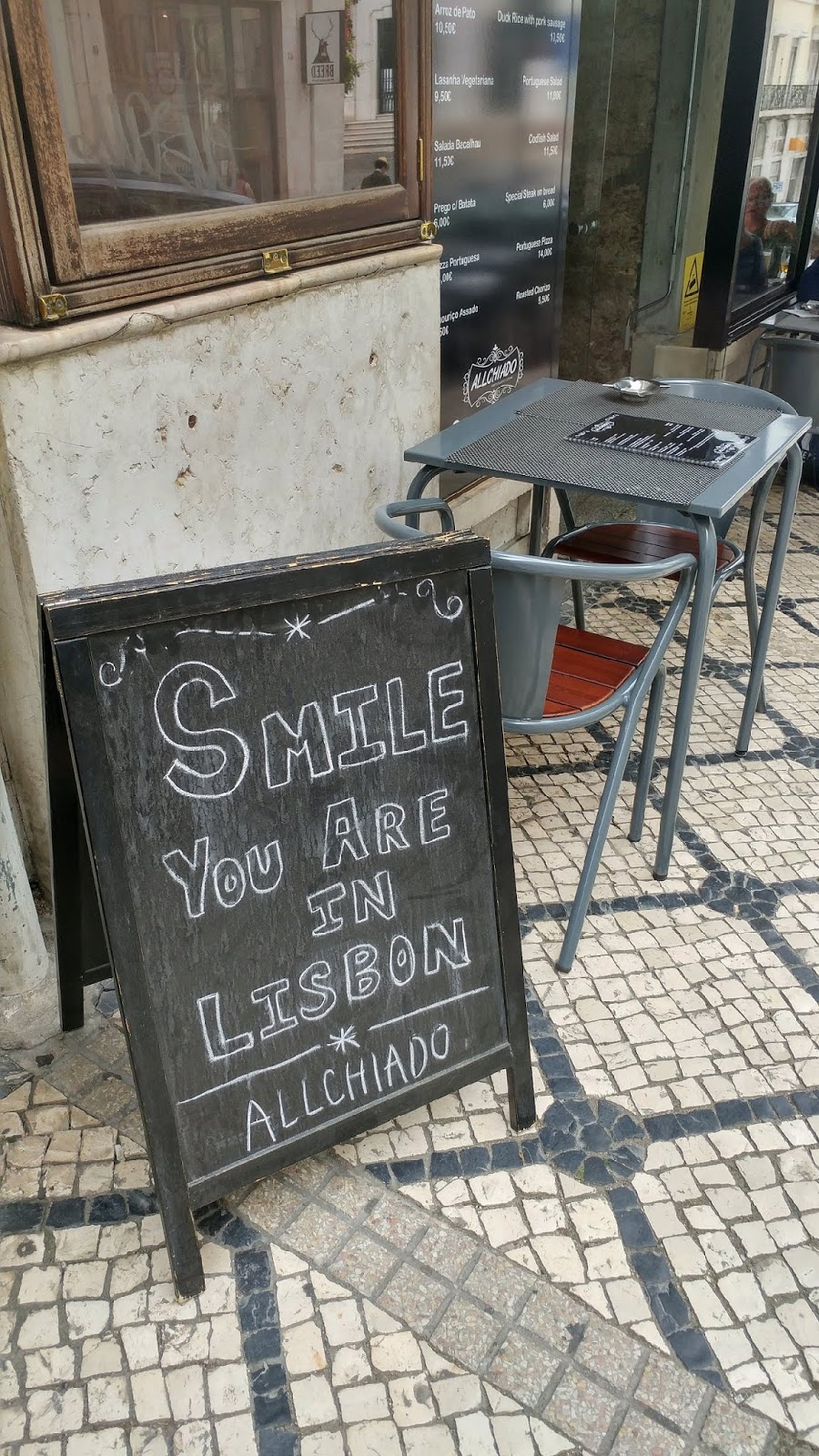
For me, the 2019 Disquiet International Literary Program in Lisbon, Portugal was about three words: layers, shape, and Sophia. If I’d taken the two weeks on my own to go to Lisbon, I would have enjoyed the city, especially the restaurants that let you sit for hours until you beg to pay your bill, the mosaic paths, tiled walls, Fado music, funky bathrooms, and the variety of tiny chairs to fit inside small shops and spaces. However, on my own, I wouldn’t have experienced the amazing workshops, the other attendees, or had the chance to meet local writers.


I took the non-fiction track with writer David Leavitt. We met in the basement of Livraria Ferin, the second oldest bookstore in Lisbon dating back to 1840. Our group always ran long as we shared, supported, and challenged each other. Each day we workshopped two of the attendee's pieces up to thirty pages in length. Our workshop covered accuracy, formatting, storytelling, language, voice, where a writer wanted their piece to go, and sometimes whether the writer wanted it to be non-fiction or fiction. Unlike fiction, non-fiction often includes discussing a writer's life to understand a piece and the direction if can take, so our workshop allowed for that natural discussion. After the workshop, participants often ate lunch together to talk. I haven’t attended many workshops, so I asked, “How does this compare?” Everyone said it was the best they’d ever attended, including some people with MFAs.


The primary workshops met Monday, Wednesday, and Friday mornings; on Tuesday and Thursday, we could take a secondary workshop. I selected Visual Storytelling taught by Pulitzer Prize-winning photojournalist Deanne Fitzmaurice. She taught us storytelling through photographs using layers, focus, light/shadow, the rule of thirds, color pallet, and feel, when to zoom in and when to step back. All aspects of writing but captured through a camera. She told us that as we worked our story would present itself. I find writing is the same way. You start in one direction and end up someplace different.


For me, the common themes that emerged were layering and shape. They appeared not only in my workshops, but on literary tours, in talks about Fernando Pessoa (the author of The Book of Disquiet), the history, and the structure of the Lisbon itself. Viewed from the waterfront, buildings rise like steps from the lower section that the locals call new because an earthquake, a tsunami, and fires destroyed it all in one day in 1755, and climb up to the older and higher sections of this small capital city.

Shape was another major theme. David Leavitt told us we don’t have to kill our darlings, as is often advised. Instead, he said to ask, “Does it ruin the shape of the piece?” I sat in on the Poetry Editing workshop with John Hennessy, the poetry editor of The Common Magazine, and he discussed the shape of a poem and how the white space can evoke a feeling, room to breathe, and yet another layer. This is true for prose as well.

Adding layers and shape to the Disquiet experience were not only the writers leading the workshops and the fellow attendees but the Portuguese writers who held readings and discussions. As an American, it can be difficult to grasp the impact of a true dictatorship. Two years before I was born the forty-eight-year dictatorship ended. My lifespan is the difference between freedom and oppression. For places as old as Lisbon, a three-thousand-year-old city named by a God, forty-four years is a blink of an eye. It’s still fresh in their minds. Three of the female Portuguese writers helped me better understand this layer.

I met Teolinda Gersão as I stood outside the bookshop where she was presenting. “Welcome to the city that is always under construction,” she said to me. Her words rang through my head as she shared the history of Lisbon and told us about her book, The City of Ulysses, which I’m reading right now. She said today as people, “We want to find home,” and that “The world feels rootless.” I believe she’s right about that. I also agree with her that “History lies a lot,” because the victor writes it, but “myth doesn’t.”

Another woman I had the opportunity to see was Dulce Maria Cardoso. Her family moved to Angola when she was an infant and returned after the Angolan War of Independence in 1975. She went from a more modern country to one discovering itself and attempting to modernize. Americanize as she referred to it. She discussed what it was like as a young woman to move backward in time as she returned to a country she wasn’t familiar with and watched it attempt to catch up. Soon I’ll be reading her book, The Return.


The third woman who I will carry in my heart forever was Sophia de Mello Breyer Andresen. Her name appeared on the door to my hostel room, on the tote bags given upon arrival, and on my travels around the city. She is to Lisbon what Edna St Vincent Millay is to Camden, ME. We attended a reading of her poems at the adorable bookstore Menina e Moça on the famed Pink Street. Since she passed away in 2004, her translator Richard Zenith and her daughter, who owns the bookstore, Cristina Ovídio performed bilingual readings of Sophia’s work set to music. Her grandson even read a poem he’d written. When they finished, they passed around slips of edible paper with the following poem:


The Day
Spend the day with yourself
Let nothing distract you
A poem emerges so young and so old
You can’t know how long it has lived in you


After we read it a few times, we ate the paper to take the poem inside ourselves and make it a part of us.

Anyone can Google a country, read a history book, or familiarize themselves with a location, but to experience the words and hearts of the people who live there is different. To learn about history so removed from my own and to see a country healing itself through creative endeavors helped me to understand it on a deeper level. To have had this opportunity through Disquiet added shape and layers for me as a human and as a writer in a way I could never have done on my own.

To learn more about the Disquiet International Literary Program, visit www.disquietinternational.org. There are a variety of scholarships, fellowships, and a contest. The contest includes fiction, non-fiction, and poetry which are processed through Submittable. 2019 was their tenth year of the program, and they had over fourteen hundred applicants to the contest. I wasn’t the contest winner, but she was in my workshop, and I learned a great deal from her. However, I was honored to receive a scholarship to attend.

Along with the contest and scholarships, there are Luso-American Fellowships for four North American writers of Luso descent. Disquiet has made an effort to increase the awareness around Luso-American voices and launched their first book Behind the Stars, More Stars, which is an anthology of Luso-American alumni of the Disquiet program. Disquiet has a residency following the two weeks in Lisbon. I had a chance to attend the residency in Sao Miguel in 2018, and it was a true pleasure.

***


Christy O’Callaghan lives in Upstate, New York. She works with incarcerated adults seeking employment. Her favorite pastimes include hiking, gardening, swimming, and collecting sea glass—anything outside in the fresh air. You can learn more about her, her blog about being an over 40 newbie writer, and her work at www.christyflutterby.com.

Read More »
Powered by Blogger.
Back to Top