Showing posts with label writing about childhood. Show all posts

Interview with Gretchen Roberts - 2nd Place Winner in the Q1 2023 Creative Nonfiction Essay Contest

Sunday, February 05, 2023


I’m thrilled to chat with Gretchen Roberts about her award-winning essay, “The Abandonment.” Gretchen shares the inspiration behind her piece, tips for editing, how science shapes her art, and a touching story her dear cat, Mr. Dooly.
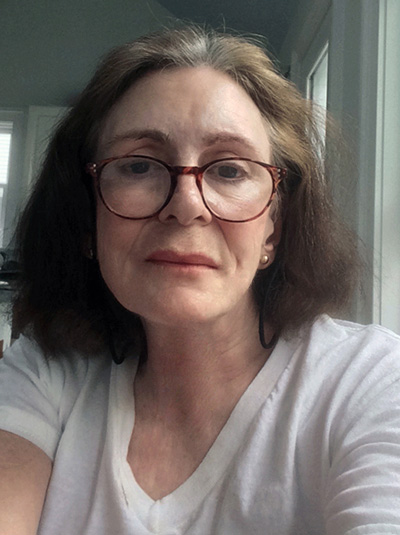
Gretchen’s Bio: 

Gretchen Roberts is a former biomedical research scientist with a PhD in Cell Biology and Genetics from the Weill Cornell Graduate School of Medical Sciences in New York City. Her areas of research included cell motility, Alzheimer’s disease and, finally, the development of novel treatments for inoperable liver cancer.

Doing science is a voracious user of time, leaving one with few hours to enjoy other interests and, although Gretchen loved science, she ultimately needed a change. After spending years following one dream, it was time to follow another. Retirement from science allowed her to rediscover her other passions, one of which was painting. Art and science both involve observation as they strive to understand the world, but it was the transition from objective to subjective interpretation that captured Gretchen’s imagination.

A favorite subject for painting was her cat Mr. Dooly and, ironically, it was his death at the age of 19 that began Gretchen’s foray into writing. Writing about Mr. Dooly was both an homage to her beloved pet as well as a way to lessen the agony of loss. And thus another avenue of creativity opened as Gretchen began using writing to explore her life and the life around her.

Gretchen currently lives in Manhattan and Greenport NY with her husband and their tabby cat Eloise. 

Interview by Angela Mackintosh

WOW: Welcome, Gretchen, and congratulations on winning second place in WOW's Q1 Essay Contest! Writing about family and unhealthy relationships can be tough, and you covered so much ground in your essay, "The Abandonment." How did you pare down your piece to 1,000 words? Were there any specific methods you'd like to share?

Gretchen: I had submitted this piece once before and bought the optional critique. I’d love to say that the improvement of the essay was all my doing, but the review was paramount, with the reviewer providing a combination of encouragement and suggestions. Things needing improvement were pointed out, such as some sentences being redundant and some phrases bordering on sentimentality. When I changed the wording, I saw what the reviewer meant. The most amazing change occurred when I started cutting out whole sections of writing. When sentences that I thought were necessary were slashed, the piece started to come alive. It was amazing how fewer words conveyed so much more. One hint is to get rid of modifiers and your sentence will have more power. I think I cut about 800 words and it was all because of the reviewer. My suggestion? Cut just one phrase and reread the piece. I bet you’ll find how easy it gets when you see the improvement.

WOW: It's so true that cutting one phrase or a sentence can change an entire piece! What was your initial spark or way into the piece, and what do you hope readers will take away from this piece?

Gretchen: The subject of this essay was from a period of my life that I rarely talk about. So, what made me go “public” with it and in such a dramatic way? First, I finally realized that the shortcomings of a parent says nothing about the child. Second, I did not cause what happened to me. Often when a person describes something their parent did that was hurtful, people will respond with “What did you do to make them do that?” Someone once told me that people need to feel in control. In my situation, wouldn’t it have been nice to think I had been in control of my mother’s actions, that I was the one pulling the strings. What better way to feel in control than to believe that if you had acted differently, bad things would not have occurred. The fact is that what happened to me was not the result of anything I did and could have happened to anyone. My essay says that things occur and I was not in control of it and I refuse to keep it buried any longer. The weight is off my shoulders.

WOW: Your ending has got to be one of my favorites because it presents a realistic conclusion, and not one that's wrapped up in a nice bow, but one that provides hope. How did you decide on this ending? Was it always the same or did it change over time?

Gretchen: Actually, the ending was exactly what happened and never changed from the first time I wrote it. I remember that day in my friend’s backyard and how we ran and jumped and ran until we were exhausted. And we really did make peach ice cream which we gobbled down as we sat in the hot sun. It was a beautiful day and I can still see those two little girls laughing. There’s something especially exhilarating about pretending to be a powerful animal, unleashing all the force of which you’re capable. I think it’s important that girls have a chance to do this, getting in touch with the capable and tough aspects of their personae. Maybe it was just my Baby Boomer generation that lacked outlets and/or encouragement for this type of letting loose, but it was a magnificent feeling soaring over those hastily contrived jumps that we had set up.

WOW: I think we should still be able to pretend we're powerful animals as adults! Perhaps in our writing. Speaking of our animal companions, your bio says that after you retired from your science career it was your nineteen-year-old cat's death that prompted you to start writing. My condolences for your loss. I'm sure Mr. Dooly would be honored to know you've written about him. I also recently lost my nineteen-year-old cat, Jazzy, and I'm writing about her. Do you have any advice for those who are grieving the loss of a dear pet?

Mr. Dooly
Gretchen:
Mr. Dooly’s mother was a feral cat that frequented our Greenport backyard. One summer day I noticed two little kittens in our woodpile. It was unacceptable to have these two little ones outside, looking forward to nothing but a hard and probably short life in an environment for which they were not suited, so we had a local rescue group trap the kittens along with their mother. We had the mother spayed and, upon the recommendation of the rescue group, released her back outside. Sadly, she was killed by a car the next summer and I’ll always regret not trying to socialize her in order to keep her as an inside-only pet. We did end up keeping Mr. Dooly and his brother Jasper. Jasper died four years later from what his vet thought was an aortic aneurysm, but Mr. Dooly went on to live until he was 19 years and 4 months old. I slept on the couch with Mr. Dooly for what was to be our last night together. When he woke the next morning, the morning of the day he would die, he looked at me with so much love and happiness to see me. I had never seen that expression on his face before and it was his last gift to me. It was almost impossible for him to stand without help so I knew that it was time to put him to sleep. I made the call to the vet. After that, I felt nothing. Nothing. I often cried as he got older, wondering what I would do when he was gone, yet on the day he died, I was numb. I was in shock I realize now. If I had allowed myself to feel, I would not have had the strength to do what needed to be done. We went to the vet who gave Mr. Dooly a sedative and anti-anxiety agent and we waited for it to kick in. It was then that I started to feel. The tears streamed down my face as I told Mr. Dooly stories of when he was a kitten. I told him how much I loved him. I told him he was my baby. Then my vet injected an overdose of the drug that would end Mr. Dooly’s life. When he was dead, I threw my body over his as if to protect him and I yelled into his deaf ears how much I loved him. He was gone. I went home. I collected his things, his medicine, his stairs to the couch and bed and windowsill, his favorite toys. I put up a large framed photo of him on a bureau that I am looking at and, seven years later, it now brings a smile to my face, my tears having changed to feelings of gratitude that I had known him, that he had shared my life, that he had loved me.

Do not judge yourself for how long you need to grieve. You loved your pet with all your heart and the tears will come when you are able to handle the pain. And they will come. Depth of mourning has no relation to depth of love. You grieve in your own special way, just as you love in your own special way.

WOW: Oh Gretchen, your story is heart wrenching; but it's a blessing when feelings of loss change to gratitude over time. If we can stay in that space, it's a beautiful gift. Thank you for saying not to judge yourself for how long you need to grieve. Now that I'm wiping away a few tears, let me shift back to writing. How does your science background shape your art and writing?

Gretchen: They’re all about creativity. People often don’t view science as especially creative, but the ability to imagine enables the researcher to formulate questions based on what has been shown. How art and creativity are related is more obvious. Both disciplines interpret what is around us, science being objective, art being subjective. I’ve always been a visual thinker, so transitioning between science and drawing and painting wasn’t difficult. Writing just seemed a natural segue from science, since science depends on clear writing to report your findings. A scientist sitting at the bench, designing an experiment or doing an experiment, relies on fluid thinking in order to transition between words and images and analysis.

WOW: That makes sense! Anything else you'd like our readers to know?

Gretchen: When I was in school I hated writing. I dreaded when we were assigned writing a short story and would sit staring at the blank piece of paper in front of me completely devoid of thought. I never knew how to start. It was only in my adult years that I realized it doesn’t matter where you begin to write, even if you start at the end. And I can only write when the mood hits me. In that sense, writing is like art. You can’t force it. Just let it come out when you feel the need to write.

WOW: Fantastic advice! In fact, I have a project that might be solved if I start at the ending. Thank you so much for chatting with us today. Congratulations again, Gretchen, and wishing you much writing success in 2023!

Find out more about WOW's flash fiction and creative nonfiction contests here: https://www.wow-womenonwriting.com/contest.php
Read More »

Michelle Rene Wins Second Place With Her Essay "Pit of Snakes"

Sunday, November 11, 2018
Michelle Rene is our second place creative nonfiction essay contest winner (Quarter 4) with her essay titled, "Pit of Snakes." And no, that title is not figurative. If you have an Indiana Jones fear of snakes, then this essay may terrify you--that's how well-written it is. Read on to find out more about Michelle and her tips for writing about your childhood in creative essays!

Michelle is a creative advocate and a multi-award winning author of a number of published works of science fiction, historical fiction, humor and everything in-between.

This year, she released several books. Hour Glass, her touching tale about Calamity Jane, won Chanticleer Review’s Best Book of the Year award. It was released as an audiobook in September. Her experimental novella, Tattoo, has won high acclaim from Foreword Review and Publisher’s Weekly. Recently, she published an anthology of stories and humorous essays from her time growing up in West Texas called Defending Ducks.

When not writing, she is a professional artist and all around odd person. She lives as the only female, writing in her little closet, with her husband, son, and ungrateful cat in Dallas, Texas.

Visit her website at www.michellereneauthor.com.

WOW: Congratulations on placing second in the WOW! creative nonfiction essay contest. Your essay is going to give many people the heebie jeebies, but they need to read it anyway! So how do you think this experience in your young life made you the person you are today?

Michelle: Thank you! I had a really weird upbringing in Texas. I spent a good deal of time in the country. We have a lot of dangerous animals that you sort of learn to live around: rattlesnakes, copperheads, scorpions, bobcats, mountain lions, etc. Funny side note, I actually once wrestled/played with a full grown mountain lion. She won. But back to the question. Because of where I'm from, and my knack for getting myself into weird situations, I ended up with a lot of crazy experiences most people can't boast. I don't really know anyone who was dangled over a pit of snakes as a child, for example. While it's funny to tell people these crazy stories of my youth, I am extremely thankful both for the experience and for surviving the experience. I believe it gave me more confidence as an adult to go and try new things without fear.

WOW: I bet. I mean, once you survived a battle with a mountain lion, what else is there? I have to ask, did you ever go into a pit of snakes again--by yourself or carried in?

Michelle: Oh hell no. I did go back to the Rattlesnake Roundup several times after, but I steered clear of the pitmasters just in case. It was enough to live it once. After that, I preferred to just stare over the wall like everyone else. I always did stop by to say hello to the pitmaster who carried me in. He was really nice even if he did threaten to recruit me. He worked the roundups for years until he was bitten and had to retire.

WOW: Oh no! Goodness, what a career that is. How did you structure this creative essay? I'm sure a lot of our readers want to write about childhood moments that stand out to them, but it's often hard to focus the essay.

Michelle: I found my essay voice after I perfected my verbal storytelling skills. It didn't really occur to me how crazy my stories were until I started telling them as an adult to "normal" people who looked at me like I was insane. I got really good at regaling friends and coworkers with these tales of my youth. When you cut childhood memories up into bite-sized story bits fit to tell at a dinner party, it forces you to format your memories into an essay. Once I figured out how to convey the oddball humor of what happened without doing hand gestures and accents, I found my essay voice. The story I told at dinner about my father letting some crazy guy dangle his daughter over snakes became the essay, "Pit of Snakes."

WOW: How very true. Thinking about some of these childhood memories like: What would I say at a dinner party? is really good advice. What is a tip for writers who want to write about a distant memory but may have trouble recalling it? You make it sound like this happened to you just yesterday, with all the details you included!

Michelle: Well, I am blessed with a very good memory. However, I do strategically choose stories that are borderline traumatic to write about because you can't help but remember those more. I might not remember much about the time I rode my bike and skinned my knee, but being held over a pit of snakes does sort of stand out in one's memory. The other thing is to ask people who were a part of the story to help fill in any gaps. As a storyteller, I always worry about embellishing my memory too much the more and more I tell it. I check in with family as I go to make sure I'm remembering correctly. My father took pictures of our little adventure, including one of the pitmaster holding me over the snakes. Yes, there is tangible evidence this happened. I looked at those photos for years, which kept the memory fresh.

WOW: Great tips--looking at photos and asking older family members can help fill in those details we forget, even though we want to write about these memories. Let's switch gears for a minute. Tell us about your books. Your bio says you released one this year as well as a few other publications.

Michelle: I actually had two books released this year with separate publishers. Hour Glass, with Amberjack Publishing, is my historical fiction novel about Calamity Jane that won Chanticleer Review's Best Book of the Year award. Tattoo, with Annorlunda Books, is my experimental novella told backwards, which got glowing reviews from Publisher's Weekly and Foreword Reviews. I personally released a collection of funny stories, called Defending Ducks. It is a combination of crazy essays like "Pit of Snakes" and humorous fictional stories. I have three more books releasing in 2019, so I feel very blessed and very exhausted!

WOW: That's all such fantastic news, and congratulations on the great reviews you are getting--and the awards. Well-deserved! Thanks for stopping by with your busy schedule, and best of luck to you. 
Read More »
Powered by Blogger.
Back to Top