Showing posts with label writing a novel. Show all posts

Friday Speak Out!: Climbing the Mountain: After the First Draft

Friday, March 04, 2022
by Lydia Rose Brita

I heard someone say that in life, once you reach the top of a mountain you find yourself at the base of another one.

During the first year of the pandemic I wrote the first draft of a novel that had been in my head for a decade. When I wrote the ending I was in pure disbelief that I had actually finished something shaped like a novel! I really felt like I had climbed to the top of the mountain and was probably done now with learning more about writing, right? Now I just got published and got lots of money?

Wrong - it was just the beginning!

Redrafting my novel has been challenging not because of the writing itself but because it made me have to look in detail at my own shortcomings as a writer. To look closely at your work is to inevitably come to the conclusion you’re not the artist you want to be - yet!

I’ve spent the past year learning how I write the best story possible. I’ve redrafted it a few times now, tweaking the plot - in the end I used a hero’s journey structure, changing my writing routine - now I write 30 minutes a day and watching endless clips of writers talking about writing on youtube to feel less alone - Elizabeth Gilbert is amazing.

I’m learning how to really fill out characters, combining multiple characters into one, simplifying the story and enriching the characters themselves. I’ve refined my writing style, which is dialogue heavy and I’m trusting it more and more.

And most importantly I’m learning to just do it.

I realized that I spent so long overthinking things rather than doing it that I would never get my novel ready to send to publishers. And I am determined to send it to publishers next year.

My 29th birthday was on 22nd February and one of my intentions for the next year is to send my completed and edited draft to a publishing house that sounds perfect.

Hopefully my 30th birthday present to myself is going to be getting my book published!

I don’t know when my book will be published but I do know that if I keep climbing I will get to the top of this mountain. I know because I’ve done it before and will no doubt do it again and again.

My best piece of advice for anyone at a similar stage to me would be - enjoy the climb - because that’s all we’ve got!

* * *
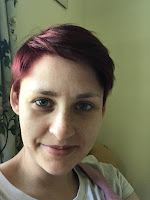
Lydia Rose Brita is a writer based in London. She works in communications and is currently working on her first novel, a coming of age contemporary YA. 

Her Linkedin page is: https://www.linkedin.com/in/lydia-brita-78a769218/

~~~~~~~~~~~~~~~~~~~~~~~~~~~~~~~~~~~~~~~~~~~~
Would you like to participate in Friday "Speak Out!"? Email your short posts (under 500 words) about women and writing to: marcia[at]wow-womenonwriting[dot]com for consideration. We look forward to hearing from you!
~~~~~~~~~~~~~~~~~~~~~~~~~~~~~~~~~~~~~~~~~~~~
Read More »

Friday Speak Out!: 6.5 Months to A Beginning that Worked

Friday, October 15, 2021
by Caitlin Hamilton Summie

I didn’t get it. I didn’t get it for 6 ½ months. But my editor, Marc Estrin, patiently stuck with me, nudging me, until I did: the opening to my novel was all wrong. The way my characters had met wasn’t “true.”

I’d set the scene with the couple meeting at a college football party. Al and Sarah ended up sharing space on a couch to view the game. Despite the team getting trounced and limping off the field, a slightly inebriated but always loyal Al rose to sing the Gopher fight song, and Sarah got a kick out of him. I loved that moment of Al’s, but I came to understand that I had trivialized my characters in this scene, perhaps made Al look silly, and so I wrote something new. It didn’t work. Nor did the next effort. Or the next. Marc kept nudging me away from the whole idea of a party, but every draft, it reappeared. It was just a different party or location. Then, at his suggestion, I wrote about their first date.

Suddenly, two things happened. In the new pages, the best of Sarah met the best of Al. One glimpses her strength and also his kindness. Right there, in the bright beginning I gave them, were the traits that would see them through what came next. No place else in the novel do they shine in quite the same way, with such hope and confidence. But that mix of hope and confidence becomes their anchor, as does their marriage, and gives them the ability to survive the bumps. More importantly, with this revised opening, readers would believe this couple had what it takes to endure. If they’d met in my original scene, would anyone have quite believed Sarah and Al could have the necessary grit?

This is an age in publishing when there are, in my opinion, too few editors. With respect, I can’t think of one who would have stuck with me, going over the same five pages for months on end. This short essay is about my revision, yes, but it is really about Marc. The best of Marc—his patience and keen eye—helped my story find the best of my characters. So thank you, Marc. 

* * *
Caitlin Hamilton Summie earned an MFA with Distinction from Colorado State University. Her story collection, TO LAY TO REST OUR GHOSTS, won the fourth annual Phillip H. McMath Book Award, Silver in the Foreword INDIES Book of the Year Award for Short Stories, and was a Pulpwood Queen Book Club Bonus Book. Her debut novel, GEOGRAPHIES OF THE HEART, was inspired by three stories in her collection and is due out from Fomite Press in January 2022. She spent many years in Massachusetts, Minnesota, and Colorado before settling with her family in Knoxville, Tennessee. She co-owns the book marketing firm, Caitlin Hamilton Marketing & Publicity, founded in 2003. Find her online at caitlinhamiltonsummie.com.
~~~~~~~~~~~~~~~~~~~~~~~~~~~~~~~~~~~~~~~~~~~~

Would you like to participate in Friday "Speak Out!"? Email your short posts (under 500 words) about women and writing to: marcia[at]wow-womenonwriting[dot]com for consideration. We look forward to hearing from you!
~~~~~~~~~~~~~~~~~~~~~~~~~~~~~~~~~~~~~~~~~~~~

Read More »

Friday Speak Out!: Baking Lessons

Friday, October 01, 2021

by Jane Ward

This year I wanted a chocolate roulade for my birthday cake. In the past, my mother’s chocolate roll had been my go-to. As a child watching her, I learned how to beat the egg whites with cream of tartar to stabilize the stiff peaks. How to sift the small amount of cake flour three times to aerate and properly measure it before folding it into the cocoa-and-egg yolk batter. And how to roll the still-warm layer of sponge cake in a clean kitchen towel to prepare it for rolling with the filling. The method was known; the cake would have been the easy choice.

But in February, I didn’t reach for my mother’s recipe. I wanted something richer, I decided, a cake tasting more boldly of chocolate than my mother’s. Feeling experimental, I combined the chocolatey parts of one new recipe with the chocolatey parts of a second, thinking only about the flavor I wanted at the end—and giving no thought at all to how the quantity of melted chocolate might overwhelm the delicate structure of a cake made largely with egg whites.

The cake that came out of the oven was beautiful: shiny, with a crackly, coffee-with-cream colored crust that hid a darkly decadent fallen soufflé center.

I wish I could tell you here that the resulting roulade was beautiful too. But when the layer cooled, it didn’t roll well. Cracks appeared all over the surface. I persevered, hoping that a final glaze of chocolate ganache would hide the imperfections. Instead, that glaze only added weight. My poor concoction couldn’t take that, and it collapsed completely.

This could be a story about remembering to play it safe when there is much on the line, a story about editing decadent impulses and remembering that most basic rule of baking—assessing balance—and applying it. My mother’s cake was balanced; because of that, it worked. But this isn’t that story. Instead, I’m really writing about the necessity of risk and experimentation—in baking, yes, but also in writing.

In the early stages of drafting a novel, the writer must lead with wild imagination, getting the art on the page without the critic looking over her shoulder, whispering questions in her ear: Is that workable? Is it perfect? There must be time for flights of fancy, mistaken or not, in the early stages of fiction, keeping questions of perfection and right or wrong at bay, questions that, if asked too soon, can stymie the story that begs telling. There will be time enough for the critic’s tools later.

This year, my birthday cake was not roulade. I dubbed it Dark Chocolate Trifle as I spooned the broken pieces of cake into a large glass bowl and layered those with whipped cream and leftover ganache. A failed cake became an unexpected dessert full of deep and complex flavors, a flight of fancy edited to become something I couldn’t have anticipated, and it was delicious.

* * *
JANE WARD is the author of
Hunger (Forge 2001) and The Mosaic Artist. She graduated from Simmons College with a degree in English literature and began working almost immediately in the food and hospitality industry: private events planner with Creative Gourmets in Boston, planner of corporate parties at The 95th Restaurant in Chicago, and weekend baker at Quebrada Bakery in Arlington, Massachusetts. She has been a contributing writer for the online regional and seasonal food magazine Local In Season and a blogger and occasional host of cooking videos for MPN Online, an internet recipe resource affiliated with several newspapers across the country. Although a Massachusetts native, Jane recently settled in Chicago after returning to the US from Switzerland. Find her online at:

Website: janeaward.com
Twitter: @authorjane
Instagram: @authorjaneward
Facebook: @janealessandriniward

~~~~~~~~~~~~~~~~~~~~~~~~~~~~~~~~~~~~~~~~~~

Would you like to participate in Friday "Speak Out!"? Email your short posts (under 500 words) about women and writing to: marcia[at]wow-womenonwriting[dot]com for consideration. We look forward to hearing from you!
~~~~~~~~~~~~~~~~~~~~~~~~~~~~~~~~~~~~~~~~~~~~

Read More »

Introducing YA Author Kelly Coon and her Amazing Story of Persistence

Thursday, March 21, 2019
I'm so excited to introduce you guys to Kelly Coon today! Kelly is a debut young adult author whose first fantasy novel is coming out at the end of October from Delacorte Press, titled Gravemaidens! Kelly's story of getting an agent and publication contract is truly one of hard work and perseverance; if you're feeling bummed out with a couple of rejections, then you are lucky you landed on this interview today. Well, I won't keep you in suspense any longer. Read on to find out about Kelly, her publication journey, and what a wonderfully generous author she is.

WOW: Welcome, Kelly, we are very excited to talk to you today. We have a lot of YA writers and readers that read our blog. So, let's start with your book that is coming out in October. What is the title? Is it part of a series? Who is publishing? 

Kelly: Thank you so very much for having me, Margo! My YA fantasy is called GRAVEMAIDENS, and it’s being published on October 29, 2019, by Delacorte Press (Random House). It’s the first book of a duology centered on Kammani, a 16-year-old healer’s apprentice who has to save the dying ruler of her city, so her little sister, the lovely Nanaea, isn’t buried alive to be his bride in the afterlife.

WOW: That sounds very intense and also very cool! So, you are published by a big NYC publisher, and we also know you have a literary agent. A lot of writers are wondering: How did you do it?

Kelly: Before I got my agent, Kari Sutherland of Bradford Literary, I had been rejected by agents 106 times over 9 years and 4 novels. 106 times I opened up my email inbox or tore open a letter, my heart pounding, hands sweating, and read some version of “No, your story isn’t right for us at this time.”

I’d carefully researched each one of those agents. I’d poured my heart into those first five, ten, twenty-five, fifty pages—whatever the agency required—and sent them on with my query letter, determined that this was going to be the time.

But again and again, I was wrong.

My problem wasn’t in my persistence. I was nothing if not persistent. The problem was that I did not have a growth mindset. I was banging on the door, trying to get inside the house, pounding again and again the exact same way, and getting nothing except a sore fist and a bruised ego. It wasn’t until I humbled myself and realized that perhaps I didn’t know what I was doing (maybe I should hunt for the hidden key and unlock the door!) that I made any progress at all. I was a good writer; I had my BA in creative writing and my masters in English education. But I wasn’t a good novelist. I had to open myself up to my failures, invest in educating myself about writing books, and write a story someone would want to read.

When I did that, I sent out eleven queries and got eleven full requests and two offers within a couple weeks. Kari and I clicked incredibly well over the phone; so with tears running down my face, I accepted her offer of representation. We had interest within two weeks of going out on sub to editors, and a pre-empt offer from Delacorte less than a month after we submitted. It was the most surreal, most exhilarating day of my professional life when I accepted Kelsey Horton’s offer for a two-book deal.

WOW: I love what you said about this entire process. We can all learn so much from your answer above about writing and learning and not giving up--no matter what you write. Thanks for all the details and encouragement. Your bio is super, super interesting! And I love the way you wrote it. Muffin readers, check it out here! But here's the part I think our readers will be really interested in: you have a BA in creative writing (as you mentioned earlier). How do you feel that helped you (or do you) with your publication journey?

Kelly: Having a creative writing background helped me immensely with many parts of my writing. I’m a better editor because of that degree. I understand how many rewrites go into a perfect snippet of prose or poetry. My degree taught me how to craft language to set a mood or thread a theme or make a character grow and change throughout the pages. I didn’t take any classes on novel writing since they weren’t offered in my program, but the classes I took in personal essay, poetry, short story, and business writing have helped me throughout my career as an editor, which is my day job, and a storyteller, which is my passion.

WOW: And you have three children, a husband, and a rescue pup, so how do you manage your life to balance your family life and writing time and marketing time?

Kelly: Haha! That is the question, isn’t it? (smiles) Last year, I was not great at balancing my life. Balance is actually the word I chose to focus on for 2019. I’m relentless when it comes to my job and writing, so I let my health slide last year because I just couldn’t figure out how to squeeze everything into the day. This year, I’ve set down some of my own heavy expectations and have forced myself to take a balanced perspective of my personal and professional life, so I can reduce my stress.

Balance, as I’ve found out, takes disciplined scheduling for me. It seems counterintuitive, but it’s true! Doctor’s appointments, sports practices, work deadlines, writing deadlines, gym time and everything in-between gets written out and color-coded on a giant white board in my office and put into my phone’s calendar system. It’s helped me focus on what’s important!

Another one of my tricks is that I fit my work into little portions of the day when I have down time. If I’m at a baseball practice with one of my sons, I sit in the car and edit instead of just playing on my phone. If I’m on my phone, I’m scheduling marketing social media posts on Buffer or ordering groceries for my family to be picked up the next day. I look at my task list and slide it in where I can. That way, I can usually accomplish what I’ve set out to do. For the times I can’t, I’m learning to forgive myself for not being superwoman (arghhhh, so hard) and acknowledge that sometimes, I’m going to fail and it’s okay. I’ll try again the next day.

WOW: I love these tips. Ordering the groceries online while waiting somewhere and picking them up later--brilliant! So often we ask these questions of writers, and this time, we got some great specific answers--thank you! Speaking of marketing, I know many of our readers will be as enamored with you and your books as I am, so what is the best way for them to stay up-to-date with you and your news regarding your upcoming books or anything else you're working on? I personally signed up for your newsletter! So should readers do that? Follow you on social media, too?

Kelly: Thank you so much for those kind words. It’s scary being a writer on the brink of wide and very public critique, so I appreciate you saying that! If anyone wants to stay in touch, they can follow me on Twitter, Instagram , and Facebook, or sign up for my newsletter! My newsletter goes out once a month, but I update my social feeds regularly.

WOW: Awesome--thanks for the links. We love to ask our published authors: what is the best piece of advice you can give to writers who are currently struggling in any way: to get published, to find writing time, to get an agent, to sell their books?

Kelly: The best thing I ever did was find fellow writers who believe in me and can critique my work. If you can afford to do so, go to a writer’s conference and put yourself out there as someone looking to connect with critique partners. If you can’t afford a conference, then get on Twitter and follow the #writingcommunity hashtag to find a critique partner that way. My writing improved so much after I became vulnerable enough to let other people read my novels and began to critique theirs, too. Plus, when you’re struggling, you have a buddy who might understand what you’re going through.

Also, if you find yourself sitting in a puddle of gloom after reading this or after getting a rejection, I do not want you to picture me with my agent contract in hand dancing around my office or screaming with glee when I got my publishing contract because those were just two moments in the thousands I put into securing a literary agent and getting a deal.

I want you to picture me sitting at my desk, wiping tears off my blotchy face after my 106th rejection, pulling tentacles of woe from around my neck, and trying again. You do not know when the next email will be a “Yes!”

WOW: That's right--and there are so many stories like that from authors who just didn't give up whiel also improving their craft and knowledge about the business. Thank you so much for talking with us today! Readers, don't forget to check out Kelly here.


Read More »

Friday Speak Out!: The Road to Publication

Friday, May 04, 2018
By Robin Mullet

You are picked up by a taxi at Idea Central. Mr. Protagonist is at the wheel and seems to be preoccupied with something. Turning left onto Problem Blvd., he stops to pick up Mr. Sidekick who hops in the front passenger seat. Mr. Sidekick is very funny and tells you a story on how they got to be friends. The two of them are discussing Mr. Protagonist’s problem when a motorcycle swerves in front of the cab.

“It’s Miss Antagonist! She’s out to get us,” Mr. Protagonist shouts, and takes an alley to avoid her. However, when he turns back on Second Crisis Street, Mrs. Secondary Character flags him down, hurt and bleeding. It is the work of Miss Antagonist, she gasps in pain. Mr. Sidekick jumps out to take her to the hospital. Mr. Protagonist guns it down the street to go after the dastardly woman.

He makes a right turn on two wheels onto Holy Toledo Way. By now, you are starting to wonder if you are ever going to get to where you want to go, when, Miss Antagonist roars up beside the taxi on her bike. They swerve back and forth, forth and back, and your stomach is doing flip-flops. How will this end up? Will you ever get there? Can you refuse to tip?

Suddenly, in front of the speeding vehicles, a young mother is pushing a baby stroller at the intersection of Holy Toledo Way and Culmination Drive. Mr. Protagonist yells, “Hang on!” and turns the wheel sharply toward Miss A. and away from the pedestrian. The villainess tries to avoid the cab, loses control, and skids sideways. With a sickening crunch, she crashes into a lamppost right in front of the police station.

After a while, when the coroner’s wagon has pulled away and the statements have been given to the police, you climb back in Mr. P’s cab, and he whisks you down to One Book Signing Lane to the Last Chance Bookstore. You pay him (with a large tip), shake his hand and thank him for the adventure. As he pulls away, he says, “Who knows, maybe we will meet again.”

The bookstore owner is waiting for you at the door. “Welcome, Ms. Author,” she says, pumping your hand. “We are so honored to have you here today. Your story was so exciting!”

And that is how you get from idea to novel.

* * *
Robin Mullet writes poetry, short fiction and non-fiction. Her work has appeared in anthologies such as, Common Threads, in A Rustling and Waking Within, and others. She was a finalist in the New River Press 2013 American Fiction Prize for her short story, "Blind Horse." Her non-fiction articles have been published in Wild Bird Magazine and Hobby Farms. She writes the column, “Muse Clues” for the Ohio Poetry Association quarterly newsletter. She calls Eastern Ohio home, where she gardens and her husband is a busy beekeeper. Her website is www.robinmullet.com.
~~~~~~~~~~~~~~~~~~~~~~~~~~~~~~~~~~~~~~~~~~~~
Would you like to participate in Friday "Speak Out!"? Email your short posts (under 500 words) about women and writing to: marcia[at]wow-womenonwriting[dot]com for consideration. We look forward to hearing from you!
~~~~~~~~~~~~~~~~~~~~~~~~~~~~~~~~~~~~~~~~~~~~
Read More »

Structuring My Novel: Influenced by the Experts

Saturday, January 19, 2013
This past week, Sue Bradford Edwards wrote a great post about why writers need to be readers, too. I've been thinking a lot about this lately anyway--actually wondering if what I read ever influences how I write or what I write. What I decided that I learn the most from other authors, and the thing I need the most help with myself, is structure. I find myself marveling at how some authors seem to structure their novels just right--to build suspense, to unveil layers of a character one peel at a time, or even to keep the reader guessing who is actually responsible for some crime or bad behavior in a novel. Even memoirs have different structures: some go in chronological order, while others start with the life-changing event and then explain how or why they got there.

After reading Holly Black's White Cat in her semi-new The Curse Workers series (YA), I realized my WIP, a YA novel, is structured all wrong. Holly's book is so engaging because the reader, and the narrator (Cassel) too, don't figure out until almost the end the truth about the main character's family and secrets. If Holly would have started off with revealing the secret to the reader, even if the main character didn't know, like I do in my YA "curse" book, then White Cat wouldn't have been as engaging or as page-turning. Sure, it would have probably still been good--it's an interesting story, and Holly is a good writer. But we care more about Cassel because of how Holly reveals him to us--readers discover him as he also discovers himself. Now I have to decide if I want to go back to the drawing board and re-write my YA novel once again. Thanks, Holly Black. (smiles)

The book I just read for my newspaper book review column, an adult historical fiction paranormal mystery (can you say that all in one breath?) is structured with a prologue! "WHAT? Someone wrote a prologue and got it published?" you say. YES! And the person is a very successful and well-revered author of both children's and adult fiction. The book I am talking about is The Greatcoat and the author is Helen Dunmore. The Greatcoat is set mostly in 1952 in Great Britain and deals with the effects of World War II on the war-torn country. But the prologue and some of the "paranormal" action is set in World War II--it's a very interesting way to structure a book.

In this case, I'm not sure if the prologue was needed, but I suppose Helen wanted readers to get a little insight into her paranormal figure before he started haunting our main character, who can't figure out what is going on. So back to my WIP--should I start with a prologue? Could I reveal a bit about my main character's family and the curse before I start in present time? It's something to consider from reading Helen's book, which I really enjoyed. Again, she didn't reveal the whole mystery until almost the end of the book--that's pretty common. If writers revealed everything at the beginning, then who would keep reading?

So, back to the drawing board, aka the revision process, for me--thanks to two books I've recently read and really enjoyed. How about you? Has a book influenced you so much that it made you either write something new or change the way you were already writing it? What was it about the book? The structure? The characters? The point of view? Let us know!

Margo Dill, author of middle-grade historical fiction novel Finding My Place, is teaching a children's and YA novel online writing workshop, starting on January 22. The class is for people beginning or in the middle of writing a novel for this age group. There will be critiques by Margo and classmates, discussions, and writing instruction. For more information, check out the WOW! classroom page. 

 
Read More »

How NaNoWriMo Taught Me To Write A Novel Fifteen Minutes At A Time, Guest Post by Laurie Brantley

Tuesday, November 09, 2010
How NaNoWriMo Taught Me To Write A Novel Fifteen Minutes At A Time

by Laurie Brantley

I've been writing since my childhood. As I entered my empty nest years, I realized that life now affords me the opportunity to write as much as I want.

Frustrated with my writing skills, I decided that this year I would participate in NaNoWriMo. Not really knowing exactly what to expect or how to prepare, with anticipation I created a few character sketches and made an outline, realizing that this must be too easy. I just knew there had to be more preparation, but I wasn't sure just what.

I've never enjoyed writing fiction, which is a requirement of the NaNoWriMo event. The reason I decided to try it was more for the exercise of fiction writing. So, I wasn't very concerned about my preparation, or should I say, my lack of preparation – a recent discovery. I thought I'd try it, see what it's like, and if I enjoyed it. If it turned out to be a purely dreadful event, I could always quit. Nothing would be lost.

With excitement and anticipation, November first, I turned on the computer, pulled up my outline, opened a blank page and began to write. I wrote and I wrote and I wrote. I realized that I was having fun – and I was writing fiction! I kept writing and realized I'd been writing without reference to my outline. So, I stopped for a minute, checked the outline and saw I was way off base. Now, what? My story had changed and I couldn't think of how to get myself on track. Finally, after several chapters and several thousand words, I got myself back to where I needed to be.

Although I'm having a great time of writing and inventing characters and places and events and being in control of a whole other world, I have some physical battles that limit my writing. I'm unable to sit for long periods of time and I have this little pinched nerve in the back of my neck that likes to keep me from sitting at a keyboard for too long. If I'm there too long, my shoulders cry in pain for me to give up, my arms and fingers rebel in numbness.

I am, however, determined to write a full fiction novel this November and win NaNoWriMo. I set a timer for fifteen minutes and write. When it goes off, I do some stretches and take a writing break by getting some chores done. After doing this about three or four times a day, I meet my daily NaNoWriMo goals.

And I'm learning so much. So far, I've learned I could've used a more detailed outline, that if I get off track, I can always get back on it again, that writing fiction really can be fun and that I can write a novel fifteen minutes at a time.

*  *  *

Laurie Pitts Brantley has two grown daughters and four grandchildren. She and her husband live on the east coast where they enjoy walks along the various beaches. Laurie discovered her love for writing at the age of ten. You can follow her fiction blog at http://fifteenminutesofwriting.blogspot.com/ or her non-fiction blog at http://lauriebrantley.blogspot.com/ .
Read More »
Powered by Blogger.
Back to Top
