Showing posts with label reading. Show all posts

Friday Speak Out!: Never Stop Learning

Friday, January 07, 2022
by Bethany Jarmul

Midnight black, charcoal gray, metallic cobalt—for the last 15 years, whenever I wanted my eyes to pop, I pulled out an eyeliner pencil and in one minute, I’d have perfectly outlined lids. A year ago, I bought liquid eyeliner for the first time. Despite reading the instructions and my confidence in my skills, my lines looked jagged instead of smooth. It just takes practice, I thought. Months later, I wasn’t getting any better. I pulled up an instructional video and discovered I was holding the applicator incorrectly. Once I corrected this, it just clicked.

Similarly, I’ve been writing for many years, first with a purple gel pen in a Lisa Frank journal, later fingers flying on a silver laptop. Having worked as a magazine writer and a marketing copywriter, when I decided, at the beginning of 2021, to write personal essays, I didn’t think I needed much guidance. I read essays published in online journals. I read Lee Gutkind’s You Can’t Make This Stuff Up and Kate Hopper’s Use Your Words: A Writing Guide for Mother’s. Then I opened up a blank page and started typing.

I wrote a few pieces, sent them out to literary journals, only to receive one rejection after another. I had the base ingredients for chili, but I was missing the paprika and cayenne—the oomph.

Soon after, I stumbled upon WOW! Women on Writing and decided to take Chelsey Clammer’s class “Not What But How: Improving Essays with a Focus on Craft, Not Content.” During the 4-week course, we explored different essay structures—lyric, segmented, braided, hermit crab (that last one reminded me of my childhood pet crustaceans who liked to eat a piece of popcorn as a late-night snack.) We learned to play with the voice and rhythm of an essay and experiment with POVs. I received feedback from Chelsey that helped me to refine my writing, distilling it from corn to moonshine.

I did not need to discard all that I had learned about writing up to that point, but I did need to grow as a writer. A voracious student, I wanted to soak up every drop of knowledge. (I was either Chelsey’s favorite or least favorite pupil that session, because I emailed her at least eight questions about writing before the class began.)

During Chelsey’s class, I received my first acceptance email from a literary journal, a bright green “accepted” rectangle on Submittable. Since then, each new essay or poem that I get published becomes my fuel to keep learning, keep reading, keep writing.

* * *
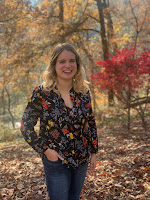
Bethany Jarmul is a writer and work-from-home mom. Her work has appeared or is forthcoming in
Literary Mama, Scribes*MICRO*Fiction, Sky Island Journal, and Allium, A Journal of Poetry & Prose. She grew up in the hills of West Virginia and lives in Pittsburgh, PA with her husband and two kids. Connect with her on Instagram or Twitter: @bethanyjarmul.
~~~~~~~~~~~~~~~~~~~~~~~~~~~~~~~~~~~~~~~~~~~~

Would you like to participate in Friday "Speak Out!"? Email your short posts (under 500 words) about women and writing to: marcia[at]wow-womenonwriting[dot]com for consideration. We look forward to hearing from you!
~~~~~~~~~~~~~~~~~~~~~~~~~~~~~~~~~~~~~~~~~~~~
Read More »

Rejections Are Personal, Just Not How You Think

Thursday, September 09, 2021
TBR: Book love is highly personal.

Rejection letters are not personal. I know you’ve heard that before. 

We tell each other that because rejection letters sometimes feel personal. After all, we’ve poured time and soul into the manuscript. Telling us you don’t want it, or worse yet that you hated it, feels deeply personal. I’m not going to stick up for editors or agents who say that they hated something. Or that you should stop writing or whatever. I think we just have to assume they didn’t have a West Texas grandma with a broom. They’d have learned not to be hateful. 

Recently, I learned just how rejection letters are personal. The book club I’m in just read a mystery. I love mysteries. Love them! And I know that the friend who picked it out did so because she knows how enthusiastic I am about mysteries, but this book was a slog. I disliked it enough to look it up. Surely there would be tons of bad reviews. What?! It won an Edgar. 

I never did warm up to this particular book, but I’m glad I read it because it clarified for me how rejection letters are personal. I like mysteries, historic nonfiction, biographies of historic women, and American history. I like fantasy, science fiction, and humorous fiction. I love everything from picture books to novels and book-length memoir. 

But that doesn’t mean I want to read every mystery. If a book features an anti-hero, I’m not going to be easily pulled in. I don’t mind police procedurals or edgy stories, but there needs to be humor and a bit of levity. And, please, no talking cats. I’m not saying that cats are incapable of speech, but simply that they do not deign to chat with the help. 

I have similar quirky preferences with every type of book I read. For historic nonfiction, Stamped from the Beginning is a YES, but presidential biographies are generally a NO. I love fantasy but not vampire stories. And science fiction must be character driven. These preferences are deeply personal. 

Now think about that in terms of agents and the manuscripts they receive. I recently saw an agent speak at an event. She talked about her love of humorous picture books. I immediately pulled up the library catalog and requested every one of her humorous picture books. I am sad to report that I didn’t laugh even once. Humor is deeply personal, and we clearly like very different things. 

When you are researching possible markets, you are going to find magazines that sound spot on and agents who seem like your dream. Read the magazine. Check out books the agent represented. Some won’t appeal to you but others will, because what we each love is personal and subjective. 

And that’s okay. It is why there are so many books out there. We each like something a little different whether we are readers, writers, editors, or agents. That's why each of us has a different pile of books on their bedside table.

--SueBE

Sue Bradford Edwards' is the author of over 30 books for young readers.  To find out more about her writing, visit her site and blog, One Writer's Journey.

The next session of her new course, Pitching, Querying and Submitting Your Work will begin on October 4, 2021).  Coping with rejection is one of the topics she will cover in this course.

Sue is also the instructor for  Research: Prepping to Write Nonfiction for Children and Young Adults (next session begins October 4, 2021) and Writing Nonfiction for Children and Young Adults (next session begins October 4, 2021). 
Read More »

A Focus on Friendships - Part Two of Three

Thursday, August 26, 2021


Thanks for tuning in for part two of three on our focus on friendships. My favorite books are the ones where I feel most kindred to the characters. I finish those books and feel like I've had a visit with a dear friend. During Part One of our focus, we talked about feedback; giving it, receiving it, growing from it, walking away, considering the reason for the feedback, and MORE! In part two, let's talk about what draws us to certain people and pushes us away from others. 


 So - here goes - let's talk about friendships, shall we? This isn't me telling you what to do or not to do - it's just a conversation and hopefully it will offer each of us a little something. Grab your favorite beverage (I'll fill my coffee mug) and we can chat a bit. Stop back in a few weeks for part three publishing on the 6th of September!. If you're wondering, today's photo headline is me and my best friend celebrating our engagement over a decade ago - he still makes me smile like this! 

Let's start with a quote by English writer Samuel Johnson (1709-1784)

THE TWO MOST ENGAGING POWERS OF AN AUTHOR ARE TO 
MAKE NEW THINGS FAMILIAR AND MAKE FAMILIAR THINGS NEW


Isn't that an interesting concept (and clearly not a new one)? I think about this as I start a new book. I've never met these characters before, but if they feel familiar to me I am immediately drawn in. As authors, we need to keep this at the forefront of our craft and make sure those real life idiosyncrasies of each character make it to the page. Often, in our own mind we know our characters quite well, but we need to make sure they feel familiar to our readers as well. So - how do we best do this? By taking a look at what draws us to friendships off the page.

What is it about someone that draws us in and makes us decide they need to be part of our world? Is it an unexplainable energy or vibe, a welcoming smile, their posture? What makes them approachable (or how did they approach us - in the case of an introvert)? Think about these things and make sure they land on your page - your readers will thank you! And for non-writers; remember that the key to a healthy relationship of any kind is appreciating the other person; so as you read this, think about what it is you appreciate about those friends in your life - and get out there and tell them about it! Similarly, if you're a reader who has fallen in love with the characters written by a particular author - take a moment to thank them in a review! 

Our time is coming to an end today - but before we get together again, leave a comment and answer one of these questions if you would please? 


 ** Were you ever drawn to someone after initially thinking you didn't really care for them? What shifted? 


** Have you ever ended a friendship? Why and what feelings went along with that "break up"?


** What do you think is the key to a long lasting friendship?

And with that - hugs my dear friend and until next time!
~Crystal

Today's blogger is Crystal J. Casavant-Otto who is a hot mess of a momma and dairy farmer enjoying her little corner of the cornfield in Wisconsin! 


Read More »

The Busy Bee Reader

Tuesday, August 17, 2021

Whenever I ask the Oldest Junior Hall how work is going, he always says, “I’m a Busy Bee!” So I’m deep into my pre-writing (all that stuff I shared last time!) and buzzing around myself. 

But I want to circle back, as the news people love to say, to a part of my pre-writing. Namely, the reading part. Which isn’t writing at all but just as important in the pre-writing process. 

 If you’ve ever used mentor texts, it’s mostly that concept. It’s hugely beneficial for me to read up in what I’m planning to write. Take, for example, a new market that I’ve come across and have an idea I figure will fit. First, I’ll read a bit of the market to get a feel for the style they like. But I’m also reading to sort of saturate my brain with the tone of this new market. I don’t know if osmosis works like that in writing, but I kinda feel like it does for me. 

However, the osmosis trick doesn’t work quite the same way when it comes to novels or picture books. That takes a little more reading work. 

Back in the day, I penned a bunch of picture books; the Oldest Junior Hall was the Only Junior Hall so it really was a long time ago. And when I jumped into children’s writing, I wrote even more picture books because I’d been into picture books for years. The trouble was, it had been years since I’d actually read ‘em and picture books have come a long way in the last decade or two. So I had a lot to learn about what makes a good picture book today; reading A LOT of contemporary picture books, and using mentor texts, was not only eye-opening but also game-changing for me. 

And when I dipped my toes into children’s novels, I gravitated toward middle grade. Who knew I still think (and write) like a 12-year-old? Anyway, I put in hours and hours, reading A LOT of middle grade fiction so I’d know what the pre-teens were into these days. But also because I just really like middle grade fiction. It was basically immersion therapy and a tremendously helpful tool. 

Now, I’m going back to adult fiction, specifically cozy mystery. As it happened, when the world was closed down, I read digital books, and I found myself reading mysteries. I LOVE mysteries and so it was a joy to read LOTS of mysteries, from charming and cozy to suspenseful and intense. So yeah, I’d done a lot of reading and I was all in for some mystery-writing. But I was also interested in writing a series so next, I decided to read a few series’ books; not the whole series, just the first one. And I was looking for the good…and the bad. 

Because here’s the last reason I read: sometimes, it’s not about what to do; sometimes, it’s about what NOT to do. And though I realize that even badly written books get published (I mean, we’ve all read books and wondered how, right?), I don’t think a debut author in a new genre can risk poor writing. 

So when I see a lot of boring minutiae of a character’s day, I cringe. (And make a mental note not to get bogged down in the tedious.) When I read declarative sentences that end with question marks in that annoying way we speak sometimes, where our inflection goes up after statements, I want to scream. (There’s another mental note for me, to avoid that sort of punctuation that stops the reader.) 

Yep, reading serves a myriad of purposes in my pre-writing and writing, so I highly recommend it. And when I’m lounging on a beach chair, book in one hand, cool drink in the other, and the Junior Halls imply that it must be nice, just sitting around, I can say in all honesty, “Scram! I’m a busy bee here!”

Read More »

4 Types of Reading for Every Writer

Sunday, January 24, 2021

Late in 2020, I prepped to write a middle grade science fiction novel. Because I read a lot more fantasy than science fiction, I knew I needed to compile a reading list. I found very little for this age group so I asked book fans and writers. I found online lists composed by reviewers and librarians. I requested a dozen recent middle grade novels and War of the Worlds by H.G. Wells. 


After I read the first contemporary novel, I examined the others. Every book was a boarding school story on another planet. Harry Potter goes to Mars, etc. Why oh why was the only unique recommendation War of the Worlds? And why didn’t science play a bigger part in these books? I also noticed that there was no diversity among the authors. 


I put creating a better list but on the back burner until I signed up for a DIY MFA starter kit from Gabriela Pereira. One assignment was to compile a reading list to study the type of book you are writing. Gabriela includes 4 types of books-- 


Comp Titles 

These are the titles your book will be up against in the market place. Many of them will be the same genre as your book. Others may be the same theme or setting. All will be recent. 


My comp titles: 

  • The Lion of Mars by Jennifer L. Holm. I found this title because I had seen a recent interview with Holm. This was my jumping off place. I looked it up on my library web catalog and then used the NoveList feature to find read-alikes. 
  • An Unkindness of Ghosts by Rivers Solomon 
  • The Moon Platoon by Jeremy Kraatz 
  • Dragon Pearl by Yoon Ha Lee 
  • Sleepers by Darcy Pattison 


Contextual Books

These titles inform your writing. They may be research. They may offer breadth in the genre or topic. They don’t have to be recent. 

My contextual titles:

  • Space Case by Stuarts Gibbs 
  • The Scorpion Rules by Erin Bow. I read this one when it came out and loved it. 
  • The Planet Thieves by Dan Krokos 
  • Minrs by Kevin Sylvester. My grandad was a mining engineer. This was an easy sell. 
  • The Long Way to a Small Angry Planet by Becky Chambers. Hint: If your book is compared to Firefly, I will pick it up. 


Contemporary Books 

Even if a book doesn’t directly compete with yours, you need to know what is being published in your genre. These books may not be contextual but again add breadth to your list. 

My contemporary titles: 

  • Randoms by David Lee 
  • #MurderTrending by Gretchen McNeil. Running man with a teenage girl protagonist. Yes! 
  • The Book of Joan by Lidia Yuknavitch 
  • Empress of a Thousand Skies by Rhoda Belleza 
  • The Secret Lake by Karen Inglis 


Classics 

These are the foundational titles, the ones that led to what we see today. Because I’m writing a book for young readers, I chose several early dystopian novels for tweens. 

My classics: 

  • War of the Worlds by H.G. Wells. It was written in 1897. How much more foundational can you get? 
  • The Ship Who Sang by Anne McCaffrey 
  • City of Ember by Jeanne Du Prau 
  • The Giver by Lois Lowry 
  • Enders Game by Orson Scott Card 


Not only are the plots more diverse than my original list, so are the writers and the characters. This is a solid list but I couldn’t develop it until I started looking beyond comp titles and include contextual titles, classics and a broader scope of contemporary books. 


Like Cathy recently pointed out in her post, writers need to be readers. Are you reading from all four categories? 


--SueBE

Sue Bradford Edwards' is the author of over 27 books for young readers.  To find out more about her writing, visit her site and blog, One Writer's Journey.


Sue is also the instructor for  Research: Prepping to Write Nonfiction for Children and Young Adults (next session begins February 1, 2021) and Writing Nonfiction for Children and Young Adults (next session begins February 1, 2021). 

Read More »

Read to Assemble a Writer’s Toolbox

Wednesday, January 15, 2020
This is one of my favorite writing quotes, and Stephen King has the weight to carry it off. After all, he’s been selling his work since 1967 and has published something like 83 novels. Go ahead. Try to argue.

But when I saw this quote today, I realized something new. You also need to read widely. After all, a good toolbox contains a wide variety of tools.

Read poetry. Interested in winning the WOW Flash Fiction Contest?  Then read poetry to learn how to make every word count. Reading poetry will also enable you to study how to create powerful imagery and writing that resonates emotionally with the reader.

Read picture books. As in the 32 page books written for young children. Written for pre-readers, they are meant to be read aloud. Picture books will teach you how to make your words sing and how to engage in word-play. Want to do all of this and also learn to tell a story in 500 words or less? Picture books are the tool for you. Picture books contain a full plot, beginning, middle and end, as well as multiple attempts to solve the problem all in a limited word count.

Read horror. Horror will teach you to create suspense. You will also learn to select setting details that allow you to manipulate your reader’s emotions. Depending on what you describe and how you describe it, a sunny day can be uplifting or ominous, cheery or harsh.

Read speculative fiction such as fantasy or science fiction. In fantasy and science fiction, authors must build bridges that bring the reader into an unfamiliar landscape. Authors also use emotion and other familiar elements to help readers identify with character who are truly alien.

Read epic novels. Whether you choose fantasy, horror, or historic fiction, read sagas with huge casts of characters. You will learn how to introduce large numbers of characters to your readers and how to bring these characters forward when necessary and when to let them retreat into the background.

Read graphic novels. Sometimes I look at a page I’ve just written and realize my characters are talking an awful lot and saying very little. Characters in graphic novels have to get to the point in short order. Learn to make every word of dialogue count by studying this format.

Read mysteries. Even if you aren’t writing a who-done-it, mysteries will teach you how to dole out information a bit at a time. You will learn how to foreshadow coming events and revelations and how to create false leads.

If you want to stock your tool box, read. Read often and read widely unless you think you can fix every writing problem with a hammer.

--SueBE

To find out more about Sue Bradford Edwards' writing, visit her blog, One Writer's Journey.  Sue is also the instructor for  Research: Prepping to Write Nonfiction for Children and Young Adults. The next session begins  March 2nd, 2020. 
Read More »

5 Writer-ly Activities for the Post-NaNoWriMo Season

Monday, December 02, 2019
Image by Gerd Altmann from Pixabay 
Here we are post-NaNoWriMo. What are you going to do with yourself now? Here are five possibilities.

Keep Writing. Whether you worked on a young adult novel, a memoir, or a cozy mystery, even the full 50,000 words is not enough for a full draft. For a cozy or a young adult novel, you need about 80,000 words. According to literary agent Rachelle Gardner, a memoir can range from 60,000 to 120,000 words with the sweet spot for new memoir authors at 75,000. Regardless, it takes about six weeks to write daily through Christmas. By then you’ll have built a solid habit.

Put It Aside. Whoa, wait? Didn’t I just say keep writing? I did, but if you’ve finished a draft you need to put it aside for a while so that you can approach it with fresh eyes. Draft something new to build those writing muscles but don’t rewrite your NaNoWriMo project until after the New Year. Many writers need at least four to six weeks to let a manuscript rest.

Rewrite Something Else. Once you have your NaNoWriMo project drafted and have set it aside, rewrite something else, something you haven’t work on in four to six weeks. Rewriting, after all, is an essential part of writing. It gives you the opportunity to create the manuscript that you meant to create in the first place.

Write Something New. What if NaNoWriMo was your first major manuscript? You might not have something else that you can rewrite. If that is the case, once you have completed a draft you can start working on something new. This might be a good time for you to get to work on something new.

Read, Read, and Read Some More. One of the best ways to recognize good writing in your own work and in that of others is to read good writing. Check out best-selling books and award-winning books in your genre. My library has a winter reading challenge that started December 1. To complete it, I have to earn five “badges” which include reading a best seller, a favorite author or an author who is new to me.

What am I doing? I never work on any single manuscript at a time. I will continue working on the cozy that was my NaNoWriMo project. Hopefully by the end of December I’ll have 50,000 words. I am also going to rewrite a picture book manuscript that I put aside about 4 weeks ago. And that reading challenge? No worries. One badge is for reading an author who is new to me. Drive Your Plow over the Bones of the Dead, a translated novel by Olgo Tokaczuk is sitting on my bookshelf waiting.

NaNoWriMo may be a thing of the past but December gives us four more weeks of writing time in 2019.

--SueBE

To find out more about Sue Bradford Edwards' writing, visit her blog, One Writer's Journey.  Sue is also the instructor for  Research: Prepping to Write Nonfiction for Children and Young Adults. The next session begins  January 6th, 2020. 
Read More »

Friday Speak Out!: Why Memoir?

Friday, May 24, 2019
by Deborah Tobola

There’s nothing like falling into a well-written memoir. How thrilling to travel to Kate Simon’s vibrant post-World War I immigrant neighborhood in Bronx Primitive, to Dominika Derry’s enchanted childhood in a Communist-occupied Czech village in The Twelve Little Cakes, to Patricia Lockwood’s hilariously unconventional household in Preistdaddy. Because of the skills of the writers, each of these books transports the reader to a specific time and place, rendering the book’s world completely.

Memoirs like The Liar’s Club by Mary Karr, Angela’s Ashes by Frank McCourt, The Glass Castle by Jeannette Walls and Wild by Cheryl Strayed are among the titles that have legitimized the genre and created an appetite for more memoirs.

Why are readers drawn to memoirs? We are searching for authenticity. In a world heavy with spin, there’s a hunger for the real. We want the truth of the writer’s life, even if it’s hard to bear sometimes.

Memoirs are intimate in the way other writing is not. There’s a deep dialogue between writer and reader. Reading a well-written memoir is like having coffee with a best friend, rather than a new acquaintance. We get to ride shotgun with the writer in her search meaning in her life.

Finally, memoirs help us put our own experience in context. I have a chapter titled “911” in my memoir, Hummingbird in Underworld: Teaching in a Men’s Prison. My experience of that day is particular—spending the day in prison after hearing on the radio that morning what sounded like the end of the world. Most readers will remember precisely their experience of that day. In that way, some moments in memoirs serve as touchstones, reminding us that although we are individuals with unique experiences, we are also connected by the joys and sorrows of our shared human experience.

This is the kind of connection that we long for in literature. There are elements of memoir in writers of other genres, such as Lucia Berlin’s gritty and incandescent stories in A Manual for Cleaning Women and Norm Eisen’s The Last Palace, a breathtaking panoramic chronicle of the history of Eastern Europe, with his mother’s escape from the Nazis during World War II woven in to the history of the building.

For the writer, memoir presents challenges that fiction does not. We use the same tools as novelists, short story writers and poets in telling our stories—a compelling plot, complex characters, vivid language and a coherent theme. But we must also give up artistic license in service of the truth. A memoirist’s experiences are filtered through memory, and people remember the same events differently. The best memoirs, I think, resonate with the ring of truth.

* * *
DEBORAH TOBOLA is a poet, playwright and co-author of a children’s book. Her work has earned four Pushcart Prize nominations, three Academy of American Poets awards and a Children’s Choice Book Award. Tobola retired from the Department of Corrections at the end of 2008 to begin Poetic Justice Project, the country’s first theatre company created for formerly incarcerated actors, where she serves as artistic director. Tobola returned to prison work three years ago and currently teaches creative writing and theatre at the California Men’s Colony. She lives in Santa Maria, California. www.deborahtobola.com
~~~~~~~~~~~~~~~~~~~~~~~~~~~~~~~~~~~~~~~~~~~~
Would you like to participate in Friday "Speak Out!"? Email your short posts (under 500 words) about women and writing to: marcia[at]wow-womenonwriting[dot]com for consideration. We look forward to hearing from you!
~~~~~~~~~~~~~~~~~~~~~~~~~~~~~~~~~~~~~~~~~~~~
Read More »

Friday Speak Out!: New Year's Resolution: Reading with a Busy Life

Friday, December 28, 2018
by Karen Wiesner

If you're a lifelong reader the way I am, you remember lazy days as a child, too young to have worldly cares let alone responsibilities, opening a book and getting lost in the story. Flash-forward to Adult Life, and those moments of bliss curling up with a book are few and far between.

With a full-time career as an author of fiction as well as writing reference titles, I recall trying to juggle numerous book contracts, promotion, signings and speaking engagements and a monthly writing column with a family and a house, a social life with my husband when I could manage, and daily caretaking of my young son. Reading was something I did with him every single day. On his third birthday, he sneaked away from his own party to read the stack of books he'd received as gifts. When I found him curled up looking at them, he wanted nothing more than to have me read them to him.

Beyond all the health benefits (brain fitness, relaxation, and--who knew?--life longevity: 30 minutes a day=2 extra years*), reading expands the mind, heart, horizons, fun factor and imagination all at once. That precious moment with my son taught me reading is too important to dismiss even with a packed life. Here's how:

Whatever's going on in your life, take a book along when you're traveling, cleaning, eating, waiting, shopping or in the loo (audio and ebooks count!).

Finally, read for love. If you're bored or struggling to get into a book, find something else that captures your attention. The world is filled with wonderful variety and there's no reason to force yourself to read anything but what you love.

These two simple strategies can ensure that you get your dose of enriching minutes reading every single day.

* * *
In addition to being a popular writing reference instructor and writer, professional blurbologist and freelance editor, Karen Wiesner is the award-winning author of 130 titles in nearly every genre. Her newest writing reference is Writing Blurbs That Sizzle--And Sell!. Karen runs a blurb service for authors at www.angelfire.com/stars4/kswiesner/BlurbService.html, where you can find information about signing up for her workshops. When she isn't writing, she can be found reading, playing videogames or piano, and visiting her son--also a writer and copyeditor--where he attends college. In 2018, Karen read about 400 books (of all sizes).

http://www.karenwiesner.com
http://www.facebook.com/KarenWiesnerAuthor

~~~~~~~~~~~~~~~~~~~~~~~~~~~~~~~~~~~~~~~~~~~~
Would you like to participate in Friday "Speak Out!"? Email your short posts (under 500 words) about women and writing to: marcia[at]wow-womenonwriting[dot]com for consideration. We look forward to hearing from you!
~~~~~~~~~~~~~~~~~~~~~~~~~~~~~~~~~~~~~~~~~~~~

Read More »

Making Time For Time Off

Wednesday, June 06, 2018
One recent Friday, I made plans for a lunch date with friends and it was an hour’s drive to the restaurant so I knew it would be a long day away from work. One of my friends remarked that it must be hard, working at home. Yep, I agreed, it is hard. But not because writing is hard (though, ahem, it’s harder than it looks). Rather, having the self-discipline to work when you’re the boss is not always a walk in the park. Particularly when it’s a gorgeous spring day and you want to take a walk in the park instead of working…

When I want to take time off for other activities in my life, I have to plan for it. That’s not so difficult; it just takes a bit of organizing. What is difficult are those times that I can’t exactly plan for, the moments that come along either expected or unexpected, when emotionally, I’m not in the best place to write. I suspect that we all have those moments. But like most working writers, I have deadlines to meet, and curling into a ball under my desk is remarkably unhelpful. I have a few strategies that are helpful, though, starting with making time to take time off.

Accept that you need time for yourself. Why is it so hard for us to take care of ourselves? I mean, really, we’re pretty good at taking care of everybody else’s needs, but when it comes to our own needs, maybe not so much. We believe we must soldier on, no matter what. So first, give yourself a break. Give yourself permission to take time off.

Next, do something good for yourself. So you’ve taken that first step, which is taking a step away from work and writing. And now it’s time to take care of yourself. For me, that means meeting with friends for food and laughter, or heading to Tybee Island to reconnect with family. Maybe it’s a day of sitting on my deck, reading. I love to read, and like comfort foods, I have favorite books and authors that comfort my soul. It might even be binge-watching a season of one of my favorite comedies on Netflix. The point is, I indulge in something that makes me happy. Granted, it doesn’t change the reality of my life, but it gives my sea storm of emotions a chance to subside. And that’s a very good thing.

Then get back to work. Oh, that was kinda wonderful taking time off from work, wasn’t it? But too much time off and I start to defeat the purpose of taking time off. Namely, my work piles up and guilt sets in. Or I get too far behind and want to throw in the towel and walk away. And so the trick to taking time off is striking a balance. It’s not just hearing, but listening to that voice that says, “Okay, you’re better now.”

And you know what? Mostly, I am. I take a couple of good, deep breaths and appreciate the gifts I’ve been given, including this writing life I love. Time to get back to work.

~Cathy C. Hall 


Read More »
Powered by Blogger.
Back to Top