Showing posts with label marketing. Show all posts

What's the Magic Number?

Thursday, August 21, 2025


As writers, we spend so much time searching for the magic word needed for a piece of writing. But lately I've been wondering about the magic number -- the marketing number. In my prior life in marketing, I talked to plenty of business owners about the Rule of Seven. The Rule of Seven is a theory that the average customer has to have seven contacts with a message before they take action. For writers, the message might be "Buy my book" or "Hire me for my writing services" or "Take my class". On the surface it sounds simple, but how much contact is too much?


Like most of you my inbox is filled with communications from other writers - Substack, Instagram, blogs, email blasts, newsletters. Recently I signed up for the newsletter of a new writer who seemed interesting. I received a "newsletter" that was basically all her book covers  and a synopsis of her newest release. OK, that's fine. I don't know much about her and this introduced me to the different series she writes. Then I received another "newsletter" that featured a different title...and another...and another. I was being contacted every other day. My inbox was jam-packed and much of it was a result of her marketing plan. Why so many emails? Perhaps she was hedging her bets, thinking I wouldn't open every email so if she sent quite a few I would open at least one or two. Sadly, it didn't work out the way this author hoped. First, I stopped opening the emails. Then I unsubscribed. She didn't win me over. She just annoyed me.


I follow other authors that send me something once a week or once a month. Yes, I hear from them less frequently but I ALWAYS open and read their emails. True, they tout their books but it's a soft sell. They also give me something more: personal stories, what they're reading, photos, recipes. When I see their email in my inbox I'm happy! It's like a little gift I can't wait to open. They've managed to communicate in a way that makes them feel like a friend. I remember their names and when I'm in a bookstore I seek out their books to buy, read, review.


I understand that this type of communication takes a lot more time and effort but, at least in my case, it's paid off for these writers. I bought their books. I told friends about them. I recommended their newsletters. And I'm writing about them now (Julia Kelly, Claire Cook and Katie Clapham).


All writers need to touch base with their audience. Share your thoughts...


How frequently should an author contact you?


What's your favorite thing to see in an author's newsletter?


Have you ever unsubscribed from an author's newsletter because it came too frequently or contained stale content?


Jodi M. Webb writes from her home in the Pennsylvania mountains about everything from DIY projects to tea to butterflies.  She's also a blog tour manager for WOW-Women on Writing. Get to know her in her at blog Words by Webb. If you follow her, she promises not to send you something every other day!


Read More »

A Rose by Any Other Name: Why You Need to Call Your Book What It Is

Thursday, January 30, 2025

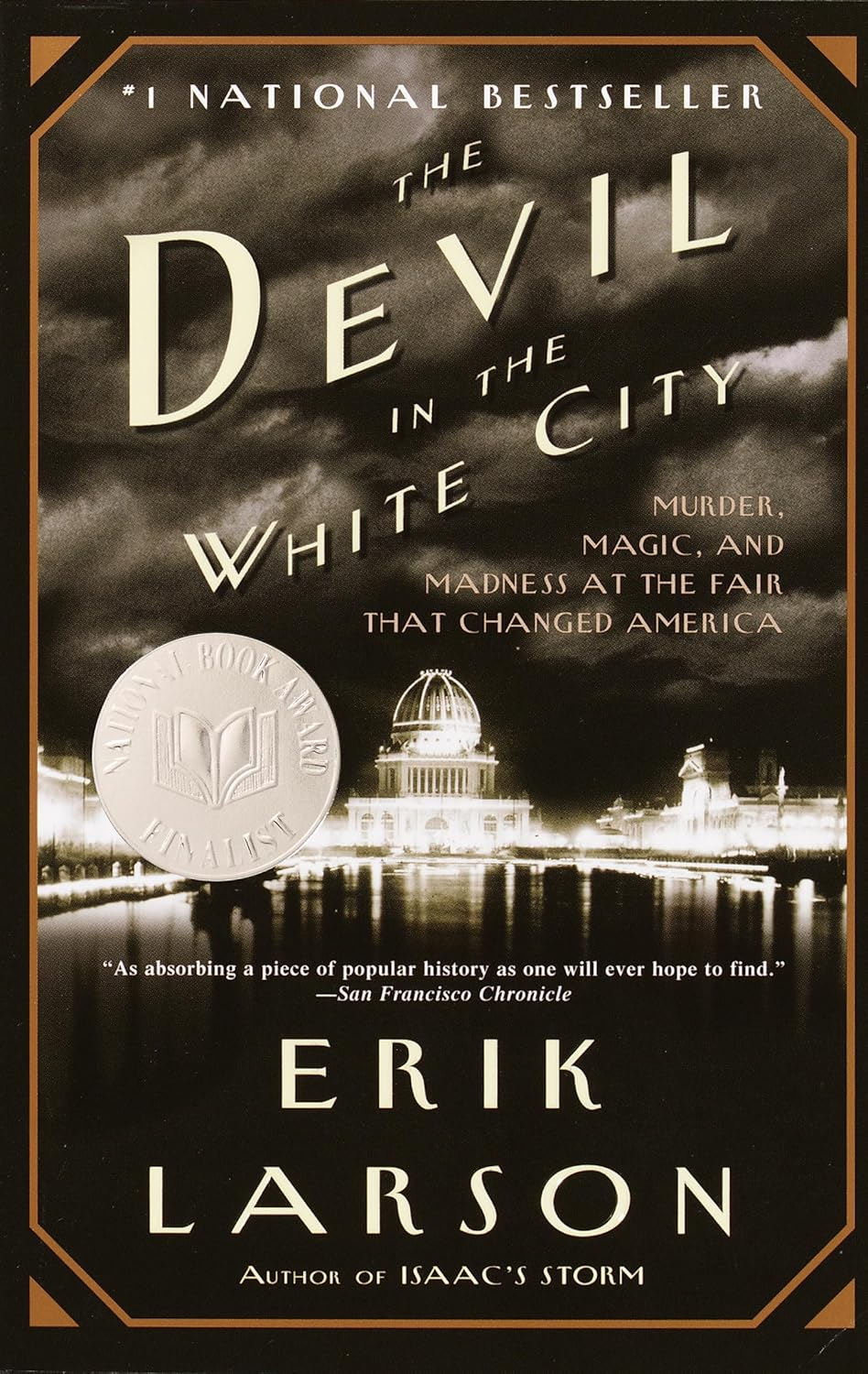
I love it when a discussion comes together in the comments on a post. Recently Renee Roberson and I were discussing Erik Larsen’s The Devil in the White City. You can see the conversation on Jodi Webb's post "Why Good Writers Read Bad Books." Renee disliked it, but I love it. 

Obviously, different people love different types of books, but she diagnosed an important problem. The book had been misidentified when it was recommended to her book club. They were told it is historic fiction and true crime. While it deals with true crime and a serial killer, it is a nonfiction history about the Chicago World’s Fair and a serial killer that operated against that backdrop. 

What’s the big deal? So, it’s nonfiction and not fiction. Surely a book lover could get over that. 

The problem is focus and pacing. True crime is tense and fast paced. Danger and deceit keep the reader turning the pages. History? The pace is going to be much slower because you must pull in so much material. This is all about the Gilded Age and is as layered and complex as a Gilded Age drawing room. There’s landscape architecture, architecture, and city politics. What? Oh, right. A murderer. He’s in there too, but he is only a part of a very complicated whole. People who read history are okay with that. People who read true crime may be, but it is going to help if they know what they are getting into. 

Call your book the wrong thing, and you are going to lose potential readers. Call your manuscript the wrong thing and you are going to lose potential sales. 

So how do you make sure you’ve got it right? A big part of it is knowing the market. If you read in a certain area, then you are going to have a better idea what to call a manuscript. I read a lot of mysteries. I can explain the difference between a cozy, a police procedural, and noir. Although I enjoy fantasy, my recent reading is more science fiction. Because of this, I have only a vague idea of what a romantasy is versus a cozy fantasy. I’m much more familiar with older terms like high fantasy, steampunk, and Arthurian. 

Reading your competition but still not sure what to call your own writing? Read articles about writing mystery or fantasy, essays or whatever it is that you write. Don’t forget to look up “types of fantasy” or “mystery subgenres.” And don’t read just one list but several since they are sure to have different sub-genre listed. For example, I just did a quick search and only one of three articles I skimmed included Wuxia fantasy. 

A third way to find the right term is to read reviews. Do you have a mentor text? Google it and read reviews. Be sure to look for professional journal reviews. Skim them for phrases like “a perfect example of real crime” or “the best cozy we’ve read this season.” 

Still not sure? Ask a book seller or librarian. They need to know how to find things, and they often make book recommendations. If they can tell you what genre or subgenre your mentor text falls into, this can help you categorize your own work. Categorize it correctly and you are that much closer to helping your readers find your work. 

--SueBE

  • Click here to find her newsletter.
Sue Bradford Edwards' is the author of over 60 books for young readers.  

She is also the instructor for 3 WOW classes which begin on the first Monday of every month. She teaches:
Read More »

Promote Your Book at the Library

Sunday, January 14, 2024
My last office job was just around the corner from my local library. It was heaven! I would stroll down on my lunch hour and never missed a used book sale, speaker or after work event. My frequent visits taught me a few things that could help an author promoting their book.

Libraries Like to Say Yes
Chances are, if you are a free speaker, you will probably be welcomed to the library. You can propose a book reading, a talk about writing or a presentation on something related to your book. Offer several options. Maybe they’ll want multiple events! 

Help with publicity. Provide a media kit with the basics about your book as well as templates for flyers, social media posts and press releases for the local media. Make it simple for the library to promote your event.

Yes, the people who come to the library are book lovers. But are they book buyers? Increase your sales by reaching beyond the library patrons and beyond your social media community. Visit local offices, organizations, restaurants and shops near the library and with an event flyer for them to display. 

Libraries Like Fundraisers
Libraries seem to have ever increasing budgets and ever decreasing incomes. So, fundraising activities are a constant with libraries, especially small town locations.  They also introduce the library and all its services to people who aren’t regular library patrons. Library fundraising isn’t just used book sales. In the past year, my library has had a wide variety of fundraisers including Plant and Sip (plant a succulent and drink/learn about local wines), Tarot Readings, Mini Golf in the Library and Murder Mystery Dinner Theater.

Can you create an event that people will want to attend AND promotes your book? Think beyond writing workshops that limit you to budding writers – and are normally free. If you host something fun to do but related to your book, everyone wins. Attendees have fun. The library receives activity fees. You introduce your book to a new audience. 

Nonfiction books are naturals for classes if you can connect a craft, new skill or game to your books. Novels can have fun events too. Is one of your characters a baker? Bring sugar cookies and teach a class on cookie decorating. Does it happen in Arizona? Plant cacti gardens. Do your characters attend weekly yoga classes? Yoga in the stacks!

Libraries Like a Sure Thing
Creating a fundraising event for the library may seem like a lot of work but it doesn’t have to be a one-time event. At my local library many successful events are held annually. Some are held even more frequently with a seasonal twist. Plant and Sip was held for Valentine’s Day, Halloween (Potions and Plants), Mother’s Day and Summer. So come up with a winner and you could be invited for an encore performance. You can also extend your reach by having an adults-only version and a family/kid version. We’ve had events so popular they sold out in the first week, encouraging the library to add additional dates.

Libraries Like a Big Event
Worried not enough people will visit the library if your book is the only draw? Check their past events for group events. My library holds a Metaphysical Market featuring vendors with crystals, aromatherapy, candles, books and more. No group events that fit your book? Suggest one. Could you convince local authors to attend a Meet the Authors event? What about local artisans, authors and food retailers for a special event like Small Business Saturday or Christmas in July? Bring your idea and a list of possible participants to your local library. They can charge a small table fee and all the participants will benefit from a larger crowd. There’s power in numbers.

No matter what event you plan at the library don’t forget to take time to network. The people attending could be looking for a speaker for their book clubs, service organizations or social groups. An artisan I know taught a paper star class at her local library. She was hired by one of the attendees to teach a private paper star class to her employees as a holiday bonus. You never know what will happen at a library event!

Have you planned any events at your local library? 

Read More »

Judging a Book By Its Cover

Thursday, November 16, 2023
When I was a little girl, I put a lot of stock into the saying, “You can’t judge a book by its cover.” Though not so much with actual books; in my day, hardbound books were solid colors with those plastic covers that were always annoyingly falling off the book. 

But when it came to the spirit of the saying—that it’s what’s on the inside that matters—I was all in. As a quiet kid outside the home, I sincerely hoped that people would see beyond my shyness to the brilliant and flashy girl on the inside. 

And so it’s a little bit funny now that, as a self-published author, I’m singing a different tune. Namely, that the book cover matters. Quite a lot, actually. 


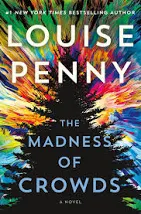
Oh, not if you’re a profitable author. I was reading Louise Penny’s The Madness of Crowds when I did my book cover research. It has an artsy, geometric design on the cover, and I remember thinking that I’d have no idea what the book was about, based on the cover. But it’s not the cover selling the book. It’s Louise Penny and Inspector Gamache. 

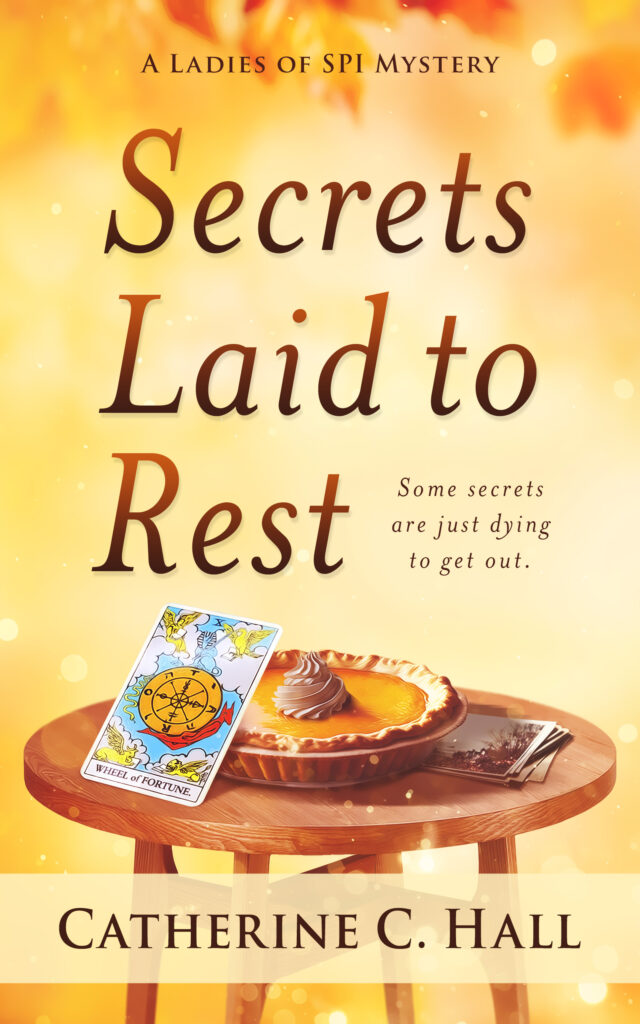
Catherine C. Hall might initially get readers from friends and family. But to attract readers who don’t know her from Adam’s house cat? That was going to start with the cover, a point made clear to me recently when I heard from my local library system. 

My library system serves one of the largest and most populated metro Atlanta counties; Lord only knows how many books—hardbound, digital, and audio—are in the system. When it comes to those of us outside the trade publishers—regional or indie published authors—it’s not easy to get a book on the shelves. But it is possible. One fills out the form and waits. 


So I filled out the form, dropped off a copy of Secrets Laid to Rest, and crossed my fingers. About a week later, I received an email, inviting me to give an Author Talk at one of our libraries. Not till March, but still, I was pretty darn excited! 

Just this week, the staffer called. We touched on timing, how I had wanted to release the book last fall but the cover took way longer than I planned. And she said, “Oh! It’s a great cover. I noticed it immediately.” 

She happened to be in the office of the staffer who gets the proposals and my book was on the desk. The cover caught her eye. I joked that it was worth it then, ‘cause that cover was a whole thing! 

“We get a lot of books here,” she added. “But few of them look as professional as yours.” 

Simply based on the cover, she had judged Secrets Laid to Rest to be professionally produced, a lesson to learn if you’re self-publishing. But I still think it’s important to look beyond the outside to what’s inside. So make sure the content of your book is as brilliant (and flashy!) as your cover!

Author, Secrets Laid to Rest
A Ladies of SPI Southern Cozy Mystery

Read More »

Three Things You Need to Know about Comp Titles and a Tool

Friday, October 02, 2020


I hate finding comp titles. Comp titles, or comparable titles, are books that are similar to your book in two ways. The content is similar and the audience is similar. 


It pays to know comp titles for your book for several reasons. If you can name five comp titles, you have a good idea who your audience is. That’s why agents ask for comp titles when you query. Comp titles can also help you project what the sales for your book will be. That’s why editors and publishers ask for comp titles. If you are self-publishing, comp titles can help you identify your audience and track down potential buyers. 


When you are contemplating comp titles it helps to ask yourself “what is my audience reading right now?” Just keep these three things in mind as you select comp titles. 


Your titles should be recent. 

As a children’s author, I might be tempted to name The Lorax as a comp title for a picture book and San Domingo, the Medicine Hat Stallion as a comp for a middle grade horse book. But these books are far too old. I should limit my titles to books published in the last 2 to 3 years. 


Don’t pick an “extreme” title. 

Don’t pick a book that had poor sales (mine will do better!) or a blockbuster (see what I will do, too!). Instead, pick a book with solid sales. The Lorax and San Domingo were both written by Big Names, Dr. Seuss and Marguerite Henry, so they are disqualified yet again. 


Pick like books. 

If your book is a picture book, your comp titles should be picture books. If your book is an e-book, pick e-books. You’ve written a romance? Than your comps need to be romance titles. 


How do you find comp titles that meet all of these requirements? You can ask for help at your local book store or library. After all, it always pays to pick the brain of someone knowledgeable. Or you can use NoveList Plus, a tool I discovered reading Jenn Mecks’s Writing Cooperative post on comp titles, A Better Way to Find Comp Titles for Your Novel


You’ll have to use NoveList Plus through your library. I found it on electronic databases that my system allows you to link to online. To replace The Lorax, I keyed in a search on “environmental fantasy” which gave me 331 results. I narrowed it by age (0-8), fiction, and keyed in 2018 to 2020 for the range of release dates. That narrowed my results to 18 which would be a manageable list to explore. 


Comp titles may not be easy to produce but if doing so helps you identify your audience and potential sales outlets, isn’t it worth your time? 


--SueBE


Sue Bradford Edwards' is the author of over 25 books for young readers.  To find out more about her writing, visit her blog, One Writer's Journey.


Sue is also the instructor for  Research: Prepping to Write Nonfiction for Children and Young Adults (next session begins October 5, 2020) and Writing Nonfiction for Children and Young Adults (next session begins October 5, 2020). 

Read More »

Why Consistency Is So Important to Your Writing (and What Should We Do About it?)

Thursday, May 21, 2020
One thing that may have many of us feeling unsure or out of sorts right now is the conflicting information that can come with stories and information about the current pandemic. Some of it is because we live in a 24/7 news cycle, and scientists and doctors are making new discoveries daily. Some of it is rumor and hype. But when I talk to my friends and family, this is one topic that's often brought up: Everything feels so inconsistent. People are asking: Who do I trust?

Think about your best friend or a relative you are close to. You've established trust and a bond, and one of the ways this happened is because the person was consistent. He or she followed through on promises and showed up when s/he said they would. S/he was always there for you with consistent behavior.

So consistency is important to human beings; and as you know, human beings are your readers--at least for now, until we teach other creatures to read or life is found on another planet. (I'm only kidding--sort of.)

When I was thinking about this post, I thought of many, many ways that we have to be consistent when we write or because we are writers. I decided I would turn this topic into a series of blog posts. Today's post gives you an overview of the topic; and then in other posts throughout the end of May and into June, I'll provide some tips in different areas for how to be consistent in your writing and keep your readers happy!

Here are some areas where consistency is important both in your writing and in your career:

  • Point of view character
  • Worldbuilding
  • Characters' descriptions
  • Characters' names
  • Characters' motivations and feelings
  • Spelling (i.e., U.S. vs U.K.)
  • Formatting
  • Branding
  • Correspondence
  • Social Media
and more...

This is where you come in. Where do you think it is crucial to be consistent, in both your stories, novels, essays, or whatever you write and in your career and marketing. Is there an area where you excel or one where you struggle? Please let me know in the comments. Plus, if you have any questions in this area, please also leave them in the comments, and I will answer them in following posts.

Here's to being consistent in an area of our lives we can control--our writing! 

Margo L. Dill is a writer, editor, and writing coach and instructor, living in St. Louis, MO, with her nine-year-old daughter and her one-year-old lab mix dog, Sudsi. To take Margo's next novel writing course, go here and sign up before June 5! She will help you be consistent when writing your novel or memoir. 

Read More »

Ennui: Not So Boring After All

Wednesday, April 29, 2020
I was talking to a friend the other evening and she was annoyed with herself: “I always thought if I had the time, I’d work on my calligraphy, clean out the garage…”

Welcome to the World of Pandemic Ennui, y’all.

I love that word “ennui.” It’s one of those words you don’t hear much anymore, but when I do think of it, I picture a woman reclining on a chaise longue (also a word out of fashion), a hand resting against her forehead, while the other arm falls to the side, fingertips grazing the floor. Or there’s Libs, when she’s not being a Tiny Terror:


The short definition for ennui is boredom, but it’s so much more than that:

noun; ennui
a feeling of listlessness and dissatisfaction arising from a lack of occupation or excitement.

Doesn’t that just about sum up where many of us are at right now? And though the world is slowly starting to open again, it will be in phases, and so we have days of ennui ahead of us still. But that doesn’t mean we can’t lie around and entertain our thoughts. Like what matters to us as writers.

I’m thinking about skill sets; the ones I have and the ones I want.

Take online communication. Like blogs, for instance. You may have noticed an uptick in blog tours lately. Which makes sense when you can’t get out and travel to bookstores and libraries; you have to bring the book to where people are. Blogs have always been an important “distribution” tool for writers, but I suspect they’ll become even more integral in marketing/promotion. And there are other tools to consider…starting a newsletter or (re)building a website. What’s going to work, career-wise?

And of course, online communication includes social media, which has been a boon to creatives during this shut-down time. At last, we all have a day (or twenty) to take a look around at ALL that’s out there in the virtual world. Media beyond YouTube, Twitter, and Instagram. Maybe TikTok? We have a minute now to do some browsing among writers we like or writers like us. It’s a great opportunity for a little comparison shopping, if you will, to see what’s a good business fit.

Perhaps this is the moment you—and by you, I mean me—have been waiting for, the chance to get a long-postponed project done. Like making a powerpoint presentation. Of course you—and again, I mean me-- know how, but are you stuck in the basics when you could add so much more pizazz? Or create a book trailer! Or learn photoshop! There are classes that can teach you, me, all of us, EVERYTHING—and at a price for any budget.

Finally, whilst we’re stuck in our ennui, perhaps it will occur to us that there’s a good reason that we’ve never quite got round to what we thought we always wanted to do. Namely, that we don’t really want to do it.

Who wants to clean out a garage? And maybe we haven’t signed on with Instagram because we have our hands full with trying to cook any kind of meal much less one that’s picture-worthy?!

Ahem. The point is, we can be productive stretched out on a chaise longue in the drawing room (or in my and Libby's case, wherever). All it takes is a little thought to what we do want to do, how we want to spend the precious gift of time we’ll have.

One day, when the world opens wide its arms and welcomes us back.

~Cathy C. Hall


Read More »

Don't Forget What You've Accomplished or I Wrote a Book

Thursday, February 20, 2020
by Chris Schroeder (Flickr.com)
All right, Muffin readers, I'm here to encourage us all a little today. A lot of my recent posts have been about indie publishing or the writing process, and I thought I'd take a break from that and get a bit simple. Here's why.

The other day, my book, Finding My Place, was sitting on the kitchen table. I recently wrote a prequel for it and got great feedback from my critique group, but there were some details of this story I couldn't remember. So I'm rereading to make sure my prequel is in alignment. Anyway, there's my book, on the kitchen table, and I had this overwhelming proud moment of, "You know what, I wrote a book. And I had it published. Plus, I go to schools and kids and parents buy it. It's not even half-bad."

Then the next thought: Why am I so hard on myself? Why am I almost apologetic that I wrote a book, got it traditionally published, and want people to buy it and read it? Why do I downplay it when people say to me: You wrote a book. Cool! 

Well...I haven't talked to a therapist about that yet, but my guess is that I'm submerged in the writing culture where a lot of people have written a book, and some have had more success than others, more success than me. So, since so many people I know have done this same thing, maybe it doesn't seem like such a big deal.

But to the rest of the world, not in the writing culture, writing a book and seeing it through to publication is a great accomplishment. And it should be to us too! We should not be apologetic that we want to share our creation with the world, that we want to find readers, that as children's writers, we want to get into schools and share our message and our books.

I told myself that day, "It's okay, Margo. You should feel proud. Of this book and all your books. This is tangible proof of a goal you set and accomplished."

But I'll be honest. I have to keep telling myself that. I'm a people pleaser by nature, and I'm trying to be a reformed people pleaser. It's hard. So I worry about everything I say and do way too much! Trust me, my friends are always saying things to me like, "Overthink much?"

When I have to ask schools if they pay for authors to talk or ask teachers to send home my book flyers or ask my newsletter list to write a review for me, it's excruciatingly difficult, and I have to force myself to push send. But I do it. I do it because I know it's what needs to be done for success and that other authors are doing it. I do it thanks to the book, You Are a Badass, which is so encouraging. I highly recommend it for anyone who has any of the difficulties I've talked about in this blog post today.

If you submitted a short story this week, that is amazing! If you finished your book manuscript, jump for joy! If you are holding a book you wrote in your hand, wow! Honestly, just wow! Yes, you'll have to get back to the hard work and turmoil of being a writer, but for a minute today, celebrate the amazing goal you accomplished. I know for sure that there are thousands (at least) of people with half-written manuscripts or who haven't even typed one word of a book idea. And you are no longer in this group.

Now, after you've toasted yourself, get back to work. And don't be afraid to ask someone to buy your book!

Margo L. Dill is a children's author, writing instructor, freelance editor, and WOW!'s managing editor, living in St. Louis, MO, with her daughter and dog. To find out more about Margo, check out https://www.margoldill.com. Margo's next class is Writing a Novel with a Writing Coach and starts on March 6! 

Read More »

Trying To Get a Book Published Is Not So Easy...

Monday, October 28, 2019
Last week, I announced that I would have a new picture book out titled, Listen, Lucy! Listen! A Red Ribbon Week Adventure, and I do! I did it! I got the book out before a lot of schools are celebrating Red Ribbon Week and before the National Family Partnership's Red Ribbon Week dates of October 23 to October 31, 2019. I am thrilled.

But getting to this point was not easy. I share this story with you today for a couple reasons:

1. Maybe your own road to publication is not going as smoothly as you hoped, and you are feeling stuck with limited options.

2. My story is not atypical for any creative area--whether you write novels, paint landscapes, photograph family portraits, or create Christmas wreaths. Being creative, producing your work, and selling it is not for the faint of heart--but it is possible. "Where there's a will, there's a way."

I wrote this picture book over fifteen years ago when a friend of mine told me she was having trouble finding a good Red Ribbon Week book to share with her students. She said there are a lot of books--nonfiction--that talk about saying NO to drugs, but not many with a story that is also entertaining. So I wrote this manuscript; and of course, I revised and revised and tinkered and debated and all the things that picture book writers do.

Then I found a publisher. It was a small, regional publisher who was getting into picture books, and she had high hopes for a series of Lucy books, and so did I! She found an illustrator who worked in water color. We signed a contract for royalties, and I was even assigned an editor. The artist finished her illustrations, and there were a few back and forths about the cover and a couple of the illustrations, and then...NOTHING. I mean NOTHING.

Eventually, I discovered that the publisher suffered from some family problems and physical ailments and went out of business or at least stopped publishing anything new, and I gave up on Lucy. Until...everyone started self-publishing their books and doing well. It's very hard for a picture book author to self-publish because you have to find an illustrator, and your book price is hard to set as inexpensive if you print them in color because that is not cheap. But the brain wheels started turning and turning and turning, and finally, I contacted the illustrator and asked if she had the originals.

That was about two years ago, and I did nothing until the spring of this year. I realized that I had the capability to create a PDF of this book--but then I was still stalling. I had a form of writer's block until I began listening to podcasts on book marketing. One point the podcasters talk a lot about is giving something away for free when someone signs up for your email list. Before this picture ebook, I had designed a practical parenting worksheet for email newsletter subscribers, but I wanted to give something more. The lightbulb went off, and I decided my free gift would be Listen, Lucy! Listen!

Once I decided I would give this book away for free and use it as a marketing tool, the design took off, and I finished it up in a few weeks with my critique group looking over it to make sure it was done well. And then I emailed the illustrator to tell her I had finally decided what to do with Lucy and that she could use it to giveaway, too, and...

no email back.

I started to worry, and so I turned to Google, and sure enough, Pam Withroder, my illustrator, had died last year. Ugh. She never got to see the finished product, and I know that she had poured her heart and soul into those illustrations, so I was very sad that I had waited so long to finish it, and she never saw it.

But now it's done. And a lot of teachers have already downloaded it to use it, and I'm super excited that I finished a project and published it in spite of all the difficulties Lucy's story had getting out into the world.

If you're interested in reading Listen, Lucy! Listen! or you know a teacher or parent with preschoolers to second graders, then please click this link or pass the link on. (Scroll to the middle of the page, and you'll see the newsletter sign up and information about Lucy!) To receive the book for free, all it takes is an email address.

And to the authors and illustrators out there, to get your book into the world, it takes grit and determination--but you can do it!

About Listen, Lucy! Listen: A Red Ribbon Week Adventure:  It’s Red Ribbon Week, and Lucy is ready to learn about being drug free. But there’s one problem. Lucy always forgets to listen. She tries to listen to what her teacher Mr. Grant says, but she gets distracted by polar bears and police dogs. The whole week is a total disaster for Lucy, and she has to figure out the secret of listening. Will Lucy discover how to be a good member of her classroom in time to celebrate being drug free? Join Lucy, Mr. Grant, and her classmates for a Red Ribbon Week adventure! Click here to enter an email address and receive your book for free.


About Margo L. Dill: When she's not writing picture books, Margo is working on longer fiction and teaching novel writing classes, such as WOW!'s Writing a Novel With a Writing Coach, that starts THIS FRIDAY, November 1. It's not too late to achieve your 2019 goals of working on or finishing a novel with Margo's help. Register here before the price increases in 2020.
Read More »

Don't Ignore YouTube Just Because You're Not 8 to 16

Thursday, September 12, 2019
So the other day on my Facebook business page, I posted this meme:


Parents and grandparents of elementary school kids should be nodding (and laughing, come on--it's funny) along with this hysterical meme from Debi Downer on Facebook (which you should follow by clicking that link because she is super funny!) because you understand the YouTube craze like no other, I'm sure. My daughter who is 8 sometimes watches YouTube on our Smart TV instead of Netflix or Hulu--instead of Disney! (gasp) And she watches people play video games or do slime challenges or play "games" where the kids switch clothes with each other. She wants to talk about slime and create her own challenges all the time, and I will admit that I'm often not tuned into the conversation because I just don't understand. 

But this "blasted" YouTube is where kids are. This is where teens are. This is even where adults are--finding TED talks, how to change their oil, or how to make themselves look better through Photoshop. Recently, when I taught the School Visits and Author Talks class for WOW! (next one is in October!), even I used YouTube videos as part of my material. Authors are making videos of their presentations online, so that interested schools can view them and see what the authors' speaking styles are like. And I used these videos as examples for WOW! students on how to create engaging and interactive presentations for kids. 

Recently, I was listening to the Jen Hatmaker podcast and her guest was HEAVEN TAYLOR-WYNN from MediaWise, a media literacy project that aims to teach 1 million teens how to sort fact from fiction online by 2020. (This really does have to do with videos and YouTube, just bear with me...). During the interview, the following exchange took place:

Jen Hatmaker: One thing I know as a mom of five teens and just post-teens is that... they are inhaling videos. That is absolutely how my kids are getting their information. Is this what you're seeing?

Heaven: Yeah, well like you just said, it's hard for not just teens but for adults as well—it's so much content, so much information coming at us all the time. But some new research just came out recently from Common Sense Media, and they concur with what you're finding. Teens are getting most of their information from social media and from YouTube. 
So, in the class I just taught, I suggested to WOW! students that making a YouTube video of yourself presenting or speaking or even reading your books is a great idea. If you're a young adult author, you should be making videos and posting them to Instagram, Snapchat, YouTube, and Twitter. (Teens are not on Facebook. Facebook is for us old people.)

Look, I am giving this advice, and this is how many videos I have made: 0.

But V-I-D-E-O is written up on my dream/goal board now, and I know it's something that Angela and I have talked about for social media: Instagram stories and FacebookLive and more. So many videos and information are free out there; and if you want people to pay for your books or your speaking or your class, then you're probably going to need to give them a taste of what you're like because you can be sure that some other author is doing that already.

I'll be honest--this video craze scares me--I'll have to shower and put on makeup!  But we've all heard the quote from Dune about fear being a mindkiller, so join with me and let's try to make some videos and further our careers.

The YouTube addict is pictured above...:) 
The next School Visits and Author Talks for Children’s and YA Writers and Illustrators starts on October 16 and ends before Thanksgiving and the crazy holiday season. If you are a children's or YA author, giving these talks is a must for your marketing plan. Sign up here. Find out more about Margo on her site.

Read More »
Powered by Blogger.
Back to Top