by Sue Bradford Edwards
A friend recently recommended a mystery with an FBI profiler as the detective. I turned it back into the library largely unread not because I didn’t have time to read but because the author butchered her setting. The murder took place at a well-known museum in the city where I live. When she described what the FBI agents could see from where they stood beside the body, I cringed and then closed the book. There was no way this author had ever seen this museum herself, but an interview with someone who had been there would have provided the detail she needed to create an accurate setting.
I faced a similar problem when trying to describe the relationship between a pipeline and the river it crossed. Instead of hoping I had it right, I contacted the author of an article I used as a reference. Reaching out to her led to a lengthy phone interview and a better understanding of my topic.
Over the years, I’ve contacted geologists, virologists, wildlife biologists and more. I explain I am working on an article or book and I’m not sure I understand the material I’ve found. Or I point out a gap in what I’ve read. Then I ask for help to avoid misleading my reader. Very few people have turned me down.
Here are four tips to help land the interviews you need to bring accurate details to your writing:
Read More »
A friend recently recommended a mystery with an FBI profiler as the detective. I turned it back into the library largely unread not because I didn’t have time to read but because the author butchered her setting. The murder took place at a well-known museum in the city where I live. When she described what the FBI agents could see from where they stood beside the body, I cringed and then closed the book. There was no way this author had ever seen this museum herself, but an interview with someone who had been there would have provided the detail she needed to create an accurate setting.
I faced a similar problem when trying to describe the relationship between a pipeline and the river it crossed. Instead of hoping I had it right, I contacted the author of an article I used as a reference. Reaching out to her led to a lengthy phone interview and a better understanding of my topic.
Over the years, I’ve contacted geologists, virologists, wildlife biologists and more. I explain I am working on an article or book and I’m not sure I understand the material I’ve found. Or I point out a gap in what I’ve read. Then I ask for help to avoid misleading my reader. Very few people have turned me down.
Here are four tips to help land the interviews you need to bring accurate details to your writing:
Do your homework. An interview is a great way to gain access to the latest information and fill in any gaps, but it isn’t a shortcut. You have to do your research ahead of time. Read, watch, and listen to all that you can find. That way you’ll know what information isn’t already accessible to your reader.
Write out your questions. Before you contact the person you want to interview, take the time to write your questions. Then you can include the questions in the body of your e-mail. In my experience, many professionals want to know what you will be asking before they say yes or no. It helps them see the slant of your work.
E-mail first. Most likely, the person you want to interview has a busy schedule. They may not be in the office or have their hands free to answer the phone. Send them an e-mail introducing yourself, stating what you want and why and that you are including your questions. If you don’t hear back from them in a few days, you can give them a call.
Be ready. Occasionally you will reach someone who has time to do an interview today but not tomorrow. Call them when you too have time to do the interview. Although you want to be ready to do it now, don’t be surprised if they want to put it off a day or two.
Interviews with experts help ensure that your piece contains accurate detail and the latest information. These two things can help you catch an editor’s attention.
* * *
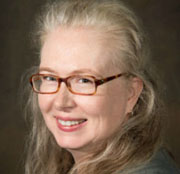 Sue Bradford Edwards is a nonfiction author with over 600 sales to her credit including 30 nonfiction books for young readers. Sue has also published numerous crafts, activities and how to pieces of various kinds. Her most recent books are Cancel Culture (Abdo, 2022), The Who (Abdo, 2022), Robotics in Healthcare (Brightpoint Press, 2022), Being Black in America (Brightpoint Press, 2022), The Impeachment of Donald Trump (Abdo, 2021), Coronavirus (Abdo, 2021), The Murders of Tupac and Biggie (Abdo, 2020), The Assassination of John F. Kennedy (Abdo, 2020), Stem Cells (Focus Readers, 2020), Earning, Saving, and Investing (Abdo, 2020), The Dark Web (Abdo, 2020), The Evolution of Mammals (Abdo, 2019), The Evolution of Reptiles (Abdo, 2019), Labradoodle: Labrador Retrievers Meet Poodles! (Capstone, 2019), and Puggle: Pugs Meet Beagles (Capstone, 2019). In addition, her children’s nonfiction has appeared at Education.com, in Gryphon House anthologies, in Harcourt and Houghton Mifflin testing packages and also in READ and Young Equestrian Magazine. Her nonfiction for adults has been published in Writer’s Market, Children’s Writer newsletter, WOW! Women on Writing, Writer’s Digest, The Children’s Writer’s and Illustrator’s Market, The Writer’s Guide, and Magazine Market’s for Children’s Writers. Sue is also a dedicated blogger, writing for the Muffin as well as her own personal blog, One Writer’s Journey.
Sue is also a WOW! Women on Writing instructor. Check out her upcoming workshops, Research: Prepping to Write Nonfiction for Children and Young Adults , Writing Nonfiction for Children and Young Adults and Pitching, Querying, and Submitting Your Work. More information about our classes can be found on our classroom page.
~~~~~~~~~~~~~~~~~~~~~~~~~~~~~~~~~~~~~~~~~~~~
Would you like to participate in Friday "Speak Out!"? Email your short posts (under 500 words) about women and writing to: marcia[at]wow-womenonwriting[dot]com for consideration. We look forward to hearing from you!
~~~~~~~~~~~~~~~~~~~~~~~~~~~~~~~~~~~~~~~~~~~~
Write out your questions. Before you contact the person you want to interview, take the time to write your questions. Then you can include the questions in the body of your e-mail. In my experience, many professionals want to know what you will be asking before they say yes or no. It helps them see the slant of your work.
E-mail first. Most likely, the person you want to interview has a busy schedule. They may not be in the office or have their hands free to answer the phone. Send them an e-mail introducing yourself, stating what you want and why and that you are including your questions. If you don’t hear back from them in a few days, you can give them a call.
Be ready. Occasionally you will reach someone who has time to do an interview today but not tomorrow. Call them when you too have time to do the interview. Although you want to be ready to do it now, don’t be surprised if they want to put it off a day or two.
Interviews with experts help ensure that your piece contains accurate detail and the latest information. These two things can help you catch an editor’s attention.
* * *

Sue is also a WOW! Women on Writing instructor. Check out her upcoming workshops, Research: Prepping to Write Nonfiction for Children and Young Adults , Writing Nonfiction for Children and Young Adults and Pitching, Querying, and Submitting Your Work. More information about our classes can be found on our classroom page.
~~~~~~~~~~~~~~~~~~~~~~~~~~~~~~~~~~~~~~~~~~~~
Would you like to participate in Friday "Speak Out!"? Email your short posts (under 500 words) about women and writing to: marcia[at]wow-womenonwriting[dot]com for consideration. We look forward to hearing from you!
~~~~~~~~~~~~~~~~~~~~~~~~~~~~~~~~~~~~~~~~~~~~