Showing posts with label freelance editing. Show all posts

The Wonderful World of Freelance Editing: 5 Fabulous Perks of Freelance Editing

Saturday, April 06, 2024
 
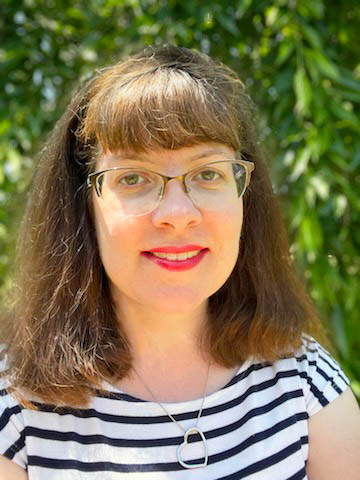
By Melanie Faith
 
Do you love to read? Have you participated in a writing workshop or beta read for a friend? Or taken a creative writing class to learn the building blocks of prose and poetry? Have you offered suggestions for a friend’s essay or creative piece? Are you a creative writer? Are you a fan of precise or beautiful language? Do you love talking about the writing and revision processes? Do you enjoy discovering an individual author’s voice and offering encouragement?
 
If the answer to any of these questions is yes, freelance editing may very well be a wonderful fit for your natural skills, bring enjoyment, and offer some spending money or a helpful additional income to your household while doing something you already love—communicating and developing fun-to-read, page-turning literature for fellow readers.
 
Let’s look at just a few of the many perks of becoming a freelance editor. 
 
1. One of the best parts of freelancing is working directly with a motivated writer who is open to suggestions for making their manuscript clearer and more gripping to readers. We all know how hard it can be to spot errors or inconsistencies in one’s own writing, and as a freelance editor you get the privilege of offering feedback that the author may be too close to the manuscript to notice while self-editing. You work as a team to sculpt the work to optimal length, genre specifications, literary devices, pacing, character and/or plot development, and so much more.
 
2. You also will likely expand your network and build a bond or a friendship with authors whose manuscript you have the chance to review. It’s a sacred, meaningful honor to be entrusted with a writer’s work, and while bringing out the best in the writing, editors and writers work towards the same goals. Once you have offered supportive, clear feedback to an author on one project, they often return when they have other manuscripts they’d like constructive, helpful suggestions on in the future.
 
3. Freelance editors have freedom of time and freedom of project-choice. Freelancers set up a schedule and a deadline that mutually work for both writer and editor. Freelance editors also enjoy the freedom to pick the kinds of projects and the genres of writing that most excite us. Do you love reading thrillers and fantasy but dislike mysteries and dystopian work? As a freelancer, you can pick and choose the projects that you feel most excited to offer feedback on and that most inspire you.
 
4. Most freelance editors begin their small businesses as part-timers, so whether you are working another job, serving as a caregiver, raising a family, running another small business, or juggling multiple life stages and vocations, freelancing offers the flexibility to work from home or a café or shared office space at times that work best for you, your schedule, and your life circumstances. I’ve worked with freelance editors and students of all ages—from their twenties through their retirees—who start editing, and these editors have found that freelance editing fits into their lives around other life events and responsibilities with a little organization and planning.
 
5. You can work with clients from your local neighborhood or from all around the world at a time that is best for you and your clients’ needs.
 
Clearly, freelance editing offers countless perks and the satisfaction of adding quality, entertaining, meaningful books to the literary landscape. If you have any interest at all in this exciting, flexible field, it’s well-worth looking into and giving it a whirl. 
 
***
 
An Insider's Look at Launching as a Freelance Editor webinar with Melanie Faith
Melanie Faith holds an MFA from Queens University of Charlotte, NC. She is an author and freelance editor with more than 10 years' experience in the field. Her upcoming webinar on freelance editing, An Insider's Look at Launching as a Freelance Editor, is on Friday, April 12th. 
 
To learn more about Melanie’s writing, teaching, and photography, please visit: www.melaniedfaith.com, Twitter: @writer_faith, and Instagram: @frompromisingtopublished99.
Read More »

Launching into Freelance Editing: Tips for Choosing Your Genre Specialties

Friday, September 08, 2023
Freelance Editing

By Melanie Faith
 
There’s never been a better time to break into freelance editing. With the rise of e-books and digital publishing, many small-press publishers and individual authors who self-publish actively seek the assistance of editors who are enthusiastic about their craft.
 
When you think about beginning as a freelance editor, in addition to creating a website and posting your editorial availability on your social media, another step to explore is to decide what genre or genres you’d most like to edit.
 
Many editors specialize in a few areas of editorial work. While at first glance just mentioning that you are open to editing seems like enough, in actuality you are helping both yourself and your future clients by listing a few of your favorite genres that you have a passion for reading and editing as examples. These might also be genres you write as well.
 
Think of it: fiction alone has countless exciting subgenres, from mysteries, middle grade, thrillers/suspense, horror, new adult fiction, and graphic novels, to literary fiction, sweet romance, sensual romance, science fiction and fantasy, westerns, comedic/humorous fiction, historical fiction, and many more.
 
Similarly, nonfiction manuscripts include a diverse array of subgenres, from memoir to biography, journalism, and true crime, to flash nonfiction collections, autofiction collections, thematic anthologies, and flash memoir manuscripts, just to name a few.
 
Don’t forget that there are also exciting opportunities for editorial work in offering feedback to poets (from individual poems to batches of 3-5 poems to poetry chapbook collections and full-length manuscripts) and in offering personalized feedback on authors’ query letters, book proposals, grant proposals, contest entries, project descriptions, back-cover copy/descriptions, website copy, artist’s statements and author biographies for cover letters and/or website use, writing samples, and synopsis drafts.
 
Also, there are many authors specifically seeking feedback on shorter manuscripts, such as novellas and novelettes in countless fiction genres.
 
Remember that you can always begin with two or three types of editing and expand your range as opportunities come your way after your first few editing jobs.
 
Try this exercise:

I often recommend to my writing students who are interested in getting started as editors that they make a list of four or five of the favorite genres they like to read and/or to write. Get some paper, and list away!
 
Then, jot a few lines about what you love most about these genres; such an explication can be very clarifying.
 
After you’ve made your quick list (do this off of the top of your head and without pausing—first-thought, best-thought style), pick two or three of the genres on your list as your initial editorial specialties.
 
From reading and/or writing often within a genre, you already know a lot about pacing, characterization, dialogue, tropes within the genres, and so much more. You also have a natural passion for these genres which will make offering feedback to talented authors an especially fun and meaningful experience.
 
The sky’s the limit, and happy editing! 
 
***
 
Melanie Faith

Melanie Faith likes to wear many hats, including as a poet, photographer, prose writer, professor, editor, and tutor. She teaches workshops for WOW! Women on Writing. Her new webinar, An Insider’s Look at Launching as a Freelance Editor, is on Friday, September 15th. She’ll also teach a four-week Food Writing class, starting October 6th. Find out more about Melanie by visiting her website.
Read More »

Freelance Editing for Dummies

Tuesday, January 12, 2021


I mean the title of this post as a joke and in the most loving way possible. I had lunch recently with a friend and she was asking what tasks fall under my job as a freelance magazine editor. After I finished firing off a list of the tasks, she gaped at me. “That’s a lot of work, Renee! I had no idea all those things were part of an editor’s responsibility.” 

My "day job" is being editor for two monthly magazines in my area. One is a lifestyle magazine and the other is a smaller publication focused on residents of the community who are 55 and older. For each issue, I’m responsible for planning out the themes and content, getting approval for each article (from businesses, people profiled, etc.) assigning articles to freelance editors and photographers, writing additional content where necessary (I write the editor’s letter, a regular column and calendar of events for one magazine and at least one feature article and a calendar of events for the other). Once articles are completed, I edit them and upload them to Dropbox so our creative director will have everything in one place. When photographers share galleries of their assignments, I select my favorites and upload them as well. Once an issue is laid out on the page, I go through three to four rounds of copy editing the pages, and this includes captions for each photo and cover blurbs for the issue. 

I collect invoices from the writers and turn them over to the publisher for payment, and also reconcile any missing payments and invoices when those issues arise. I work to develop good relationships with writers, and welcome them to submit relevant pitches that our magazines can use for future issues. In addition to these two monthly magazines, our company also produces annual newcomer’s guides for two area Chamber of Commerce offices. When we’re working on these, I look over the content we already have on file and see what needs to be repurposed and what new articles we can assign to freshen up the guides. These editorial budgets are a lot smaller, so it requires creativity to give the guide a new look while continuing to share the same information about real estate, the school systems, healthcare, the dining scene, etc. 

There are always things for an editor to do. While I don’t manage our social media channels, I send a weekly list of five fun community events to our social media manager so she can share them with our followers. I also send her any relevant posts I think may help her with social media planning. I’m always looking through story pitches from PR agencies and writers to see if there’s anything I can assign ahead of time. I stay networked with local businesses and organizations to see how we can mutually help one another. 

It’s a lot. I’m fortunate the role of technology allows me to work remotely and set my own hours (some weeks require more hours than others), but there is a lot more to the role than just copy editing stories or writing a few articles each month. 

Do any of these editorial responsibilities surprise you? What would be your favorite part of this job?

Renee Roberson is an award-winning writer and editor who also hosts the podcast Missing in the Carolinas. Visit her website to read more about writing, reading and true crime.
Read More »

Growing Your Editorial Business--Safely!

Sunday, September 14, 2008
Doing well and in a hurry to grow your writing or editing business? Be careful. If you don't steer it in the right direction, your business can run into all kinds of problems. Small business consultants such as Inc. magazine's Rhonda Abrams offer several warnings:

1. Know what business you're in. What do your clients look to you to provide? What are you best at doing? Independent writers and editors today can go in all sorts of directions -- Web content provider, Web editing, copy editing, proofreading, ghostwriting, bookseller, book publisher, copywriter, marketing consultant, and even more. It can be difficult to narrow it down, but doing so can help you make marketing and overall planning decisions.

2. Concentrate on your core business first. Which activities actually bring in the money that pays your bills? Which clients or publications or subject areas comprise your core business? Take care of them first before expanding into other fields or markets.

3. Don't bet all your money on one horse. Over the years, our Network has seen several members run into trouble because a single client or publisher brought in most of their income -- then that client folded or moved on to other writers. Being dependent on one or two revenue streams is perilous, according to Abrams. If you're currently in this situation, make adding new revenue streams a top priority as you begin planning for 2009.

-----

Source: Writers-Editors eZine, Sign up for a complimentary subscription at http://www.writers-editors.com.

WOW! interviewed the founder of writers-editors, Dana K. Cassell, in our March Issue--see it here: http://www.wow-womenonwriting.com/7-review.php
Read More »
Powered by Blogger.
Back to Top