Showing posts with label flash fiction runner up. Show all posts

Interview With Spring 2025 Flash Fiction Runner Up, Renée Rockland

Tuesday, October 07, 2025
 

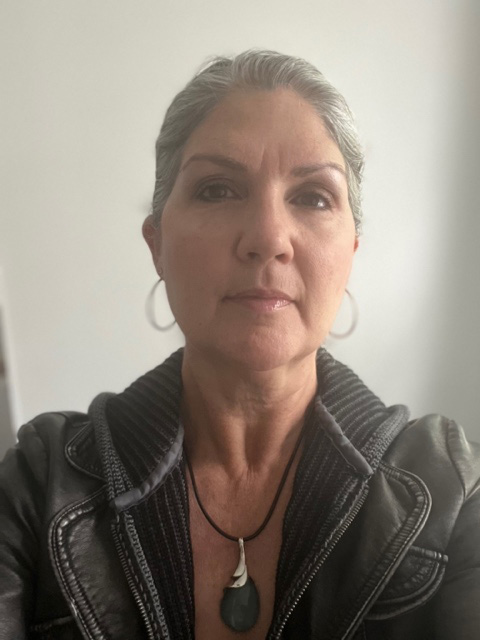
Today, I'm honored to interview Renée Rockland, runner up in our Spring 2025 Flash Fiction contest. Read her story "Survivor" before you check out our interview.

Here's more about Renee:

By day, Renée Rockland (she/her) works as a Corporate Controller. But at night, she trades numbers for words, writing short and flash fiction in a variety of genres. A native of Iowa, she traded cornfields for seashores and feels incredibly fortunate to live in the beautiful blue bubble that is coastal Delaware with her wife, twin daughters and two incredibly spoiled rescue dogs. Renée is a proud member of the Rehoboth Beach Writers’ Guild and believes in the healing power of dark chocolate.

-- Interview by Nicole Pyles

WOW: First off, congrats on winning runner up! What inspired you to write "Survivor"?

Renée: Thank you so much, Nicole. I took a class called “Transforming Hearts” at my Unitarian Universalist church in early 2024. The purpose of the class was to help foster radical inclusion and support transgender and non-binary individuals in our communities, going beyond basic welcome to build deeply affirming and safe spaces for all genders. I learned so much in the class, and it gave me deep compassion for those individuals who are navigating a path different than my own.

WOW: That must have been an inspiring course. Your story is a beautiful blend of identify and grief, and all the complex meanings of the word. How did you bring these themes about in your writing process?

Renée: I heard some heartbreaking stories in the class, and then as I researched and read more, I was awestruck at stories of survival and triumph despite unimaginable devastation. It’s not a journey I’ve taken, but I don’t believe you should “write what you know” (unless you really want to). For me, I’d rather write what I don’t know, so I can learn, discover, grow, imagine, and shine a light on things I think are important for people to know and care about.    

WOW: I love your version of that adage: write what you want to know. How did your story change during the revision process?

Renée: Probably because I have limited time to write, I do a lot of “mind writing” before I actually sit down at my computer. So, by the time my fingers are on the keyboard, I have a strong idea of where the story is going to go. I knew the last sentence almost from the start, and I knew I wanted to begin at the end with him opening a box and finding a photograph that took him back in time. The vignettes came about from extensive research and reading about transgendered folks and their experiences. By using his mother as the lens through which I captured the various stages in his life, I was able to show the arc of their relationship while still maintaining his POV throughout the story.

WOW: Pre-writing in your mind is a great approach! You did a great job showing that story arc. You have such an excellent way with words. Your story was an excellent example to me about writing with each word having meaning. How did you revise the story to make sure this was the case? 

Renée: That’s really kind of you to say, Nicole. I truly believe that every word is a choice. Once I vomit the first draft – I literally start every piece of writing with the little vomit emoji at the top of the page as a reminder to just write without judgment! – then I go back and pick at it, usually over the course of several weeks, depending on how long a piece is. I also read all my writing aloud multiple times. It helps me to hear flow and dialogue. If my mouth gets stuck or something doesn’t sound right, the reader’s probably going to feel the same way. After I’ve done all of that, I put the draft away until I don’t remember it very well and see if it still resonates when I resurrect it. At that point, I may change a word here or there, but it’s kind of like microwave popcorn, once you only hear a few kernels popping, it’s time to pull it out and dump it in the bowl. Otherwise, you’re going to overcook it. And nobody likes burnt popcorn! 

WOW: Ha, great visual! What advice do you have for writers who are reluctant to share their voice with the world? 

Renée: I keep a writing notebook for ideas, and this is what I have written on the inside cover, courtesy of Trevor Noah. “Never not do something because you’re afraid to fail. Take risks. Failure will provide you with an answer, but regret will always leave you questioning.”

WOW: Beautiful quote. What lessons do you hope people take away from your stories?

Renée: Probably the same thing I hope to take away from anything I’ve read…that it was time well spent. That I’m better for having read it. That it’s shown me another perspective or given me something to think about that will enrich future conversations or interactions. In the end, I always hope it’s more about the characters and story than the writing. Good writing gets out of the way, so the story can shine through. I never want my writing to distract from the story.

WOW: Thank you so much for your time today, Renée. Best of luck on your future stories!

Read More »

Interview with Sara Siddiqui Chansarkar: Winter 2024 Flash Fiction Contest Runner Up

Tuesday, July 09, 2024
Sara Siddiqui Chansarkar is an Indian American writer. She is the author of a short fiction collection Morsels of Purple and a prose chapbook Skin Over Milk. She is currently working on her first novel. Her stories have been published in numerous anthologies and journals including the Best Small Fictions 2022 and 2023. She is the winner of the National Flash Fiction Day Micro Contest and the runner-up for the Larry Brown Short Story Prize. Outside of her day job as a technologist, she is a submissions editor for SmokeLong Quarterly. More at saraspunyfingers.com, Twitter:@PunyFingers Instagram:sara_siddiqui24

---interview by Marcia Peterson

WOW: Congratulations on your top ten win in our Winter 2024 Flash Fiction competition! What prompted you to enter the contest?

Sara: I’ve seen friends’ posts on social media about winning the WOW contest. That combined with the fact that this contest is always open propelled me to submit my story to the Winter call.

WOW: Can you tell us what encouraged the idea behind your story, “The Rest Area at Chautauqua Lake?”

Sara: I know the setting well. My husband and I used to stop at this rest area after dropping our son to college. Sometimes, I peeked into the cars parked beside us and wondered about the people inside them. Those thoughts came to mind one morning and took the shape of this story.

WOW: What do you enjoy about flash fiction writing versus the other kinds of writing that you do?

Sara: Flash fiction is quick and effective for both the reader and the writer. With my full-time job, I am hard-pressed to find time to write. That’s where Flash comes to the rescue. I can write the first draft in one sitting and then complete the story in three or four revisions and that leaves me with a spurt of writerly satisfaction.

WOW: You mention that you’re working on a novel. Can you tell us anything about it, and what your novel writing journey has been like so far?

Sara: My novel is a story of a girl growing up in the backdrop of a loss in the family. She tries to emerge, crystallize her beliefs, and determine her identity and place in the world.

With an unrestricted word count, I have the freedom to build the characters with more depth, expand and detail the scenes, and interrogate internal thoughts with more clarity. On the flip side, it’s hard to maintain the focus and energy throughout the chapters. I have to constantly rein in my thoughts which tend to wander in different directions.

WOW: Thanks so much for chatting with us today, Sara. Before you go, do you have a favorite writing tip or piece of advice you can share?

Sara: Take breaks but don’t give up. It’s alright to not write anything for some time, but please return to the keyboard. We need to keep reading and writing alive in this age of AI and robotics.

***

Read More »

Interview with Veronique Aglat, Spring 2021 Flash Fiction Runner Up

Tuesday, November 09, 2021


Today I am excited to talk with Veronique Aglat, one of the runner-ups to the Spring 2021 Flash Fiction contest. Make sure you read her story The Perfect Spot then come on back and read our interview. 
First, a bit more about Veronique:

Veronique Aglat writes out of a studio leased from the Montreal Art Center for inspiration and company. She turned to writing to honor the memory of her son Liam, a true artist in the making, whose life ended too early. She has published several short stories in literary magazines and is working on a novel.

--- Interview by Nicole Pyles

WOW: First off, congratulations on winning runner-up! What surrounds you when you write? 

Veronique: I decided to write full-time on the nine-month anniversary of my son's death. I looked up space for rent and found someone who had a studio at the Montreal Art Center. He needed someone to help him share the burden of full rent, especially since he couldn't give drawing lessons there anymore (COVID, what else?). The Art Center is part of Montreal's heritage. It has three floors filled with art, artists of all sorts, and a library. I sit at my desk, write for a while, and when I don't know where to go with a story, I look at a new exhibit or a painting I find interesting. I am surrounded by visual art. 

WOW: What a beautiful setting! What inspired the story?

Veronique: I read an article about this bizarre tree that produces only good fruit once it has rotted a few weeks. It used to be a major source of winter sugar in England before air shipping. Nowadays, we have bananas, pineapples, and mangoes all year round. Go back 120 years, and most English people ate what they grew. However, it is making a comeback. There is someone who planted a whole orchard. The tree is real. It comes from Central Asia. I was learning to juggle at the time, hence the mayor who juggles three fruit. 

WOW: That's so amazing! I love how you blended fiction with reality. What does a typical day of writing look like to you? 

Veronique: My goal is always to be at my desk at 2 pm. I used to close the door, but with summer and AC issues, I leave it open. I prefer when I can close the door. I try to write 1000 words. I want to be flexible, so some days it's more, some days less, but 1000 is a good objective, especially if I'm working on a longer piece. I keep a diary of the work I do every day. 

WOW: That's an amazing way to keep yourself on track. What are you currently working on that you can tell us about? 

Veronique: I'm writing a story based on the premise: what if a gum that can regrow teeth was invented? It's two stories that run parallel to one another. One deals with an old man who has been wearing dentures for 50 years and who decides to try the gum. The other is about a young man who went to dental schools on loans and now faces a future where his skills are obsolete, but his debt isn't. Both storylines merge eventually. I am also working on a historical fiction novel loosely based on my great uncle's life. He was picked up by the Nazis in 1942, mostly because he was homosexual, and deported to Mauthausen, where he died two weeks after the Liberation in 1945. 

WOW: Both stories sound amazing! You have a wonderful way of capturing all senses in your writing. What is your technique for doing that? 

Veronique: When my children were little, we had many plastic figurines; some were Star Wars characters, others were animals, etc. We named each figurine and touched it. Then we played a game where we closed our eyes, felt the object, and named it. We sense a lot more than what we see. For example, I know who is entering the building by the way the person closes the door. The other day, I passed next to a man who smelled like Cardamone and lavender. I think I sometimes close my eyes to give my other senses a chance to give their input.

WOW: That's a profound way to capture senses! I love it! Congratulations again and I can't wait to see what you come up with next. 
Read More »

Interview with Karen Ingram, Spring 2021 Flash Fiction Runner Up

Tuesday, September 14, 2021

Today I'm excited to interview Karen Ingram, one of the runner-ups for the Spring 2021 Flash Fiction writing contest. Be sure to read her story IED first, and then come on back to read our interview.

First, more about Karen:

Karen Sarita Ingram is half Kentuckian, half German, and proudly 100% Army Brat. Her first published story, “The Suicide Artist,” was featured in Touchstone Literary Magazine’s Spring 2012 issue and won the Best Undergraduate Writing Award at Kansas State University’s English Department the same year. When she’s not demanding to speak to your manager, Karen enjoys science fiction and video games. Against her better judgment, she currently resides in Topeka, Kansas.


---- Interview by Nicole Pyles

WOW: First of all, congratulations on winning runner-up! What inspired you to write this story?

Karen: I began writing flash fiction in an attempt to break my writer's block. I would go to free photo websites, like Unsplash or Pexels, find a random picture, and write a story about it. I managed to write about 100 or so before my writer's block came back. IED started out as Untitled #30, inspired by a photo by Kevar Whilby, which you can see here.

If the photo is not what you expected, great. I'll get to that in Question #5. 

The photo reminded me of those perfect moments in life, where you try hard to memorize every detail. I tried to imagine the relationship between the woman in the photo and the narrator, and why they would need a good moment like that to hang on to. That's when I knew the narrator was a soldier. 

WOW: I love that photos inspire you because I'm the same way! How do your experiences as an army brat influence your writing? 

Karen: I don't usually write about Army Brat life, or about soldiers, but IED definitely pushed me in that direction. I used to hang out with my dad at a local brewery, and he would inevitably end up sitting at a table with a bunch of old veterans, swapping war stories. I never ask a soldier questions about war, but when they feel compelled to speak about it, I listen. It's the least I can do for them. I've heard a lot of very dark stories, but I don't share them. I want to make that clear. IED is not based on a true story, but the smells are. I think the old cliché that your life flashes before your eyes when you die is probably not accurate, based on most of the stories I've heard from people who have had near-death experiences, but it's a nice idea. A hopeful idea. So I painted a perfect moment for my narrator to hold on to and let it carry them through the horrific experience that was really happening to them. 

WOW: You definitely captured that final moment of a wonderful memory carrying someone through a terrible moment (even if it is a cliche!). What is your rewriting and revising technique after you've written the first draft? 

Karen: I tend to finish rough drafts quickly in a spurt of inspiration, then just sit on them for a long time. If the idea is any good, I know it will keep pestering me until I return to revise it. Untitled #30 was like that. The rough draft sat around for about two years before I ever looked at it again. But during those two years, it kept lurking in the corner of my mind, muttering. When I saw the Spring 2021 WOW! Contest was an open prompt, Untitled #30 insisted "NOW IS THE TIME." So, I had another look at it... and I hated it. I ended up rewriting the entire thing from scratch. But that seemed to satisfy whatever muse or beast haunts my imaginings, because it finally shut up when I hit "submit."

WOW: How amazing you rewrote it from scratch! What surrounds you when you write? 

Karen: Coffee. 

WOW: Ha, me too! What do you hope readers take away from reading your story? 

Karen: If you ask ten people what a painting or a song means, you get ten different answers. Writing is a form of art, so it's just as open to interpretation as any other art form. I think writers tend to forget that sometimes. It's bewildering to me when an author I like gets irritated because somebody saw sadness in the blue curtains and they're all, "That's not what it means!" I decided a long time ago that I'd have zero expectations about what readers take away from my stories. That's why I was intentionally vague about the narrator's gender and race in IED. I know what I had in mind, and I left a breadcrumb or two to give them a clue, but I'm totally cool if the reader ignores that and cuts their own path through the woods. I know they enjoyed themselves if they tell me where story took them.

WOW: Writing is absolutely an art and you captured it wonderfully! Thank you so much for your time and I can't wait to see what you come up with next. 
Read More »

Interview with Jo Skinner, Winter 2021 Flash Fiction Runner Up

Tuesday, August 10, 2021
Today I am excited to talk with Jo Skinner, one of the runner-ups to the Winter 2021 Flash Fiction contest. Make sure you read her story Endings then come on back and read our interview.

Jo's bio:

Jo is a Brisbane-based general practitioner who has worked in urban, regional, and rural Australia as well as Ireland. She is married with three teenagers, a dog, and a cat.

She did her first writing course in 2017 and her stories have been long-listed, shortlisted, and won competitions. She is currently working on the manuscript of a novel with coercive domestic violence as its central theme and also continues to write flash fiction and short stories. Last year, she coedited an anthology about people’s experiences of COVID which was published by the Queensland Writer’s Centre.

When Jo is not working or writing she is running. She has completed forty-five marathons and counting.

Visit her website at www.johannaskinner.com.

--- Interview by Nicole Pyles

WOW: First, congrats on winning runner-up! Your title hints at two different sorts of endings happening to the character - one publicly celebrated, and one privately known. I thought you captured both pains well. Did you initially write this knowing both types of endings?

Jo: The piece changed quite a bit from the first draft. Through my work as a general practitioner, I was seeing a fellow who was shocked when his wife left him after nearly forty years. I tried to imagine it both from his and from her point of view. It is not uncommon, particularly for men, to be unaware that their relationship has been unraveling for a long time. 

I then saw a story competition that required the setting to be in a hotel. I sketched out a tale about a retirement party and then it became obvious that these two ideas were part of the same story about change, loss, and self-reflection. 

I love how our brains play with ideas in the background until we have a moment of inspiration and suddenly a story comes together better than we originally imagined.

WOW: I can completely relate! We never know we have something until the brain connects it. As a general practitioner, I wonder how COVID impacted you personally and professionally, and how that influenced your writing?

Jo: Although we have been fortunate overall in Australia, my work has been transformed in many ways. Once a week I volunteer to do our fever clinic in the carpark. In rain, hail or shine, I don full PPE and examine and swab patients with any coughs, fevers or respiratory symptoms. The surgery also runs a vaccination clinic where we each do shifts regularly. Patients have been hostile and rude for the first time and we have had to put signs up that such behaviour will not be tolerated.

The biggest impact has been on mental health and domestic violence which have both exploded. On one memorable weekend I was in regular contact with a teenager who was suicidal. Despite numerous phone calls, mental health facilities were at capacity. It was a relief on Monday when she had survived, and a mental health bed became available. 

There was such an outpouring of experiences by patients that I decided to co-edit an anthology with a friend and editor. We invited patients and the public to send us their stories and poems about the lockdown experience. We were overwhelmed with submissions by specialists, priests, teachers, retirees, school children etc and could not publish all of them. The anthology, “Stories from the Heart, Penning the Pandemic,’ was published by the Queensland Writer’s Centre as an e book. They were incredibly supportive of the project. It was very cathartic for me. I realised that we are all in this together and that everyone has been impacted in some way by this pandemic.

WOW: I love that you captured all those stories. Also, I'm so impressed with how many marathons you've completed! Does running help you creatively at all? 

Jo: Distance running is a very efficient way to get hours to yourself without interruption. If I am stuck on a scene or have an idea smouldering about an essay or story, a run is an incredible way to give my nebulous thoughts shape. I let my feet do their thing while my mind free ranges. 

Running also provided the mental scaffolding I needed to work as a doctor during the 2020 pandemic. It was an acceptable way to ‘run away,’ escape and employ the well-recognised fight and flight response while still turning up to work each day to do what I have been trained to do; provide an essential service to the community in solidarity with my colleagues.

I calculated that between March and October, I ran just under 1,500 km. I have no doubt this is what enabled me to keep working and writing.

WOW: How motivating! What does a typical day of writing look like for you?

Jo: I am very methodical with my writing. I get up really early two mornings each week and write for two hours before going to work. I have one day a week where I don’t go to the surgery and after I drop my kids off, I put my head down and write in blocks until it is time to pick them up. On the weekends, my family know that I will spend at least some of the time tapping away.

I find having writing goals is a great way to progress and have committed to writing a flash fiction piece every month and keep an eye out for story competitions I can submit to. Since starting to write after doing my first course in 2017, I have learnt that just sitting down and getting words on the page is a great way to improve and learn. A great deal of what I write is scrapped in the editing process, but you can’t do an edit unless you have words down on the page to start with!

WOW: Writing goals are absolutely essential. What are you working on next?

Jo: I am currently editing a novel that has coercive domestic violence as its central theme. It is something I have had to deal with a lot as a general practitioner. For two years, I worked in a regional town and was on call to do the forensic examinations of women who had been sexually assaulted and was surprised how few of them pressed charges. I wanted to bring some of this experience into my writing.

Two weeks after I completed the first draft, a family died two streets away from where I work. The estranged father set the family car alight with all of them inside. The incident had a huge impact in Australia and suddenly domestic violence became a significant political issue. 

I have written an essay and a few shorter pieces on this theme but am hopeful that writing about fictional characters in a novel will improve awareness of the wide-ranging direct and indirect impacts that domestic violence has on every one of us. 

WOW: I can't wait to see what you come out with next! Congrats again and I look forward to seeing your next work.


Read More »

Interview with Madeleine Pelletier, Winter 2021 Flash Fiction Runner Up

Tuesday, July 06, 2021
Today I am excited to talk with Madeleine Pelletier, one of the runner-ups to the Winter 2021 Flash Fiction contest. Make sure you read her story Deviled Eggs then come on back and read our interview.

Madeline's bio:

Madeleine Pelletier is a writer of short, sometimes very short, fiction. After graduating from the University of Saskatchewan with a degree in archaeology, she spent twenty years traveling the world, contemplating history, and collecting stories. She now lives in a farmhouse near Montreal, with six goats, three cats, and one grumpy old man. She enjoys gardening, watching birds, and making things up.

Her work has been published in several anthologies, including Endless Pictures by TL;DR Press, The Arcanist’s Tales from the Weird West, and 72-Hours of Insanity: Volume 8 presented by The Writer’s Workout. You can find her on Twitter @mad_pelletier.

-- Interview by Nicole Pyles

WOW: First congratulations on winning runner-up! I absolutely loved your flash fiction piece, "Deviled Eggs." It said so much in such a short time. What inspired this story?

Madeline: Last summer, I did a workshop on hermit crab flash fiction, and creating a recipe story was one of the prompts. We only had about 30 minutes to write and the first simple recipe I could think of was for deviled eggs because I’d made them the day before for a family party. And this story came from that. It went through a lot of revisions afterward, but I’d say 75% of the story is what I wrote in that workshop.

WOW: That's amazing! I also love the prompt too. How did this story transform in the editing process?

Madeline: Editing this story was interesting. Because I wrote it quickly and for a specific prompt, I really had no idea where the story was going when I started. I was just playing with language and rhythm and seeing what would happen. And that really showed when I finished the first draft. The feedback I got was that there were a lot of pretty lines but it lacked a cohesive story. So, I had to go back and figure out what I wanted the story to be and rewrite it from the beginning with that in mind. I had to throw out some of the pretty lines, but it is a much stronger story for it.

WOW: That's always such a tough process. What leads you to write short (and even shorter) fiction?

Madeline: I am excited by big things that come in small packages. I remember the first time I read a story that was under 500 words that just clung to me. I had to go back and read it again and again. Each time I would find something new, another layer, a deeper meaning, even though I practically knew the words by heart. There is something very powerful in being able to connect so resoundingly with such a small word count. And I think micro fiction and experimental forms are only going to get more popular in the future because of this.

WOW: I feel the same way about short fiction! A few words can pack a lot of punch. How does your love of history inspire you?

Madeline: What I really love about history is learning the details of everyday lives, especially women’s lives. In university, I wrote a paper that studied quilt patterns and fabrics from across 19th century North America that really changed how I looked at artifacts and understood women’s place in history. When I lived in Turkey, I bought carpets that had patterns and embroidery motifs stitched into them that told stories in a secret language. This is how women have always told their stories, covertly and out in the open at the same time. Those are the voices I want to hear and the people that I love to write about. “Deviled Eggs” could have taken place 50 years ago or yesterday. It’s a story that women have been living, in one form or another, throughout history.

WOW: Those details are so inspiring! What are you working on next?

Madeline: I love short stories and always have. People would ask me when I was going to write a novel and I’d just laugh and say never. Novel writing wasn’t for me. Then I wrote a short story that, honestly, was not that great a short story because the story was way too big. But, man, that story. I loved it and the protagonist so much that I couldn’t stop thinking about them, to the point where I finally decided that I had to turn that story into a novel. So, much to my surprise, that’s what I’m working on now. And, yes, it is historical fiction!

WOW: How exciting! I can't wait for it to come out and read it. Thank for your time today and congrats again! 

Read More »

Interview with Lilith A. Heart, Winter 2021 Flash Fiction Runner Up

Friday, July 02, 2021
Lilith A. Heart is a horror prose author who favors the gothic horror and psychological horror sub-genres.

She graduated from Aquinas College in 2016 with a B.A. in English and a double minor in Creative Writing and Japanese. Lilith was featured in two publications by Caffeinated Press, a former local publisher: Brewed Awakenings 1 (2015, The Garden and the Grave) and Brewed Awakenings 2 (2016, Suppression).

At the end of 2020, she made the bittersweet decision to leave her job with a local cat furniture manufacturer to pursue her passion more enthusiastically and to build her writing collection.

She currently lives in Grand Rapids, Michigan with her husband of 11 years, two cats named Shinobi and Hana, and rescue pitbull named Koda.

***

WOW: Congratulations on your top ten win in our Winter 2021 Flash Fiction competition! What prompted you to enter the contest?

Lilith: Thank you!

At the end of 2020, I left my job to pursue writing more enthusiastically, build my collection and challenge myself as an author. One of the challenges I gave myself was to enter at least one writing contest per month this year. I found WOW and thought that a flash fiction contest was a perfect way to kick off my new chapter.

WOW:  Can you tell us what encouraged the idea behind your story, “Snow Day?”

Lilith: People generally enjoy snow days. It’s a fun, guilt-free day off! But I wanted to create a situation where a snow day causes upset. Instead of relaxing or otherwise taking a load off, the nameless main character is suddenly forced to face the demons of a toxic home; “Snow Day” became a story about the unseen effects and events of domestic abuse.

WOW: You did a great job, I felt a wave of apprehension at the end. Are you working on any writing projects right now? What’s next for you?

Lilith: At the moment, I am working on a flash fiction horror story for another contest.

WOW:  What are you reading right now, and why did you choose to read it?

Lilith: I am currently reading “Barbed Wire Heart” by Tess Sharpe. I chose it because I wanted to find a gripping thriller and so far this one has had me hooked since the opening line.

WOW:  That book looks interesting! One of the reviewers described it as, "It's the Sopranos meets Ray Donovan only the hero is a woman." 

Thanks so much for chatting with us today, Lilith. Before you go, can you share a favorite writing tip or piece of advice?

Lilith: The first draft is just you telling the story to yourself. 

****

For more information about our quarterly Flash Fiction and Creative Nonfiction Essay contests, visit our contest page here.


Read More »

Interview with Vicki Sutherland Horton: Fall 2020 Flash Fiction Runner Up

Tuesday, April 06, 2021

Today I am excited to interview Vicki Sutherland Horton, one of the runner-up winners of the Fall 2020 Flash Fiction contest. Make sure you read her story The Winter the Moose Moved In and then come on back and read our interview. 

Vicki's bio:

Vicki Sutherland Horton lives in the Victorian seaport town of Port Townsend, Washington. She is a retired educator, with deep roots in the Pacific Northwest. Through her writing, Vicki is interested in exploring the often unrecognized contributions of women in history. Vicki is a wife and mother and finds great joy in being a grandmother. She is a long-time participant in FisherPoets, a yearly gathering in Astoria, Oregon where she performs original work about her life in a commercial fishing family. Vicki is currently working on a novel: a historical fiction set in Alaska in the late 1940s. Accompanied by her Golden Retriever, Rhododendron, the two of them explore the surrounding forests and seashore. Vicki looks forward to more travel adventures—but of course that has to wait.

--- Interview by Nicole Pyles

WOW: First of all, congratulations on your story The Winter the Moose Moved In. What inspired this story? 

Vicki: This story is deeply personal and part of a larger work. I began researching my mother’s upbringing on an Alaskan homestead in the late 40’s and 50’s. I am asking questions such as why did my grandmother do the things they said she did (family abuse, abandoning the family)? My family has taboo’s around sharing that part of life except on a superficial level. Being the kind of person I am I want to discover a deeper understanding. The protagonist Nadia is roughly based on my grandmother. The supporting stories are told to me by my mother and uncle such as the moose carcass out the back door and the hairdresser who is cabin bound because of moose in his yard. 

WOW: I love how you used fiction to explore your family history. When I read this story, it felt like such a vivid setting to me. Was it inspired by a real location? 

Vicki: Yes, it takes place in Alaska although I will have to be careful that I protect the location and inhabitants. I have visited the area and of course our family stories center on this specific location. My grandparents homesteaded there as part of a mission. Again, I don’t know much about the mission part of the story. 

WOW: I loved hearing that you visit Astoria to take part in FisherPoets! Living in the Pacific Northwest myself, I personally love that area. What is that event like and do you see many of the same poets yearly?

Vicki: FisherPoets is a time I connect with those who have spent, or spend their life fishing. Fishing is a dangerous occupation and listening to fishermen’s poems you begin to understand their deep appreciation of beauty and death. My father was a commercial fisherman who died on his fishing boat many years ago. There are many fishermen still today who I meet up with, who I maintain connection with even though I no longer fish. 

I am especially inspired by the young women who are presenting at FP these days. Their poetry and prose are raw and stunning! They are amazing women taking on all aspects of the fishing industry even serving as captains of their own boats! 

Here is the official description of FisherPoets. The FisherPoets Gathering has been featured in media both national and international from the NY Times, Smithsonian magazine, the Wall Street Journal, NBC to the BBC and others. The U.S. Library of Congress has recognized the FisherPoets Gathering as a “Local Legacy” project and the event has spawned a genre, “fisherpoetry,” that fans of occupational poetry might hear in towns like Kodiak, AK, New Bedford, MA, Port Townsend, WA and Camden, ME. 

WOW: How rewarding that experience is! What led you to enter this contest? 

Vicki: Women on Writing offer a rubric that helps me move my writing forward. I don’t enter to win but to learn. As a former educator I can attest to the usefulness and research behind this kind of learning. It really helps me. 

WOW: I love how you approach the contest - to learn! And I love that you are inspired by the unrecognized contributions of women in history. How do you research women to write about? 

Vicki: I am reading as much as I can about women who traveled west especially on the Oregon trail. I am heartbroken reading the accounts of women who had no choice but to follow behind their husbands. So many of these women didn’t want to leave life as they knew it. I think my grandmother probably had similar things to consider as these women did. She gave up her established life in Washington State to homestead in Alaska, an unknown to her. I understand the complexity and hardship she, without question, undertook to raise her young children—and this was in the fifties! My next venture is to visit the museum in Oregon celebrating the end of the Oregon Trail. 

WOW: I can't wait to see what you write next! Thank you so much for your time today!

Read More »

Interview with Natalie Beisner: Summer 2020 Flash Fiction Runner Up

Tuesday, February 02, 2021


Natalie Beisner is a writer and oral storyteller. She is a previous WOW! Creative Nonfiction Essay Contest first-place winner and honorable mention respectively. Her work has appeared in antonym, VISIO, The Dead Magpie, ArtAscent, and Gulf Stream Literary Magazine and has been recognized by Kaleidoscope: A Reflection on Women’s Journeys. She is a StorySLAM winner at The Moth. Natalie holds a BFA in Acting from California State University Fullerton. You can find her on Instagram @nataliejeanbeisner.

Make sure you read Natalie's story, "Out," and then come on back and read our interview.

-- Interview by Nicole Pyles

WOW: First of all, congratulations on winning runner's up in the summer flash fiction contest! What was the inspiration behind this story?

Natalie: This was my first fiction piece. I tend to write personal essays, creative nonfiction and the like. It was scary branching out into fiction because--although I'm an avid consumer of novels--I honestly feel terrified by the prospect of writing fiction. I admire all writers; all of it requires no small amount of bravery. However, what I find with writing true stories about my life, is that I feel somehow less vulnerable to "slings and arrows," because the stories are true, they are mine; thus, readers can criticize them only so much (without coming off as...well, insensitive jerks). With fiction, on the other hand, it's a whole different ball game in my brain! When you write a piece of fiction, you're admitting to the world that this story comes (at least to a significant degree) from your imagination, so I feel as though you're really quite vulnerable to criticism and attack in a way that personal essays might not be. 

All that to say that writing my first piece of fiction was really a mini-triumph for me. I had (and still have) no idea what I was doing. To answer your question, however: the inspiration for this piece actually came from my holidays last year. I took the train down to see my family, and when it came time to catch my train home, my dad came with me to wait on the northbound side of the tracks (the direction I'd be heading home), while my mom and brother waited on the opposite side directly across from us. We could see them but not hear them, and vice versa. My mom sometimes has trouble climbing stairs, and the train station in the story is based off the train station in real life (with stairs and a bridge to get to the northbound side of the tracks), so this is why we separated for the brief wait. It's totally mundane and almost wholly unrelated to the story I eventually wrote, but for some reason the image of my mother and brother sharing a bench across the tracks from us--that image stuck with me. Other than that, the story is wholly fabricated (although I did have a former coworker many years ago tell me and a group of women that she went out to celebrate after her abortion, and that idea always stuck with me as well).

As for the inspiration for the imagined parts of the story: I've always been interested in and fascinated by women, fertility, birth, miscarriage, and the pro-choice/pro-life movements. 

WOW: I love how you utilized bits and pieces of real moments to write this piece! How do you approach telling a story verbally vs telling it in writing?  

Natalie: I love oral storytelling (à la The Moth) for its ability to engage an audience in real time and also for its fluidity. Like live theatre (which I also love and was trained in), oral storytelling changes every time, unlike the written word. So perhaps then it's odd that I do always first write down stories I plan to tell/perform orally. Some people can get by with just sparse notes, but not me! I write the story down exactly as I want to tell it and then memorize word for word--almost like a monologue from a script. Of course, I work on getting it to sound "unrehearsed," as if it's my first time telling it (again, sort of like acting). So in the sense of choosing words carefully and (I hope) artfully, telling a story verbally and telling a story in writing are quite similar for me. One difference I can point out, however, is that--when writing with the intent to tell orally--I tend to be a bit more conversational. This is due in no small part to the fact that oftentimes oral storytelling shows have a time limit (and in general, I think it's good to leave them wanting more, not less!), so I do tend to write like I would speak it to a friend, whereas--in personal essays and the like--I tend to be a little more lyrical and well...verbose (to put it nicely!).

WOW: I love that approach with your oral storytelling! How do you know when a story is done? 

Natalie: I don't! I never do. And truthfully, I almost never feel that anything is "done." More often than not, it's just I'm sick of it and don't want to look at it anymore and can't "perfect" it anymore, so may as well put it out in the world. (And in this case, there was a strict word maximum, so that helped give me the shove I needed to shove this story out of the nest :) 

WOW: Word limits definitely help! What is your secret to getting published? 

Natalie: If only I knew the secret to getting published! But alas, I don't believe it exists. Unless you count this obvious and boring one: keep trying and trying and trying until someone says "yes." Before I was a writer, I was an actor for many years, so I guess I'm used to rejection (although truthfully it never gets any easier). What I love about the literary community, though, is that the rejection (or sometimes, the acceptance) doesn't feel quite so personal as when you're auditioning; maybe because it doesn't happen in real time. Sometimes, when you're auditioning in a roomful of strangers, the rejection can feel quite immediate and palpable. Another aspect I love of the literary community is that you receive actual rejection letters! This does not happen often in the acting community. Usually you audition and then just never hear anything at all (so you're left to assume you didn't book the gig). When I submit for publication, I almost always hear back either way--however long it takes. And sure, sometimes the letters are obviously standardized rejections that the magazine or journal sends out to everyone, but many times, the rejections are personalized, which lets me know that the editors actually took the time to read, appreciate, and genuinely consider my piece(s). I love that. It means so much to artists (and to people in general, I think) to hear back either way. I've taken to screenshotting my rejections and posting them on social media--almost like a badge of honor. 

WOW: That's a great idea! What are you currently working on that you can tell us a bit about?

Natalie: I am currently working on--as always--cultivating the discipline to write often and everyday. And to put it out in the world more frequently and even--sometimes--messily. The freedom to be both prolific and also not perfect, as it were. It is, however, a journey--not a destination. And it ebbs and flows--especially in this year of 2020. 

WOW: I am with you on that note! Thank you so much for talking with us today and I can't wait to see what you come out with next!
Read More »

Interview with Eva W: Summer 2020 Flash Fiction Runner Up

Tuesday, December 29, 2020


Eva Wewiorski has lived a geographically varied life in Scotland and the UK, currently residing in Leith, Edinburgh with her fiancé. Outside of writing, she works in a university library. She trained as a librarian at Newnham College, Cambridge and throughout that year, spent every evening and weekend she could scribbling in the romantic secrecy of her rented annexe. At the end of her internship she decided to pursue writing more seriously and is currently undertaking Glasgow University’s Creative Writing M.Litt course on a scholarship award. Her entry for WOW! Women On Writing’s Flash Fiction Competition is her first publication. You can follow her on Twitter @evadoubleyu.

Make sure you read her story, "Dear Victor," then come on back and read her interview with us.

--- Interview by Nicole Pyles

WOW: First, congratulations on winning runner up in the summer flash fiction contest! Your story roped me in immediately. The whole time I kept wondering which direction it was going and then you delivered that shocking ending! What was the inspiration behind this story? 

Eva: I liked the idea of a story based on something that at first seemed like quite a saccharine and girly premise - a woman talking about her first real kiss, a high school crush - that then gradually revealed itself to be something very sinister and creepy. I write a lot about trauma, particularly around taboo subjects, and teacher-pupil transgressions are definitely something not often talked about - even though I think they’re more common than people realise, as with all forms of power abuse.

WOW: I definitely think you are right on about that! So, I love how you wrote this story as if the character is writing a letter to Victor. When you first started this story, did you know how it would end? 

Eva: Yes, I knew the last line before I knew the opening one. I liked playing with the power dynamic by having the narrator address him by his first name, which is obviously not how she'd have known him as a teenager. I felt it undercut the status he'd have as 'Mr' , reinforcing a man like him is no way deserving of the respect that comes with the title.  Even though I obviously knew the ending, as I was writing it I found myself almost believing it was a fellow student she was talking about. It was eerily easy to create all the misleading clues.

Also, I know it ends on a pretty grim note and the narrator’s obviously very damaged but I hope the letter form also conveys a sense of power for her now, the fact that she’s directly addressing him and vowing to one day speak out. At the very least, she’s now able to comprehend the true nature of what he is and understand that what happened wasn’t her fault.

WOW: That power she has regained absolutely comes across in the piece! What does a typical day of writing look like for you?

Eva: Because I'm in the middle of an creative writing M.Litt, I have lots of writing tasks I have to prioritise, including giving feedback on other writer's work. I generally set myself a personal goal of a minimum of 500 words a day, which is normally enough to either complete a short exercise - a piece of flash fiction or reflective exercise  - or write a decent chunk of a short story. Inspiration doesn't always arrive with the clock and a little progress each day is better than trying to perfect a major project in one day - I've learned that the hard way! I'm a big fan of writing on paper first before typing it up, and I generally print things out to edit the final draft on paper too. Outside my coursework, I'm also in the process of writing a novel which I work on really any spare moment I have. I'm the sort of person who will write on the back of a receipt while on a moving bus and, left to my own devices, I'd probably never stop. Thankfully I have a fiance who helps remind me there is an equally exciting world outside the one in my head. 

WOW: Writers always need someone there to remind us of the world outside our mind! How do you know when a story is done?

Eva: I think the point you have to let it go is when you find yourself reading over bits you previously thought were brilliant and then suddenly falling out of love with them for no reason. When you’re at that stage of proofreading obsessively and getting bored of re-reading the same thing, it’s easy to forget that what’s become overly-familiar to you will be completely fresh to a reader’s eyes. It’s important to step away before you end up panicking and changing things or worse, deciding irrationally it’s no good at all and binning it altogether. This is one of the most important things I’ve learned since being part of a writer’s group. You have no idea how others will receive your work, often in a pleasantly surprising way. 

WOW: Oh that's a fantastic point! What do you hope readers take away from reading your story?

Eva: I hope they find it entertaining, as dark as the subject matter might be, and are taken aback by the twist. I tried to write it in a way that invites a second reading, so if WOW subscribers feel it’s got re-readability, I’ll be thrilled. 

Also, I hope this isn’t the case but in the event there’s someone reading it who can relate to the narrator’s situation or has a Victor Larkin in their past, I really hope they find a way to tell their story and get the support they need. And to always remember that transgressions of this nature are never, ever a victim’s responsibility.

WOW: I completely agree. Thank you so much for talking with us today and I can't wait to see what you come out with next!

Read More »
Powered by Blogger.
Back to Top