Showing posts with label fiction writing. Show all posts

Friday Speak Out!: The Savvy Reader

Friday, June 14, 2024
by Megan Staffel

When I first started to write fiction, I was afraid to read. I didn’t want to pick up a published author’s style. We writers are good mimics and often, I would slide into the voice from whatever novel was my current book. But a life without reading fiction would have been dreary indeed, so luckily, I learned that the bits and pieces of other writers’ work sifting into my work would ultimately be transformed through the multiple revisions that anything I write goes through.

And when I started to teach, one of the things I enjoyed most about working with MFA students was discussing a literary work in class. Together, we would deconstruct a scene to figure out what made it compelling, and I would always learn from my students’ input. When I retired, it was that shared discovery that I most missed. So, now, on my own, when I finish a novel or story, I examine it as though I were preparing it for that class. This practice has turned into a Substack newsletter called, “Page and Story.” I give a brief description of the book or story to entice my readers, and then discuss an aspect of craft that the author does particularly well, showing how it shapes the narrative.

This close examination increases my enjoyment and I believe it helps me as a writer because it widens the possibilities. When I begin to write a new piece of fiction, do I want to start with a long shot as Dominic Smith does in Return to Valletto, situating the town within its landscape as the narrator approaches, or do I want to start with a close up, a view from a character’s interior as Margot Livesey does in the opening to The Road from Belhaven when Lizzie thinks about her visions? Or do I want to begin with a story that appears in a newspaper as in Clare Chambers novel, Small Pleasures? There are endless choices and from the fiction I’ve read I have a sense of how each choice affects the reader’s experience. Paying attention to the craft of a story I’m enjoying is reading like a writer and opening myself to methods that are different from the ones that may have become my default.

In my next posting I’ll discuss Held, a novel by Anne Michaels in which the narrative is episodic and fragmented and the story is not about characters in a particular time and place, but in multiple locations at different time periods. What unifies them is the theme of love. It’s a wholly original approach to narrative and the elasticity and suppleness Michaels gives it is exciting. Held has suggested new tools to consider as I work on my next piece of fiction, but even if I borrow something, my revision process will make it my own. What I’ve learned over these many years is that reading fiction while I’m writing fiction is necessary, helpful, and enriching.

* * *

photo credit Brian Oglesbee
Megan Staffel's new novel, THE CAUSATIVE FACTOR, won the Petrichor Prize at Regal House Publishing and will be published by Regal House in October 2024. She is the author of two recent collections of short fiction, THE EXIT COACH and LESSONS IN ANOTHER LANGUAGE (Four Way Books) and two novels, THE NOTEBOOK OF LOST THINGS (Soho Press) and SHE WANTED SOMETHING ELSE ( North Point Press) and a first collection of short stories, A LENGTH OF WIRE AND OTHER STORIES (Pym-Randall Press). Her short stories have appeared in numerous journals including the New England Review, Ploughshares, The Common, and others. Her stories have been shortlisted in Best American Short Stories and nominated for The Pushcart Prize. Megan taught in the MFA Program for Writers at Warren Wilson College as well as at the University of Iowa, Kansas State University, Rochester Institute of Technology and Vermont College. She lives with ceramic artist Graham Marks and has two adult children. She splits her time between Brooklyn, New York and a farm in a small town in western New York State. 
~~~~~~~~~~~~~~~~~~~~~~~~~~~~~~~~~~~~~~~~~~~~

Would you like to participate in Friday "Speak Out!"? Email your short posts (under 500 words) about women and writing to: marcia[at]wow-womenonwriting[dot]com for consideration. We look forward to hearing from you!
~~~~~~~~~~~~~~~~~~~~~~~~~~~~~~~~~~~~~~~~~~~~
Read More »

Tips on Writing Dialogue

Saturday, July 15, 2023
Image by pch.vector on Freepik

by Bobbie Christmas

Q: Which of the sentences below sounds best?

John's mother told him,
A. "I'm beginning to regret giving birth to you."
B. "I regret giving birth to you."
C. "I wish I never gave birth to you."

A: I assume you are striving for the most realistic dialogue possible, rather than what sounds the best, so I will give you a fourth choice. It is the most realistic because I actually overheard it in person. Yes, I witnessed a mother saying to her fortyish son (whom I was dating at the time), "I wish I'd never given birth to you." This quote is the most realistic, but it is devastating for a child to hear. It could end a relationship between parent and child. Don't use it unless you intend for it to have dire consequences, as it did in real life.

Q: I have written a novel in what could be described as conversational style. There are large blocks of text in which one of my characters is telling the story of her life to someone. I am having a little trouble finding information that explains how to use punctuation marks in this type of writing. Any suggestions? 

A: Without seeing the manuscript, I’ll say the following:

Monologues (long dialogues without anyone interrupting) are discouraged in contemporary literature, because readers today prefer to see a story unfold with action as well as dialogue. Consider breaking up the monologues with actions and or reactions. Here’s an example of using action to break up a monologue: 

Elton scratched his forehead. “I don’t exactly remember the date this happened, but I remember . . .” He looked up as if retrieving memories. “I remember being under a bed, afraid my brother was going to hit me with that broom, but he stuck the handle of the broom under the bed anyway and poked me with it. Hard.”

Here’s an example of breaking up a monologue with a reaction:

Elton scratched his forehead. “I don’t exactly remember the date this happened, but I remember . . .” 

“Don’t stop now,” the therapist insisted. “What happened?”

Elton looked up as if retrieving memories before he continued, “I remember being under a bed, afraid my brother was going to hit me with that broom, but he stuck the handle of the broom under the bed anyway and poked me with it. Hard.”


Even though readers today don’t want to be told a story and would rather feel as though they are watching the story unfold, monologues do have a place, and they also have punctuation guidelines.

When a character speaks for more than a paragraph, don’t end the paragraph with quotation marks. Open the next paragraph with quotation marks, though. At the end of the monologue, close it with quotation marks. Here’s a brief example:

“One night my father came home stinking of whiskey.” John shifted his weight. “Pops yelled at us, woke us from a deep sleep. We didn’t know what he was going to do next.

“To our surprise he made us all get up, Ruth, Susan, Samuel, and me, and he danced with every one of us in the living room.” John shook his head. “That night turned out to be one of my best memories of my old man.”

***

Send your questions to Bobbie Christmas, book editor, author of Write In Style: Use Your Computer to Improve Your Writing, and owner of Zebra Communications. Bobbie@zebraeditor.com or BZebra@aol.com. Read Bobbie’s Zebra Communications blog at https://www.zebraeditor.com/blog/.
Read More »

Why You Should Show Rather Than Tell

Friday, July 15, 2022
By Madeline Dyer

Almost every writer at one point in their career has been asked by an editor to show rather than tell. Telling the story rather than showing it is a mistake that nearly all writers make early on in their career, and manuscripts and submissions will be returned with requests for more showing. But what exactly is showing, why is it important, and how do you achieve it?

What is showing vs telling?

In short, showing encourages the reader to experience something with the character, rather than simply being told that something has happened. Showing is about conveying information through imagery and emotion, whereas telling uses exposition.

Showing something gives more meaning and often more details.

For example, ‘it was a hot day’ simply tells readers it was a hot day. But ‘With the back of her hand, Anna wiped the sweat from her forehead as she squinted against the bright rays of the sun’ is better writing because it shows that it is hot through Anna’s body language and actions.

While ‘hot’ itself can be subjective in ‘it was a hot day,’ from the longer description, we know now that it is hot enough for Anna to sweat and have enough sweat that it needs wiping away. So we’ve now got a character involved in this description, and we can infer that she is outside. Not only is it hot, but it’s sunny and bright too (whereas ‘it was a hot day’ could mean it’s a muggy, cloudy hot day—there’s no sense of light or the effects on the human body). And we also know how Anna’s body reacts to hot weather (by sweating).

Why is showing important?

Firstly, showing something is more immersive for the reader and the act of showing rather than telling quite often brings in other literary and narrative devices, thereby improving the writing craft in more ways than one.

Showing rather than telling brings in more details that readers can relate to. We’ve all been outside on a bright day where it’s hard to see or we’ve all wiped sweat from our foreheads. These are moments we now share with this character, and so showing what it means for it to be a hot day provides a point of connection between reader and character—and connections are what we want.

So, how do we achieve more showing and less telling?

1. Involve your characters in the descriptions. As in the above example, show what something means specifically for your character. And remember, it could mean different things for different characters.

2. Avoid naming emotions. Whenever you name an emotion, you’re telling the reader how someone feels. Instead, show the emotion through your character’s actions and word choice. ‘He was happy’ becomes ‘A light smile spread across his face as he heard the song.’ This tells us what has made him happy, and also shows the reader body language that they associate with happiness.

3. Have your characters exhibit non-verbal communication. Something like 70% of communication is non-verbal in real life, so make sure this is also present in your writing. We rarely have to ask people how they’re feeling moment to moment because we pick up on non-verbal cues (especially applicable with those we know well). Have your narrator notice other characters’ body language, facial expressions, actions, and posture—together, these all build up a picture of what these characters are thinking and feeling. And you can totally have a character saying one thing in dialogue but their body language implies something different—because this happens in real life so often.

4. Pay attention to imagery.
Imagery is your friend when you’re looking to show more and tell less. Think about the connotations of certain images and the things they can symbolise. Do these images and meanings link to a certain emotion you’re trying to convey? Then great!

5. Use all the senses in your writing. This will immediately help you to show more to your reader and immerse them into your story.

6. Be careful of word choice. Avoid adverbs when you can, as these tell the reader how a verb is performed. Instead, use a stronger verb. ‘He ran quickly’ becomes ‘He sprinted,’ which captures more urgency. In a similar vein, adjectives should be avoided or used sparingly.

7. Be as specific as you can. T
he more details you give, the better. Details avoid general telling sentences while also deepening characterisation. Introducing details often means you’re using more sensory language and imagery too.

But don’t show everything!

Every time you show something, you’re often spending more time on it. This sometimes has the effect of pausing a moment. If you’re showing absolutely everything, the pacing overall can be too slow. So you want to show the important moments, plus a few others. If your main character is travelling by bus, but nothing really happens on the bus and the action is focused on what happens before and after the journey, then don’t describe the whole bus journey in great detail. It’s fine then to say ‘He caught the bus to the next town’ rather than showing him waiting for the bus, then buying his ticket, then picking his seat, etc, when the bus journey itself isn’t significant to the overall plot.

When you’re showing something, you’re telling the reader it’s important because you’re spending more time and attention on it. So make sure that these make sense for your story. It’s all about getting the balance right.
***

Madeline Dyer lives on a farm in the southwest of England, where she hangs out with her Shetland ponies and writes dark and twisty young adult books.

Madeline has a strong love for anything dystopian or ghostly, and she can frequently be found exploring wild places. At least one notebook is known to follow her wherever she goes. Her books include the Untamed series, the Dangerous Ones series, and Captive: A Poetry Collection on OCD, Psychosis, and Brain Inflammation.

Untamed won the 2017 SIBA award for Best Dystopian Novel and has been a #1 bestseller in its Amazon category in five countries. Madeline’s second novel Fragmented was also a runner-up for Best Young Adult novel at the 2017 SIBAs. Her memoir, Captive and her ace romance novel, My Heart to Find (written as Elin Annalise) have both been nominated for 2021 Reader’s Choice Awards from TCK publishing, for Best Memoir and Best Romance respectively.

She is represented by Erin Clyburn at Howland Literary. Madeline is also a staff editor at Bolide Books, a publisher based in Scotland, specializing in speculative fiction. Visit her website at www.MadelineDyer.co.uk
~~~~~~~~~~~~~~~~~~~~~~~~~~~~~~~~~~~~~~~~~~~~
Read More »

Six Ways to Beat Sagging Middle Syndrome and Fix Your Story

Friday, May 13, 2022
By Madeline Dyer

Is the middle of your story sagging? Do you think this is the weakest part? Are you really stuck on what to write here? If you answered ‘yes’ to any of these questions, chances are you need to dig a little deeper into your novel’s structure to make it more engaging, entertaining, and crucial to the story.

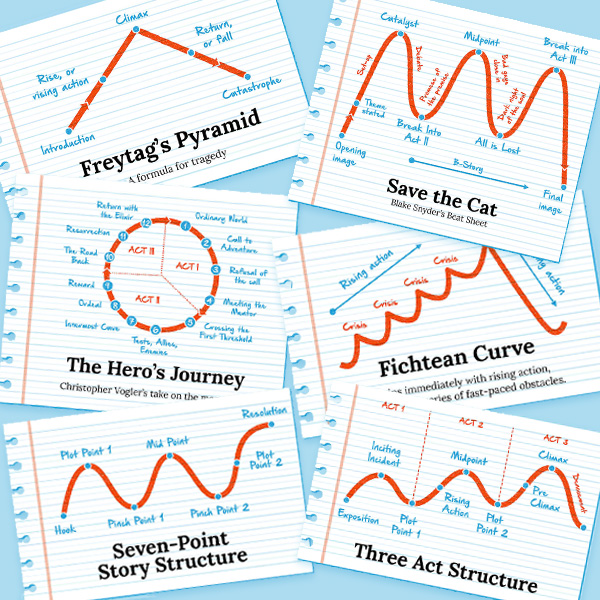
In a three-act structure, the central act is usually the longest act and it connects arguably the most exciting parts of the novel—the opening/hook and the climax/end—and so this is often the trickiest part to write. You don’t want it to be boring, but you also don’t want to reveal everything in the middle, because that’ll affect your ending. Similarly, you don’t want to rush toward the ending, as that’ll affect pacing. As such, the central act is both a place that connects the first and third acts and the place where you develop your story further, while keeping readers engaged.

Luckily, there are a number of ways to do this!

Use Plot Points

It’s easy to create forward momentum in the opening, when you’re introducing your reader to the exciting premise of your story, but you also need to make sure to maintain this momentum going forward. An easy way to do this is to end the opening of the story (act one) on a plot point. A plot point is a point of no return. Something (usually bad) happens to the protagonist as they begin to try and achieve their goal, making their goal even harder to obtain while also meaning they definitely can’t go back to living like they were. The protagonist then has no choice but to move forward, in a different direction, to face this new problem which they must solve in order to continue their journey to obtain their goal. (Note: this is different to the inciting incident, which will happen earlier in act one; the inciting incident will usually cause the protagonist to realize what their goal is.)

Switch up the Setting

You can also maintain forward momentum by introducing a new setting which brings its own challenges. If your protagonist is comfortable and familiar in their surroundings in act one, then shake this up in act two. Act two is where we see our main character being tested. Make things as hard as possible for them!

Picture the Movie Trailer

Act two should be exciting! Think of your story as a film and work out which snippets of exciting scenes would be used in a movie trailer—most of these will be the scenes you want in act two, as these will keep readers engaged while developing the plot.

Introduce a Love Story

You can also use the middle part of the story to focus on your character’s love life (the subplot of ‘the love story’ often really gets going in this central act), and you can show readers the challenges that come with this love story—especially in the wider context of the protagonist achieving their goal. Is the lover a distraction? How does their presence affect the protagonist’s interactions with the antagonist? And has the love interest got their own agenda?

Develop your Protagonist and Antagonist

While we get to know secondary characters more in the middle section, we also need to get to know the two most important characters further here as well: the protagonist and antagonist. Readers need to learn more about these characters, and we need to see interactions between them. Think about how the power struggle between the protagonist and antagonist develops as the central act progresses, and consider whether each will use the other’s darkest secrets, mistakes, flaws, and fears against them.

Twists and Turns

You’re also going to want to have some twists thrown into this central section, too. This will really help with reader engagement and increase the pacing and tension. Sure, save your big twists for the ending, but whet your reader’s appetite by giving them a couple smaller, unexpected twists in the middle, as well. This shows that you really know what you’re doing and will also promise a satisfying ending with an even bigger twist.

Most successful novels use many, if not all, of these techniques in order to keep the reader interested and to prevent their novels from suffering from Sagging Middle Syndrome.

***

Madeline Dyer lives on a farm in the southwest of England, where she hangs out with her Shetland ponies and writes dark and twisty young adult books.

Madeline has a strong love for anything dystopian or ghostly, and she can frequently be found exploring wild places. At least one notebook is known to follow her wherever she goes. Her books include the Untamed series, the Dangerous Ones series, and Captive: A Poetry Collection on OCD, Psychosis, and Brain Inflammation.

Untamed won the 2017 SIBA award for Best Dystopian Novel and has been a #1 bestseller in its Amazon category in five countries. Madeline’s second novel Fragmented was also a runner-up for Best Young Adult novel at the 2017 SIBAs. Her memoir, Captive and her ace romance novel, My Heart to Find (written as Elin Annalise) have both been nominated for 2021 Reader’s Choice Awards from TCK publishing, for Best Memoir and Best Romance respectively.

She is represented by Erin Clyburn at Howland Literary. Madeline is also a staff editor at Bolide Books, a publisher based in Scotland, specializing in speculative fiction. Visit her website at www.MadelineDyer.co.uk

--Madeline is also a WOW! Women on Writing instructor. Check out her upcoming classes, NARRATIVE STRUCTURES and HOW TO WRITE A YA DYSTOPIAN NOVEL. More information about our classes can be found on our classroom page.

~~~~~~~~~~~~~~~~~~~~~~~~~~~~~~~~~~~~~~~~~~~~

Would you like to participate in Friday "Speak Out!"? Email your short posts (under 500 words) about women and writing to: marcia[at]wow-womenonwriting[dot]com for consideration. We look forward to hearing from you!
~~~~~~~~~~~~~~~~~~~~~~~~~~~~~~~~~~~~~~~~~~~~
Read More »

Let Your Protagonist In Your Final Novel Image

Thursday, December 02, 2021
There are a lot of blog posts and articles about novel beginnings and first lines. After all, if a reader can't get past your beginning, that's not good! And they won't read the rest of your work. But endings of chapters, short stories, essays, and novels are really, really important, too, and I want to discuss the "final image" today. 

I find myself often writing advice to authors, when critiquing their work, that they should end the piece with a final image that contains the main character. If the story is the main character's, then the story should end with that main character--whether it's a description, a thought, or dialogue from that protagonist. 

As your readers, if we spend 300 pages of your cozy mystery with LouAnn the chef in the local bakery who also solves crimes, we want to end with LouAnn eating a cinnamon roll or kissing her new love interest or even finding her next dead body to lead into the next book. We readers don't want to end on a description of the baking assistant (AKA sidekick) with a sassy line--because that steals the thunder of LouAnn.

This happens ALL THE TIME. As writers, we get a line in our head that's clever or cute, and our main character just can't say it--for whatever reason we've decided. Or our main characters are busy with their personal growth or new business venture or new relationship, and I suppose can't be bothered to finish out the chapter or story. (I'm kidding, but honestly, sometimes, it does feel that way.)

Now, I won't be surprised if you go to your bookshelf and pick up ten books and find that the ending of half of those does not contain an image of the main character. This "final image" idea isn't a hard and fast rule. I'm not sure I've ever heard anyone write about it before--it's not a "show vs. tell" industry standard. But to me, it makes sense. I don't want anyone else stealing my protagonist's thunder, to use a cliche--not the antagonist, not the mentor, and certainly not the sidekick, who often likes to be the star of the show. 

Check on your latest work-in-progress. Look at the chapter you just worked on. Was there a lot of character growth in the chapter? If so, how did you end the chapter? Hopefully, your main character said something profound, or there's an image of him/her doing something that shows character growth. If you ended with her pet parakeet talking up a storm, make a note to revise that as soon as possible. 

One final note: I'm not saying every chapter has to end with your protagonist's "final image," especially in a full-length novel. But the very end of that full-length novel should contain a final image of your main character. Try it. You'll see the satisfying reviews and happy readers. Give your main characters the credit they deserve, and for goodness sake, don't use cliches while you're doing it (like I've done this entire blog post--do as I say, not as I do!). 

Happy writing! 

Margo L. Dill is a writing coach, teacher, author, editor, and publisher living in St. Louis, MO. Her next novel writing class starts tomorrow December 3, and her next middle grade and young adult class starts on January 26, 2022. Find out more about the classes in the WOW! classroom and more about Margo here. 


Read More »

Friday Speak Out!: On Craft: The Perfectionist’s Nightmare

Friday, February 28, 2020
by Mari Coates

I haven’t always been a fiction writer. At one time I toiled over screenplays and scripts for television—all unsold. Screenwriting is demanding and exacting, a complicated puzzle. But I love puzzles, so that aspect of it was a big draw. The hard work—numerous drafts, many false starts—I was willing to undertake for the thrill of stumbling on that perfect solution. I even enrolled at the American Film Institute for two years, hoping to earn an MFA for my efforts.

It was like an addiction—day after day attending classes and writing pages I would then discard as not good enough, until suddenly it was spring of the second year, and I had not completed the first required full-length film script, never mind the second. Panicked, I looked at what I had written that very day—another new beginning, which was pretty much like yesterday’s new beginning—and I threw the newer one out too.

I had spent a lot of money to be at AFI, where I was a full-time student. Read: no job. Was all of that to be wasted? I knew that my efforts, however inadequate I might deem them, would not be rejected; the issue was simply to finish. I briefly considered just quitting, slinking away red-faced with shame, wasting the two years and thousands of dollars I’d already invested. But that was no solution. I wanted the degree I’d been working for.

I leafed through all the beginnings I’d pounded out and gradually realized that, actually? All of them were adequate. Fine, in fact. I picked the one that seemed best that day and started again. I cried as I typed, mourning the failure of this final attempt, regretting my own dearth of talent. After about a week something strange happened: I started getting interested in my character instead of my own misery. I was curious about her predicament. I found myself coming alive to the story that was unfolding in front of me. Despair receded and excitement rose as I observed and listened, wanting to find out what was going to happen.

By the end of the second week, that screenplay was finished—and well received by classmates and teacher. For the second script I seized on the barest idea for a character—an overweight romantic named Art who owned a delicatessen—and, almost out of time, I started following him around too. Most importantly, listening to what he had to say until ten days later I typed “the end.” Neither script made it to the screen, but my writing life was transformed. I had stumbled on what has since been my best writing tool: to look deeply at someone or something—a character, a scene, a situation. To take the focus from myself, my own fears and perfectionism, to observe and listen and let the character and story come to life. The secret to writing is simply to write. May you find joy as you try it for yourself.

* * *
photo by Lynn Shepodd
MARI COATES lives in San Francisco, where, before joining University of California Press as a senior editor, she was an arts writer and theater critic. Her regular column appeared in the SF Weekly with additional profiles and features appearing in the San Francisco Chronicle, East Bay Monthly, Advocate, and other news outlets. Her stories have been published in the literary journals HLLQ and Eclipse, and she is grateful for residencies at I-Park, Ragdale, and Hypatia-in-the-Woods, which allowed her to develop and complete The Pelton Papers, her first novel. She holds degrees from Connecticut College and the Warren Wilson MFA Program for Writers. 
~~~~~~~~~~~~~~~~~~~~~~~~~~~~~~~~~~~~~~~~~~~~
Would you like to participate in Friday "Speak Out!"? Email your short posts (under 500 words) about women and writing to: marcia[at]wow-womenonwriting[dot]com for consideration. We look forward to hearing from you!
~~~~~~~~~~~~~~~~~~~~~~~~~~~~~~~~~~~~~~~~~~~~

Read More »

Building Structure with Changes of Significance by Jeanne Cavelos

Thursday, November 21, 2019
Jeanne Cavelos

Stories often start too soon or too late. They get mired in the middle. When they finally emerge, the climax can seem forced or random. Even if they avoid all those problems, the plot often carries little emotional impact.

In my 32 years working with writers, as a senior editor at Bantam Doubleday Dell and then as director of the Odyssey Writing Workshops Charitable Trust, it's become very clear that writers struggle most with plot and structure.

One reason for this titanic struggle is that creating a strong structure requires a writer step back from the story and see it as a reader sees it. What does the reader care about? What is the reader worried about? What does the reader hope happens? If you can't answer these questions with some certainty, it's hard to overcome those problems.

To build a strong structure, you can start with the smallest unit, a scene, and expand the story one unit at a time, stepping back periodically to assess and strengthen the overall structure that is being revealed (known as writing from the seat of your pants, or pantsing). Or you can start with the overall plan, an outline, and build units to fulfill the plan, stepping back periodically to compare the actual structure being revealed to the plan and make any necessary changes (known as plotting). In either case, that smallest unit, the scene, is key. If your scenes are weak, your structure will be weak.

A STORY IS ABOUT CHANGE

A story, with few exceptions, is about change. That means your structure is the physical expression of that change. That smallest unit of structure, then, the scene, must show change. Just showing any change, though, is not enough. The scene must show change that moves the story forward in a significant way.

What does that mean, exactly? Two things:
  1. Each scene must show a change in a value of significance to the main character of that scene
  2. The change must have an impact on the rest of the story

When something important to the character changes, and that change has an impact on the rest of the story, the scene pays a critical role in the story and moves the story forward in a significant way.

Let's look more closely at those two requirements. In the first one, what exactly is meant by "a value of significance to the main character"? Well, what does your character value? The love of her husband? Trust in her friends? Her health? Her freedom? Ethical procedures at the hospital where she works? Helping others? Being recognized for her achievements?

In that case, here are some ways a scene might show a change in a value of significance to this character:
  • she catches her best friend in a lie and goes from trusting her friend to distrusting her friend
  • she discovers falsified records at the hospital and goes from believing her colleagues at the hospital are ethical to realizing some of them are unethical
  • when the head of security detains her, she goes from freedom to captivity
  • when a colleague pushes her down the stairs, she goes from health to serious injury

You can see that I am describing these changes as reversals, from one quality to its opposite. Aristotle, in fact, called the change each scene should have a reversal. That's a very useful way to think about it. Robert McKee discusses this concept further in his excellent book Story.

Values of significance are often tied to a character's goal. If a character forms a particular goal, that should mean the goal is important to her. The fact that it's important to her likely means the goal is intertwined with her core values. For example, let's say our character's goal is to clear herself from false charges of negligence at the hospital. What values might be involved? Success in her career, recognition for her achievements, competence, the ability to do what she loves (her job), the respect and love of her husband, her freedom—all these are at stake. For values of significance to change, they must be at stake. They can be gained or lost. This creates emotion in the character and hopefully emotion in the reader also.


"For values of significance to change, they must be at stake. They can be gained or lost. This creates emotion in the character and hopefully emotion in the reader also."


You might ask why values need to be involved. Can't a scene just show a change of significance? Weakening requirement #1 can lead to weak scenes, as writers try to convince themselves that any minor change is a "change of significance." I once wrote a scene in which the antagonist searched for a parking place on a busy city street so he could go execute his evil plan. At the end of the scene, he found a parking space! Ah, the change of significance! The scene was about as interesting as it sounds. If I had considered a "change in a value of significance," I would have found that there is no major value at stake in finding or not finding a parking space. So this would not fulfill the requirement or make a strong scene. That search for a parking space could instead be downgraded to a sentence at the start of the scene in which he attempts to execute his evil plan, or skipped over entirely.

More commonly, the author isn't just missing a value change; the author is missing a change of any sort. A character wakes up and thinks about his life, or walks around and thinks about his life, or two characters exchange information, but nothing much changes at all. This is a common problem in opening scenes (and in many other scenes as well). Often the author is preoccupied with establishing certain background information, setting up character relationships, or describing the world. While those are important tasks to accomplish, they should be accomplished while the plot is simultaneously moving ahead, not while the plot is stuck at a standstill. A scene in which no change in a value of significance occurs is a scene that is not moving the story ahead. It should be cut or revised so that it does create such a change.

Fulfilling requirement #1 rigorously and consistently will help to ensure that each scene shows significant change that will have an emotional impact on the character. That could make an involving scene. But for that scene to form an effective piece of the larger structure, it needs to connect to the rest. That leads us to the second requirement.

Odyssey Workshops


A CHAIN OF CHANGES

The second requirement reveals that the "change in a value of significance" can't be one that matters only in that individual scene. It must matter beyond that scene, having an impact on the rest of the story. For example, if our protagonist catches her friend in a minor lie and goes from trusting her friend to distrusting her, but that change has no impact on the rest of the story, the scene will feel unnecessary, an unimportant sidetrack. Indeed, that scene would not belong in the story. If, later on, the protagonist discovers that the minor lie actually reveals her friend's role in the unethical practices at the hospital, the initial change will have a big impact on the rest of the story.

The impact of a scene's change on the rest of the story isn't limited to the plot, though. Often (and I'd really like to say always), part of the impact is expressed through the character. A character who believes she can trust her best friend and then discovers she can't is no longer the same person. In future scenes, as she faces her husband, or her boss, she will wonder if her trust in them is as misguided as her trust in her friend. She'll be more wary, more emotionally reserved. And this will have further effects on the story.


"A character who believes she can trust her best friend and then discovers she can't is no longer the same person. In future scenes, as she faces her husband, or her boss, she will wonder if her trust in them is as misguided as her trust in her friend."


A scene with a strong change in a value of significance to the character is a scene that alters the character, perhaps temporarily, perhaps permanently. And as the chain of changes develops, the character will evolve, for good or ill.

A writer struggling to revise a story that readers call "slow" or "uninteresting" may be failing to fulfill requirement #2. The writer might try to make her story more interesting by revising a scene to create a bigger change in a value of significance--she could add explosions and characters dying. But if that value change doesn't have an impact on the rest of the story, the scene doesn't belong, and readers still won't be happy.

When each scene's change has an impact on the rest of the story, then your overall structure is made up of an interconnected chain of changes. This helps you to create a unified structure, in which each piece is important and all the pieces work together.


AN EMOTIONAL JOURNEY OF CHANGE

When each scene fulfills the two requirements, your story will have significant values at stake for the character, will show major changes in which those values are gained or lost, and will thus move the story ahead in a significant way, generating emotion and having an impact on the character and the rest of the story.

That sounds like a story I'd enjoy reading.

Creating scenes in this way can also help you avoid some of the most common problems writers have with structure and plot.

  • If you start your story too soon, the opening scene (or scenes) will most likely either lack a change in a value of significance, or the value change it has will not make an impact on the rest of the story. If you start your story too late, that opening scene may well be overstuffed with multiple changes to values of significance, making it murky, with a confused mix of emotion, and the rest of the story may feel the impact of multiple value changes that occurred before the story began.
  • If you get mired in the middle, you are most likely failing to fulfill one or both requirements, so scenes don't move the story ahead in a significant way and/or don't have an impact on the rest of the story.
  • If your climaxes seem forced or random, that means they are not the culmination of all the value changes that have gone before. Events may seem to be impacted by something outside the previous scenes, or the character may behave in a way that doesn't reflect the evolution we have seen.
  • If your plot elicits little emotion, then you may be writing the equivalent of the antagonist-looking-for-a-parking-spot scene. Remember that you need to do more than just show any change in the scene. You must show a change in a value of significance to the main character of that scene.

As you write scenes that fulfill the two requirements, you'll need to step back periodically to assess the overall structure you are building and try to see it the way a reader sees it. Whether you are pantsing or plotting, you'll want to consider what impacts each value change might have on future events and on the character, and what impacts the reader expects, hopes for, and fears. As you move forward in your story, you'll also want to look back on past scenes and consider whether their value changes are the most important ones for the story and whether the particular ways you create those value changes are the best ways for the story.

At some point in your story creation process, either early (if you're a planner) or later (if you're a pantser), you'll want to consider the best shape for this chain of changes, the overall structure. That will depend on the impact you want to create through the evolution of the character and the development of the plot. "Shape" is a product of several things, but most prominently, the number of acts. An act is another unit of structure, a much larger one. Is this a twisty story? That probably means three acts. One that builds in an almost unbearable way? One act. Is it the epic story of a character's life? Most likely five acts. Understanding the nature of your story and the impact you want to have on the reader will help guide you in making those larger-scale structural decisions. But that's a discussion for another day.

In the meantime, focus on making each small unit of structure the best it can be for your story. Challenge your character by putting the things she values most at stake. Relate events in which she gains or loses those things, creating powerful emotions. And tie each scene to the rest of the story so we can feel the impact of those events resonating through the plot and the character.

That's the way to build a strong structure with changes of significance.

***

Jeanne's online workshop with Odyssey

Jeanne Cavelos is a bestselling author, an award-winning editor, and the director of the Odyssey Writing Workshops Charitable Trust, a 501(c)(3) nonprofit organization devoted to helping writers of fantasy, science fiction, and horror improve their work.

She'll be teaching the Odyssey Online class Three-Act Structure in Fantastic Fiction this winter.

Jeanne began her professional life as an astrophysicist working at NASA. After earning her MFA in creative writing, she moved into a career in publishing, becoming a senior editor at Bantam Doubleday Dell, where she edited award-winning science fiction, fantasy, and horror novels and won the World Fantasy Award. Jeanne left New York to pursue her own writing career and find a more in-depth way of working with writers. She has had seven books published; her last novel was Invoking Darkness, the third volume in her bestselling trilogy The Passing of the Techno-Mages. Her writing has twice been nominated for the Bram Stoker Award. Jeanne is currently working on a near-future science thriller, Fatal Spiral.

Since Jeanne loves working with developing writers, she created the Odyssey Writing Workshop in 1996, which quickly became one of the most respected programs in the world for writers of the fantastic. In 2010, she launched Odyssey Online Classes; live, intensive, interactive courses that use the techniques that have proven so effective at the workshop. Three online classes are announced each fall with an application deadline of December 7. Jeanne is also an English lecturer at Saint Anselm College, where she teaches fiction and nonfiction writing.

Connect with Jeanne and the Odyssey Writing Workshops on Odyssey’s website and blog, on Facebook and on Twitter. For more information about Odyssey, check out this YouTube video.
Read More »

Writing Fiction: Three Things to Avoid

Thursday, September 13, 2018
Read, read, read, read. Write, write, write, write. My writing year has been pretty busy. In addition to the nonfiction writing I do for pay, I’ve also been roughing out a mystery. Fiction isn’t something I have much experience writing so I’ve been educating myself by reading as much as possible. Some of what I’ve learned has been what not to do when writing fiction in general, mysteries in particular.

‘If it bleeds it leads’ does not work in fiction. Unfortunately, many of us have heard the advice that we need to start with action. Something exciting has to happen right away to pull readers in. I was guilty of that when I outlined my mystery.

But the reader wants to care about your characters before things get gory. Otherwise, the blood is gratuitous. That’s why cozy mysteries spend several chapters acquainting the reader with everyday life in whatever corner of the world the story takes place. Only when the reader has a feel for the world and genuine affection for the main character does the writer bump someone off.

Description needs to be about more than how the character looks. I know that. Really I do. So I know not to have the character studying her reflection in a mirror or a shop window, unless she’s worried that her make up isn’t hiding her black eye.

See how I slipped that in there. You know that the character has a black eye which means that something happened and maybe, just maybe, you’re a little concerned about her.

Angela Ackerman, co-author of The Emotion Thesaurus and other how-to books, recently wrote a blog post, “Describing Your Character: How to Make Each Detail Count.” In this post, she shows how description can give the reader information about the character’s personality, emotion, and motivation as well as escalate the tension in a story.

Learn the rules for your genre instead of making assumptions. Ninety-nine percent of my writing time is spent creating educational nonfiction for young readers. I know that for a 15,000 word title, each chapter has to be about 1,670 words or my editor will ask for a rewrite. So I assumed that mystery chapters had the same limitations – all of the chapters in a book had to be approximately the same length. Fortunately the ladies in my WOW accountability group set me straight.

Whether you are writing horror, fantasy or a mystery, there are rules that you will have to follow. To learn these rules, read how-tos, top-notch examples of the genre in question, and blogs. Talk to your fellow writers.

Writing a new type of book has definitely been a learning experience. Fingers crossed that the lessons keep coming in a timely matter. At only 6,650 words, I suspect I still have a lot to learn.

--SueBE

To find out more about Sue Bradford Edwards' writing, visit her blog, One Writer's Journey.  Sue is also the instructor for Writing Nonfiction for Children and Young Adults. The next session begins November 12th, 2018.
Read More »

Even Pantsers Should Ask Themselves These Questions For Fiction Manuscripts

Sunday, January 14, 2018
While judging some flash fiction pieces and critiquing novel chapters for the WOW! class I teach, I found myself asking a series of questions to several different writers. These questions focused on important story elements that were missing from the piece.

This seems to happen a lot in flash fiction, especially, and maybe it's because there aren't a lot of words to work with. But winning stories tell a complete tale, and to have a whole story there, these questions have to be answered by the writer and included in the story.

Here are questions to consider, even if you are a pantser, when you're writing your flash fiction or short story:

  • What is the character's problem in the story?
  • How does she solve it?
  • How does she grow as a person from solving the problem?
  • Does she have an internal struggle she overcomes (or begins to)?
  • What is the climax of the story?
  • What is the resolution?
Obviously, in a novel, you have to have these same elements. They are usually easier to work in because you have so many more words to include than in a flash fiction or short story. But the beginning of novels are often difficult for writers, especially pantsers, because they start writing with some idea in  mind, but not an outline or carefully planned plot. If you are a pantser, you may know where you are going in your novel, but not exactly how will you get there. So it's crucial to have the answers to these questions on hand, even if you aren't outlining or summarizing each of your chapters:
  • What is your main character's MAIN problem in the novel? 
  • What is the inciting incident (the incident that starts the main problem)?
  • How will the character solve the main problem?
  • What do you envision as the climax of your novel? (Often writers can see the climax scene in their minds, and they are busy writing toward it.)
  • What is the resolution and ending?
These groups of questions are similar because fiction needs to contain certain elements to be a complete story. When writing a longer work, you can also add: What are two or three subplots my novel will also contain? In a flash fiction piece, you definitely would not have subplots. 

So what about you? Are you a pantser? If so, do you know the answers to these questions above for the fiction you are writing?  


Margo L. Dill is a writer, editor, and teacher, living in St. Louis, MO. She teaches a novel course for WOW! each month, which includes 4 critiques of your work-in-progress. To check out more about her, go to http://www.margoldill.com. To check out her next class starting February 2, go to the WOW! classroom.

Pencil photo above by Pink Sherbert on Flickr.com 

Read More »

The Mundane Doesn't Belong in Your Story

Thursday, October 19, 2017
Our lives are filled with wonderful events, lively conversations, and meaningful relationships. But every day, we also encounter the mundane. In real life, there's routine. There's "hello" and there's  "good-bye". There are conversations with strangers that don't mean anything to our lives. Sometimes, these mundane occurrences show up in our manuscripts.

If you're writing a draft (especially a first draft) of a novel, short story, or memoir, you most likely have some mundane-ness in there. But in fiction (or your memoir), there's no room for mundane events, words, or conversations. If you include these, your pacing will be slow, and your reader may put the book down somewhere in the muddy middle.

Think about a well-crafted novel you've read or even a movie or TV show, where you think the writing is fantastic. Everything that happens in that story has a purpose. The main character does not have a random encounter with a man in the grocery store while picking out fresh produce unless something about that scene is important to the character's overall story and growth.

Where to Look for the Mundane in Your Writing:
  • Dialogue: If you're anything like me, your dialogue is full of lines and words that don't move your story forward. Even if you're a natural at writing dialogue, yours might still be full of greetings, everyday questions like: how are you, "inside jokes" between characters that are clever but don't move the story forward, or a conversation your characters have had more than once.
  • Life routine, especially getting ready and going to bed: When writing, we often take a while to get to the story we need to tell, and that's okay. I believe that it's better to delete 25 percent of what you wrote the day before than to have nothing on the page to delete. But we often start stories and chapters in the wrong place, and this is where everyday, boring life can slip in. We don't need to hear about a character's daily routine of waking up and getting ready for work. Readers understand that your character did not go to bed in chapter 2 and show up at the gala at the beginning of chapter 3, without nothing happening to her all day long. We don't need to read about her getting ready unless something happens that is purposeful, that adds to her overall story and character growth. If, for example, she is OCD, and it literally takes her twelve hours to get ready for the gala and readers need to see this to understand the character--then these events would NOT be mundane. 
  • Transitions: Transitions are places where your characters are going somewhere, like a family gathering, or getting ready to do something, like participate in a protest. Usually there's some needed preparation in the novel, but we also include how the character got to his car or the bus, drove to the event and had a conversation with his family or a stranger, and walked up to the event. Look at these sections carefully. Do you need them? Or will your novel work better if you put one transition statement like: After rushing through traffic and jamming out to the Rolling Stones, Freeda finally made it to the protest, now more than ready to stand for what was right. She grabbed her sign...
When revising your draft, look at every scene you wrote carefully. You need details to set the scene. You need dialogue to reveal your characters. But, you also need to look objectively at what details and dialogue you chose and make sure they're not slowing down your novel. Sometimes, this is hard for us to see in our own writing. So, remember, a good critique group or content editor can help you with this task and get rid of the mundane.

Margo L. Dill is a writer, editor, and teacher, living in St. Louis, MO. You can read more about her on her blog at http://www.margoldill.com. Consider taking her next WOW! novel writing course, which begins on November 3. More details here. If you would like to find out about Margo's personal writing coach or editing services, please see http://www.editor-911.com.

Edit photo above on Flickr.com by Matt Hampel. 
Read More »
Powered by Blogger.
Back to Top