Showing posts with label essay winner interview. Show all posts

Interview with Robin Lee Lovelace, Runner up in WOW's Q1 2024 Creative Nonfiction Essay Contest

Sunday, March 17, 2024
I'm thrilled to chat with Robin Lee Lovelace about her powerful, award-winning essay, "To Be a Mixed Race (Black and White) Woman in America Means." In today's interview we chat about craft, what to look for when entering contests, Robin's latest projects, and a headless chicken that lived for eighteen months!
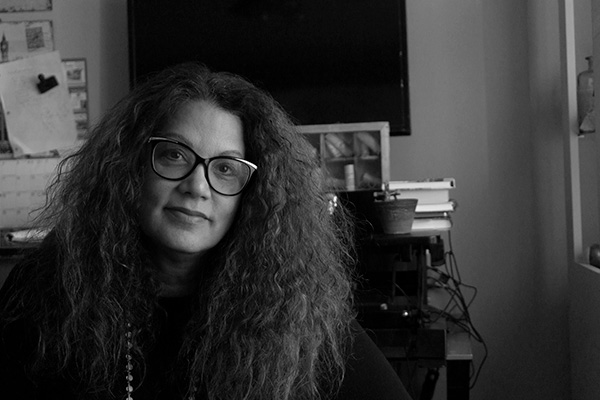

Robin's bio:

I am a mixed-race African-American writer from Indiana who usually writes fiction.

In 2017, I won the grand prize in a one-act play contest, presented by the 30XNinety theatre in Mandeville, a suburb of New Orleans.

In March 2019, I won the Etchings Press annual competition for novellas for my novella, Savonne, Not Vonny. 

I was named as an honoree in the Emerging Author category for the Indiana Author’s Awards in September 2020.

I was one of the three finalists for the Don Belton Fiction Prize for 2021 for my collection of stories titled A Wild Region and a Stowe Story Labs SAG Indie Top Ten Finalist for Savonne, Not Vonny in 2021.

Also, in 2021, I won the Marguerite McGlinn short fiction prize for my story "Uncle," awarded by Rosemont College and Philadelphia Stories.

One of my essays called "Different Times, Different Degrees, Same Shit" appeared in the 2023 Summer Edition of the Indiana Review.

I was a Wild Acres Retreat Diversity Fellowship winner in July 2023.

I live in Indiana with my husband and my dog and cat.

----- interview by Angela Mackintosh

WOW: Welcome, Robin! Thank you for joining us today, and congratulations on your award-winning essay, "To Be a Mixed Race (Black and White) Woman in America Means." I love how the title serves as an opening prompt for each paragraph, and your choice to write it in second person is brilliant. How did you come up with the idea for the format? 

Robin: I decided to write down every instance of racism or questionable situation regarding race that I encountered in my everyday life. 

Second person just came naturally. It seemed to be the most comfortable way to present the narrative.

WOW: It works so well. I am mixed race (half Asian, half White), and I can relate to hearing people talk about your ethnicity with racial slurs right in front of you! How did you choose which mini scenes to use in your essay, and how did the piece evolve as you wrote it?

Robin: It only took me about four months to gather the different mini-scenes. The one that struck me hardest was the two women in the mall assuming the tricked-out mustang blasting bass-heavy rap was driven by black people. The crude name-calling and stereotyping that these women displayed were infuriating.

WOW: You did a great job with that scene, because it also infuriated me as I read it. 

From plays to novellas to short stories—you've had great success at winning contests! What are some tips for choosing and entering contests?

Robin: If the judge of the competition has been announced, review what that judge writes and if your writing is in the same genre or is similar in tone or the judge has similar life experiences (possibly) then enter the contest. Go over your essay or story with a fine-tooth comb, not once but many times. If you can, have someone else read your essay or story and get their opinion.

WOW: Reading what the judge has written is such a great tip! When and where do you like to write?

Robin: I have a room in my house with all my books and my computer, that is the best place for me to write.

Usually, I write in the late evening - 9:00 pm to 1:00 am is the timeframe I usually write in. 

WOW: I'm a morning writer, so late night writers always impress me because I can never keep my eyes open past ten!

Your short story collection, A Wild Region: Tales and Stories from the Heartland, was recently published by Liminal Books. I love how you dedicated your collection to your grandmother. In your prologue, you mentioned that one of your characters, Virgie, who kept a headless chicken, was the essence of your grandmother. Did you draw on your real life experience for all the stories included in your collection? Would they be classified as magical realism? Are the stories connected by a theme?

Robin: I believe all writing draws on the author's life experiences to some degree. Of course, in fiction things are changed around a bit and characters are composites or at least have a little bit of the author's emotional truth. 

Yes, I would call my stories magical realism. Flying dogs, Voodoo conjurers, magic animals carved out of ivory. Not connected except by the area where the stories are situated and, of course my strange view of life.

However, a live headless chicken really did exist in the 1940s as a carnival sideshow attraction.


Mike the Headless Chicken (April 20, 1945 – March 17, 1947)[1] was a male Wyandotte chicken that lived for 18 months after his head had been cut off, surviving because most of his brain stem remained intact and it did not bleed to death due to a blood clot. After the loss of his head, Mike achieved national fame until his death in March 1947. In Fruita, Colorado, United States, an annual "Mike the Headless Chicken Day" is held in May.

Also, I am honored that you read my stories, Ms. Mackintosh!

WOW: I love your writing, Robin! That's wild about the headless chicken. What are you working on now?

Robin: A novel about an orphaned young woman making her way in Victorian London with an off-putting birthmark on her face. A Doctor Jekyll-type physician claims he can rid her of the birthmark, but she also has to contend with the Mr. Hyde side of him.

This Doctor is named Doctor Robert Harold, and his alter ego is simply called Jenks. I'm about 90 pages in.

WOW: Ooh, that sounds fascinating, and I love dual personality stories, and birthmarks are intriguing. Okay, last question: what is your favorite piece of writing advice?

Robin: Take long walks and think about your story and characters. Sometimes I talk to my characters or talk as my characters. I try not to let anyone hear me on my walks, or they might think I am peculiar.

WOW: Ha! That's wonderful advice, Robin, and you are a true artist. It's been a joy chatting with you today, and I wish you the best of luck on your project! I will be following your work.

Find out more about WOW's flash fiction and creative nonfiction contests here: https://www.wow-womenonwriting.com/contest.php
Read More »

Jacqueline V. Carter Writes About the Colors of Her Life and Wins Second Place

Sunday, February 14, 2021
We are excited to welcome 2nd place creative nonfiction essay winner, Jacqueline V. Carter, with her winning essay, "The Colors of My Life," to our blog this Valentine's Day to talk about writing and contests and her essay! Here's a little about Jacqueline in her own words: 

This is the first time I’ve entered a writing contest, and I’m very encouraged by the response to my essay. I’ve always wanted to be a creative writer. But my professional life went in another direction. For years, I worked with government agencies and national organizations to develop and promote public health campaigns targeted to policymakers, providers, consumers, patients, and the media. I loved the work. I still believe the health messages and materials we created helped people make lifestyle choices that improved the quality of their lives. But my life changed several years ago when my husband was diagnosed with lung cancer. First, I became a caregiver. Then, I became a widow. Watching him and loving him through his transition both humbled me and left me depleted. Along with my family and friends, prayer and meditation, yoga, and walking saved me. Once I regained my equilibrium, I knew I had to reset and focus on my next life chapter. One day I “discovered” the WOW website (I don’t believe in coincidences!), and was fascinated by the array of online writing classes. After a week, I hesitantly registered for a class on writing personal essays, one of the best things I’ve done for myself in a long time. My butterfly wings are finally beginning to open slowly but surely, giving my heart the courage to release stories I yearn to tell. 

Check out her essay here and then come back for her interview. 

WOW!: Jacqueline, congratulations on winning second place in the contest with your essay, "The Colors of My Life." In this essay, you tackle the theme of colorism. Can you explain to our readers what this is and how it has affected your life, and why you chose it as a topic of your essay? 

 Jacqueline: Margo, thanks so much. I’m really humbled by this second place. While I appreciate your question about colorism, I’m hardly equipped to explain this complicated issue. As referenced in my essay, Alice Walker is credited as the first author to use colorism in print. She defined it as “prejudicial or preferential treatment of same-race people” based solely on the color of their skin. Although colorism is found in many cultures, my essay speaks to my experience of colorism in the African American community. Here’s a little background on colorism in this country: European colonialists created the system of “racial hierarchy” in which White people were privileged over Black people. They then used differences in skin color to justify their enslavement of non-White peoples. During slavery, lighter-skinned enslaved people were favored and were more likely to be educated than darker-skinned enslaved people. Over the years, some African Americans adopted this racial hierarchy among themselves, assigning lighter-skinned men and women higher status in their own communities. In this way, the oppressed adopted the thinking of their oppressors. Hope this helps. Though I didn’t always know the name for it, I’ve experienced colorism in the broader community and in my own family. Growing up in the South, I saw how African American girls with light skin were singled out for special treatment (for example, awarded leading roles in school plays, chosen for special projects at church). When I applied to a historically Black all-women’s college, I was required to submit a recent photo to complete my application for admission. I didn’t know it at the time, but I learned that this was a requirement instituted years ago by the Europeans who established the college as a way to deny admission to darker-skinned Black women. I didn’t submit a photo and was admitted. Ironically enough, I was selected as the first “brown” girl to be part of what was then called “the queen’s court.” I didn’t even know it was such a big deal until one of my classmates told me. Imagine that! I could write more about my experiences with colorism, but I think you get my drift. 

I chose this topic for my essay after we discussed the use of color in essays in one of my WOW! writing classes. The exchanges among my classmates caused me to flashback on how, as a child, some family members discouraged me from wearing certain colors because of the color of my skin. The more I worked on this essay—with the encouragement of my classmates and very thoughtful feedback from our instructor, the wonderful Chelsey Clammer—the more I remembered how color affected my life. Like unraveling a skein of yarn, the more I tugged, the more memories surfaced. 

WOW!: Thank you for explaining colorism to us as you understand it and a bit about the United States history. Thank you even more for sharing a bit of our story with our readers! Your writing is so descriptive and beautiful. I like all the ways you described different colors in your essay. It was like reading a painting, if that makes sense. How did you choose just the right words to describe the colors, especially all the shades of purple in the end? 

Jacqueline: Thank you for saying that. I’ve always enjoyed color. I loved my childhood coloring books and boxes of crayons, especially fresh Crayolas. In fact, I still do. My father grew many different colors of roses in our front yard. A tall, handsome man, he regularly dusted his beauties with a tiny brush. After his second stroke, he learned to paint beautiful scenes using those old-fashioned “paint-by-numbers” kits. I’m not sure that I chose “just the right words,” but I tried to describe the various shades in a way that readers could visualize them. literally looked at the various shades of purple in my closet, amazed at how much clothing and accessories I have in shades of purple. As for the ending, I credit my instructor, Chelsey Clammer, with encouraging me to explore the various purples in my closet. Truthfully, I was amazed at how many items of clothing and accessories I have in shades of purple. Guess I really like that color. I also did some research on the color purple, its meaning and how its been used over time. All this helped me paint the ending in vivid shades of purple. 

WOW!: So interesting! And thank you for all the great words about Chelsey. We love her so much at WOW! You also chose to not tell your story in a chronological order. There are events from your childhood mixed in with events as an adult. How did you organize your essay? Why did you choose to organize it this way? 

 Jacqueline: In Chelsey’s writing class, Grief, Bluets by Maggie Nelson is required reading. In fact, I took that class twice. Third time’s the charm, huh? The first time I read the book, I didn’t like it at all. For me, Nelson’s format of numbered entries with no obvious chronology was jarring and uncomfortable. I finished the book but I didn’t get it—at all. However, when I read it the second and third time, it all made sense. So, I challenged myself to tell my story without the confines of chronology, to learn a new writing format. Nelson’s book was my inspiration for this essay. I wrote the segments/”vignettes” as they came to me, all related to the overall theme. Encouragement from the other writers in the class and Chelsey’s precise feedback helped me throughout the process. 

WOW!: It sounds like you were very determined, and I love that a class and book inspired you to try something new. And obviously it worked! I read that this is the FIRST time you've ever entered a writing contest--and you got 2nd place! That is so awesome. Your essay is also amazing. Why did you decide to enter this piece into WOW!'s contest? 

Jacqueline: Yes, this is the first time I’ve entered a writing contest. From the time I first visited the WOW! website almost two years ago, I’ve read about the contests but never seriously considered entering one. I didn’t have the courage to put my writing out there, to expose myself in that way. Over the past year, the wonderful women in my WOW! writing classes and Chelsey (yes, I’m a big fan!) suggested I submit my writing for publication. Finally, I decided to submit, never expecting any type of recognition. 

WOW!: Awesome! We are also so sorry to hear about your husband. Thank you for sharing that piece of your life with the WOW! community. We know from your bio that part of your healing process has been taking classes. So what's next for you? More essays? Fiction? Any longer pieces? 

Jacqueline: Thank you for your kind words. Yes, the writing classes have truly been a balm to my spirit. They’ve helped me remember how good it feels when I get into my writing zone and everything else fades into the background. It’s freeing in many ways. What’s next? Well, I want to do more things to nurture my creative side. Recently, I signed up for an online drawing class, which I know will be fun. Of course, I’ll definitely continue to take more writing classes. And, yes, I plan to keep writing—poetry, essays, even longer pieces. One of these days, I’d love to write a memoir about the wonderful women who poured into my life. Although I’ll forever be a Daddy’s Girl, I acknowledge the wisdom and sense of wonder I gained from the women who raised me. Who knows? I may even try my hand at fiction. One thing I know for sure: I’ll glide in whatever direction my wings take me. 

WOW!: That sounds like the perfect plan. Thank you again for your time today! Best of luck to you!
Read More »

Creative Nonfiction Runner Up Susana Romatz Brings Humor to WOW!

Saturday, September 26, 2020

We welcome creative nonfiction writer Susana Romatz to our blog today because she was a runner up in our quarter 3 2020 contest with her essay, "How to Cure Mange." If you haven't read it yet, you can check it out here.  If you are a humor writer or want to learn to write humor better than you have been, Susana gives us some great tips and insight below!

Susana is a middle school teacher in Eugene, Oregon. She grew up in Saginaw, Michigan, and graduated from Central Michigan University with a double major in earth science and religion. She went on to earn a certificate from the Eugene Waldorf Teacher Education Program and took a job at a Waldorf inspired charter school. She spends 180 days of the year arguing with twelve-year-olds. She thinks it’s the best. Susana has been writing for most of her life, having won first place in a Ford Motor Company fiction writing contest and published articles at HumaneFacts.org and The Peaceful Dumpling. Her most recent work can be found at www.scrappyhaps.com.

WOW!: Congratulations, Susana, on placing as a runner up in the creative nonfiction essay contest with your essay, "How to Cure Mange." It is hysterical! Let's start at the beginning, though. What led you to write this essay?

Susana: I wrote this essay for two reasons: 1. I felt the heaviness of what was (is) happening in the world (including but not limited to the virus) so strongly, and I wanted to lighten the mood as much as I could, both for myself and for others; and 2. I enjoy normalizing neurotic behavior. I think that everyone has something they are a little overly attentive to, and we can all get a little neurotic from time to time. It feels like we, as a group of human animals, feel like we are alone in our crazy thoughts; when in truth, we are all at least a little bit crazy, even the people we know who seem so put together. The more we can meet each other on common ground, the healthier we, and our planet, will be.

WOW!: Great points. I certainly agree that everyone has "something"! You take three events--waiting at the pharmacy and imagining COVID in the air, and your dog having mange, and worrying about eyelash mites--and weave them together to make this delightful essay. What made you piece all of these together?

Susana: In an interview for writers, David Sedaris said that we should look for times in our lives that feel like a story. I take that to mean times that are so whacky or synchronistic or other-worldly that they seem like somebody made them up. I will have memories of times like these that happened to me in the past, and I write down little notes to myself to write about them later. Often when I’m writing about something that happened recently, one of those little memories will go along with it. I really like putting two stories together into one; I think it gives more room for depth and more opportunities to squeeze in a laugh. That’s how this writing came together.

WOW!: You really can't go wrong with advice from David Sedaris. You are very good at writing humor. Is this something you often do? Any tips?

Susana: I write nearly every day, but not all of what I write is humorous. I do a lot of journaling, writing down the things that happen, so I can look back and pick ideas from it. When I’m writing for my humor blog, I usually try to imagine myself telling a story to my best friend, who is really patient at listening to me tell a million stories, some of which are funnier than others, and I translate that energy into something readable. I add in a lot of metaphor and simile, both of which allow a lot of room for colorful adjectives and funny imagery. Instead of saying, “He walked into the room, looking uncomfortable,” I’ll say, “He walked into the room like he was on the second day of his jock itch treatment.” It’s also important in humor writing to make the story relatable. When I read writing that I think is super funny, I can usually put myself in the shoes of the characters and imagine what they are seeing/doing myself.

WOW!: That's a great example of how you use figurative language to bring humor to your writing. Your bio also mentions that you are a teacher. How do you balance writing and teaching?

Susana: Sometimes I do, and sometimes I don’t. It depends on the time of year and how much extra time I’m putting in to my pet projects. I also have a small vegan specialty items business called Avellana, I’m working on developing an invention prototype idea for making nut milks at home, and as well I have a vegan recipe blog. I try to keep busy so I stay out of trouble.

WOW!: That sounds like you have quite a full plate and all very interesting projects! What's next on your writing plate? What are you working on?

Susana: I’m working on a series about campers. I have a 1978 Toyota mini motor home named Campy. We just took her out into the desert of Eastern Oregon for two weeks, and many things went...unexpectedly. I thought a series memorializing all the weird stuff that’s happened to me in my life surrounding camper camping was a rich topic for making people laugh.

WOW!: Sounds delightful and unique! Best of luck with the camper camping stories. 
Read More »
Powered by Blogger.
Back to Top
