Showing posts with label elizabeth maggio. Show all posts

Interview with Elizabeth Maggio: Spring 2019 Flash Fiction Contest Runner Up

Tuesday, October 22, 2019
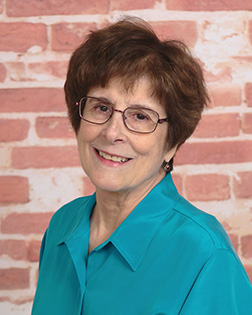
Elizabeth’s Bio:

Armed with a geology degree from New York University, Elizabeth Maggio moved cross country to begin her writing career as the science reporter on the Arizona Daily Star in Tucson and then as science editor at the University of Arizona were she founded a research magazine. After picking up a degree in Italian while at the university (“someone had to speak the family language properly”), she packed up and headed to Turin, Italy, where she worked as a bilingual science editor for an Italian aerospace company. That experience led to a position as consulting science editor for the Vatican’s astronomical observatory.

After retirement, Elizabeth switched to writing fiction and discovered that making up the facts was surprisingly harder than documenting the facts in her science reports.

With encouragement from a fellow writer, she entered and won a short story contest. Emboldened, she entered the WOW flash fiction contest and has won various awards over the years. Her flash fiction inspiration often comes from the novel she’s working on, an archaeological mystery set in Italy.

Elizabeth lives in Clifton, Virginia, with her husband Ike and a dear old, now-deaf cat named Bailey.

If you haven't done so already, check out Elizabeth's award-winning story "The Talisman" and then return here for a chat with the author!

WOW: Congratulations on placing in the Spring 2019 Flash Fiction Contest! What excited you most about writing this story?

Elizabeth: I was excited—thrilled—to be able to use the plot element I had tried so hard to make the central focus of the archaeological mystery I’m writing. No matter how hard I tried, it just didn’t work in the novel, and yet the idea of being able to touch an old object, in this case, the roof shard from an ancient Roman site, and be connected with the past haunted me. As I often do when I’m stuck on my novel, I turned to flash fiction and it worked in my story. At last, my orphan plot element had a home!

WOW: Excellent news! And I love the idea that flash fiction is both an amazing standalone genre and a useful tool for other genres. What did you learn about yourself or your writing while crafting this piece?

Elizabeth: The big take-away from writing “The Talisman” was to relax. I knew that the little girl would have an imaginary friend but I had no idea how the story would play out. Would the friend be real or make-believe? I didn’t know, and I was getting anxious as I neared the end of my story. Once I let go of my anxiety, the ending—a shadowy friend—just happened.

WOW: In your bio it says that “making up the facts” in fiction writing “was surprisingly harder than documenting the facts” in your career as a science writer, which I find very interesting. Can you tell us more about that challenge and about your transition from science writer/editor to fiction writer?

Elizabeth: Oh my. Overcoming my facts fetish—I built my reputation as a science writer on accuracy—is still hard and slows my writing down, especially for a novel based on a real archaeological site with lots of documentation available. Just this morning I was writing a chapter that dealt with the way the sanctuary site had been looted in the past. I wanted to know the “who, what, where, and when” of this looting, what happened to the found items. When I should have been moving my story forward, I wasted time researching and trying to pound the square facts into the round holes of my story. Ugh.

WOW: I can see how that would be a challenging occupational habit to overcome!

Elizabeth: Making up the facts should be easy, but I find it difficult to pick and choose and edit the facts and make up new ones to suit my story. Maybe I feel guilty. I try to remind myself that I’m writing fiction now and to not let the facts get in the way.

P.S. Not one to waste good research, I’ve filed away my facts and built up a large stockpile of interesting material for blog postings related to my novel (when I get around to creating a blog).

WOW: That’s an amazing idea! And such good motivation to create that blog soon! Thanks for sharing that process with us. What are you reading right now, and why did you choose to read it?

Elizabeth: I just finished A Wrinkle in Time by Madeleine L’Engle. When the movie came out last year, I decided to read the book first because it had a magical/sci fi theme. But I couldn’t get into it. Recently I wanted to stream the movie, so I gave the book a second try and enjoyed it.

WOW: If you could give your younger self one piece of writing advice, what would it be and why?

Elizabeth: “Liz, don’t try so hard.” Don’t stake your story on a particular plot element that’s caught your fancy. You’ll end up going around in circles unless you let it go.

WOW: Great advice! Anything else you’d like to add?

Elizabeth: Writing flash fiction is a great way to take a break from a longer project, especially if you’ve hit a stubborn writing block.

WOW: That’s also great advice! Thank you again for sharing your stories and for your other thoughtful responses! Congratulations again, and happy writing!

Interviewed by Anne Greenawalt, who keeps a blog of journal entries, memoir snippets, interviews, training logs, and profiles of writers and competitive female athletes.
Read More »

Meet Flash Fiction Top Ten Winner, Elizabeth Maggio

Tuesday, February 20, 2018
Elizabeth’s Bio: I still have the Tom Thumb typewriter on which I pecked out simple stories in childhood. It reminds me of when my writing career began. I never set out to be a fiction writer but looking back, telling stories and an imagination were always a part of me. I got a degree in geology—I love science—but that didn’t get in the way of my writing. I simply turned that degree into a rewarding career in science writing. Switching to fiction was hard. I built my science writing achievements on factual accuracy, and it took a while to give myself permission to make up the facts.

I’m retired now and thoroughly love spending time on my fiction. I’ve been working on a novel since the Pleistocene and switching to flash fiction when I’m in a dry spell helps me move the novel ahead.

I live in Clifton, Virginia, with my husband Ike Ghozeil and a dear old cat named Bailey.

interview by Marcia Peterson

WOW: Congratulations on your top ten win in our Summer 2017 Flash Fiction competition! What inspired you to enter the contest?

Elizabeth: Years ago a writer friend introduced me to WOW. I enjoyed its articles and I was intrigued by this thing called “flash fiction.” I had no idea what that was but after researching the genre and reading a few winning entries I decided to try my hand. As a former newspaper reporter, I was used to dashing out 1,000-word stories before deadline. So, 750 words would be a piece of cake, right? Was I wrong! It's tough to write a complete story with protagonist, story arc, etc. in so few words. But I found that doing so allowed my creativity to blossom.

WOW: Can you tell us what inspired your story, "A Touching Compromise?"

Elizabeth: This story is a dark departure from my usual genre that touches on magic realism. But I had to get it out of my system. It started as a scene in my novel that I had to jettison because it just didn't work. Still, the scene haunted me. How would such a story line play out? What solace could be offered to a young mother when the body of her murdered daughter is too gruesome to view? I wondered if a compromise solution was even possible. Letting my imagination run free, without the constraints imposed by my novel, I ended up writing "A Touching Compromise."

WOW: What do you enjoy about flash fiction writing versus the other kinds of writing that you do?

Elizabeth: Flash fiction is my go-to therapy for writing blocks. I've been working on my novel for ages, and it's frustrating. But flash fiction is concise and I see a result relatively quickly.

WOW: Describe a typical day spent writing. Do you have any unusual writing habits?

Elizabeth: I wish I had writing habits! I do meet with my writing group every Wednesday but other than that, writing habits are nonexistent. I've tried writing at a set time each day or producing a specific amount of text, but it just doesn't work for me. I have finally accepted, after trying all of the aforementioned good-writing habits, that my muse is unpredictable and unstructured. So I write when she moves me. Often that's triggered by something I read in the newspaper (I still read the print version of the Washington Post every morning). I do have one writing trick that has helped me: While reading an ebook on my Nook, I'm constantly highlighting passages that trigger an idea for a scene, a piece of dialog, or a new flash fiction story. I add a note to the highlighted text, sketch a snippet of possible scene/dialog, and then email it to myself. When I see the email, I'm moved to flesh out the snippet. In this way I move my novel or flash fiction piece forward. The downside is that it takes me forever to get through reading a book!

WOW: Thanks so much for chatting with us today, Elizabeth. Before you go, do you have any tips for our readers who may be thinking about entering writing contests?

Elizabeth: Oh yes. Don't be afraid to put your writing out there. It's not about winning but about being brave with what you write. And ask for a critique, if offered, which the WOW flash fiction contest does. I always do. It's an invaluable add-on to the entry free, both of which are modest. The critiques are always helpful and not put downs. I'm amazed at how perceptive those editor eyes can be. "A Touching Compromise" was dinged in one spot (I'm not telling), which I had felt needed addressing but which I ignored. I've learned now to trust my gut.

****

WE NOW HAVE TWO CONTESTS!

WOW! Women On Writing now hosts two quarterly contests: one for fiction writers and one for nonfiction writers. Click on the links below for information and entry:

Quarterly Flash Fiction Contest

Quarterly Creative Nonfiction Essay Contest


Read More »

Friday Speak Out!: Bending the Facts in Historical Fiction

Friday, June 19, 2015
by Elizabeth Maggio

Fiction, says one Webster definition, is “literature that tells stories which are imagined by the writer.” But what if your novel is based on real events or people or places? What do you do about the facts that just don’t fit into your storyline?

I’m writing an archaeological novel set near a small town in the hills outside of Rome. The story relies heavily on what’s left of an ancient sanctuary, its complex history, and its captivating deity. I can’t resist the real story. I am so enamored of the facts that I have a hard time allowing my creativity some freedom in bending them, just a little, to make my fiction work. The result is that my first novel has taken ages to write, but I’m getting better and my story is moving ahead faster.

Here are a couple of examples:

Fact: A small train line runs from downtown Rome into the hills and stops at several towns. I am familiar with the stop at one town, its tiny train station, and the fact that getting from the station to the town means walking up the hillside over a few switchbacks to get to the main piazza. Great visual for my novel; the only problem is that this train stop is not at the town I’m writing about.

Fiction: I thought of moving the setting of my novel to the town with the train station, but that wouldn’t work. So I relocated the train stop.

Fact: Early excavations, mostly by artifact hunters, uncovered ruins of several structures in this monumental complex that were then reburied. A few reports exist saying what was found, but no one has had the time or financial support to excavate the site completely and properly and recreate what exactly was there.

Fiction: Taking advantage of the incomplete knowledge about this site, I reorganized its layout to fit my plot.

The changes I’m making don’t alter the core facts--the site and its history will be recognizable to the archaeological community and to nearby residents. I feel however that my changes need to be acknowledged in my novel, and I will do that in an Author’s Note at the beginning.

* * *
Elizabeth Maggio is a retired science writer who is transitioning to fiction. She was a third place winner of the WOW! Women on Writing Fall 2012 Flash Fiction Contest. You can read her winning entry “Extant, Not Extinct” at http://www.wow-womenonwriting.com/54-FE1-Fall12Contest.html
~~~~~~~~~~~~~~~~~~~~~~~~~~~~~~~~~~~~~~~~~~~~

Would you like to participate in Friday "Speak Out!"? Email your short posts (under 500 words) about women and writing to: marcia[at]wow-womenonwriting[dot]com for consideration. We look forward to hearing from you!
~~~~~~~~~~~~~~~~~~~~~~~~~~~~~~~~~~~~~~~~~~~~
Read More »

Meet Elizabeth Maggio, 3rd place winner in the Fall 2012 WOW Flash Fiction Contest

Tuesday, April 09, 2013
Good day, Muffin lovers! Today, we will be chatting with Elizabeth Maggio, 3rd place winner in the Fall 2012 WOW! Flash Fiction contest. If you haven't had the opportunity to read Elizabeth's story, Extant, Not Extinct, head over to the contest page. Then return to join us for a great interview!

Elizabeth Maggio parlayed a geology degree and her facility at explaining science to lay audiences into an award-wining science writing career. I twas an ideal fit, affording her a front-row seat at the cutting edge of research. Of all her experiences as a science writer, a few hold special memories: interviewing Carl Sagan about water on mars and hearing him say "torrents and torrents of rain" long before he became a science super star; snagging a one-on-one interview with Gene Roddenberry during the start-up days of Star Trek (after convincing hr newspaper editor that the assignment did fall within the bonds of the science beat.) Her career even led to adventures in Italy where she used both her science writing and Italian language skills working for an aerospace company and an astronomical observatory.

Now semi-retired, Elizabeth is transitioning into a second career as a fiction writer. She started writing flash fiction about two years ago and discovered it has helped her write her first novel, an archaeological mystery set in the Alban Hills outside of Rome.

Elizabeth lives with her husband in northern Virginia.


WOW:  Elizabeth, congratulations and welcome to The Muffin. After reading your story, I felt such a sense of wonder. The science tie-in hooked me! How did your science writing background lead to the story, Extant, Not Extinct?

Elizabeth: What led to Extant, Not Extinct, indeed, to my entire approach to fiction, came about when I was pursing my geology degree. While doing geological mapping in the limestone mountains of southern Arizona,  I sat down on an outcrop of rock to eat lunch, but it soon became terribly uncomfortable. I got up to see what I was sitting on and was amazed to find a fossilized coral reef…exposed on the top of a mountain... in the desert. For the rest of the day I couldn’t get out of my head that I had been sitting on something that once lived on the ocean floor, and the only dimension separating me from the live coral reef was time. My character Mona felt this too when she ran her finger over the 300 million year old fossil that Professor Millington had handed her, saying “Imagine what it could tell us if it were alive.”

WOW: I like the personal connection you included in the story. It added so much to the overall effect. To me, there's a double layer of meaning in this story: the scientific background/research element and then the application of science to real life. When you write fiction, do you try to combine these elements or was this a "first" of science principles and fiction? 

Elizabeth: I definitely try to combine both science and fiction. The boundary between the two is often blurred, and I want my writing to take science one step beyond what is perceived as the limits to reality. My first introduction to this genre was reading Michael Crichton's The Andromeda Strain. Crichton included so much convincing scientific documentation, including a bibliography of scientific reports, that I often had to look at the book cover to make sure it said “novel”.

WOW: I've read The Andromeda Strain and can relate! I like reading stories like this that include scientific research yet they are fiction. A line from your bio piqued my interest. You mention that confronting the challenges of flash fiction is helping with your novel writing process. Can you give an example and how it's made your fiction writing stronger? 

Elizabeth: For my science non-fiction writing, I do a lot of research on a topic. When I write fiction, I still do a lot of research but I have a hard time restraining myself from including all the fascinating facts I find into my story. What I really need to do is zero in on only those elements that move my story forward. Flash fiction forces me to do this; to write sparingly, to choose only enough background information to move the action along, and to slip background facts into dialogue or scene setting.

WOW: Great example! I've found that writing flash requires the writer to fine tune and tighten every element in a story. Naturally, that should carry over into fiction! Elizabeth, you have a varied writing background. You've written science non-fiction, flash fiction and fiction. Which do you find most challenging to write and why? 

Elizabeth: Both flash fiction and fiction are challenges because I’m still uncomfortable making up the facts after decades of building a reputation on the factual accuracy of my science stories. Flash fiction, though, is the hardest because of its format restraints. I really have to focus on scene, characters, and plot as well as on the word count. But surmounting that is so rewarding.

WOW: As a journalist who also dabbles in fiction writing, I understand being uncomfortable making up facts when your primary job is to relay only facts. Sometimes, I find it difficult to transition from writing non-fiction into fiction. Still, I never seem to have trouble finding ideas. I'm wondering what you need to feel inspired to write? 

Elizabeth: Inspiration hits me at the most unexpected times: reading the newspaper, day dreaming on the Metro, and of course in the shower. I wish I could control it to a certain degree, but I’ve learned to be ready. I carry lots of notepaper, and if need be, I’ll sit at my computer dripping wet in a towel to write down inspiration that hit during my shower!

WOW: Yes, you never know when an idea will emerge. My kids used to make fun of me for the "hopping out of the shower to take notes" routine, too. I'm fascinated with the breadth of your science writing career. You met a lot of famous and influential individuals. Writing fiction must have presented a new set of challenges. What has been the greatest challenge in your professional (writing) life? 

Elizabeth:Discipline, definitively. I’m still new to this second-life fiction career. Unlike my science writing career, I haven’t yet been able to set up a daily routine for fiction writing. It’s still pretty much hit or miss. I’m working on that.

WOW: A routine is extremely important for a writer! You'll nail it down and then, watch out! :) One last question, Elizabeth. What would you want to hear from readers after they have finished reading one of your stories? 

Elizabeth: “I want more!” I aim to end a piece with not-quite-closure, that is, to write a satisfactory ending but one that leaves a bit of room for the reader to imagine “what if…”, or for a book club to debate if something really happened or if it was a dream.

WOW: That's the perfect way to end a story...such a great discussion starter! Once again, congratulations, Elizabeth and thank you for spending time with our readers.

Interview by LuAnn Schindler
Read More »
Powered by Blogger.
Back to Top