Showing posts with label Spring 2019 Flash Fiction Contest. Show all posts

Interview with Bonnie West: Spring 2019 Flash Fiction Contest Runner Up

Tuesday, November 05, 2019
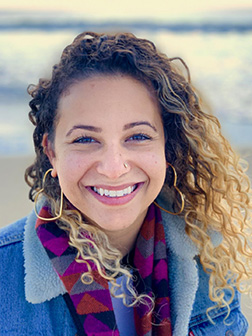
Bonnie West’s stories and essays have appeared in numerous publications, including The Minetta Review, Women’s Day and Redbook Magazine. She has a children’s bilingual Japanese/English children’s book Hideki and Kenji Save the Day and Boyfriends, a short story collection from a small press in England, are available on Amazon or at www.bonniewest.net.

Before you read her interview, be sure you read her story Book by Book, then come on back!

---- Interview by Nicole Pyles

WOW: First of all, I loved your story Book by Book. I loved how you weaved in the plot lines of other boos into the life of your character! What was the inspiration behind this story?

Bonnie: I first wrote the story about 20 years ago. I was with my husband in a library he frequented often and where I rarely went. I noticed he was all chummy with the librarians and I thought for the first time, wow, I would never know! During the same visit, I found a book on the shelf on affairs, which I thought was serious serendipity. It was an anthology of sorts and I thought again, wow, who would ever tell. And that was the beginning of the story. (I didn’t actually read that book.)

WOW: What an inspirational moment! I have to say how impressed I am with how you wrapped up this story. How did your story transform from the first draft to the final draft?

Bonnie: I am not certain how many revisions it went through, but there were many. And I think the ideas for the affairs came to me from simply thinking about affairs and all their convolutions: where people have them; what happens how they think they are secretive; how some people really must get away with it and how some people must want to be caught. And actually how many people do really leave for the affair.  In the end I decided since the main character had stated she is looking for her story by being in the library she would have to find it. So the last story I use is more her story although obviously not the same. But she realizes it is the end. Whether or not she is really poisoned by her own husband doesn’t really matter. (I like to think she is!)

WOW: Ha, I love that twist at the end! I loved reading on your website that you are a writer that doesn't write enough but loves writing! What advice would you give to another writer who says the same thing?

Bonnie: I really am that writer who loves writing and doesn’t write enough. I have analysed it and talked to other writers and find it is not such an unusual thing but I am still and always struggling with it. I think part of my problem is thinking that I really should be doing something else. Something like being with friends or cleaning the house or cooking a nice dinner. I also think that is crazy! I should be doing what I really want to do. So that is one thing. Another is that when I get going I write for hours and hours and hours. And I am annoyed if I am interrupted or stopped for whatever reason so I tend to just not start. Good luck. I can only hope that someone who might read this will comment and help me out with this one!

WOW: If you ever find out how let me know. I struggle with the same issue! What writing tip stayed with you the most?

Bonnie: The writing tip I use the most is one I use during revision. (I love revision and revise and cut and revise and cut many times.) Once I have written the story and think maybe it’s finished I look at it and ask myself, what is the story and what is the plot. And always I find good reasons to revise several more times. I see the plot right away but often don’t see the “story” by which I mean, the truth of what I have written. What is it REALLY about? Is it about betrayal? Is it about honesty? Is it about loss? And when I figure that out I can go back and put write some of the more difficult parts. In this story it was not such a problem because the story is I think is less serious than others I write. I wrote a story not so long ago that also was in the top ten at WOW which was called One Side of the Vase and that story was, for me, very difficult and very important to figure out what it was really about opposed to simply the plot.

WOW: That advice helps me a lot actually! What are you currently working on? What can we expect next from you?

Bonnie: I am currently and slowly working on a collection of connected stories. My book, Boyfriends, is a short story collection but they are in no way connected and I would like to have a more cohesive collection (to use the words from Project Runway! Ha)

It takes the characters from my final story in Boyfriends, which is titled, Sunrise, Banana, Chair and gives them a more complex story with lots of other characters involved. It is very definitely in the beginning stages. 

I’m also working on a few stand alone stories written a few years back which I am revising just to get them finished. I have lots to do so I had better get writing. Being runner up in this contest has perhaps given me the boost I need. 

WOW: I am so glad it did! Congratulations again and I can't wait to see what is next for you! 
Read More »

Interview with Elizabeth Maggio: Spring 2019 Flash Fiction Contest Runner Up

Tuesday, October 22, 2019
Elizabeth’s Bio:

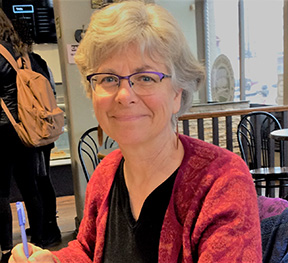
Armed with a geology degree from New York University, Elizabeth Maggio moved cross country to begin her writing career as the science reporter on the Arizona Daily Star in Tucson and then as science editor at the University of Arizona were she founded a research magazine. After picking up a degree in Italian while at the university (“someone had to speak the family language properly”), she packed up and headed to Turin, Italy, where she worked as a bilingual science editor for an Italian aerospace company. That experience led to a position as consulting science editor for the Vatican’s astronomical observatory.

After retirement, Elizabeth switched to writing fiction and discovered that making up the facts was surprisingly harder than documenting the facts in her science reports.

With encouragement from a fellow writer, she entered and won a short story contest. Emboldened, she entered the WOW flash fiction contest and has won various awards over the years. Her flash fiction inspiration often comes from the novel she’s working on, an archaeological mystery set in Italy.

Elizabeth lives in Clifton, Virginia, with her husband Ike and a dear old, now-deaf cat named Bailey.

If you haven't done so already, check out Elizabeth's award-winning story "The Talisman" and then return here for a chat with the author!

WOW: Congratulations on placing in the Spring 2019 Flash Fiction Contest! What excited you most about writing this story?

Elizabeth: I was excited—thrilled—to be able to use the plot element I had tried so hard to make the central focus of the archaeological mystery I’m writing. No matter how hard I tried, it just didn’t work in the novel, and yet the idea of being able to touch an old object, in this case, the roof shard from an ancient Roman site, and be connected with the past haunted me. As I often do when I’m stuck on my novel, I turned to flash fiction and it worked in my story. At last, my orphan plot element had a home!

WOW: Excellent news! And I love the idea that flash fiction is both an amazing standalone genre and a useful tool for other genres. What did you learn about yourself or your writing while crafting this piece?

Elizabeth: The big take-away from writing “The Talisman” was to relax. I knew that the little girl would have an imaginary friend but I had no idea how the story would play out. Would the friend be real or make-believe? I didn’t know, and I was getting anxious as I neared the end of my story. Once I let go of my anxiety, the ending—a shadowy friend—just happened.

WOW: In your bio it says that “making up the facts” in fiction writing “was surprisingly harder than documenting the facts” in your career as a science writer, which I find very interesting. Can you tell us more about that challenge and about your transition from science writer/editor to fiction writer?

Elizabeth: Oh my. Overcoming my facts fetish—I built my reputation as a science writer on accuracy—is still hard and slows my writing down, especially for a novel based on a real archaeological site with lots of documentation available. Just this morning I was writing a chapter that dealt with the way the sanctuary site had been looted in the past. I wanted to know the “who, what, where, and when” of this looting, what happened to the found items. When I should have been moving my story forward, I wasted time researching and trying to pound the square facts into the round holes of my story. Ugh.

WOW: I can see how that would be a challenging occupational habit to overcome!

Elizabeth: Making up the facts should be easy, but I find it difficult to pick and choose and edit the facts and make up new ones to suit my story. Maybe I feel guilty. I try to remind myself that I’m writing fiction now and to not let the facts get in the way.

P.S. Not one to waste good research, I’ve filed away my facts and built up a large stockpile of interesting material for blog postings related to my novel (when I get around to creating a blog).

WOW: That’s an amazing idea! And such good motivation to create that blog soon! Thanks for sharing that process with us. What are you reading right now, and why did you choose to read it?

Elizabeth: I just finished A Wrinkle in Time by Madeleine L’Engle. When the movie came out last year, I decided to read the book first because it had a magical/sci fi theme. But I couldn’t get into it. Recently I wanted to stream the movie, so I gave the book a second try and enjoyed it.

WOW: If you could give your younger self one piece of writing advice, what would it be and why?

Elizabeth: “Liz, don’t try so hard.” Don’t stake your story on a particular plot element that’s caught your fancy. You’ll end up going around in circles unless you let it go.

WOW: Great advice! Anything else you’d like to add?

Elizabeth: Writing flash fiction is a great way to take a break from a longer project, especially if you’ve hit a stubborn writing block.

WOW: That’s also great advice! Thank you again for sharing your stories and for your other thoughtful responses! Congratulations again, and happy writing!

Interviewed by Anne Greenawalt, who keeps a blog of journal entries, memoir snippets, interviews, training logs, and profiles of writers and competitive female athletes.
Read More »

Interview with Courtney Essary Messenbaugh, Spring 2019 Flash Fiction Contest Runner Up

Tuesday, October 08, 2019
Courtney Essary Messenbaugh is an expert dilettante. In other words, her curiosity about the world has propelled her to try all kinds of different things over the years. She’s worked as a bond analyst, waitress, political fundraiser, and even once, a documentary film producer. She now occasionally gets paid to do some writing and communications work, spends a lot of time getting her children to and fro, and dreams a fair bit about having space and time of her own to do nothing but craft short stories and dive deep into her creative mind.

Someday, she’d like to produce an entire collection of short stories. Until then, some of her more mundane (i.e., paid for) writing can usually be found at www.courtneyessary.com, but that site is currently undergoing a redesign, so check it out at a later date!

Courtney loves travel, music, dancing, movies, and books and likes to get lost in the lives and histories of people and places both fictional and real. When she’s not dreaming and scheming, she’s enjoying a hike with her dog, doing yoga, or meditating. She took a solo trip earlier this summer to hike to the summit of Mount Kilimanjaro and feels a bit like she’s got a superpower as a result. She could live on champagne, laughter, and toast (but doesn’t, actually) and loves her three children, husband, and dog immeasurably.

interview by Marcia Peterson

WOW: Congratulations on your top ten win in our Spring 2019 Flash Fiction competition! What inspired you to enter the contest?

Courtney: It had been a while since I’d entered one of the contests and I missed it! As often happens, the demands of family and my day job had begun to consume my time and I’d inadvertently stopped creative writing. Since I love how I feel when I’m able to be creative, I clawed my way back from being “too busy” and committed to entering the Spring 2019 contest. I felt buoyant after I’d finished the story and knew that no matter how my story would fare in the contest, writing short stories was something I needed, simply for how it makes me feel.

WOW: Can you tell us what encouraged the idea behind your story, “Cracked”?

Courtney: Several ideas: the inherent human appeal of people watching, either overtly or covertly; the deeply personal experiences of reproductive health and the inner lives that can develop as a result; and, the flow of the waves of our relationships with ourselves and those around us.

WOW: As a busy mom to three children, how do you find time to write? What works best for you?

Courtney: That’s the million dollar question. I do not have a lot of time (see my answer to the first question!). One of my goals this year is figuring out how to carve out more creative space - both mental and physical - for myself. For the physical space, I have a home office, but it doesn’t inspire me much since it’s where I work my day job, so I’ve got a chaise lounge in a sunny corner of the house on which to park myself, or I’ll sometimes go to a local coffee shop for more stimulation. As for mental space, I’m trying to get in the habit of consistent, hour-long creative writing sessions several times a week to get my juices flowing and feel more comfortable with the writing; I'm trying to be more observant and sensitive to the world around me for inspiration; and, I have signed up for a short writing seminar this Fall with The Lighthouse Writer’s Group, a terrific local nonprofit.

WOW: Are you working on any writing projects right now? What’s next for you?

Courtney: I have a notebook filled with ideas for short stories that I’ve jotted down and hope to fulfill and have also been trying to write a bit of poetry. I am quite certain my poetry is horrible, but I’m indulging myself nonetheless. I read poetry often and a good poet’s words are soul food for me.

WOW:Thanks so much for chatting with us today, Courtney! Before you go, can you share your favorite writing tip or advice with our readers?

Courtney: I’m not sue that I’m in any position to give advice, but I am currently trying to read as much as I can. There is so much good writing out there that serves as great inspiration and a tool for learning.

****

For more information about our quarterly Flash Fiction and Creative Nonfiction Essay contests, visit our contest page here.


Read More »

Interview with Chelsey Monroe: Spring 2019 Flash Fiction Contest Runner Up

Tuesday, October 01, 2019

Chelsey Monroe is a builder of worlds. She graduated UCLA as Valedictorian with a focus on playwriting, and brought new worlds to life on stage; after college, using her theatrical foundation, she worked for six years in the magical land of Hollywood, but her true passion lay in creation through language. So she packed way too many suitcases and left Los Angeles for Tokyo to explore the real world and teach English.

Currently, Chelsey lives in San Francisco, California, and writes fantasy, horror, and magical realism novels. As a woman of color, she strives to be the intersectional eye lacking in the grand narrative, telling history, fantasy, and horror, from alternative angles. Her characters defy norms and heroic tropes. Her goddesses are single-mothers juggling two jobs while her gods are ex-convicts and reformed addicts; her princesses are gender-nonconforming, and her princes prefer men. Inspired by the possibility she finds in authors like Octavia Butler and Tomi Adeyemi, Chelsey uses fantasy to create dialogues between cultures and to reimagine our history and society. Her goal is to inspire people to move beyond the limiting patriarchal narratives offered and work to build their own universes—to be in control of their own stories. Chelsey’s work has been featured in the 2012 WriteGirl Anthology, and has won the San Francisco Writers Conference Kevin Smokler Scholarship twice, the Murphy School of Writing Get Away to Write Scholarship, and 1st place at the House of Blues Martin Luther King Jr. Poetry Contest.

When she is not writing, Chelsey loves traveling and exploring new cultures, reading late into the night, and baking high-calorie sweets. You can find more of her work on her Instagram @wilde4writing and discover more about her via her LinkedIn.

Before you read her interview, be sure to read her story The Talk then come on back!

---- Interview by Nicole Pyles

WOW: First of all, I loved your story The Talk. It was so poetic with incredible, vivid imagery. What was the inspiration behind this story?

Chelsey: This piece actually started as an assignment for a writing class I was taking with The Writers Studio. Using the techniques from a poem by James Schuyler, I found a way to implement his lyrical yet simple style into a more grounded work of prose. There was a sense of nostalgia in this particular poem, and I thought about how profound people can get when the things they love no longer exist. This led me to wonder how someone could explain these things to a person who had no concept of what they were.

WOW: Oh I love that idea. And I could sense that nostalgia and the longing for places and times gone by in the piece you wrote, actually. How did world-traveling inspire you?

Chelsey: Every place I travel to informs my writing. Sometimes I set a story there, or just I utilize the feelings of that environment. In this story, my character is missing a place we all know: Earth. A place that no longer exists. Travel teaches me about expectations and how to deal when those expectations go completely haywire. It teaches me how to immerse myself in different cultures and use that understanding to reflect upon my own lifestyle. And, most importantly, it teaches me about history and how interconnected we all are. I hear new stories and meet new people, and they weave themselves into my intersectional narratives.

WOW: This inspires me to travel more! I love how traveling opens us all up. What are you working on at the moment? What is next for you?

Chelsey: Next up, I'm finishing my current novel, The Man Behind the Frame. The idea actually came to me while visiting an art museum in Scotland, nine years ago, and it's taken all this time since to craft and research. It's a work of magical realism about an old man who can bring art to life.

WOW: That sounds amazing! And how did you transport your reader so vividly in this piece? 

Chelsey: For me, the language came from personal experience. What will I miss most if our world isn't able to stop the Climate Crisis? What will I be nostalgic for, and what will feel impossible to describe? I live in San Francisco, and I know I would miss the bustle of the city and the calm of the beach. Immersing myself in these feelings and places, I tried to describe them concretely while also making the emotional details universal.

WOW:  This is so true and so inspiring you used what is going on with our environment to inspire you in this piece! For women of color who seek to tell their stories, what advice would you give them?


Chelsey: To paraphrase the legendary, and greatly missed, Toni Morrison: Write the story you want to read. My first novel was a good lesson in this. I was writing what I thought would impress people and not what I wanted to read. When I realized that I didn't have to live up to these imagined expectations, that I could be profound and fun, it really freed my pen. For women of color, it can feel as if we are expected to write only about our trauma--that this is what will sell, and what readers want from us. But you're a reader. What do you want to read? What makes you excited? What book doesn't exist that you wish you could read? Write that.

WOW: I think that is absolutely the best advice. Congratulations again and best of luck with your writing!
Read More »

Interview with Jerri Jerreat: Spring 2019 Flash Fiction Contest Third Place Winner

Tuesday, September 17, 2019
Jerri’s Bio:

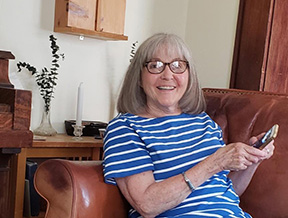
Jerri is a social justice and environmental activist, and writes fiction, both good and terrible, for joy. She is inspired by her family, her ten-year-old students, and a number of kick-ass non-profit groups.

Her fiction has appeared in The Penmen Review, (pending), Everyday Fiction, The Ottawa Arts Review, The Yale Review Online, The New Quarterly, The Antigonish Review, The Dalhousie Review, Room and is in two anthologies, Glass and Gardens: Solarpunk Summers (World Weaver Press) and Nevertheless: Tesseracts 21 (Edge Publishing). She mentors her students to write and perform a play each year and was honoured that her own play was performed in the Newmarket National Play Festival, July 2019. The actors were magnificent. She can be found at www.jerrijerreat.com.

If you haven't done so already, check out Jerri's award winning story "Waves" and then return here for a chat with the author. 

WOW: Congratulations on placing third in the Spring 2019 Flash Fiction Contest! What excited you most about writing this story?

Jerri: When I write, I am diving into myself. It’s a bit like falling into a dream. I read a variety of fiction in different genres, and nonfiction for teaching, or newsletters from Ecojustice, and a news magazine, Macleans. I listen to the CBC news. I talk with young students most of the day, with adults around that, go for walks and do errands. Life! Then, all these thoughts and images simmer together. When I sit down to do a 15-minute writing exercise I never know what will emerge. It’s so interesting to see how things kaleidoscope.

I have been drawn to reading articles and books about refugees for the past few years. Still, it was exciting, to feel a girl’s voice, fleeing from a war, bubbling up inside.

This particular tiny story emerged long after I began reading about the kindness and the cruelty of strangers toward modern refugees crossing the Mediterranean Sea. It is still happening. Just this week I received a newsletter from the U.N. group that works with refugees around the world, (U.N.H.C.R.). There was a news article about one of the survivors of an event in 2016 wherein pirates deliberately sunk a boat, killing over 500 people who were fleeing war.

I highly recommend the film, “Human Flow.” The numbers of people presently fleeing their homes because of war or climate change/famine is something we all need to be aware of. The United Nations keeps statistics, and updates them frequently. In 2017 there were over 65 million people fleeing their homes due to war or famine or other disasters. In 2019 there are over 70 million forcibly displaced people worldwide.

That’s more than after the World Wars. Now that I know it, it’s not something I can un-know. I think we all have to see this as a global change, and find positive solutions.

WOW: Thank you for sharing the background of not only your general writing process but also of the events that make your story so relevant and powerful. These statistics are shocking. It sounds like you’ve learned a lot through your research. What did you learn about yourself or writing while crafting this piece?

Jerri: I practiced an old Jedi mind trick: despite a dozen misgivings about what was appearing onscreen, I ignored them. I let my mind go. I don’t know why I went into the head of a young teen leaving Syria with her family. I’ve brought two lovely newcomer families (recently Syrian refugees) into my classroom to chat with my students. When my students asked why families were running away from their country and coming here, I’d simply shown some photos of Syria before and after the war. One visiting youth, about 15, was quite articulate and told us that what was strange for her about attending high school in Ontario, was that couples kiss in public. My students, aged 9 and 10, agreed that it was gross. This lovely girl wore a hijab, played soccer, and had two part-time jobs. She talked about missing her baby brother a lot while at school. Again, my students agreed with that feeling.

She didn’t have to take a boat; her family was sponsored by a group of local churches and the local mosque to come to Canada. A lucky family. My students raised a little money for this charity, “Save a Family from Syria”, the last two years.

After writing, I became very concerned that this piece might be seen as cultural appropriation. I didn’t send it out for a year, fretting. Finally, I decided that I would. I had written it in a spirit of deep respect for those families forced to leave their land, daring terrible dangers, because they had to. That is, truly, a universal theme throughout human history.

WOW: We are grateful to you for sharing your work with us! It clearly sounds like activism is a meaningful part of your life. How often and what ways does your activism inspire your fiction writing, and vice versa?

Jerri: I can’t avoid seeing the effects of climate change right here. We had tornadoes last winter, (I’ve never heard of them here), and it seemed like more ice storms and floods than lovely white snowy days. I’d never heard of Lyme Disease ten years ago but it’s a constant concern. Thus, I support Ecojustice, Environmental Defense, the David Suzuki Foundation, among others. As well, I tutored recent refugee children last summer, a small bit of volunteerism, and was very proud to follow my students last year on a path of peaceful protest to two levels of government about single-use plastics. Two students, aged ten, told me that they had counted over 40 plastic bags in the ditches, streams, and caught in trees on a bus ride to school one day.

However, I don’t write to preach. I write because I need to, and these underlying concerns sometimes slip into my fiction. This story was overtly about families in terrible danger, and I was drawn into a girl’s thoughts at such a time. I simply went there. I have written a story with magical realism called “The Narrow Café” which appeared in the Yale Review Online last fall. There, I was yanked into a story about a young man with family expectations who had a gift for making drinks. The refugee background was very slight. I did, however, enjoy writing two stories set in the future for two Solarpunk anthologies. Those stories had to be set in a future where climate change had generally been overcome for the most part, a refreshing change from dystopias and “Hunger Games” futures. For those, I researched all the latest emerging green energies. The worldbuilding was great fun. Then I wrote a story about a young woman and her fiancée on a canoe trip, a sort of a marriage test, set in that future! (Note: if you have ever taken a lover camping for the first time, you might be able to relate.) The anthology is called “Glass and Gardens: Solarpunk Summers.” The company is now publishing a set of winter stories, out in January, and I was delighted they accepted another story in that same world. This story is about a teacher and a 12-year-old bully.

WOW: You mentioned earlier that you draw a lot of inspiration from what you view and read in your daily life. What are you reading right now, and why did you choose to read it?

Jerri: I always have a few books on the go. My husband and I are rereading a fantasy “The Blue Sword” by Robin McKinley because it’s fun and makes me happy before I fall asleep. It was briefly lost in some cushions so we read Sue Monk Kidd’s “The Invention of Wings” which was brilliant. I’m in the middle of “Apple and Rain” by Sarah Crossan, (terrific) and “Love Walked In” by Marisa de los Santos (delightful, unexpected). Recently finished “The Scorpio Races” by Maggie Stiefvater, which I couldn’t put down. I have various non-fiction works I read at as well, including “Speaking our Truth: A Journey of Reconciliation” by Monique Gray Smith, and “Dispatches Volume 24”, a magazine from Doctors Without Borders.

WOW: If you could give your younger self one piece of writing advice, what would it be and why?

Jerri: I would say--get out there in the world, girl, and engage with people! Take the bus more so you can chat with the older lady with the bag of groceries. In store line-ups, begin conversations. Listen to a diverse range of people. Each person’s story will enlarge your heart, your wisdom, and enrich your writing.

WOW: Wonderful advice! Anything else you’d like to add?

Jerri: I wish to encourage other women to write, to take a workshop or course, and then write some more. Writing fiction can be fun, or healing, an act of self-discovery, or of rebellion. If writing nourishes you, then make time for it. Like visual art, it’s not about the money. It’s about the joy.

WOW: Thank you again for sharing your stories and for your other thoughtful responses! Congratulations again, and happy writing!

Interviewed by Anne Greenawalt, who keeps a blog of journal entries, memoir snippets, interviews, training logs, and profiles of writers and competitive female athletes.
Read More »

Interview with Patricia Donovan, Spring 2019 Flash Fiction Contest 1st Place Winner

Tuesday, September 03, 2019
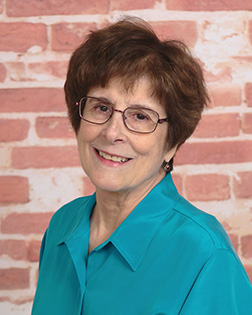
Patricia Perry Donovan is an American journalist and author of two novels of domestic suspense published by Lake Union: At Wave’s End (2017) and Deliver Her (2016). She has nearly completed a third, Her Own Best Interests, a family drama with a dose of medical intrigue set on Spain’s Costa del Sol. The story follows burnt-out social worker Aida Bischoff, who, while in Marbella for her husband’s medical conference, grapples with the disappearance of a wealthy American surgeon, the five-year-old daughter the surgeon left in Aida’s care, and a loved one’s baffling illness whose origins threaten to infect Aida’s marriage.

Her short story, “Still Life,” was awarded second place in Women on Writing’s Winter 2018 Flash Fiction competition, and her fiction has appeared in several literary journals. She is a member of the Jersey Shore Writers and enjoys mentoring aspiring writers, including several whose work has been recognized in recent WOW! Women on Writing contests.

Patricia and her husband have two grown daughters and live at the Jersey shore with Diesel, their senior-aged Yorkie. Connect with her on Facebook, Twitter, and Instagram, or visit patriciaperrydonovan.com.

interview by Marcia Peterson

WOW: Congratulations on your first place win in our Spring 2019 Flash Fiction competition! What inspired you to enter the contest?

Patricia: I’m a huge fan of WOW! Women on Writing contests—-so much so I encourage several writers I mentor to enter. I’m proud to say all have made it through at least the first round of elimination. WOW contest genre choices, word count, entry fee, contest frequency and limit on the number of entries make it very attractive proposition for writers. And with its framework of writing craft and writer interviews, WOW! offers a supporting and inspiring haven for women writers.

WOW: Thank you for the kind words about WOW! Can you tell us what encouraged the idea behind your story, “The Everyday”?

Patricia: My second novel, AT WAVE’S END, was inspired by living through Hurricane Sandy at the Jersey Shore. The novel ends about a year following the storm, but the real story didn’t end there. Even today, six years later, storm survivors struggle to reclaim their homes. Some renovated from the ground up, only to move out again for six or nine months in order to elevate their updated homes and avoid astronomical flood insurance premiums. “The Everyday” is a reflection on not letting life’s disappointments ruin the small joys.

WOW: What do you enjoy about flash fiction writing versus the other kinds of writing that you do?

Patricia: Besides the instant gratification of writing a shorter piece, flash is an exercise in brevity, clarity and pacing, forcing you to tell a compelling story in abbreviated form. Flash also hones your editing skills as you carve away the non-essential. I’ve whittled down longer stories and even outtakes from my novels to flash fiction.

WOW: We’d love to know more about your writing routines. Could you tell us when and where you usually write? Do you have favorite tools or habits that get you going?

Patricia: For several years I rose early to write fiction, churning out a thousand words before heading to work. However, life changes in the last year have freed more time in my day for writing. This is not always a good thing, as I create best under pressure! In this new life order, I first “warm up” with coffee, a few inspirational readings and a ten-minute journaling session. I often hit 500 words during these timed sessions. That output is more introspective than fiction, and so plants seeds for future essays. Then, after a workout (biking, running or yoga), I settle in for three or four hours of writing fiction.

As to when and where I usually write, I’m striving to adopt the “laptop lifestyle” and work wherever life takes me. If I’m honest, however, I do my best writing at my desk, at home, in silence, with only the white noise of our Yorkie gently snoring at my feet.

WOW: Thanks so much for chatting with us today, Patricia! Before you go, do you have any tips for our readers who may be thinking about entering writing contests?

Patricia: Yes…by all means enter them, but judiciously. Contests foster hope, acclimate you to deadlines, and thicken the writer’s skin because yes, there’s plenty of rejection! Even while working on a novel, I usually have two or three entries in contention. I view contests as kind of like running a 5K race while training for a marathon. However, don't just enter to enter. Make sure your story is the best it can be before hitting “Submit.”

Before entering a contest, I read previous winning entries, and, importantly, familiarize myself with the judge’s background and literary tastes. I also maintain a spreadsheet of contests and stories entered and/or submitted, along with results, so I don’t make the mistake of submitting the same piece twice. (Yes, this happened.) According to my spreadsheet, I entered my first contest in 2013. Since then, I’ve entered more than seventy contests.

If you are on a tight budget, don’t be deterred by entry fees. There are many free contests and/or publications to submit to in the hopes of building publishing cred. Good luck to all the aspiring writers out there!


****

For more information about our quarterly Flash Fiction and Creative Nonfiction Essay contests, visit our contest page here.
Read More »
Powered by Blogger.
Back to Top