Showing posts with label Sandra Jensen. Show all posts

Interview with Sandra Jensen: Q4 2024 Creative Nonfiction Contest Runner Up

Sunday, December 15, 2024
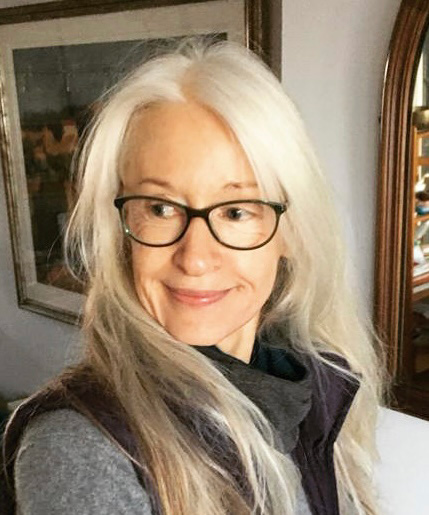
Sandra’s Bio:
Sandra Jensen has over 60 short story, essay and flash publications including in: World Literature Today, The Irish Times, Descant and AGNI. Awards include winning the Bridport Prize for a first novel and the Grindstone Novel Prize, and multiple honorable mentions, short and long-listings for her short stories and flash pieces. She was also awarded Top 10 in WOW! Women on Writing’s Q3 CNF Essay Contest. She is currently working on a hybrid memoir in essays about art, illness, trauma and her relationship with her sculptor mother. Sandra leads writing workshops and mentors writers. She has been living with chronic illness for three decades and her book for writers with chronic disabling conditions, “The Irrepressible Writer: How Writers with Ill Health Write Well”, commissioned by Story Machine in the UK, will soon be published. She currently lives in Brighton, England. You can find her at www.sandrajensen.net

If you haven't done so already, check out Sandra's award-winning story "Eclipse" and then return here for a chat with the author. 

WOW: Congratulations on placing in the Q4 2024 Creative Nonfiction Contest! How did you begin writing your essay and how did it and your writing processes evolve as you wrote? 

Sandra: I started this piece many years ago, and most likely started it in the same way as most of my short pieces: using a method called Freefall and my own process which I call A Page a Day. I talked a bit about these in my previous interview. Essentially, I don’t plan anything, I just sit there and see what arises, and once I start writing, I let one word follow the other, without changing anything, just to see where it goes. It often goes nowhere useful, but I’ve had a lot of short pieces published using this method, and sometimes with very little editing needed. However. I was not getting any bites with publishing “Eclipse”, so every so often I’d take another look and do a bit of tweaking. One of the main issues for me with this piece was the ending, I couldn’t get it right. But after being awarded Runner Up in a recent WOW Creative Nonfiction Essay contest, I took another look and worked hard on the ending until I was happy with it. A couple of people have said it makes them laugh, which I like, given it’s quite a dark piece! 

WOW: Thanks so much for sharing more about your writing process using Freefall and A Page a Day. Sounds like it has helped you to be a productive writer. What did you learn about yourself or your writing by creating this essay? 

Sandra: I can’t say anything specific really about this essay, but what I have been coming to terms with recently is that perhaps I’m a better nonfiction writer than a fiction writer! Most of my fiction is largely based on my own experience, but perhaps it’s time to focus on nonfiction. 

WOW: Fun! Enjoy exploring the nonfiction genre! From your bio, it sounds like chronic illness has influenced you as a writer. Will you tell us more about your experience with the intersection of writing and illness? 

Sandra: Another difficult question to answer, for me at least. While I fully agree with what Virginia Woolf said in her essay “On Being Ill”—that a person relates to, perceives, the world differently when sick, I have for most of my three decades of being ill tried to pretend I wasn’t, and considered myself ‘normal’. In the early years, this was possible as my illness was not as severe as it is now. As it became more severe, when I finally committed to being ‘a writer’ in my mid-forties, it was a great relief to focus on something other than my health and the various symptoms that plagued me. In fact, initially my health improved. I didn’t write about my illness, and I’ve only recently started doing so. I don’t – or haven’t – found it cathartic, but perhaps I haven’t yet found the right entry point. 

Much of my early work is very body-based, however. “Give all the sensuous detail” is one of the Freefall precepts, and for me this was easy as I was and am so physically sensitive: in touch with – too much so! – physical sensations, with smells, noises, textures and so on. I’ve backed off a little on this approach, but I do feel it’s given me an advantage in terms of expressing how certain characters feel and experience the world. Also, as my own world is quite limited compared to many, and these days I walk and move slowly, I notice small things that might pass others by. The shape of tiny leaves, the brush of air against my cheek. 

There’s a quote by Amy Morgan that I like “…it seems likely that living with illness may deepen writers’ capacity to imagine extreme situations.” I think this is correct, although in my case I have CPTSD which means I’ve lived through a number of extreme situations anyway! 

I should say I am grateful that it was never my dream to become a firefighter or something else that requires a strong, resilient body, although in 2021 I developed severe sciatica, and this put a massive dent in my ability to write. Sitting or even lying down made the pain worse, and I can’t stand for any great length of time. It was devastating for me. Thankfully the pain is now well managed. And my illness is still tremendously limiting. I only have about 3 or 4 usable hours in a day to do something that isn’t resting or taking care of myself (or my rescue cat!), and this of course affects how much I’m able to focus on my writing. 

WOW: Thank you for sharing your story about illness and its connection to your writing. I find it so helpful and inspiring to hear what other writers are overcoming to be productive and successful writers, and I very much appreciate hearing about your experiences. Which creative nonfiction essays or writers have inspired you most, and in what ways did they inspire you? 

Sandra: While I’d read and loved Jo Ann Beard’s The Boys of My Youth, it wasn’t until I read Alexander Chee’s How to Write an Autobiographical Novel that I realised what an art the personal essay was. And what an exciting art! That book made me want to learn how to do it. I don’t think I have, not yet at least. Not longer essays. But I’m working on it. For me, many of the best essays – personal essays – can be both personal and universal, perhaps weaving two or more threads together to create something that is so much more than a particular event or situation in someone’s life. 

WOW: Those are excellent examples that show what creative nonfiction can accomplish. If you could tell your younger self anything about writing, what would it be? 

Sandra: Don’t procrastinate and do everything else under the sun other than writing! 

WOW: I think many of us can relate to that! Anything else you’d like to add? 

Sandra: I always appreciate if there’s a touch of humour when I read essays about dark or difficult subjects. I suppose it’s something I’m trying to learn, not just in writing, but about life. How to hold onto that touch of lightness in the face of suffering or adversity. 

WOW: Thank you for sharing your writing with us and for your thoughtful responses. Happy writing! 


Interviewed by Anne Greenawalt, founder and editor-in-chief of Sport Stories Press, which publishes sports books by, for, and about sportswomen and amateur athletes. Engage on Twitter or Instagram @GreenMachine459.
Read More »

Interview with 2024 Q3 Creative Nonfiction Essay Runner Up, Sandra Jensen

Sunday, August 25, 2024
Sandra Jensen has over 50 short story, essay and flash publications including in: World Literature Today, The Irish Times, Descant and AGNI. Awards include winning the Bridport Prize for a first novel and the Grindstone Novel Prize, and multiple honorable mentions, short and long-listings for her short stories and flash pieces. She is currently working on a hybrid memoir in essays about art, illness, trauma and her relationship with her sculptor mother. Sandra leads writing workshops and mentors writers. She has been living with chronic illness for three decades and a commission by Story Machine to write a book for writers with chronic disabling conditions is slated for publication in late 2024. She currently lives in Brighton, England. You can find her at www.sandrajensen.net.

Check out Sandra's winning essay "What Men Want" here and then return to learn about Sandra's life as a writer.

---Interview by Jodi M. Webb

WOW:  Congratulations on being a runner-up in the WOW Creative Nonfiction Essay contest. "What Men Want" is such a powerful, deeply personal piece. Is it difficult writing about such personal experiences?

Sandra:  Actually, no! I think this is partly because of the way I write first drafts. As I’ve often said, I always thought I’d be a writer when I “grew up”, but growing up took a long time and I only committed to writing as a vocation in my mid 40s. The impulse for this was the fortuitous discovery of a wonderful writing teacher, Barbara Turner-Vesselago, who teaches a simple but highly effective writing method called Freefall.

Freefall isn’t the same as freewriting, which can sometimes produce diary-type work, or work that is
similar to what happens if I write morning pages. With Freefall, you follow five simple precepts. These are on Barbara’s website but I’ll list them here:

1. Write what comes up for you: whatever occurs to you once you have started writing, write it down. Put plans aside, in case something else wants to be written.
 
2. Don’t change anything: not even spelling errors, just keep going!
 
3. Give all the sensuous detail: what you hear, feel, smell et cetera). This precept to give all the sensuous detail (what you hear, feel, smell et cetera), slows me down, preventing a gush of emotive writing.
 
4. Go where the energy is, or go “fearward”: write what you don’t want to write about! “Write
what makes you sweat,” as Robert Burdett Sweet said. 
 
5. “The Ten-Year Rule”: if what comes up for you is inspired from your own experience, it will work better and be easier to write if it is an experience from some time in the past. If you write about a very recent, challenging experience, it’s unlikely it has ‘composted’, to use Natalie Goldberg’s phrase. The actual writing could be challenging to actually do, and lack the clarity that time can give. When I write about a challenging personal experience, while I do have one foot directly in that experience, so to speak, I also have distance from that experience.

I wrote "What Men Want" about three decades after the events I describe, so I have plenty of distance. And while I was bulimic for about seven years after those events, I am blessed in that I am completely free of the eating disorder.

Perhaps what also helps when writing about challenging personal experiences is I am always aware I’m not just writing these pieces just for myself. I am not entering into a therapeutic process. I am writing to be read, to communicate to others. (That being said, I don’t have my mind on publication when I write, that would stop me writing altogether!).

WOW: The events portrayed in your essay happened many years ago. How do you effectively recapture the past?

Sandra: I don’t journal I’m afraid. I know I should, particularly as I have a very poor memory. But when I am settling down to do some new writing, opening a blank page and waiting for something to arise, usually all sorts of past experiences pop up. In fact, most of my fiction is closely based on events in my own life, I can’t seem to get away from them!

I do have one process that works very well for me, a process I call A Page a Day. It’s a process to develop the writing muscle, a daily practice, but for me it’s also produced publishable pieces (once edited!). I wrote about a version of this process for the Story Machine

I often combine this with specific memory prompts that I developed when I read about Ray Bradbury’s word-association lists in his book, Zen in the Art of Writing. Bradbury’s lists are specifically nouns—The Toy Chest. The Old Woman. The Fog Horn. The Crowd. My lists tend to be short sentences associated with a memory: The Thing in The Road, Bloated Sheep in Kashmir, for example. It’s important not to be too specific or detailed or I’d get bogged down when writing my list. I might not even remember the whole experience when I jot the sentences down. When I’m about to write my page for the day, I’ll scan the list of prompts and choose which ever one strikes me the most forcefully. As I write, almost always more of the memory returns to me.

WOW: You have a long list of writing awards for everything from flash fiction to novels. Tell us about the appeal of writing contests. Where do you find the contests, how do you choose which ones are right for you and how many do you enter each year?

Sandra: I subscribe to a number of newsletters which list competitions and other calls for writing: Hope Clark’s FundsforWriters, Erika Dreifus’ Practicing Writer newsletter, Winning Writers. I also try to keep an eye on certain websites: Poets & Writers and Almond Press. Also, since I have submitted to so many literary magazines, I receive newsletters which alert me to when they have an upcoming competition.

It’s hard to say how often I submit to competitions, it depends on my state of mind, how engaged I am with a current project or story. Entering competitions can be a way to distract myself from actually writing! But I also find entering competitions forces me to polish a piece, so even if I don’t place or win, the process is worth it. The advice I often give is to send out work to several competitions, if it’s possible, so you are not waiting hopefully. I won the Bridport Prize for a first novel, and when I heard I was longlisted, I had completely forgotten I’d entered! I had to scramble to polish up further pages to send on for the next stage of the competition, and when I was shortlisted, I had to write from scratch the next chapters of the novel in short order, as I hadn’t written them yet!

As for choosing which competitions are right for me, I do try to have a look at other pieces that have won or placed in that particular competition, but I can also be a bit profligate and just send out rather randomly. And, it can depend on my pocket book as most competitions have an entry fee.

WOW: Tell us about the book about writers living with chronic illnesses you’ve been commissioned to write.

Sandra: It’s a short book aimed at giving encouragement and support to writers, whether budding or experienced, who live with chronic disabling conditions. Sam Ruddock, who heads up Story Machine, commissioned the book. I credit my being awarded an Arts Council grant to his support and guidance, and we co-led an online workshop for writers living with illness, disability, or a chronic or life-limiting condition. The commission is one in a series of five short books aimed at specific groups, including prisoners, working class writers and writers living with illness. The whole series is titled You Are A Writer, and my book’s title is The Irrepressible Writer: How Writers with Ill Health Write Well.

When Sam first contacted me about the commission, I balked. Partly because I didn’t think I had any advice to impart, I was just another writer struggling along, albeit with a few more limitations than some due to my chronic illness (ME/CFS, to be brief). I also balked because other than blogs, I’d never written nonfiction. Creative nonfiction, yes, but not something like this. But I said yes, and although it had to go through a few drafts with Sam’s help, I found it surprisingly easy to write. I also enjoyed the research aspect – discovering other writers with chronic illness, and a plethora of literary magazines and organisations supporting writers with disability, not to mention competitions specifically aimed at writers with disability. I had never even thought to look for such things!

Sam wanted the tone of the series to be conversational, encouraging, and non-academic. The format combines narrative exploration of my development as a writer along with specific chapters on editing and other aspects of writing. In each chapter there are writing exercises and prompts, and several pages of resources including literary magazines and support groups for writers with disability. Included in my commission is leading a 6-week online workshop course for a small group of writers with chronic disabling conditions who will attend the course for free. I’m looking forward to that! The first one I did with Sam was a revelation, not because I hadn’t taught before, but teaching a group of people who truly understood what it meant to live with illness, particularly invisible illness, was amazing.

WOW: Do you have any rituals or habits that help with your writing life?

Sandra: “Writing is so difficult that I feel that writers, having had their hell on earth, will escape all punishment hereafter,” Jessamyn West said. For the most part I agree, and it’s important to find ways to ease the difficulty.

For me the best is attending a writers retreat where I don’t have to think about anything at all other than what I’m writing. There are only so many of these I can afford, so at home, a view, a good chair and no interruptions are critical. I used to write to music (no lyrics, unless in a foreign language!) but now I need silence. Some writers write best in cafés, or in bed.  

Then there are rituals, which are known to help form a consistent writing habit and get you into the mood. For me it’s making an Aeropress espresso, or a little pot of Ceylon tea, and preparing a little plate of nibbles. For others it’s reading a poem, or lighting a candle, or drawing a Tarot card. 

What works for you?

WOW: I'm a silence gal too. And recently, my pre-writing ritual has been yoga. It helps get me out of the "What do I need from the grocery store" mindset and into the "What would my characters say" mindset. Readers? What are your writing habits?
Read More »
Powered by Blogger.
Back to Top