Showing posts with label Query Letter. Show all posts

4 Things to Remember Before You Query an Agent

Saturday, October 07, 2023
4 Things to Remember Before You Query an Agent
 
By Linnea Gradin
 
In today’s publishing landscape, opportunities to get traditionally published without an agent are far and few between. That’s not to say it’s impossible, but in order to be taken seriously—or to even be considered at all—most publishers require manuscripts to pass through an agent before landing on an editor’s desk. And the competition is fierce.
 
So if you’re looking to increase your chances of landing an agent, here are 4 things to remember before you start querying.
 

1. Give agents something they can sell

 
This might be a slightly demoralizing note to start on, but the publishing industry is a business just like any other. Profit margins and sale predictions are central to decision making, so if you can help agents easily imagine your book’s target audience, and where it might fit into the market, you significantly increase your odds of being noticed.
 
To do so, you’ll need a roughly completed (well-edited) manuscript, with a clear mark potential. Simply saying “I put a lot of effort into this, so please publish it” is unlikely to get you very far. Take a step back and consider your book as a reader or bookseller would: what unique selling points does it have compared to other titles on the market?
 
If you’re unsure of whether you’re getting it right, it can be helpful to get some external feedback from friends, beta readers, or even a professional editorial assessment.
 

2. Focus on finding a good fit

 
To further increase your chances, research what agents might be the best fit for you. Knowing your book well is a precondition for this, as it will help you narrow down your alternatives. If you’re writing literary fiction, for instance, Stephen King’s agent is probably not right for you, even if it sounds impressive.
 
Rather, take a look at other books in the same genre and category as you, and look into what agents represent the authors you admire. If you reach out to this type of agent, you show that you’ve done your due diligence and know your audience well. If an agent is more niched, they are also more likely to understand your vision and know what editors to reach out to.
 
Also, bigger agents may already have a full client list and might not be able to spend as much time on your manuscript as a smaller agent would, while a junior agent may not hold as much sway in the industry. Consider this tradeoff and what matters most to you when it comes to getting representation.
 

3. Personalize and perfect your query letter

 
To convince your dream agent that you have a book worth signing, you’ll need to craft a perfect query letter.
 
Nothing in your creative writing classes probably prepared you for query letter writing, but the good news is that it’s a skill you can perfect. A query letter should contain a strong hook, an intriguing synopsis, and perhaps some notes on your credentials as an author, but besides that, it should also be personalized and specific to the agent/agency you’re submitting to. This personalization shows that you’ve done your research. It has to be sincere or an agent will immediately write your letter off as a copy-paste job.
 
You can also hire an editor to help you: they will have a strong sense of market trends and what agents are looking for when they assess manuscripts.
 

4. Stay persistent and organized when querying

 
Querying is a numbers game, and can be mentally and emotionally draining. After receiving inevitable rejections and intangible feedback—or, worse, no replies at all—it’s easy to give up. But by going into the querying process with a clear idea of what it entails as well as a solid structure with small, achievable goals to work towards, you’re giving yourself a good chance to beat the odds of publishing
 
Consider tracking how many query letters you’ve written, how many you’ve submitted, and who you’ve followed up with in a simple spreadsheet. With luck, hard work, and persistence you’ll hopefully end up with a couple of yeses and can start listing the pros and cons of working with each agent before you sign with one.
 
 
Querying is a daunting process, but also an exciting chapter to enter as an author, bringing you one step closer to your dream. Rather than sitting back and thinking that the hard work is over, this is the time to buckle down. By keeping these tips in mind and remembering to ask for help when you need it, representation is within your reach.
 
*
 
Linnea Gradin

Linnea Gradin writes about writing and publishing over at Reedsy: a website with resources on everything from NaNoWriMo to writing templates that connects authors with the industry’s top professionals—from editors to ghostwriters to book cover designers.
Read More »

The Power of the Book Blurb

Wednesday, January 31, 2018
I had the opportunity to catch up with a fellow writer two weeks ago. After the usual pleasantries, we got down to what we really wanted to discuss – our latest work in progress. He asked me about mine, first, and I did my best to explain the basics, giving him an overview of my main character, basic plot, setting, etc. I rambled on for a little while, painfully aware that I wasn’t describing it very well.

When I finally stopped talking, I turned the conversation to his novel. In three concise, descriptive sentences, he captured all the information I had tried – and failed – to convey.

“Wow,” I said (or something to that effect). “The book sounds great. And you described it really
well.”

He smiled and thanked me. “It’s my book blurb,” he explained. “Like the one on the back of a paperback, or in the front flap of a hardcover. I always write it before I start my books to keep myself on track. Plus, if I ever run into anyone of “publishing” importance, I’m ready for the pitch.”

How right he was.

It’s brilliant, really. I’m ashamed I never thought of it myself. A book blurb gives us the right amount of information to indicate the direction of our story, capture the main plot, and highlight the conflict our character(s) face. These are elements we should, in theory, know ahead of time. By memorizing the blurb, we can keep ourselves on track.

And he was spot-on about being ready for a pitch. Not that I consistently run into literary agents on a regular basis, (my neighborhood is surrounded by farm land) but should it ever happen and I’m not ready – well, perish the thought.

The other bonus to writing a book blurb early is that you’re practicing for a quality query letter pitch, since they are almost the same thing. Knowing all the hours I’ve spent agonizing over my query letters, starting early sounds like a good plan.

This might be difficult for some of you pantsers out there, but even those who like to “see where the writing takes them” should have some of the basics set before diving in.

Consider this a challenge. Write that book blurb. Memorize it. Then, share it with me on Twitter (@BethHararWrites) or in the comments below. I’d love to hear them.


Bethany Masone Harar is an author, teacher, and blogger, who does her best to turn reluctant readers into voracious, book-reading nerds. Check out her blog here and her website here.


Read More »

Query Letter as Job Application

Wednesday, March 16, 2016
Last weekend I went to a writer’s workshop that included a Skype session with Lori Kilkelly, an agent from Rodeen Literary Management. One of the questions that someone asked was about query letters. “Should I tell the agent this is my first manuscript?”

It didn’t surprise me when Lori said no, but her explanation as to why will help us all remember what to put into our next query and what to leave out. Think of your query letter as what it is – a job application. What would you include in a job application? Relevant reasons to hire you. What do you leave out? Relevant reasons to say no. Or laugh. Or run away.

In short, don’t tell the agent/interviewer why you are a bad choice. This includes:

  • That this is your first finished manuscript.
  • That you have no sales.
  • How many agents have already said no.

Instead, tell the agent why you are a good choice.

  • For some of us that means listing sales. But only go into detail for relevant sales. When I submit a book proposal, I only include my activity writing if I am pitching a book that includes activities. If that’s the book I’m pitching, I don’t tell about my history writing unless the activities have something to do with history.
  • Also include relevant educational experience. This looks especially good if you don’t have sales. Are you working on an MFA? Do you go to SCBWI retreats or Highlight Foundation workshops? When I applied to write for an educational publisher, I told them about my degrees in anthropology and history. My first assignment? Ancient Maya.
  • Include your work experience if it is relevant. I’ve worked in archaeology which was relevant to Ancient Maya but not 12 Incredible Facts about the Cuban Missile Crisis. A friend of mine writes books to help children deal with tattling, divorce and people who appear different. She is a counselor so that appears in her letter.

Last but not least, make a personal connection.

  • Did you meet this editor at a conference? Mention it, but don’t stop here.
  • The best job applicants know why they want to work for a particular company. Why is this agent or agency a good match for you? Do they represent both fiction and nonfiction? Maybe they emphasize diverse book, self-help or romance novels.
  • Study the agency web site and the agent’s blog. Look for key phrases that they use to describe themselves and their authors. If you can subtly work these into your letter, they will see that you know who they are.

Your query letter is your job application. Use it to make yourself shine.

--SueBE
Sue is the instructor for our course, Writing Nonfiction for Children and Young Adults. The next session begins on March 21, 2016.
Read More »

What Can YOU Say About Querying?

Monday, September 30, 2013
I left the crazy world recruiting in the financial industry and found myself (after a decade mind you) still scouring resumes, cover letters, and checking references as I was the Director of Operations at a busy call center. With my eyes closed (and probably in my sleep) I can tell you what to do and what not to do when job hunting. Here I am in the writing world (and loving it by the way) and I find it ironic how authors can make a cover letter sound so special. “I sent out 4 queries last month” someone will say during a conversation about goals and publishing – and doesn’t that sound very special indeed? Of course, it is…but because I’m new to this world, I had to find that out for myself.

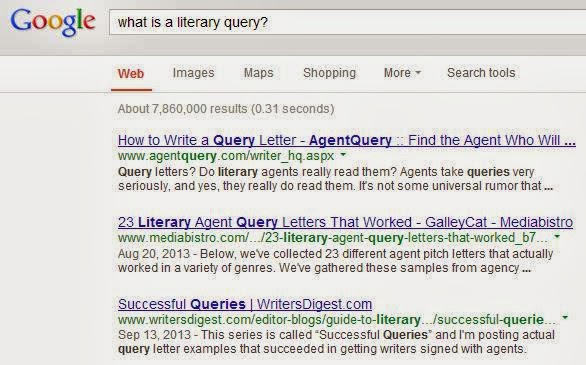
What’s a girl to do when she isn’t sure what all the fuss is about? Well, she turns to her smart phone when no one is looking…

Google pointed me in the right direction and ultimately I found the October 2010 issue of Writer’s Digest which explained the basics of mastering a query letter. The article is very helpful, but I was astonished how closely it matched everything I already knew about writing a cover letter:

• Know something about the person you are sending the letter to (use their name instead of something generic)
• Summarize what it is you have to offer (in the case of a query, tell them about your book – in the case of a cover letter, tell them what you bring to the table for the job)
• Make a comparison (talk about similar books – or if you’re applying for a job, talk about an experience at a similar company where you excelled)
• Say something about yourself (people like real people…you are more than just a query or a cover letter, aren’t you?)
• Promise a follow up – and follow through on it! (Whether a query or a job hunt, you’re going to follow up with a phone call, another email, a letter, etc… in a certain period of time, right? Let them know what your intentions are!)

So – now we know how to write a query or get an employer’s attention with our cover letter, right? Well, Google brought up another good point that I feel only YOU (Dear WOW! Readers) can answer for me: DO LITERARY AGENTS REALLY READ THEM?

What has been your experience? When you speak to a literary agent, have they actually read your query? How do you know if they read it or not? What do you recommend to other writers as they set out on their journey with querying?

Thank you in advance for your help and comments; that's one of the things I love about authors - the community is so encouraging of one another!

Hugs,
~Crystal

Crystal is a church musician, business owner, active journaler, writer and blogger as well as a dairy farmer. She lives in Reedsville, Wisconsin with her husband, two young children (Carmen 6 and Andre 5), three dogs, two rabbits, four little piggies, and over 200 Holsteins. Crystal and her husband, Mark, are hoping that by the time you read this they will be holding their newest addition, a little boy named Breccan! You can find Crystal blogging at: http://bringonlemons.blogspot.com/
Read More »

What Goes in the Bio Paragraph?

Tuesday, May 29, 2012
by paul-simpson.org (Flickr)
If you are a WOW! newsletter subscriber, you probably saw a recent article I wrote about the difference between cover and query letters. (If you are not on the WOW! mailing list, go to our home page and put in your e-mail address. It's free!) In cover and query letters, you usually include a bio paragraph. This is the last paragraph of the letter, where you include information like all of your publication credits and your website or blog address. But what do you do if you have NO publication credits? What if you are a brand new writer, but you have written a novel and you want to start sending it out? What if you have great ideas for articles, you have constructed a query letter to a magazine editor, but you don't have anything to put in your bio paragraph yet?

Never fear. Here are some tips!

1.  Do you have any experience that makes you an expert in the topic? So, if your query letter is about working for zoos, and you are a zookeeper, that should go in your bio paragraph. If your query letter is for a parenting magazine about helping picky eaters and you are a nutritionist, that should go in that last paragraph. However, if you wrote a romance novel and are seeking representation, you don't want to state something like: I've been married for 20 years and every bit of it has been romantic. That's not professional.

2. Start a blog and/or a newsletter. You actually have to do this before you are getting ready to query. If you do not have any publication credits, then one of the easiest ways to establish a publication history is to create a blog or a newsletter. You don't want to throw something up there though. You want the blog to center on a topic that you plan to query about, and you want it to be well done. For example, if you want to write for the health care industry, then you may start a blog that dishes out health care tips, interviews doctors and nurses, and reviews new books on health topics. In your last paragraph in your query letter, you can state something like: "I have been blogging at http://margodill.com/blog/ for almost four years, covering children's and YA books and how to use them in the classroom or in a home school environment."

3. List a few professional things you do. One of my writing friends doesn't have any publication credits, but she organizes shop talks for her local SCBWI chapter. This shows that she is involved in the children's writing community and cares enough about her career to join the most well-known and respected organization for children's writers. You don't want to list that you are a member of your church choir--unless your query has to do with singing in the choir--but you do want to list that you were the conference chair for your local writing conference.

4. Get on Twitter and Facebook. Agents and editors are looking for people who are in to social media. If you have no publication credits, then become active on these--start a Facebook page or take part in a Twitter hashtag chat. Then in your bio paragraph, you can write: I have been on Twitter for one year and have 2,345 followers at http://www.twitter.com/iamwriter. I also have a Facebook fan page with 400 fans. This shows that you are already into marketing and networking. Publications and publishers LOVE this!

The number one thing you don't want to do in your bio paragraph is show you are unprofessional by including information that doesn't have to do with your career or the topic of your query. If you have played co-ed volleyball for 20 years and your query is about sports for the over-40 crowd, great! If your query is about slipping veggies into recipes so kids don't notice, no one cares about your volleyball hobby (well, your mother probably does).

For more tips and to learn how to query and write nonfiction articles, consider signing up for my online class through WOW! that begins on June 4.  For more information, check out the syllabus here!


Read More »

Concerns (and Solutions!) for Freelance Writers Part 2

Thursday, August 11, 2011
Last week, I shared with you some common concerns freelancers have and ways to solve them. I received some terrific comments, and many were full of tips, too. I hope the same thing happens this week! (Hint, hint!) Last week, I covered these three main freelancing problems: running out of ideas, health insurance, and time management. As promised, here are the last two concerns:

Concern #4: Stealing My Ideas

This is a big concern for many new writers. They worry if they send an idea in a query letter to a magazine, the editor will steal the wonderful idea and assign it to a staff writer. This RARELY happens; and to be honest, if it does happen, there’s actually nothing you can do about a stolen idea—ideas cannot be copyrighted. However, if an editor printed an entire article without giving you credit or a byline, then she would be in violation of the copyright law.

According to Marcia Yudkin, who has a website titled Creative Marketing Solutions: “The moment you fix your idea in tangible form, what you wrote is automatically covered by copyright law. You do not need to place a copyright notice on it, and many editors, therefore, take such a copyright notice on unpublished work as a mark of an amateur.”

She suggests the way to keep the rare editor from stealing an idea is to write the query in a way that no other writer could create the article except you. If you are sending to reputable magazines, websites, and newspapers, an editor stealing your ideas should be the very least of your worries.

Concern #5: Contracts—Rights and Payments

You should understand any contract you sign, including what rights to your work you’re giving up and when you will be paid. Once you understand these contract terms, many worries should be erased, such as concerns about whether or not you can reprint an article or when your check or PayPal payment will be arriving. Many freelancers seem to worry about editors and publications taking advantage of them and offering unfair terms or no payments.

Here’s the thing: Don’t worry about these publications because you don’t have to write for them. If you don’t want to give away all your rights, then don’t write an article for a publication that buys all rights. You can read writers’ guidelines on websites or contact the publication if it’s not clear. As a freelancer, you do have a choice on whom you work for, where your work is published, and how much money you need to make for a weekly salary. Instead of worrying about these issues, set goals and standards for yourself and then do your homework.

Any career is going to come with concerns, and there will be days when you worry. But to be the best freelancer you can be, you don’t have time to waste on worrying. If a problem comes up, educate yourself on solutions by finding sources or other freelancers you trust. Then put those solutions into action. The most important thing is to spend your time writing. Don’t let worries stand in the way of your dream—it is possible to work for yourself as a freelancer and to be successful!

If you are interested in getting started as a freelancer or learning tips for writing query letters and articles, then consider taking my online freelancing course through WOW!'s classroom, starting on August 19. It's not too late to register. Any questions? You can contact me at margo (at) wow-womenonwriting.com or leave a comment here.
Post by Margo L. Dill

Photo by jczart www.flickr.com

Read More »

Writing Articles with Unique Slants: A Nonfiction Writing Exercise

Saturday, May 29, 2010

Last week, WOW! team member Jodi Webb wrote an excellent blog post about getting your query noticed. If you missed it, check it out here. Today, I thought I'd continue the theme of queries with a writing exercise about creating unique article slants. (Hopefully, light bulbs will be going off above your heads soon!) I recently gave this writing prompt to my children's writers online class I teach for WOW! Here's the prompt:

An editor whom you've worked with before wrote an email to several writers and asked for someone to come up with a unique article idea to teach children water safety rules for the summer. She explained it's a topic that's been covered many times during past years in the magazine, but the managing editor thinks it's important to remind kids (and new readers) the importance of water safety in the summer. She invites you to turn in a query for an article with a different slant on water safety. The best idea/query will get the contract for the article.

I talk with my students about how important it is to cover subjects that have been written about excessively but that some readers new to the age group or magazine haven't read about before. I've been to conferences where editors talk about how they still need articles about Abraham Lincoln or George Washington (a subject that's been covered time and time again), but they need an article for kids with a new slant. I imagine the same is true for a magazine like Good Housekeeping--the editors still need articles about tips for saving money or household cleaning secrets, but the article slant needs to be new and original.

One of the best ways to think of new article slants is to just engage in old-time brainstorming techniques of lists or word webs or brain maps. I like to put my subject, such as water safety, in a circle in the middle of the paper, and then create branches off the center with any idea that pops into my mind whether it's been done before or not. I keep going until I get an idea that is new or fresh or important and then write my query. As a matter of fact, I did this very exercise for the next WOW! issue on fiction writing and came up with an article about dialogue tags, which Angela accepted and will be in the July/August issue.

If the above writing prompt doesn't fit your genre or freelance writing career, you can substitute almost any topic for water safety and get your creative wheels moving. Here's wishing you have many light bulbs go off this weekend!

post by Margo L. Dill, http://margodill.com/blog/
photo by thomasbrightbill www.flickr.com
Read More »

E-mail Queries: Avoiding the Filter

Saturday, April 17, 2010
When I began freelancing, many publications didn't accept e-mail submissions. I kept ample postage and 9x12 envelopes in my supply closet, so I could send a query as soon as the idea printed on the heavy bond, cream-colored paper that contained the prerequisite watermark.

Then it was the wait-and-see game to see if my query landed in the hands of the editor or if it was held up in the filter, a.k.a. secretary or editorial assistant.

How times have - and haven't - changed in just 15 years!

Typically, editors prefer to receive a query via e-mail instead of snail mail. Still, writers play a waiting game. How can writers be certain the query lands in the editor's inbox and isn't being directed to the cyber highway's slush pile - the spam filter?

Every ISP has its own prescribed rules or filtering software; however, by following the general tips about e-mail subject lines listed below, your query can avoid ending up in technological black hole.

  1. Check and double check spelling. Take a peek at the messages in your filtered mail folder. Many contain misspelled words. Verify the correct spelling of any words in your subject title. Not only will it help your message avoid the filter, attention to spelling and detail shows your professionalism.
  2. Ditch subject lines typed in "all caps." All caps signals yelling, and netiquette warns against it. My personal exception to the rule is that I do type the word "QUERY" in this manner and type the rest of the subject line in regular type, capitalizing only where necessary.
  3. Limit punctuation use. Filtering software keys on strange - and even misused - punctuation. I checked my filtered file. The majority of the messages included exclamation points in all the wrong places.
  4. Shy away from filter-triggering words. Think about words you use in the subject line. Certain words, especially those with a double connotation, trigger filters.

Once you hit the send button, you still may play the waiting game. Keep in mind query guidelines, and if you don't hear from an editor, you may want to send a follow-up e-mail verifying your query has been received.

Keep the subject line of a query straightforward and avoid being trapped.

LuAnn Schindler is a freelance writer and editor; visit her website at http://luannschindler.com.

Read More »

Mistake Noted

Tuesday, August 05, 2008
Not too long ago in my zest and zeal to send out query letters, I began coming up with ideas for queries that related to life as I was living it. And how was I living, you may ask? During this rampant, query-writing fest I had a two-and-a-half year old running around and a two-month old nursing every 3 hours. Life was crazy, and maybe I can blame the query faux pas I committed on sleep deprivation and hormone fluctuations.

I came up with what I thought was the greatest idea for a story: how to breastfeed in public. My own mom didn’t give me many tips except “Just put a blanket over your shoulder,” and the lactation nurses weren’t much more helpful (they told me to just wear big shirts). I figured if I was having a hard time other moms were probably having a hard time, too, and would appreciate a how-to article that showed them the ropes.

I had my sources lined up, a body of research and I knew which magazine I was going to pitch the story to: American Baby Magazine. I looked through old issues to make sure that they hadn’t covered my exact topic but found that they did lots of articles about feeding new babies.

I wrote the query, thinking that I had the golden ticket for making it in the glossies with this pitch. With trepidation, I mailed off my query and began to wait. The odd thing was I didn’t have to wait very long.

I received back a letter a week later that said thanks but no thanks. Instead of being devastated, truthfully I was a little relieved. After all of my research on different tips and tricks for breastfeeding in public, I had exhausted my brain on the topic and it was no longer very interesting to me. I was glad was not to be required by an editor to make that story happen.

My relief aside, I did want to understand why the story was rejected. I don’t know for sure but some clarity came a few weeks later when I was telling a friend about that particular query. I told her it was about breastfeeding in public and she looked at me almost startled.

“Omigosh, Sue,” she said, “that is such a controversial topic. Ask three women about it and you’d get four opinions back. If I was an editor I wouldn’t want to touch that topic with a ten-foot pole.”

I sat there a little more than stricken by my friend’s bluntness, but I thought she was right. In all my research, in all my consideration of whether or not women would want to hear about my topic, I had not taken into account that the subject of breastfeeding in public was too taboo for that particular magazine. Now, if I had pitched it to, say an OB nurse quarterly, or a publication of the La Leche League, perhaps I would have gotten a different response. Since I chose to pitch it to a national magazine that needs to carefully take into account the sensibilities and opinions of a wide audience, I’m not surprised that this one was quickly overlooked.

Of course, I don’t know for sure why this query was rejected by that magazine; there could have been many other reasons besides the topic being controversial. Through the experience, though, I learned to take into consideration a different aspect of what a publication may look for or avoid in an article.

-Susan L. Eberling
Read More »

Another dose of inspiration

Friday, June 06, 2008
by LuAnn Schindler

I'm working on some queries this morning, and I'll show you how I came up with some of the ideas I'm pitching. Inspiration is everywhere!

Sometimes, you need to step outside your comfort zone and write. When I taught creative writing for a local community college, I could write a couple poems during a class period and work on revisions later. Poetry was easy for me and I wrote a lot of them. Of course, now most of those pages are in three-ring binders and need more revisions. Later in my writing life, I became more interested in newspaper and magazine writing. I like telling a story through nonfiction. I haven't written a poem in five years. It seemed like the muse had disappeared. But recently, I stumbled upon a contest for a 50-word narrative poem. I opened my binders and found a selection that I thought told a solid story in limited words. But I still revised some here and there and submitted it. Stepping back into the poetry shoes wasn't an easy fit, but it opened a shoebox full of ideas. And hopefully, the contest judges will appreciate my efforts, too!

Yesterday, when I was cleaning my office, I found an old notebook from my teaching days that I used for brainstorming. When I opened the pages, I discovered a list of topic ideas using a method I used when I taught writing and when I first started freelancing. It works like this: Across the top of a page, I write 10 topics I'm interested in. Underneath each of those, I list 10 subtopics. Then I use the subtopics as the headings on a new sheet of paper and list 10 more subtopics. You can keep using the subheads as new headings until you run out of ideas. I literally had hundreds of ideas in this notebook. As I was flipping through these pages, I found a topic that I just had received a press release about, did a bit more research and drafted a query. This morning, I'll be emailing it to an editor at a national food magazine.

The new phone books arrived the other day. I was flipping through the yellow pages because I needed to find someone to fix my vehicle. On my way to the automotive section, I found an ad for a new air conditioning business. Since the lazy, crazy, hazy days of summer heat will soon be upon us, I called and asked about tips for preparing the air conditioning unit for summer use. Then, I wrote a short article and sent it to the local paper. If you leaf through the pages, all kinds of article ideas stand out.

And sometimes, you just need to take a break. This is a hard one for me to do because if I'm not writing, I feel like I'm wasting time. But, a break - an afternoon outing with friends or family, time away from the computer and email, reading a book, exercising, cooking - can reignite the inspiration. The tricky part will be giving yourself permission to relax and take some time off. Hey, there's a possible article idea in that thought!
Read More »
Powered by Blogger.
Back to Top