Showing posts with label Friday Speak Out. Show all posts

Friday Speak Out!: Why I Started Writing: Finding My Voice After Marriage

Friday, November 28, 2025
By Dr. Farzeen Bano

Marriage changes a woman’s world in ways she rarely anticipates. For me, it wasn’t about giving up my dreams—it was about learning how quietly they can be reshaped.

After completing my M.Phil. and Ph.D. in Political Science and Gender Studies, I imagined a life of teaching, research, and writing. But after marriage, reality took a different turn. My husband works in another state, while I live with my in-laws in Uttarakhand, where the expectation is simple: a woman may work, but only if she can return home by evening.

Each time I received an interview call from a university in Delhi or Uttar Pradesh, excitement mixed with guilt. My family would gently remind me, “It’s too far… Who will take care of your daughter?” I told myself that love requires compromise. Yet, as the years passed, I realized something had quietly faded—my sense of self.

When Silence Turned Into Words

There were nights when loneliness crept in. My husband was busy, and I never wanted to burden him with my worries. My parents were miles away. I found myself surrounded by affection that didn’t always understand me

So, I started writing.

It began with a few sentences scribbled in a notebook after putting my daughter to bed. Slowly, those lines became paragraphs, and paragraphs became blog posts and essays. Writing became my friend—someone who listened without judgment.

Each word I wrote was like reclaiming a piece of myself that I had lost in the process of fulfilling others’ expectations. Writing became more than expression; it became survival.

The Weight Women Carry

Many women I meet share similar stories—educated, capable, yet quietly confined by invisible boundaries. It’s rarely open opposition; it’s the soft resistance wrapped in care: “We just want what’s best for you.”

Statistics often show how women’s participation in the workforce declines after marriage, especially in traditional societies. But behind every number is a woman who once dreamed of a life beyond domestic roles.

For me, it wasn’t just about giving up a job—it was about giving up a version of myself I had worked so hard to build.

Writing as Healing

Writing offered me the courage to turn pain into purpose. Every blog post or research article became a step toward emotional healing. It connected me with other women who shared their struggles, and I realized I wasn’t alone.

Through writing, I found a way to live meaningfully within the life I already had. It reminded me that while our circumstances may limit us, our words can set us free.

A Note to Every Woman Writer

If you’re reading this and feel unheard or stuck between duty and desire—write.

You don’t need perfect conditions to start. You just need honesty and the willingness to express your truth. Writing doesn’t just record your experiences—it reshapes them.

For me, writing became a bridge between who I was and who I wanted to be And perhaps that’s what every woman’s story deserves—to be written, shared, and remembered.

* * *

Dr. Farzeen Bano is an Assistant Professor of Political Science and a researcher passionate about gender studies, digital literacy, and women’s empowerment. She holds an M.Phil and Ph.D. from Jamia Millia Islamia, where her doctoral research focused on “Women Prisoners and Their Rehabilitation: A Case Study of Jails of Uttar Pradesh.” Beyond academia, she writes on social issues, education, and women’s rights, aiming to bridge research with real-life change through digital storytelling and public engagement.

~~~~~~~~~~~~~~~~~~~~~~~~~~~~~~~~~~~~~~~~~~~~

Would you like to participate in Friday "Speak Out!"? Email your short posts (under 500 words) about women and writing to: marcia[at]wow-womenonwriting[dot]com for consideration. We look forward to hearing from you!
~~~~~~~~~~~~~~~~~~~~~~~~~~~~~~~~~~~~~~~~~~~~

Read More »

Friday Speak Out!: The Savvy Reader

Friday, June 14, 2024
by Megan Staffel

When I first started to write fiction, I was afraid to read. I didn’t want to pick up a published author’s style. We writers are good mimics and often, I would slide into the voice from whatever novel was my current book. But a life without reading fiction would have been dreary indeed, so luckily, I learned that the bits and pieces of other writers’ work sifting into my work would ultimately be transformed through the multiple revisions that anything I write goes through.

And when I started to teach, one of the things I enjoyed most about working with MFA students was discussing a literary work in class. Together, we would deconstruct a scene to figure out what made it compelling, and I would always learn from my students’ input. When I retired, it was that shared discovery that I most missed. So, now, on my own, when I finish a novel or story, I examine it as though I were preparing it for that class. This practice has turned into a Substack newsletter called, “Page and Story.” I give a brief description of the book or story to entice my readers, and then discuss an aspect of craft that the author does particularly well, showing how it shapes the narrative.

This close examination increases my enjoyment and I believe it helps me as a writer because it widens the possibilities. When I begin to write a new piece of fiction, do I want to start with a long shot as Dominic Smith does in Return to Valletto, situating the town within its landscape as the narrator approaches, or do I want to start with a close up, a view from a character’s interior as Margot Livesey does in the opening to The Road from Belhaven when Lizzie thinks about her visions? Or do I want to begin with a story that appears in a newspaper as in Clare Chambers novel, Small Pleasures? There are endless choices and from the fiction I’ve read I have a sense of how each choice affects the reader’s experience. Paying attention to the craft of a story I’m enjoying is reading like a writer and opening myself to methods that are different from the ones that may have become my default.

In my next posting I’ll discuss Held, a novel by Anne Michaels in which the narrative is episodic and fragmented and the story is not about characters in a particular time and place, but in multiple locations at different time periods. What unifies them is the theme of love. It’s a wholly original approach to narrative and the elasticity and suppleness Michaels gives it is exciting. Held has suggested new tools to consider as I work on my next piece of fiction, but even if I borrow something, my revision process will make it my own. What I’ve learned over these many years is that reading fiction while I’m writing fiction is necessary, helpful, and enriching.

* * *

photo credit Brian Oglesbee
Megan Staffel's new novel, THE CAUSATIVE FACTOR, won the Petrichor Prize at Regal House Publishing and will be published by Regal House in October 2024. She is the author of two recent collections of short fiction, THE EXIT COACH and LESSONS IN ANOTHER LANGUAGE (Four Way Books) and two novels, THE NOTEBOOK OF LOST THINGS (Soho Press) and SHE WANTED SOMETHING ELSE ( North Point Press) and a first collection of short stories, A LENGTH OF WIRE AND OTHER STORIES (Pym-Randall Press). Her short stories have appeared in numerous journals including the New England Review, Ploughshares, The Common, and others. Her stories have been shortlisted in Best American Short Stories and nominated for The Pushcart Prize. Megan taught in the MFA Program for Writers at Warren Wilson College as well as at the University of Iowa, Kansas State University, Rochester Institute of Technology and Vermont College. She lives with ceramic artist Graham Marks and has two adult children. She splits her time between Brooklyn, New York and a farm in a small town in western New York State. 
~~~~~~~~~~~~~~~~~~~~~~~~~~~~~~~~~~~~~~~~~~~~

Would you like to participate in Friday "Speak Out!"? Email your short posts (under 500 words) about women and writing to: marcia[at]wow-womenonwriting[dot]com for consideration. We look forward to hearing from you!
~~~~~~~~~~~~~~~~~~~~~~~~~~~~~~~~~~~~~~~~~~~~
Read More »

Writing is therapy – let it happen

Friday, January 06, 2023
By Kandace Chapple

In September 2018, I squeezed my eyes shut and hit “submit” on one of the saddest essays I’ve ever written. And when the editor said yes two days later, I felt two things: glee and terror.

I was totally elated. Someone liked my stuff! But.

My family might read this. It was an essay in Motherwell about the new woman wearing my deceased mother’s jacket. I wasn’t sure, suddenly, if I should let the essay see the light of day.

But I knew that I had written the truth. And, just as importantly, I had kept the essay in my POV, framed from my very own eyeballs and heart. I had not projected anyone else’s thoughts, motives or ideas onto the page. Instead, I had focused on MY experience.

At the end of the day, even though not everyone would be happy with my publication credit, I realized that this was still my story to share.

And the experience made me a different writer. I had to cast off the old guilts and worries about others in order to take my writing to the next level, to really dig in and share what turned out to be a pretty universal experience. I got several emails from others who had gone through something similar.

I knew I had done something special: I had told my story. The people who needed to read it, who could identify with it, were my readers. Not necessarily my family. Maybe it’s time to write about something that matters to you. That will bring you healing. Here are some tips on letting yourself go deeper.

MAKE YOURSELF A CHARACTER

One morning I sat down to work on my memoir. But instead of a piece on my mom, as I had planned, I switched gears and wrote in third person. I turned myself into a character and she headed out for a bike ride at dawn (it was still mostly dark), during which a deer darted across the dirt road. And she hit it! With her bike! She was fine. The deer was fine. But she was shaking, she was scared, she was… laughing.

The story was true, I had just lived it a week earlier.

And it ended up in my Mom book because as I wrote it, an epiphany arrived. I realized that I didn’t fear the dark, not like I used to. I feared losing my mother, illness and loss much, much more. My “main character” wasn’t the same anymore. She was stronger. She was bolder. She was braver. (It’s way easier to say things like that about someone else, than yourself!) In the end, the scene was a picture of what grief does to a person.

Write what comes to you. Trust your intuition. Take a real-life episode and see where it goes on the page. It just might be your mind working something out. Let it.

BEST KEPT SECRETS

What are the things you’d tell your friend over coffee? What are the things you’d tell your BEST friend over wine? Two different versions of the same story. One for public consumption. One for private.

When it comes to writing a personal essay, you need to give yourself permission to put that best friend conversation down on paper. You can always cut and delete what seems too personal later.

But I have found that when I put stuff down on paper, it isn’t as scary as I think it is. I can write tough things, but have found that in doing so, it takes the edge off them. I am able to share things I wouldn’t have dreamed of sharing if I hadn’t written them down. It’s wild the way that works. Just put it down, tell it like you would tell that one person you trust the most in the world. Write now, edit later. Nothing you say will be held against you. But, bonus, that first version carries all of your healing.

UNEXPECTED TURNS

I had no idea where that Motherwell essay was heading when I wrote it. At first I was just venting and grieving on paper. Then, I thought about that coat on another women and all the other things my mother had left me (love, memories, family), and suddenly, a wonderful calm came over me. I didn’t NEED that coat! I had so much more.

I was delighted. I had healed, another layer of my grief soothed. All because I had written that essay.

So, take time this week and see if you can sit with yourself and write about something – that thing that hurts or niggles or just sits there on your mind. See what happens when you put it on paper, as yourself or as a character. Epiphanies, laughter, healing. It’s all up for grabs, thanks to the power of writing.

***


1-2-3 PERSONAL ESSAYS: WRITE REAL, HONEST, JOYFUL (SOMETIMES SAD!) ESSAYS WITH WEEKLY FEEDBACK by Kandace Chapple starts on Monday, January 9, 2023. Reserve your spot here!

Kandace Chapple published and edited Grand Traverse Woman Magazine, a regional women’s publication in Michigan, for eighteen years before closing it to open Michigan Girl, LLC. She has spent 18 years coaching writers in her publication and helping them polish their personal essays. Her own essays have appeared in Writer’s Digest, Chicken Soup for the Soul, Literary Mama, Motherwell and more. She hosts weekly #Friday500 coaching sessions where writers submit 500 words every Friday (or else!). She is also a well-known freelance writer for publications in Michigan, including Traverse Magazine. She has a Bachelor’s degree in Education with a minor in Journalism and a Bachelor’s degree in Business. She loves to mountain bike on Northern Michigan trails, hike with her dog, Cookie, and spend time with her husband and two sons. Visit her at www.kandacechapple.com.

~~~~~~~~~~~~~~~~~~~~~~~~~~~~~~~~~~~~~~~~~~~~
Would you like to participate in Friday "Speak Out!"? Email your short posts (under 500 words) about women and writing to: marcia[at]wow-womenonwriting[dot]com for consideration. We look forward to hearing from you!
~~~~~~~~~~~~~~~~~~~~~~~~~~~~~~~~~~~~~~~~~~~~
Read More »

SUBMISSIONS FOR THE MUFFIN BLOG

Friday, October 07, 2022
Want to contribute to WOW! Women On Writing's blog, The Muffin? Fridays are "Speak Out!" days on the blog, and we love to hear from our core audience of writers (subscribers only). Submit a guest post to our ongoing blogger program!

Your post can be about: writing inspiration, balancing family life/parenting with writing, craft of writing fiction/nonfiction, how-tos, tips for author promotion/marketing/social media, book reviews, writing prompts, special opportunities (paying markets for writers), publishing industry news/gossip, and anything you think our readers will love.

Please make sure that there is take-away value to our readers. No press releases please. We're more interested in hearing from our core audience--personal essays and humorous anecdotes are encouraged, as long as they provide something useful to our audience of writers--including a good laugh!

How to Submit: Submit your 250 - 500 word post in the body of your email to blog editor, Marcia Peterson. Upon acceptance, we will ask for your bio, links, bio photo, and any other pictures to illustrate the article. We look forward to hearing from you!

marcia[at]wow-womenonwriting[dot]com
Read More »

Friday Speak Out!: Never Say “She Saw”

Friday, July 08, 2022
by Fran Hawthorne

“Don’t drag down the narrative momentum by describing every single, ordinary action your characters take to get from Point A to Point B.” That’s a standard piece of advice for fiction writers. If Jane’s nitpicking sister, Lois, unexpectedly turns up at the front door while Jane is eating breakfast, there’s no need to mention that Jane put down her fork, pushed back her chair, and walked to the door—unless Jane’s particular style of fork-putting, chair-pushing, or walking reveals something significant about her personality. For instance, if Jane shrieks and hurls her fork to the floor, that could be a clue that she’s easily rattled.

So, according to the standard advice, the following would be a perfectly acceptable way to write the scene:

Just as Jane put her fork in her mouth, the front doorbell rang. When she opened the door, she saw her sister standing on the stoop.

I go a step further. I throw away “she saw” and simply let the reader see exactly what Jane sees:

Just as Jane put her fork in her mouth, the front doorbell rang. Her sister was standing on the stoop.

Isn’t that a lot more powerful?

Similarly, I avoid “she knew” “she remembered” “she noticed” “she heard” “she thought” and any other self-explanatory verbs.

But doesn’t the reader need phrases like “she saw” to understand what’s going on? Won’t it be confusing otherwise, as if Lois is floating in the middle of nowhere? Not at all. Since the reader is in Jane’s mind in that scene, who else would be seeing her sister?

Let’s try another example. First, a standard passage:

As Jane watched her sister tug off her wet pumps and line them up precisely next to the coat rack. she remembered how Lois always used to discard shoes, coat, backpack – everything and anything -- haphazardly around whatever room she was in, when they were growing up.

Now, my rewrite:

Lois had tugged off her wet pumps and lined them up precisely next to the coat rack. 
But when the sisters were growing up, Lois always used to discard shoes, coat, backpack – everything and anything -- haphazardly around whatever room she was in.

This technique works for both first person and close third person, no matter how many narrators or points of view are in the piece. All you have to do is put the reader right inside the head of whichever character is seeing, thinking, knowing etc. at that moment.

It might seem impossible to avoid those helper phrases 100 percent of the time. I confess that I slip up too often; “she saw” has been the default style of writing forever, and it slides into a sentence as smoothly as a cliché.

If you’d like, please use the Comments section to send me a short example where you think one of those phrases is vital, and I’ll see if I can “un-saw” it. It will be great practice for me.

* * *
photo credit Jolene Siana
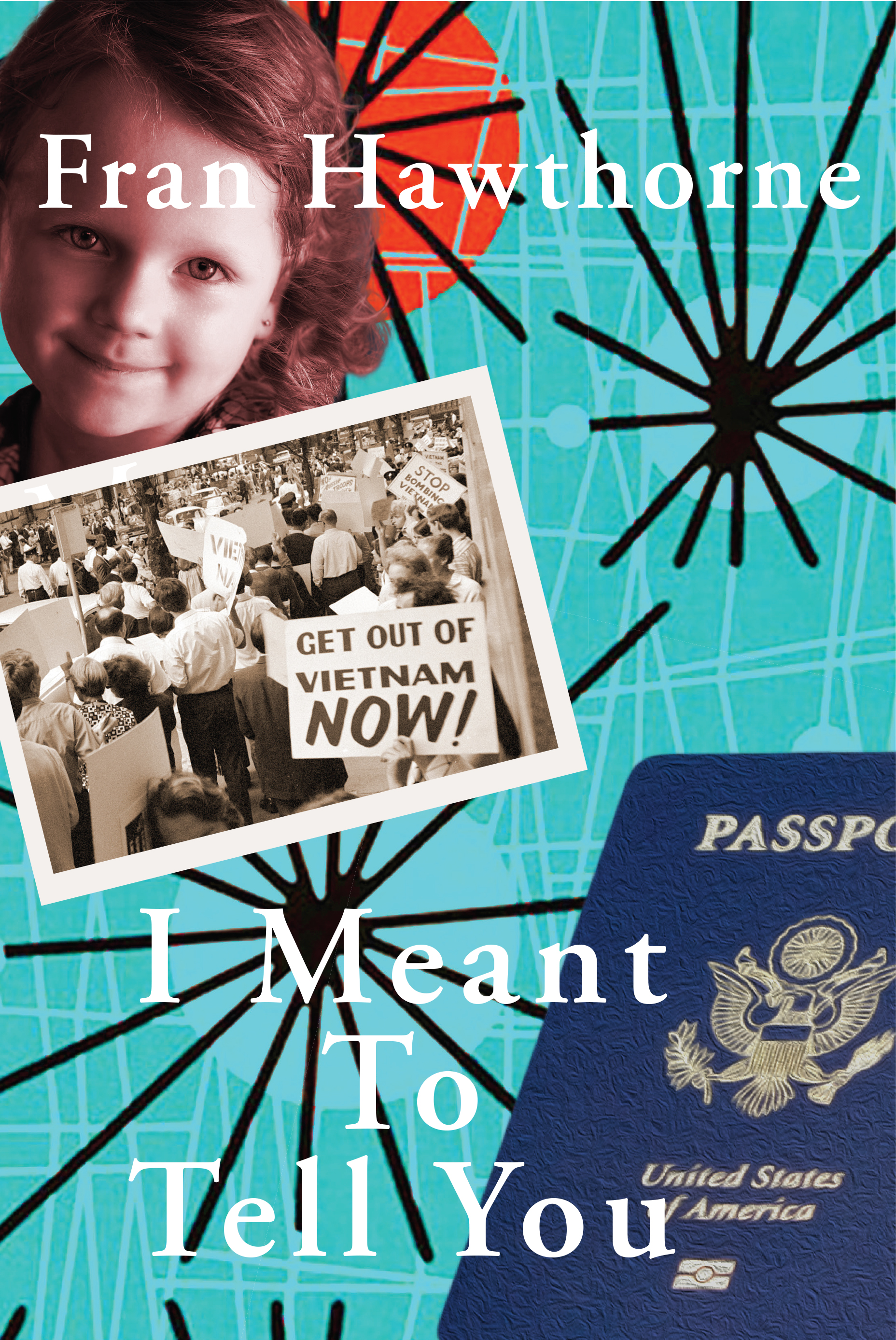
FRAN HAWTHORNE has been writing novels since she was four years old, although she was sidetracked for a few decades by journalism. She’s written for The New York Times, BusinessWeek, and many other publications, and her eight nonfiction books have won awards from Library Journal and Foreword magazine, among other plaudits. But Fran never abandoned her true love: Her debut novel The Heirs was published in 2018, and I Meant to Tell You will be published in November 2022 by Stephen F. Austin State University Press.
~~~~~~~~~~~~~~~~~~~~~~~~~~~~~~~~~~~~~~

Would you like to participate in Friday "Speak Out!"? Email your short posts (under 500 words) about women and writing to: marcia[at]wow-womenonwriting[dot]com for consideration. We look forward to hearing from you!
~~~~~~~~~~~~~~~~~~~~~~~~~~~~~~~~~~~~~~~~~~~~

Read More »

Friday Speak Out!: A Debut Novelist’s Foray into the World of Sensitivity Readers

Friday, June 24, 2022
by Adele Holmes

In 2019, while pitching my first novel which involved discrimination during the Jim Crow era, I was asked if I’d had a sensitivity read. In all honesty I’d never heard of the term, but its implication was fairly easy to pick up, so I brightly replied, “Yes.”

I’m white. Two of my beta-readers were Black. They both heartily approved of my manuscript. That’s the same as a sensitivity read, right? As it turns out, the answer is a definitive, “No.”

Luckily the agent did not offer a contract, and I went home to delve more deeply into the subject of sensitivity readers. A web search for articles from within the writing community revealed a deep divide—imagine that, in America, a deep divide over otherness. Not only was there disagreement on when and where, or even if, a sensitivity read was necessary, but there gaped a huge hole where the definition should have stood.

Those inclined to recommend such a manuscript review argued that no one outside a certain criteria (race differences, cultural differences, gender-identity differences, any you-name-it differences) could appropriately speak to the situation without oversight from someone inside the criteria.

Those against sensitivity reads bemoaned censorship of the author’s right to write about whatever they chose, without muzzling for the sake of political correctness.

I found little indifference on the subject, no shrugging of the shoulders with a quiet, “Meh.”

In the years since, likely due to the spotlight of the #OwnVoices movement, most writers have a working concept of what a sensitivity read is. The dictionaries, wikipedia included, have not yet applied a strict definition. Many publishers now require a sensitivity read for any manuscript that has the possibility for cultural inappropriateness. And still the debate rages with very little middle ground.

Back in 2019, a hard look at the facts of my situation led me to realize that my beta-readers were my friends, and as such, they might be biased in my favor. I chose to contract a professional sensitivity reader, and I’m glad I did. She found little to correct, a fact that bolstered my confidence in the cultural appropriateness of my novel. What she did correct was incredibly instructive to me. While I had no instances of the “white savior” role popping up, there were a few examples of white privilege that I had overlooked to call out.

I make no pretense of calming the waters; this tempest will likely never subside. But the honest sensitivity review I received made my book better—and made me a better person. I’d do it again in a heartbeat.
* * *

Adele Holmes graduated from UAMS medical school in 1993, and from residency at Arkansas Children’s Hospital in 1996. She practiced general pediatrics in central Arkansas for over twenty years. While she loved every moment of it, a serious travel bug, a need to put the voice of her soul onto paper, and a call to give back to the community led her to an early retirement in 2017. Her debut novel Winter’s Reckoning, a southern gothic set in the Southern Appalachians of 1917, will be published by She Writes Press on August 9, 2022. She continues to write, travel, and serve in her community. Visit her website at www.adeleholmes.com

~~~~~~~~~~~~~~~~~~~~~~~~~~~~~~~~~~~~~~~~~~~~
Would you like to participate in Friday "Speak Out!"? Email your short posts (under 500 words) about women and writing to: marcia[at]wow-womenonwriting[dot]com for consideration. We look forward to hearing from you!
~~~~~~~~~~~~~~~~~~~~~~~~~~~~~~~~~~~~~~~~~~~~

Read More »

Friday Speak Out!: Presentation, Giveaways and Gimmicks

Friday, June 17, 2022
by Janet Shawgo 

An inviting table presentation can make or break your sales, trust me on this. If it isn’t eye catching or appealing readers will pass you by.

I find it important to keep things neat and tidy, even if you have a lot going on, your books need to remain center stage.

If you have banners place them up on tables so that they will draw immediate attention. Display any awards you have received, I have mine on a canvas making it easy to transport and safe from damage.

Costumes can be a great conversation item whether you wear or display them. I have two that I wear at signings, book club meetings and festivals. You will be surprised at the reactions you receive and it can increase your sales.

Most authors have freebies, pens, candy, and bookmarkers. I have my business cards attached to a small gift bag containing either herbal tea, small nail file or handwipes. These are less than ten cents each, because I buy in bulk. You should make choices depending on your budget.

In my city I attend a festival every year and to increase traffic to the table have included a giveaway. For any book you buy a ticket goes into a box for the prize. In 2021 I gave away a Harry Potter backpack and throw. I discovered a great deal for my budget and it was well received.

This two day festival was an investment of $200.00. I cleared over $1200.00 and sold out of my books in three different genres. I discovered returning to the same festivals faithful readers seek me out for new releases. I made numerous contacts with book clubs and was interviewed for a local magazine because of the costume I wore.

Though these ideas are helpful you need to engage every person even if it’s just to say hello. Unless you are Stephen King, James Patterson or Robert Dugoni, your books will not sell themselves.

I have met readers who said they had too many books at home to read and couldn’t buy another, but after a short conversation they bought two.

It is possible for you to sell ice in the Artic.

* * *
Janet began writing in 2009 while still working as a travel nurse. She retired in 2019 to her home in Galveston Texas.

She has published five full novels, three novellas, and has been published in three anthologies for poetry, flash fiction and short stories.

Janet has multiple awards for her works and was a runner-up in the WOW winter contest for her story The Holiday Slayer.

www.jkshawgo.com  / Instagram author_janetshawgo / 
Twitter @jkshawgo_author

~~~~~~~~~~~~~~~~~~~~~~~~~~~~~~~~~~~~~~~~~~~~

Would you like to participate in Friday "Speak Out!"? Email your short posts (under 500 words) about women and writing to: marcia[at]wow-womenonwriting[dot]com for consideration. We look forward to hearing from you!
~~~~~~~~~~~~~~~~~~~~~~~~~~~~~~~~~~~~~~~~~~~~

Read More »

Friday Speak Out!: How to Balance Parenting and Writing

Friday, June 10, 2022
by Fatima Farooq

I couldn’t believe it when my best friend asked me: "How would you manage kids and content writing together?" My fussed look took her by surprise as she thought she had asked a legitimate question. To me, however, it was not something that needed much focus.

What the hell did I know?!! The moment I started writing articles as part of my new job, I knew what my best friend was talking about. It is a tedious task. Not only does writing demand time, but it also warrants uninterrupted concentration to let one’s creative juices flow.

Any female writer with kids and their endless tirades would know that both require a mystical equilibrium that is far from being readily achievable.

But don’t let this come in the way of choosing the career of your dreams. If you’re thinking: Is writing and maintaining family life a balance that is impossible to achieve? Well, the answer is a clear NO.

As I discovered, there IS something that you can do to create a favorable atmosphere where you can successfully extract valuable time from your daily chores while giving 100% attention to your family commitments.

Curious to know what these are? Dive right in:

- Place importance on your work

The first important step is to sit down with your kids and tell them just how vital your career is for your personal growth. You can put in factors like you having a lively overall persona, better financial aspects, along with any other features that may pertain to your personal life.

Kids today are more clever than we might give credit to! They understand what we say to them when we treat them like adults.

- Assign a place of work

Remember that your living room might be occupied all the time by busy kids or pets. It always helps to have a secluded place of work so your kids would know that you shouldn’t be disturbed while sitting there.

Even if you don’t have room to spare, don’t worry. Picking your bedroom’s corner or placing a desk and chair in the backyard may work too.

- Pick a specific work time

As choosing a separate work spot is important, so is assigning a fixed time of the day for writing. It will help you to juggle other family chores around this time. Your kids would also know that mom is unavailable at certain times of the day and they are more likely to work their schedules accordingly.

See! Balancing home life/parenting while maintaining an active writing career isn’t that hard after all. All you need is to be a little organized, a tad bit prioritized, and a dash of luck and Voila! All good to go!

Good luck!

* * *
I am a Senior Content Writer at Pritningblue since 2019. The company is based in Los Angeles, USA. My work typically revolves around marketing and SEO but I occasionally write non-fiction to flex my creative muscles. I got my BA (Hons) in English studies from Anglia Ruskin University, UK in 2014. When not working I love to read, cook, travel, and take care of my pet cat Harry so he doesn't scratch every piece of furniture in the house.
~~~~~~~~~~~~~~~~~~~~~~~~~~~~~~~~~~~~~~~~~~~~
Would you like to participate in Friday "Speak Out!"? Email your short posts (under 500 words) about women and writing to: marcia[at]wow-womenonwriting[dot]com for consideration. We look forward to hearing from you!
~~~~~~~~~~~~~~~~~~~~~~~~~~~~~~~~~~~~~~~~~~~~
Read More »

Six Ways to Beat Sagging Middle Syndrome and Fix Your Story

Friday, May 13, 2022
By Madeline Dyer

Is the middle of your story sagging? Do you think this is the weakest part? Are you really stuck on what to write here? If you answered ‘yes’ to any of these questions, chances are you need to dig a little deeper into your novel’s structure to make it more engaging, entertaining, and crucial to the story.

In a three-act structure, the central act is usually the longest act and it connects arguably the most exciting parts of the novel—the opening/hook and the climax/end—and so this is often the trickiest part to write. You don’t want it to be boring, but you also don’t want to reveal everything in the middle, because that’ll affect your ending. Similarly, you don’t want to rush toward the ending, as that’ll affect pacing. As such, the central act is both a place that connects the first and third acts and the place where you develop your story further, while keeping readers engaged.

Luckily, there are a number of ways to do this!

Use Plot Points

It’s easy to create forward momentum in the opening, when you’re introducing your reader to the exciting premise of your story, but you also need to make sure to maintain this momentum going forward. An easy way to do this is to end the opening of the story (act one) on a plot point. A plot point is a point of no return. Something (usually bad) happens to the protagonist as they begin to try and achieve their goal, making their goal even harder to obtain while also meaning they definitely can’t go back to living like they were. The protagonist then has no choice but to move forward, in a different direction, to face this new problem which they must solve in order to continue their journey to obtain their goal. (Note: this is different to the inciting incident, which will happen earlier in act one; the inciting incident will usually cause the protagonist to realize what their goal is.)

Switch up the Setting

You can also maintain forward momentum by introducing a new setting which brings its own challenges. If your protagonist is comfortable and familiar in their surroundings in act one, then shake this up in act two. Act two is where we see our main character being tested. Make things as hard as possible for them!

Picture the Movie Trailer

Act two should be exciting! Think of your story as a film and work out which snippets of exciting scenes would be used in a movie trailer—most of these will be the scenes you want in act two, as these will keep readers engaged while developing the plot.

Introduce a Love Story

You can also use the middle part of the story to focus on your character’s love life (the subplot of ‘the love story’ often really gets going in this central act), and you can show readers the challenges that come with this love story—especially in the wider context of the protagonist achieving their goal. Is the lover a distraction? How does their presence affect the protagonist’s interactions with the antagonist? And has the love interest got their own agenda?

Develop your Protagonist and Antagonist

While we get to know secondary characters more in the middle section, we also need to get to know the two most important characters further here as well: the protagonist and antagonist. Readers need to learn more about these characters, and we need to see interactions between them. Think about how the power struggle between the protagonist and antagonist develops as the central act progresses, and consider whether each will use the other’s darkest secrets, mistakes, flaws, and fears against them.

Twists and Turns

You’re also going to want to have some twists thrown into this central section, too. This will really help with reader engagement and increase the pacing and tension. Sure, save your big twists for the ending, but whet your reader’s appetite by giving them a couple smaller, unexpected twists in the middle, as well. This shows that you really know what you’re doing and will also promise a satisfying ending with an even bigger twist.

Most successful novels use many, if not all, of these techniques in order to keep the reader interested and to prevent their novels from suffering from Sagging Middle Syndrome.

***

Madeline Dyer lives on a farm in the southwest of England, where she hangs out with her Shetland ponies and writes dark and twisty young adult books.

Madeline has a strong love for anything dystopian or ghostly, and she can frequently be found exploring wild places. At least one notebook is known to follow her wherever she goes. Her books include the Untamed series, the Dangerous Ones series, and Captive: A Poetry Collection on OCD, Psychosis, and Brain Inflammation.

Untamed won the 2017 SIBA award for Best Dystopian Novel and has been a #1 bestseller in its Amazon category in five countries. Madeline’s second novel Fragmented was also a runner-up for Best Young Adult novel at the 2017 SIBAs. Her memoir, Captive and her ace romance novel, My Heart to Find (written as Elin Annalise) have both been nominated for 2021 Reader’s Choice Awards from TCK publishing, for Best Memoir and Best Romance respectively.

She is represented by Erin Clyburn at Howland Literary. Madeline is also a staff editor at Bolide Books, a publisher based in Scotland, specializing in speculative fiction. Visit her website at www.MadelineDyer.co.uk

--Madeline is also a WOW! Women on Writing instructor. Check out her upcoming classes, NARRATIVE STRUCTURES and HOW TO WRITE A YA DYSTOPIAN NOVEL. More information about our classes can be found on our classroom page.

~~~~~~~~~~~~~~~~~~~~~~~~~~~~~~~~~~~~~~~~~~~~

Would you like to participate in Friday "Speak Out!"? Email your short posts (under 500 words) about women and writing to: marcia[at]wow-womenonwriting[dot]com for consideration. We look forward to hearing from you!
~~~~~~~~~~~~~~~~~~~~~~~~~~~~~~~~~~~~~~~~~~~~
Read More »

4 Tips to Help Add an Interview to Your Research

Friday, April 08, 2022

by Sue Bradford Edwards

A friend recently recommended a mystery with an FBI profiler as the detective. I turned it back into the library largely unread not because I didn’t have time to read but because the author butchered her setting. The murder took place at a well-known museum in the city where I live. When she described what the FBI agents could see from where they stood beside the body, I cringed and then closed the book. There was no way this author had ever seen this museum herself, but an interview with someone who had been there would have provided the detail she needed to create an accurate setting.

I faced a similar problem when trying to describe the relationship between a pipeline and the river it crossed. Instead of hoping I had it right, I contacted the author of an article I used as a reference. Reaching out to her led to a lengthy phone interview and a better understanding of my topic.

Over the years, I’ve contacted geologists, virologists, wildlife biologists and more. I explain I am working on an article or book and I’m not sure I understand the material I’ve found. Or I point out a gap in what I’ve read. Then I ask for help to avoid misleading my reader. Very few people have turned me down.

Here are four tips to help land the interviews you need to bring accurate details to your writing:

Do your homework. An interview is a great way to gain access to the latest information and fill in any gaps, but it isn’t a shortcut. You have to do your research ahead of time. Read, watch, and listen to all that you can find. That way you’ll know what information isn’t already accessible to your reader.

Write out your questions. Before you contact the person you want to interview, take the time to write your questions. Then you can include the questions in the body of your e-mail. In my experience, many professionals want to know what you will be asking before they say yes or no. It helps them see the slant of your work.

E-mail first. Most likely, the person you want to interview has a busy schedule. They may not be in the office or have their hands free to answer the phone. Send them an e-mail introducing yourself, stating what you want and why and that you are including your questions. If you don’t hear back from them in a few days, you can give them a call.

Be ready. Occasionally you will reach someone who has time to do an interview today but not tomorrow. Call them when you too have time to do the interview. Although you want to be ready to do it now, don’t be surprised if they want to put it off a day or two.

Interviews with experts help ensure that your piece contains accurate detail and the latest information. These two things can help you catch an editor’s attention.

* * *

Sue Bradford Edwards is a nonfiction author with over 600 sales to her credit including 30 nonfiction books for young readers. Sue has also published numerous crafts, activities and how to pieces of various kinds. Her most recent books are Cancel Culture (Abdo, 2022), The Who (Abdo, 2022), Robotics in Healthcare (Brightpoint Press, 2022), Being Black in America (Brightpoint Press, 2022), The Impeachment of Donald Trump (Abdo, 2021), Coronavirus (Abdo, 2021), The Murders of Tupac and Biggie (Abdo, 2020), The Assassination of John F. Kennedy (Abdo, 2020), Stem Cells (Focus Readers, 2020), Earning, Saving, and Investing (Abdo, 2020), The Dark Web (Abdo, 2020), The Evolution of Mammals (Abdo, 2019), The Evolution of Reptiles (Abdo, 2019), Labradoodle: Labrador Retrievers Meet Poodles! (Capstone, 2019), and Puggle: Pugs Meet Beagles (Capstone, 2019). In addition, her children’s nonfiction has appeared at Education.com, in Gryphon House anthologies, in Harcourt and Houghton Mifflin testing packages and also in READ and Young Equestrian Magazine. Her nonfiction for adults has been published in Writer’s Market, Children’s Writer newsletter, WOW! Women on Writing, Writer’s Digest, The Children’s Writer’s and Illustrator’s Market, The Writer’s Guide, and Magazine Market’s for Children’s Writers. Sue is also a dedicated blogger, writing for the Muffin as well as her own personal blog, One Writer’s Journey.

Sue is also a WOW! Women on Writing instructor. Check out her upcoming workshops, Research: Prepping to Write Nonfiction for Children and Young Adults , Writing Nonfiction for Children and Young Adults and Pitching, Querying, and Submitting Your Work. More information about our classes can be found on our classroom page.

~~~~~~~~~~~~~~~~~~~~~~~~~~~~~~~~~~~~~~~~~~~~

Would you like to participate in Friday "Speak Out!"? Email your short posts (under 500 words) about women and writing to: marcia[at]wow-womenonwriting[dot]com for consideration. We look forward to hearing from you!
~~~~~~~~~~~~~~~~~~~~~~~~~~~~~~~~~~~~~~~~~~~~ 

Read More »
Powered by Blogger.
Back to Top