Showing posts with label 2021 Fall Flash Fiction Runner Up. Show all posts

Interview With Andra Loy, Fall 2021 Flash Fiction Runner-Up

Tuesday, May 03, 2022


I'm excited to interview Andra Loy, one of the runner-ups in the Fall 2021 Flash Fiction contest. Before you read our interview, make sure you check out her story Bare Walls. Then come on back!

First, find out more information about Andra:

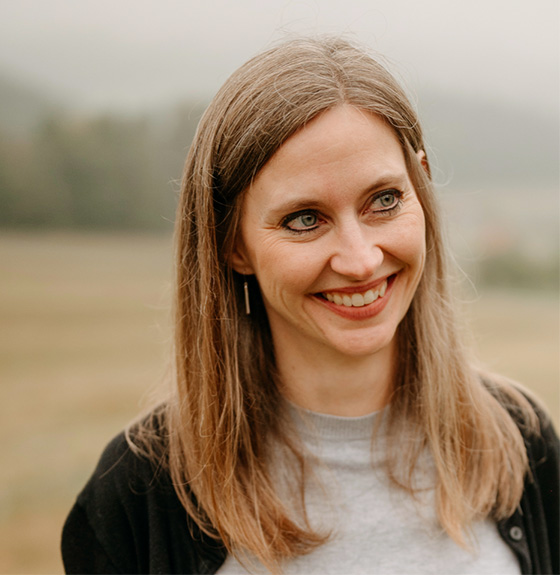
After growing up in Oklahoma, Andra moved to Europe, where she found herself locked on an empty, abandoned train, lost in a forest with just a compass, and falling in love with the only American man in her town—all fodder for her grounded speculative fiction writing. She believes that at the heart of every amazing story lies the elemental truth that what’s lost can be found, what’s broken can be healed, and what’s fallen can be redeemed. Her various manuscripts have won the ACFW Genesis Award, the ACFW First Impressions contest, and the Virginia Crown Award (three times), as well as achieving finalist in the Monroe-Walton Center New Writers contest and the Oregon Cascades contest. You can connect with Andra on Twitter: @andrajloy, and IG: @andraloy, or visit her website www.andraloy.com where you can sign up for her newsletter and receive a collection of short stories. Andra lives half an hour from a castle in the Czech Republic with her husband and three children.

--- Interview by Nicole Pyles

WOW: First, congratulations on winning runner-up! It seems you have lived such an interesting life! How does that inspire your fiction? 

Andra: Every new place I visit leaves an emotional impression on me. So when I think of a story idea, I choose the setting based on the atmospheric mood I want the story to have. Or the place will inspire a story idea. Living overseas has also enriched my life experience, so I get to draw from that well for my characters. I never would have grown by staying in my safe comfort zone, and I think my characters are stronger and more well-rounded because of that. 

WOW: I would agree! How did your story transform from first draft to final draft? 

Andra: Ironically, when I finished writing it, I thought it was a speculative story about a child who really did produce all these things with her imagination and her mother’s acceptance of her, including her own demise. My husband interpreted it completely differently, that Klara never existed in the first place, and that the ending of the story signaled the mother’s mental healing, which is way nicer. So I tweaked it a bit, still leaving it open ended enough to go either way, but leaning more toward the second interpretation. I love seeing how we can all read the same text and end up with different takeaways. 

WOW: That's so profound! How do you know when a story is done? 

Andra: It almost always catches me by surprise. This story was especially dramatic, I was typing away, letting the words flow, then I reached the conclusion and jerked my hands off the keyboard so fast, and my eyes started watering. I was stunned and chilled at where the story ended up, but I knew it was complete. I love writing as if I were reading the book. I love being as surprised as anyone else at where the story takes me. 

WOW: Surprise is a wonderful thing to have when you are writing! What are you currently working on that you can tell us a bit about? 

Andra: My WIP is a speculative suspense that takes place mostly in Slovenia. I’m doing a lot of research on caves and spending a lot of time grateful my job doesn’t include dark, claustrophobic spaces. As a child, I climbed through a very small hole into a very cramped, crowded space and thought I’d never make it out alive. If I ever want to really make myself squirm and scream, I go back to that moment. But it will be useful while writing these scenes. 

WOW: That sounds incredible. What do you hope readers take away from reading your story? 

Andra: I watched a lot of Twilight Zone as a kid and will never stop loving the roller coaster of big reveals. With my short fiction, I want readers to enjoy that twist at the end that changes how you view the rest of what came before.

WOW: I love that too! Thank you for your time and I can't wait to see what you come up with next.
Read More »

INTERVIEW WITH Kathleen Dunn, FALL 2021 FLASH FICTION CONTEST runner up

Tuesday, April 12, 2022
Kathleen Dunn is a native of Portland, Oregon, and now currently lives in Knutsford, England. She finished her first novel during lockdown, and hopes to write many more without succumbing completely to madness. When she isn’t writing, she loves hiking, dancing around to The Strokes, and reading spooky stories.

interview by Marcia Peterson

WOW: Congratulations on your top ten win in our Fall 2021 Flash Fiction competition! What prompted you to enter the contest?

Kathleen: I had written "Parasite" before I even knew about the competition. I was so excited about finishing the story that I immediately started searching for open contests. WOW's site spoke to me from the get-go-- I went to an all-women's college, so I love the idea of a site dedicated to women writers.

WOW: Can you tell us what encouraged the idea behind your story, “Parasite?”

Kathleen: I wrote the first draft of this story around Halloween. Movies like Rosemary's Baby, Alien, and The Omen were being advertised for the season, so I had those ideas circulating in my head. I also felt inspired by "The Yellow Wallpaper" by Charlotte Perkins Gilman. Like the main character from Gilman's story, my character is a woman who's motherhood brings her to a dangerous place (both physically and mentally).

Moreover, I liked the idea of taking something traditionally considered the most feminine, natural, and 'womanly' thing--giving birth--and subverting it into something sinister. It seemed like WOW, a forum specifically created for women writers, was the best place to share a story like "Parasite." Who better to judge it than women themselves?

WOW: What do you enjoy about flash fiction writing versus the other kinds of writing that you do?

Kathleen: Flash fiction makes you think on your feet. How can I get a message across in so few words? What adjectives to use? How can I keep it short, sweet, and to the point--and still make it fun?

It's a thrilling challenge for any writer, I think.

WOW:  You finished your first novel (during lockdown, wow!). What did it take to accomplish that big goal? What did you learn along the way?

Kathleen: Persistence is everything. Making time each day to sit down and write was the only reason I finished my first draft. I also think that during lockdown, when everything was so frightening and unsure, having a world to escape into was a God-send.

I learned quite a few things along the way. Namely, that writing long-fiction is a long process, and expecting perfection from early drafts is not only impossible, but also counterproductive. You've gotta chip away at it bit by bit, and make sure that you keep all those fun critical voices in your head at bay. The work will get done if you keep at it, but pace yourself.

WOW: Thanks so much for chatting with us today, Kathleen. Before you go, do you have a favorite writing tip or piece of advice you can share?

Kathleen:  To quote Winston Bishop from New Girl

"Nick, it's not that hard, man. Just sit down and write. You ain't Hemingway."

****

For more information about our quarterly Flash Fiction and Creative Nonfiction Essay contests, visit our contest page here.
Read More »

Interview with Mandy Wheeler, Runner Up in the Fall 2021 Flash Fiction Contest

Tuesday, March 29, 2022

Mandy’s Bio:
 

Mandy Wheeler is a writer and radio director who’s spent her career working in the creative industries. For twenty years she ran an award-winning audio production company in London, before moving on to devise creativity workshops and work as a writer and presentation coach. As a writer she works across commercial and creative work: prose, scripts, ads, she’s done the lot. In 2021 her play “Tree Rings” won the Bitterpill Painkiller Project Award. She also hosts an annual residential retreat in Spain where she encourages people to apply the techniques of performance improvisation to writing practice. 

If you haven't read her story, click through and spend a moment with “You’re Packing a Suitcase.”  

-----interview with Sue Bradford Edwards-----

WOW: “You’re Packing a Suitcase” is one of those stories that I thought I had figured out but it just kept changing. What was the inspiration behind this story?

Mandy: I’m not sure where the inspiration for this one came from. Possibly a writing prompt. I’m always impressed (and a little envious) of people who say they walk round with a head full of stories. It isn’t like that for me. I lure inspiration in by making Offers (as improvisors would call them.) Setting puzzles for my imagination to solve. That gets me started. Then I write until something tumbles out that feels like it’s got energy, something I’m interested in exploring. 

Or it might be that a line gets stuck in my head. I let it rattle around for a while until I hear the rhythm of the piece, or the tone of voice, then I start writing and to see where it goes. I’m not a planner. I rarely know what a piece is about until I get to the end. I think the creative process works best when we don’t get in its way, when we don’t interfere too much. I certainly didn’t know where ‘You’re Packing’ was going when I started it. 

So why did it tumble out the way it did? I’d been playing around with writing ghost stories for a while, looking at different ways to tell them, so that probably had something to do with it. And, well, the mother daughter relationship – it’s the gift that keeps giving, isn’t it? 

WOW: Your bio lists your career as a radio director. How does your experience as a director impact your writing process? 

Mandy: Directing is editing. An actor gives a performance; you help them to develop and finesse it. Together you edit it. You also have to be able to keep the big picture in mind, to step back and ask: ‘What’s this about, what’s it communicating, what do we need to add, or lose?’ Then you go in close again and edit the detail of the performance or the script. 

If you’re used to working that way, it makes the whole drafting / editing thing a lot easier. I’m used to revisiting things over and over to build them up. A first draft is like a first read through, the beginning of a journey. 

And for me as a radio director, the sound of a piece is always very important: the tone of voice, the rhythm. When I’m editing I always read the work aloud. 

WOW: Rewriting is such a huge part of the writing process. How did this story change from first draft to finished manuscript? 

Mandy: In this case, not too much. That’s unusual, my first drafts are usually pretty unruly. I revise a lot. In this piece though, the rhythm and the tone were there early on. It was the detail that needed work. With Flash, it’s always about asking yourself, what more can I take out? How much can I leave up to the reader? That suits me. I love cutting stuff. It comes from working in radio, where you’re always trying to say less, to avoid over explaining. That’s how you keep the listener with you; by making them part of the production team, getting them to do some of the imaginative work. I approach writing in the same way. But, of course, you have to make sure you’re intriguing, not confusing. That’s what I worked on in this piece. 

Oh, and I always leave a good while between edits. That way a lot of the editing decisions seem to make themselves – they just jump off the page when you go back to it. 

WOW: Many of our readers have never tried writing flash fiction. What advice would you give writers new to this type of work? 

Mandy: Think of it as a collaboration with your reader. Flash is not a novel; you’re not suggesting they curl up in an armchair while you tell them a tale. You’re inviting them out to play. Look for ways to hook their imagination. Don’t over explain. Give them something to think about, let them do some of the work, let them have some fun. 

Writing short also gives you the opportunity to play around with format – don’t be afraid to try out unconventional ways of telling a story. 

And here’s a useful rule from improvisation. ‘Go in late; get out early’. Drop your reader into the middle of a scene. Lose the preamble. Hit the ground running. Then leave before the end - don’t worry about staying around to tie it all up. Leave it with the reader, let it linger pleasantly in their mind. 

In radio, we often withdraw with a fade out. That’s how I hear the end of ‘You’re Packing’. It fades out on that last line. Hopefully to be continued in the reader’s imagination. 

WOW: Your bio also mentions a retreat in Spain where you guide participants to use performance improvisation in their writing. Can you explain what performance improvisation is and how it benefits writers? 

Mandy: Performance improv is basically writing standing up. The kind of thing you see in comedy improv shows. For a writer, the techniques that improvisors use are incredibly useful in building spontaneity and encouraging you to get out of your own way. You get better at not judging, at moving a story forward and committing to ideas. 

For an improvisor, the empty stage is your blank page. Nothing’s happening until you make an ‘Offer’. Then, when you’ve set something running, you have to keep going. You can’t stop to judge or correct, you’ve got to keep building the idea, keep creating the scene. And, of course, because you do it with another person, you don’t know what’s coming next. It’s a great way to get comfortable with letting go of control. 

The sessions I run on the retreat and in the UK workshops, aren’t about performance. I just invite people to try out the improvisors’ techniques and think about how they can be useful when they’re working on their own, on the page. 

Improvising is about listening and reacting to what arrives – internally and externally. Getting things down, rather than making things up. It works brilliantly for blasting through creative blocks. You begin to enjoy that heady feeling of not knowing where you’re going – but trusting you’re going somewhere. You get to surprise yourself.

WOW:  Mandy, I love the idea of treating the blank page as a stage! This is definitely an idea we can play with.  Thank you so much for sharing your techniques with our readers and, again, congratulations! 
Read More »
Powered by Blogger.
Back to Top