Showing posts with label writing in second person. Show all posts

Interview with Jean Ransom, Runner Up in WOW's Q2 2023 Creative Nonfiction Essay Contest

Sunday, June 18, 2023
I'm thrilled to chat with Jean Ransom about her award-winning essay, "Rude Awakening." You may recognize Jean's name from previous interviews here and here where she placed in WOW's creative nonfiction contests. In today's interview, we chat about writing in second person, revision, entering contests, and Jean's super cute dogs!
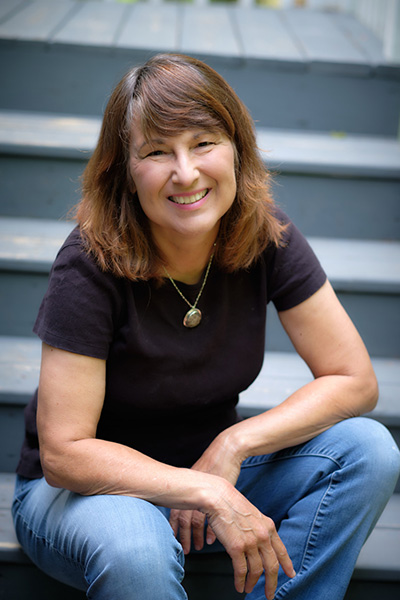
 
Jean Ransom
Jean's bio:
 
Jean Ransom has been writing for a living since she sold her first story to Seventeen magazine at age seventeen. Over the years, she’s written for radio stations and ad agencies, traveled internationally with a bed-and-breakfast magazine, and published numerous articles in national and regional magazines and newspapers.
 
The author of nine children’s picture books, Jean became interested in writing flash fiction and micro memoir after participating in workshops at the Iowa Summer Writing Festival. She’s also taken several WOW! Women on Writing classes, and has been a finalist or in the Top Ten in previous WOW contests. 
 
Jean divides her time between her home in St. Louis, Missouri, and a cottage in northern Michigan. When she’s not writing or reading, she’s birding, rockhounding, kayaking, or hiking.
 
----- Interview by Angela Mackintosh
 
WOW: Welcome, Jean, and congratulations on your winning creative nonfiction, “Rude Awakening.” I simply love essays written in second person! Why did you decide to write in this point of view?
 
Jean: I wrote this essay as a WOW class assignment after instructor Chelsey Clammer talked to my class about point of view. I remember second person being a less-common POV in essays—and more of a challenge to write. We read a couple of examples of second-person essays, but unfortunately I don't recall the titles. Chelsey encouraged us to play around with different POVs to find the one that really felt right for the story we were telling. My initial impulse was to write my essay in first person, but after a few sentences, I switched to second person almost intuitively. "Rude Awakening" is my first and only essay written in second person. Playing around with different POVs is a really great writing exercise! 
 
WOW: Well, you nailed the POV! It works so well with the pacing of your essay, as you walk the reader through the event and pepper in the backstory. Your beginning and ending are also brilliant—where the narrator stops peeing midstream and in the end finds relief. What was the trickiest part of writing/revising this essay?
 
Jean: Thank you, Angela! As I mentioned, Chelsey Clammer was the instructor for the WOW class I was taking when I wrote "Rude Awakening," and we were experimenting with using a repeated phrase in our essays. Mine was “Yes, you can stop peeing mid-stream, if you are terrified.” I wasn’t sure about that phrase at first. It seemed a little raw or coarse, not the typical way I'd start an essay. I tried to rewrite it and make it "nicer," more "polite." It was hard for me to accept that there was no other way to write this story without being raw and real. After all, I'm used to writing children's books where nothing bad happens and the endings are neatly tied up with a bow!
 
WOW: That’s so funny, and I’m glad you chose to be raw and real. Chelsey has a way of bringing out the bravery in writers! I'm still wondering about the dogs not barking. It's an interesting fact that stays with the reader throughout the piece. I'd love to hear more about your dogs. You have a collie and a sheltie—what are their ages, and why do you think they didn’t bark?
 
Jean: My husband and I were just talking about this! Our theory is that between the habit we had of using a big fan to block out sound at night and the fact that our bedroom was at the other end of the house from where the intruders broke in, no one woke up because no one heard anything. It was the middle of the night, and the only reason I woke up was because I had to pee. (I'm not going to lie, using that word in print still makes me wince a little!)
 
Sawyer and Sadie
Sawyer (left) and Sadie (right).
After the intruders ran out of the house and I went back to the bedroom to wake up my husband, the dogs woke up, too. When the police arrived, Mac, our Sheltie, ran to the top of the stairs and stood there barking, too scared to go downstairs. Our collie Comet followed my husband downstairs to give the officers a tail-wagging welcome. He may have barked once or twice, but it was more like a friendly "hello!"
 
Mac and Comet have long since gone over the Rainbow Bridge, but in the years since, we've always had at least one Sheltie or collie, or two. We lost our 12-year-old Sheltie, Nemo, four years ago, but we still have our collie Sadie, who recently turned eight. We added a second collie named Sawyer, two years ago. Sadie and I are a certified therapy team, and we visit an elementary school every week so that students can read to her. Sawyer is big, strong, and full of beans, but very sweet. He does agility, which he loves!
 
WOW: Aw, I’m sorry to hear about Mac, Comet, and Nemo. I picture them playing together in that magical place beyond the rainbow bridge. Thank you for sharing a photo of Sawyer and Sadie! They are beautiful, and it’s wonderful you and Sadie are a therapy team! I know you enjoy outdoor activities like birding and hiking. What are you up to right now?
 
Jean: I really need my "outside" time every day, whether it's walking the dogs, going birding, or just sitting on the patio in my backyard. Right now, my husband and I are getting ready to spend the summer at our cottage in Michigan, where we like to hike, kayak, and take our dogs on walks through the woods or on the beach. I also like to rock hunt and go birding, and I'm working on my "Northern Naturalist" certification at the local community college.
 
WOW: That sounds wonderful! Okay, one last question before I let you go and enjoy the great outdoors. I know you've been successful at placing as a finalist or in the top ten in several of WOW's contests. What are a few tips you can share with our writers for targeting and entering contests?
 
Jean: I really don’t enter many contests, but I came across WOW’s contests at a time when I was in a bit of a writing slump. I needed a reason to write and a deadline to meet, and contests are great for that! The wonderful feedback, encouragement, and support I received from WOW’s contests have been much-needed validation. Thank you!
 
As for tips for targeting and entering contests, first of all, I'd recommend that writers research any contest they're thinking of entering, including reading the fine print (especially the part about rights). Who is sponsoring the contest? Are they "legit?" There are a lot of wonderful contests out there, but there are scams, too. If you’re not sure about a contest, you can consult “Writer Beware” http://www.sfwa.org/other-resources/for-authors/writer-beware/contests/ or “Alli,” short for "Alliance of Independent Authors," https://selfpublishingadvice.org/author-awards-contests-rated-reviewed/.
 
Look for free or low-fee contests to enter. If the price to submit is higher than the prize, you may want to pass on that contest. Do you know you can do a search for “legitimate writing contests 2023” and get plenty of qualified hits?
 
My biggest tip for successfully entering a contest? Follow the contest rules or guidelines to the letter! It should go without saying that you’ve checked your manuscript for grammar, spelling, and typos before you submit your entry. Are there rules about preferred typeface, formatting, etc.? Don’t risk having your submission disqualified before it’s even out of the starting gate!
 
One last tip! In a contest, there will always be winners, but you may not be one of them. Not the first time, maybe not even the second or the tenth or even the fiftieth time. Don’t give up—not on your story, or your writing, or yourself! If feedback is an option in a contest, you may want to take advantage of it to see if there are ways to make your story even stronger. Then get it back out there!
 
WOW: Fantastic advice, Jean! I also love Victoria Strauss at Writer Beware and Alli, and especially your inspirational advice: "Don’t give up—not on your story, or your writing, or yourself!" Amen. Thank you so much for chatting with me today, and I wish you much success in all your writing endeavors!
 
Find out more about WOW's flash fiction and creative nonfiction contests here: https://www.wow-womenonwriting.com/contest.php
Read More »

Interview with Liz Ramirez - Second Place Winner of the Q4 2022 Creative Nonfiction Essay Contest

Sunday, October 30, 2022
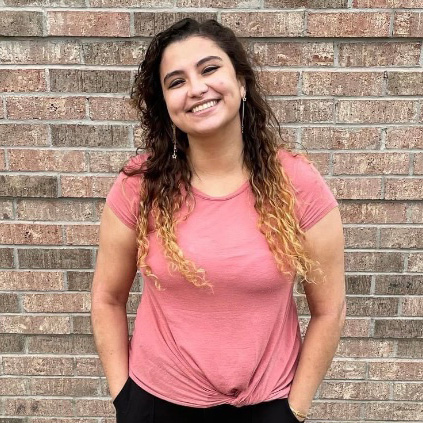
I'm thrilled to chat with Liz Ramirez about her award-winning essay, "first lesson." Liz shares the inspiration behind her piece, craft choices and POV, her literary influences, and so much more.  

Liz Ramirez recently completed an M.A. in English at Texas A&M University, where she now works full-time as a project manager in Technology Services. Her poem “et tu,” published in Volume IV of OyeDrum Magazine, was nominated for the 2021 Pushcart Prize and Best of the Net. “first lesson” is taken from her master’s capstone project, “Latinish: Mixed Identity in Three Essays,” where she writes about family, racial hybridity, and liminality in Mexican identity. Find her on Twitter and Instagram @trapezoidette.

Interview by Angela Miyuki Mackintosh

WOW: Welcome, Liz! Congratulations on winning second place in the Q4 2022 Creative Nonfiction Contest. I love your essay, "first lesson" and all of our judges thought it was well written and powerful. What inspired you to write this piece?

Liz: Thank you, and thanks to everyone at WoW for this opportunity. I'd been searching for a way to articulate this experience of the first time that I felt that social judgment of racialization for a really long time, and once I learned what the flash form was, and the way it’s supposed to zoom in and amplify a single moment, it fit perfectly. More than almost any other moment in my life, that memory most clearly demanded a specific form in writing. It began with this central metaphor in my head, that ended up in one of the last sentences of the piece, this image of a judge on the bench who passes down these social evaluations in that split-second moment of imposed gaze. Something I learned in grad school through Stephanie Fetta’s work on racialization is that what transpires in those glances that “other” and isolate you is actually shame, and the gaze is the primary vehicle of that shame.

WOW: Your ending has got to be my favorite part, and I can totally see that metaphor. I never thought of "othering" as shame, but Fetta is so right! Wow, I'm going to have to drill that down in my own work. I love that you wrote the piece in second person. Was this how you wrote it initially or did the POV change in later drafts? Why was second person necessary to this piece?

Liz: I did write it in second person initially; I do a lot of writing like that, and I think that it was necessary for me in “first lesson” because this piece represents a kind of talking back through the years to myself and remembering that self who knew what it was like to feel free of this social judgment. As I got older, I felt more and more constrained by those instant on-sight evaluations that place you in those categories that impose marginalization, and I wanted to make those more visible through my writing, because so often I think we let them go without saying.

WOW: It takes courage to not let it go and shine a light on it, and I love that you wrote it to your younger self. I also found the use of "you" put the reader in the narrator's shoes, feeling the weight of her marginalization as well. Your bio says "first lesson" is part of your master’s capstone project, which explores mixed identity in three essays. What did you learn about yourself or your writing process from crafting these essays?

Liz: Well, the first thing I learned is how very difficult it is to write in a pandemic! During lockdown in 2020, I was spending a lot of time alone in my apartment, attending grad school remotely, zoning out in Zoom meetings, and procrastinating my assignments. With all that free time, I ended up opening Ancestry.com, and fell down a rabbit hole with everything I found (and didn’t find) there. My mother is white, and my searches for her family turned up thousands of records going back generations, some dating back to the 1600s. By contrast, my search for my father’s family, immigrants from Mexico, hit a dead end with my paternal grandfather Sotero; I couldn’t even find where he was buried, because I don’t know what year he died. I was so struck by that contrast, and confronted for the first time with what it actually means identity-wise to be half-white, mixed. Whiteness always seemed to be metaphorically empty and neutral, giving the illusion of subtracting from ethnicity rather than adding anything of its own; I could never imagine myself as connected to or descending from my white ancestors. The experience of actually finding out who they were, what their names were, what their handwriting looked like, where they lived–it really hammered home that I really am just as much a product of my mother’s heritage as my father’s, and got me thinking about the nature of hybridity and my own racial identity. This was the place of reflection from which that series of essays sprang.

WOW: That contrast is stark, and I can relate being a hapa, mixed. That absence of your father's heritage and the realization of claiming your mother's heritage as your own is a great subject for your series. I'd love to read it sometime! You also write poetry, and your poem, "et tu," was published in OyeDrum Magazine, which they nominated for a 2021 Pushcart Prize and Best of the Net - congratulations! I always admire writers who craft both poetry and prose. Currently, who are your biggest influences or favorite authors in poetry and creative nonfiction?

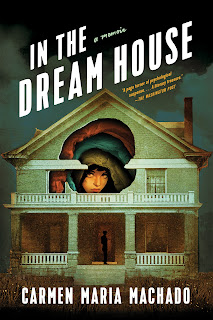
In the Dream House
Liz:
 The biggest writing influence in my adult life by far has been Carmen María Machado and her memoir In the Dream House. I read this for the first time in grad school in 2019 and absolutely fell in love with it for its lyricality, inventive form, and second-person perspective, where the author writes back to her past self to talk through the end of a painful relationship. More than anything else, though, it was how she wrote about something that was incredibly difficult to write about, to the extent that it felt almost unspeakable when it happened to me: the way that the fact of abuse or mistreatment from a person who is marginalized in the same way as you feels like a betrayal, and like a confirmation of everything bad the mainstream establishment says about your group. This was heavily on my mind when I wrote “et tu,” which is about the same thing: how admitting the way I was treated in my first same-sex relationship when I was nineteen felt like it would affirm every bad thing my mother and my friends have ever believed about LGBTQ people. I let that keep me silent about it for years.

WOW: Machado's In the Dream House is one of my favorites as well! That line about your mother and friends in your poem is unforgettable, and your ending with the turtle is such a brilliant metaphor to close the piece with. What are you working on right now?

Liz: Right now, in addition to fiddling around with some flashes I wrote in a workshop by the wonderful Kathy Fish, I’m preparing for NaNoWriMo in a few days (this will be my first time participating since I was a teenager), and trying to put together a writing sample for MFA application season this fall. And I’m still editing the series of essays “first lesson” came from, in the hopes that some of the short vignettes will soon be ready to send out.

WOW: Small literary world! WOW just interviewed Kathy Fish, and she's an amazing flash teacher. I'm also participating in NaNoWriMo this year, and I can't wait. It's so much fun. What's your favorite piece of writing advice or a tip you'd like to share with our readers/writers? 

Liz: Don’t underestimate writing, journaling, and talking to yourself as tools for healing and self-integration. Write in the second person. Journal in the second person. Write your to-do list like it’s for a child you take care of and love dearly. Reread your old journals, and write letters to the person you were then; write letters and save them for your future self. I did this when I was fourteen, and a couple of years ago when I turned twenty-four, I got to open the letter I’d saved for myself ten years prior. It was a sweet, poignant reminder of the idealist that I was at fourteen, and a vital connecting thread to just how strongly I already knew who I was and what I wanted back then; I just wanted to write and for people to read it, and I’ve made it further than I ever actually imagined I would.

WOW: Aw, I feel that way when I read my old diaries. Your writing has touched all of our hearts, Liz! You've definitely made it, and thank you for those fantastic tips. They're some of the most creative we've gotten! I simply love writing in second person, and wish you much success in your writing career. We can't wait to see what you write next. I'll be cheering you on during NaNo!

*

Angela Miyuki Mackintosh is a writer and editor at WOW! Women on Writing. Like Liz, she also loves to write in second person. Her essay about a childhood friendship, sobriety and grief, written in second person, "Happy Sobriety Birthday" was published by Eastern Iowa Review. Her most recent CNF piece written in second person, "Waiting for the End," a hybrid collage written during the height of the pandemic, published in Permafrost Magazine, September 2022. 

Read More »
Powered by Blogger.
Back to Top