Showing posts with label contest winner. Show all posts

Interview with Sara Winslow, Runner Up in the Q2 Creative Nonfiction Essay Contest with "Sweater"

Saturday, July 11, 2026

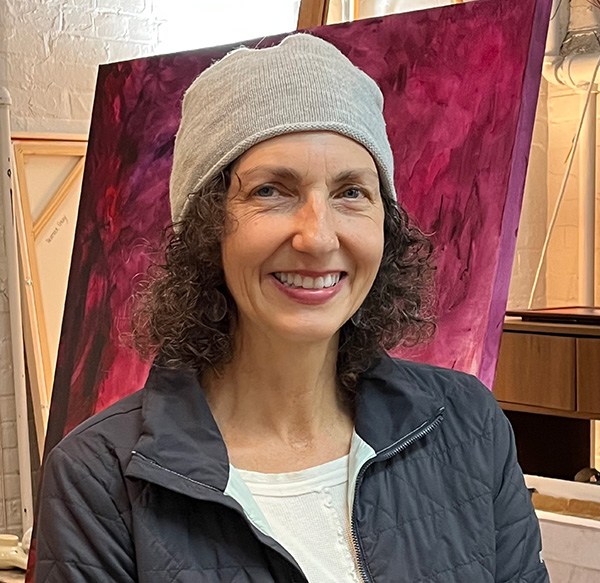
 Interview with Sara Winslow, 

Runner Up in the Q2 Creative Nonfiction Essay Contest with 

“Sweater” 

Congratulations to Sara Winslow from San Francisco, California for her amazing nonfiction essay titled: Sweater

Check out Sara's submission, Sweater as well as all the other winning entries and then stop back here to read Sara Winslow's engaging interview with Crystal J. Casavant-Otto from WOW! Women on Writing. 

Sara’s Bio: 

Sara Winslow is a repenting (a.k.a. retired) government lawyer turned creative writer. Her work appears in several literary journals and anthologies, and has been nominated for a Pushcart Prize. Sara lives in San Francisco. She has visited all 50 states and is working on the seven continents (two to go). You can find her on Instagram @winslow_writing.


...interview with Crystal J. Casavant-Otto

WOW!: Thank you for being here with me today Sara and thank you for writing such a personal essay. Let’s get right down to it! Do you have advice for your younger self when it comes to making decisions, believing in yourself, and/or writing? What would your current self say to the younger you? 

Sara: I’ve wanted to be a writer since I was a kid. When I was a young woman, that desire was pushed aside by my stronger desire to support myself financially. I went to law school and had a long career in government, allowing me to retire relatively young. Although I’ve dabbled in creative writing most of my life, in retirement I’ve taken it up in earnest. The writing I’m doing now is so much more fun than my work as a lawyer ever was. It’s tempting to say that I’d advise my younger self to go for it, believe in herself, forget about law school, write books instead. Part of me wishes I had taken that path. But I’m not so sure I’d enjoy writing as much if I had to depend on it to make a living. So, if I could have a talk with my younger self, I actually think I’d tell her to stick to the path she was on. I’d tell her that it was all going to work out fine in the end. 

WOW!: I’m sure those sentiments would have felt like a big comforting hug - especially during those years when self-doubt is so prevalent. What’s next for you? What are your writing goals for the rest of 2026 and beyond? 

Sara: Lately, I’ve been focused on two book-length projects. One is a novel that's on its second or third draft. At the end of last year, I set it aside to marinate. On January 1 of this year, I began drafting a memoir, kickstarted by a program called JanYourStory with the organization Memoir Nation. They encouraged participants to write their memoirs, 500 words a day, every day in January. I enjoyed the daily practice so much that I continued it even after January ended. In fact, I’m still writing at least a little bit of the memoir every single day. Now I’m more than halfway through a first draft. Before the end of 2026, I’d love to have a full draft completed so I can set it aside for a while and return to my novel. Then who knows, maybe in 2027 one or both of them will be ready to send out into the world. 

WOW!: You have an impressive bio - it makes sense to work on a memoir! Could you tell us more about being nominated for a Pushcart Prize? 

Sara: Thank you! I’ve always wanted to be a fiction writer. And that’s what I focused on when I first retired. Then my mother died, and I felt compelled to write nonfiction about our relationship. I wrote the first such piece, “When Your Mom,” about taking care of my mom in her final weeks and then dealing with her death. It was published in the Winter 2025 issue of Passager Journal. I was very honored that Passager nominated the essay for a Pushcart Prize. Even more meaningful, though, was hearing that the essay struck a chord with readers who were struggling with their own grief around the deaths of their parents. Hearing from these folks taught me that sharing my very personal and specific experiences could actually be helpful to others. Since then, I’ve written additional pieces about my mom, including “Sweater.” And she's a central character in the longer memoir project I’m currently working on. 

WOW!: I can’t wait until the project is finished - hopefully we can work together again! What advice would you give to others (specifically female authors) when it comes to self care? 

Sara: Ideally, writing is a fun activity that’s a form of self-care in itself. In reality, writing can get tough. For example, when you start being critical of yourself. At times like that, my advice is to take a step back and give yourself the compassion that you'd give a friend in the same situation. Remind yourself that the story you’re writing does matter and that you’re the one to tell it. You started writing it for a reason. Go back to that reason. It also gets tough when you’re writing about a traumatic event. The memoir I’m currently writing caused me to go back in time and reread my old journals. I had heard about how important it was to take care of yourself when writing about trauma. Still, I was surprised to find myself being re-traumatized as I read my old journal entries about a tragedy from decades ago. I was right back there, living it all over again. For me, it's been helpful to take breaks and work on less challenging sections of the book for a day or two. Or simply take a walk with my dogs, do some yoga, read a novel. I guess the bottom line is, when the writing gets tough, be kind to yourself, and carve out some time to do whatever activity you find most nourishing. 

WOW!: Speaking of things that are nourishing - I have to ask about journaling and writing groups. What role has journaling and/or writer's groups played in your life? 

Sara: Both have played big roles! I’ve kept a journal since age 7. It’s hard for me to imagine life without journaling. The simple act of putting your thoughts down in writing can be so therapeutic. Without journaling, I’m not sure my mind would ever be clear enough to engage in creative writing! And of course my old journals have been a vital resource for the memoir I’m currently drafting. I’ve belonged to various writer’s groups, both in person and online. I think they’re essential. They give you support. Other pairs of eyes to look at what you’ve written. And a glimpse into how other people write. Right now, I’m in a small online group of women writers. We met (virtually) while taking a class through WOW!, taught by the amazing Kimberly Lee. After the class ended, we formed a group that's lasted over a year so far. It's still going strong. We’ve never met in real life, but we’ve read a lot of each other’s personal stories. In fact, my “Sweater” essay was first written for this group. Comments from the women in the group helped me to make it into the essay that you've read. 

WOW!: Thank you so much for sharing your time and talent with us today and always Sara - it’s been a pleasure!


Today's interview was penned by Crystal J. Casavant-Otto

Crystal Casavant writes. 

Everything. 

If you follow her blog you have likely laid eyes on every thought she has ever had. 

Her debut novel, It Was Never About Me, Was It? is still a work in progress and shall be fully worthy sometime in her lifetime as she switched gears and is seven chapters in on a psychological thriller that has captured her heart. She has written for WOW! Women on Writing, Bring on Lemons, and has been featured in several magazines and ezines relating to credit and collections as well as religious collections for confessional Lutherans. 

She runs a busy household (from her parent’s basement) full of intelligent, recalcitrant, and delightful humans who give her breath and keep her heart beating day after day. 

Crystal wears many hats (and not just the one in this photo) including college student, mom, musician, singer, administrator, writer, teacher, and friend. She fully believes in being in the moment and doing everything she can to improve the lives of those around her! She recently moved into her parent’s basement and is enjoying the challenge, recently posting some delicious meals titled: Culinary Adventures in My Parent’s Basement. 

The world may never know her name, but she prays that because of her, someone may smile a little brighter. She prides herself on doing nice things - yes, even for strangers. She is always up for a challenge whether it’s living in the basement, living on a boat, or buying a dairy farm! You never know where she’ll turn up next or what she’ll be doing, but it’s guaranteed she’ll be having fun! 


 Check out the latest Contests: 

 www.wow-womenonwriting.com/contest.php 


Read More »

Interview with Rebecca Redshaw, Spring 2018 Flash Fiction Runner Up

Tuesday, November 06, 2018
Today we are chatting with Rebecca Redshaw, one of the runner's up of the Spring 2018 Flash Fiction contest. If you haven't read her story yet, be sure to go by and read "The Picnic" and then come back and read her interview.

Rebecca's Bio:

Rebecca Redshaw is an author and playwright who moved to Washington State in 2001 to write full time. She published extensive articles and short stories in national newspapers and magazines and was awarded First Prize in the 2009 Lakeview Literary Review for her short story, “Somebody Special.” In 2016, she was awarded third prize in the Soul-Making Keats Contest for her short story, “Mrs. C.” In addition to productions of Spider on the Sill and Dear Jennifer by Olympic Theatre Arts, her plays Hennessey Street, A Conversation with Hattie McDaniel, and FOUR WOMEN have been performed in the Pacific Northwest and Canada. Hazel Speaks! and Vignettes: A Good Time with Wine were commissioned and produced by the Clallam County League of Women Voters and Camaraderie Cellars respectively. Redshaw was appointed to the Washington States Arts Commission in 2016 by Governor Jay Inslee. She is currently working on her fourth novel and eighth play. For more information go to www.rebeccaredshaw.com.

WOW: First of all, congratulations on your story and thank you so much for taking the time to chat with us today! You have such an incredible background with writing, including novels and playwriting. How do you keep up with all that you do? Do you have any particular method you use to approach your writing?

Rebecca: I’m not sure “incredible” is a word I would apply to my writing career. I write – that’s the easy part. My first work, Dear Jennifer, is an epistolary novella and a friend suggested I adapt it as a play. It was thrilling to stand in the back of a theatre and hear different reactions when actors delivered lines. Applause is something an author rarely thinks of, so it was a nice treat. Whether I write a play or a short story or a longer work is most often determined after I sit down to write. The characters take over at that point.

WOW:  It must be so rewarding to hear applause over something you've written! So, how did your first draft of "The Picnic" change by the time you wrote the final draft?

Rebecca: Contemplation has served me well. I can spend days, months, years thinking through a particular story. I traveled to England and had a wonderful exchange with a Brit when she invited me for tea in her sitting room. Ten years later, I wrote a short story, The Sitting Room, that has been adapted and performed as a play. Because of the time I spend thinking through the process, I’ve been fortunate not to have to rewrite at length. Of course, there is always tweaking, but The Picnic required very few rewrites.

WOW: I'm so impressed. That contemplation truly pays off!  How does playwriting help you with your fiction writing?

Rebecca: My first creative endeavor was as a struggling songwriter in Los Angeles. I took a workshop that has influenced my writing through the years. You need to grab a listeners’ attention and tell a story in three and a half minutes. Later on, I worked as a journalist for a large newspaper which required keeping readers’ attention for exactly sixteen inches. Writing at length is a joy, but those early experiences have helped me in being concise.

WOW: That's an incredible tip to use for creative writing! Grabbing the reader's attention is so key. So, what is next for you? What are you currently working on?

Rebecca: I read several books at a time and the same holds true with my writings. I have a file that I can click on with partial works or new ideas that kick start my process. I wrote a play based on an event that occurred in the early 1900s. Right now, it’s dormant because the cast consists of 18 people which is overwhelming to me, so I’ve been contemplating reworking it as a novella. The problem that keeps coming up in the process is that I hear voices demanding to be heard. One of my favorite quotes is by Horton Foote, “Keeping an unpublished manuscript in a drawer and not sharing it with an audience, even if it is a small audience of friends and acquaintances, is a mistake.” So, in addition to writing, I submit at least once a week and/or as soon as I get a rejection.

WOW: I love your submission process! And that quote is perfect - writing must be read!  I was touched by a recent blog post you published on your website about reading and the joy of reading. What advice do you have for adults about introducing the children in their lives to reading?

Rebecca: From what I hear we need to introduce people of all ages to the joys of reading! I’m not keen on giving advice, but by way of example I would suggest two things:

1. Give books as presents to children, but don’t stop there. Take the time to read to them! I have sent short stories to preteen and teenage nieces and nephews and asked for their input. People of every age are flattered that you value their opinion. Now my older relatives and I exchange titles and have conversations about books. Amazing.

2. Make the library or local book store a weekly occurrence. Both usually have regularly scheduled story times and browsing the shelves is an adventure.

These tips are so perfect. I recall as a child loving the library and still do to this day! Congratulations again on your story and thank you again for chatting with us today!

Interview by Nicole Pyles

Read More »

Interview with Tori Haring-Smith, Spring 2018 Flash Fiction Runner Up

Tuesday, October 02, 2018
Today, we are chatting with Tori Haring-Smith, one of the runner's up in the Spring 2018 Flash Fiction contest. If you haven't had the chance to yet, be sure to check her story "Baby Steps" then come back and read her interview below.

Tori's Bio:

Tori Haring-Smith taught English and Theatre at Brown University for 16 years before moving with her husband and son to Cairo, Egypt, for a three-year stint as Artistic Director of the Wallace Theatre there. Returning to the United States, she led a foundation and then served thirteen years as president of Washington & Jefferson College. She has published books on writing, stage history, and teaching as well as editing several collections of monologues for women by women. Her play translations have been produced in the U.S. and abroad. Now retired, she lives in Peterborough, New Hampshire with her husband and 12 cats (all rescues). She loves writing flash fiction because every word counts!

WOW: First, thank you so much for taking the time to chat with us today and congratulations on your story! I was so amazed to find out this was the first piece of fiction you have written in nearly 50 years! What inspired you to write fiction again?

Terry: I guess it was literally more like 47 years, although sometimes it feels like 50! The last piece of fiction I wrote was for a class in college. I was inspired to write again by the exciting, supportive community of writers here in New Hampshire and by the possibility of competing in a 3-minute fiction contest run by the New Hampshire Writers Project. I have a competitive spirit, and so the contest was a real motivator.

WOW: It's incredible how motivating contests can be! What was the inspiration behind your story "Baby Steps"?

Terry: I have been married for 44 years. During that marriage, I have been pregnant nine times and suffered eight miscarriages (all very early). After each miscarriage, I grieved; at times I was outright crazy with grief. I am so thankful for my husband and my son for putting up with me during that period, for never losing faith that I would come back to myself, and for forgiving me. So, I began to wonder what it would be like to try to heal after giving birth to a child who lived only a few minutes.

WOW: First, I'm so sorry for your loss. It is incredible and so moving that you used your own personal experience with grief to write this story. So, you have such a fascinating background, I have to say. What did teaching English and theater teach you about writing and telling stories?

Terry: Although I have had several different careers in my life, all of them called upon my skills as a story-teller. As a professor, I told stories ever day--whether they were about the power of mathematical modeling, the wonders of nature, or the ways in which poetry crystallizes human emotion. Directing or translating a play is also about finding a compelling way to tell a story—with words, people, lights, costumes—all of it. The cast, the designers, the publicists—everyone has to be telling the same story. Even being a college president is about telling stories—bringing a community of students, faculty, and alumni together around touchstone parables that define the college’s character, mission, values, and aspirations. Stories define us and inspire us, no matter what our profession.

WOW: Excellent point! I love that - "stories define us and inspire us, no matter what our profession." Since this is your first piece of fiction in quite some time, how is writing fiction different for you than writing non-fiction?

Terry: There really isn’t much difference between writing fiction and writing nonfiction. Nonfiction takes lots of research, of course, but you still have to try to understand what people’s lives were like, why they did what they did, why they said what they said. Writing nonfiction draws upon your imagination just as writing fiction does—the difference is simply that the world you are bringing to life is grounded in research rather than in the characters and events that you create.

WOW:  That is absolutely true! So, I love that you have rescued 12 cats! I'm definitely a cat person myself. Do your cats help you with your writing at all?

Terry: The cats do their best to prevent me from writing—scattering my note cards, sitting on my keyboard, dipping their paws into my tea, and distracting me with requests for pats. But, then, they also curl up in my lap and purr, assuring me that they, at least, approve of what I am writing. There’s nothing like unconditional love.

What charming motivators those cats are! Thank you so much for sharing your story with us Terry and best of luck to you in your writing journey!

Interview by Nicole Pyles
Read More »

Interview with Terry Cobb, Winter 2018 Flash Fiction Runner Up

Tuesday, August 07, 2018


Today, we are chatting with Terry Cobb, one of the runner’s up in the Winter 2018 Flash Fiction contest. If you haven’t had the chance to yet, be sure to check out her moving story, “Afternoon Tea with Jacqueline Kennedy” then come back and read her interview below.

Terry’s Bio:


Terry Cobb is a former radiology supervisor who resides with her husband on a farm in north central Missouri where she writes short stories, devotionals, and novels. Her flash fiction has been published in The Binnacle and in anthologies published by The Saturday Writers and The Columbia Writers Guild. It has won awards from The Pike’s Peak Branch of American Pen Women, the Green River Writers, Springfield Missouri Writers Guild, and the Dr. Doris Mueller Prose Contest. Her devotionals have been printed in The Upper Room and The Secret Place. She posts photos of flowers and wildlife on her blog and writes about the challenges of gardening, at www.whatsinyourgarden.wordpress.com.

WOW: Thank you so much for chatting with us today! So, I loved your flash fiction story Afternoon Tea with Jacqueline Kennedy. What inspired this story?

Terry: In their later years, my parents had many health issues which naturally took a toll on their spirits. Mom used to tell me how she wished she could run away from all their troubles. The problem was that she didn’t have any place to run and she only wanted to escape for a little while. Although this story was written long after my mother’s death, this is a temporary escape I have created just for her.

WOW: What a touching way to honor your mom! So, what’s next for you? What are you currently working on?

Terry: I’m primarily working on a novel that I began a few years ago. I can’t remember if I’m on its tenth or twentieth draft. Since I believe in the story too much to quit, I’ll keep plugging away on it until I’m satisfied enough to send it off to an agent. I’m also writing another short story and a devotional. As you can tell, I’m easily distracted, but that’s because I find all types of writing fun. When I get an idea, I like to go ahead and get it on paper.

WOW: I’m exactly the same way with writing! I tend to bounce around a lot, but I feel like it makes it more fun that way. That leads me to my next question – what does a typical day of writing look like for you?

Terry: I’m an early bird. My biological clock wakes me up between 4:30 and 5 am. With a cup of coffee in hand, I meditate and journal for a couple of hours. Journaling is where I get my devotional and short story ideas. I often try to steal more time after lunch to write again for an hour or so, although I’m not consistently successful.

WOW: As a night owl, who is not at all an early bird, I’m impressed you wake up so early to write. What a way to start your day! So, do you have any tips you can share about entering contests? What works for you best?

Terry: Entering writing contests have been an excellent way for me to receive feedback on my writing by either signing up for an additional critique or by seeing if I can place in the contest itself. Many contests publish the winning stories which is extremely helpful in seeing what the judges are looking for and how my story stacks up to them. I also triple check the submission guidelines. I don’t want my story thrown out before it’s even read just because I didn’t format it according to the contest guidelines. I always let my work sit for a few days before submitting. That gives me a chance to read it one more time for grammatical errors and missed words.  

WOW: That is great advice! So, I couldn’t help but notice in your profile you said you liked to garden. How does your garden inspire your writing?

Terry: The garden is my world of miracles. I marvel at how the tiny seeds in my hand produce baskets of tomatoes and bouquets of flowers. It’s especially terrific for providing metaphors and story ideas for my devotional writing. Oddly enough, pulling weeds seems to slow the wheels churning in my brain. A story idea will often come to me when I’m “in the zone” and not trying so hard to come up with something.

WOW: I understand that completely! Usually when I’m not focusing so much on writing is when the best ideas come about.

Thank you so much for chatting with us today Terry and sharing your beautiful story!

Be sure to find Terry over at her blog www.whatsinyourgarden.wordpress.com


Interview by Nicole Pyles
Read More »

Interview with Pam Maddin Baker, Winter 2018 Flash Fiction Runner Up

Tuesday, July 03, 2018

Today we are chatting with Pam Maddin Baker, one of the runners up in the Winter 2018 Flash Fiction contest. If you haven’t had the chance to yet, “The Fire,” then come back and read her interview below.

Pam’s Bio:

After recently retiring from three decades of teaching in both elementary and high school, Pam realized she no longer had a captive audience to listen to her stories. So, needing to continue her passion, she decided to start writing them down. Her degrees in Theater Arts and English Literature have proven useful in developing believable characters and composition. She also relies on family and friends who are always willing to provide feedback on her work. Thanks to all that support, she has been published online in the magazines, Story Quilt, and Canadian Stories, as well as in previous WOW! flash fiction contests. She is an avid member and contributor to TheNextBigWriter community and Ottawa Independent Writers group.

Pam has a strong passion for social justice issues and animal rights. These themes weave themselves into much of her writing. She often finds inspiration for stories while riding her bike around her home city of Ottawa, Canada or as a snowbird in the ocean city of Venice, Florida. Luckily, she doesn’t try to write them down until she stops riding.

Visit her website at writingmylifeawayblog.wordpress.com.

WOW: Thank you so much for taking the time to chat with us today! I was so moved by your story “The Fire.” What was the inspiration behind your story?

Pam: "The Fire” is based on an event that happened in my home city of Ottawa, Canada. Just days after a new park had been completed for the children of a disadvantaged neighbourhood, a young man was tragically shot and killed in a gang murder. The shooting was particularly shocking as it occurred just as the children were arriving home from school. Local residents were horrified by the act, but the next day a group of mothers in the community organized a protest. I was very touched by their bravery. Despite the possible danger of even being out on the street, they decided to speak out and demand changes for the security of their neighbourhood. Many of them had already fled their own countries to escape war and violence. I decided to write the story from the point of view of one of the women who had escaped war in Somalia. I researched what might have happened to her before she came to Canada and tried to imagine how she would have acted and felt.

WOW: That is absolutely incredible you based this on a real event that happened. So, you mentioned in your bio that you have a passion for social justice. How does that passion influence your writing?

Pam: When I write about situations that are unjust, I feel more powerful in dealing with the issues. I hope the story leads other people to empathize with the characters in the story. Having to flee a home country, living in poverty, dealing with gun violence — these are the realities for many people who are just trying to do their best to make a good life for their families. Writing is my way of expressing support for those that need it.

WOW: I love that you use your writing to show support for those in unjust situations. And I couldn’t help but notice your story coincides with a troubling theme of shooting violence that seems to be happening more and more. What do you hope people take away from your story?

Pam: My story takes place in Canada where the laws for purchasing and carrying firearms are more restrictive than those in the United States. Yet, gun violence is currently on the rise in our cities. Communities are trying to stand up to the violence and demand better supports. Acknowledging the problem is an important step towards solving it. Children have the right to live and play in a safe community. We need to do whatever is possible to protect that security.

WOW: I absolutely agree. 100%. So, what are your writing goals? What are you working on at the moment?

Pam: Currently, I’m exploring different styles of writing. I am really enjoying focusing on short stories and flash fiction. I also have a couple of larger projects I 'm working on. One is a novel about a young Maya woman in Mexico struggling to support her family. Another is a memoir recounting times growing up with one of my best friends. She passed away from cancer and I find the writing a good way for me to express my feelings and preserve my memories of her.

WOW: What a way to honor your friend! I love how you use your writing for a greater purpose, whether it’s to honor someone or help people find justice. What advice do you have for writers interested in writing flash fiction?

Pam: Flash fiction can be a lot of fun! Telling a full story within such a tight word limit is difficult, but it pushes the author to keep the writing concise. Finding the right words and images is part of the challenge of creating an emotional impact. I find it invaluable to have someone listen to my story and give feedback on what works and what could use revision. I am lucky to have some dependable friends who listen tirelessly to my many edits. (My thanks to Gary, Joann and Victoria!)

Having supportive people who will read and give you feedback means so much! Thank you again for taking the time to chat with us today and congratulations on your story.

Be sure to find Pam over at her blog writingmylifeawayblog.wordpress.com
--  Interview by Nicole Pyles


Read More »

Meet First Place Essay Contest Winner, Adriana Páramo

Sunday, May 13, 2018
Adriana Páramo is a Latina cultural anthropologist, writer and women’s rights advocate. She is the author of Looking for Esperanza, and My Mother’s Funeral. Her essays have appeared in multiple literary magazines and been noted in The Best American Essays of 2012, 2013 and 2014. In 2014, she was named as one of the top ten Latino authors in the USA.

She teaches in the low-residency MFA program at Fairfield University and is an alumna of the travel writing workshop of VONA—Voices of Our Nations Arts Foundation—a community of writers of color.

She currently writes from Qatar, a place she considers home and where, oddly enough, she works as a yoga and zumba instructor.

She tries to keep a travel blog at: www.paramoadriana.com/travel-blog. Visit her website at: www.paramoadriana.com.

interview by Marcia Peterson

WOW: Congratulations on winning first place in our Q2 Creative Nonfiction essay competition! What prompted you to enter the contest?

Adriana: Thank you, Marcia. This is not only a very personal story, but sadly, also a very universal experience. I wanted to make sure that the readers could empathize, genuinely and effortlessly, with Julie and her journey. I couldn't think of a more accepting/receptive/loving readership than WOW's followers.

WOW:  Thank you for your kind words about WOW. Your entry, “Let’s Kill Your Grandfather Together” is powerfully moving from the title all the way to the final sentences of the essay. What inspired you to write this particular story?

Adriana: The first time someone cried in my restorative yoga class, I thought I had done something wrong. I thought that my sequence of poses, or maybe even my words, had triggered an emotion that it was not for me to elicit. I knew that because the poses in this type of yoga nourish the parasympathetic nervous system, the students switch from their fight or flight reactive mode to a rest and release state. What I didn't know was that in that release state, in that safe place on the mat, the students crumble along with their fears, traumas, insecurities. Hence the tears. Suddenly, there are no walls to hide behind, nothing to fear, no one to fight off, and these feelings take some women aback, like Julie. Her tears in the studio, her revelations outside of it, her need to share her struggle with other women, and her blessing to have her story published inspired me to write it.

WOW: Your work often involves social activism and advocacy for women. What messages do you hope to impart with your writing and other efforts?

Adriana: What do I want the reader to walk away with after reading my accounts of other people’s lives? I want the reader to trust me, to come along on this journey and inhabit other peoples’ world for a few hours or days, but more than anything, as a social activist, I want to turn an ordinary reader into an “empathetic reader," one whose decision making in the world is affected by and more thoughtful as a result of reading my work.

Writing about social activism is my opportunity to subvert. I write what I write to instigate change, to be analytical, critical, loud and vocal. Conversely, I read what I read to allow myself to be swayed, to discover, to become aware of “the other” and imagine alternative scenarios, different points of view, possibilities and actions.The truth is reading and writing are in themselves subversive acts. What they subvert is the notion that the status quo can’t be changed, that we are alone, that no one has ever felt the way we have, that the voices from the margins have no place in mainstream literature, and that we belong to a powerless subculture.

WOW:  Can you tell us what projects are you currently working on? What can we plan on seeing from you in the future?

Adriana: Southern Indiana Review will be featuring some of my work in the next issue. It is part of a larger work: a memoir about Kuwait. Right now I'm working on a collections of essays about women, and off-and-on continue to work on a project about the cross-cultural symbolic value of the hymen.

WOW:  Thanks so much for chatting with us today, Adriana! Before you go, do you have any tips for our readers who may be thinking about entering writing contests?

Adriana: Yes. Submit to legitimate contests and for the right reason. Money awards are nice to win, but shouldn't be the only reason to submit Send your work where the main reward is to be read with loving kindness. Nothing tops that.

****

For more information about our quarterly Flash Fiction and Creative Nonfiction Essay contests, visit our contest page here.

Read More »

Meet Flash Fiction Contest Winner, Jeaninne Escallier Kato

Tuesday, March 20, 2018
Jeaninne’s Bio: As well as her writing history, Jeaninne is proud of her educational accomplishments. To support herself through college for a Bachelor of Science in Educational Psychology, three teaching credentials, and a Masters degree in Special Education, Jeaninne worked as a waitress, traffic school instructor, aerobics instructor, radio talk show disc jockey and acted in community theater. She is especially proud of receiving Teacher of the Year for California Continuation High School Association (1996-97); and, three separate awards for Teacher Who Makes a Difference (1989, 1992 and 2011). Jeaninne wrote and received grants for hiring a counselor for her Special Education Students (1991-92); and, she funded a Latino college scholarship program she created called “Lincoln Hermanos Mentors.” She raised enough college funds for 50 Latino college-bound young men (2005-2014) who mentored at-risk Latino elementary boys. Writing gives Jeaninne an outlet for her passions where she hopes to continue affecting others.

interview by Marcia Peterson

WOW: Congratulations on your first place win in our Fall 2017 Flash Fiction competition! What inspired you to enter the contest?

Jeaninne: My inspiration for entering the Women On Writing 2017 Fall Fiction contest was the way the online site is presented. I so appreciate the positive way women are celebrated here. The pictures, the stories, and the easy way to navigate this page proved my initial feeling that all the women who enter have important stories to tell. In this climate of “Me Too” infiltrating our society, I am proud to be among the women who have their work displayed. Women have many ways to share their personal stories and their worth. Writing, for me, is the best way to send the message of equality and inclusion.

WOW: Thank you for your kind words about WOW. Can you tell us what encouraged the idea behind your story, "A Desert Rose?"  Your previous contest entry that won an Honorable Mention was about the Holocaust, and this story is about border control/immigration.

Jeaninne: I wrote “A Desert Rose” as a love letter to all the brave people who try to find a better way for their families. My roots in the Mexican culture go deep. I grew up in the Southern California town of La Habra, which is now mostly Hispanic. The first-generation Mexicans with whom I grew up are among the most loyal and lasting of all my childhood friendships. I taught in a bilingual school for the last 13 years of my teaching career; and, I met many Mexican families who were torn apart by our broken immigration system. When I learned Spanish in my later years, I spent every summer in Mexico to use it with native speakers. What I found in Mexico was more important than learning a second language: I found other parts of me that I have been missing all my life. I know now my ancestors go back to Mexican roots, and I feel at home when I am there because the people live close to God and the earth, taking nothing for granted. It is possible to be in love with two countries: Mexico is my soul; America holds my freedom to become all that I can be.

WOW: What key elements do you think make a great piece of flash fiction?

Jeaninne: Interestingly enough, I just stumbled into flash fiction within the past couple of years. I have written and published many essays and longer short stories, as well as my children’s book “Manuel’s Murals.” However, flash fiction is like condensing a week-long, ideal vacation into one glorious day, never to be forgotten. For me, great flash fiction consists of memorable characters who experience a drastic change or ‘ah-ha’ moment within a limited amount of words. A good short-short story must have a beginning, middle and end; and, it must move the reader emotionally in some way. I never want my readers to forget my little stories because I want them to see our world a little differently after they have read them.

WOW: You have many educational and professional accomplishments including Teacher of the Year and several Teacher Who Makes a Difference awards, and you’ve created and raised funds for several important programs. What messages do you hope to impart to your students, and to others in the community?

Jeaninne: I always say, “I could die tomorrow knowing I have made a difference.” I say that because of my educational accomplishments and the effect they’ve had on hundreds and hundreds of my students. Whenever, I run into an ex-student, or communicate with him or her on social media, each student has something in particular they took from my classes and my teaching style that they have never forgotten. I guess I am proud of giving my students, and my community, the indelible truth that knowledge and hard work will give you a happy and meaningful life. I grew up poor; therefore, I worked even harder to attain the life I dreamed of in my youth. I have never let one student fail in any class because I went to the mat with each one of them to pass by the sweat of his or her hard work. When I didn’t give up, neither did they.

WOW: Thanks so much for chatting with us today, Jeaninne. Before you go, do you have any tips for our readers who may be thinking about entering writing contests?

Jeaninne: I love this question about tips for others who wish to enter a writing contest. What has inspired me to enter contests is all the hard work I have learned through writing classes, conferences, writing groups and writing retreats. I have spent years honing my craft with others in order to see my work more objectively. I wouldn’t even think of entering unless I have put in the time and sweat to become a better writer. One needs more than parents, friends and neighbors to read and critique one’s work. One needs to be torn apart at the seams by successful writers, publishers and editors, so that the journey to sew oneself back up is liberating and true. And lastly, I wouldn’t enjoy the process of writing so much if I weren’t a reader. I read as much as I write because words give me so much joy, and I need to see them presented in a myriad of ways. I was reading way before I took up writing. Good books give me my imaginative wings on which to write my own stories. Thank you, again, for this wonderful opportunity to share my heartfelt gifts with others. I am honored to be among all of you.

*****

For more information about our quarterly Flash Fiction and Creative Nonfiction Essay contests, visit our contest page here.
Read More »

Interview with Kathy Joyce, Summer 2017 Flash Fiction Runner Up

Tuesday, February 13, 2018
Today we are talking with Kathy Joyce, one of the runner's up in the Summer 2017 Flash Fiction contest. If you haven’t had the chance, make sure you read her incredible story, “Secrets of an Old Maid” and then come back over and read her interview below. 

Kathy’s Bio:

With a certain plan for her life, Kathy started serious fiction writing nineteen years ago. A couple of months later she met her husband. (...plan a wedding, have a family, adopt a few pets, renovate a house, build a business, care for aging parents...) She wrote all those years in between, as President of M. Kathleen Joyce & Associates, serving clients as an organization development consultant, facilitator, and educator.

The fiction laid fallow, but the seeds took root; they now insist on flowering. So, Kathy is pruning a domestic thriller, fertilizing a mystery, and planting other literary seeds. On especially sunny days, she propagates short stories and flash, or sows creative nonfiction. America Magazine has published her essays, and her fiction has won prizes from WriterAdvice.com, Writer’s Digest Annual Writing Competition (forthcoming), and Pulp Literature (forthcoming).

Kathy lives in Michigan with her teenaged son and daughter, bossy poodle, and very patient husband.

WOW: Thank you for taking the time to talk with us today. Your story was so moving and incredibly sad, but so well told. What inspired this story?

Kathy: Thank you! I loved writing this story. Years ago, I saw a newspaper article about a young couple who bought a home from two elderly sisters. They found an infant’s skeleton hidden in a box. The story stuck with me. Did one of the women have the child? Why did they leave the skeleton in the house? I always assumed that they both knew about the pregnancy, but later, I wondered.

Overlaid on this story is my family history, (which relates to the setting, not the incident). My dad’s family homesteaded in the Dakotas in the late 1800s, and that era and location has always fascinated me. Add a familial propensity for storytelling over generations, and I have so much imagination about that time and place.

WOW: I love that you based this on something you read in the newspaper as well as your family history! I can see you are a busy writer and seem to be working on quite a couple of different books right now. How do you handle these projects on top of everything else in your life?

Kathy: Honestly, this is not something that serves me well. I love spinning a yarn, letting the novel flow. That’s the fun part. But I’ve learned that the payoff writing, the part that gets you to publication, comes in revisions, which don’t enthrall me. So, I start new stories to avoid revising the ones I have! My goal for 2018 is to finish the revisions on my first two manuscripts.

In terms of handling projects, I set goals. A lot of advice says to write every day, but getting daily words on a page is difficult with a business, a family, an elderly parent. So, I’ve expanded the definition of ‘writing’ to include making notes about stories, reading, connecting with other writers, and thinking through plotlines and characters. I let it all matter. So, I feel accomplished, even if word count doesn’t rise every day.

WOW: I can completely relate to avoiding revisions! I struggle with that myself. What is your greatest source of inspiration for your stories?

Kathy: My stories are mostly based on experiences or observations of people. I wonder about why something happened, and create a story. For personal experiences, I try to tell the story from the perspective of someone else in the situation, not me. For example, a man once asked me to buy him a loaf of bread. He had spent the last of his money on medicine, and had no food for his family. When I came out of the store with a bag of groceries, he cried. What must it have been like for him to realize his situation, and make the decision to become a beggar for his family’s sake? That question turned into a nice short story that I’m submitting now.

WOW: I love how you write stories from real experiences, but from another person’s perspective. What is your advice for new writers looking to make their way in short fiction? What is the best advice you've ever been told?

Kathy: I feel like such a new writer myself! I’m not an expert, but I can offer inspiration. First, writing short fiction has honed my writing skills so much! It is very different than writing a novel, but the revising and editing needed for short fiction benefits my longer work. It also gives me encouragement and a sense of accomplishment. I would advise any writer to try a variety of writing. Second, almost every story that I’ve had published or rewarded was rejected somewhere else first. Keep writing and keep submitting.

In the best writing class I ever took, the professor would have us write something, then say, “cut it by half,” or “add fifty words.” I still do that with my work. Once a story is ‘finished,’ I try to reduce the number of words by at least twenty-five percent. The stories always improve. Then I reduce or add words, based on submission guidelines.

WOW: What great advice that professor shared with you! And I couldn't help but notice the gardening metaphors in your bio. Do you like to garden or spend time in nature? How does that inspire you?

Kathy: As a concept, gardening is a life philosophy for me. The truth that things die and come back to life holds so much hope. Winter comes, and spring follows. Always. If plants die, there are infinite other plots to sow. That’s such a powerful idea when things seem lost or hopeless. It applies to writing too. How often do we bury a story because it’s not working, then a little idea sprouts, and soon that same dead story is blooming and growing? Same with rejection. It feels so lousy, but you plant the story somewhere else, and it thrives. I love the idea of growing words into stories, and ideas into plots and characters. Writing can be discouraging, but, in the end, like gardening, it’s lifegiving.

Thank you again Kathy for taking the time to chat with us and for your beautiful story!

Make sure you can find Kathy over at her blog and Twitter @Kathyjoycewrite and her website.

Interview by Nicole Pyles
Read More »

Interview with Tracy Maxwell, Summer 2017 Flash Fiction Runner Up

Tuesday, January 09, 2018

Today we are talking with Tracy Maxwell, one of the runner's up in the Summer 2017 Flash Fiction contest. If you haven't had the chance, make sure you check out her fascinating story, "Mazes" and then come back by and read her interview below.

Tracy’s Bio:

Tracy Maxwell is a lover of all things short-form—especially her children. Her poetry and short fiction have been published and prized in anthology and competition, and she recently won Best International Script in the 2017 Tas Gothic Short Screenplay Challenge. As an Addy-winning advertising creative, Tracy’s also written commercials you’ve probably fast-forwarded through. Attempting to extend her word counts, she’s hard at work coaxing a wicked beast of a novel from her stubborn brain, while also tinkering with her first hour-long drama.

WOW: Thank you for taking the time to chat with us and congrats on your story! What was the inspiration behind, "Mazes"? Did it start with an image, a sentence, an idea, research...or?

Tracy: It stems in part from a longstanding aversion to writing romance. I don’t read the genre much, and haven’t found romantic relationships all that compelling in the fiction and content I enjoy. The idea started percolating when I remembered an interview with David Byrne of the Talking Heads I’d read years ago, where he expressed similar sentiments about love songs. His attempt to challenge himself resulted in “Naïve Melody,” one of my very favorite tracks. It’s a romantic song, yes, but it feels almost like a love song for aliens. It was that idea of ‘love songs for aliens’ – along with getting out of my comfort zone – that really sparked “Mazes.”

WOW: I love that you challenged yourself to write in a genre you aren't comfortable in. And I love how Carmen uses her mazes to communicate with the great beyond and the supernatural elements you've included in the story. Does science fiction (or elements of it) always influence your writing? If so, how?

Tracy: Though my favorite author is well known primarily in the genre, I never thought I’d write as much sci-fi as I do! The future and supernatural worlds are freeing landscapes where rules are malleable, which is always helpful and exciting. They’re also great places to plumb how and why people change along with external advances or forces. I also write quite a bit of magical realism, which is really not where I ever thought I’d be.

WOW: Being a science fiction fan myself, I completely agree about the freeing nature of the genre! And congratulations on winning the Tas Gothic Short Screenplay Challenge! Short fiction seems to be your go to writing outlet. Why do you choose short fiction to tell your stories?

Tracy: Thank you so much! I just love the short form. I come from a copywriting background. In advertising, you have to make a tremendous impact in such a tightly defined space. I’ve spent 20 years telling stories in seven words, or 60 seconds, or sometimes in just a name. I think my background affords me a useful toolkit for short fiction, though it’s still always a challenge.

WOW:  That is so true! The need to be brief in short form marketing translates well into short form fiction! So, do you have any advice for new writers wanting to write short fiction? What is the most important thing you can tell them? What mistakes should they avoid making?

Tracy: Know your beats. Those essential moments that propel your story from beginning to end are so important to understand before you start pressing keys, because you need to tell a complete story and don’t have the luxury of word count to make your way there leisurely.

WOW: Those propellers that drive the story forward are so important to know in a short story! So, you mentioned dealing with insomniac thoughts. Can you share some tips on ways to keep track of your ideas, and any tips for insomniacs (or writers simply kept awake by their stories)?

Tracy: Oh, I wish I had the magic sleep juju. No tips there, but I’d love some if you hear any! My brain is always crackling, so I often keep an email draft open on my phone while it charges on my nightstand. With a swipe and a tap I can record the idea, and before I drift off I email the draft to myself. Most of the time.

WOW: Keeping your phone handy to record the idea helps so much! And how did your story change from initial draft to finished form?

The tone changed as I stripped out the extraneous. It was not intentional, but ended up serving the story well.

WOW: Thank you so much for taking the time to chat with us and for your fantastic story.

Make sure you find Tracy over at Twitter @SeaMomster for sporadic progress updates, random insomniac thoughts, and hashtag shenanigans.


Read More »

Meet Fall Flash Fiction Contest Runner Up Karla M. Jay, Author of "The Thaw"

Tuesday, May 23, 2017
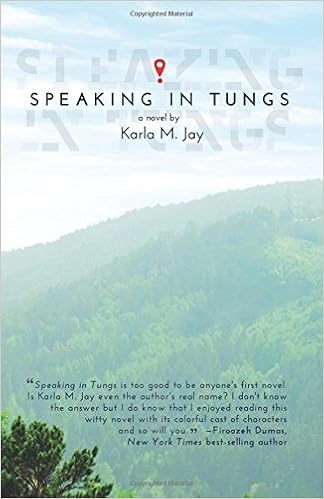
Karla M. Jay is a runner up in the WOW! Women on Writing Fall Flash Fiction Contest with the very touching story The Thaw. Karla M. Jay introduced us to her protagonist Marleigh Benning in her debut novel, Speaking in Tungs, May 2015. Speak of the Devil, published May 2016, is the sequel to Speaking in Tungs. Raised in Western New York and Northern Pennsylvania, Karla M. Jay has worked as a speech pathologist since 1982. When she is not home in Utah gardening or writing, she is traveling, trying to see as many countries as possible—in particular, those with good coffee, ancient history, and great beaches. Find her at www.karlajay.com or on Facebook at www.facebook.com/AuthorKarlaJay.


Interview by Crystal J. Casavant-Otto

WOW: Thank you so much for taking time out of your busy schedule for today's interview. Congratulations again on your many accomplishments but most recently as a runner up in the WOW! Fall Flash Fiction Contest! The Thaw seems like a very personal look into a very real life. Do you care to share where the story or idea came from and/or which parts of it mirror your own reality?

KARLA: When I was in high school, in Northern, Pa., a friend and I found a frozen waterfall on her parents' property. We were able to squeeze inside, staying dry with the water rushing around us, which was a very cool (pun intended) experience. That stuck with me all these years. I turned it into a story I felt many families could relate to; the disintegration of sibling relationships as life shapes them into adulthood.

WOW: As an only child this is sort of new to me, but as a soon to be mother of 5, I'm hoping my children will have relationships into adulthood. Thank you for giving me an interesting look into such relationships.

What role do flash fiction pieces play in your writing life? Do you have advice for other authors as far as contests and flash fiction pieces are concerned?

KARLA: I took this contest on as a challenge since I always think in novel-length stories. It's HARD to tell a story under 750 words but now I know I can. I highly encourage all novelists to write short stories and flash fiction pieces and to enter contests. It's a win/win experience. You stretch your writing talents and possibly win something!

WOW: 750 words sounds simple until you start writing, doesn't it? That's how I first found WOW! too - these contests are fun, but they aren't as easy as one might think!

Many authors struggle with time management. That does not seem the case for you as you are working on your 4th novel. What is the key to your success and what advice would you pass onto others who may find time management and writing to be a challenge?

KARLA: I treat my writing like a second job. I work full-time and I have a life like everyone else, so I have to be selfish with the time I schedule for writing. It's mostly on the weekends but I squeeze in an hour or two some mornings. I also have learned, and this only took fifteen years, to write the first draft without going back to fuss or edit everything I wrote the day before. Believe me—it moves a lot faster that way. My biggest challenge is when the weather turns nice and then I have to fight the urge to be outside.

WOW: Speaking of the outside...and warmer weather, you are passionate about gardening as well as writing; do you find they tie in well with each other? Do many of your writing ideas come while gardening? What advice would you give to other writers who haven't yet found that perfect place for inspiration?

KARLA: I do love gardening and it is THE siren call that lures me away from writing. So, I use it to plot and play with new ideas for the next part of the book I'm working on. My love for dirt and nature come through in my stories, I think. Gardening is not for everyone, but I find that walking alone, sitting in a park or wandering through a bookstore also work.

WOW:  Speaking in Tungs was not the first book you wrote - what ever happened to that first book
Grasshopper Soup?


KARLA: Oh, my. I spent ten years writing and rewriting Grasshopper Soup. Lesson learned. Stop pitching after a year and move on! I love that story, especially since I interviewed men who had survived the Bataan Death March as I was writing it. I need to rewrite the manuscript since my writing has grown up all these years later, but I will get it out!

WOW: Sounds like exciting things are in store for you in the future as well! I have a feeling WOW! readers will be hearing from you again (maybe even this fall...wink wink). Thanks so much for chatting with us today, Karla! Congratulations again on The Thaw and best wishes to you all your future projects!


Our Spring Flash Fiction Contest is OPEN
For details and entry, visit our contest page.
Read More »
Powered by Blogger.
Back to Top