Showing posts with label Spring Flash Fiction contest. Show all posts

Interview with Emily Freeborn: Spring 2026 Flash Fiction Contest Runner Up

Tuesday, October 13, 2026


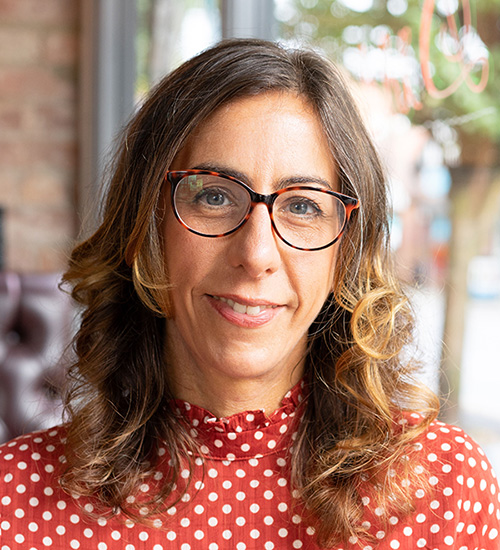
Emily’s Bio:
Emily Freeborn is an author currently on submission with her debut NA heist novel (Sinners or Saints) and an entertainment law student at Chapman University in Southern California. She loves writing stories that explore the minds of complicated, morally grey women. When she's not busy plotting fictional crimes and racking up a search history that would probably get her put on an FBI watchlist, she enjoys hanging out with her chaotic husky and hunting down rare books. You can find her on social media at @authoremilywrites and contact her agent, Lauren Galit of LKG Agency, for inquiries. 

Take a moment to read "Unclean" (CLICK HERE) and then come back to learn about how Emily shaped this story.

----interview with Sue Bradford Edwards----

WOW:  What was the inspiration for “Unclean”? 

Emily:  I was drawn to the specific aspect of coming of age in which you start to see the distance between your expectations and reality. One area I've noticed that this often appears in for young women is sex. You spend your teenage years growing attached to a theoretical version of the act, informed by romance books filled with orgasmic, idealized lovemaking. However, for many, early explorations of intimacy can be deeply unsatisfying. You not only find yourself coming down from a flood of hormones, but also from the intoxicating rush of that failed fantasy. I wanted to write a story about a young woman's first time that was less about a loss of "innocence" and more about this concept of the death of a dream. 

WOW:   I think you've written something that will definitely resonate with female readers. Revision is such an important part of the writing process. How did this story change during revision? 

Emily: Since "Unclean" is about a young woman grappling with complicated feelings about her first sexual experience, I wanted to make sure I communicated her emotional state in a way the reader could easily connect with. While editing, I tried to be precise with the imagery that I used so that even while the character jumps between her memories and the present, readers can feel immersed in her perspective and hopefully connect with the underlying emotions tying these moments together. 

WOW: Your bio says that you like working with morally grey characters. How is this character morally grey? What is it that makes these characters interesting to you? 

Emily: I've always been drawn to morally grey characters because I feel like they are often the most honest. Dig around long enough in any person's psyche and you are certain to uncover something ugly. For the young woman in "Unclean," this is her naïve and flawed belief that because there are boundaries that should keep her from the man she sleeps with -- those being the fact that he is married and her teacher -- her attraction and attempts to pursue him are safe and acceptable. I wanted her perspective to represent how overindulging in fantasy can limit your perception of reality and lead to a self-indulgent and ultimately damaging way of viewing the world. 

WOW: You definitely showed how her beliefs led to this situation. In addition to writing flash, you have a novel on submission. How does working on one form of literature inform the other? 

Emily: I actually have always found flash fiction much harder to write than novels. It challenges you to do everything that a good book should do -- immerse you in a new perspective, foster a connection with a character, and draw readers into the world you've created -- in a fraction of a fraction of the time a novel gets to accomplish that. 

But if you are a writer looking to work on your craft, I think writing short fiction is one of the best ways you can accomplish that. After my debut went out on submission, I challenged myself to write a piece of short fiction every morning while I tried to figure out what project I want to work on next. I've noticed that since getting into that habit, my writing has gotten much tighter, so I would especially recommend any writers who struggle to cut down their word count try it out. 

WOW: That's an excellent recommendation! What advice do you have for our readers who may be trying to decide if they should focus on one type of writing (novels) or write multiple forms (novels, nonfiction, flash, etc.)? 

Emily: Whether you are a new writer or someone who's made a career of it, I highly recommend trying out as many types of writing as you can. Play around with poetry, write a narrative non-fiction essay, try out flash fiction if you've been primarily writing long-form or vice versa. Regardless of whether you stick with any of those forms or not, you will probably be able to implement something from that experience into the form you do want to stick with long term. The more you experiment and explore, the better your understanding of the kind of work you want to create will be.

WOW:  Thank you for sharing with our readers not only how you create your own work but also how our readers can explore various forms and shape their own writing!  
Read More »

Interview With Sophie Claire, Runner-Up in the WOW! Spring Flash Fiction Contest

Tuesday, November 28, 2023


I'm so glad to interview Sophie Claire, running up in the WOW! Spring Flash Fiction Contest. Make sure you read her story After the Storm then come on back.

First, here is more about Sophie:

Sophie Claire writes emotional stories set in England and in sunny Provence, where she spent her summers as a child.

Previously, she worked in marketing and proofreading academic papers, but now she’s delighted to spend her days dreaming up heartwarming contemporary romance stories set in beautiful places.

--- Interview by Nicole Pyles

WOW: Congratulations on winning runner up! You had great character development in your story What is your approach in creating such strong characters in fiction?

Sophie: Editing! That’s the key. We all strive to create strong and sympathetic characters (heroines especially), but I often have to edit my work several times to really draw this out. No one wants to read about someone who’s too sharp or jagged: characters also need warmth and motivations we can relate to. It’s only in revisiting the piece that I tease out these elements, so I write a rough first draft, then edit several times until it’s polished. 

WOW: Great technique! What surrounds you as you write?

Sophie: I’m lucky enough to have my own office, and I always have a mood board on the wall beside me for each book. It’s a collage of pictures and words cut out of magazines, and it helps me stay focused on the story, but also provides inspiration. I also use Pinterest, but there’s something about having it right there beside me that really sparks my imagination. I also have a clutter of printouts and notes on my desk: I’m a very messy writer, and it drives me mad, but it’s all essential, and woe betide anyone who moves even a sheet of paper!

WOW: I love you have visuals around you! I loved reading on your website that you love to help characters find their home. Is that something you've struggled with as well?

Sophie: I’m half French, half British, and, growing up, I lived in England but we used to visit my mother’s family in France regularly. I always felt very aware of the different attitudes and traditions within these two countries, and, as a child, I desperately wanted to fit in and belong. However, as an adult I embrace the unique perspective that my background gives me. I speak two languages, I cook French and British cuisine, and I hope my upbringing makes me more open-minded and gives me a better understanding of different attitudes. I love to write about characters struggling with the issue of belonging, and I strongly believe that we have to find peace within ourselves and our relationships before we can really ‘come home’.

WOW: That's amazing! You have some incredible publications under your belt! Why did you decide to write flash fiction?

WOW: I started writing flash fiction recently as warm-up exercises for my writing day. I belong to the Romantic Novelists’ Association and in their quarterly magazine (Romance Matters) they hold a flash fiction competition. I entered it and, when I won, I was so thrilled that it motivated me to write more short pieces. I’m a slow writer and finishing a novel can take me a year or more, so completing a short story in a morning is hugely satisfying. It’s also a great way of honing my writing skills: creating tension and plot development in such a short word count is not easy.

WOW: Finishing a short story is such a wonderful experience. What are you working on now that you can tell us about?

Sophie: I’m currently promoting my latest release, This Christmas in Paris, which was loosely inspired by the film You’ve Got Mail. I’m also writing another romance novel set partly in England and partly in the South of France at Christmas. I really enjoy writing festive novels, and this one is super cosy with a heroine who’s a carpenter. 

WOW: I have already added your book to my reading list! I love that movie! What advice do you have for writers who are struggling telling their stories?

Sophie: Relax! That’s what works for me, although it’s not always easy to do. So often we put pressure on ourselves, or let our inner critics have too much volume in our heads. I recommend writing short pieces if a longer project feels too daunting, and writing every day to keep those writing muscles working. I also swear by Julia Cameron’s morning pages. I use them as a warm-up to get into the zone, and if I’m stuck with the plot they often help untangle the knot. But the thing that helps me most is to read: it’s when I’m relaxed and absorbed in a story that ideas come to me. 

WOW: Great advice! Congratulations again and best of luck on your future successes.


Read More »

Interview With Renee Rockland, Runner-Up in the WOW! Spring Flash Fiction Contest

Tuesday, October 24, 2023


I'm so excited to be interviewing Renee Rockland, who joins us again as a runner-up in the WOW! Spring Flash Fiction Contest. Before we get to our interview, make sure you read her story Play At Your Own Risk then come on back.

First, here's more about Renee:

Renee Rockland is an award-winning short fiction and flash writer whose stories have appeared in a handful of anthologies including Beach Secrets and Beach Holidays (Cat & Mouse Press), The Year’s Best Dog Stories 2021 (Secant Publishing) and the forthcoming Winter Solstice (Devil’s Party Press) as well as a number of online publications. Her story, “Her Mark,” was a Runner-up in the Fall 2022 WOW! Flash Fiction Contest. A native of Iowa, she’s traded cornfields for seashores and resides with her wife, twin daughters and a menagerie of rescue and foster dogs in Rehoboth Beach, Delaware, where she happily hoards books and is a member of the Rehoboth Beach Writers’ Guild.

-- Interview by Nicole Pyles

WOW: Congrats on winning runner-up! I LOVED the unfolding of this story. As a reader, I wasn't sure what to expect when the game begins but the ending put a smile on my face. What inspired this story?

Renee: I recently took a free one-week class from Nicole Breit on creative non-fiction. My preferred genre is fiction, but I’m always looking to improve my craft, so I stretched myself and was thrilled and surprised at how much I learned. Nicole is a gifted teacher whose advice is both accessible and immediately implementable (regardless of genre). In one of our mini lessons, we were challenged to tell in a story in a different format. (She gave the example of using the symbols in the legend of a map as story benchmarks.) While I was brainstorming, my mom called to tell me she was upset because her cable had been out for five days, and she was missing Jeopardy! The intersection of perspiration and inspiration is how I find most of my ideas, and this one was no different.  

WOW: I love how your moment with your mom led you to this storytelling technique! You had a wonderful way of adding some clever nonverbals (via the husband eating for example!). I love how you did that to convey emotion and the underlying truth behind what was going on. What was your approach in the writing process to incorporate those? 

Renee: When the idea for this story took root, I knew I wanted to have some fun with it. I love the juxtaposition of an emotionally charged, heavy subject (cheating) told in a light-hearted way. We were in the middle of the long, dark days of winter, and I was looking to make myself laugh. The protagonist’s husband is a cliché and a fool for cheating on his clearly brilliant wife, so I delighted in exaggerating his foolishness and putting him in a position in which he wasn’t calling the shots. I also love a good revenge story and was inspired by one of my favorite books/movies, The First Wives Club, as I was writing. One of the tenants of impactful storytelling is “show don’t tell,” and especially because he wasn’t my main character, and I didn’t want to introduce his POV, the only way for me to tell his story was by showing him reacting to the unfolding scene.

WOW: Ha, I love it! You have many short stories and flash fiction pieces published! Why do you love telling short stories?

Renee: When I first started wearing make-up, my mom’s favorite refrain was, “less is more.” To be fair, it was the 1980’s, and there’s plenty of photographic evidence of my affinity for blue eyeshadow. But her advice certainly applies to writing as well, and I love the challenge of mining small moments in life for larger emotional impact. In the end, regardless of character, it’s emotion that drives any story.

WOW: I have to laugh - I remember having a blue eyeshadow era, too. How did your story "Play At Your Own Risk" transform in the revision process?

Renee: I find that any story can be vastly improved if it’s allowed to marinate after the initial writing/revision process, and this one was no different. The bones were there from the beginning, but I kept picking at it over several months. In fact, the Tammy Wynette reference at the end was late to the party. My first several clues for Final Jeopardy! just weren’t hitting the mark. I knew there had to be something better, but I was stumped. So I put the story away and worked on other pieces in the pipeline. One day I Googled “divorce,” and several rabbit holes later, Tammy’s song came up. It was such a natural fit—like finally finding the perfect pair of jeans after trying on 884 pair—that I couldn’t believe I hadn’t thought of it earlier. It’s those lightbulb moments, the satisfaction of feeling like you cracked a code that propel me to persevere, especially when my writing’s not going well. 

WOW: I know that feeling! So, what does your writing space look like?

Renee: I love this question for two reasons: first, I adore when other writers share details about their writing space. It’s kind of like driving around at night so you can see inside other people’s homes or watching House Hunters on HGTV. And second, because my writing space has morphed over the years. I feel incredibly fortunate to have a home office where I do the bulk of my work. (And make no mistake, it is work.) It has a door, so I can shut out the chaos (cluttered desktop notwithstanding), but I’ve learned it’s not the only place I can write (which is what I used to think). And that thinking was holding me back. I justified not writing because I thought if I couldn’t have long stretches of uninterrupted time in my office, then it wasn’t even worth trying. But perfection is the enemy of progress, so I readjusted by thinking and started writing in small bursts, taking advantage of wherever I happen to be. Sometimes I’m sitting in my car waiting to be Uber-Mom. Sometimes I’m sitting on my couch or the beach or a park bench. The writing I do outside my office may not be as focused, but I’ve found that once I’m back in my office, I can dive deeply more quickly because of the work I’ve done elsewhere.

WOW: Great tips on why you should have your own space! What are you working on next that you can tell us about?

Renee: Inspired by my class with Nicole Breit, I’m working on my first piece of creative non-fiction. It’s a stretch for me, but when I feel daunted or insecure, I just remind myself that in the end, my writing is first and foremost, for me. A creative outlet that enriches both my internal and external life. I don’t have to share it with anyone. My decision to do so is a choice. And choice is power. I know that if I do decide to share it, I’ll enter it in one of WOWs creative non-fiction contests and pay for a critique because the feedback I’ve received for my past entries has been thoughtful and encouraging and only helped to strengthen my writing.

WOW: Best of luck on your creative non-fiction work! We can't wait to read it. Congratulations again!
Read More »

INTERVIEW WITH DR. JO SKINNER: SPRING 2021 FLASH FICTION CONTEST RUNNER UP

Tuesday, November 02, 2021

Jo’s Bio:
Jo is a Brisbane based general practitioner who has worked in urban, regional and rural Australia as well as Ireland. She is married with three teenagers, a dog and a cat. 

She did her first writing course in 2017 and her stories have been long listed, short listed and won competitions. In 2020, she coedited an anthology about people’s experiences of COVID which was published by the Queensland Writer’s Centre and can be found at the State Library of Queensland. Her essays about the impacts of COVID on domestic violence and the mental health have been published by MiNDFOOD. 

She is currently writing her third novel and exploring publishing options. 

When Jo is not working or writing she is running. She has completed forty-seven marathons and counting. 

Click through here to read Jo's story, "Magpie's Warble."  Then come back to learn about her writing process. 

----------interview by Sue Bradford Edwards----------
 
WOW: “Magpie’s Warble” is such a compelling piece. What was the inspiration behind it? 

Jo: Years ago, my best friend and I were both leaving relationships and she realised she was pregnant despite precautions. I still remember vividly her trauma around the decision about what to do. It is an area so fraught with consequences whichever path you take. Managing fertility, the when and whether to have babies, still falls disproportionately to women. 

I was reminded of this again when a patient presented after her husband left her. She found herself pregnant with a third unplanned child, torn about what to do. This prompted me to write "Magpie's Warble." 

WOW: It is a story that is far too real for many women. There is so much that you don’t tell us about Layla. We don’t know her age or her hopes and dreams. How did you decide which details to include in the story and what to leave out? 

Jo: I did not want to confine Layla. The decision about whether to have a child can affect any woman whether she is a teenager or in her forties. I just wanted to leave it open so that readers could imagine her to be twenty or forty. 

With flash, I like to focus on one issue and let the reader fill in the empty spaces. I suspect most of us have been in a relationship where we were reluctant to let go even though it is no longer working. I wanted a glimpse into a powerful moment in Layla's life, and how it gives her the courage to be brave, to take control. The chances are she will face difficulties and her hopes may or may not be realised but that moment of owning her decision, moving forward was important. 

WOW: And it is such a strong moment in the story.  Revision is such a vital part of the writing process. Please tell our readers how “Magpie’s Warble” changed between the first draft and the finished piece. 

Jo: Usually, I do multiple revisions and rewrite, edit and rewrite again. I think the shadow of this story had been in my imagination for so long, I did not have to change a lot. 

I have a writing friend and we read and give feedback on each others’ work. She made a couple of suggestions and I added some details and removed a line or two. I find getting another writer to give some feedback is a great way to do revision as they see your work with fresh eyes, notice things you miss. 

WOW: Your bio says that you took your first writing course in 2017. Why then? What inspired you to try something new and what compels you to keep at it? 

Jo: I think deep down I always wanted to write but didn’t think I was capable of it. I was sitting at an airport in 2017 and picked up Gretchen Rueben’s book, The Happiness Project. In chapter nine, she challenges you to write a book in a month. I gave myself three months and wrote a 54,000 word book. It was probably terrible but gave me the confidence to sign up to a writing course. 

The week the course started, we took the family on their first snow holiday, but I still committed an hour each day to doing the exercises and submitting my work. I absolutely loved it, would rush in every lunchtime to see if I had feedback. By the end of the six weeks I was addicted! 

I learnt that you just have to make time for the things that make you sing inside. Now, I can’t imagine not writing. I always have some writing project on the go (or two or three) and am part of a fabulous women’s writing group, Brisbane Scribes. Even if I am away, I still zoom into the monthly meeting. Why? It makes me happy. 

WOW: I suspect that a lot of our readers will be Googling The Happiness Project. As a writer, a physician, a marathoner, and the mother of three teens, you must be a pro at time management. What advice do you have for our readers who have trouble finding time for their writing? 

Jo: Life is short and it is important to focus on the things we love. I have learnt that time will never magically become available so I carve time into my day and treat writing like work. Not negotiable. 

I get up early and either run or write six days each week. I have had to let some things go and that gets easier. I have a repertoire of simple meals that are on the table in less than half an hour (and yes poached eggs on avocado toast is a meal!), I pay someone to clean the house once a week, I have enlisted the kids to do chores and I do my shopping online. It took me years, but I have learnt to say no. I treat my writing time on my day off or weekend with the same reverence I would treat other appointments. It has been immensely satisfying to prioritise something I love in this way.

WOW: Prioritize what makes us happy.  That is a lesson for all of us!  Thank you for taking time out of your writing to share this with us.

To find out more about Jo and her work, visit her website at www.johannaskinner.com and connect with her on Instagram @running.writing. 
Read More »

Interview with Dawn McCaig: Spring Flash Fiction Runner Up

Tuesday, September 28, 2021


Dawn McCaig is an Assistant Crown Attorney who prosecutes all manner of serious crime. She escapes the stress of her professional life by writing fiction. She lives in Nipissing District, Ontario, Canada. 

If you haven't read her story, "In Bloom," take a moment to do so and then come back to learn about how she writes.    

------interview by Sue Bradford Edwards------

WOW: “In Bloom” is such a chilling piece. What was the inspiration behind this story? 

Dawn: My work as a criminal prosecutor has definitely influenced my writing. I’ve never had a case with a body buried under the front shrubs, but I do deal with chilling fact patterns, including homicides, on a regular basis. My professional life is very satisfying, but it immerses me in the worst the world has to offer, so I’m not surprised my imagination treads dark waters. 

WOW: Your work definitely seems to fuel your writing. Revision is a vital part of the writing process. How did “In Bloom” change from the first draft to the last? 

Dawn: The first draft of the story had looser language; it was too « flowery. » I cut around 100 words, and when I read it now I still see 10 more I probably should have tossed. 

WOW: Because it is so short, many details don’t make it into a flash fiction story. We don’t know, for example, this history of Miranda and Nigel’s marriage. How did you decide which details to include in the story? 

Dawn: The word limit made me a vicious editor; if something didn’t further the plot or theme I (hopefully) deleted it. I left most of the details of the marital disputes out to create some moral ambiguity - should Miranda have killed Nigel? Did he deserve it? From her perspective, yes to both, but we’ll never really know. 

WOW: Individual words in your story, including exhume, bone-white, and sinew, help create the dark tone. What advice do you have for our readers about using word-choice to create a mood? 

Dawn: I’m not sure I have a lot of advice to offer, but I do think it’s good practice to figure out the mood you want to evoke with your work, and to sit in that mindset for a few minutes before you start drafting. 

For this story, I reached for language that describes graveyards and corpses because they provoke feelings of darkness and unease. 

WOW: What are your writing plans for the future? Can you tell our readers where else they can see your work? 

Dawn: Confession: I love writing fiction, but I have only just started letting other people read it. This is my first published piece and I am beyond delighted. I do have a draft of a novel nearly finished, so we’ll see what becomes of it. It’s a courtroom murder mystery, of course.

WOW:  Good luck finalizing the draft of your novel!  Murder and a mystery seem to be right up your alley. 

Read More »

INTERVIEW WITH CHLOE GRECH: 2020 SPRING FLASH FICTION CONTEST RUNNER UP

Monday, September 28, 2020


Chloe’s Bio: 

Chloe has had a passion for storytelling ever since she could first form words. Whether that be unsuccessfully convincing her mother that it was her brother who spilt paint on the carpet, or missing the bus because she was off building her own worlds, not much has changed since she grew up. Chloe is now bringing stories to the screen as a Producer and Director of children’s and adult animation in Sydney, Australia. 


Unlike the mad world of animation, Chloe enjoys the solitary gauntlet that is trying to put pen to paper. Sir Arthur Conan Doyle put it beautifully when he said that “a book is a mummified soul.” Unfortunately, writing one isn’t so beautiful and is just as excruciating as it sounds, but whether it be on the train, in a meeting, or it’s three o’clock in the morning, Chloe would be rather doing nothing else. 


Excited to further explore her writing career, Chloe is working on her first manuscript, hoping to fulfill her ten-year-old self’s dreams of telling stories to anyone who will listen. 


Take a minute to read Chloe’s story, “The Quiet that Follows,” and then come back to enjoy this chat with the author. 


WOW: There is a story behind every story. Can you tell our readers what inspired “The Quiet that Follows”? 


Chloe: I have always been interested in the different way death is perceived in different cultures. The one I was most familiar with growing up was the Grim Reaper, which is always depicted as a sinister and foreboding personification of Death. But why should death be seen as cruel when it only makes us appreciate our impermanence? 


WOW: At first, readers assume Renfri is hunting the deer to feed her people. Only later do they realize she is a different kind of huntress. How did this surprise develop during the rewrite process? 


Chloe: I always like leaving the reader something to think about toward the end of my pieces, so I knew early on that I wanted the reveal to come at the end. My hope is that in misleading the reader into believing Renfri is human, and therefore sharing a similar experience of death, the reader would be forced to challenge their perception of it once it is revealed that she is Death. I don’t believe that I would have achieved the same impact if I had introduced Renfri as Death earlier in the piece as the reader would not instinctually empathise with her. 


WOW: In your “day job” you produce and direct animation. Can you tell our readers a bit about it and how this work shapes your writing? 


Chloe: I have been in animation for seven years, mainly in management roles, but recently I have had the amazing opportunity to flex my creative muscles in the director’s chair. Animation is obviously a very visual medium, so in my work I have to have clear direction on character’s movements and actions when working with animators. I think this translates into my writing style as I tend to use verbs rather than adjectives and like to emphasise action. I do often find myself being excessive with my stage direction though, which I try to be conscious of. 


WOW: That's good advice for all of us especially if we write things that will be animated or illustrated.  What advice do you have for writers who are hesitant to attempt flash fiction? 


Chloe: It can be intimidating trying to structure a story with deep and complex characters in less than two pages. If you’re unsure how to tackle the challenge, I would suggest approaching it as if you were writing the first two pages of a story you have always wanted to write, or better yet, the final two pages. Your characters will then feel as if they have developed over, and survived, an entire book. Flash fiction is also an amazing exercise on restraint and saying more with less. I like to think that instead of me being paid per word, I’m the one paying. 


WOW: That's excellent advice on working with flash characters. What else are you working on? Where can readers find more of your work? 


Chloe: I am a chronic project-ditcher. I have plenty of starting chapters and story outlines but no real completed pieces (yet!). That is why I find flash and microfiction so fun and rewarding, because it isn’t as daunting as a 350-page novel. The projects I’m currently working on are a high fantasy novel and a series of single-shot scripts, which are like flash fiction but in film form. I have only just begun to delve back into my writing so I don’t have many pieces under my belt, but I have plans to launch a blog soon. 


WOW: Don’t we all have files full of story beginnings? We’re so glad that flash and microfiction are rewarding for you and, in turn, for our readers! We are looking forward to seeing more of your work in the future, especially getting to see your scripts as films. 


Interviewed by Sue Bradford Edwards who refuses to disclose how many abandoned first chapters she has on her desktop. Sue is the author of over 25 books for young readers. To find out more about her writing, visit her blog, One Writer's Journey. 


Sue is also the instructor for Research: Prepping to Write Nonfiction for Children and Young Adults (next session begins October 5, 2020) and Writing Nonfiction for Children and Young Adults (next session begins October 5, 2020).

Read More »
Powered by Blogger.
Back to Top
